
How to Use a Siphon Coffee Maker: Step-by-Step Guide for Beginners (2026)
Editorial standards: brewing guidance is based on manufacturer instructions, published brewing guides, and established specialty-coffee practice. Safety guidance follows manufacturer directions; always read the manual for your specific brewer. CoffeeGearHub does not claim hands-on testing where it has not occurred.
At a glance
What this siphon how-to covers
How a siphon works, what you need, how to set up the filter and heat source, a timed first brew, how to adjust for taste, safe handling of glass and flame, and how to clean up.
Editorial analysis
Siphon looks complicated because you can see every step
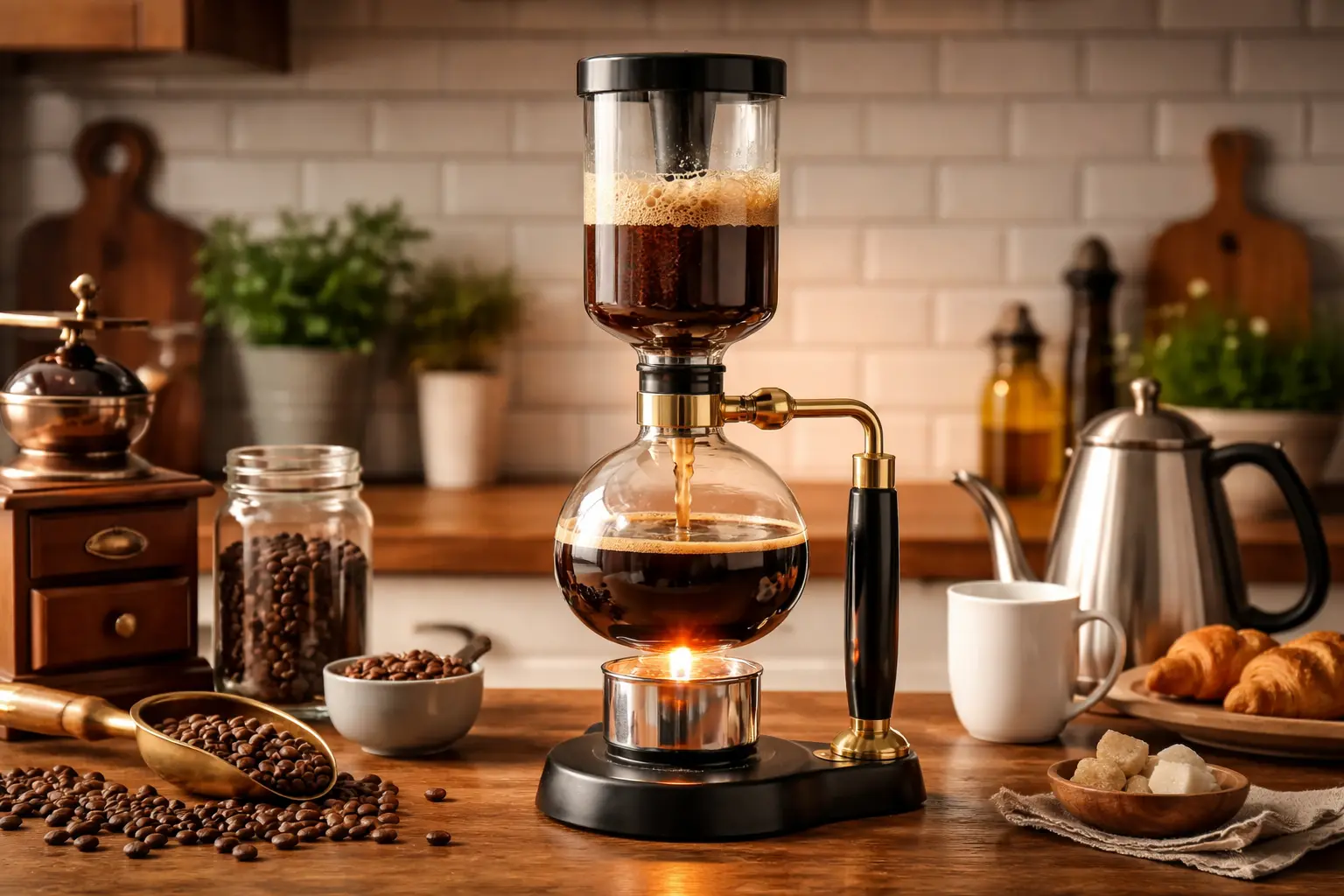
A siphon (vacuum) brewer is a full-immersion brewer with a built-in timer. Heat pushes water up into the coffee, you steep it, and cooling pulls the finished coffee back down through a filter. Nothing about that is harder than a French press; it is just happening in glass, in front of you.
Most beginner problems come from three things: a badly seated filter, too much heat during the steep, and not knowing when to take the heat away. Get those right and the method is very repeatable.
The 30-Second Answer
To use a siphon: seat a soaked filter in the upper chamber, add hot water to the lower chamber, heat until the water rises, add medium-fine coffee and stir, steep 60–90 seconds on low heat, then remove the heat so the coffee draws down through the filter.
Start with 36 g of coffee to 540 ml of water (about 1:15), a grind a little finer than drip, and a drawdown target of roughly 20–35 seconds. Adjust grind and steep time based on taste and drawdown speed.
Compare current options
Start with these representative choices
Three common ways into siphon brewing: the classic glass Hario Technica with an alcohol burner, a stovetop-capable Yama, or a fully electric Tiger Siphonysta. Our best siphon coffee makers guide compares them in depth.
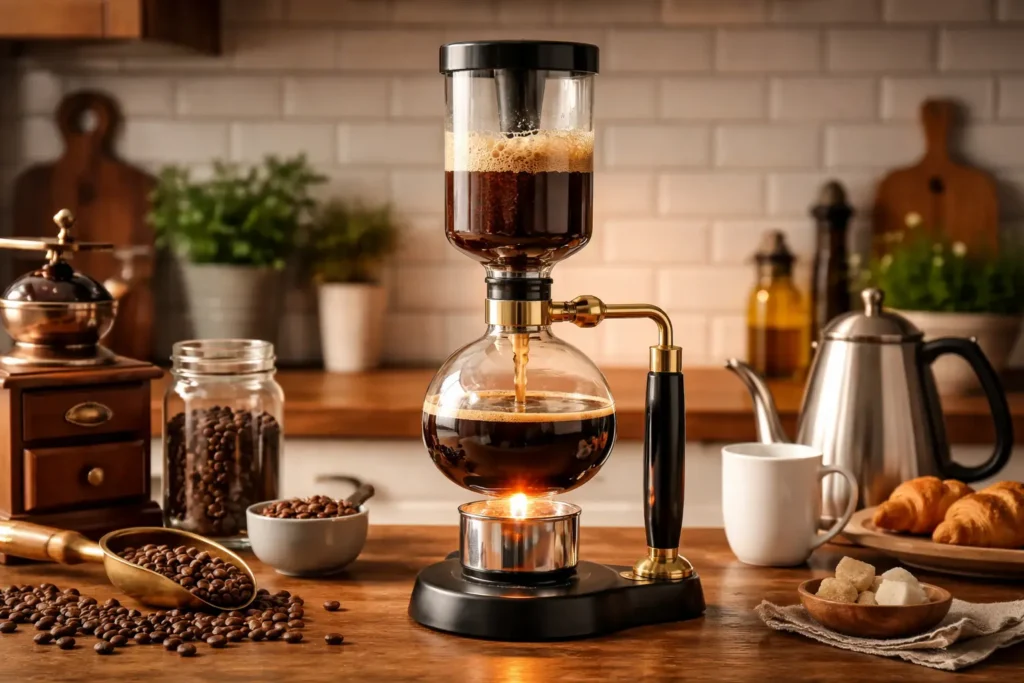
Hario Technica — Classic tabletop siphon
The reference glass siphon. Ships with an alcohol burner and cloth filter; can be upgraded to a butane burner for faster, adjustable heat.
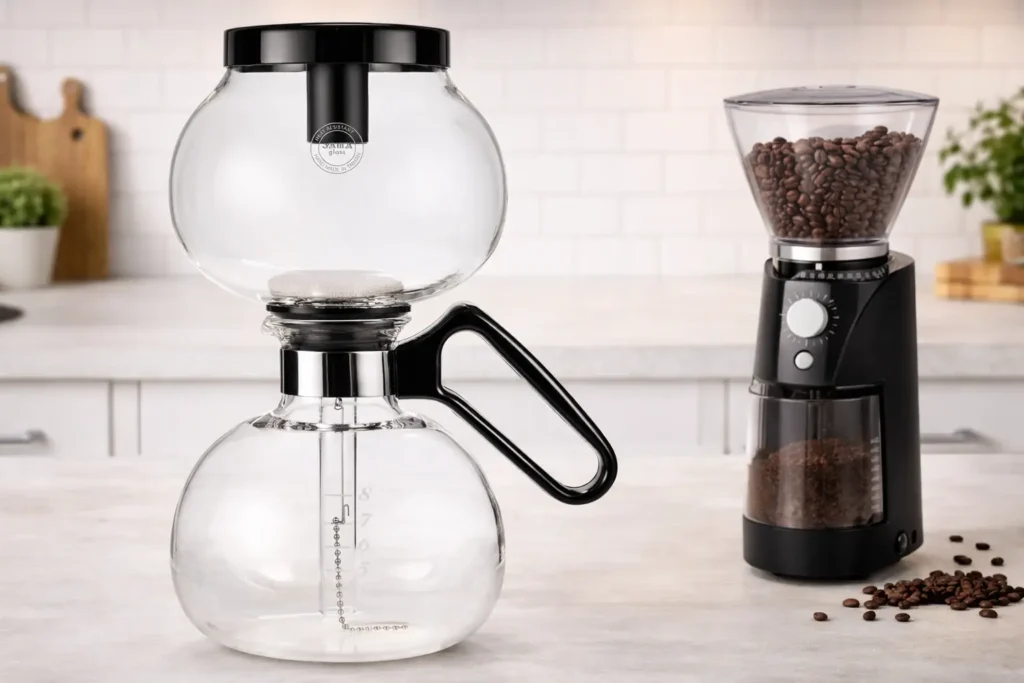
Yama Glass — Value and stovetop options
An affordable glass siphon. Stovetop models use a wire heat diffuser on gas or electric coil burners; check the listing for which heat source your model supports.
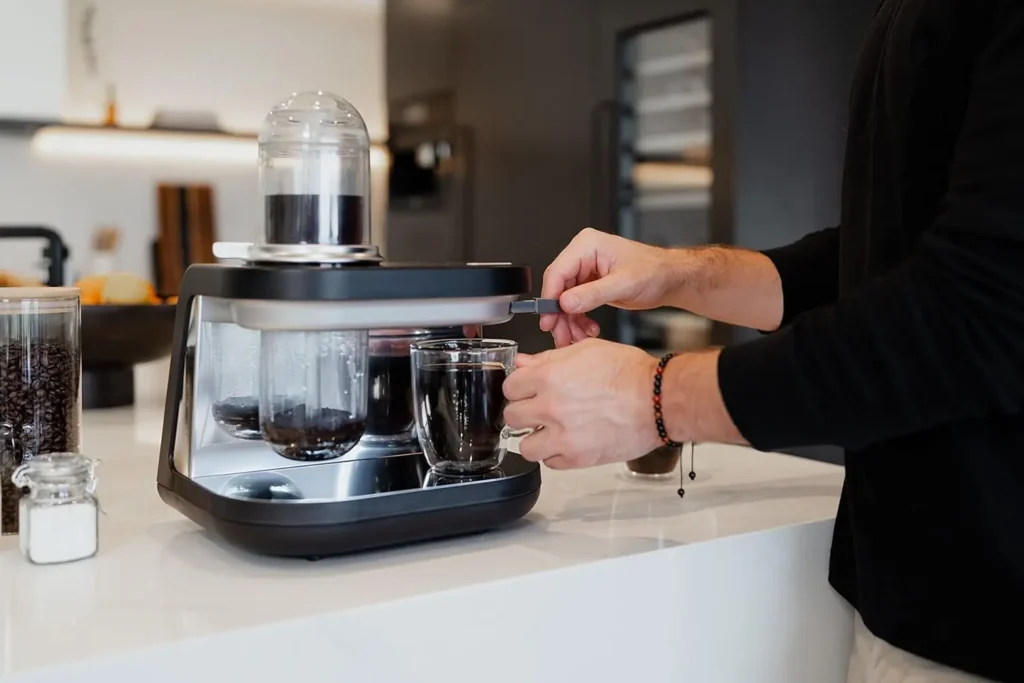
Tiger Siphonysta — Electric automation
An electric siphon that controls heating and timing for you. The least hands-on route, with the least manual control.
Affiliate disclosure: Amazon links may earn CoffeeGearHub a commission at no additional cost to you. Prices and availability can change.
How a Siphon Coffee Maker Works
A siphon has two chambers joined by a tube, with a filter at the bottom of the upper chamber. Brewing happens in three stages:
1. Rise. As the lower chamber heats, water vapor builds pressure and pushes most of the water up the tube into the upper chamber. A little water always stays below; that is normal and keeps the vapor pressure going.
2. Steep. You add coffee to the upper chamber and stir. The coffee steeps in full immersion while gentle heat holds the water up.
3. Drawdown. When you remove the heat, the vapor in the lower chamber cools and contracts, creating a partial vacuum that pulls the brewed coffee down through the filter. The grounds stay on top.
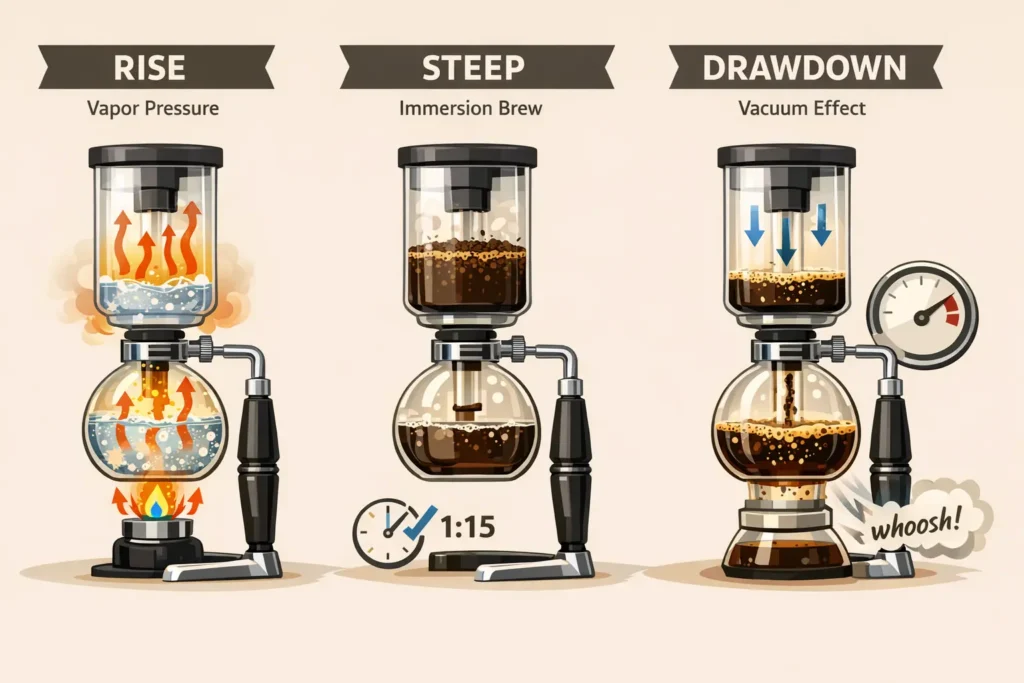
Because brewing water is near its hottest at the point of contact and the cup is filtered through cloth or paper, siphon coffee tends to taste clean and aromatic with a light-to-medium body. Our siphon buying guide covers the extraction science in more depth.
What You Need
| Item | Why it matters | Notes |
|---|---|---|
| Siphon brewer | Upper and lower chambers, stand, and filter assembly | Hario, Yama, Bodum, and Tiger are the common home options |
| Heat source | Drives the rise and holds the steep | Alcohol lamp, butane burner, halogen beam heater, stovetop (supported models only), or built-in electric |
| Filter | Separates grounds during drawdown | Cloth is standard; paper and metal adapters exist |
| Burr grinder | Consistent medium-fine grind | Fines clog the filter and stall drawdown |
| Scale | Repeatable dose and water | 0.1 g resolution is helpful |
| Kettle | Preheats water | Shortens the brew and protects the glass from long heating |
| Bamboo or wooden paddle | Stirring without scratching glass | Avoid metal spoons on glass |
| Timer | Steep and drawdown timing | Phone timer is fine |
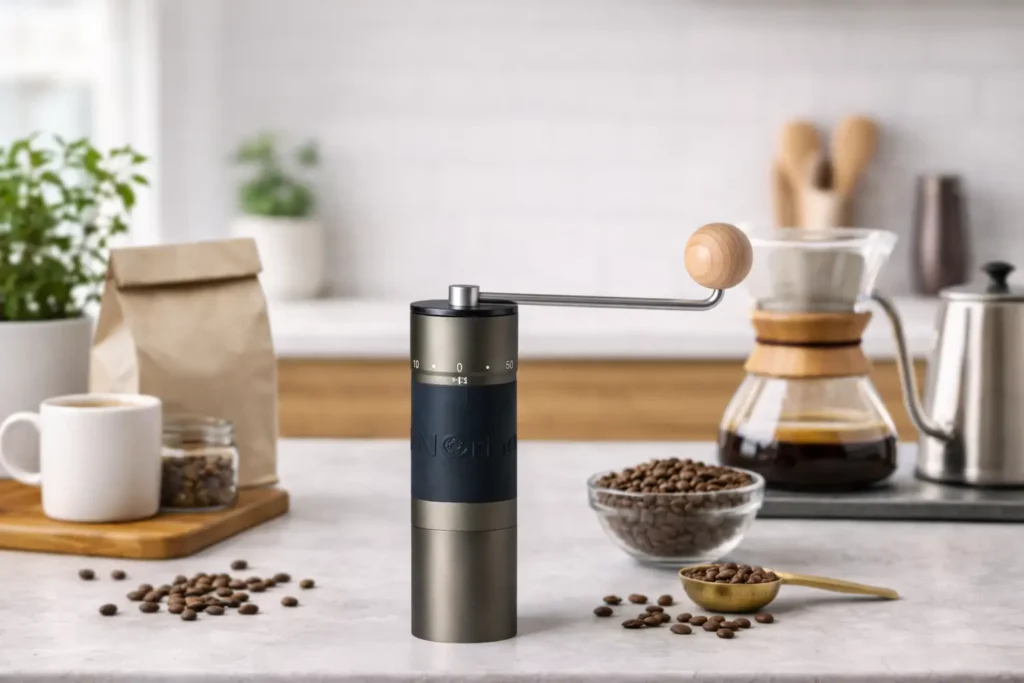
Grinder note: siphon uses a medium-fine grind, a little finer than drip. Consistency matters because excess fines clog cloth filters and slow the drawdown. A good manual burr grinder such as the KINGrinder K6 covers this range easily; start around 85–100 clicks and adjust by drawdown speed.
See our coffee grind size guide and the KINGrinder K6 grind settings chart for reference points.
Choosing and Using Your Heat Source
The heat source controls the whole brew, so it is worth understanding before your first cup.
| Heat source | Control | Speed | What to know |
|---|---|---|---|
| Alcohol lamp | Low (adjust by wick height and position) | Slow | Included with many tabletop siphons. Use the fuel the manufacturer specifies. Preheating water in a kettle makes it far more practical. |
| Butane burner | High (adjustable flame) | Fast | The most popular upgrade. Use in a ventilated space and keep the flame centered and modest during the steep. |
| Halogen beam heater | High | Fast | Flame-free and precise, but a specialist and more expensive accessory. |
| Stovetop | Medium | Medium | Only for siphons designed for it, usually with a wire heat diffuser between burner and glass. Never put a tabletop siphon on a stove. |
| Built-in electric | Automated | Medium | Machines like the Tiger Siphonysta manage heat and timing for you. |
Whatever you use, the rule is the same: strong heat to make the water rise, gentle heat during the steep, no heat to trigger drawdown.
Setting Up the Filter Correctly
A poorly seated filter is the most common cause of cloudy cups, grounds in the coffee, and stalled drawdowns. Take a minute to get it right.
- Soak the cloth filter. Before first use, rinse a new cloth filter and soak it in hot water for a few minutes. Before every later brew, give it a hot-water rinse to wash out any fabric or storage taste.
- Drop the filter into the upper chamber. Let the chain or spring hang down through the tube.
- Hook the chain. Pull the chain down and clip its hook onto the bottom of the tube so the filter is held tight.
- Center the filter. Use a paddle to nudge the filter until it sits flat and centered over the opening. An off-center filter lets grounds bypass it.
Paper filters (with a compatible holder) give an even cleaner cup and need no storage; metal filters give more body and a little sediment. Cloth is the classic balance and the best place to start.
Step-by-Step: Your First Siphon Brew
| Recipe at a glance | |
|---|---|
| Coffee | 36 g, medium-fine |
| Water | 540 ml filtered, preheated |
| Ratio | About 1:15 |
| Brewing temperature | About 90–93°C (194–200°F) in the upper chamber |
| Steep | 60–90 seconds |
| Drawdown target | About 20–35 seconds |
| Total time | About 5–7 minutes including heating |
Scale the recipe to your brewer’s marked capacity, keeping roughly the same ratio. Brewing near full capacity makes the rise more reliable.
- Weigh and grind. Weigh 36 g of beans and grind medium-fine, a little finer than for drip.
- Preheat water. Heat 540 ml of filtered water in a kettle until hot but not necessarily boiling. Preheating shortens the brew and keeps the glass from sitting over a flame for a long time.
- Fill the lower chamber. Pour the hot water into the lower chamber. Dry the outside of the glass completely; water droplets on heated glass can cause cracking.
- Start the heat. Light or switch on the heat source under the lower chamber. Rest the upper chamber loosely on top at an angle so the tube is in the water but not sealed.
- Seal and let it rise. When small bubbles stream steadily from the bottom of the tube, press the upper chamber gently straight down to seal it. Water will rise into the upper chamber. A small amount staying below is normal.
- Turn the heat down. Once most of the water is up, lower the heat so the water stays up without churning violently. A gentle bubble from the tube is fine; a rolling boil is too hot.
- Add coffee and stir. Add the grounds and stir gently with a paddle for a few seconds until all of them are wet. Start your timer.
- Steep. Let it steep for 60–90 seconds on gentle heat. Give one more gentle stir around the 45-second mark.
- Remove the heat. Take away or switch off the heat source. Give a final gentle swirl or stir if you like. The vacuum will begin pulling the coffee down within a few seconds.
- Watch the drawdown. Coffee should draw down in roughly 20–35 seconds and finish with a gentle gurgle, leaving a domed bed of grounds on the filter.
- Remove the upper chamber. Once drawdown is complete, rock the upper chamber gently to break the seal and lift it out, then set it in its stand.
- Serve. Pour from the lower chamber. Siphon coffee shows its aromatics best after cooling for a minute or two.
Get the Core Siphon Kit
A classic glass siphon and a consistent burr grinder cover everything you need for this recipe. Add a scale and a gooseneck kettle for precision.
As an Amazon Associate, CoffeeGearHub earns from qualifying purchases.
Dialing In: Adjusting for Taste
Siphon gives you two clear signals: how it tastes and how long the drawdown takes. Change one variable at a time.
| What you notice | Likely cause | Try this first |
|---|---|---|
| Sour, thin, or weak | Under-extraction: grind too coarse, steep too short, or water too cool | Extend the steep by 15 seconds, then grind slightly finer |
| Bitter or dry finish | Over-extraction: steep too long, too much heat, or drawdown too slow | Shorten the steep by 15 seconds and lower the heat during the steep |
| Drawdown stalls or takes over 60 seconds | Grind too fine, too many fines, or a clogged filter | Coarsen the grind and rinse or replace the cloth filter |
| Drawdown under about 15 seconds | Grind too coarse | Grind a little finer |
| Water will not rise | Upper chamber not sealed, too little water, or heat too low | Check the seal, brew closer to capacity, and use more heat until the rise |
| Grounds in the cup | Filter off-center or not hooked properly | Re-seat the filter and re-hook the chain |
For a broader taste-based method, see how to dial in coffee by taste. The siphon buying guide has a full troubleshooting matrix.
Safety: Handling Glass and Flame
- Never heat an empty or nearly empty lower chamber. Always have water in it before applying heat.
- Dry the outside of the glass before heating; wet glass over a flame can crack.
- Use only the fuel your manufacturer specifies for alcohol lamps and butane burners, and refuel only when the burner is off and cool.
- Ventilate when using a butane burner, and keep flames away from paper towels and filters.
- Stay with the brewer. A siphon brew takes a few minutes; do not leave a lit burner unattended.
- Let glass cool before washing and avoid sudden temperature shocks, such as running cold water over hot glass.
- Stovetop only if supported. Use a stovetop only with a siphon designed for it and the diffuser it specifies. Do not use induction unless the manufacturer says the model is compatible.
Cleaning and Filter Care
Clean right after brewing, while grounds are still easy to remove. Knock the spent grounds out of the upper chamber, rinse both chambers with warm water, and let the glass air-dry. Wash with mild dish soap periodically.
Cloth filters: rinse under warm water without soap (soap can leave a taste), then store the filter submerged in clean water in a covered container in the fridge. Letting a used cloth filter dry out can trap stale coffee oils. Replace it when drawdown slows noticeably or off-flavors appear; with regular use, that is often every few months.
Inspect the rubber gasket on the upper chamber occasionally. If the seal feels looser than it did when new, a replacement gasket will restore a reliable rise. Our equipment maintenance schedule covers routine care across brewers.
Best Coffee for Siphon Brewing
Siphon’s clean cup suits coffees with clear, layered flavors: washed Ethiopian and Kenyan coffees, Central American coffees, and light-to-medium roasts generally. Darker roasts work too, especially for a rounder cup, but the method’s clarity can make roast flavors dominate.
Whatever you choose, use whole beans roasted within the last few weeks and grind just before brewing. Our Ethiopian coffee guide and roast levels guide help with choosing.
Siphon vs Pour-Over and French Press
| Siphon | Pour-over | French press | |
|---|---|---|---|
| Brew style | Full immersion with vacuum filtration | Percolation (water flows through) | Full immersion with metal-mesh filter |
| Typical cup | Clean, aromatic, light-to-medium body | Clean and bright; varies with technique | Heavy body, some sediment |
| Skill needed | Moderate: heat control and timing | Moderate: pouring technique | Low |
| Equipment | Siphon, heat source, filter | Dripper, filters, gooseneck kettle | Press only |
| Cleanup | More parts, fragile glass | Easy | Easy |
If you enjoy the clarity of pour-over but find pouring technique fussy, siphon is a rewarding alternative: the machine does the extraction, and you control time and heat. See our pour-over guide and French press guide to compare.
Is Siphon Brewing Worth It?
Siphon is worth it if you enjoy the ritual, like clean and aromatic cups, and do not mind a few extra minutes and careful handling of glass. It is less suitable for rushed mornings, very large batches, or households where fragile glassware is a concern; an electric model reduces some of that friction.
Editorial bottom line: A siphon is easier than it looks. Seat the filter carefully, use strong heat to rise, gentle heat to steep, and no heat to draw down. Start at about 1:15 with a medium-fine grind and a 60–90 second steep, then adjust by taste and drawdown time.
As an Amazon Associate, CoffeeGearHub earns from qualifying purchases. Prices and availability can change at any time.
Frequently Asked Questions
What is the ratio for siphon coffee?
A good starting point is about 1:15, for example 36 g of coffee to 540 ml of water. Many recipes range from about 1:13 to 1:16; go stronger if you prefer more body.
What grind size is best for a siphon?
Medium-fine, a little finer than drip coffee. If drawdown stalls, coarsen slightly; if it rushes through in under about 15 seconds, grind finer.
How long should siphon coffee steep?
About 60–90 seconds after the coffee is added to the risen water. Extend by 15 seconds if the cup tastes sour or thin, and shorten if it tastes bitter.
What temperature should siphon water be?
Around 90–93°C (194–200°F) during the steep. Use gentle heat after the rise so the water stays up without boiling vigorously.
Why won’t the water rise in my siphon?
Usually the upper chamber is not sealed, there is too little water, or the heat is too low. Check the gasket seal, brew closer to capacity, and use stronger heat until the water rises.
Why does some water stay in the lower chamber?
A small amount of water always stays below the tube. It creates the vapor that keeps the water up, so it is normal.
Can I use a siphon on an induction cooktop?
Only if the manufacturer states the model is induction-compatible. Most glass siphons are designed for alcohol lamps, butane burners, halogen heaters, or gas and electric stovetops with a diffuser.
How do I store a cloth siphon filter?
Rinse it without soap, then keep it submerged in clean water in a covered container in the fridge. Replace it when drawdown slows or off-flavors appear.
Sources and Further Reading
Brewing steps and parameters were cross-checked against published siphon brewing guides, including Coffee Brew Guides (dose, stirring, heat removal, and cloth-filter storage) and Japanese Coffee Co.’s Hario Syphon guide (dose, grind, temperature, and contact time), alongside manufacturer instructions for Hario and Yama siphons. Recipes vary; treat the numbers here as starting points.
CoffeeGearHub product shortlist
Continue with related products on CoffeeGearHub
Review product categories and current verified merchant offers on CoffeeGearHub before leaving the site.
Continue Learning
Siphon and immersion brewing