The Robusta coffee guide provides a different extraction strategy. Learn how to brew Robusta for espresso, cold brew, crema, and smooth flavor.
Robusta (Coffea canephora) isn’t “bad coffee”—it’s a different extraction problem. Robusta has higher caffeine and a different balance of bitter/structural compounds than Arabica. If you brew it like Arabica, it can taste harsh. If you brew it intentionally—controlling grind, temperature, contact time, and (for espresso) pressure/flow—Robusta becomes a powerhouse for thick crema, milk drinks, cold brew, and Vietnamese phin coffee.
Robusta Coffee Guide Quick Takeaways
- Robusta isn’t automatically low-quality. The stereotype came from commodity processing and over-roasting.
- Robusta extracts aggressively. It often tastes smoother with slightly lower temps and tighter time control.
- Espresso blends benefit from 10–30% Robusta for crema stability and body in milk drinks.
- Cold brew is one of Robusta’s best formats: high caffeine, low perceived acidity, smoother edges.
- Pressure profiling/flow control can soften Robusta by reducing early channeling and aggressive extraction.
Table of Contents
- Robusta vs Arabica (what changes in brewing)
- Robusta myths (debunked)
- Robusta flavor profile (what to expect)
- Extraction science (why it turns bitter)
- Robusta espresso dial-in (baseline + advanced)
- Pressure profiling & flow control (Robusta edition)
- Best uses (espresso blends, cold brew, phin)
- Taste → fix diagnostic table
- Recommended gear (product cards)
- Download ratio charts (lead magnet)
- Internal linking strategy
- FAQs
Robusta vs Arabica: What’s Different (and Why It Matters for Brewing)
Robusta and Arabica aren’t “good vs bad.” They’re different species with different chemistry. That chemistry changes how flavor shows up in the cup—and how easily you can push the brew into bitterness. The practical takeaway: Robusta is less forgiving if you extract too hot, too long, too fine, or too aggressively under pressure.
| Factor | Robusta | Arabica | Brewing impact |
|---|---|---|---|
| Caffeine | Higher | Lower | More bitterness potential + stronger “kick” |
| Perceived acidity | Lower | Higher | Less brightness to “balance” bitterness |
| Body | Heavier | Often lighter | Excellent in milk drinks and cold brew |
| Crema tendency | Higher | Lower | Thicker crema in espresso/blends |
| Sweetness buffer | Often lower | Often higher | Over-extraction tastes harsher |
Robusta Myths (Debunked)
Myth #1: “Robusta is always low quality”
Most “bad Robusta” experiences come from commodity-grade beans with inconsistent picking, uneven fermentation, and rushed drying—then dark roasting to hide defects. But the species itself is not doomed. Properly processed Robusta can be chocolate-forward, nutty, and syrupy—especially when brewed for body and paired with milk or ice.
Myth #2: “Robusta only belongs in instant coffee”
Instant coffee is one use, but Robusta is also a classic espresso blend tool. Many traditional espresso profiles rely on Robusta for crema stability and structure. Vietnamese phin coffee is another strong example where Robusta is culturally and technically the “right” choice.
Myth #3: “Robusta always tastes burnt”
Burnt flavors come from over-roasting. When roast development is controlled and extraction is managed (temperature + flow), Robusta often reads as dark chocolate, toasted nuts, and earthy spice—bold, not ashy.
Robusta Flavor Profile: What to Expect
Robusta tends to deliver body and intensity first. Compared to Arabica’s brighter aromatics, Robusta leans chocolatey and heavy. That can be a feature—especially in milk drinks and cold brew—if you control bitterness.
- Dark chocolate / cocoa powder
- Toasted nuts (peanut, hazelnut)
- Earthy spice / wood
- Low acidity (less fruit brightness)
- Heavy mouthfeel
Extraction Science: Why Robusta Gets Bitter (and How to Prevent It)
Robusta bitterness is usually a symptom of over-extraction or uneven extraction (channeling in espresso, bypassing in pour-over). Because Robusta can hit “bitter territory” sooner than Arabica in many home setups, your strategy is to reduce extraction intensity while keeping strength through ratios and body.
The 5 Levers That Control Robusta Harshness
- Grind size: too fine increases surface area and accelerates bitterness.
- Temperature: high heat pulls harshness faster; Robusta often likes 195–200°F.
- Time: long contact pushes late bitter/drying fractions.
- Agitation: heavy stirring/aggressive pours increase extraction and bitterness risk.
- Flow/pressure (espresso): early channeling = harsh spikes and bitter tail.
Robusta “Safe Zone” Targets
| Method | Temp | Baseline ratio | Primary goal |
|---|---|---|---|
| Espresso | 195–200°F | 1:2 | Crema + chocolate body without harsh tail |
| Pour-over | 195–200°F | 1:16 | Reduce agitation; keep sweetness/body |
| Cold brew | Room/fridge | 1:5 concentrate | Smooth strength + high caffeine |
| Phin | 195–200°F | ~1:6–1:8 | Slow drip intensity that balances milk |
Robusta Espresso Dial-In (Baseline + Advanced)
Robusta espresso shines when you aim for chocolate body and crema texture—then stop before the bitter tail. Start here and adjust one variable at a time.
| Variable | Baseline |
|---|---|
| Dose | 18g |
| Yield | 36g (1:2) |
| Time | 25–30s |
| Temp | 195–200°F |
| Pressure | 8–9 bar |
| Grind | Slightly coarser than your Arabica espresso setting |
Robusta Espresso Troubleshooting (Fast)
- Harsh/bitter: lower temp 2–3°F → coarsen slightly → shorten time → taper earlier (if profiling).
- Thin/hollow: slightly finer grind → raise temp 1–2°F → improve distribution/puck prep.
- Thin + bitter: usually channeling → fix puck prep, add pre-infusion, reduce peak pressure.
Pressure Profiling & Flow Control (Robusta Edition)
Pressure profiling and flow control can make Robusta taste smoother and more chocolate-forward by reducing early turbulence and channeling. The goal is even saturation early, controlled mid-shot flow, and a clean finish without a bitter tail.
Two Profiles to Try
Profile A: “Creamy Robusta” (Most Machines)
- Pre-infusion: 3–6s
- Ramp: smooth to ~8–9 bar
- Taper: slight taper near the end
Profile B: “Low-Pressure Chocolate” (Bitter Control)
- Pre-infusion: 5–8s
- Peak: ~6–7 bar instead of 9
- Taper: earlier taper to avoid bitter tail
Best Uses for Robusta (Where It Wins)
Espresso Blends (Crema + Milk Drink Backbone)
If you want thicker crema and more structure in lattes/cappuccinos, Robusta is a strategic blend tool. Start with 10–15% Robusta and work upward. If bitterness rises, solve it with temperature/flow/time—not by abandoning Robusta.
Cold Brew (High Caffeine, Low Acid Feel)
- Concentrate: 1:5 coffee:water
- Grind: coarse
- Steep: 16–18 hours
- Dilute: 1:1 to taste
Vietnamese Phin (Robusta’s Home Turf)
- Coffee: 18–22g
- Water: 120–150g
- Bloom: 30–45s
- Target drip: 4–6 minutes
Robusta Taste → Fix Diagnostic Table
| Taste problem | Likely cause | Fix order |
|---|---|---|
| Harsh bitterness | Too hot / too fine / too long | Lower temp → coarsen slightly → shorten time |
| Drying finish | Late over-extraction | Shorten brew/shot → reduce agitation → taper earlier |
| Thin + bitter | Uneven extraction | Improve puck prep → pre-infusion → lower peak pressure |
| Flat/dull | Under-extracted or weak ratio | Increase dose slightly → tiny grind adjustment → temp +1–2°F |
Recommended Gear
Affiliate disclosure: As an Amazon Associate, CoffeeGearHub may earn from qualifying purchases.
Best Grinders for Robusta

Baratza Encore
Best for: cold brew + pour-over. Consistency reduces harshness and makes dialing repeatable.
- Great for daily brewing
- Easy to dial coarser for Robusta
- Excellent first grinder upgrade

1Zpresso JX / JX-Pro
Best for: Robusta-forward espresso blends where uniform grind reduces channeling and harshness.
- Excellent grind uniformity
- Great espresso control
- Portable and durable
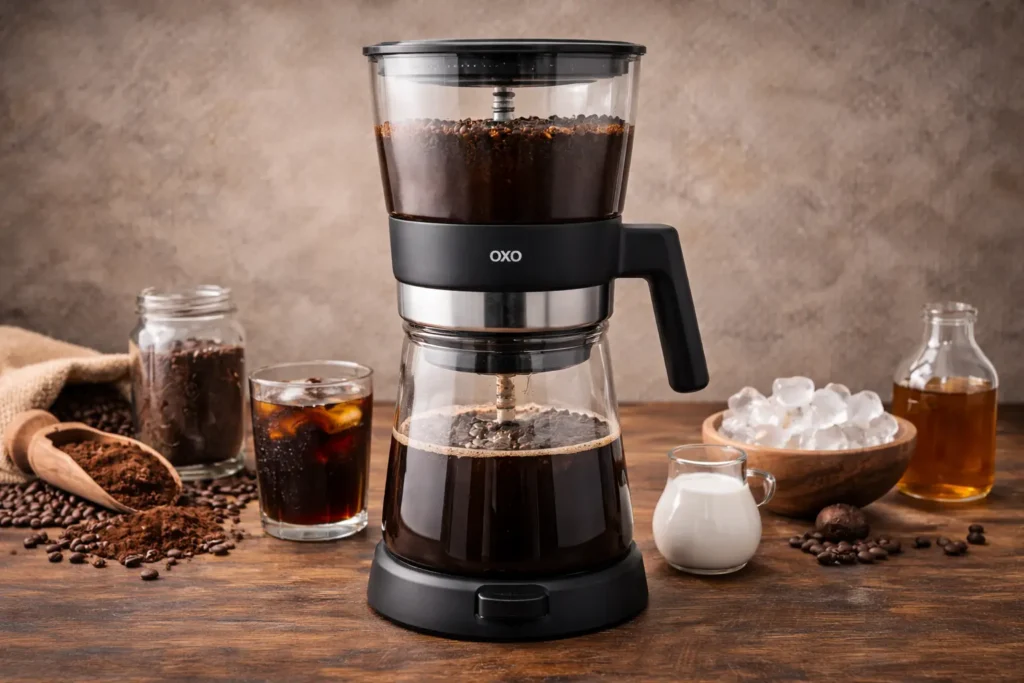
OXO Conical Burr Grinder
Best for: drip/pour-over/cold brew with minimal fuss.
- Simple adjustments
- Consistent daily cups
- Good value electric option
Download: Robusta Brewing Ratio Charts (Printable)
Robusta Brewing Ratio Charts (PDF)
FAQs
Quick answers to the most common Robusta questions—plus links to deeper CoffeeGearHub brewing guides.
How do I brew Robusta coffee without bitterness?
Lower brew temperature to 195–200°F and use a slightly coarser grind than you would for Arabica. Avoid long contact times and aggressive agitation. For espresso, follow the workflow in How to Dial In Coffee at Home and consider pre-infusion to reduce channeling.
What is the best espresso ratio for Robusta beans?
Start with 18g in and 36g out (1:2 ratio) in 25–30 seconds at 195–200°F. If harsh, coarsen slightly or taper earlier (if you have profiling). If thin or inconsistent, use the diagnostics in the Espresso Troubleshooting Guide.
Is Robusta better for cold brew concentrate?
Robusta is excellent for cold brew because it’s typically lower in perceived acidity and high in caffeine. Use a 1:5 concentrate ratio with coarse grind for 16–18 hours, then dilute to taste. See the full method in the Cold Brew Coffee Guide.
What grind size works best for Vietnamese phin coffee?
Use a medium-coarse grind and target a 4–6 minute drip. Faster means too coarse; slower means too fine or too much press plate pressure. For grind/extraction fundamentals, reference the Dial In Coffee at Home guide.
Should I use lower espresso temperature for Robusta blends?
Often yes. Many Robusta-forward blends taste smoother around 195–200°F compared with hotter temps that amplify bitterness. Temperature is one of the main extraction levers covered in How to Dial In Coffee at Home.
Why does Robusta produce thicker crema in espresso?
Robusta commonly contributes to more persistent crema and heavier body, which is why it’s traditionally used in espresso blends—especially for milk drinks. If you’re chasing smoother crema with less harshness, learn profiling basics in Flow Control Espresso Machines.
How much Robusta should I add to an espresso blend?
A common range is 10–30% Robusta. Start at 10–15% to boost crema/body while staying smooth, then increase if you want more intensity. If bitterness rises, follow the fixes in the Espresso Troubleshooting Guide.
Does pressure profiling help Robusta taste smoother?
Yes. Pre-infusion plus lower peak pressure (around 6–8 bar) can reduce early channeling and aggressive extraction, often producing a smoother, more chocolate-forward shot. See Flow Control Espresso Machines: Are They Worth It?.
What roast level is best for Robusta espresso?
Medium-dark is often the best balance for espresso: strong chocolate body without the ashy flavors that can dominate very dark roasts. For bean/roast selection fundamentals, use the Coffee Bean Buying Guide.
Is Fine Robusta worth buying for home brewing?
If you like bold coffee, milk drinks, or high-caffeine brews, Fine Robusta can be worth it because it’s typically cleaner and more chocolate-forward than commodity Robusta. Learn how processing impacts flavor in the Coffee Bean Buying Guide.
Next Reads
| Dial In Coffee at Home Grind, ratio, time, temp—your core framework. | Espresso Troubleshooting Fix bitterness, channeling, weak shots, fast flow. | Flow Control Espresso Pressure profiling basics + smoother extraction. | Cold Brew Guide Ratios + concentrate dialing for bold beans. | Coffee Bean Buying Guide Roast, freshness, processing—choose better beans. |