
Last updated: February 2026 • 22 min read
Quick takeaway: Coffee is mostly water. If your water tastes like chlorine, is extremely hard, or is too soft (distilled/RO only), your coffee can taste flat, harsh, or thin—even with great beans. This guide gives you a quick start, simple tests, practical targets, and the easiest fixes for drip, pour-over, and espresso.
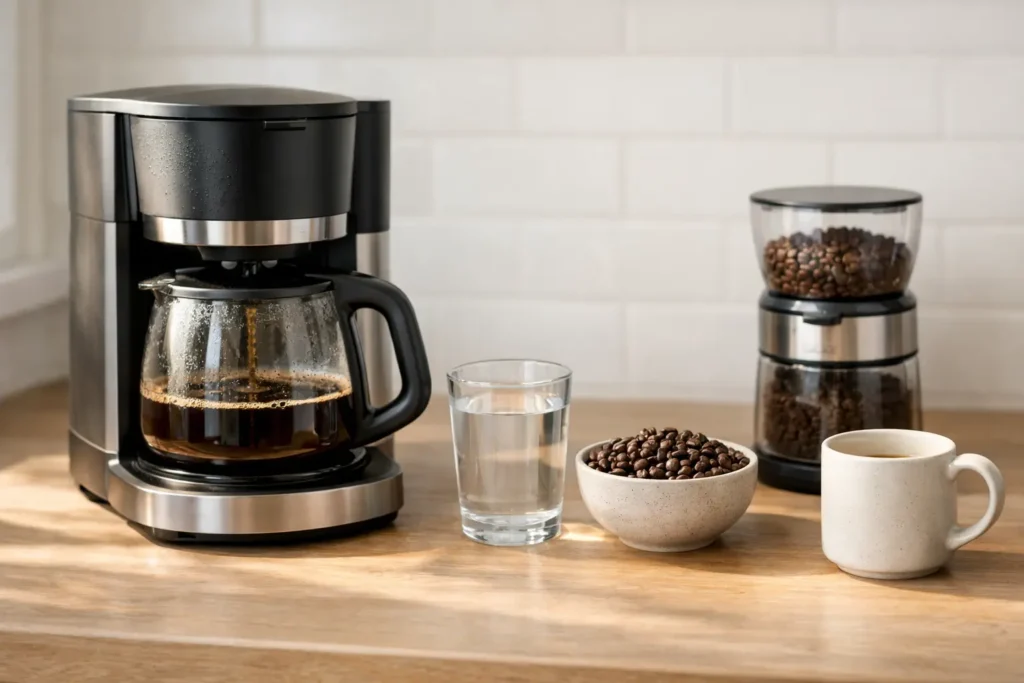
This guide focuses on practical home-brewing results—not lab chemistry—based on real-world drip, pour-over, and espresso setups.
Key Takeaways
- If water tastes bad on its own, coffee will taste bad too. Fix taste first (usually with basic charcoal filtration).
- Avoid distilled/RO water by itself. Coffee often tastes thin/sour without minerals—remineralize if you use RO.
- Hard water = scale + inconsistent flavor over time. If you see white crust in kettles, your brewer likely needs protection.
- Prove it: keep beans/grind/ratio the same for 3 days, then change only water.
If you’re building consistency across your whole brew routine, pair this guide with Drip Coffee Ratio (Simple Chart + Fixes) and Grind Size Explained. Water changes are easiest to taste when the recipe stays steady.
Water Quick Start (Best Results With Minimal Effort)
If you want noticeably better coffee without obsessing over numbers, do these three steps first. This works for most drip machines, pour-over setups, and beginner espresso workflows.
1) Make sure water tastes clean
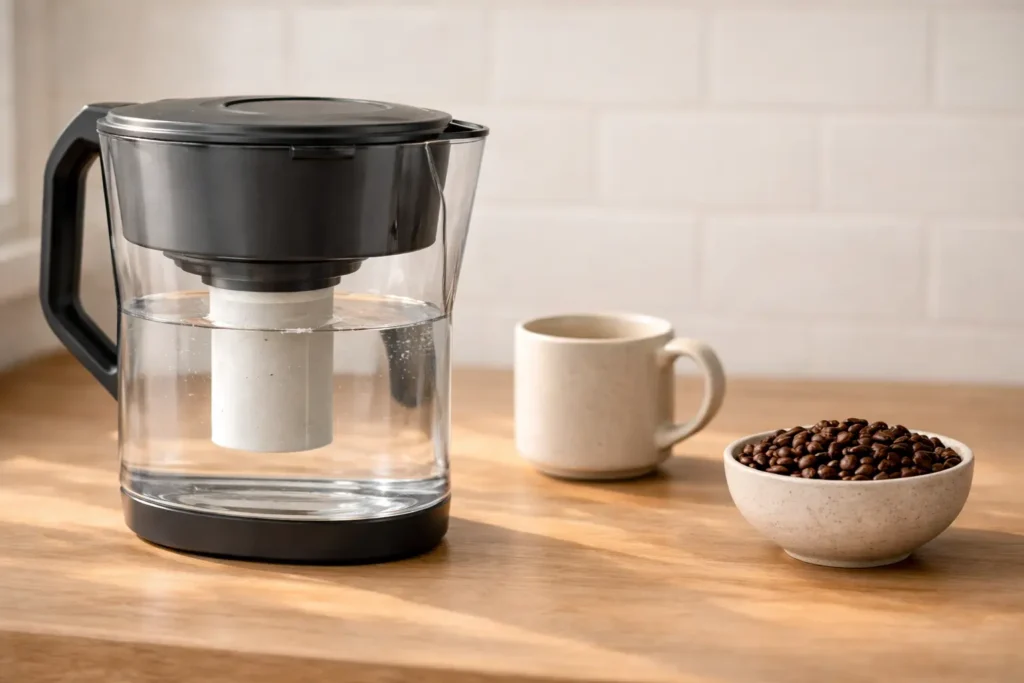
If your water smells/tastes like chlorine or “pool water,” your coffee will taste muted and harsh. Start with basic charcoal filtration (pitcher, faucet, or inline).
- What you’ll notice: more sweetness, less “paper” taste
- Best for: drip, pour-over, and espresso
2) Avoid distilled/RO water by itself
Coffee needs some minerals to extract sweetness and body. Distilled/RO alone often makes coffee taste thin or sour. If you use RO, consider remineralizing.
- What you’ll notice: better body + fewer “sharp” cups
- Best for: espresso stability and clear drip flavor
3) Hard water? Protect your brewer
If you see white crust in kettles/faucets, scale will build inside machines over time—hurting flavor consistency and shortening brewer life.
- What you’ll notice: fewer “random bitter days” as scale grows
- Best for: drip machines, kettles, and espresso boilers
Best “proof” test: Brew your normal recipe for 3 days (same beans, grind, ratio), then change only your water for the next 3 days. If you’re using drip, start with 1:16 and keep it unchanged for the test.
Good Water Basics (No Chemistry Degree Required)
“Good coffee water” is balanced water: clean tasting, not too hard, not too soft. These are the three knobs that matter most and what they do in real life.
Chlorine / chloramine
These disinfectants are common in municipal water. If you can smell them in a glass of water, you’ll usually taste them in coffee too.
- In coffee: dull sweetness, papery finish, harsh edges
- Fix: charcoal filtration
Hardness (minerals)
Minerals help extraction. Too little can taste thin. Too much can increase harshness and create scale buildup.
- Too soft: thin, sour, hollow cups
- Too hard: chalky bitterness + more scale over time
Alkalinity (buffering)
Alkalinity moderates acidity. Too low can taste sharp. Too high can taste dull and “muddy.”
- Low: bright but sometimes harsh
- High: muted, dull, heavy cups
Beginner-Friendly Targets (Practical)
You don’t need perfect numbers. You’re mainly trying to avoid extremes. Use these targets as a “good enough” zone for home brewing.
| What to check | Beginner-friendly target | Why it helps |
|---|---|---|
| TDS | ~75–150 ppm | Supports balanced extraction |
| Hardness | ~40–70 ppm | Body/sweetness without heavy scale risk |
| Alkalinity | ~30–50 ppm | Smoother acidity and more consistent flavor |
Test Your Water (Taste + Simple Tools)
You’re looking for extremes. If your water is “normal,” filtration + consistency is usually enough. If it’s extreme, you’ll want a targeted fix.
- Taste test: If water tastes bad alone, coffee will taste bad too.
- Scale clues: White crust in kettles/faucets = hard-water risk.
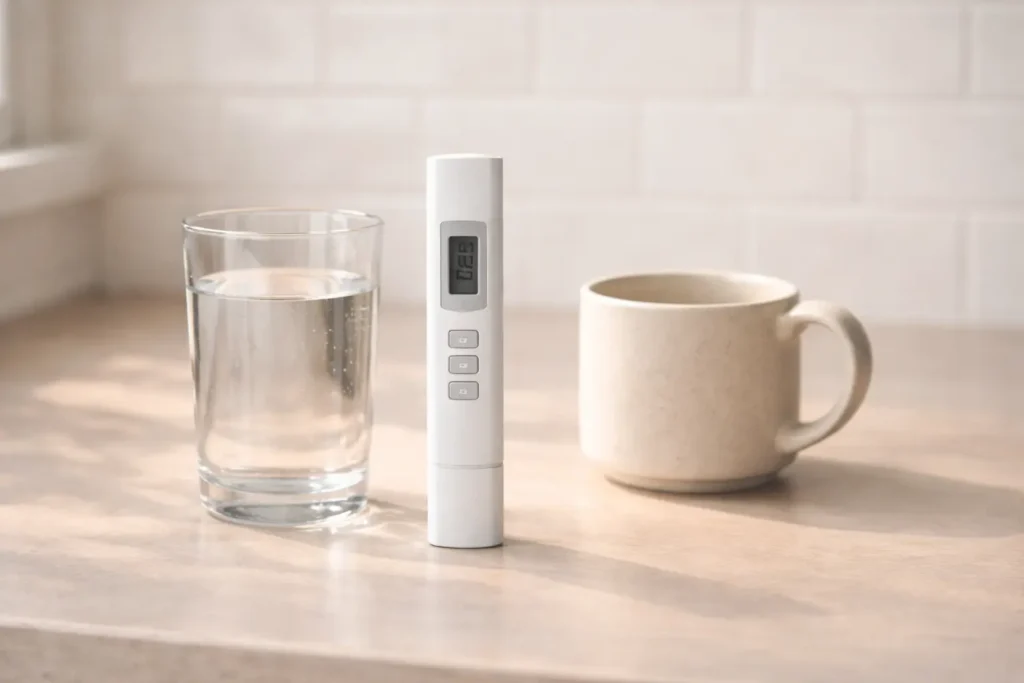
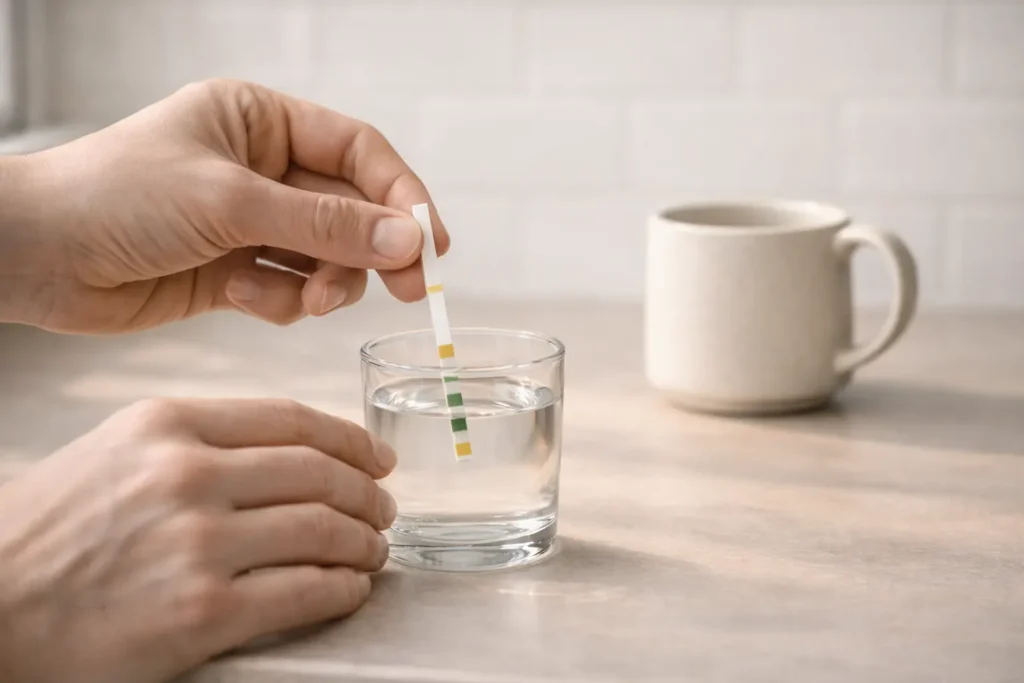
- Optional tools: TDS meter or test strips can confirm “very soft” vs “very hard.”
Diagnose by Taste (Quick Grid)
| Taste problem | Water might be… | Best first fix |
|---|---|---|
| Flat / muted | Chlorinated or inconsistent | Charcoal filter + same water source daily |
| Harsh / chalky bitterness | Very hard | Hardness-reducing filter + descale schedule |
| Thin + sour | Too soft / RO / distilled only | Remineralize RO/distilled water |
| Changes day to day | Variable tap blending | Use filtered water consistently |
Important: If you’re troubleshooting taste, change one variable at a time. For most home brewers, the order is: water taste → ratio → grind size → beans. Use Common Drip Coffee Mistakes if your results still feel inconsistent.
Fix Your Water (Pick the Right Path)
Choose the simplest fix that solves your problem. Most people only need one change to see a clear improvement in taste.
Water Options Compared
| Water option | Best for | Pros / cons |
|---|---|---|
| Filtered tap | Most drip + pour-over homes | Pros: Easy, affordable, big flavor jump Cons: May not reduce hardness enough |
| Bottled spring | Quick baseline test | Pros: Sometimes consistent Cons: Minerals vary; cost adds up |
| RO/distilled only | Avoid as daily coffee water | Pros: Low scale risk Cons: Often thin/sour extraction |
| RO + minerals | Maximum consistency | Pros: Repeatable flavor + machine protection Cons: Extra step |
How to pick fast: If your water tastes chlorinated, start with filtration. If you have scale buildup, focus on hardness reduction and a routine clean (see How to Descale an Espresso Machine). If you use RO/distilled, remineralize for better extraction and body.
FAQs
Does water quality really make that much difference in coffee?
Yes. Brewed coffee is about 98–99% water, so chlorine, extreme hardness, or very soft water can quickly make coffee taste flat, harsh, or thin even with great beans.
What kind of water is best for everyday home brewing?
For most people, clean-tasting filtered tap water works best: it removes chlorine but usually keeps enough minerals for good extraction and reasonable machine protection.
Why does very soft, distilled, or RO water make coffee taste weak or sour?
Very low‑mineral water (low TDS) struggles to pull flavor compounds from the grounds, which often leads to thin body and sharp, under‑extracted flavors.
How can I tell if my water is too hard for my coffee maker?
Visible white scale in kettles or on faucets is a strong sign of hard water, which increases limescale in machines and can push coffee toward chalky, bitter cups over time.
What simple tools can I use to check my water for coffee?
A basic TDS meter and inexpensive hardness/alkalinity test strips can quickly show if your water is very soft, very hard, or somewhere in the middle.
What is a good starting range for TDS, hardness, and alkalinity?
Many coffee pros aim roughly for TDS around 75–150 ppm, hardness near 50–80 ppm, and alkalinity around 30–50 ppm for balanced extraction and manageable scale
Is bottled water better than tap water for coffee?
Sometimes. Some spring waters land in a good mineral range, but others are too soft or too hard, so filtered tap water is usually the most cost‑effective first upgrade.
What is the easiest first step to improve my coffee water at home?
Start with a charcoal filter (pitcher or faucet) so your water tastes clean, then keep using the same filtered source consistently while you dial in your brew ratio and grind.