
Percolator vs Moka Pot (2026): Taste, Strength, Batch Size, and Which to Buy
Quick answer
Percolator or moka pot?
The difference in one line: a moka pot pushes water through the coffee once; a percolator cycles boiling water over it again and again. That is why moka coffee is stronger and sweeter, and percolator coffee is larger-batch and easier to over-brew.
As an Amazon Associate, CoffeeGearHub earns from qualifying purchases.
Editorial standards: this comparison draws on manufacturer instructions, established brewing principles, and independent owner and reviewer reports. CoffeeGearHub does not claim hands-on testing where it has not occurred.
At a glance
What this comparison covers
How a percolator and a moka pot each work, how the coffee differs in taste and strength, batch size, grind, brew time, camping use, induction compatibility, how to avoid bitterness with each, and which one to buy.
Editorial analysis
Two stovetop pots that make very different coffee
Percolators and moka pots both sit on a burner, both have a lower water chamber, and both get called “stovetop coffee makers,” so people mix them up. But they brew in opposite ways. A moka pot makes one pass of hot water through finely ground coffee; a percolator keeps recirculating near-boiling coffee through coarse grounds.
That single difference drives everything else: strength, flavor, batch size, and how easy each is to get wrong. Choose a moka pot for a small, strong, espresso-style cup, and a percolator for a big pot of regular coffee for a group.
The 30-Second Answer
A moka pot pushes hot water up through finely ground coffee once, making a small amount of strong, espresso-style coffee. A stovetop percolator cycles boiling water over coarse grounds repeatedly, making a large batch of mug-strength coffee that turns bitter if it perks too long.
Choose a moka pot for one to three people who like strong coffee or lattes. Choose a percolator for groups, camping, or anyone who wants many mugs of regular coffee from the stove.
How a Moka Pot Works
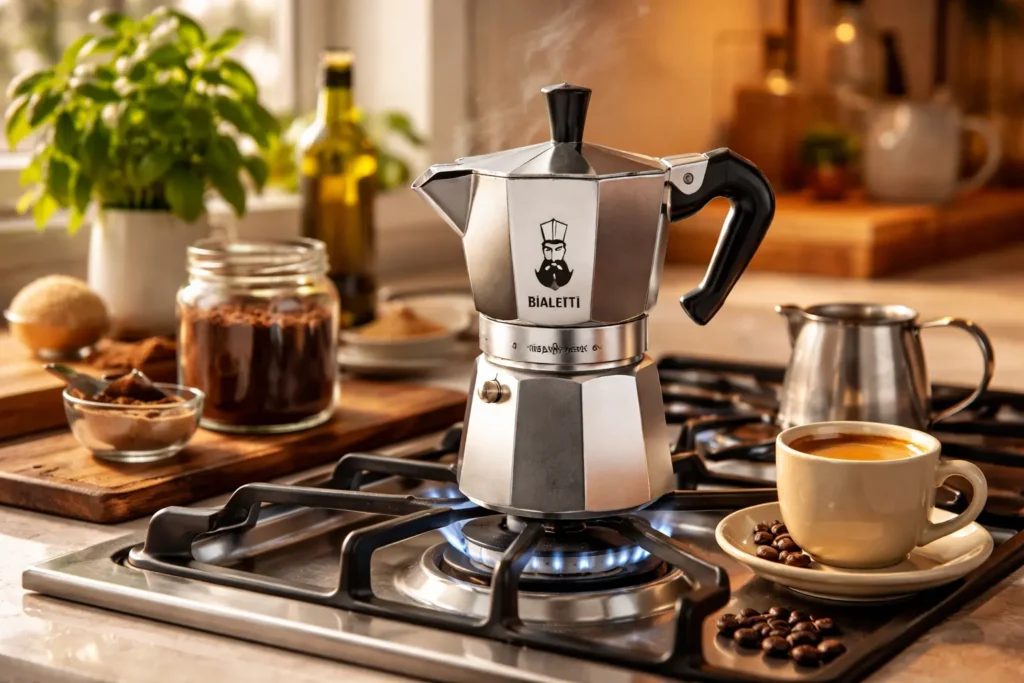
A moka pot heats water in its base until steam pressure, about 1 to 2 bar, pushes it up through a basket of medium-fine coffee and into the top chamber. Each drop of water passes through the coffee once. The result is a strong, concentrated coffee, roughly between drip and espresso. Our how to use a moka pot guide walks through the method.
How a Percolator Works
A percolator has a water pot, a central tube, and a perforated basket of coffee near the top. As the water heats, it is forced up the tube and splashes over the grounds, then drips back down into the pot. That brewed liquid is heated and pushed up again, so the coffee passes through the grounds many times. You watch the glass knob on the lid darken and stop when the coffee reaches the strength you want, usually after about 5 to 10 minutes of gentle perking.
Percolator vs Moka Pot Compared
| Moka pot | Stovetop percolator | |
|---|---|---|
| How water meets coffee | One pass, pushed by steam pressure | Recirculates many times |
| Coffee style | Strong, concentrated, espresso-style | Mug-strength, like strong drip |
| Typical batch | About 40–480 ml depending on size | Often 4–12 mugs |
| Grind | Medium-fine | Coarse |
| Brew time | About 4–6 minutes | About 5–10 minutes of perking |
| Main risk | Bitter if heat is too high | Bitter if it perks too long or boils hard |
| Best for | 1–3 people, lattes, strong coffee | Groups, camping, regular mugs |
Moka batch sizes follow our moka pot size guide.
Taste and Strength
Moka pot coffee is rich, heavy-bodied, and concentrated, with chocolate and caramel notes when brewed gently. It is strong enough to drink in small cups or to stretch with milk or hot water. Percolator coffee is closer to strong drip coffee in strength, with a bold, roasty character. Because the coffee keeps passing through the grounds at near-boiling temperature, percolators over-extract easily, which is why many people associate them with bitter coffee. Gentle heat and stopping on time make a big difference.
Batch Size and Who Each Suits
Moka pots are sized in small espresso-style cups, so even a 6-cup moka pot makes only about one mug’s worth. That suits one to three people. Percolators are sized in mug-like cups and often make 8 to 12 at a time, which suits families, offices, and camp groups. If you regularly brew for a crowd, a percolator is far more practical than several moka pot runs.
Grind and Coffee
The two need opposite grinds. A moka pot needs medium-fine coffee, about like table salt. A percolator needs coarse coffee, like French press, because fine grounds pass through the basket holes into the pot and over-extract. A hand grinder such as the KINGrinder K6 covers both settings; see our K6 grind settings chart. For beans and pre-ground picks, see best coffee for moka pot.
Camping and Outdoor Use
Percolators are a campfire classic: stainless and enamel models tolerate uneven heat, have no gaskets to wear out, and serve the whole campsite at once. A moka pot is lighter and packs smaller, which suits backpackers who want a strong cup for one or two. If you camp alone and want the lightest kit, an AeroPress Go is another option.
Induction Compatibility
Neither type works on induction unless the base is magnetic. Many percolators are stainless steel and work on induction, but aluminum and some enamelware models do not. Classic aluminum moka pots also need an induction-ready model or an adapter disc. Test the base with a magnet before buying; our best induction moka pots guide covers moka options.
How to Avoid Bitter Coffee in Each
Moka pot
Start with hot water in the base, use medium-low heat, never tamp the coffee, and take the pot off as soon as the stream turns pale and sputters. Cool the base under cold water to stop the brew. Our moka pot troubleshooting guide covers more fixes.
Percolator
Use a coarse grind, bring the water up on medium heat, then lower it so the coffee perks gently every few seconds rather than boiling hard. Stop after about 5 to 8 minutes, or as soon as the color in the knob looks right, and remove the basket so the grounds stop steeping.
Our Recommendation
Buy a moka pot if you want strong, espresso-style coffee or lattes for one to three people; the Bialetti Moka Express is the classic choice, and our best moka pots guide covers the alternatives. Buy a stainless steel stovetop percolator if you regularly make a big pot of regular coffee for a household or a campsite.
Choose Your Stovetop Brewer
Moka pot for strong small cups; percolator for big batches.
As an Amazon Associate, CoffeeGearHub earns from qualifying purchases.
Frequently Asked Questions
Is a moka pot a percolator?
No, although both are stovetop brewers and moka pots are sometimes called Italian percolators. A moka pot pushes water through the coffee once using steam pressure. A percolator cycles boiling water over the grounds again and again until you take it off the heat.
Which makes stronger coffee, a percolator or a moka pot?
A moka pot makes a stronger, more concentrated coffee, closer to espresso. A percolator makes a mug-strength coffee whose strength depends on how long it perks; longer perking makes it stronger but also more bitter.
Why does percolator coffee taste bitter?
Percolators keep recirculating near-boiling coffee through the grounds, which over-extracts them. Use a coarse grind, keep the heat low enough for a gentle perk rather than a rolling boil, and stop after about 5 to 8 minutes.
What grind should I use in a percolator?
Coarse, similar to French press. Fine grounds slip through the basket holes into the coffee and over-extract. A moka pot needs a medium-fine grind instead.
Is a percolator or moka pot better for camping?
A percolator suits groups because it brews many mug-size cups in one batch and tolerates rough heat. A moka pot is lighter and better for one or two people who like strong coffee.
Can I use a percolator on induction?
Only if it has a magnetic stainless-steel base. Aluminum and enamelware percolators may not work. Check for the induction symbol or test the base with a magnet.
Sources and Further Reading
Brewing descriptions follow Bialetti’s published moka instructions, percolator manufacturers’ instructions, and the Specialty Coffee Association’s brewing standards. Times and batch sizes are typical ranges that vary by model. CoffeeGearHub did not test these brewers hands-on.