
Last Updated: March 2026 • 35–55 min read • CoffeeGearHub Brewing Reviews
✍️ Editorial note: This guide is researched and written by the editors at CoffeeGearHub.com using published brewing science, manufacturer guidance, and established specialty-coffee community knowledge. All product links are affiliate links — we may earn a commission at no cost to you.
The 30-Second Answer
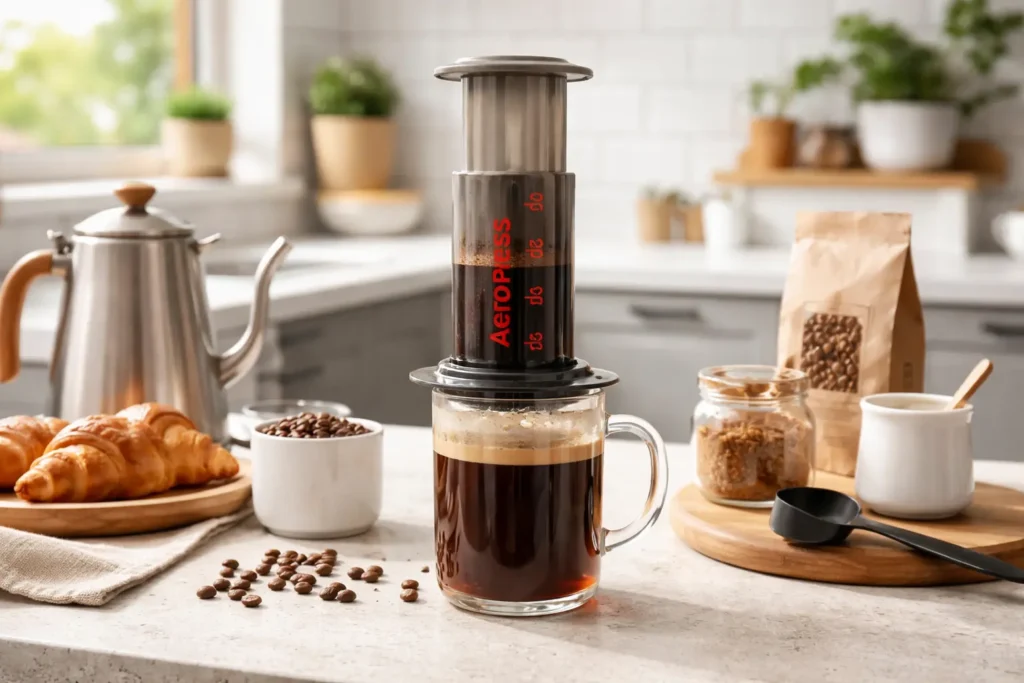
CoffeeGearHub Verdict The AeroPress is one of the best-value brewers you can buy. It’s fast, forgiving, easy to clean, and capable of multiple styles — clean and bright, rich and syrupy, espresso-style concentrates, and crisp iced coffee — with simple adjustments to grind, temperature, agitation, and filter type.
- Best for: people who want great coffee fast with minimal mess, plus flexibility to brew different strengths and styles
- Biggest quality upgrade: a burr grinder — most “bad AeroPress” is inconsistent grind, not the recipe
- Overall rating: 9.3/10 for versatility, speed, and value for home brewing
Who This Guide Is For — Jump to What You Need
☕ Just bought an AeroPress
Start with What Is the AeroPress, then go straight to Recipe 1.
🥛 Want lattes or iced drinks
Jump to Espresso-Style Concentrate or Flash Brew.
🔧 Fixing a bad cup
Go straight to Troubleshooting or the Dial-In Guide.
🎒 Buying gear
See Which AeroPress to Buy and Gear Recommendations.
Table of Contents
AeroPress Review Summary (What You’re Really Buying)
The AeroPress isn’t just a gadget — it’s a brewing system. The combination of immersion + filtration + a gentle press means you can make coffee that sits in the sweet spot between pour-over clarity and immersion sweetness. That flexibility is the core value: you can brew a clean cup in the morning, a concentrate for a latte at lunch, and an iced flash brew in the afternoon without changing equipment.
It’s also one of the best brewers for learning how coffee works. Because changes to grind size, temperature, brew time, and agitation produce obvious differences in flavor, the AeroPress is a great dial-in trainer — especially when paired with a burr grinder and a scale.
Bottom line: If you brew mostly one cup at a time and want better coffee with less cleanup than many manual brewers, the AeroPress is hard to beat at its price point.
What Is the AeroPress?
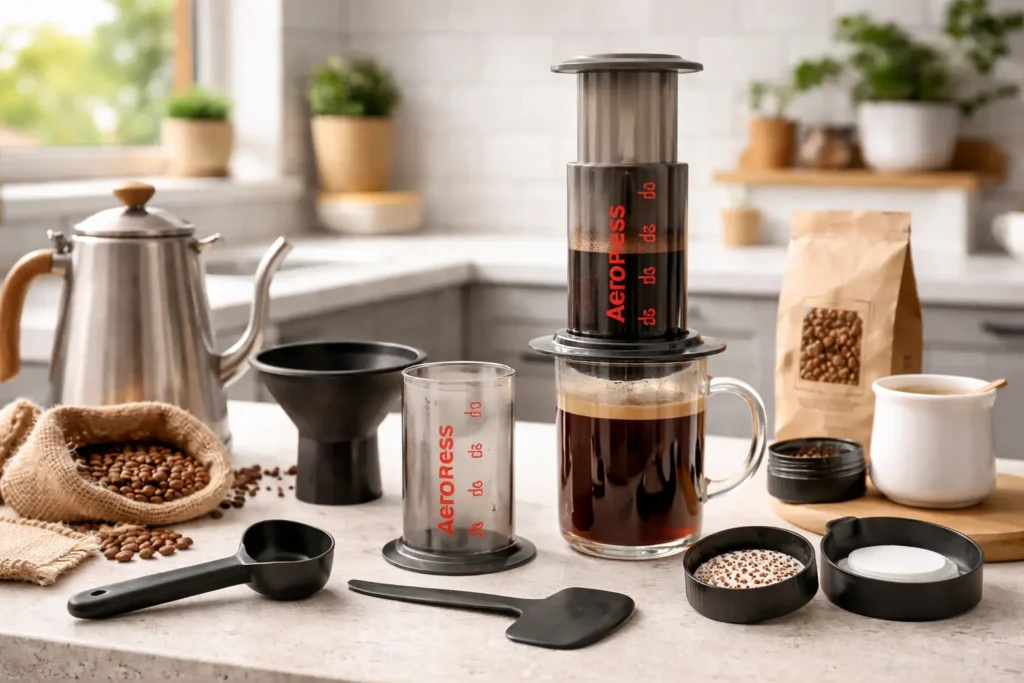
The AeroPress is a compact manual coffee maker made of a brewing chamber and a plunger. You add coffee and hot water, let it steep briefly (immersion), then press the plunger to push brewed coffee through a filter into your cup. The filter can be paper for a clean, crisp cup or metal for a richer, oilier texture.
Unlike espresso machines, the AeroPress does not generate true espresso pressure. But because you can brew at high coffee-to-water ratios and press through a filter, you can make an espresso-style concentrate that works exceptionally well for milk drinks and iced lattes.
Which AeroPress to Buy: Original vs Clear vs Go
AeroPress currently sells three versions. All use the same brewing chamber diameter and produce the same quality of coffee — the differences are material, size, and what’s included.
| Model | Material | Max volume | What’s included | Best for | |
|---|---|---|---|---|---|
| AeroPress Original | Black BPA-free plastic | ~250g (1–3 cups) | 350 paper filters, stirrer, funnel, scoop | Home daily use — best value | Check Price → |
| AeroPress Clear | Tritan clear plastic | ~250g (1–3 cups) | Same as Original | Those who want to watch the brew or a cleaner aesthetic | Check Price → |
| AeroPress Go | BPA-free plastic + travel mug | ~220g (1–2 cups) | Travel mug lid, stirrer, scoop, 350 filters | Travel, camping, office, AeroPress Go setups | Check Price → |
💡 Recommendation: Start with the Original. The Clear costs more for aesthetics only. The Go is worth the small premium if you travel or commute — the built-in travel mug is genuinely useful. All three use the same recipes and grind targets in this guide.
AeroPress vs Other Brewers
If you’re deciding between brewing methods, this comparison covers the five most common alternatives. AeroPress occupies a genuinely unique position: faster cleanup than most, more style flexibility than any single method, and a lower price than most espresso alternatives.
| Brewer | Cleanup | Cup body | Brew speed | Serves groups? | Price range | Best for |
|---|---|---|---|---|---|---|
| AeroPress | ⭐⭐⭐⭐⭐ (30s) | Medium–High | 1–3 min | 1–2 cups per brew | $ | Versatility, travel, single-serve |
| French Press | ⭐⭐⭐ | High (oils) | 4–5 min | 2–4 cups | $ | Full body, low-fuss brewing |
| Pour-Over (V60/Chemex) | ⭐⭐⭐⭐ | Low–Medium | 3–4 min | 1–4 cups | $–$$ | Clarity, aromatics, light roasts |
| Moka Pot | ⭐⭐⭐ | Very High | 5–8 min | 2–6 cups | $ | Strong stovetop concentrate |
| Drip Machine | ⭐⭐⭐⭐ | Medium | 5–10 min | 4–12 cups | $$–$$$ | Households, convenience, batches |
| Espresso Machine | ⭐⭐ | Very High + crema | 30s (+ heat-up) | 1–2 shots | $$$$ | True espresso, crema, milk drinks |
Who It’s Best For (And Who Should Skip It)
✅ Buy it if…
- You want excellent coffee fast (typically 1–3 minutes)
- You drink 1–2 cups at a time and value minimal cleanup
- You like experimenting with strength and style (clean, rich, concentrate, iced)
- You travel, camp, or want an office brewer that’s compact and durable
- You want latte-style drinks without buying a full espresso machine
❌ Skip it if…
- You regularly brew for 3–4 people and want one batch (a drip machine fits better)
- You want true espresso workflow and crema (9-bar pressure)
- You prefer fully automated brewing with no manual steps
Pros & Cons (Real-World)
Pros
- Versatility: can mimic multiple brew styles by changing parameters
- Speed: quick brew cycles, excellent for busy mornings
- Cleanup: “puck pop” into trash/compost, rinse and done
- Consistency potential: extremely repeatable with a scale and burr grinder
- Travel-friendly: compact, durable, and easy to pack
Cons
- Single-serve output: you may need multiple rounds for groups
- Inverted method: adds spill risk if rushed or overfilled
- Grind sensitivity: cheap grinders create sour/bitter confusion
- Not true espresso: concentrates are excellent, but it’s not a 9-bar machine
Performance Scorecard
| Category | Score | Why |
|---|---|---|
| Ease of Use | 9.5/10 | Simple steps, forgiving recipes, fast cleanup |
| Flavor Versatility | 10/10 | Clean cups, rich cups, concentrates, iced — all in one tool |
| Consistency Potential | 9/10 | Extremely repeatable with scale + burr grinder |
| Speed | 9/10 | Most brews in 1–3 minutes (plus boiling water time) |
| Best for Groups | 6.5/10 | Single-serve design; multiple rounds required |
| Overall | 9.3/10 | One of the strongest value buys in coffee gear |
How AeroPress Brewing Works
AeroPress brewing is mostly immersion: water contacts the coffee grounds directly, dissolving flavor compounds. The press then pushes the brewed coffee through a filter, separating liquid from grounds and stopping extraction quickly. This is why AeroPress is both forgiving and controllable: you can get a good cup quickly, but you can also fine-tune with small changes.
AeroPress coffee is shaped by five levers. If you understand these, you can fix almost any cup:
- Grind size: finer extracts faster and more; coarser extracts slower and less
- Water temperature: hotter increases extraction and intensity; cooler reduces harshness
- Time: longer steep generally increases extraction (until harshness appears)
- Agitation: stirring/swirl accelerates extraction; too much can push bitterness
- Filter type: paper clarifies; metal increases body and oils
Extraction Science You Can Use (Without the Headache)
Most coffee taste problems come down to extraction balance. In simple terms:
Under-extraction tastes sour, sharp, or thin.
Over-extraction tastes bitter, dry, or harsh.
Low concentration tastes weak or watery (even if extraction is fine).
The AeroPress is powerful because you can correct each of those issues quickly. If a cup is sour, grind a bit finer or steep a bit longer. If bitter/dry, grind a bit coarser or reduce time/agitation. If weak, increase dose or brew a concentrate and dilute after pressing.
Pro tip: Don’t change five variables at once. Start with grind size, then adjust one variable per brew. Two brews is usually enough to find your sweet spot.
AeroPress Workflow (How to Get Repeatable Results)
The biggest difference between “random good cups” and “consistently great cups” is workflow. Here’s a repeatable process you can use every day:
Step 1: Pick a target style
Clean cup? Rich cup? Milk drink? Iced? Choose the recipe that matches the goal (see recipe section).
Step 2: Use a scale
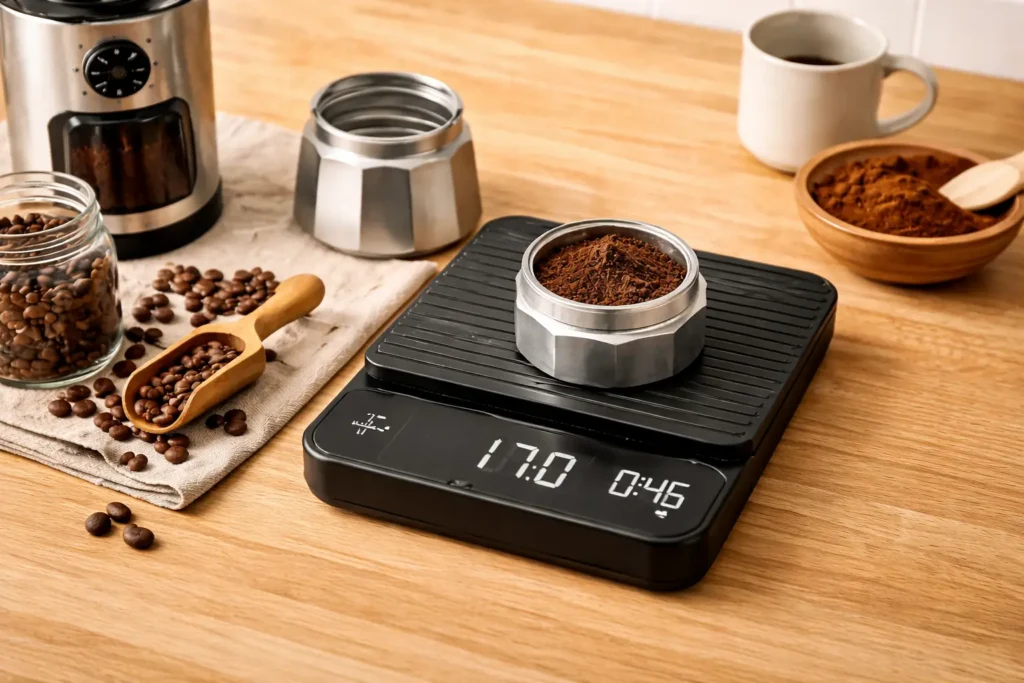
Dose and water weight are the backbone of repeatability. “Eyeballing” is fine for learning, but a scale makes dial-in fast. Look for 0.1g resolution and a built-in timer.
A Coffee-Capable Digital Scale
You can’t reliably dial in AeroPress without weighing dose and water. A scale with 0.1g resolution and a timer eliminates the two biggest sources of inconsistency in one purchase.
Pick this if: you’re dialing in for the first time and want your grind adjustments to show up clearly.
Disclosure: CoffeeGearHub may earn from qualifying purchases.
Step 3: Control grind consistency
A burr grinder reduces “dust + boulders,” which is the #1 cause of sour/bitter confusion. If your cups feel unpredictable, this is usually why.
Step 4: Press consistently
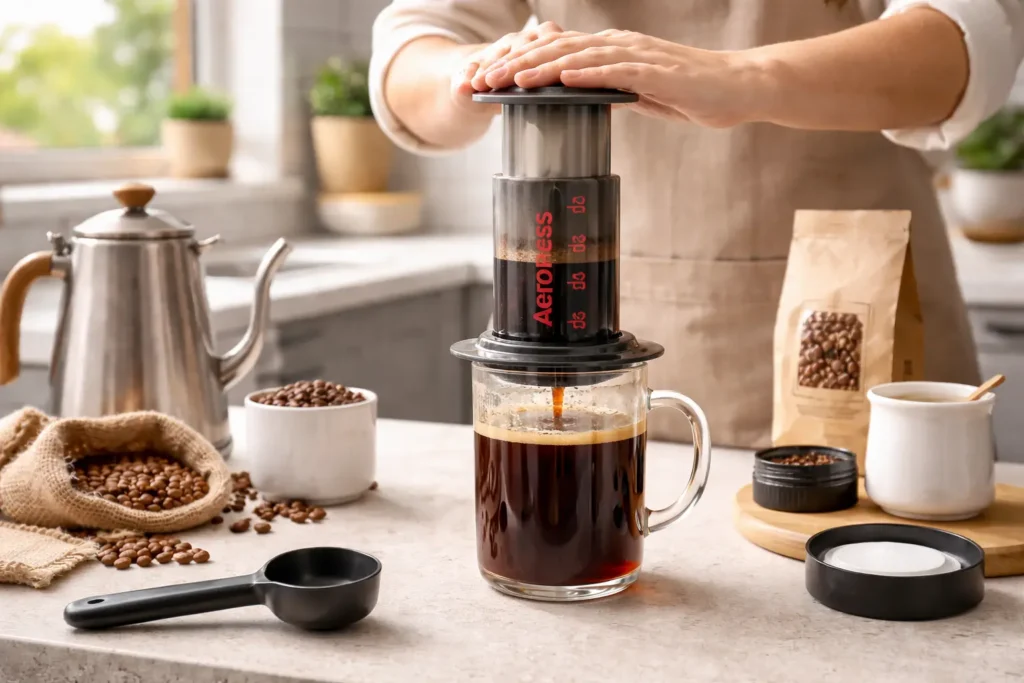
Most full-cup recipes like a 20–30 second press. Pressing extremely slowly can over-extract and add bitterness, especially with fine grinds.
Best AeroPress Recipes
These five recipes cover the highest-intent user goals: a balanced daily cup, a richer full-body cup, a concentrate for milk drinks, iced coffee, and a light-roast clarity recipe. Each includes a “why it works” explanation and the fastest dial-in adjustments.
🔑 Recipe rule: When dialing in, change grind first. If the cup is sour, go slightly finer. If bitter/dry, go slightly coarser. Adjust temperature/time only after grind is close.
Recipe 1: Classic Balanced (Daily Driver)
Best for: daily driver, medium roast, beginners, clean and balanced cups
What it tastes like: clean, sweet, balanced, with medium body and a clear finish. The best starting point for most coffees and most people.
| Coffee | 15g | Water | 250g |
| Temp | 200°F / 93°C | Grind | Medium-fine (table salt) |
| Total time | ~2:00 | Filter | Paper |
Step-by-step
- Rinse a paper filter in the cap (reduces paper taste and warms the brewer)
- Set AeroPress on your mug and add 15g coffee
- Start timer. Add 50g water and bloom for 30 seconds
- Add remaining water to reach 250g
- Stir gently 5–8 times (or swirl once)
- At 1:30, insert plunger and press steadily; finish around 2:00
Why it works
This recipe balances extraction and concentration. The bloom reduces channeling and improves sweetness. Medium-fine grind extracts efficiently in a short immersion window, and paper filtration keeps the cup clean — especially helpful if your grinder produces some fines.
Fast dial-in: Sour/thin → grind slightly finer OR steep +10–15s. Bitter/dry → grind slightly coarser and stir less. Weak → increase dose to 16–17g or reduce water to ~230g.
Recipe 2: Inverted Rich (More Body + Sweetness)
Best for: heavier body, extra sweetness, when classic feels too thin or clean
What it tastes like: rounder, richer, heavier mouthfeel with more perceived sweetness. The inverted method prevents early drip-through, creating a true immersion steep.
⚠️ Safety note: Flip carefully and don’t overfill. Use a stable mug, keep hands dry, and flip calmly.
| Coffee | 18g | Water | 220g |
| Temp | 195–200°F | Grind | Medium (sand / kosher salt) |
| Total time | ~2:30 | Filter | Paper or metal |
Step-by-step
- Insert plunger about 1 cm and stand the AeroPress upside down on a stable surface
- Add 18g coffee
- Start timer. Add water to 220g and stir 8–10 times
- Attach cap with rinsed filter, then steep until 1:45–2:00
- Flip onto mug carefully and press steadily; finish by ~2:30
Why it works
The stronger ratio increases intensity and body. The longer immersion supports sweetness. Using a metal filter enhances “thickness,” while paper keeps the richness without adding too many fines.
Fast dial-in: Too bitter → reduce agitation (fewer stirs) or lower temp to ~190°F. Slightly sour → grind a touch finer or steep +10–15s. Too heavy/muddy → switch to paper filter and grind slightly coarser.
Recipe 3: Espresso-Style Concentrate (Best for Lattes + Iced Drinks)
Best for: lattes, iced lattes, Americano-style drinks, anyone without an espresso machine
What it tastes like: strong, syrupy concentrate with a bold finish. It won’t match espresso pressure, but it’s excellent in milk, over ice, or diluted into an Americano-style cup.
| Coffee | 20g | Water | 70g |
| Temp | 200–205°F | Grind | Fine (fine sand, not powder) |
| Total time | 0:45–1:15 | Filter | Paper (clean) or metal (body) |
Step-by-step
- Rinse filter (paper) or pre-wet metal filter if using one
- Add 20g coffee
- Pour 70g water, stir aggressively for 10–15 seconds
- Press smoothly; avoid pressing extremely slowly (harshness risk)
Build your drink
- Americano: add 120–180g hot water to taste
- Latte-style: add 150–220g warm/foamed milk
- Iced latte: pour concentrate over ice, add cold milk
Fast dial-in: Harsh/bitter → grind slightly coarser or press a bit faster. Sour/sharp → grind slightly finer or use hotter water. Too strong → dilute after brewing; don’t weaken the brew water.
Brewing concentrates? A consistent grind makes the biggest difference. A burr grinder upgrade produces an immediate improvement in concentrate quality — less harshness, more sweetness.
Recipe 4: Iced / Flash Brew (Crisp, Sweet, Not Watery)
Best for: iced coffee, summer brewing, retaining bright aromatics — requires paper filter
What it tastes like: bright and aromatic iced coffee with more freshness than hot coffee cooled slowly. Flash brewing locks in aromas by chilling immediately, which also reduces the stale flavors that appear during slow cooling.
| Coffee | 18g | Hot water | 150g |
| Ice | 100g (in mug) | Grind | Medium-fine (table salt) |
| Temp | 200°F | Filter | Paper (essential for clarity) |
Step-by-step
- Weigh 100g ice into your mug
- Rinse paper filter and place AeroPress on mug
- Add 18g coffee
- Pour 150g hot water, stir 6–8 times
- Press steadily and finish around 1:45–2:00
- Stir the mug to even out melting; add extra ice if desired
Fast dial-in: Watery → increase coffee to 19–20g or reduce hot water to 140g. Harsh → reduce agitation and/or lower temp to ~195°F. Too acidic → grind slightly finer or steep +10s before pressing.
Recipe 5: Light Roast Clarity (Bright, Layered, Competition-Inspired)
Best for: light roasts, fruit-forward coffees, high-clarity cups, specialty bean exploration
What it tastes like: high clarity, lifted aromatics, and layered sweetness. Many competition-style AeroPress cups use controlled agitation and thoughtful temperature choices to reduce harshness while keeping acidity clean and fruit-forward.
| Coffee | 20g | Water | 200g |
| Temp | 185–200°F | Grind | Medium-fine (table salt) |
| Total time | ~1:35–2:00 | Filter | Paper (recommended) |
Step-by-step
- Rinse paper filter thoroughly (clarity matters here)
- Add 20g coffee
- Pour to 200g using 185–200°F water
- Stir gently 3–5 times (controlled agitation)
- At ~1:10, insert plunger; press steadily to finish ~1:40–2:00
💡 Temperature note: Light roasts often benefit from hotter water for sweetness. If your light roast tastes sharp/sour, try 200–205°F and a slightly finer grind. If it tastes harsh, reduce temp slightly and cut agitation.
Dial-In Guide (Grind, Temperature, Time) — The Fastest Way to Fix Your Cup
Use this like a decision tree. Start with grind adjustments — grind size changes extraction faster and more predictably than anything else. Move to temperature and time only after grind is close.
| Symptom | Most likely cause | Fix (in order) |
|---|---|---|
| Sour, sharp, lemony, thin | Under-extraction | Grind finer → +10–20s steep → +5–10°F hotter |
| Bitter, dry, harsh, ashy finish | Over-extraction | Grind coarser → reduce agitation → −5–10°F cooler |
| Weak / watery but not bitter | Low concentration | Increase dose → reduce brew water → brew concentrate + dilute |
| Muddy / gritty | Too many fines / metal filter / heavy agitation | Use paper → reduce stirring → grind coarser |
| Sour AND bitter simultaneously | Inconsistent grind (blade grinder or wide distribution) | Burr grinder upgrade — see Best Grinders |
| Press is very hard or stalls | Grind too fine or bed packed | Grind coarser → stir less → press steadier (not ultra-slow) |
Roast-level temperature guide
☀️ Light roast: 195–205°F
Hotter helps sweetness; control harshness with agitation and grind consistency
🌤 Medium roast: 190–200°F
Most forgiving range; best starting point for new coffees
🌑 Dark roast: 175–190°F
Cooler water reduces bitterness and dryness significantly
Paper vs Metal Filters (Which Should You Use?)
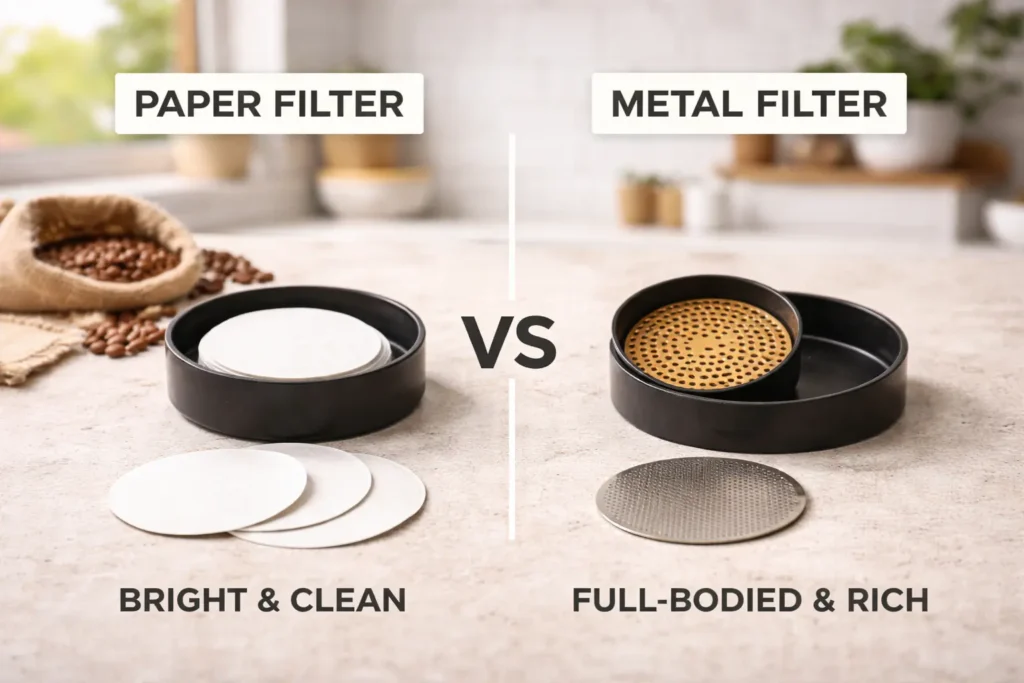
Filters change your cup as much as recipes do. If you want the AeroPress to behave like a clean pour-over, paper is the default. For extra body and mouthfeel, metal filters are useful. Many serious home brewers keep both and switch based on bean and mood.
Paper filters
- Cleaner, brighter cup
- Less oil and fewer fines
- Best for light roasts and iced flash brew
- Best for troubleshooting bitterness and muddiness
- Easiest to dial in with
Metal filters
- More body and oils
- Heavier mouthfeel
- Great for concentrates and milk drinks
- Go 1–2 steps coarser than paper baseline
- Can be slightly muddier with inconsistent grinders
Troubleshooting (Fix Problems in 60 Seconds)
Diagnose the symptom, pick one change, and brew again. Most problems resolve in one or two adjustments.
“My AeroPress coffee is sour no matter what”
Start with grind. Go one notch finer and keep everything else the same. If it’s still sour, steep 10–20 seconds longer. If you’re using a blade grinder or inconsistent pre-ground coffee, the grinder is almost certainly the limiting factor — boulders under-extract while fines over-extract, creating a confusing sour/bitter mix.
“My cup tastes bitter and dry”
Go slightly coarser and reduce agitation. Also check press time: pressing extremely slowly pushes extraction into bitterness. Dark roasts often improve instantly by lowering water temperature to 175–190°F.
“The press is hard / stalls”
Grind is too fine or the bed is packed. Go coarser, stir less, and press steadily. Also check the filter and cap: a folded paper filter or clogged filter adds significant resistance.
“My coffee is weak”
Weakness is usually concentration, not extraction. Increase dose (by 1–3g), reduce water, or brew a concentrate and dilute after. Don’t “fix” weak coffee by over-extracting — that adds bitterness without improving sweetness.
Gear Recommendations — What Actually Improves AeroPress Coffee
Here’s the order that most reliably improves taste:
Upgrade priority: burr grinder → scale → temperature-control kettle → filter options. If you buy only one thing, buy the grinder.
Best Grinders for AeroPress
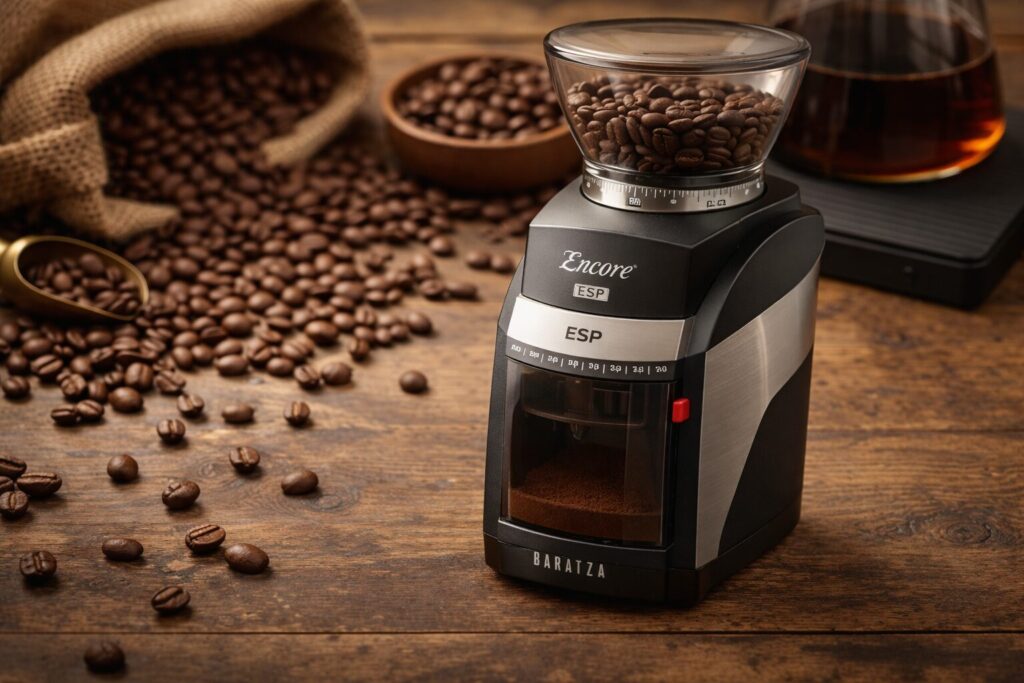
Best Overall Electric Value
Baratza Encore
A reliable entry burr grinder that dramatically improves sweetness and clarity versus blade grinders. Excellent for AeroPress and drip — and fully repairable for long-term use.
Pick this if: you want the best reliable daily electric grinder at a reasonable price and plan to use it for years.
Disclosure: CoffeeGearHub may earn from qualifying purchases.
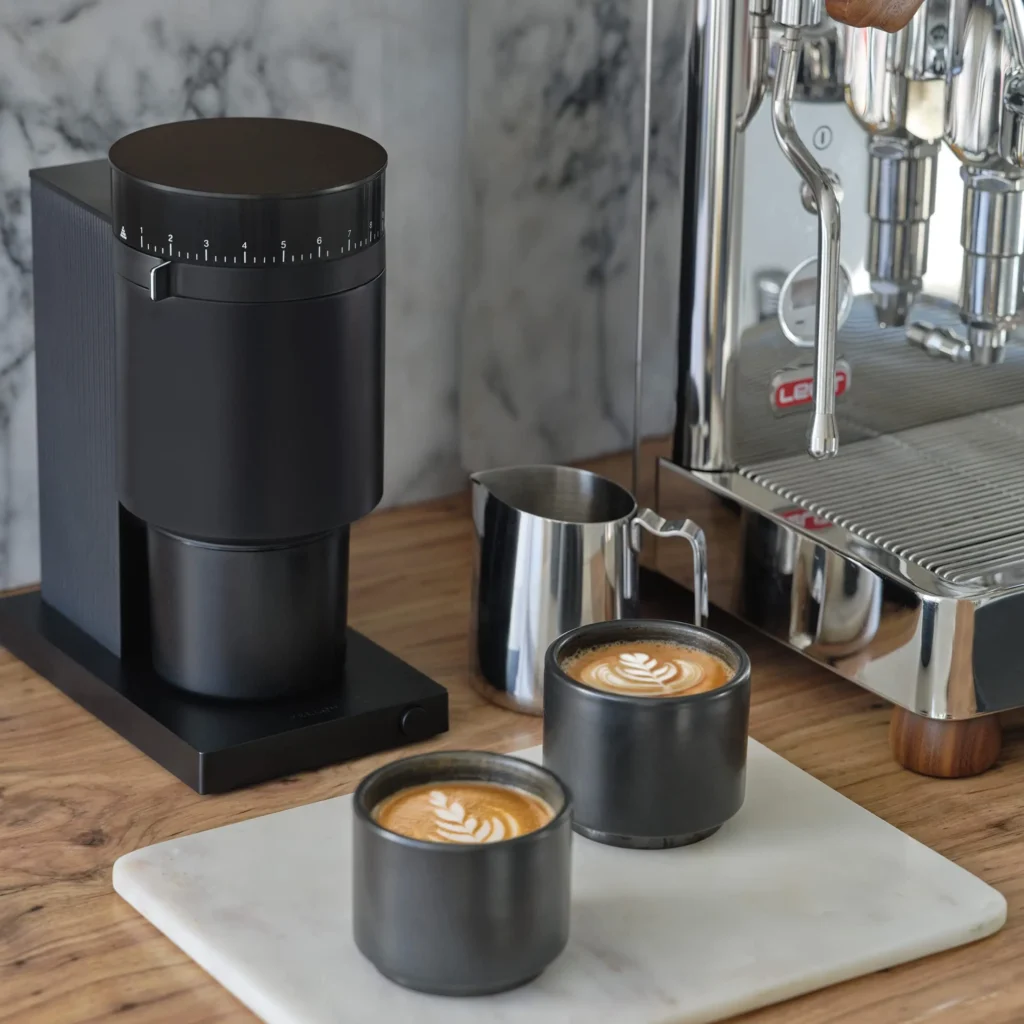
Best Modern Electric
Fellow Opus
A compact burr grinder with a wide grind range, low static, and clean dosing — great for rotating between classic, inverted, and concentrate recipes without constant guesswork.
Pick this if: you rotate between AeroPress, pour-over, and other methods, or want a modern countertop aesthetic with easy dial-in.
Disclosure: CoffeeGearHub may earn from qualifying purchases.
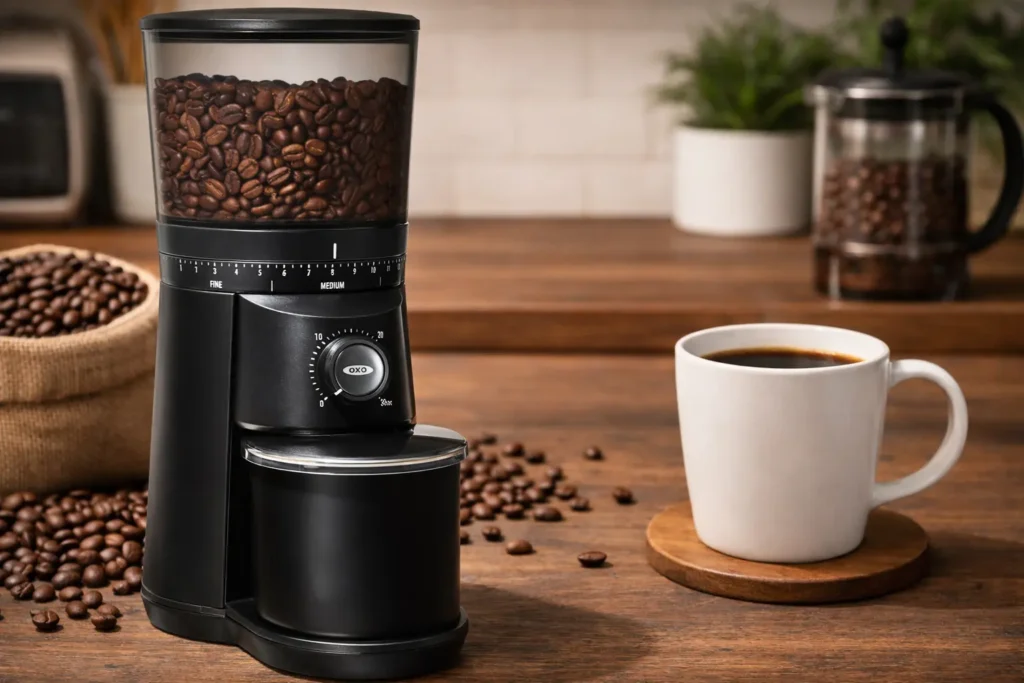
Best Budget Electric
OXO Brew Conical Burr
A solid everyday electric with consistent medium-fine output and an easy workflow. Fills the gap between the Encore and manual grinders for budget-conscious buyers who don’t want to hand grind.
Pick this if: you want a straightforward electric burr grinder on a tighter budget and mostly brew AeroPress or drip.
Disclosure: CoffeeGearHub may earn from qualifying purchases.
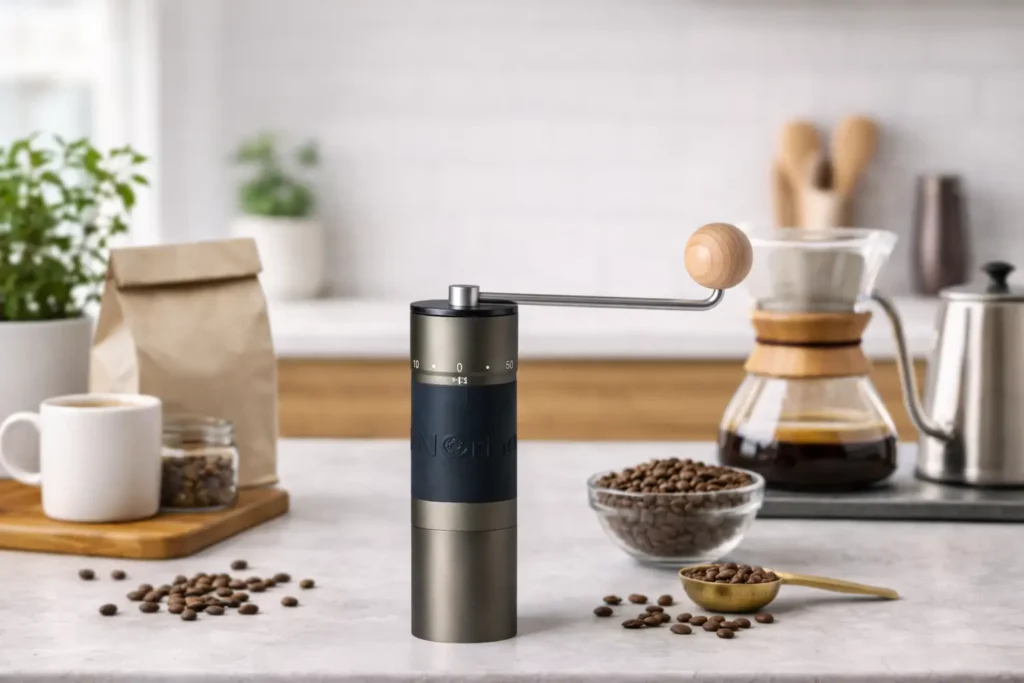
Best Manual Value
KINGrinder K6
A precision manual grinder with excellent medium-fine consistency, fine-grained click adjustment, and very low retention. Outstanding value for solo brewers who don’t mind hand grinding.
Pick this if: you brew one cup at a time, travel frequently, or want precision adjustment without paying for electric.
Disclosure: CoffeeGearHub may earn from qualifying purchases.
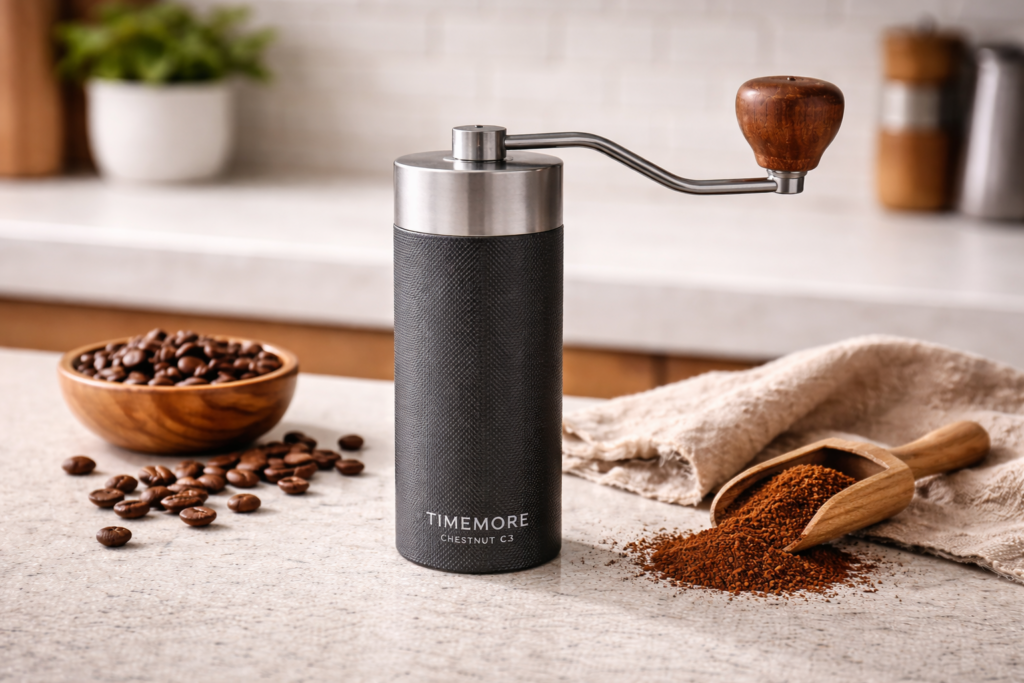
Best First Burr Upgrade
Timemore Chestnut C3
A strong manual grinder choice for travel, small kitchens, and AeroPress Go setups. Great quality-per-dollar for single-serve brewers who don’t mind hand grinding.
Pick this if: you’re upgrading from a blade grinder for the first time and want the biggest flavor improvement per dollar spent.
Disclosure: CoffeeGearHub may earn from qualifying purchases.
Filters (Paper + Metal)
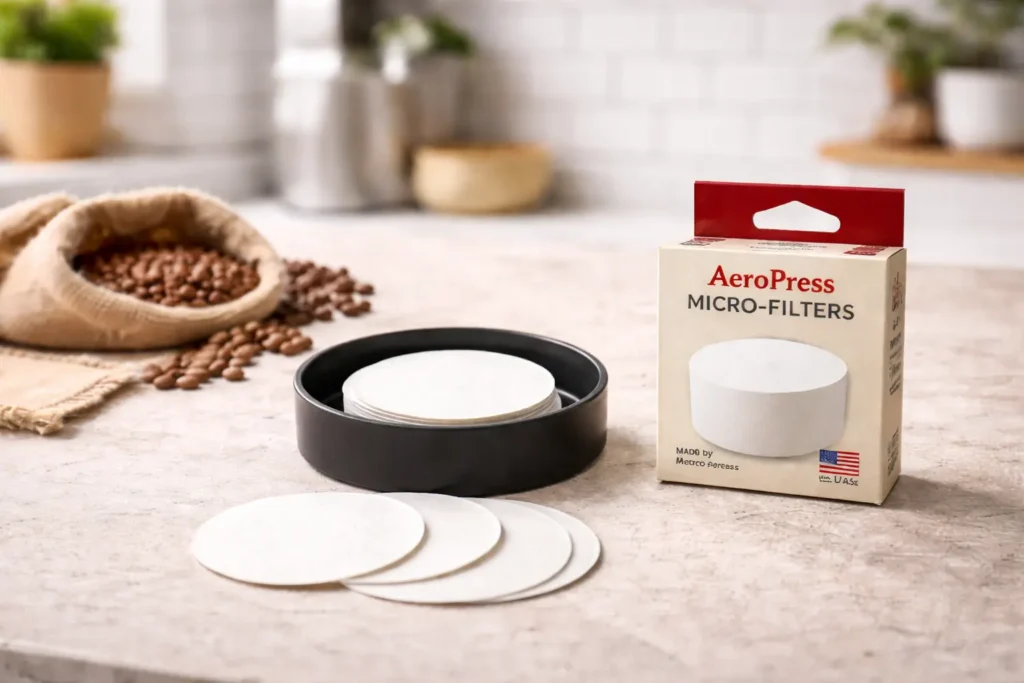
AeroPress Paper Filters
Best for clarity and consistent dialing-in. Great for light roasts, iced flash brew, and troubleshooting harshness. Pick these if: you’re starting out or optimizing for a clean cup.
Disclosure: CoffeeGearHub may earn from qualifying purchases.
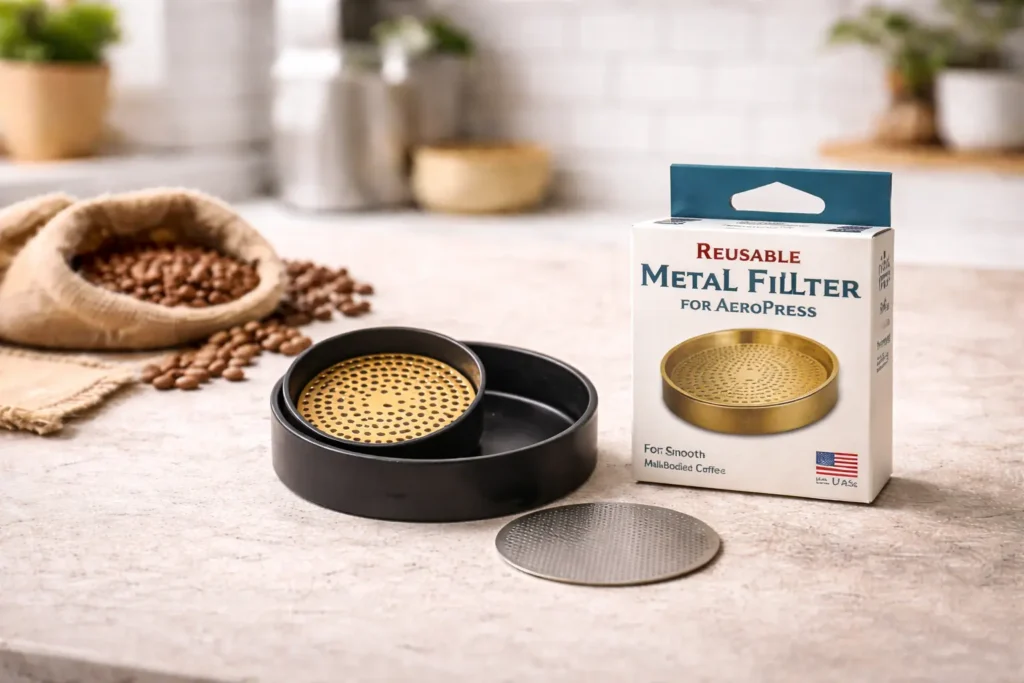
Reusable Metal Filter
Best for body and oils. Ideal for concentrates and milk drinks. Pick this if: you prefer a heavier mouthfeel or want to use the inverted method for rich cups.
Disclosure: CoffeeGearHub may earn from qualifying purchases.
Kettles (Temperature Control)
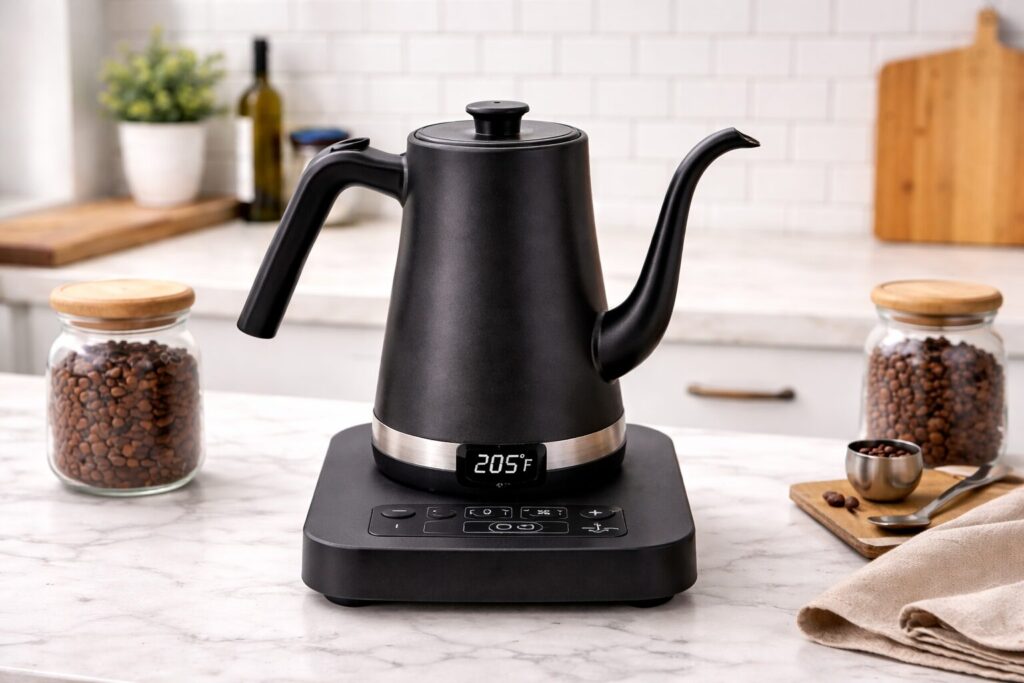
Fellow Stagg EKG
Premium temperature control and precise pouring. Pick this if: you brew light roasts, want maximum repeatability, or are serious about dialing in.
Disclosure: CoffeeGearHub may earn from qualifying purchases.
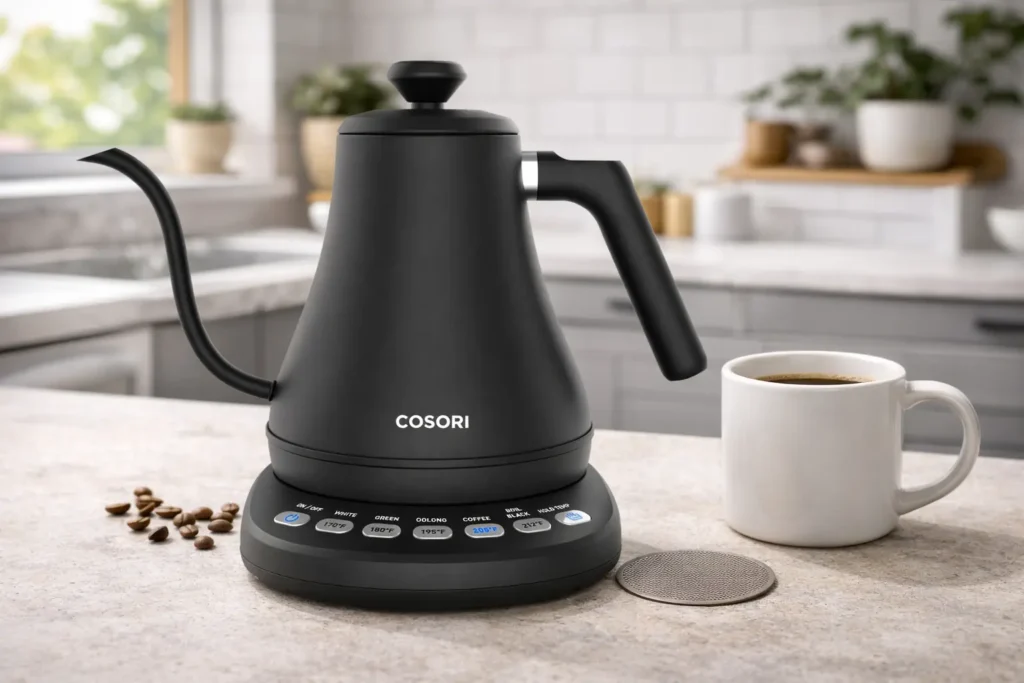
COSORI Electric Gooseneck
Strong value temperature-control kettle. Pick this if: you want precise temperature without the premium price tag.
Disclosure: CoffeeGearHub may earn from qualifying purchases.
Build a Complete AeroPress Kit
For consistently great AeroPress coffee, the most effective kit is: AeroPress + burr grinder + scale + paper filters + temperature-control kettle. If you add only one upgrade, start with the grinder.
FAQs: AeroPress Recipes
What’s the best AeroPress recipe for beginners?
Use the u003ca href=u0022#recipe-classicu0022u003eClassic Balancedu003c/au003e recipe (15g : 250g at ~200°F, medium-fine grind). It’s forgiving, repeatable, and gives a clean, sweet cup that’s easy to dial in.
What grind size should I use for AeroPress?
Most full-cup recipes work best at u003cstrongu003emedium-fineu003c/strongu003e (table-salt texture). If the cup is sour, go finer. If bitter/dry, go coarser. Grind consistency matters more than the exact setting number. See our u003ca href=u0022/aeropress-grind-size/u0022u003efull AeroPress grind size guideu003c/au003e for specific grinder settings.
Is the inverted method better?
It’s not universally u0022better,u0022 but it tends to produce u003cstrongu003emore body and sweetnessu003c/strongu003e because it prevents early drip-through and increases immersion. It’s best when classic feels thin.
Can AeroPress make espresso?
Not true 9-bar espresso, but it can make an u003cstrongu003eespresso-style concentrateu003c/strongu003e that works extremely well for lattes, iced lattes, and Americanos. See u003ca href=u0022#recipe-concentrateu0022u003eRecipe 3u003c/au003e for the full method.
Why is my AeroPress hard to press?
Usually the grind is too fine or the bed is packed from heavy stirring. Go slightly coarser, reduce agitation, and press steadily (not ultra-slow).
What water temperature is best for AeroPress?
Medium roasts: 190–200°F. Light roasts often benefit from 195–205°F for sweetness. Dark roasts often taste smoother at 175–190°F to reduce bitterness.
Paper filter or metal filter — what should I use?
Paper filters produce a cleaner, brighter cup and are more forgiving for beginners. Metal filters increase body and oils — great for concentrates, inverted brews, and milk drinks. Many brewers keep both.
Why does my AeroPress taste bitter?
Common causes: grind too fine, too much agitation, water too hot for a dark roast, or pressing extremely slowly. Start by going slightly coarser and stirring less.
Why does my AeroPress taste sour?
That’s usually under-extraction: grind too coarse, steep too short, or water too cool. Start by grinding slightly finer, then add 10–20 seconds of steep time if needed.
Which AeroPress model should I buy — Original, Clear, or Go?
All three brew identically. The Original is the best value for home use. The Clear is cosmetically different (transparent plastic). The Go adds a travel mug and smaller chamber — worth the premium if you travel or commute. See the u003ca href=u0022#aeropress-modelsu0022u003efull model comparisonu003c/au003e.
Final Verdict
The AeroPress deserves its reputation: it’s one of the simplest ways to get high-quality coffee at home with minimal cleanup and maximum flexibility. If you brew mostly for yourself or one other person, it covers daily cups, strong concentrates for milk drinks, and iced coffee — with consistent results once you dial in grind size and press technique.
If you want the fastest upgrade path: buy a burr grinder, then use the Classic Balanced recipe until you can repeat it. After that, branch into the method that matches your preference: Inverted for body, Concentrate for lattes, and Flash Brew for iced coffee.
Continue Learning
AEROPRESS CLUSTER
Want espresso-style AeroPress for lattes? Use the concentrate recipe above, then pair it with a strong milk frother for café-style drinks at home.
☕
Written by the CoffeeGearHub Editorial Team
CoffeeGearHub is a specialty coffee equipment resource produced by the CoffeeGearHub Editorial Team. Our guides are researched using published brewing science, grinder manufacturer specifications, and established specialty-coffee community knowledge. We review and update our pillar content regularly. About CoffeeGearHub →
Compare current CoffeeGearHub product pages
Use these stable CoffeeGearHub product pages to compare specifications and current verified merchant offers before leaving the site.