
Coffee Roast Levels: Light vs Medium vs Dark
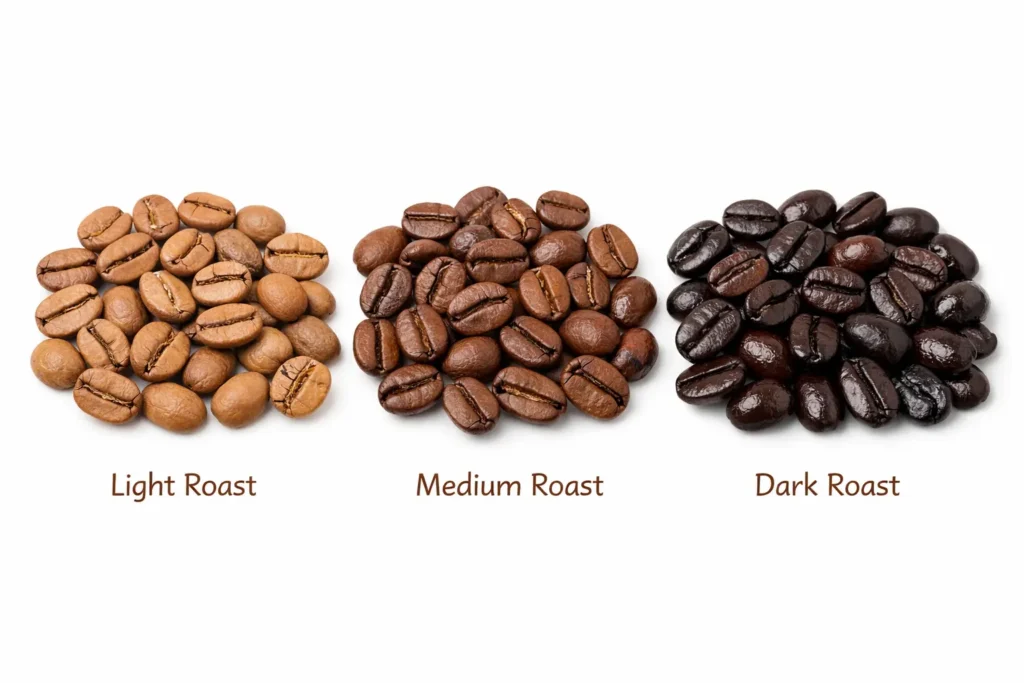
Editorial standards: this guide separates roast science, brewing adjustments, and product examples so the advice remains useful regardless of which beans you buy.
At a glance
Roast level changes flavor, solubility, and how a coffee responds to brewing
Light roasts usually preserve more origin character and acidity. Medium roasts balance origin notes with roast-driven sweetness. Dark roasts emphasize roast flavor, lower perceived acidity, and higher solubility.
There is no universally best roast. Match the roast to the flavor you want and then adjust grind and water temperature to suit it.
Editorial analysis
Roast level is a brewing variable, not just a flavor label
Lighter beans usually need more extraction help, which can mean hotter water or a finer grind. Darker beans extract more readily and often benefit from gentler brewing.
That is why copying one recipe across every roast level can produce sour light roasts and bitter dark roasts.
The 30-Second Answer
Choose light roast for brighter, fruitier, origin-forward coffee; medium roast for balanced sweetness and broad brewing flexibility; and dark roast for heavier roast character, lower perceived acidity, and milk-friendly intensity. Adjust the brew rather than using one fixed recipe for all three.
Representative choices
Start with these representative choices
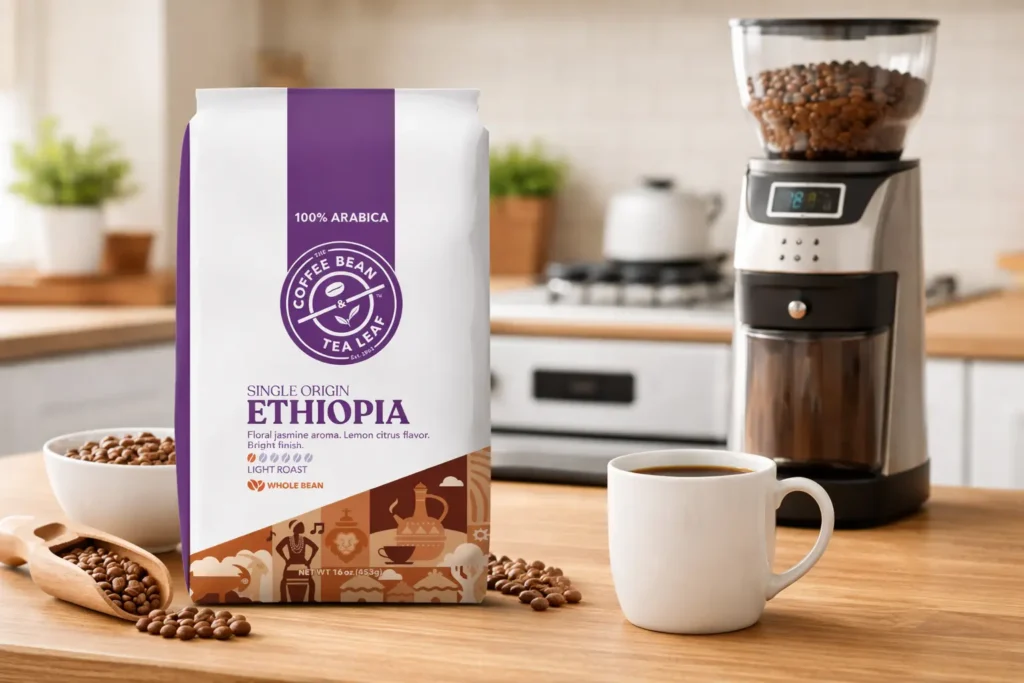
Light-roast coffee — clarity reference
A useful reference if you want brighter acidity, fruit, floral character, and more origin expression.
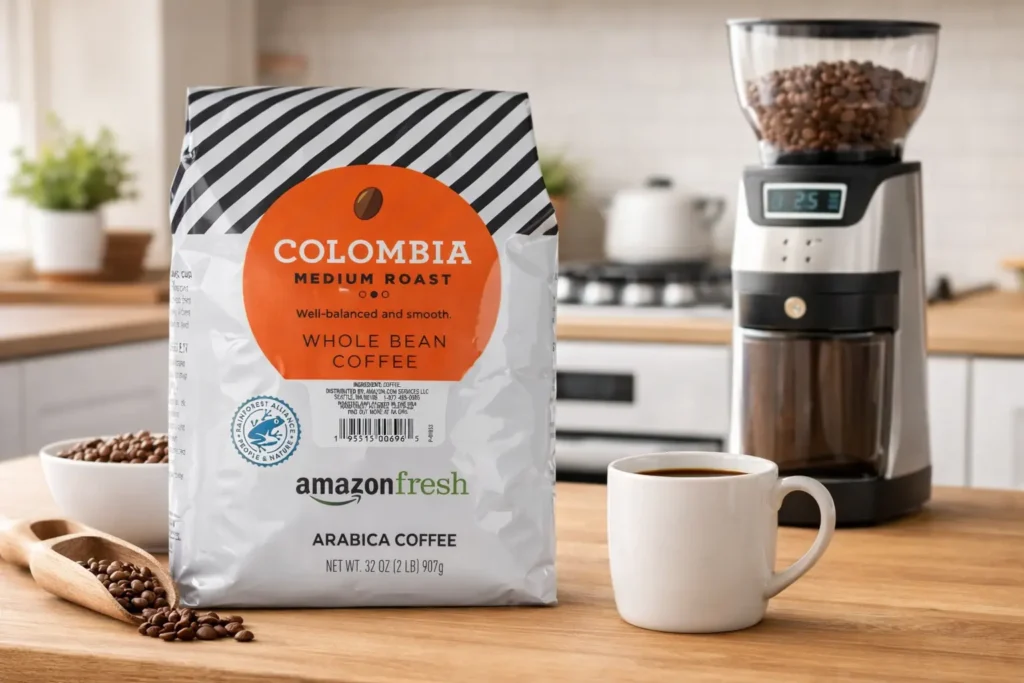
Medium-roast coffee — versatile reference
A balanced starting point for drip, pour-over, French press, and many everyday home setups.
Affiliate disclosure: Amazon links may earn CoffeeGearHub a commission at no additional cost to you.
What Coffee Roast Levels Actually Mean
Roast level is the single most visible coffee characteristic — and the most misunderstood. It does not determine caffeine content. It does not indicate quality. It does not mean a specific flavor in any standardised way across roasters. What it actually describes is how far a green coffee bean was taken through a heat-driven transformation process that changes its color, density, moisture content, and flavor profile from the inside out.
Green coffee beans are the raw seeds of the coffee cherry. They are dense, hard, and grassy-smelling, with acids, sugars, amino acids, lipids, and aromatic precursors that later become coffee flavor.
Roasting drives out moisture and triggers the chemical reactions that create coffee’s aroma and taste. The longer the roast continues, the more the cup shifts from origin-driven flavors toward roast-driven flavors.
Stop earlier and you preserve more fruit, floral, and acidic character. Roast deeper and caramelized, bittersweet, smoky, and toasted flavors become more dominant.
🔬 The roast spectrum is continuous. Light, medium, and dark are useful regions rather than three exact categories. Different roasters draw the boundaries differently, so one company’s medium can look like another company’s medium-dark.
At home, treat the label as a starting point and use bean color, surface oil, and taste to understand where the coffee sits on the spectrum.
What Roasting Does to a Coffee Bean: The Flavor Science
Understanding what happens during roasting is not academic for home brewers. It directly explains why light roast tastes the way it does, why dark roast behaves differently in the grinder and the cup, and why the same bean from the same origin can taste completely different at two roast levels. Three chemical processes drive everything you taste in a roasted coffee bean.
- The Maillard reaction (140–165°C): Amino acids and reducing sugars react under heat, producing hundreds of new aroma compounds — the same process that browns bread crust and seared meat. In coffee, this is where caramel, nut, chocolate, and toasty notes begin to develop. The longer and hotter the roast, the more Maillard products accumulate. This is a major source of the “roasted coffee smell” that most people associate with coffee generally, and it begins long before light roast territory. At medium roast, Maillard products are prominent and pleasant. At dark roast, they have continued developing into more intense, bitter, and smoky compounds.
- Caramelisation (170°C+): The bean’s sucrose content (roughly 6–8% of a green bean’s dry weight) begins breaking down into simpler sugars and then into caramel compounds. At light roast, some sucrose remains intact, contributing sweetness. At medium roast, caramelisation is well underway, producing the characteristic caramel and brown sugar notes. At dark roast, nearly all sucrose has been converted or further broken down, reducing perceived sweetness and increasing bitterness. This is why dark roast coffee often tastes bitter without sweetness — the sugar has been spent.
- Acid development and degradation: Green coffee is naturally high in organic acids — citric, malic, acetic, and chlorogenic acids are the primary contributors. At light roast, these acids are largely preserved, producing the brightness, fruity notes, and wine-like complexity that specialty light roasts are known for. As roast progresses, chlorogenic acids break down into quinic and caffeic acids — compounds that taste bitter rather than bright. At dark roast, most of the original fruit acids have degraded and bitterness from degraded chlorogenic acids, along with new pyridine and furan compounds from caramelisation, dominates the flavor profile.
Light Roast Coffee: What It Tastes Like and When to Choose It
Light roast is less forgiving than medium roast, but it can be especially rewarding when you enjoy bright and origin-driven coffee. The beans are stopped relatively early in the roast, preserving more organic acids, floral aromatics, and fruit character.
That same structure makes light roast harder to extract. It usually responds well to hotter water, a consistent grinder, and careful attention to grind size.
Light Roast at a Glance
- Roast temp: ~180–205°C
- Bean color: Tan to light brown
- Surface oils: None — dry surface
- Bean density: High — hard bean, denser than dark roast
- Acidity: High — bright and fruit-forward
- Body: Light to medium — tea-like
- Bitterness: Low
- Common flavor notes: Jasmine, citrus, bergamot, stone fruit, blueberry, floral
- Caffeine (relative): Marginally highest by weight
Who Light Roast Is For
Choose light roast when you want to taste more of the coffee’s origin, processing, and variety. Single-origin light roasts often emphasize floral, citrus, berry, or stone-fruit notes that would be muted by a darker roast.
Pour-over and AeroPress can show those flavors clearly. The trade-off is a narrower extraction window: water that is too cool, a grind that is too coarse, or a brew that ends too quickly can leave the cup sour and thin.
Best brew methods for light roast: V60 pour-over, Chemex, AeroPress (standard and inverted), and filter drip with machines that brew at 93°C+. Light roast in a French press tends to taste thin because the coarse grind required by immersion doesn’t fully develop the bean’s sugars. Light roast for espresso is possible but demanding — narrow extraction window and requires a precise grinder.
Medium Roast Coffee: What It Tastes Like and When to Choose It
Medium roast is the easiest general starting point for most home brewers. It keeps enough origin character to remain interesting while adding more caramelized sweetness and body from the roast.
It also has a wider extraction window than many light roasts. Small mistakes in grind or temperature are less likely to dominate the cup.
Medium Roast at a Glance
- Roast temp: ~210–220°C
- Bean color: Medium brown
- Surface oils: Minimal to none
- Bean density: Medium — more porous than light, harder than dark
- Acidity: Moderate — present but balanced by sweetness
- Body: Medium — smooth and round
- Bitterness: Low to moderate
- Common flavor notes: Caramel, chocolate, hazelnut, brown sugar, balanced fruit
- Caffeine (relative): Middle of the range
Who Medium Roast Is For
Medium roast works across a broad range of home methods because it balances sweetness, acidity, and body. Colombian medium roasts are a common example: caramel, chocolate, and mild fruit can coexist without demanding an unusually narrow recipe.
That versatility is useful in households with more than one brewer. The same coffee can work in a drip machine on a busy morning and still be interesting in a V60 or AeroPress later.
Best brew methods for medium roast: All of them. Drip coffee makers, French press, V60, Chemex, AeroPress, moka pot, and as an espresso base for milk drinks. Medium roast is the only roast level that performs reliably well across every home brew method without requiring significant technique adjustment.
Dark Roast Coffee: What It Tastes Like and When to Choose It
Dark roast is easy to recognize by its bold, smoky, bittersweet flavor and heavier body. As roasting moves deeper, acidity falls and roast-driven flavors become more prominent.
Surface oils may become visible, and the specific origin of the bean usually becomes less obvious in the cup. What you taste is increasingly the effect of the roasting process itself.
Dark Roast at a Glance
- Roast temp: ~225°C+
- Bean color: Dark brown to near-black
- Surface oils: Prominent — shiny, oily surface
- Bean density: Low — brittle, porous, grinds easily
- Acidity: Low — acids largely degraded
- Body: Heavy — full, coating mouthfeel
- Bitterness: High — bitter phenolics are dominant
- Common flavor notes: Dark chocolate, smoke, cedar, molasses, ash, bittersweet
- Caffeine (relative): Marginally lowest by weight — mass lost during roasting
Who Dark Roast Is For
Choose dark roast when you genuinely prefer bold, bittersweet coffee with lower perceived acidity. Its heavier body also works well in milk drinks because the coffee flavor remains noticeable after milk is added.
French press can reinforce those strengths by retaining more oils. The main caution is extraction: dark roast gives up soluble compounds quickly, so cooler water and a slightly coarser grind often help keep bitterness under control.
Best brew methods for dark roast: French press, espresso (especially for milk drinks), moka pot, and cold brew. Dark roast in pour-over can work but requires careful temperature control and is unforgiving if over-extracted. Dark roast in a drip machine benefits from a slightly coarser grind and cooler brew temperature where the machine allows it.
⚠️ Dark roasts can leave more oil on grinder surfaces. That residue can oxidize and contribute stale flavors if it builds up.
If you brew oily dark roasts frequently, clean the burrs and hopper more often and avoid leaving beans sitting in the hopper for long periods.
Coffee Roast Levels Compared: Full Light vs Medium vs Dark Table
Use this table as a direct reference for comparing roast levels across every dimension that affects your home brewing. All values are relative comparisons on the roast spectrum — not absolute ratings. For KINGrinder K6 grind adjustments by roast level, see the Grind and Temperature section below.
| Characteristic | Light Roast | Medium Roast | Medium-Dark Roast | Dark Roast |
|---|---|---|---|---|
| Roast temperature | ~180–205°C | ~210–220°C | ~220–230°C | ~225–245°C+ |
| Bean color | Tan to light brown | Medium brown | Dark brown | Very dark brown to near-black |
| Surface oils | None — dry | Minimal | Slight sheen | Prominent — oily surface |
| Acidity | High — bright, fruit-forward | Moderate — balanced | Low to moderate | Low — acids degraded |
| Sweetness | Moderate — delicate | High — caramel, brown sugar | Moderate — bittersweet | Low — sucrose mostly spent |
| Body | Light to medium | Medium — round and smooth | Medium to full | Full — heavy, coating |
| Bitterness | Low | Low to moderate | Moderate | High — dominant |
| Origin character | Highest — origin defines the cup | Moderate — balance of origin and roast | Low — roast is dominant | Minimal — nearly all roast character |
| Common flavor notes | Florals, citrus, stone fruit, jasmine, bergamot | Caramel, chocolate, hazelnut, balanced fruit | Bittersweet chocolate, dried fruit, toffee | Smoke, cedar, molasses, ash, dark chocolate |
| Extraction difficulty | High — narrow window; requires hot water, fine grind | Low — wide, forgiving extraction window | Moderate | Moderate-high — bitterness-prone at any over-extraction |
| Water temperature | 94–96°C | 91–94°C | 89–92°C | 88–92°C |
| Best for | V60, Chemex, AeroPress, filter drip (quality machine) | Everything — all home brew methods | French press, drip, espresso with milk | French press, espresso, moka pot, cold brew |
| Challenging for | French press, moka pot, espresso beginners | Nothing — the universally safe choice | Light tea-style pour-over | Pour-over (bitter if over-extracted) |
Which Roast Level for Each Home Brew Method
Roast choice makes more sense when you connect it to the brewer. A coffee that shines in AeroPress or pour-over may taste less balanced in French press, while an espresso-oriented roast can feel too heavy in a clarity-focused dripper.
Use the table below as a starting point, then adjust based on the flavor you actually want.
| Brew method | Recommended roast | Why it works | K6 grind starting point | Water temp | What to avoid |
|---|---|---|---|---|---|
| V60 / Hario pour-over | Light to medium-light | Conical dripper + thin paper filter produces maximum clarity — ideal for showcasing floral and fruit notes of light roast | 26–32 clicks (light); 28–34 clicks (medium) | 94–96°C | Dark roast — oils and bitterness overwhelm V60’s clarity; stalls draw-down |
| Chemex | Light-medium to medium | Thick Chemex filter removes body oils, producing a clean, wine-like cup — works especially well with Ethiopian and Colombian light-medium | 32–40 clicks | 93–95°C | Dark roast — removes the oils that give dark roast its body, leaving flat bitterness |
| French press | Medium to dark | Metal filter passes oils; immersion method extracts more slowly — medium adds caramel sweetness, dark adds bold depth; light roast tastes thin | 65–75 clicks (medium); 74–82 clicks (dark) | 90–93°C | Light roast — thin body, acidity amplified by full immersion, sugar development incomplete |
| AeroPress (standard) | Medium to medium-dark | Short brew time and pressure make AeroPress most forgiving across roasts — medium is safest; light is possible but demands precise parameters | 18–26 clicks | 88–93°C | Very dark roast — bitterness compounds extract rapidly at AeroPress pressure |
| Home drip machine | Medium | Automated drip machines have fixed brew time and flow rate — medium roast is most forgiving of temperature inconsistency across machine quality tiers | 35–45 clicks | 90–94°C (machine-controlled) | Light roast in machines that brew below 91°C — chronic under-extraction; dark roast exaggerates machine bitterness |
| Moka pot | Medium-dark to dark | Moka pot’s steam pressure and high-heat extraction naturally complement bold, low-acid roasts; medium-dark mimics Italian espresso style | 22–28 clicks | N/A (stovetop) | Light roast — under-extracts at moka pot heat profile; tastes sour and underdeveloped |
| Espresso (black) | Medium to medium-dark | Wider extraction window than dark; produces balanced sweetness and crema; more origin character; forgiving for home barista beginners | 4–12 clicks | 92–94°C (machine-controlled) | Very dark roast for black shots — bitter phenolics dominate; no sweetness to balance |
| Espresso (with milk) | Medium-dark to dark | Dark roast body and bitterness balance milk fat and sweetness — the classic Italian espresso in milk drinks formula | 4–10 clicks | 88–91°C | Light roast — origin complexity disappears in milk; sourness can cut through unpleasantly |
| Cold brew | Medium-dark to dark | Cold water extracts slowly over 12–16 hours — medium-dark and dark roasts produce sweetness and body without cold water’s acid-amplifying effect | 80–92 clicks | Cold / room temp | Light roast — cold brew under-extracts light roast dramatically; sour, watery, flat result |
The Caffeine and Acidity Myths: What the Science Actually Says
Two persistent myths about coffee roast levels circulate widely in home brewing communities and on coffee packaging. Both are misleading in important ways that affect home buyers.
Myth 1: Dark Roast Has More Caffeine
The truth: Caffeine is a thermally stable alkaloid — it does not degrade significantly during roasting at any roast level. Dark roast does not have more caffeine than light roast. If anything, light roast has marginally more caffeine by weight because dark roasting causes the bean to lose mass (moisture and CO2), concentrating flavor compounds but not adding caffeine. The difference is under 5% and practically imperceptible in a normal home brew.
Where the myth comes from: Dark roast tastes bolder, which many drinkers associate with being “stronger” — meaning more caffeine. But perceived strength (intensity of flavor) and caffeine content are different things. If you are brewing by volume (scoops), dark roast may produce slightly more caffeine per cup because the lower-density beans result in more beans per scoop by count. Brewing by weight at the same ratio — as you should — produces essentially identical caffeine content across roast levels.
Myth 2: Acidity in Coffee Is the Same as Harshness
The useful distinction: acidity in specialty coffee can be pleasant. It contributes brightness and fruit-like complexity when extraction is balanced.
Harshness is different. A rough, unpleasant cup can come from roast development, stale coffee, poor water, or over-extraction rather than from natural acidity alone.
For acid-sensitive home brewers: If you genuinely experience discomfort from coffee acidity, medium-dark to dark roast will reduce organic acid content significantly. Cold brew at any roast level also produces lower-acid results. However, if you find drip or pour-over coffee harsh, the first diagnostic question is freshness and extraction quality — stale coffee and over-extracted coffee are more stomach-irritating than acid level alone.
How Coffee Origin Interacts with Roast Level
Origin and roast level shape flavor in different ways. Origin sets the raw potential of the coffee, while roast level determines how much of that potential remains visible after roasting.
The relationship is selective rather than additive. Roasting can highlight some characteristics while muting or replacing others.
| Origin | Base flavor profile | At light roast | At medium roast | At dark roast | Best roast for home |
|---|---|---|---|---|---|
| Ethiopia (washed) | Floral, jasmine, citrus, bergamot, tea-like | Full origin expression — florals and citrus are at maximum; can taste like jasmine tea | Florals reduce; caramel sweetness emerges; accessible complexity | Origin character mostly gone; tastes of generic dark roast | Light to medium-light for pour-over; medium for drip |
| Colombia (washed/honey) | Caramel, milk chocolate, mild acidity, balanced | Brighter and fruitier than most expect; still approachable | The sweet spot — caramel, chocolate, gentle acidity; the CoffeeGearHub universal recommendation | Loses nuance but produces a pleasant bold cup | Medium — universally safe across all home methods |
| Brazil (natural) | Nutty, chocolate, low acidity, heavy body | Unusual — natural process adds sweetness that can compensate for lighter roast | Chocolate-forward, low acidity, very approachable — excellent for espresso blends | Excellent — low acidity + heavy body + dark roast = clean bold cup; Italian espresso staple | Medium-dark to dark for espresso and French press |
| Sumatra (wet-hulled) | Earthy, cedar, tobacco, full body, low acidity | Unusual earthy notes become very prominent; not typical specialty presentation | Earthiness mellows; cedar and tobacco balanced by caramel | Excellent — earthy, bold, heavy body amplified by dark roast; classic French press choice | Medium-dark to dark for French press and drip |
| Guatemala (washed) | Toffee, apple, brown spice, medium body | Fruity and bright; apple acidity prominent | Toffee and spice balanced with mild fruit; excellent all-rounder | Loses spice complexity; generic bold cup | Medium for drip and pour-over |
| Kenya (washed) | Blackcurrant, tomato, grapefruit, juicy high acidity | The highest-acidity coffee experience — extraordinary at light roast for experienced drinkers | Fruit notes mellow to berry and citrus; still bright | Loses all defining character; waste of Kenya’s terroir | Light to medium-light for pour-over only |
How to Read a Coffee Bag for Roast Information
Coffee bag labels contain useful information, but they also contain marketing language designed to sell — not inform. Knowing which information to look for and which to discount makes every future purchase more intentional. Here is what actually matters on a specialty coffee bag for home buyers.
| Information on the bag | What it tells you | How to use it | Red flag version |
|---|---|---|---|
| Roast date | When the beans were roasted — the most important freshness indicator | Buy beans with a roast date 4–14 days ago for peak flavor; anything over 4 weeks is past its best for most home brew methods | No roast date — only a “best by” date, which may be 12–18 months from roast and tells you nothing about freshness |
| Roast level label | A relative indication of roast depth — not standardised across roasters | Use as a rough guide; verify against bean color if possible; one roaster’s “medium” may be another’s “medium-dark” | Labels like “smooth” or “bold” instead of a roast level — marketing language, not roast information |
| Origin / country | Where the beans were grown — major driver of flavor profile before roasting | Pair with roast level — Ethiopia at light roast for florals; Colombia at medium for balanced sweetness; Brazil at medium-dark for espresso | No origin listed — likely a commodity blend with no traceable source; quality consistency is unpredictable |
| Process method | How the coffee cherry was processed after harvest — washed, natural, or honey | Washed = cleaner, brighter; natural = fruitier, more complex, sweeter; honey = between the two. Affects flavor independently of roast | Not listed — common on commodity bags; relevant information for single-origins |
| Flavor notes | The roaster’s tasting notes — their flavor impressions of the bean at the recommended brewing parameters | Use as a rough guide, not a guarantee — flavor notes are the roaster’s subjective experience and vary with brew method and extraction | Notes like “smooth, rich, bold” — generic descriptors that describe roast level, not origin character; indicates commodity coffee |
| Altitude and variety | Altitude affects bean density and acidity; variety (Bourbon, Gesha, etc.) affects flavor potential | Higher altitude (1,800m+) = denser bean, higher acidity potential, longer shelf life; relevant for advanced buyers | Not listed on most entry-level specialty bags — not essential but useful for intermediate buyers |
🔬 Freshness comes before roast level. A recently roasted coffee will usually show more aroma and complexity than an older bag, regardless of whether it is light, medium, or dark.
Buy whole beans with a visible roast date when possible, purchase quantities you can finish reasonably quickly, and store them sealed away from heat, light, and moisture.
How to Adjust Grind Size and Water Temperature by Roast Level
Roast level changes how a coffee responds to grind size and water temperature. Darker beans are generally more porous and extract more readily. Lighter beans usually need more energy to reach the same level of extraction.
As a practical rule, light roast often benefits from hotter water and a slightly finer grind. Dark roast often benefits from cooler water and a slightly coarser grind.
| If switching from medium to… | Grind adjustment | Water temp adjustment | Brew time adjustment | Why |
|---|---|---|---|---|
| Light roast | Grind 3–5 clicks finer on K6 | Raise 2–3°C (target 94–96°C) | Extend by 15–30 seconds | Dense bean extracts more slowly; needs more energy and surface area to develop sugars fully |
| Dark roast | Grind 3–5 clicks coarser on K6 | Lower 2–3°C (target 88–92°C) | Shorten by 10–20 seconds where method allows | Porous bean extracts faster; lower density means less resistance; bitter compounds extract readily at high temp |
| Natural processed (any roast) | Grind 2–3 clicks coarser than equivalent washed | No change from washed target | Reduce 10–15 seconds | Natural process adds fermented sugars that extract faster; slightly coarser grind reduces bitterness risk |
| Different origin, same roast level | Use existing setting as starting point; adjust 2–3 clicks based on taste | No change | No change initially | Bean density varies by altitude and variety; same roast level does not guarantee same extraction behaviour |
Representative Coffee Picks by Roast Level
Light-roast coffee option — pour-over friendly
A light-roast reference for readers who want more acidity, aromatics, and origin character in filter brewing.
Colombian medium roast — versatile everyday option
Medium roast is the easiest general recommendation when you want sweetness, balance, and broad brewer compatibility.
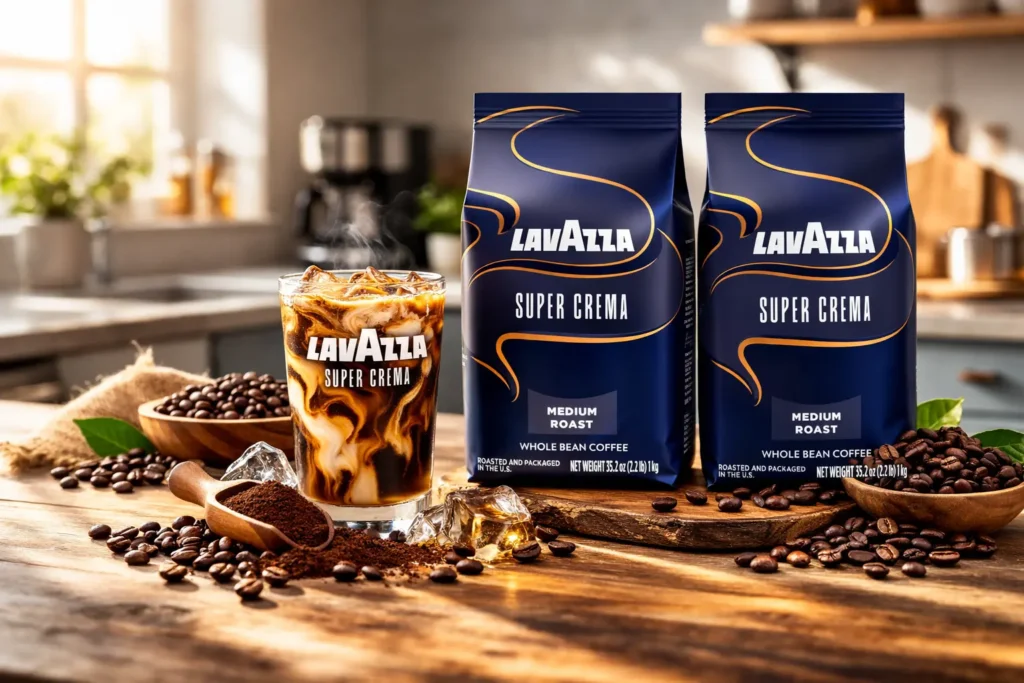
Lavazza Super Crema — medium-dark espresso-style option
A darker, milk-friendly reference for readers who prefer more roast character and espresso-style intensity.
Troubleshooting Matrix: Roast-Related Symptoms → Causes → Fixes
Most home brewing problems that seem like technique issues are actually roast-matching problems. The wrong roast level for the method, or the right roast level extracted at the wrong parameters. Identify your symptom below and follow the fix order before changing your bean or your brewer.
| Symptom | Most likely roast-related cause | Fix (in order) |
|---|---|---|
| Light roast tastes sour and thin | Under-extraction — water too cool, grind too coarse, or brew time too short for dense light roast bean | Raise water temp to 94–96°C → grind 3–5 clicks finer → extend brew time 15–30s → check bean freshness (roast date under 3 weeks) |
| Dark roast tastes harsh and bitter | Over-extraction — water too hot for dark roast’s pre-degraded compounds; or grind too fine | Lower water temp to 88–92°C → grind 3–5 clicks coarser → shorten brew time if method allows → do not bloom dark roast at 95°C+ |
| Coffee tastes flat regardless of roast level | Stale beans — aromatic volatiles depleted before purchase or after long storage | Check roast date — if over 5 weeks, buy fresh beans. No grind, temperature, or ratio adjustment can restore aroma to stale coffee |
| Light roast tastes flat in French press | French press coarse grind + immersion method under-extracts light roast’s dense, hard beans | Switch to medium roast for French press — or switch brew method to AeroPress or V60 where light roast excels |
| Dark roast tastes thin and weak in pour-over | Dark roast’s oils are removed by paper filter; bitterness without body produces hollow cup | Increase dose 2–3g → switch to medium-dark roast → or switch to French press where dark roast oils are retained |
| New bag tastes completely different from previous bag, same roast label | Different crop, different origin, or different processing — roast labels are not standardised | Start with your established grind setting; adjust 2–3 clicks based on taste; read bag for origin and process, not just roast label |
| Coffee tastes sour on first brew but improves after a few days | Beans too fresh — very recently roasted beans (under 4 days) still outgassing CO2 which interferes with even extraction | Rest beans 4–7 days from roast date for filter methods; 7–14 days for espresso — CO2 must degas sufficiently before full extraction is possible |
| Light roast in drip machine always tastes weak | Home drip machine brews below 91°C — insufficient temperature to extract light roast fully | Check machine specification for brew temperature; if below 91°C, switch to medium roast or upgrade to an SCA-certified machine that brews at 92–96°C |
| Coffee tastes oily and stale despite fresh purchase date | Dark roast oil coating grinder burrs has gone rancid — contaminating fresh grinds | Disassemble and brush-clean grinder burrs immediately; purge 5g before next use; increase grinder cleaning frequency to weekly for dark roast users |
| Home espresso with dark roast is always bitter, never sweet | Dark roast at espresso parameters over-extracts bitter phenolics before sweetness can balance them | Lower machine temperature to 88–90°C → grind 2–3 clicks coarser → reduce shot time by 3–5 seconds → or switch to medium roast espresso blend |
Roast Level Buying Checklist
Use this checklist before your next coffee purchase to match your roast choice to your home setup. It takes 60 seconds and removes the most common sources of buyer confusion and post-purchase disappointment.
| Question | What to look for | Red flag |
|---|---|---|
| What is my primary home brew method? | Match roast to method: light for pour-over; medium for drip and all-method versatility; dark for French press and espresso with milk | Buying “the darkest roast” or “the lightest roast” without considering what your brew method actually extracts well |
| Is there a roast date on the bag? | Yes — 4–21 days from roast date is the target purchase window for whole beans; 4–10 days for espresso | No roast date, only a “best by” date — no way to assess freshness; buy from a different supplier |
| Does the bag list the origin? | Yes — origin + roast level together determine flavor. Ethiopia + light = florals. Colombia + medium = balanced caramel. Brazil + dark = bold and clean | “100% Arabica” with no origin — commodity blend with unpredictable flavor and inconsistent roasting |
| Do I have a burr grinder at home? | Yes — any roast level brewed with a blade grinder produces inferior results regardless of bean quality; burr grinder required for full roast expression | Planning to buy light roast specialty coffee and use a blade grinder or pre-grind — the bean’s flavor potential cannot be accessed without even particle size |
| Am I switching from a previous roast level? | Yes — plan to adjust grind 3–5 clicks and water temperature 2–3°C in the direction appropriate to the roast change before the first brew | Using identical parameters as previous beans — same recipe does not produce same result when roast level changes |
| How much am I buying relative to how fast I brew? | 250g every 1–2 weeks is better than 1kg every 6 weeks — buy less, buy fresher; light roast in particular stales faster than dark once opened | Buying in bulk for “value” — savings on price are erased by flavor loss from stale beans in the second half of a large bag |
Final Takeaway: How to Choose the Right Roast Level for Your Home Setup
The right roast is the one that fits both your brewer and your flavor preference. Medium roast is a useful default because it is versatile and forgiving.
Move lighter when you want more floral, fruity, and origin-driven character. Move darker when you prefer heavier body, lower perceived acidity, and more roast character.
Whichever direction you choose, check freshness first. Then adjust grind and temperature to match the roast instead of assuming one recipe will work equally well for every bag.
FAQs: Light vs Medium vs Dark Roast Coffee
Does dark roast have more caffeine than light roast?
No — this is one of the most persistent myths in coffee. Light roast actually retains slightly more caffeine by weight because caffeine is stable during roasting and dark roasting reduces bean mass through moisture and CO2 loss, concentrating flavors but not adding caffeine. The difference is minor and practically imperceptible in a normal home brew ratio.
Is light roast more acidic than dark roast?
Yes, but not in a harsh way. Light roast preserves organic acids that produce brightness and fruit notes — these are the same acids in fruit juice and wine. Dark roasting breaks down these acids, producing a lower-acid cup with more bitter compounds. If you experience acid reflux from coffee, dark roast is generally better tolerated, but the root cause is usually brew strength, not roast level alone.
Which roast level is best for espresso?
Medium to medium-dark roast is the most forgiving range for home espresso — it produces consistent crema, tolerates a wider extraction window, and pairs well with milk. Light roast espresso is possible but requires a more precise grinder and tighter parameters. Dark roast espresso can taste bitter if over-extracted, which happens easily at the fine grind and high pressure espresso requires.
Which roast level is best for French press?
Medium to dark roast suits French press well. The immersion method and metal filter produce a naturally full-bodied, rich cup — medium roast adds sweetness and complexity, dark roast adds depth and a bittersweet finish. Light roast in a French press can taste thin and overly acidic because the coarse grind and lower extraction rate don’t fully develop the bean’s sugars.
What does ‘medium roast’ actually mean on a coffee bag?
Medium roast means the bean was roasted to an internal temperature of roughly 210-220°C, stopping after first crack but before second crack. In flavor terms, it means a balance between the bean’s original origin character and the caramel, nut, and chocolate notes developed by roasting. However, ‘medium’ is not a standardised term across roasters — one roaster’s medium may be another’s medium-dark. Always look for roast date over roast label.
Why does my light roast taste sour?
Light roast is sourness-prone because it retains high organic acid content and requires more energy to extract — meaning it needs hotter water (94-96°C), a finer grind than you’d use for medium roast, and sufficient brew time to fully develop. If your light roast tastes sour, grind 3-5 clicks finer on your KINGrinder K6, raise water temperature to 95-96°C, and extend brew time slightly.
Why does my dark roast taste bitter?
Dark roast is bitterness-prone because roasting develops bitter phenolic compounds and reduces the sugars that balance them. The fix is to use cooler water (88-92°C), grind slightly coarser than you would for medium roast at the same brew method, and reduce brew time where possible. Dark roast is also less forgiving of over-extraction — if your dark roast is bitter, the most likely cause is water that is too hot.
How long does roasted coffee stay fresh?
Whole bean coffee is at peak flavor from 4-14 days after roasting, when residual CO2 has degassed enough for full extraction but aromatic volatiles have not yet oxidised significantly. Most specialty roasters consider beans past their peak after 4-6 weeks from roast date. Buy in smaller quantities — 250g every 1-2 weeks is better than 1kg every 6 weeks. Always check the roast date on the bag, not the best-by date.
Can I use any roast level in a drip coffee maker?
Yes. Drip coffee makers work well across light, medium, and dark roast. Medium roast is the most universally balanced result. Light roast in a drip machine requires a slightly finer grind and the hottest water your machine produces — machines that brew below 90°C will under-extract light roast consistently. Dark roast in drip should use slightly coarser grind and shorter contact time where possible.
What is the difference between roast level and origin?
Origin refers to where the coffee was grown — Ethiopia, Colombia, Brazil, etc. — and determines the bean’s base flavor potential: the variety of flavors available before roasting. Roast level determines how much of that origin character is preserved versus how much is replaced by roasting-derived flavors. A lightly roasted Ethiopian bean tastes like Ethiopia; a dark roasted Ethiopian bean tastes primarily of dark roast. Origin matters more at lighter roasts; roast character dominates at darker levels.
CoffeeGearHub product shortlist
Choose beans by brew method
Continue Learning
Choose by brew method
In this guide
- The 30-Second Answer
- What Coffee Roast Levels Actually Mean
- What Roasting Does to a Coffee Bean
- Light Roast Coffee
- Medium Roast Coffee
- Dark Roast Coffee
- Coffee Roast Levels Compared
- Which Roast Level for Each Home Brew Method
- The Caffeine and Acidity Myths
- How Coffee Origin Interacts with Roast Level
- How to Read a Coffee Bag for Roast Information
- How to Adjust Grind Size and Water Temperature by Roast Level
- Troubleshooting Matrix
- FAQs
- Continue Learning