
Pour Over Filter Comparison: Paper vs Metal vs Cloth
Editorial standards: filter recommendations are separated from merchant links and evaluated by cup character, flow, compatibility, maintenance, and ongoing cost.
At a glance
What this comparison covers
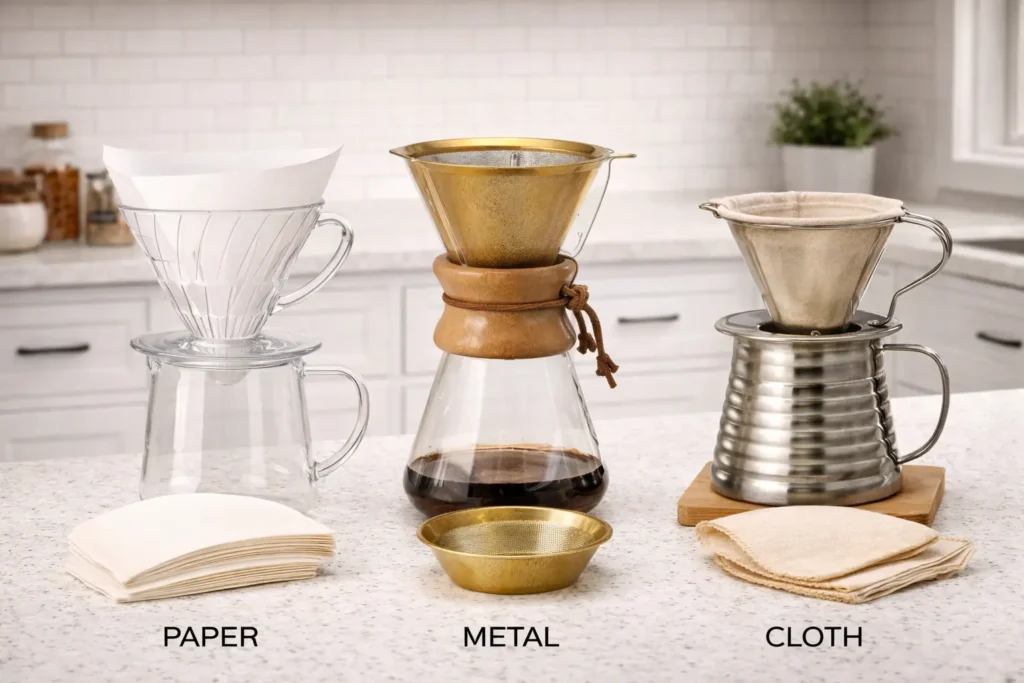
Paper, metal, and cloth filters change body, clarity, sediment, flow, cleanup, and ownership cost. This guide explains the trade-offs and how filter choice interacts with V60, Chemex, Kalita Wave, and other pour-over brewers.
Editorial analysis
The “best” filter depends on the cup profile you actually want
Paper is the easiest reference point for clean, repeatable brewing. Metal is a deliberate move toward more oil, texture, and sediment. Cloth can split the difference, but only if the maintenance routine is realistic. Choose the filter material around taste and workflow, not a universal ranking.
Filter Choice Changes the Cup Before You Change the Recipe
Pour-over filters are not passive containers. Their pore size, thickness, fiber structure, and shape influence how quickly water moves through the coffee bed and how much oil and fine material reaches the cup. That means a filter change can alter clarity, body, aroma, drawdown, and even the grind size that works best.
Paper, metal, and cloth therefore make sense as different brewing tools rather than a simple quality ranking. Paper produces the cleanest cup and the easiest baseline for dial-in. Metal preserves more oils and fine particles, creating more body and a heavier finish. Cloth sits between those two, combining relatively high clarity with more texture, but it asks for the most maintenance.
Paper vs Metal vs Cloth at a Glance
| Filter type | Oils in cup | Fine sediment | Typical cup character | Workflow |
|---|---|---|---|---|
| Paper | Very little | Very little | Clean, bright, high clarity | Single-use, easy cleanup |
| Metal | Most oils pass through | Some fines | Fuller body, richer texture, more sediment | Reusable, rinse after every brew |
| Cloth | Some oils pass through | Low sediment | Rounded body with good clarity | Reusable but requires careful rinsing and storage |
Common filter options
Compare the filter formats readers are most likely to encounter
The commercial options are grouped here so the editorial comparison can stay focused on taste, flow, cleanup, and compatibility.
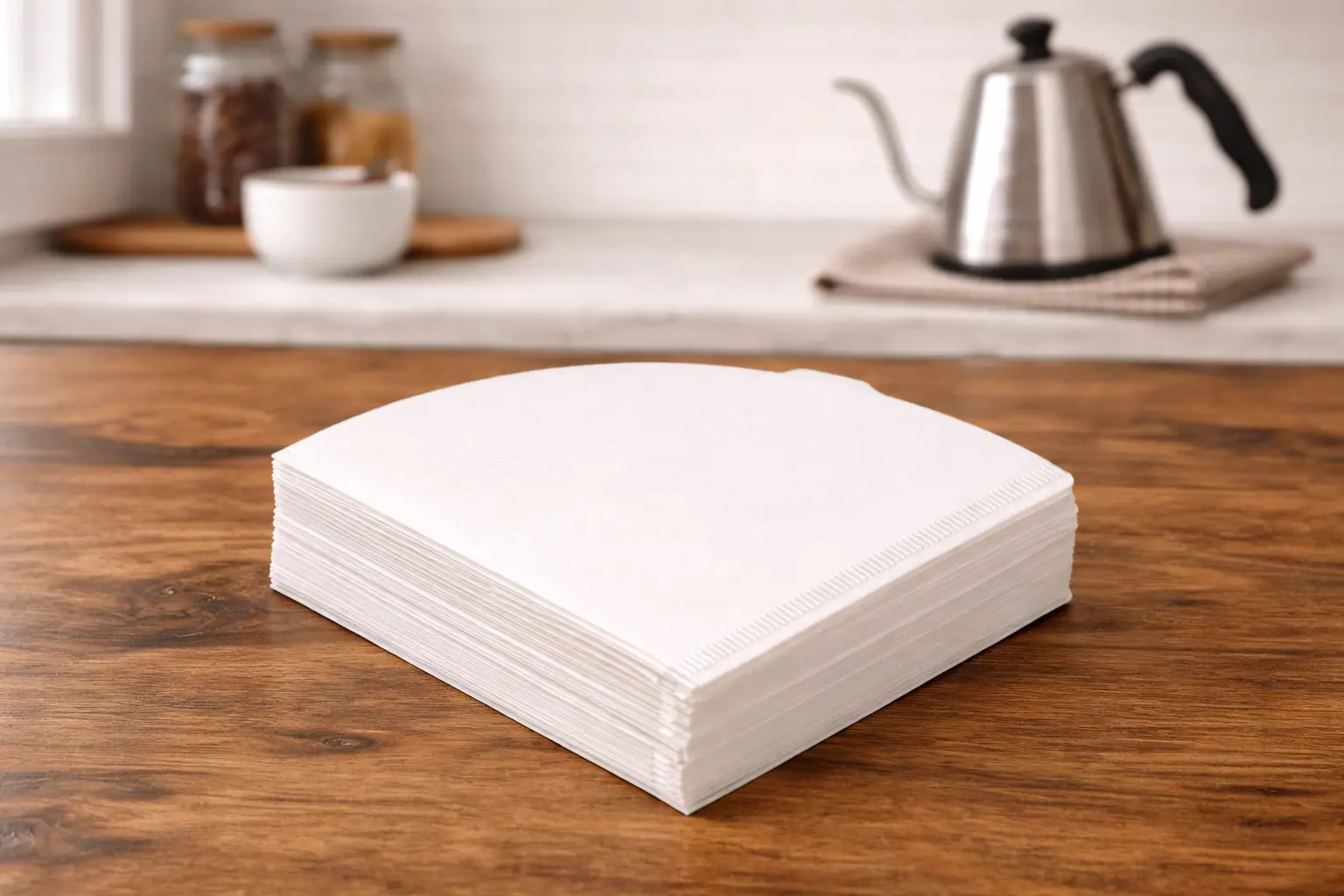 Hario V60 Paper FiltersA standard paper reference for high-clarity cone brewing and repeatable flow.View on Amazon →
 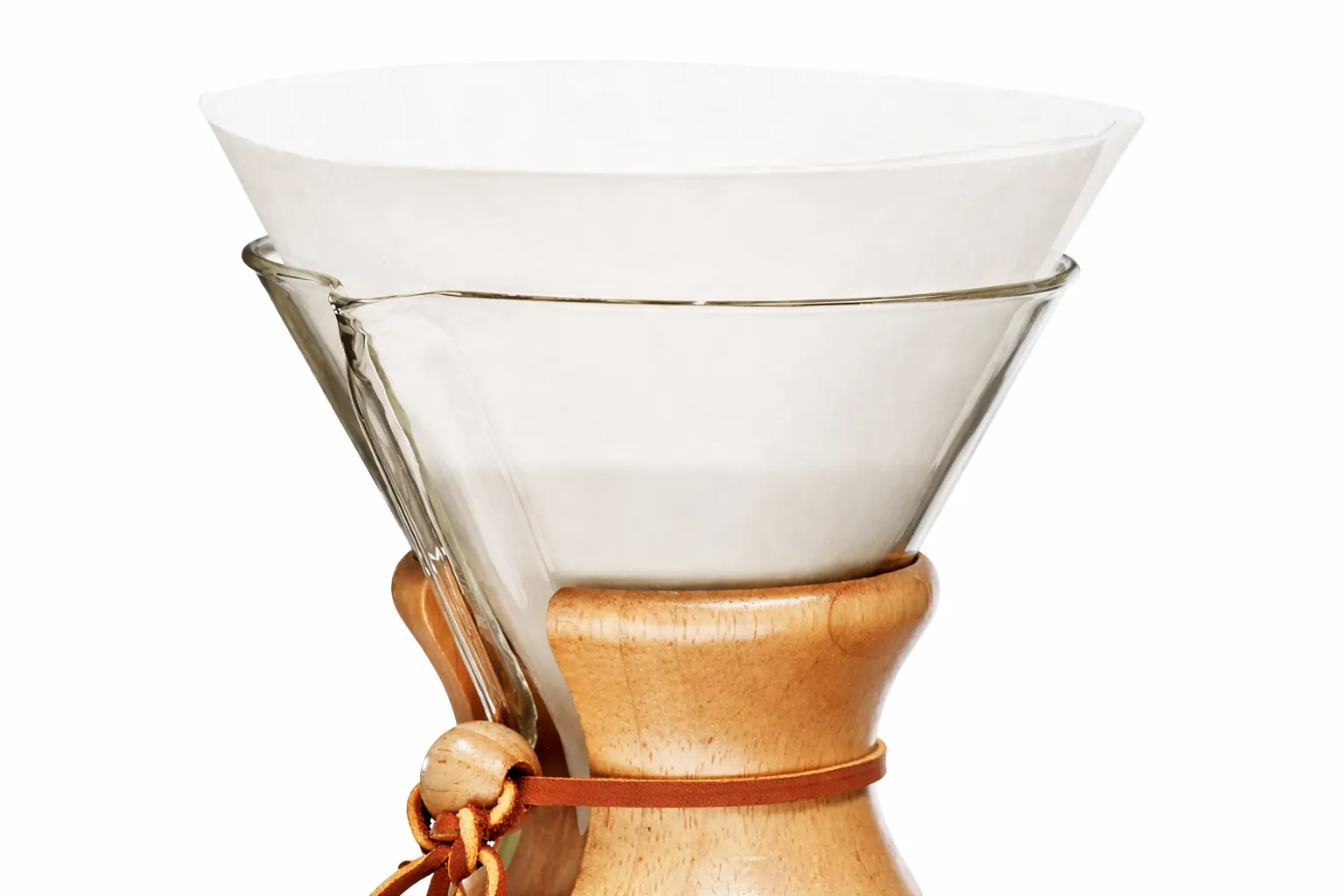 Chemex Bonded FiltersThicker proprietary paper that emphasizes clarity and changes flow more strongly than standard cone paper.View on Amazon →
 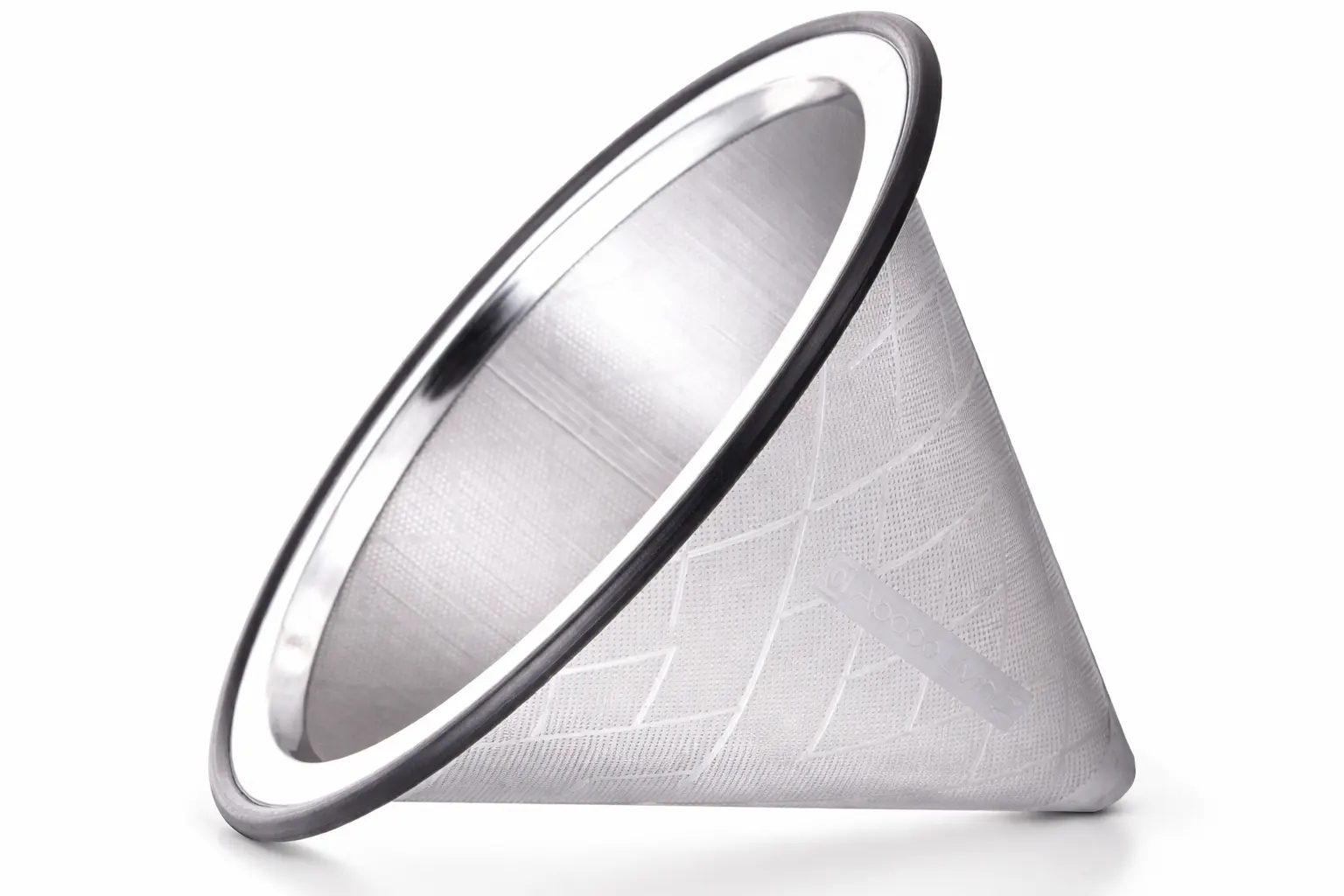 Hario V60 Metal FilterReusable stainless filter for more oils, more body, and a different cleanup routine.View on Amazon →
Affiliate disclosure: These links may earn CoffeeGearHub a commission at no additional cost to you. As an Amazon Associate, we earn from qualifying purchases. Prices and availability can change.
Paper Filters: The Clearest Baseline
Paper removes most suspended oils and fine particles, so the resulting cup tends to taste cleaner and more separated. Acidity and floral or fruit notes are easier to perceive because there is less oil and sediment adding weight to the palate. This is why paper is the default reference for V60, Kalita Wave, and Chemex brewing.
Bleached and unbleached papers can both work well. The practical difference is usually flavor neutrality and rinsing behavior rather than extraction performance alone. A thoroughly rinsed white paper tends to disappear into the brew more easily, while natural brown papers can contribute a papery or woody note if they are not rinsed enough.
Premium papers such as abaca-based filters can change flow because the fiber structure and pore pattern differ from standard wood-pulp filters. That can be useful when a brewer repeatedly stalls, but it also means a grind setting dialed with one paper may not transfer perfectly to another.
Bleached, Unbleached, and Premium Paper Are Not Interchangeable in Practice
Paper filters are often discussed as if color were the only difference, but fiber composition, thickness, crimping, pore structure, and manufacturing tolerances can all change flow. Bleached white paper is generally the easiest neutral baseline because a thorough rinse removes most paper aroma quickly. Unbleached brown paper can perform just as well, but it usually needs more rinsing to prevent woody or papery notes from entering the cup.
Premium papers such as abaca-based filters are useful when a brewer repeatedly stalls or when a faster, more open flow profile is desired. They do not automatically make better coffee. Their value is that they create a different resistance profile, which can make a recipe easier to dial in with certain grinders or coffees.
| Paper type | Typical flow tendency | Flavor neutrality | Best use |
|---|---|---|---|
| Bleached white paper | Predictable baseline | High after a normal rinse | Everyday reference brewing and repeatable dial-in |
| Unbleached brown paper | Similar to standard paper, brand dependent | Can require more rinsing | Users who prefer unbleached material and do not mind extra rinse water |
| Premium / abaca paper | Often faster and more open | High | Recipes that stall easily or users who want a different flow profile |
| Chemex bonded paper | High resistance | High after a thorough rinse | Very clean multi-cup brewing in the Chemex system |
Changing Filters Often Means Re-Dialing the Grind
A filter change can alter drawdown enough that the grinder setting that worked yesterday no longer produces the same extraction. Faster paper can shorten contact time and make a cup taste sharper unless the grind is moved slightly finer. Slower paper can increase drawdown and make the same recipe taste drying or heavy unless the grind is moved coarser or agitation is reduced.
This is why filter choice should be stabilized before chasing a precise grind setting. If you regularly alternate between paper brands, note the filter alongside the grinder setting in your brew log. Otherwise it is easy to blame the grinder for a change actually caused by paper resistance.
| Filter change | Likely flow effect | First adjustment to test |
|---|---|---|
| Standard paper → faster premium paper | Shorter drawdown | Try slightly finer if the cup becomes thin or sharp |
| Fast paper → thicker/slower paper | Longer drawdown | Try slightly coarser before increasing agitation |
| Paper → metal | Different flow and more oils/fines in cup | Re-dial from a fresh baseline; do not expect the paper recipe to transfer exactly |
| Paper → cloth | Moderate flow with different oil retention | Start near the paper recipe and adjust by taste |
Metal Filters: More Oils, More Body, More Cleanup
Metal mesh allows much more coffee oil into the cup and also lets a small amount of fine sediment pass. That produces a heavier texture and a flavor profile closer to French press than to paper-filtered pour-over. For drinkers who find paper-filtered coffee too light, this can be a feature rather than a flaw.
The main trade-off is that metal changes the hydraulic behavior of the brewer and the cup at the same time. Flow can be faster or less predictable depending on mesh design, and the brewer often benefits from a slightly coarser grind or less agitation. The filter must also be cleaned thoroughly so trapped oils do not become stale and contribute rancid flavors.
Cloth Filters: A Middle Ground With More Maintenance
Cloth filters can produce a cup with more body than paper and less sediment than metal. When they are clean and well maintained, they are capable of excellent sweetness and clarity. The trade-off is care: cloth retains oils and moisture, so it must be rinsed thoroughly after use and stored in a way that prevents odors or microbial growth.
That maintenance burden is why cloth remains a niche choice. It can be rewarding for a brewer who wants the texture of a reusable filter without the sediment of metal, but it is less convenient for anyone who values a simple daily cleanup routine.
How Filter Material Changes What You Taste
| Taste factor | Paper | Metal | Cloth |
|---|---|---|---|
| Clarity | Highest | Lowest | Medium to high |
| Body | Light to medium | Full | Medium |
| Acidity perception | More distinct | Softer under oil/body | Moderate |
| Sweetness perception | Separated and clear | Integrated with heavier texture | Rounded |
| Sediment | Minimal | Noticeable | Low |
These are broad tendencies, not guarantees. Roast level, grinder quality, water chemistry, ratio, and brew temperature still matter more than the filter alone. The useful way to compare filters is to keep those other variables stable and judge whether the change in body and clarity moves the cup toward your preference.
Filter Shape and Brewer Compatibility Matter
| Brewer | Paper format | Reusable options | Compatibility note |
|---|---|---|---|
| Hario V60 | V60 cone paper | Multiple metal cone options | Widely supported; filter brand can change flow noticeably |
| Chemex | Chemex bonded paper | Third-party metal filters such as Kone-style designs | Standard cone paper does not behave like bonded Chemex paper |
| Kalita Wave | Wave 155 or 185 flat-bottom paper | Metal options exist | Size must match the specific dripper |
| Origami / adaptable drippers | May accept cone or wave-style paper | Varies | Filter shape changes both bed geometry and flow |
Rinsing Paper Filters Is Mostly About Flavor and Heat
Rinsing removes loose paper fibers and surface compounds that can create a papery flavor, while also preheating the brewer and serving vessel. The exact volume of rinse water is less important than fully wetting the paper and discarding the rinse before coffee is added.
Thicker filters deserve more attention. Chemex bonded paper can retain more heat and paper flavor when used dry, so a thorough rinse is useful. With thinner V60 or Kalita papers, a quick full rinse is usually enough.
Reusable Filters Need a Maintenance Routine
The environmental and cost case for reusable filters only holds if the filter remains clean enough to use for a long time. Metal is straightforward: rinse immediately after brewing, periodically remove trapped oils with a coffee-safe cleaner, and inspect the mesh for blocked areas. A filter that smells stale when dry will carry that flavor into the next cup.
Cloth needs more care because it can retain both coffee oils and moisture. Rinse thoroughly after brewing, keep it from drying with old coffee residue embedded in the fibers, and follow the manufacturer’s storage guidance. If the cloth develops persistent odors, discoloration that does not wash out, or a noticeably slower flow, replacement is more sensible than trying to preserve it indefinitely.
Paper avoids that maintenance entirely. Its recurring cost is the trade-off for a clean filter every brew and a much lower chance that yesterday’s oils affect today’s coffee.
Reusable Filters Save Consumables, but Cost Is Not the Only Variable
| Filter type | Upfront cost | Ongoing cost | Ownership trade-off |
|---|---|---|---|
| Standard paper | Low | A few cents per brew | Easy cleanup and predictable flow |
| Premium paper | Low | Higher per-brew cost | Can offer different flow characteristics |
| Chemex bonded paper | Low | Higher than most standard cone papers | Integral to the Chemex cup profile |
| Metal | Moderate one-time cost | Very low | More cleaning and a different cup profile |
| Cloth | Low to moderate | Low, with eventual replacement | Highest maintenance burden |
If the goal is simply to minimize consumable cost, metal wins. If the goal is repeatability and easy cleanup, paper remains difficult to beat. Cloth is most compelling when its particular balance of body and clarity is worth the additional care.
Choose the Filter Around the Cup You Want and the Routine You Will Maintain
Paper is the safest default for most pour-over drinkers because it produces a clean cup, has predictable cleanup, and makes grind changes easy to interpret. Metal is useful when body and oil are part of the desired flavor profile or when eliminating disposable filters matters more than perfect clarity. Cloth is a specialty choice for someone willing to maintain it carefully in exchange for a texture that sits between paper and metal.
The best filter is therefore not the one with the highest price or the most reusable material. It is the one whose cup profile and maintenance burden fit the way you actually brew.
FAQs: Pour Over Filter Comparison
Do pour over filters affect coffee taste?
Yes — filter type is one of the most impactful variables in pour over flavor. Paper filters trap coffee oils and fine particles, producing a clean, bright, high-clarity cup. Metal filters allow oils and micro-fines through, producing a fuller-bodied, richer cup closer to French press. Cloth filters fall between the two. The difference is noticeable side by side even using identical beans, grind size, ratio, and temperature.
Are paper or metal filters better for pour over?
Neither is objectively better — they produce fundamentally different cups. Paper filters produce cleaner, brighter coffee that highlights acidity and subtle flavor notes. Metal filters produce fuller-bodied, oilier coffee with more texture and less clarity. The right choice depends on whether you prefer a clean, tea-like cup or a richer, heavier cup. Most specialty coffee brewers use paper; most people who prefer a fuller body use metal.
Do I need to rinse paper pour over filters?
Yes — rinsing a paper filter before brewing is strongly recommended. Unrinsed paper filters impart a faint papery taste to the first brew, especially noticeable with light roasts and delicate beans. Rinsing also pre-heats the dripper and server. Use a small pour of hot water through the filter, discard the rinse water, then proceed with your normal brew.
What is the best paper filter for V60?
Hario’s own tabbed white V60 paper filters are the standard recommendation for V60 brewing — they fit precisely, have consistent thickness, and produce the clean, high-clarity cup the V60 is designed for. Cafec Abaca filters are a popular premium alternative, made from abaca plant fiber, that some brewers prefer for their slightly improved flow rate and minimal papery taste even when unrinsed.
Can I use any filter with a Chemex?
No — Chemex requires its own bonded paper filters, which are significantly thicker than standard cone filters. Standard V60 or generic cone filters will not seal properly in a Chemex and will allow grounds to pass through. Chemex filters are available in bleached (white) and unbleached (natural) versions — bleached filters produce a marginally cleaner taste and are the more commonly recommended option.
How long do metal pour over filters last?
A quality stainless steel metal filter typically lasts several years with proper care. The main failure mode is mesh distortion from improper cleaning or storage, or gradual clogging of the mesh holes with oils and fine particles that reduce flow rate over time. Cleaning after every brew and periodic deep cleaning with a diluted coffee cleaner extends lifespan significantly.
Are bleached or unbleached paper filters better?
Bleached (white) paper filters are generally preferred for pour over because they produce less papery taste than unbleached filters, especially when not pre-rinsed. The bleaching process used by reputable filter manufacturers is oxygen-based rather than chlorine-based and does not introduce harmful compounds into the brew. Unbleached filters work well when thoroughly rinsed but leave a more detectable papery flavour if used dry.
What is a cloth pour over filter and is it worth using?
A cloth pour over filter — typically made from cotton or hemp — falls between paper and metal in terms of filtration. It allows some oils through while blocking most fine particles, producing a cup with more body than paper but more clarity than metal. Cloth filters require thorough rinsing before use and careful storage (usually kept wet in the fridge between brews to prevent mildew). They are worth trying if you want a middle-ground cup character, but the maintenance demands make them less practical than paper or metal for daily use.
Do Kalita Wave filters work in other drippers?
No — Kalita Wave filters are flat-bottomed and only fit the Kalita Wave dripper. They are not interchangeable with cone filters used in V60, Chemex (which requires its own bonded filters), or other cone-shaped drippers. Within the Kalita Wave range, both 155 and 185 sizes are available — ensure you match the filter size to your specific Kalita Wave dripper.
Are expensive filters worth it for pour over?
Premium filters like Cafec Abaca or Chemex bonded filters produce marginally cleaner flavor than standard paper filters, primarily because they require less rinsing to eliminate papery taste and have more consistent thickness across the filter surface. For most home brewers, the improvement is subtle. The more impactful variable is rinsing your current filter thoroughly rather than upgrading to a more expensive brand. If you brew specialty light roasts regularly, the upgrade to premium filters is more noticeable.
CoffeeGearHub shortlist
Compare filter and brewer product pages
Review specifications and current verified merchant offers on CoffeeGearHub before leaving the site.
Continue Learning
Use these guides to connect filter choice with brewer design, grind size, and overall pour-over technique.
In this guide
- Filter Choice Changes the Cup Before You Change the Recipe
- Paper vs Metal vs Cloth at a Glance
- Paper Filters: The Clearest Baseline
- Bleached, Unbleached, and Premium Paper Are Not Interchangeable in Practice
- Changing Filters Often Means Re-Dialing the Grind
- Metal Filters: More Oils, More Body, More Cleanup
- Cloth Filters: A Middle Ground With More Maintenance
- How Filter Material Changes What You Taste
- Filter Shape and Brewer Compatibility Matter
- Rinsing Paper Filters Is Mostly About Flavor and Heat
- Reusable Filters Need a Maintenance Routine
- Reusable Filters Save Consumables, but Cost Is Not the Only Variable
- Choose the Filter Around the Cup You Want and the Routine You Will Maintain
- FAQs: Pour Over Filter Comparison