
Last updated: February 2026 • 18 min read
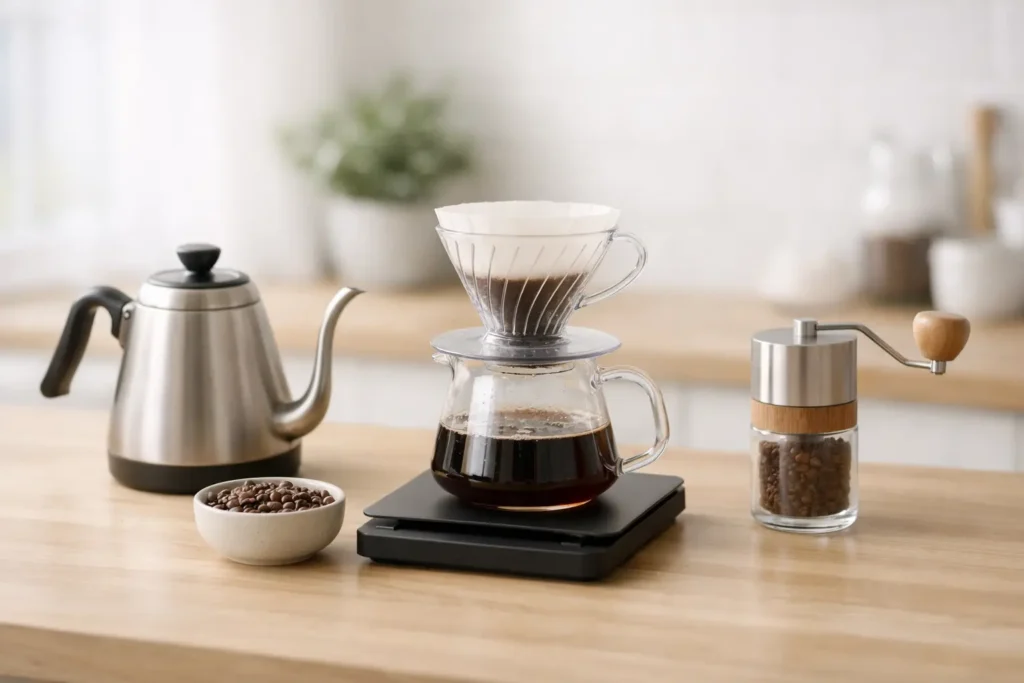
Quick takeaway: Pour-over coffee magnifies both good and bad choices. The right beans make dialing in easier, more forgiving, and far more enjoyable—especially when you’re just getting started. This guide focuses on beans that produce balanced, repeatable results without requiring perfect technique.
Key Takeaways
- Medium and light-medium roasts are easiest for beginners
- Balanced sweetness matters more than origin complexity
- Freshness (7–21 days post-roast) impacts flavor more than brand
- Forgiving beans reduce sour and bitter results while learning
If you’re brand new to pour-over, start with our Coffee Brewing Foundations guide, then come back here to choose beans that won’t fight your learning curve.
What Makes Coffee Beans Good for Pour-Over?
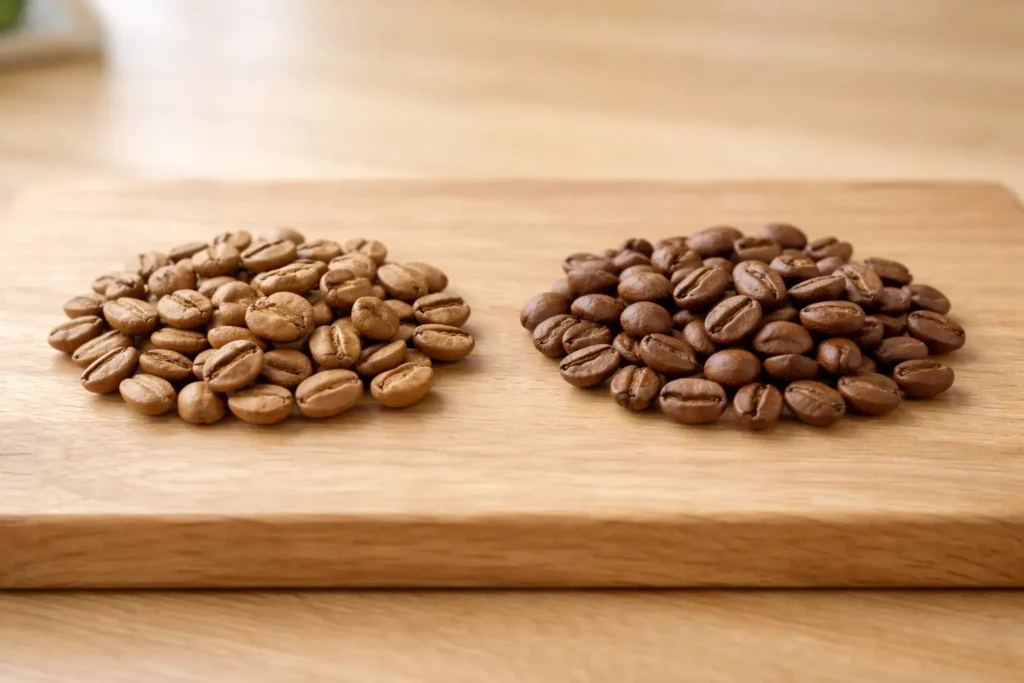
Pour-over brewing extracts coffee gently and exposes flaws quickly. Unlike drip machines, there’s no automation smoothing out mistakes—so bean choice matters more.
- Balanced acidity: Bright but smooth, not sharp
- Natural sweetness: Chocolate, caramel, honey, or soft fruit
- Even roasting: No oil sheen, no scorched aromas
- Extraction tolerance: Tastes good across small grind or pour errors
If your pour-over tastes sour or bitter, beans are often part of the problem—but grind size and ratio matter too. See our coffee grind size chart and pour-over ratio guide for fixes.
How to Choose the Right Beans for Your Pour-Over Setup
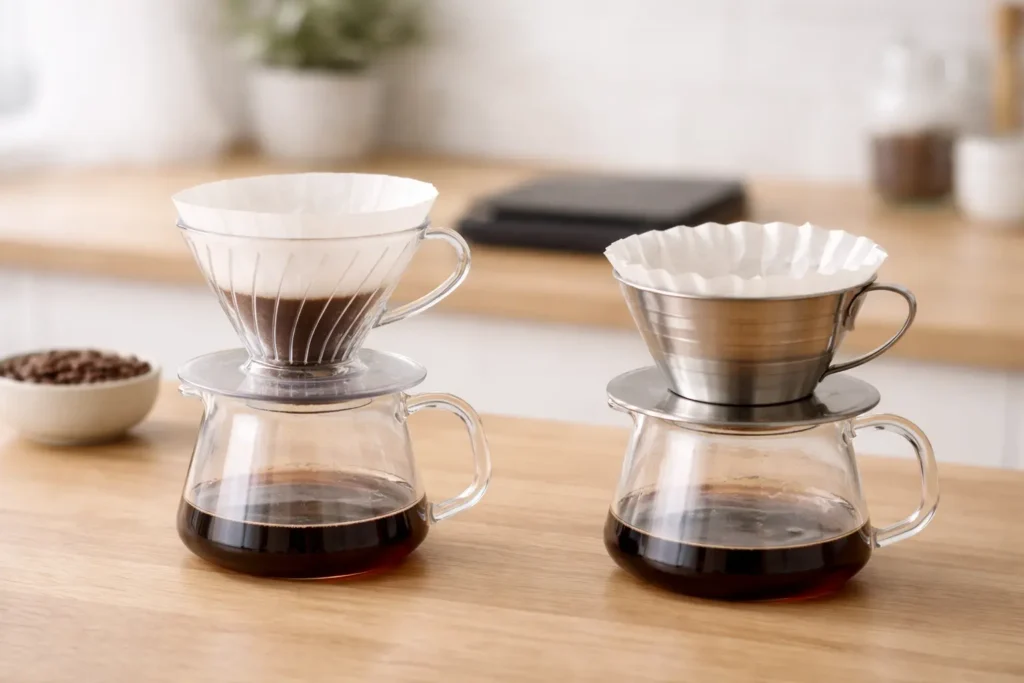
Not all pour-over setups extract coffee the same way. Your dripper shape, filter, and grinder should influence which beans you buy.
If You Use a V60 or Cone Dripper
- Light-medium roasts work best
- Sweet, balanced coffees over sharp acidity
- Colombian and Central American origins are forgiving
If You Use a Flat-Bottom Dripper (Kalita Wave)
- Medium roasts extract more evenly
- Chocolate and caramel notes shine
- Blends often outperform single origins
If You’re Using an Entry-Level Burr Grinder
- Avoid ultra-light roasts
- Choose medium roasts for grind tolerance
- Consistency matters more than origin detail
What Good Pour-Over Coffee Should Taste Like
- Aroma: Sweet, clean, never burnt
- First sip: Gentle acidity, not sour
- Mid-palate: Balanced sweetness
- Finish: Clean, no harsh bitterness
If your coffee tastes sour, you’re likely under-extracting. Bitter usually means over-extraction or too dark a roast. Flat flavors often mean stale beans.
How These Beans Were Selected
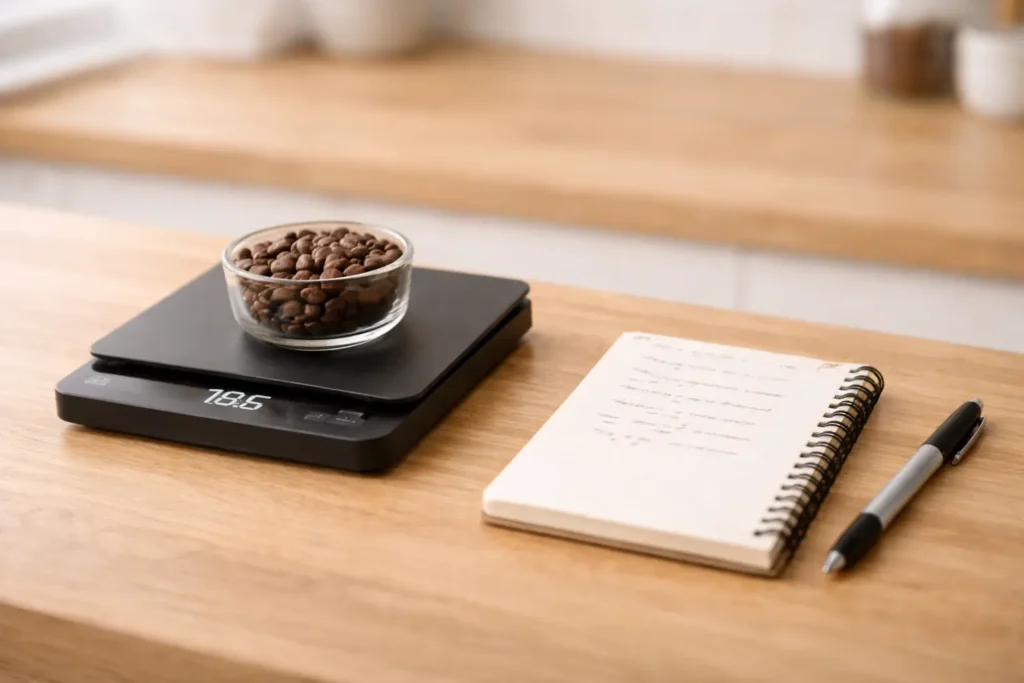
Each coffee below was chosen because it:
- Extracts evenly with minor pouring mistakes
- Performs well at common beginner ratios (1:15–1:17)
- Tastes balanced across multiple pour-over brewers
- Is widely available and consistently roasted
Lavazza ¡Tierra! Organic Medium Roast
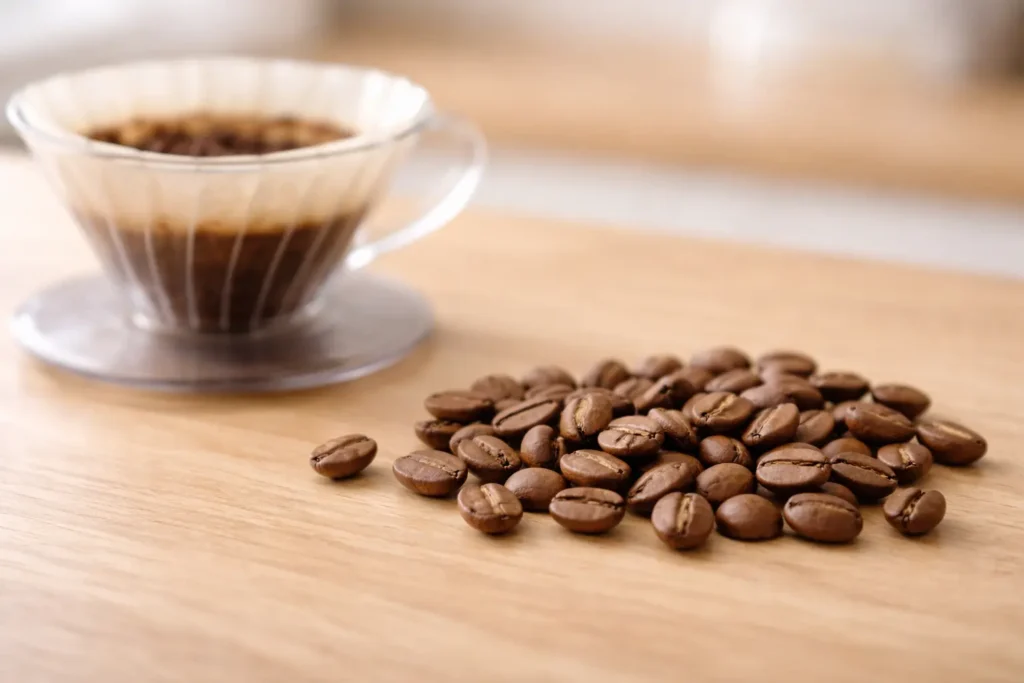
This is one of the most forgiving pour-over coffees available. Smooth sweetness, low acidity, and excellent consistency make it ideal while learning.
- Flavor: Milk chocolate, toasted nuts
- Best brewers: Kalita Wave, flat-bottom drippers
- Grind tolerance: Very high
Starter recipe: 20g coffee • 320g water • Medium grind • ~3:00 brew time
Counter Culture Hologram
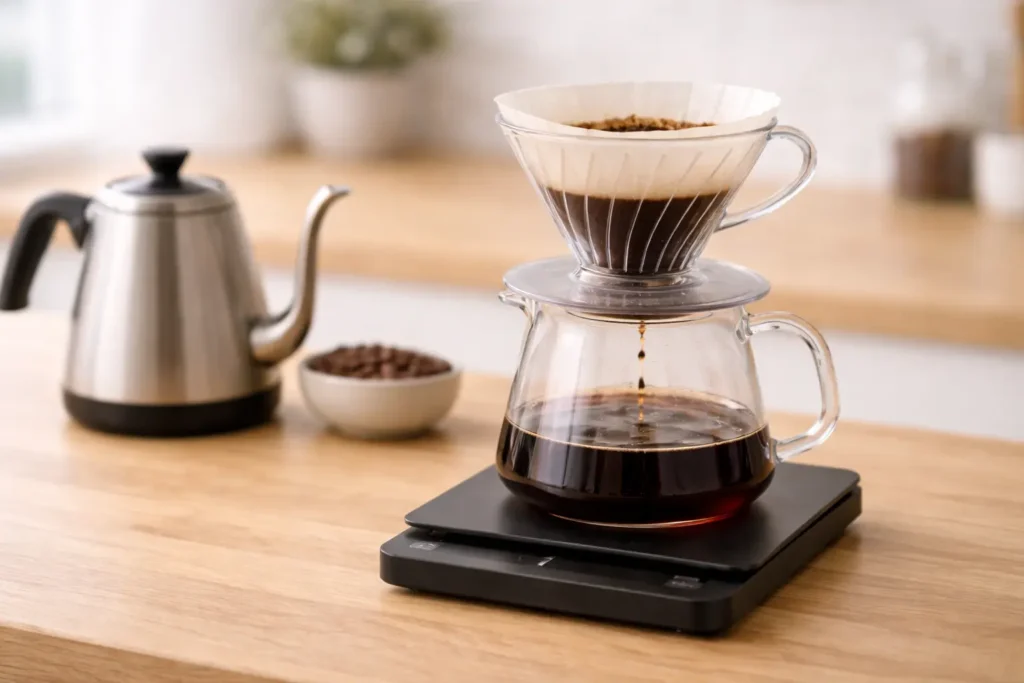
Hologram introduces complexity without punishing mistakes. It’s an excellent stepping stone into specialty coffee.
- Flavor: Brown sugar, fruit, cocoa
- Best brewers: V60, Chemex
- Grind tolerance: Medium-high
Starter recipe: 22g coffee • 330g water • Medium-fine grind • ~3:15 brew time
Stumptown Holler Mountain

Perfect if you’re transitioning from drip machines. It’s comforting, balanced, and extremely approachable.
- Flavor: Caramel, mild citrus
- Best brewers: Flat-bottom pour-over, drip-style recipes
- Grind tolerance: High
Starter recipe: 20g coffee • 340g water • Medium grind • ~3:30 brew time
Side-by-Side Brewing Comparison
| Coffee | Best Brewer | Ideal Ratio | Grind Tolerance | Taste Profile |
|---|---|---|---|---|
| Lavazza ¡Tierra! | Kalita Wave | 1:16 | Very High | Chocolate, smooth |
| Hologram | V60 / Chemex | 1:15–1:16 | High | Sweet, balanced |
| Holler Mountain | Flat-bottom | 1:16–1:17 | High | Caramel, mild citrus |
Common Mistakes Beginners Make When Choosing Beans
- Buying espresso-labeled beans for pour-over
- Choosing ultra-light roasts with basic grinders
- Ignoring roast dates
- Overpaying for complexity too early
FAQs
What roast level is best for pour-over coffee?
Light-medium and medium roasts are ideal for pour-over. They balance acidity and sweetness without requiring perfect pouring technique. Ultra-light roasts can taste sour if your grind or pour isn’t precise, while darker roasts often taste flat or bitter in pour-over.
Are single-origin beans better than blends for pour-over?
Not always. Single-origin coffees can highlight unique flavors, but blends are often more consistent and forgiving for beginners. A well-crafted blend can deliver balanced sweetness and repeatable results while you’re still learning.
How fresh should coffee beans be for pour-over brewing?
Pour-over coffee tastes best when beans are brewed between 7 and 21 days after roast. Beans that are too fresh can taste grassy or sharp, while older beans lose sweetness and clarity.
Can I use pre-ground coffee for pour-over?
You can, but it limits quality. Pour-over is especially sensitive to grind size, and pre-ground coffee stales quickly. Grinding whole beans fresh will noticeably improve clarity, sweetness, and aroma.
Why does my pour-over coffee taste sour even with good beans?
Sour flavors usually indicate under-extraction. This can happen if the grind is too coarse, the water temperature is too low, or the coffee-to-water ratio is too weak—even with high-quality beans.
Do expensive coffee beans always taste better in pour-over?
No. Price doesn’t guarantee better flavor. Well-roasted, moderately priced beans often outperform expensive specialty coffees if they’re fresher and better suited to your grinder and brewing method.
Should I avoid espresso-labeled beans for pour-over?
In most cases, yes. Espresso-labeled beans are usually roasted darker to suit pressure brewing. In pour-over, they can taste muted or overly bitter compared to beans roasted specifically for filter methods.
How do I know when it’s time to try lighter or more complex beans?
Once you can consistently brew balanced cups—without sourness or bitterness—you’re ready to experiment. Upgrading your grinder and refining your pour technique first will make lighter roasts far more enjoyable.

