Last Updated: March 2026 • 35–45 min read • Cornerstone Guide: Pour Over Grinder Science + Beginner Picks + Grind Reference + Dial-In System
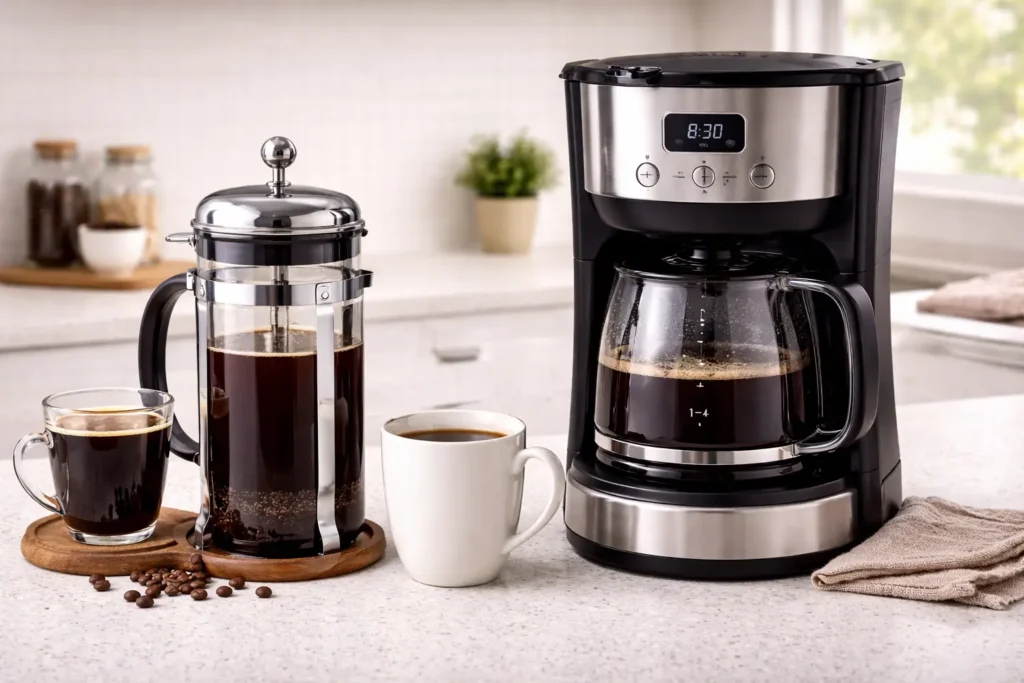

The best coffee grinders for pour over are not the same as the best coffee grinders for espresso — and understanding that distinction saves beginners from spending money in the wrong direction. Pour over operates at the far end of the grind spectrum from espresso: longer contact time, gentler gravity-based flow, and paper filtration mean it is more forgiving of minor grind variation than high-pressure espresso extraction. But that forgiveness has limits. Pour over is the most grind-sensitive of all filter brewing methods — it produces the cleanest, most transparent cup of any home brewer, and that transparency means every variable in your grind is visible in the cup. A blade grinder produces uneven particles that extract chaotically through a paper filter, resulting in cups that are simultaneously bitter and sour regardless of how carefully you pour. A consistent burr grinder produces even particles that extract predictably, letting you control brew time, flavour clarity, and extraction completeness with a simple grind adjustment. This guide covers everything a pour over brewer needs to know: why grind consistency matters more for pour over than for French press or drip, what specifications actually distinguish a good pour over grinder from a merely adequate one, our verified picks from entry manual to premium flat burr, a complete K6 grind reference for every dripper, the beginner dial-in system, and a full troubleshooting matrix for every common pour over problem.
✍️ Editorial note: This guide is researched and written by the editors at CoffeeGearHub.com using published brewing science, SCA Brewing Standards, manufacturer specifications, and established specialty-coffee community knowledge. All product links are affiliate links — we may earn a commission at no cost to you. Affiliate Disclosure: CoffeeGearHub.com participates in the Amazon Services LLC Associates Program. As an Amazon Associate, we earn from qualifying purchases.
The 30-Second Answer
For most pour over brewers, the KINGrinder K6 is the best starting point — 100-click precision, the right grind range for every pour over dripper, and the quality-to-cost ratio that no entry electric grinder at the same spend can match. For those who prefer electric grinding, the Baratza Encore is the most widely recommended entry electric option. For anyone who wants to maximise pour over flavour clarity and is ready to invest in a purpose-built flat burr grinder, the Fellow Ode Gen 2 is the benchmark. The grinder is the single most impactful purchase in any pour over setup — a quality burr grinder paired with any dripper from this guide produces better results than the most expensive dripper paired with a blade grinder.
- Best Manual Grinder (Entry): KINGrinder K6 — the CoffeeGearHub standard for all pour over brewing; 100-click precision, covers every dripper
- Best Electric Grinder (Entry): Baratza Encore — the standard electric recommendation for pour over beginners; repairable, consistent, widely supported
- Best Premium Manual: Comandante C40 — the benchmark hand grinder for pour over; low fines, exceptional consistency, the choice of competition brewers
- Best Flat Burr / Premium Electric: Fellow Ode Gen 2 — purpose-built pour over grinder; 64mm flat burrs, low retention, the highest clarity cup available in home pour over
- What to avoid: Any blade grinder; the Fellow Ode is not espresso-capable but is the correct pour over choice; do not use an espresso grinder for pour over — its fine setting precision is wasted and the medium range is compressed
Who This Guide Is For — Jump to What You Need
☕ Total Pour Over Beginner
Start with Why Grind Consistency Matters and Dripper-to-Grind Matching before reading any product picks.
🛒 Ready to Buy
Jump to Top Picks for verified product recommendations, or see the comparison table to match a grinder to your setup.
🔧 Brew Troubleshooter
Jump to the Troubleshooting Matrix for sour, bitter, stalling, and channeling fixes organised by symptom.
🔬 Grind Nerd
See the K6 Grind Reference and Dial-In Guide for click settings and systematic brew improvement.
Table of Contents
- Why grind consistency matters more for pour over
- Dripper-to-grind matching: V60, Kalita Wave, Chemex
- What to look for in a pour over grinder
- Flat burr vs conical burr for pour over
- Manual vs electric for pour over
- How much should you spend on a pour over grinder?
- Pour over grinder type comparison
- Top picks: best pour over grinders
- A note on espresso grinders and pour over
- Extraction science: why pour over rewards grind quality
- K6 grind reference: every dripper at every roast level
- Brew time reference: what good pour over looks like
- Dial-in guide: how to find your first great pour over
- Common beginner grinder mistakes
- Troubleshooting matrix
- Cleaning and maintenance
- FAQs
Why Grind Consistency Matters More for Pour Over Than Any Other Filter Method
Pour over coffee is built on transparency. The paper filter removes oils, fine particles, and suspended solids that other methods leave in the cup — what reaches your mug is a clean, clear expression of exactly what happened during extraction. This is pour over’s greatest strength: a well-brewed V60 from a quality single-origin bean reveals flavour complexity that French press, drip, and AeroPress all obscure. It is also pour over’s sharpest demand: because the paper filter produces such a clean cup, every extraction variable is more visible in the final result than in any other method. Grind inconsistency that produces a “slightly off but drinkable” French press produces a clearly sour, bitter, or flat pour over from the same beans.
Here is why: in a pour over, hot water passes through a bed of coffee grounds progressively as it drains through a paper filter by gravity. If your grind contains a mix of fine particles and coarse chunks — which every blade grinder and most cheap grinders produce — the fine particles over-extract in seconds while the coarse chunks under-extract even after the full brew cycle completes. The paper filter collects both in the same brew. The resulting cup tastes simultaneously bitter (from the fines) and sour (from the chunks), a combination that is impossible to fix by adjusting any other variable. A consistent burr grinder produces particles clustered tightly around the target size. All those particles extract at the same rate, in the same time window, producing a cup where you control the outcome entirely by adjusting one variable — grind size — one step at a time.
⚠️ The grinder-dripper priority rule: In pour over, the grinder contributes more to cup quality than the dripper at almost every budget level. A KINGrinder K6 paired with a basic plastic V60 produces better pour over than a blade grinder paired with a ceramic Hario V60. If you are choosing between spending on a better dripper or a better grinder, spend on the grinder first. The dripper is a vessel; the grinder controls what goes into it. See our Best Pour Over Coffee Makers guide for dripper recommendations once your grinder is sorted.
Dripper-to-Grind Matching: V60, Kalita Wave, and Chemex
The most important variable in matching a grinder to your pour over setup is not brand or budget — it is which dripper you are using. Each dripper has a different flow rate, filter resistance, and tolerance for grind variation. This single factor determines how tightly your grind consistency needs to be, and which grinders will work well versus which will frustrate you with inconsistent drawdown times.
| Hario V60 | Kalita Wave 185 | Chemex 6-Cup | |
|---|---|---|---|
| Flow mechanism | Single large hole — flow rate entirely controlled by grind and pour technique | Three small holes — partially regulates flow regardless of grind or pour; more forgiving | Thick bonded paper filter — slow flow; most forgiving of coarser grind variation |
| Grind sensitivity | High — small grind changes produce large drawdown time changes; rewards precision | Moderate — flat-bottom design buffers against minor grind inconsistency | Lower — thick filter slows flow enough to compensate for moderate grind variation |
| Target grind (K6) | 35–45 clicks (medium to medium-fine) | 42–50 clicks (medium) | 45–55 clicks (medium-coarse) |
| Target brew time | 2.5–3.5 minutes total | 3–4 minutes total | 4–6 minutes total (900ml) |
| Grind tolerance | Narrow — 2–3 click changes produce significant drawdown changes; demands consistent grinder | Moderate — 3–4 click range is workable before drawdown changes significantly | Wide — 5+ click range is acceptable; thick filter compensates |
| Best grinder match | K6, Comandante C40, Fellow Ode Gen 2 — precision matters | Any quality burr grinder — the most forgiving dripper | Any quality burr grinder — thicker filter compensates for wider grind range |
| Blade grinder result | Consistently poor — uneven particles produce chaotic drawdown and uneven extraction | Marginal — slightly more forgiving but still produces bitter/sour mixed cups | Marginal — thicker filter helps but particle inconsistency still ruins cup clarity |
What to Look for in a Pour Over Grinder: 5 Variables That Matter
Pour over grinder specifications are simpler than espresso grinder specifications — the precision requirements are lower and the adjustment range is more accessible. These five factors determine whether a grinder will produce excellent pour over or merely acceptable pour over.
| Factor | Why it matters for pour over | What to look for | What to avoid |
|---|---|---|---|
| Grind range at medium settings | Pour over requires a medium grind — your grinder needs enough resolution in the medium range to make meaningful adjustments for different drippers and roast levels | 30+ settings in the medium range minimum; 100-click systems (K6) give the most resolution; even 40-step electric grinders cover the range adequately | Grinders with only 10–15 total settings; blade grinders; grinders that compress their entire medium range into 2–3 adjacent steps |
| Burr quality and consistency | Consistent particle size is the foundation of controlled pour over extraction — cheap burrs produce excessive fines at medium settings, which clog paper filters and over-extract before the main extraction completes | Stainless or hardened steel burrs; 38mm+ burr diameter for manual grinders; 40mm+ for electric; manufacturer-specified particle distribution data at medium settings | Plastic burr carriers; undisclosed burr specifications; grinders without stated grind consistency data |
| Repeatability | Once you find a grind setting that produces a great pour over, you need to return to it reliably every session — and adjust from it predictably when you change beans | Numbered or click settings; stepless grinders with reference markings; digital settings on electric grinders | Continuous dial grinders without reference marks that cannot be returned to a known position between sessions |
| Low fines at medium settings | Fines (very fine particles below target size) pass through paper filters, over-extract in seconds, and produce bitterness and astringency in pour over even when total brew time is correct | Flat burr grinders produce fewer fines at medium settings than conical — the Fellow Ode Gen 2 is the lowest-fines option; quality conical burrs (K6, Comandante) produce acceptable fines levels for all drippers | Cheap conical burrs and blade grinders produce excessive fines at any medium setting |
| Dose range suitability | Pour over typically uses 15–42g per brew (single V60 cup to full Chemex) — the grinder needs to handle this range without clumping, stalling, or significant retention | Most manual grinders handle 15–30g comfortably; electric hoppers handle any practical pour over dose; single-dose hoppers reduce stale retention | Large hopper designs that hold 200g+ encourage stale beans — buy smaller quantities and use within 4 weeks of roasting |
Flat Burr vs Conical Burr for Pour Over
The flat vs conical burr question matters more for pour over than for espresso because pour over’s paper filtration amplifies the difference in particle distribution between the two designs. Both produce excellent pour over at quality levels — but they produce different cups from the same beans, and understanding this helps you choose the right grinder for your preferred flavour profile.
| Conical Burr (Pour Over) | Flat Burr (Pour Over) | |
|---|---|---|
| Particle distribution | Slightly bimodal — primary peak at target size plus a secondary fine fraction; fines add sweetness and body to the cup | Unimodal — tight clustering around target size with fewer fines; maximises clarity and separation of flavour compounds |
| Fines production at medium | Moderate fines — adds body and mouthfeel to pour over; can contribute slight muddiness in very clear brews | Low fines — produces the cleanest, most transparent pour over available; every note in the bean is distinct and separate |
| Pour over flavour profile | Fuller body, more sweetness, slightly reduced clarity — well-suited to everyday medium roast pour over and Chemex brews | Maximum clarity, brighter acidity, defined flavour separation — ideal for light roast single-origin tasting and V60 brewing |
| Best use cases | Everyday pour over across all drippers; medium to medium-dark roast; brewers who prefer body over clarity | Light roast single-origin V60; Hario V60 precision brewing; anyone prioritising flavour transparency over body |
| Beginner recommendation | ✓ Correct at all levels — K6, Encore, Virtuoso+ are all conical; produces excellent pour over | ✓ Ideal for clarity-focused pour over once you know you want it — Fellow Ode Gen 2 is the accessible flat burr option |
🔬 Why the Fellow Ode Gen 2 was designed specifically for pour over: The original Ode (Gen 1) was criticised for inconsistent alignment between brewing sessions. The Gen 2 addressed this with a new alignment system that produces more consistent burr-to-burr spacing, significantly reducing the shot-to-shot variation that undermined the Gen 1’s flat burr advantage. The Ode Gen 2 cannot grind fine enough for espresso — this is a deliberate design choice that allows the 64mm flat burrs to be optimised entirely for the medium grind range where pour over and drip operate, producing the finest, most consistent medium grind of any grinder in its price class.
Manual vs Electric Grinders for Pour Over
Pour over is one of the best brewing methods for manual grinders because the medium grind setting is easy and fast to produce by hand — unlike espresso, where fine grinding requires significant effort and time. At pour over medium settings, the KINGrinder K6 grinds 15–20g in 60–90 seconds with minimal effort. This is an entirely practical daily habit for most brewers. For larger doses (30–42g for a full Chemex), electric grinding becomes more convenient — but the quality difference between the K6 and an electric grinder at the same price tier is small enough that convenience is the only meaningful differentiator.
| Factor | Manual (K6, Comandante) | Electric (Encore, Ode Gen 2) |
|---|---|---|
| Grind time (15g, pour over setting) | ~60 seconds — fast at medium settings; much faster than espresso | ~10–15 seconds — significantly faster |
| Grind time (35g, Chemex dose) | ~2.5–3 minutes — manageable but effort-intensive daily | ~25–30 seconds — clearly more practical for large doses |
| Grind quality at pour over range | Excellent — K6 conical at 35–55 clicks produces low fines and consistent output | Excellent — Encore and Ode Gen 2 both produce clean medium grinds; Ode flat burrs produce less fines |
| Travel capability | Excellent — K6 is carry-on size, no electricity needed | Poor — mains power required; too heavy and fragile for travel |
| Quality-to-cost ratio | Exceptional — K6 grind quality at pour over settings rivals entry electric grinders | Good at entry; exceptional at Fellow Ode Gen 2 tier |
| Best for | Solo brewing (1–2 cups), travel, anyone prioritising quality-per-spend | Brewing for 2+ people, large Chemex doses, daily brewing that involves 30g+ per session |
How Much Should You Spend on a Pour Over Grinder?
Pour over grinders have a significantly lower minimum spend threshold than espresso grinders because the precision requirements are less demanding. The critical floor is simply “any consistent burr grinder” — even an entry-level manual burr grinder produces a dramatically better pour over than any blade grinder at any price. The return on investment from grinder upgrades is real but diminishing: going from a blade grinder to any burr grinder is a transformative improvement; going from the K6 to the Comandante C40 is a noticeable refinement; going from the Comandante to a commercial flat burr grinder is a subtle clarity improvement audible only to experienced palates.
| Tier | What you get | Best pick | Best for |
|---|---|---|---|
| Entry Manual | 100-click manual burr grinder; 48mm conical burrs; covers all pour over drippers and all non-espresso methods | KINGrinder K6 | Most beginners; solo brewers; travelers; anyone who brews 1–2 cups at a time |
| Entry Electric | 40-step electric conical burr; repairable; covers pour over, drip, and French press; 40mm conical burrs | Baratza Encore | Daily brewers grinding 30g+ who prefer push-button convenience over hand-cranking |
| Premium Manual | Professional-grade hand grinder; 38.5mm red corten steel conical burrs; exceptional low-fines output; used by competition pour over brewers | Comandante C40 | Serious pour over enthusiasts who want the best possible manual grind quality regardless of effort |
| Premium Electric (Pour Over Focused) | 64mm flat burrs designed specifically for filter coffee; lowest fines production of any home pour over grinder; single-dose hopper; stepless adjustment | Fellow Ode Gen 2 | Pour over enthusiasts who want the highest clarity cup possible; light roast single-origin V60 brewers |
Pour Over Grinder Type: Quick-Comparison by Brewer Use Case
| Best For | Recommended Grinder | Why It Works | Trade-Off | Tier |
|---|---|---|---|---|
| First pour over grinder — any dripper | KINGrinder K6 | 100-click precision; 48mm conical burrs; covers V60, Kalita Wave, and Chemex at the correct click settings; best quality-to-cost ratio available | Manual grinding; 1–2 minute grind time per cup at medium settings | Entry Manual |
| Daily electric grinding — any dripper | Baratza Encore | 40-step electric burr; 40mm conical; consistent medium range; Baratza repair program; widely supported in the specialty community | Not optimised exclusively for pour over; conical produces more fines than flat burr | Entry Electric |
| Serious pour over precision — manual | Comandante C40 | 38.5mm red corten steel conical burrs; extremely low fines output; exceptional consistency for V60 and single-origin precision; competition-level hand grinder | Higher cost than the K6; still manual grinding; 2–3 minute grind for 25g | Premium Manual |
| Maximum clarity — flat burr electric | Fellow Ode Gen 2 | 64mm flat burrs; lowest fines production of any home pour over grinder; single-dose hopper; designed exclusively for filter brewing; produces the cleanest, most transparent cup | Cannot grind for espresso; higher cost; no built-in timer or dosing aid | Premium Electric |
| Brews both pour over and French press daily | KINGrinder K6 or Baratza Encore | Both cover pour over (clicks 35–55 or Encore settings 12–22) and coarse French press (K6 clicks 65–80 or Encore settings 28–38) from the same grinder | Neither is optimised exclusively for one method; the compromise is acceptable for both | Entry (both) |
Best Coffee Grinders for Pour Over: Our Top Picks
These picks are verified by consistent community endorsement, grind consistency data, and alignment with how each grinder actually performs across the V60, Kalita Wave, and Chemex drippers. All affiliate links use the CoffeeGearHub Amazon Associates tag.
Disclosure: CoffeeGearHub may earn a commission on qualifying purchases through affiliate links on this page, at no cost to you. Our recommendations are editorially independent.
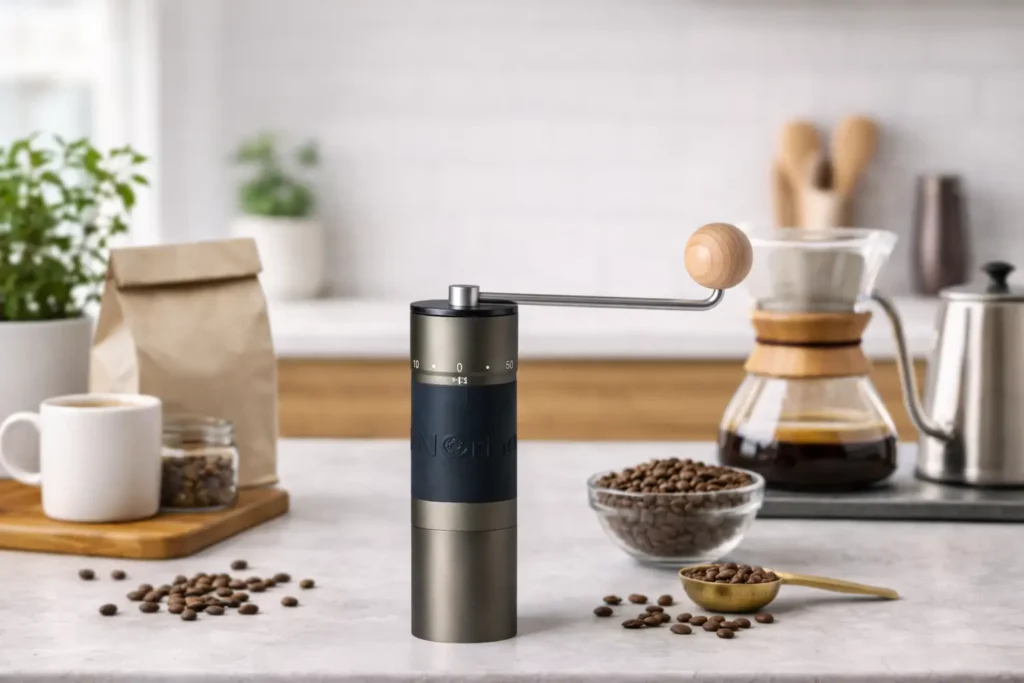
Best Entry Manual Grinder: KINGrinder K6
The KINGrinder K6 is the CoffeeGearHub standard recommendation for all pour over brewing — and it earns that position because of one feature that almost no other grinder at this price tier provides: 100-click adjustment resolution across the full brewing range. At pour over medium settings (clicks 35–55), each single-click change produces a meaningful, measurable change in drawdown time — the K6 gives you real dial-in control rather than large jumps between usable settings. The 48mm stainless conical burrs produce consistent particles at medium settings with low enough fines output for clean V60 and Kalita Wave brews. The all-metal body handles daily use without the wobble that develops in cheaper plastic-burr grinders over time. At medium pour over settings, grinding 15–20g takes 60–90 seconds — a practical daily habit for any solo or couple brewing routine. The K6 is also the grinder referenced in every CoffeeGearHub brewing guide’s grind section, meaning the click settings in this guide translate directly without any conversion.
- V60 setting: 35–45 clicks (medium to medium-fine) — drawdown target 2.5–3.5 min
- Kalita Wave setting: 42–50 clicks (medium) — drawdown target 3–4 min
- Chemex setting: 45–55 clicks (medium-coarse) — drawdown target 4–6 min
- Burrs: 48mm stainless conical — low fines at medium settings; excellent for all drippers
- Best for: all pour over beginners; solo and couple brewing; travelers; anyone who also wants one grinder for drip and French press
Disclosure: CoffeeGearHub may earn from qualifying purchases.
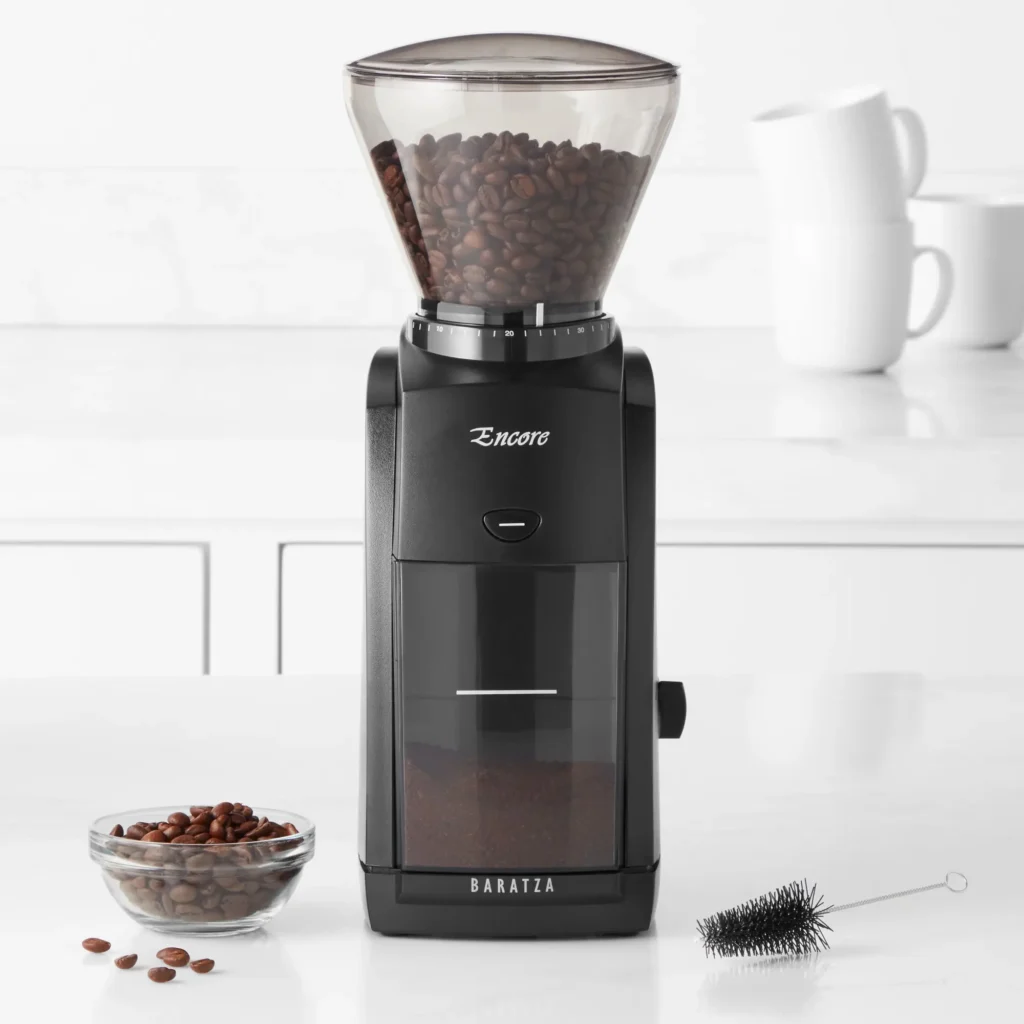
Best Entry Electric Grinder: Baratza Encore
The Baratza Encore is the most widely recommended entry-level electric burr grinder for pour over — the grinder that appears in more pour over “start here” guides than any other, and for good reason. Its 40-step adjustment system covers the full pour over medium range (settings 12–22 for V60; 16–22 for Kalita Wave; 18–26 for Chemex) with consistent, repeatable results. The 40mm conical burrs produce a clean medium grind with low enough fines for all pour over drippers including the demanding Hario V60. What distinguishes the Encore for long-term pour over use is Baratza’s repair ecosystem: replacement burrs, motors, and chutes are all sold separately, making the Encore one of the most repairable grinders available and a genuinely long-term investment rather than a disposable appliance. For households brewing 30g+ daily who don’t want to hand-grind, the Encore is the correct entry electric choice.
- V60 setting: Steps 12–18 (medium to medium-fine)
- Kalita Wave / Chemex setting: Steps 16–26 (medium to medium-coarse)
- Burrs: 40mm conical stainless — consistent medium grind; workable fines for all drippers
- Key advantage: Baratza repair program — designed to be fixed not replaced; replacement burrs available
- Best for: daily electric grinders; anyone brewing 30g+ per session; households where hand-grinding is impractical
Disclosure: CoffeeGearHub may earn from qualifying purchases.
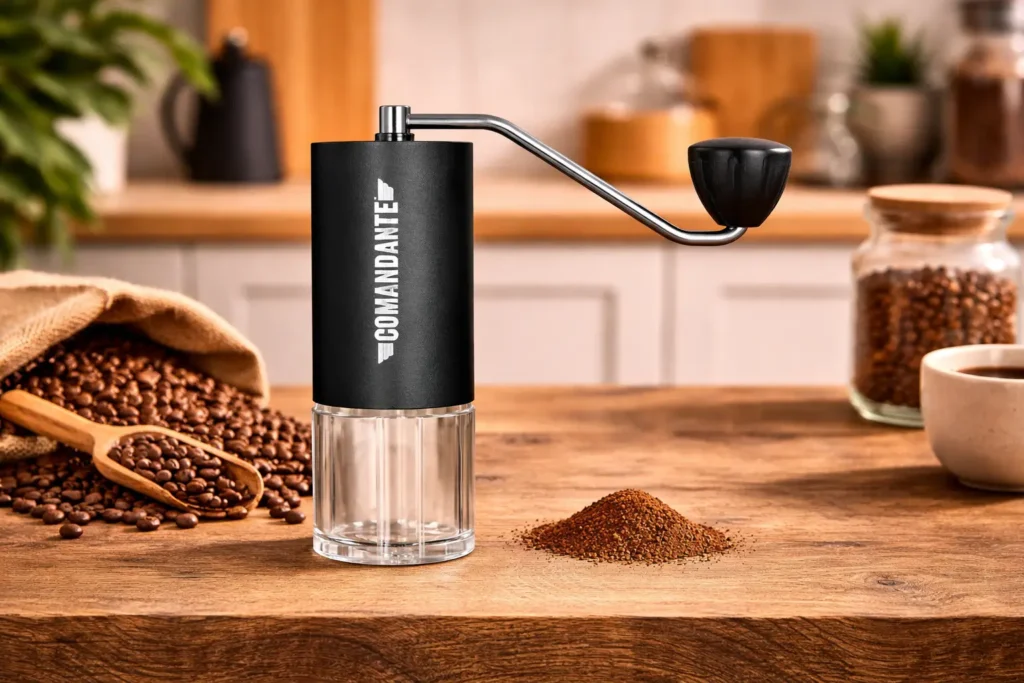
Best Premium Manual Grinder: Comandante C40 MK4
The Comandante C40 is the benchmark manual grinder for pour over brewing — the hand grinder that competition brewers take to the World Brewers Cup and the one that consistently appears at the top of specialty coffee community “best manual pour over grinder” discussions worldwide. Its 38.5mm red corten steel conical burrs are hardened to a level that produces measurably lower fines than any other manual grinder in its class, translating directly into cleaner drawdowns, more consistent brew times, and a cup with better clarity than the K6 can produce from the same beans. The adjustment system uses notched clicks (approximately 30 per rotation) for repeatable session-to-session settings, and the borosilicate glass catch jar eliminates the static that causes fine coffee particles to cling to plastic catch cups. The C40 is not a beginner’s first grinder — its value becomes apparent only when your technique is consistent enough to taste the difference. But for any pour over brewer who has developed a palate and wants equipment that will not limit their ceiling, the Comandante C40 is the correct investment in the manual category.
- Burrs: 38.5mm red corten steel conical — exceptionally low fines; competition-level manual grind consistency
- Adjustment: Notched clicks (~30 per rotation) — reproducible session-to-session settings
- Build: German-made borosilicate glass catch jar + stainless body — no static, durable
- Pour over range: ~25–35 notch clicks from zero for V60; ~30–40 for Kalita Wave (notch-based, not K6 clicks)
- Best for: serious pour over enthusiasts; light roast single-origin V60 brewing; anyone who wants the best possible manual grind quality
⚠️ Verify ASIN before publishing. Disclosure: CoffeeGearHub may earn from qualifying purchases.
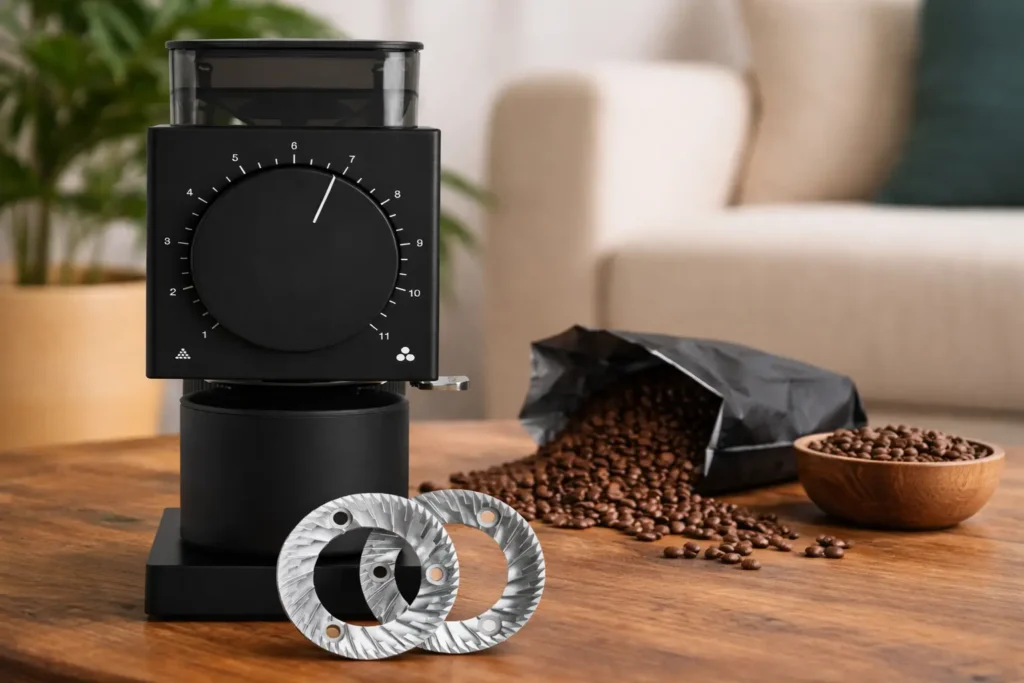
Best Flat Burr Electric Grinder: Fellow Ode Gen 2
The Fellow Ode Gen 2 is the best purpose-built pour over grinder available in home coffee — and the correct answer for any pour over brewer who has progressed past the entry tier and wants equipment that produces the absolute cleanest, most transparent cup possible from their beans. The 64mm flat burrs are significantly larger than the conical burrs in the Encore or K6, producing a tighter particle distribution with fewer fines at every medium setting. Fewer fines means fewer particles clogging the paper filter, more even extraction across the coffee bed, and a cup with flavour separation and clarity that reveals more of what makes specialty single-origin beans worth buying. The Gen 2’s redesigned alignment system addresses the consistency issues of the original Ode, and the single-dose hopper eliminates stale bean retention — you grind only what you brew, from beans ground fresh each session. The Ode cannot grind for espresso; this is a deliberate design decision that allows its burrs to be fully optimised for the filter coffee range. For any pour over brewer who takes the method seriously and wants to remove the grinder as a limiting variable, the Fellow Ode Gen 2 is the investment.
- Burrs: 64mm flat burrs — lowest fines production of any home pour over grinder; maximum clarity cup
- Adjustment: 11-step stepped adjustment designed specifically for the filter coffee range
- Hopper: Single-dose — grinds only what you brew; no stale retention between sessions
- Espresso: Cannot grind fine enough for espresso — by design; this is what makes it exceptional for pour over
- Best for: serious pour over enthusiasts; light roast single-origin V60 brewing; anyone prioritising maximum flavour clarity
⚠️ Verify ASIN before publishing. Disclosure: CoffeeGearHub may earn from qualifying purchases.
A Note on Espresso Grinders and Pour Over
🔬 Can I use my espresso grinder for pour over? Technically yes — most espresso grinders can produce a medium grind if set coarse enough. In practice, espresso grinders are optimised for the fine end of their range and often have compressed, imprecise step resolution in the medium range. Using a Breville Smart Grinder Pro or Baratza Virtuoso+ for pour over works but wastes the precision these grinders offer at fine settings, while providing fewer medium-range adjustment steps than a dedicated pour over grinder at the same price. If you already own an espresso grinder and want to pour over on the same device, it will work — but if you are buying a new grinder primarily for pour over, a dedicated pour over grinder like the K6 or Ode Gen 2 gives you better medium-range resolution. See our Best Coffee Grinders for Espresso guide for espresso-specific grinder recommendations.
Extraction Science: Why Pour Over Rewards Grind Quality
Understanding the extraction mechanism behind pour over’s sensitivity to grind quality allows brewers to diagnose problems systematically rather than changing variables randomly. Three principles cover everything a pour over beginner needs to know about why the grinder matters.
- Paper filtration amplifies every grind inconsistency. French press uses a metal filter that allows some sediment and oils to pass — these partly mask grind inconsistency by adding body and texture that blurs extraction clarity. Pour over paper filters remove everything except dissolved compounds. If your grind produces a wide particle size range, fines extract in the first 30 seconds while coarse chunks barely extract across the full 3-minute brew. The paper filter doesn’t compensate for this — it passes both the over-extracted compounds from fines and the under-extracted weakness from chunks directly to your cup. This is why the same blade-ground coffee tastes marginally acceptable as French press and noticeably bad as pour over.
- Drawdown time is controlled almost entirely by grind size. In pour over brewing, the rate at which water drains through the coffee bed and paper filter is determined by particle size, particle consistency, and filter type. Finer grind = slower drawdown; coarser grind = faster drawdown. This means grind size is the primary control for total brew time, which is the primary control for total extraction yield. A pour over that drains too fast (under 2 minutes) under-extracts regardless of how slowly you pour. A pour over that stalls (over 6 minutes) over-extracts regardless of how quickly you pour. Adjusting grind size is the correct fix for both — not adjusting your pour rate. This is why grind precision (the ability to make small, repeatable changes) matters: you need to move in small enough steps to find the target drawdown window without jumping past it.
- The bloom matters more with inconsistent grinds. The bloom (pre-infusion pour at 2× coffee weight for 30 seconds) allows CO2 released from fresh grounds to escape before the main extraction begins. With a consistent grind, all grounds bloom evenly and CO2 releases uniformly. With an inconsistent grind, fine particles seal the top of the coffee bed and restrict CO2 release from larger particles below, causing uneven saturation across the brew bed. This uneven saturation produces channeling — water finds paths through already-saturated areas rather than distributing evenly — which produces uneven extraction even if total brew time appears correct. A consistent burr grinder reduces channeling at the source by ensuring all particles saturate at the same rate during the bloom.
K6 Grind Reference: Every Dripper at Every Roast Level
Grind size is the most critical variable in pour over — wrong grind size produces problems that no other adjustment fully compensates for. This is the complete pour over K6 grind reference used across all CoffeeGearHub brewing guides. All click settings measured from zero (burrs touching). Adjust 2–3 clicks at a time for pour over; changes are gradual compared to espresso’s 1-click sensitivity.
| Dripper / Roast | K6 Clicks | Grind descriptor | Target drawdown | If sour/fast → | If bitter/stalling → |
|---|---|---|---|---|---|
| Hario V60 — light roast | 35–40 | Medium-fine | 2.5–3 min total | Finer 2–3 clicks + raise temp 2°C | Coarser 2–3 clicks |
| Hario V60 — medium roast | 38–44 | Medium to medium-fine | 2.5–3.5 min total | Finer 2–3 clicks | Coarser 2–3 clicks |
| Hario V60 — medium-dark roast | 40–46 | Medium | 2.5–3.5 min total | Finer 2–3 clicks | Coarser 2–3 clicks + lower temp 2°C |
| Kalita Wave 185 — light roast | 40–46 | Medium to medium-fine | 3–3.5 min total | Finer 2–3 clicks + raise temp 2°C | Coarser 3 clicks |
| Kalita Wave 185 — medium roast | 43–50 | Medium | 3–4 min total | Finer 2–3 clicks | Coarser 3 clicks |
| Kalita Wave 185 — medium-dark roast | 46–52 | Medium | 3–4 min total | Finer 3 clicks | Coarser 3 clicks + lower temp 1°C |
| Chemex 6-Cup — light roast | 44–50 | Medium to medium-coarse | 4–5.5 min total | Finer 3 clicks + raise temp 2°C | Coarser 3–4 clicks |
| Chemex 6-Cup — medium roast | 47–54 | Medium-coarse | 4–6 min total | Finer 3 clicks | Coarser 3–4 clicks |
| Chemex 6-Cup — medium-dark roast | 50–56 | Medium-coarse | 4–6 min total | Finer 3 clicks | Coarser 3–4 clicks + lower temp 1°C |
🔬 Why dripper matters as much as roast for grind setting: The Chemex uses a proprietary bonded paper filter that is 20–30% thicker than standard V60 or Kalita Wave filters. This thickness slows flow rate regardless of grind — which is why Chemex requires a coarser grind than V60 to achieve a similar total brew time. Using V60 grind settings in a Chemex produces a stalling, slow brew; using Chemex settings in a V60 produces a fast, weak, under-extracted cup. Always set grind for the specific dripper you are using, not for “pour over” as a general category. The table above accounts for these differences across all three major drippers.
Brew Time Reference: What Good Pour Over Looks Like
Brew time (total drawdown from first pour to last drop) is the primary diagnostic signal for pour over grind adjustment. Every time you brew, record the total time and compare it to the targets below. This table covers standard single-cup recipes. Adjust grind — not pour rate — when times are off.
| Brew time | Dripper | What it means | Primary cause | Fix | Flavour result |
|---|---|---|---|---|---|
| Under 2 minutes | V60 | Severe under-extraction — water draining with almost no resistance | Grind far too coarse; insufficient dose; very dark roast | Grind 4–5 clicks finer; confirm dose (15g per 250ml) | Sour, watery, thin body; pale yellow crema |
| Under 2.5 minutes | Kalita Wave | Under-extraction — brew running fast | Grind too coarse for dripper and dose | Grind 3 clicks finer | Sour, weak, some sweetness but thin |
| 2.5–3.5 minutes ✓ | V60 | Target extraction window | Correct grind, dose, bloom, and pour technique | No change — log setting and reproduce | Balanced brightness and sweetness; clean, lingering finish |
| 3–4 minutes ✓ | Kalita Wave | Target extraction window | Correct grind, dose, bloom, and pour technique | No change — log setting and reproduce | Round, balanced, well-extracted; slightly more body than V60 |
| 4–6 minutes ✓ | Chemex 6-Cup | Target extraction window | Correct grind, dose, bloom, and pour technique | No change — log setting and reproduce | Clean, bright, very clear; slight sweetness; exceptional clarity |
| Over 4 minutes | V60 | Over-extraction or stalling — slow flow | Grind too fine; dose too high; excessive fines clogging filter | Grind 3–4 clicks coarser; check dose weight | Bitter, astringent, dry finish; heavy crema |
| Over 4 minutes | Kalita Wave | Over-extraction or stalling | Grind too fine; dose too high; fines clogging flat-bottom filter | Grind 3–4 clicks coarser; confirm dose | Bitter, harsh; heavy, coating mouthfeel |
| Stalls completely, no flow | Any | Filter completely clogged by fines | Grind far too fine for dripper; blade grinder fines; very old dark roast with high oil content | Grind 6+ clicks coarser; gently stir the bed mid-brew to restart flow; switch to burr grinder if using blade | Over-extracted, very bitter if any liquid passes; often unusable |
Dial-In Guide: How a Beginner Finds Their First Great Pour Over
Pour over dial-in is the systematic process of finding the grind setting that produces a drawdown in the target time window with your specific bean, dripper, dose, and water temperature. It is more straightforward than espresso dial-in because the tolerance window is wider — but the principle is identical: change one variable at a time, note the result, and adjust in one direction until the cup is balanced.
The Beginner Pour Over Dial-In Process
- Set a starting dose: 15g coffee per 250ml water for a standard single cup V60 (1:16 ratio)
- Start at the grind reference for your dripper and roast level from the table above
- Rinse your paper filter with hot water before adding coffee — eliminates paper taste and pre-heats the brewer
- Add coffee, shake level, then pour the bloom: 2× the coffee weight in water (30g for 15g dose). Wait 30 seconds; observe the bloom — fresh beans will bubble actively
- Pour remaining water in slow, even, concentric circles starting from center — avoid pouring directly onto the filter wall
- Record total drawdown time from first pour to last drop. Compare to target window for your dripper
- If too fast: grind 2–3 K6 clicks finer; re-brew same dose and water
- If too slow or stalling: grind 2–3 clicks coarser; re-brew
- Once in timing window: taste. Adjust temperature for brightness vs sweetness balance
- Log the winning setting. Most pour over brewers land in the target window within 3–5 brews of a new bean
Cup Taste → Grind Adjustment
- Sour / hollow / under 2.5 min (V60): grind 2–3 clicks finer → re-brew
- Bitter / astringent / over 4 min (V60): grind 2–3 clicks coarser → re-brew
- In timing window but flat/no brightness: raise water temperature 2°C; try a lighter roast or check bean freshness
- In timing window but too sharp/acidic: lower water temperature 2°C; try one step coarser to reduce extraction yield
- Uneven or two-note cup (sour + bitter simultaneously): channeling — improve bloom pour and distribution; ensure all grounds are evenly saturated at bloom stage
- Brew times vary between sessions at same setting: confirm dose weight — variation of 1g changes drawdown time noticeably at medium settings
- No improvement after 5+ brews: check bean freshness — stale beans (60+ days off roast) resist dial-in regardless of grind setting
Common Beginner Pour Over Grinder Mistakes to Avoid
| Mistake | Why beginners make it | What to do instead |
|---|---|---|
| Using a blade grinder | Own one already; assume it’s “fine” since French press “works” | A burr grinder produces measurably and immediately better pour over than any blade grinder. The K6 is the most accessible entry point. This is the most impactful single upgrade in any pour over setup |
| Using the same grind for all drippers | Assume “medium grind” means one thing across all brewers | V60, Kalita Wave, and Chemex require different grind settings due to different flow rates and filter thicknesses. See the dripper-specific K6 reference above |
| Adjusting pour rate to fix timing instead of grind | Intuitive to pour faster to speed up a slow brew | Adjusting pour rate changes water-to-coffee contact time mid-brew but doesn’t fix the underlying flow resistance from grind. Grind is the primary control for drawdown time. Adjust grind first; pour technique second |
| Changing dose, grind, and temperature in the same session | Multiple variables all seem plausibly wrong simultaneously | Change grind first — get into the target drawdown window before touching dose or temperature. Grind is the primary dial; all other variables are secondary adjustments |
| Not rinsing the paper filter before brewing | Seems like an unnecessary extra step | Rinsing removes the paper flavour compounds that can taint light roast pour over, pre-heats the brewer, and seats the filter properly. A 10-second rinse improves every cup noticeably |
| Skipping the bloom | Seems like an optional detail | The bloom allows CO2 to escape from fresh beans before main extraction. Without a bloom, CO2 repels water and produces uneven, channeled extraction. Always bloom for 30 seconds minimum |
| Using stale beans without a roast date | Buy whatever is available at the grocery store | Pour over’s transparency means stale beans produce flat, papery, hollow cups that no grind adjustment can fix. Always buy beans with a visible roast date; use within 4 weeks of that date. Freshness is the quality ceiling beneath which no grinder improvement matters |
Troubleshooting Matrix: Pour Over Symptoms → Causes → Fixes
| Symptom | Most likely cause | Fix — in order |
|---|---|---|
| Brew drains too fast — under 2 minutes (V60) | Grind too coarse; insufficient dose; very dark roast | Grind 3–4 clicks finer → confirm dose (15g per 250ml) → confirm bloom pour was centred and even |
| Brew stalls — stops draining before all water is through | Grind too fine; excessive fines clogging filter; blade grinder fines | Grind 4–5 clicks coarser → switch to burr grinder if currently using blade → gently stir the brew bed to restart flow (recovery only — adjust grind before next brew) |
| Cup tastes sour and timing is correct | Water temperature too low; very light roast under-extracted despite correct time; or beans too fresh (under 7 days post-roast) | Raise water temp 2°C → extend bloom to 45 seconds → confirm beans are 7+ days off roast |
| Cup tastes bitter and timing is correct | Water temperature too high; too-fine grind despite correct time; or beans too dark for pour over method | Lower water temp 2°C → grind 1–2 clicks coarser → try a lighter roast profile for better pour over performance |
| Cup tastes flat, hollow, papery — no sweetness or brightness | Stale beans; or water too cool; or roast too dark for pour over method | Buy fresh beans with a roast date within 30 days → raise water temp → try a medium roast single-origin specifically grown for filter brewing |
| Uneven cup — sour and bitter notes in same cup | Channeling from uneven ground saturation during bloom | Pour bloom pour in tight concentric circles from centre → wait full 30 seconds → ensure all grounds are visibly wet before continuing → grind 1–2 clicks finer to improve saturation rate |
| Brew times vary between sessions at same grind setting | Dose inconsistency — volume scooping rather than weighing; or stale retained grounds in grinder changing effective grind | Weigh every dose to 0.1g → purge 2–3g before each grind session to clear retained stale grounds → use the same water volume each brew |
| V60 produces acceptable results but Chemex tastes weak from same beans and grind | Using V60 grind setting for Chemex — too fine for Chemex’s slower filter, producing fast drainage and under-extraction | Increase grind to Chemex-specific setting (5–10 K6 clicks coarser than your V60 setting) → re-brew at new setting |
| Light roast always under-extracts despite correct timing | Water temperature too low for light roast’s dense bean structure | Raise water temperature to 93–95°C for light roast → extend bloom to 45 seconds → grind 2 clicks finer |
| Good result on first brew with new beans, deteriorates over following days | Beans ageing past peak freshness window; or retained grounds in grinder going stale | Beans are best 7–28 days post-roast for pour over; buy smaller quantities more frequently; re-dial-in when starting a new bag; purge grinder before each session |
Cleaning and Maintenance: Keeping Your Pour Over Grinder Performing
Pour over grinders at medium settings accumulate coffee oil more slowly than espresso grinders at fine settings — the larger particle size means less friction and less heat per gram of coffee ground. But oil accumulation still happens, and rancid coffee oil at medium settings produces a stale, bitter aftertaste that is almost impossible to distinguish from a grind or bean problem without eliminating the maintenance variable first. If your pour over cup suddenly tastes stale and flat without any recipe change, clean the grinder before changing anything else.
Manual Grinder (KINGrinder K6)
Weekly
- Rinse the catch cup and lid with warm water; allow to dry fully before reassembly — moisture in the catch cup promotes mould
- Brush grounds from the grinding chamber with a dry brush — never use water on the burrs or grinding pathway
Monthly
- Fully disassemble: remove upper burr, lower burr, and all grinding pathway components
- Brush all burr surfaces and internal grinding pathway with a stiff dry brush
- After reassembly: grind and discard a small amount of beans to re-season the burrs and confirm setting is unchanged before pulling your brew dose
Electric Grinder (Baratza Encore / Fellow Ode Gen 2)
Weekly
- Wipe the grounds chute and hopper interior with a dry cloth after each session
- Empty and wipe the grounds catch bin — don’t leave ground coffee in the bin between sessions
Every 2–4 Weeks (Daily Users)
- Remove hopper and brush the burr chamber and grinding pathway with a stiff dry brush
- For Baratza Encore: Urnex Grindz cleaning tablets are the easiest option — run per instructions, then purge a full dose of fresh beans before brewing
- For Fellow Ode Gen 2: single-dose design means less retention and slower oil accumulation; brush monthly at minimum
- After any cleaning: re-dial-in your grind setting — cleaning can shift effective burr position by 1–2 steps
Final Takeaway: The Best Pour Over Grinder for Beginners
The best coffee grinder for pour over is the one that gives you enough adjustment precision to land consistently in the target drawdown window for your specific dripper, enough repeatability to reproduce that window brew-to-brew, and enough clarity in the resulting cup to tell the difference between good and great extraction. For beginners, the KINGrinder K6 is the correct starting point — 100-click precision, 48mm conical burrs, the right settings for every pour over dripper, and the best quality-to-cost ratio available in any grinder designed for filter coffee. For those who prefer electric, the Baratza Encore is the standard entry recommendation — repairable, consistent, and widely supported. For pour over enthusiasts who have developed a palate and want the best possible manual grind quality, the Comandante C40 is the competition-proven answer. And for anyone who wants to maximise cup clarity from single-origin beans and is ready to invest in a purpose-built flat burr grinder, the Fellow Ode Gen 2 removes the grinder as a limiting variable entirely. Whatever you choose: pair your grinder with fresh roast-dated beans, rinse your filter before brewing, bloom every cup, and use the drawdown time reference and dial-in guide in this article to find your first great pour over systematically rather than by guesswork. Pour over rewards consistency — and the grinder is where consistency begins.
FAQs: Best Coffee Grinders for Pour Over
What is the best grinder for pour over coffee?
The best pour over grinder depends on your budget and whether you prefer manual or electric grinding. For manual grinding, the KINGrinder K6 is the best value option — 100-click precision, 48mm stainless conical burrs, and click settings that cover every pour over dripper from V60 to Chemex. For electric grinding at the entry level, the Baratza Encore is the most widely recommended starting point. For anyone who wants a premium single-purpose pour over grinder, the Fellow Ode Gen 2 is the benchmark flat burr option producing the cleanest, most clarity-focused cups available in home pour over.
Does grind consistency really matter for pour over?
Yes — pour over is the most grind-sensitive filter brewing method because it uses paper filtration and controlled gravity flow. Inconsistent particle size means some particles over-extract while others under-extract in the same brew, producing a cup that tastes simultaneously bitter and sour. A burr grinder produces consistent particles that extract at the same rate across the entire brew bed. A blade grinder cannot do this regardless of how finely it chops. The difference in pour over quality between a burr grinder and a blade grinder is larger and more immediately apparent than in almost any other brewing method.
What grind size does pour over need?
Pour over requires a medium grind — finer than French press but coarser than AeroPress or espresso. On the KINGrinder K6, medium grind for pour over is approximately 35–55 clicks from zero depending on your specific dripper and roast level. The Hario V60 requires a medium to medium-fine grind (K6: 35–45 clicks). The Kalita Wave 185 is more forgiving and uses a true medium grind (K6: 42–50 clicks). The Chemex uses a medium-coarse grind due to its thicker filter (K6: 45–55 clicks).
Can I use a blade grinder for pour over?
Not effectively. Blade grinders chop coffee unevenly, producing a chaotic mix of powder-fine particles and large chunks. In pour over, fine particles clog the paper filter and over-extract into bitterness while large chunks under-extract into sourness — often in the same cup. A burr grinder — even an entry-level manual burr grinder like the KINGrinder K6 — produces a noticeably and immediately better pour over cup than any blade grinder at any price.
What is the correct pour over brew time?
Total pour over brew time from first pour to complete drawdown depends on the dripper. For a Hario V60, target 2.5–3.5 minutes total including a 30-second bloom. For a Kalita Wave 185, target 3–4 minutes total. For a Chemex 6-cup, target 4–6 minutes total. If your brew finishes faster than the lower end of these ranges, grind finer. If it stalls or takes longer than the upper end, grind coarser. Brew time is the primary diagnostic signal for pour over grind adjustment.
What is the difference between flat burr and conical burr for pour over?
Flat burr grinders produce a more unimodal particle distribution — tighter clustering around the target size with fewer fines — which produces cleaner, brighter, more transparent pour over cups with better flavour clarity. Conical burr grinders produce a slightly broader particle distribution with more fines, which adds body and sweetness but slightly reduces the clarity that makes pour over exceptional for single-origin tasting. Both produce excellent pour over. The Fellow Ode Gen 2’s flat burrs are the premium choice for clarity-focused pour over brewing.
Does the KINGrinder K6 work for pour over?
Yes — the KINGrinder K6 is the CoffeeGearHub standard recommendation for all pour over brewing. Its 100-click adjustment system covers every pour over dripper from V60 (K6: 35–45 clicks) through Kalita Wave (42–50 clicks) through Chemex (45–55 clicks) with consistent, reproducible precision. A 2–3 click change at medium settings produces a meaningful, measurable change in drawdown time, giving pour over brewers real dial-in control. The K6 is not suitable for espresso — it is specifically optimised for the filter coffee range where pour over operates.
How much should I spend on a pour over grinder?
Pour over grinders have a lower minimum spend threshold than espresso grinders because the precision requirements are less demanding. The critical floor is simply any consistent burr grinder. A quality manual burr grinder like the KINGrinder K6 is the most accessible entry point and produces excellent pour over results. For electric grinding, the Baratza Encore is the standard entry recommendation. The Fellow Ode Gen 2 is the premium single-purpose pour over option for those who want the cleanest, most consistent particle distribution available in home brewing.
Which is better for pour over — a manual or electric grinder?
Both manual and electric burr grinders produce excellent pour over when properly adjusted. Manual grinders like the KINGrinder K6 offer the highest quality-to-cost ratio, precise click adjustment, and portability. Electric grinders like the Baratza Encore or Fellow Ode offer convenience for daily grinding of larger doses. For anyone grinding under 35g per day, a manual grinder is entirely practical — grinding 15–20g takes 60–90 seconds at medium pour over settings. For households grinding 40g+ daily or anyone who finds hand grinding disruptive, an electric grinder is the more comfortable choice.
How often should I clean my pour over grinder?
For manual grinders like the KINGrinder K6: fully disassemble and brush the burrs monthly. Coffee oils accumulate on burr surfaces over time and produce stale, rancid notes in the cup. Rinse the catch cup and lid weekly. For electric grinders: brush the chute and hopper weekly; do a full burr clean every 2–4 weeks for daily users. Urnex Grindz tablets work well for electric pour over grinders. Pour over grinders at medium settings accumulate oil more slowly than espresso grinders at fine settings, so cleaning intervals are longer — but do not neglect it entirely.
Continue Learning
POUR OVER CLUSTER
Ready to pair your grinder with the right pour over dripper? Our Best Pour Over Coffee Makers guide covers every dripper — V60, Kalita Wave, and Chemex — with full brewing parameters, K6 grind settings, and honest guidance on which dripper suits each skill level.
☕
Written by the CoffeeGearHub Editorial Team
CoffeeGearHub is a specialty coffee equipment resource run by home brewers and coffee enthusiasts. Our guides are researched using published brewing science, SCA standards, grinder manufacturer specifications, and established specialty-coffee community knowledge. We review and update our pillar content regularly. About CoffeeGearHub →