
Percolator vs Moka Pot (2026): Taste, Strength, Batch Size, and Which to Buy
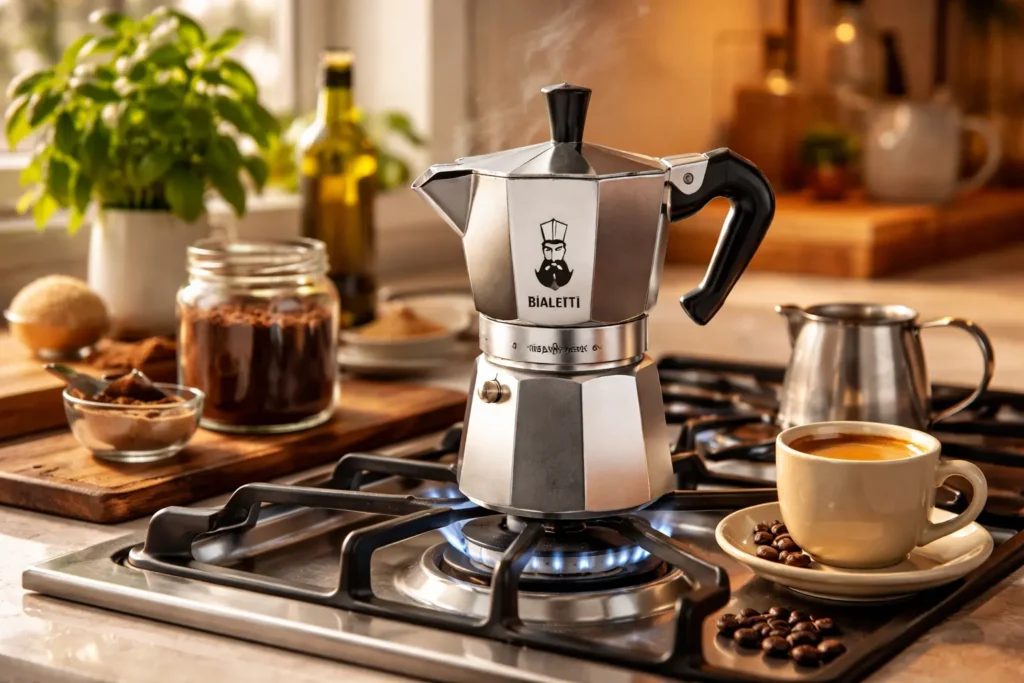
Quick answer
Percolator or moka pot?
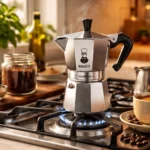
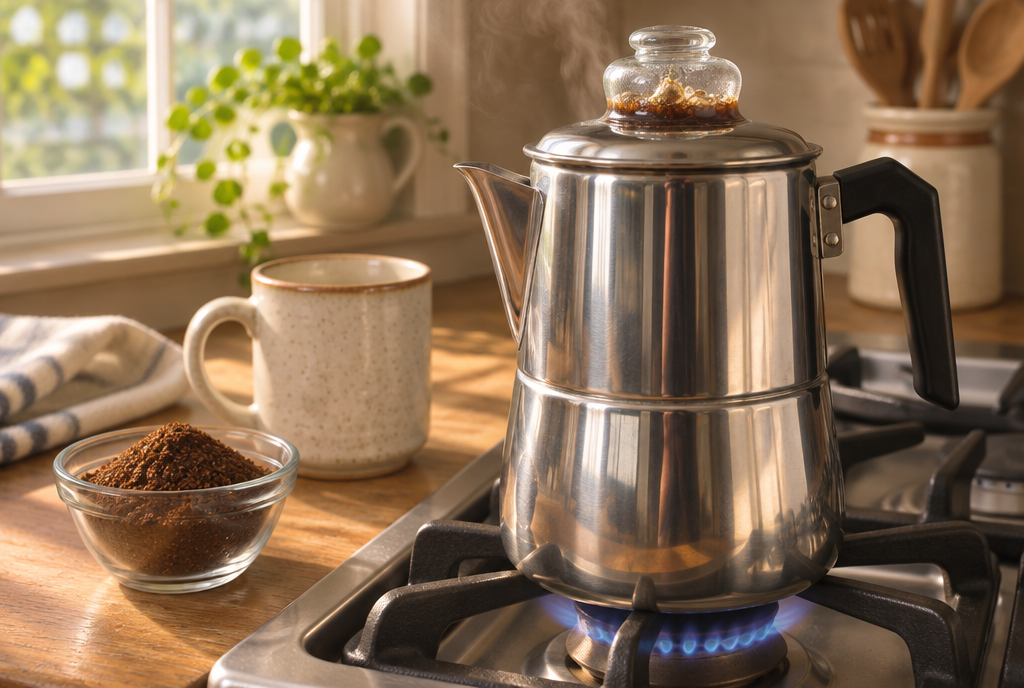
The difference in one line: a moka pot pushes water through the coffee once; a percolator cycles boiling water over it again and again. That is why moka coffee is stronger and sweeter, and percolator coffee is larger-batch and easier to over-brew.
As an Amazon Associate, CoffeeGearHub earns from qualifying purchases.
Editorial standards: this comparison draws on manufacturer instructions, established brewing principles, and independent owner and reviewer reports. CoffeeGearHub does not claim hands-on testing where it has not occurred.
At a glance
What this comparison covers
How a percolator and a moka pot each work, how the coffee differs in taste and strength, batch size, grind, brew time, camping use, induction compatibility, how to avoid bitterness with each, and which one to buy.
Editorial analysis
The real choice is how many people you brew for
Both pots sit on a burner and both get called “stovetop coffee makers,” so they are easy to confuse. In practice the decision rarely comes down to taste alone. A moka pot tops out at roughly one mug of strong coffee per brew, while a percolator fills a table’s worth of mugs at once.
The other deciding factor is forgiveness. A moka pot is hard to over-brew once you control the heat; a percolator keeps extracting for as long as you leave it perking, so it rewards a timer and a coarse grind.
The 30-Second Answer
Buy a moka pot, such as the Bialetti Moka Express, for a small amount of strong, espresso-style coffee. Buy a stainless stovetop percolator, such as the Farberware Classic Yosemite, for a large batch of mug-strength coffee, and stop it on time so it does not turn bitter.
Choose a moka pot for one to three people who like strong coffee or lattes. Choose a percolator for groups, camping, or anyone who wants many mugs of regular coffee from the stove.
Compare current options
Start with these representative choices
The classic moka pot for small, strong cups, and two stovetop percolators for big batches: an everyday stainless pick and a budget pick.
Bialetti Moka Express — Strong, small cups
The classic moka pot for espresso-style coffee and lattes for one to three people.
Farberware Classic Yosemite — Best percolator
Polished stainless steel with a glass knob, in 8- and 12-cup sizes for big batches.
Primula Stainless 8-Cup — Budget percolator
A lower-cost stainless pot with a glass knob, reusable basket, and dishwasher-safe build.
Affiliate disclosure: Amazon links may earn CoffeeGearHub a commission at no additional cost to you. Prices and availability can change.
How a Moka Pot Works
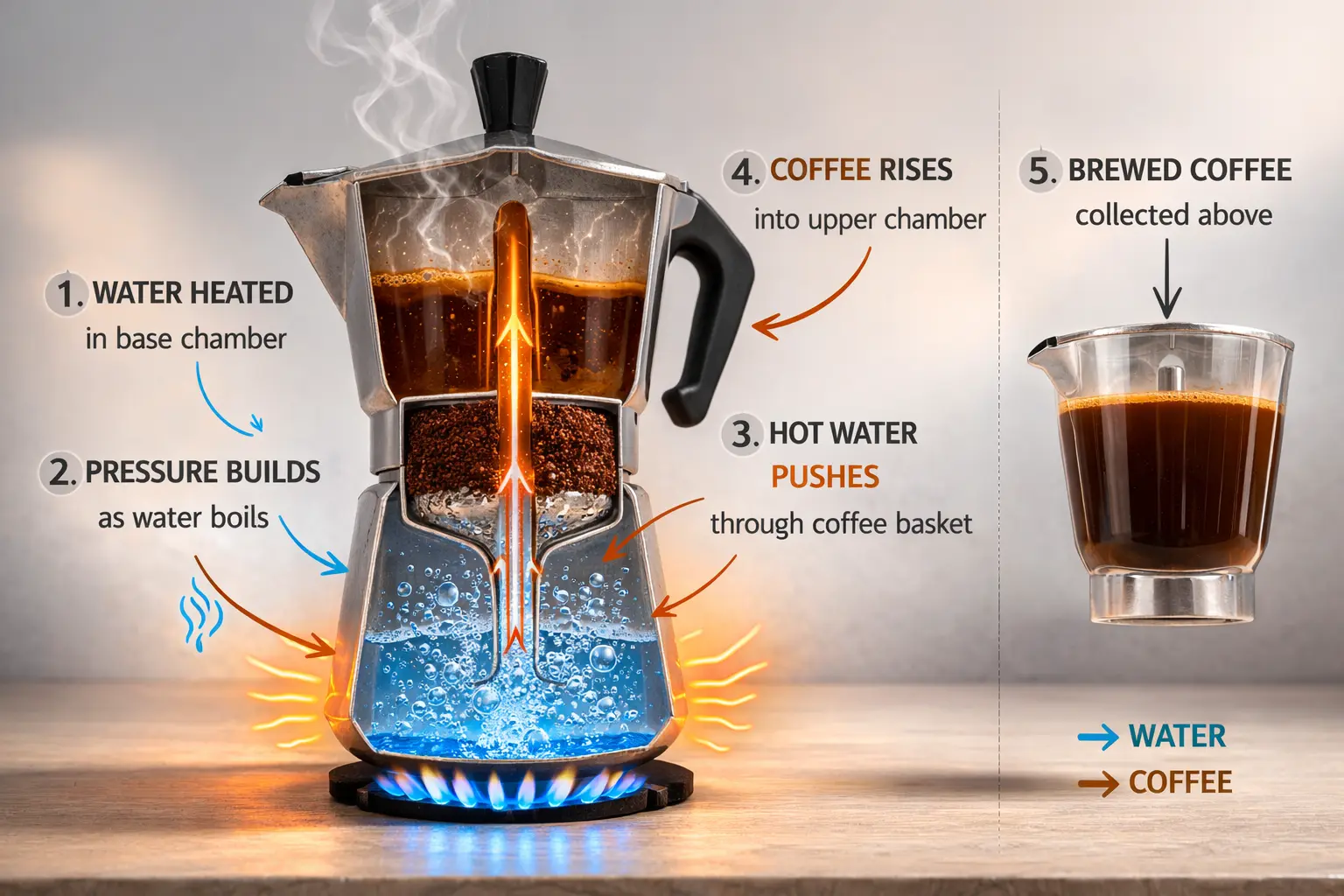
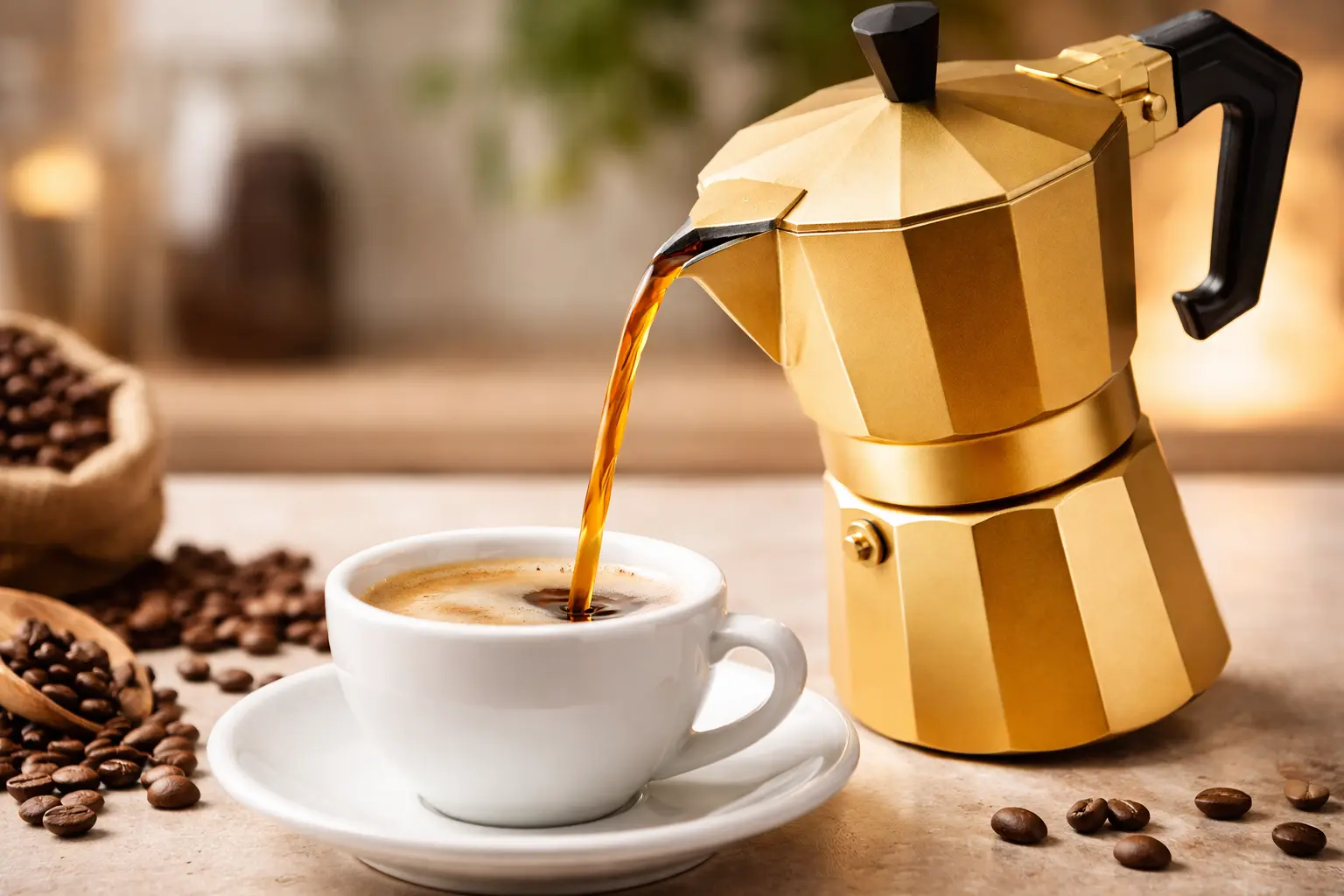
A moka pot heats water in its base until steam pressure, about 1 to 2 bar, pushes it up through a basket of medium-fine coffee and into the top chamber. Each drop of water passes through the coffee once. The result is a strong, concentrated coffee, roughly between drip and espresso. Our how to use a moka pot guide walks through the method.
How a Percolator Works
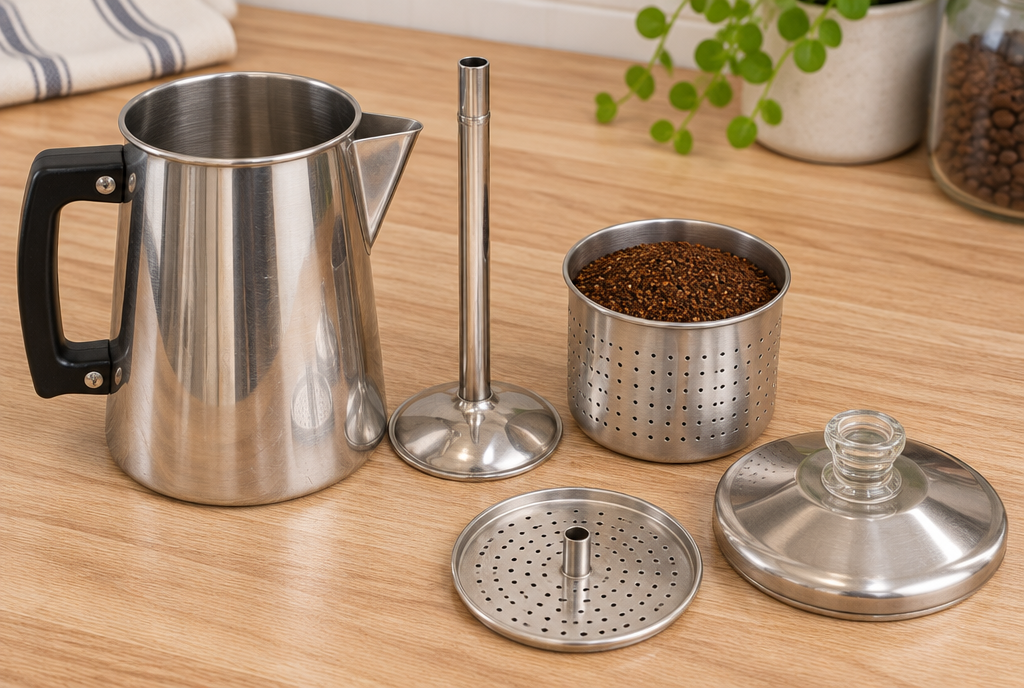
A percolator has a water pot, a central tube, and a perforated basket of coffee near the top. As the water heats, it is forced up the tube and splashes over the grounds, then drips back down into the pot. That brewed liquid is heated and pushed up again, so the coffee passes through the grounds many times. You watch the glass knob on the lid darken and stop when the coffee reaches the strength you want, usually after about 5 to 10 minutes of gentle perking.
Percolator vs Moka Pot Compared
| Moka pot | Stovetop percolator | |
|---|---|---|
| How water meets coffee | One pass, pushed by steam pressure | Recirculates many times |
| Coffee style | Strong, concentrated, espresso-style | Mug-strength, like strong drip |
| Typical batch | About 40–480 ml depending on size | Often 4–12 mugs |
| Grind | Medium-fine | Coarse |
| Brew time | About 4–6 minutes | About 5–10 minutes of perking |
| Main risk | Bitter if heat is too high | Bitter if it perks too long or boils hard |
| Best for | 1–3 people, lattes, strong coffee | Groups, camping, regular mugs |
Moka batch sizes follow our moka pot size guide.
Taste and Strength
Moka pot coffee is rich, heavy-bodied, and concentrated, with chocolate and caramel notes when brewed gently. It is strong enough to drink in small cups or to stretch with milk or hot water. Percolator coffee is closer to strong drip coffee in strength, with a bold, roasty character. Because the coffee keeps passing through the grounds at near-boiling temperature, percolators over-extract easily, which is why many people associate them with bitter coffee. Gentle heat and stopping on time make a big difference.
Batch Size and Who Each Suits
Moka pots are sized in small espresso-style cups, so even a 6-cup moka pot makes only about one mug’s worth. That suits one to three people. Percolators are sized in mug-like cups and often make 8 to 12 at a time, which suits families, offices, and camp groups. If you regularly brew for a crowd, a percolator is far more practical than several moka pot runs.
Grind and Coffee
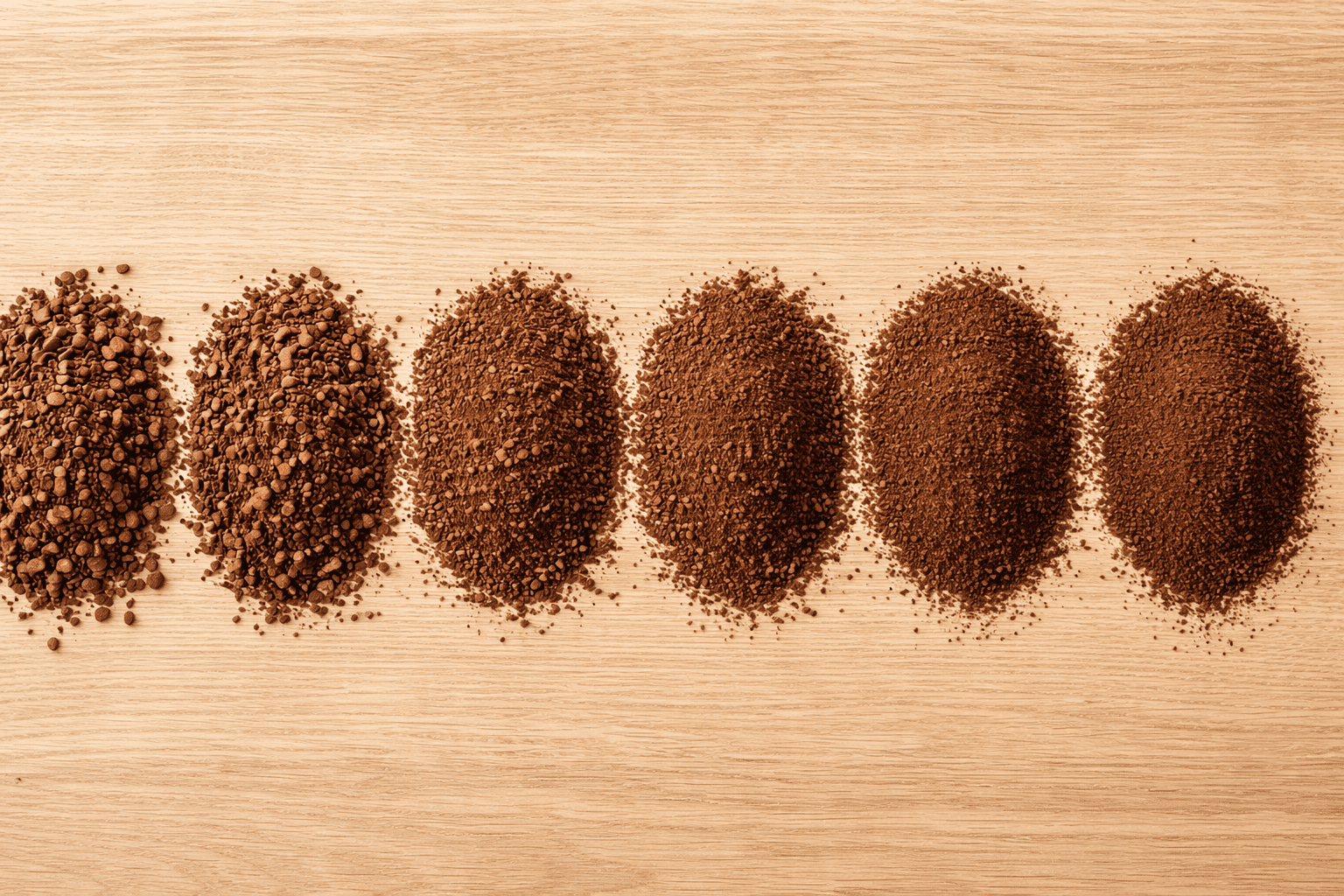
The two need opposite grinds. A moka pot needs medium-fine coffee, about like table salt. A percolator needs coarse coffee, like French press, because fine grounds pass through the basket holes into the pot and over-extract. A hand grinder such as the KINGrinder K6 covers both settings; see our K6 grind settings chart. For beans and pre-ground picks, see best coffee for moka pot.
How Much Coffee for a Percolator
Percolator makers count a “cup” as about 5 ounces of water, not a full mug. Coletti, for example, recommends roughly one tablespoon of medium-to-coarse grounds per 5-ounce cup. Cup markings vary between brands, so go by the ounces of water you add rather than the number on the pot.
| Percolator cups (5 oz each) | Water | Coarse ground coffee |
|---|---|---|
| 4 cups | About 20 oz | 4 tablespoons |
| 8 cups | About 40 oz | 8 tablespoons (1/2 cup) |
| 12 cups | About 60 oz | 12 tablespoons (3/4 cup) |
For stronger coffee, add more grounds rather than perking longer: extra perking adds bitterness faster than strength. Once the pot starts perking gently, most makers suggest about 4 to 7 minutes.
Camping and Outdoor Use
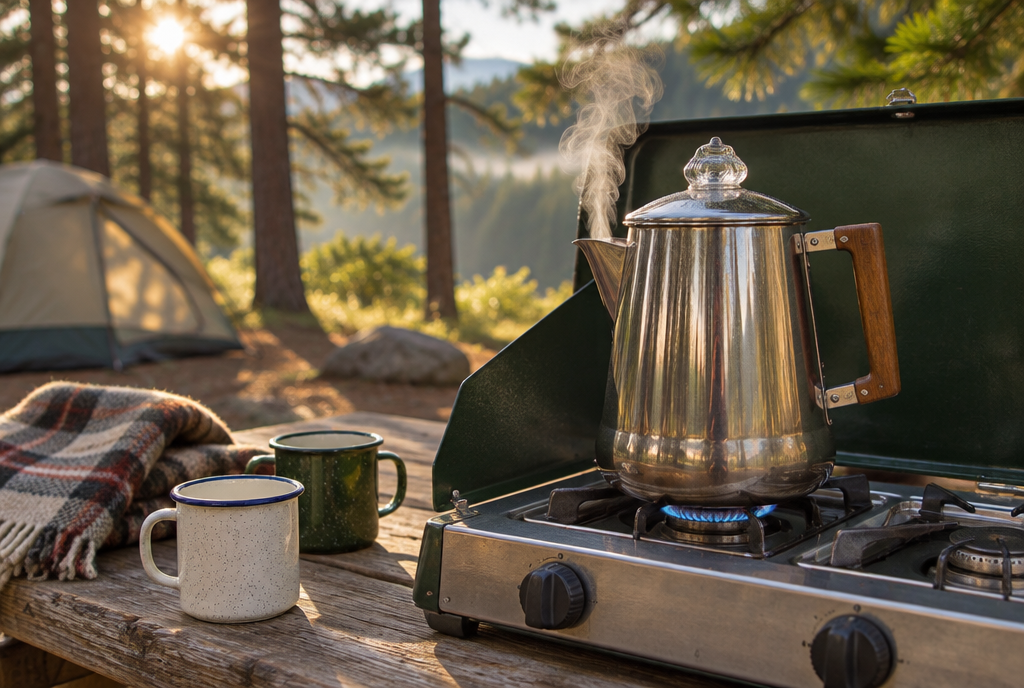
Percolators are a campfire classic: stainless and enamel models tolerate uneven heat, have no gaskets to wear out, and serve the whole campsite at once. A moka pot is lighter and packs smaller, which suits backpackers who want a strong cup for one or two. If you camp alone and want the lightest kit, an AeroPress Go is another option.
Induction Compatibility
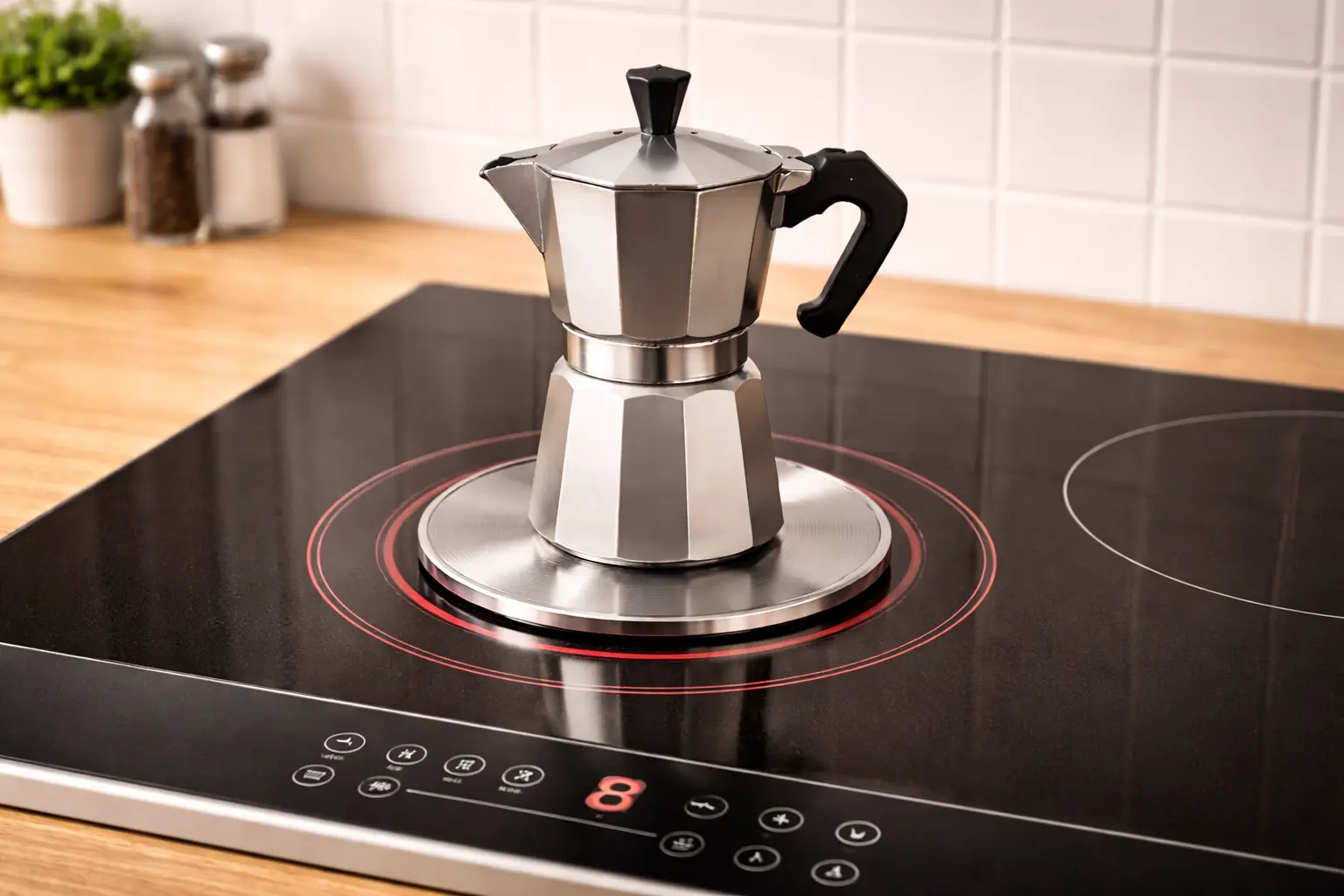
Neither type works on induction unless the base is magnetic. Stainless steel alone is not enough: Coletti notes that its 18/8 stainless percolators are not magnetic and will not work on induction, which is why it sells a separate Bozeman Induction model. Aluminum and many enamelware pots will not work either. Classic aluminum moka pots also need an induction-ready model or an adapter disc. Test the base with a magnet before buying; our best induction moka pots guide covers moka options.
How to Avoid Bitter Coffee in Each
Moka pot
Start with hot water in the base, use medium-low heat, never tamp the coffee, and take the pot off as soon as the stream turns pale and sputters. Cool the base under cold water to stop the brew. Our moka pot troubleshooting guide covers more fixes.
Percolator
Use a coarse grind, bring the water up on medium heat, then lower it so the coffee perks gently every few seconds rather than boiling hard. Stop after about 5 to 8 minutes, or as soon as the color in the knob looks right, and remove the basket so the grounds stop steeping.
Best Stovetop Percolators
Most stovetop percolators share the same basic design, so the differences are in build quality, how well the basket keeps grounds out of the cup, and whether the pot works on induction. These three cover the main buying situations: everyday stovetop use, campfires, and a tight budget.
Farberware Classic Yosemite: best for the kitchen stove
The Farberware Classic Yosemite is the familiar polished stainless percolator with a glass knob on the lid, sold in 8-cup (up to 64 oz) and 12-cup sizes, and it is dishwasher safe. In Outdoor Life’s camping percolator test it was the only pot that made ground-free coffee without an extra paper filter. The trade-offs: the lid is not attached, so it is easy to lose at a campsite, and the plastic piece under the knob cracked in that test’s drop test. The listings we checked do not mark it as induction-ready, so test the base with a magnet before using it on an induction hob.
Coletti Bozeman: best for camping, no aluminum or plastic
The Coletti Bozeman is made of 18/8 stainless steel with a glass view top and a wooden handle, and Coletti says it uses no aluminum or plastic. It comes in 6-, 9-, and 12-cup sizes, includes filters, is dishwasher safe, and works on a stove, camp stove, grill, or open fire. It does not work on induction; Coletti sells a separate Bozeman Induction model for that. Outdoor Life found it brewed about as well as the Farberware at a noticeably higher price, so it is the pick if materials and campfire use matter more than cost.
Primula Stainless Steel 8-Cup: best budget percolator
The Primula Stovetop Coffee Percolator is a lower-cost stainless steel 8-cup pot with the features that matter: a glass knob to watch the brew, a reusable filter basket, a non-drip spout, a heat-resistant handle, and a dishwasher-safe build. It is a sensible choice if you want to try percolator coffee without spending Farberware money. Primula also sells an aluminum Primula Today percolator that is cheaper still and one of the most popular on Amazon, but aluminum will not work on induction and some buyers prefer to avoid it. Primula’s listing does not say whether the stainless model is induction-ready, so test the base with a magnet first.
Our Recommendation
Buy a moka pot if you want strong, espresso-style coffee or lattes for one to three people; the Bialetti Moka Express is the classic choice, and our best moka pots guide covers the alternatives. Buy a stainless steel stovetop percolator if you regularly make a big pot of regular coffee for a household or a campsite: the Farberware Classic Yosemite for everyday stovetop use, the Coletti Bozeman for campfires and an all-steel build, or the Primula stainless 8-cup if budget comes first.
Choose Your Stovetop Brewer
Moka pot for strong small cups; percolator for big batches.
As an Amazon Associate, CoffeeGearHub earns from qualifying purchases.
Frequently Asked Questions
Is a moka pot a percolator?
No, although both are stovetop brewers and moka pots are sometimes called Italian percolators. A moka pot pushes water through the coffee once using steam pressure. A percolator cycles boiling water over the grounds again and again until you take it off the heat.
Which makes stronger coffee, a percolator or a moka pot?
A moka pot makes a stronger, more concentrated coffee, closer to espresso. A percolator makes a mug-strength coffee whose strength depends on how long it perks; longer perking makes it stronger but also more bitter.
Why does percolator coffee taste bitter?
Percolators keep recirculating near-boiling coffee through the grounds, which over-extracts them. Use a coarse grind, keep the heat low enough for a gentle perk rather than a rolling boil, and stop after about 5 to 8 minutes.
What grind should I use in a percolator?
Coarse, similar to French press. Fine grounds slip through the basket holes into the coffee and over-extract. A moka pot needs a medium-fine grind instead.
Is a percolator or moka pot better for camping?
A percolator suits groups because it brews many mug-size cups in one batch and tolerates rough heat. A moka pot is lighter and better for one or two people who like strong coffee.
Can I use a percolator on induction?
Only if the base is magnetic. Many stainless percolators use non-magnetic 18/8 steel and will not work, and aluminum ones never do. Buy a model sold as induction-ready, or test the base with a magnet.
Sources and Further Reading
Brewing descriptions follow Bialetti’s published moka instructions, percolator manufacturers’ instructions, and the Specialty Coffee Association’s brewing standards. Percolator coffee amounts, cup size, materials, and induction notes come from Coletti’s percolator FAQ and product listings; Farberware and Primula specifications come from retailer listings; performance notes on the Farberware Yosemite and Coletti Bozeman come from Outdoor Life’s camping percolator test. Times and batch sizes are typical ranges that vary by model. CoffeeGearHub did not test these brewers hands-on.
CoffeeGearHub product shortlist
Ready to choose your stovetop brewer?
Check current Amazon prices on our picks, or keep comparing with the guide below.