
Best Grinders for AeroPress (2026 Buying Guide)
Editorial standards: grinders were compared on published specifications (burr size and type, adjustment system, grind range), manufacturer documentation, independent reviews, and how well each one handles the medium-fine to medium range AeroPress recipes use. CoffeeGearHub does not claim hands-on testing where it has not occurred.
At a glance
What this AeroPress grinder guide covers
What actually matters in an AeroPress grinder, burr versus blade, manual versus electric, a grind size map by recipe, a simple dial-in method, six manual and electric picks, how roast level changes the grind, a troubleshooting table, and how to manage static, retention, and cleaning.
Editorial analysis
AeroPress rewards consistency without demanding espresso-level complexity
The AeroPress is forgiving: it combines immersion with a short press, so it does not need the extremely fine, precise grind that espresso does. But it is sensitive to grind consistency. A grinder that produces lots of fines makes the press hard and the cup muddy or bitter, while boulders leave it sour and thin.
So the best grinders for AeroPress are not the most expensive ones, but the ones that grind evenly in the medium-fine to medium range and let you make small, repeatable adjustments. Manual grinders deliver that for the least money; electric grinders add speed and convenience for people brewing several cups a day.
The 30-Second Answer
For most AeroPress brewers, the KINGrinder K6 is the best grinder: its 48 mm burrs and numbered external dial make it easy to dial in and repeat, and it travels well. If you want an electric grinder, the Baratza Encore is the simplest dependable choice, and the Fellow Opus suits people who brew several methods. On a tight budget, the Timemore Chestnut C3 is a big step up from a blade grinder.
Whatever you choose, adjust the grind before changing anything else in your recipe. It is the single biggest lever on AeroPress flavor.
Compare current options
Start with these representative choices
Three starting points: a precise manual grinder, a dependable electric grinder, and a value hand grinder. Three more options for travel and multi-method brewing follow below.
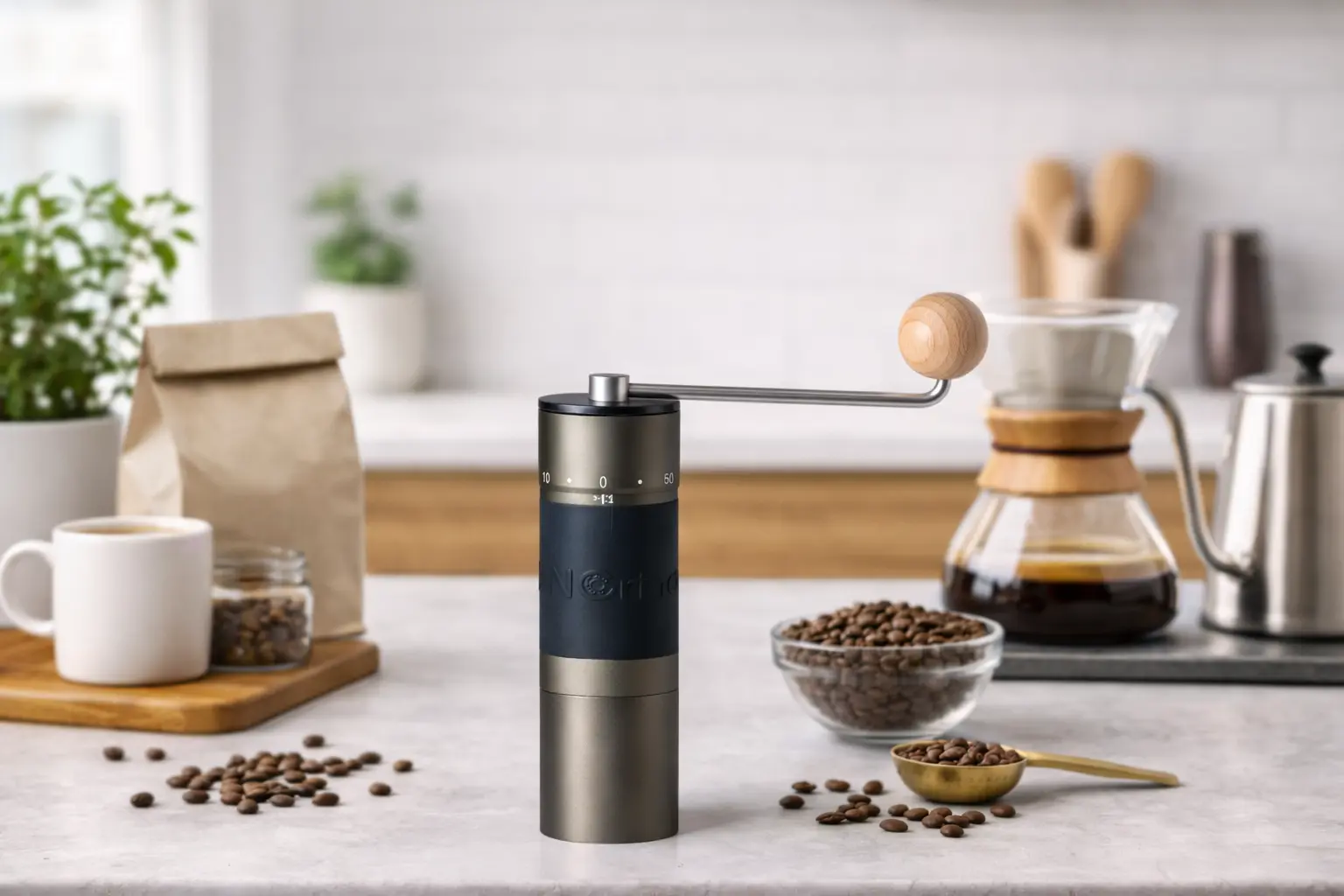
KINGrinder K6 — Best overall
48 mm conical burrs and a numbered external dial for easy, repeatable AeroPress settings at home or on the road.
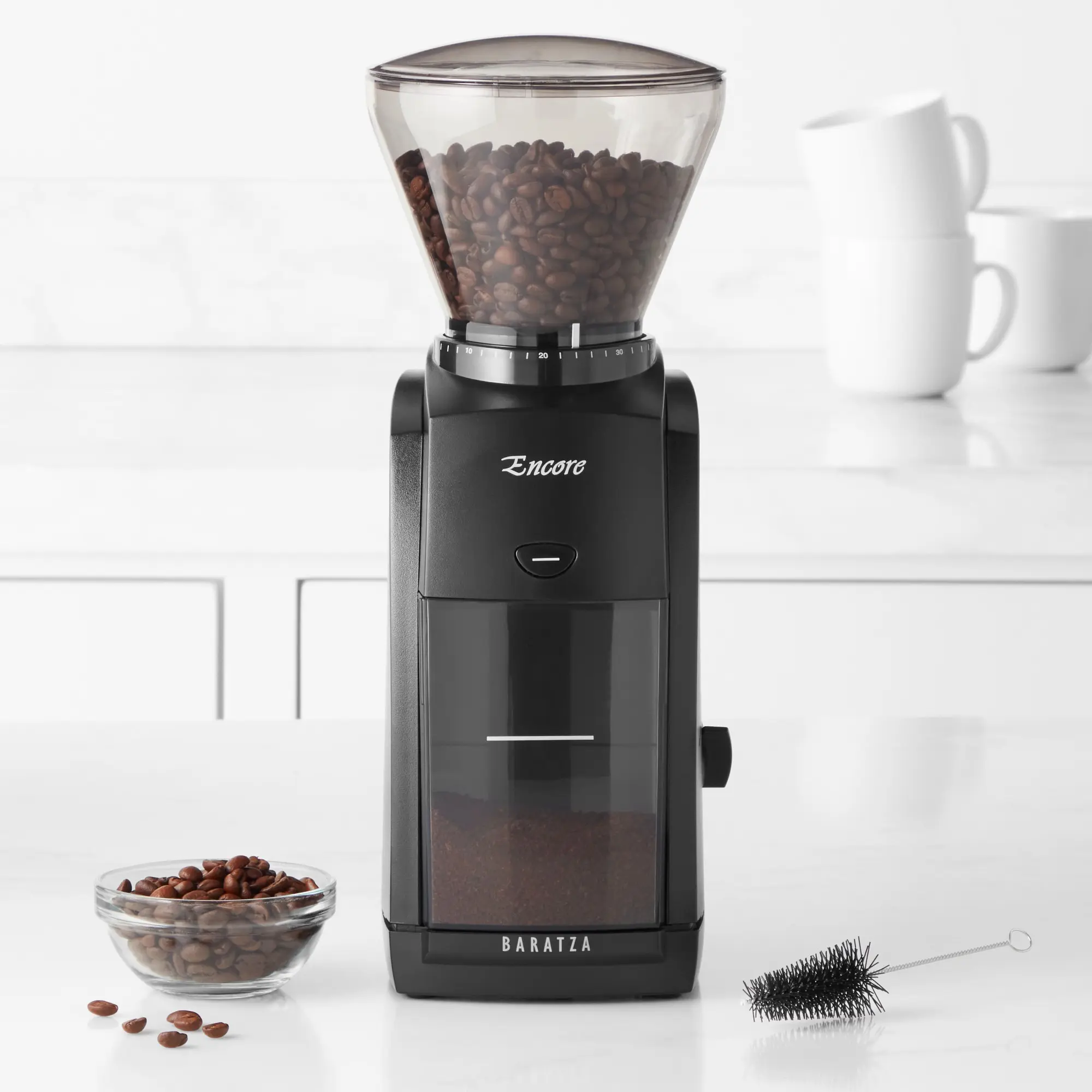
Baratza Encore — Best electric
40 mm conical burrs, 40 settings, and a simple on-off workflow, with replacement parts available from Baratza.
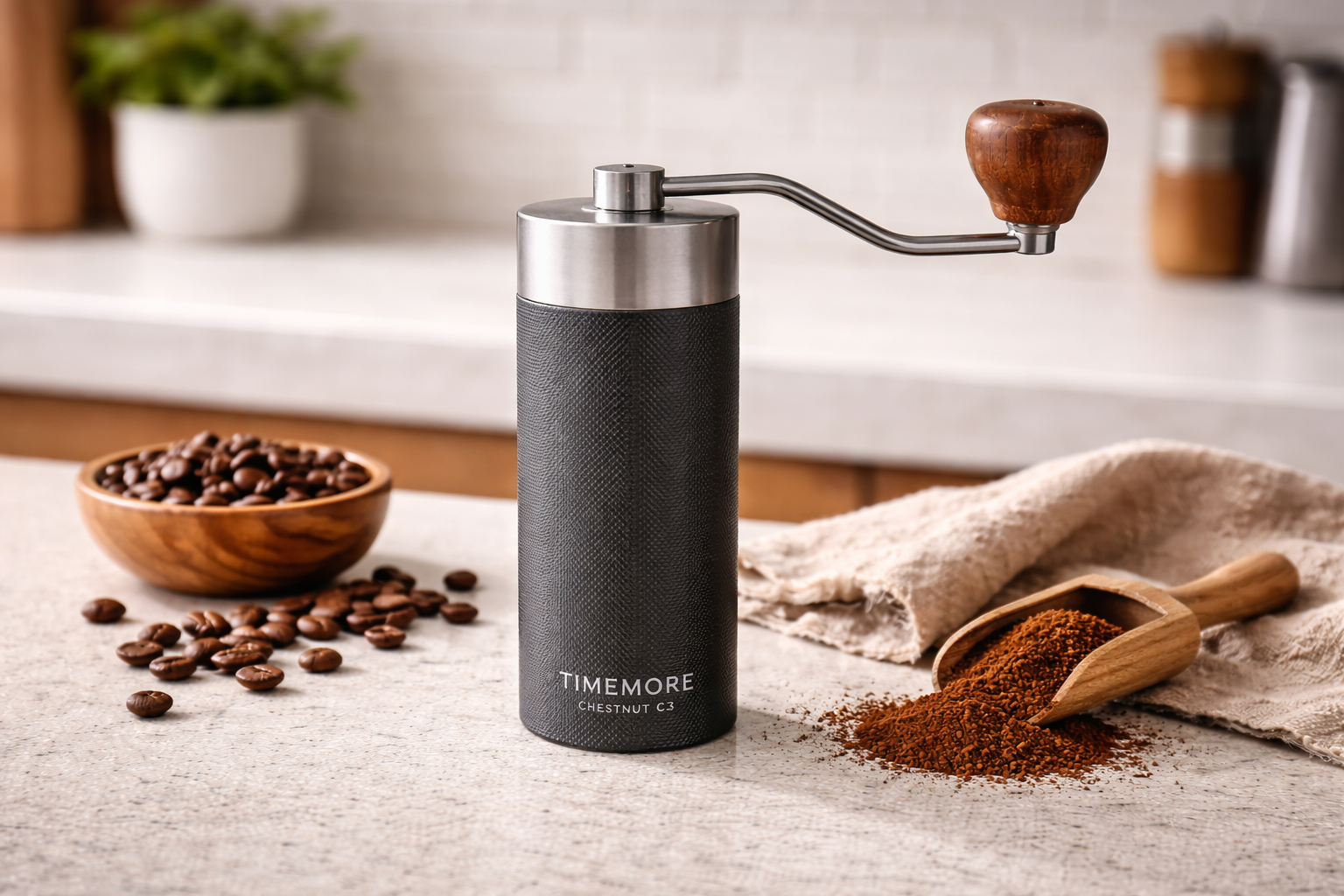
Timemore Chestnut C3 — Best value
Compact 38 mm steel burrs and a metal body that cover AeroPress well for much less than most electric grinders.
Affiliate disclosure: Amazon links may earn CoffeeGearHub a commission at no additional cost to you. Prices and availability can change.
What Actually Matters in an AeroPress Grinder
Three things decide how well a grinder works for AeroPress. The first is particle consistency. Every grinder produces a range of particle sizes, but better burrs produce fewer fines (dust-like particles) and fewer boulders. In an AeroPress, fines over-extract and clog the filter, making the cup bitter and the press stiff, while boulders under-extract and leave it sour. A narrower spread gives a cleaner, sweeter cup and a smoother press.
The second is adjustment resolution: how small each step is and how easy it is to return to a setting. AeroPress recipes span a range from fine concentrates to coarser long steeps, and a grinder with small, numbered steps lets you move within that range precisely and repeat what works. Big jumps between settings leave you choosing between slightly too fine and slightly too coarse.
The third is workflow: static, retention, and how quickly the grinder handles a dose. Static makes grounds cling and spray; retention leaves old coffee inside that ends up in your next brew. Neither ruins AeroPress coffee, but both add small, hidden variables. A grinder that is easy to use every morning is the one you will use well.
Burr vs Blade Grinders for AeroPress
A blade grinder chops beans with a spinning blade, so particle size depends on how long it runs and where each bean happens to be. The result is a mix of powder and chunks in every batch. In an AeroPress, that combination produces a cup that is muddy, bitter, and sour at the same time, and the fines can make the press slow and hard. You can reduce the problem by pulsing and shaking, but you cannot eliminate it.
A burr grinder crushes beans between two burrs set a fixed distance apart, so particles come out much closer to the same size and the setting can be repeated from one morning to the next. Even an inexpensive hand burr grinder is a large step up from a blade grinder, and it is usually the single biggest improvement an AeroPress brewer can make, ahead of a new kettle or more expensive beans. Every grinder in this guide uses burrs.
Manual vs Electric Grinders for AeroPress
A manual grinder is a natural match for AeroPress. A typical AeroPress dose is small, so grinding by hand takes well under a minute, and because none of the budget goes on a motor, hand grinders usually offer better burrs for the money. They are quiet, need no outlet, and pack easily with an AeroPress for travel, camping, or the office. If you brew one or two cups a day, a good hand grinder is the best value.
An electric grinder makes sense if you brew several cups a day, share the grinder with others, or find hand grinding a chore. It is faster and easier, and models with a wide range also cover drip, pour-over, and French press. The trade-offs are cost, counter space, noise, and, in budget models, coarser adjustment steps. Our manual vs electric grinders guide compares them in more depth.
AeroPress Grind Size Map
AeroPress recipes cover a wider grind range than most brewers, because steep time can vary from under a minute to several minutes. For an espresso-style concentrate with a short steep of under a minute, use a fine grind. For a standard cup steeped one to two minutes, start at medium-fine, about the texture of table salt. For the inverted method or a fuller-bodied two- to three-minute steep, go to medium, and for a long, light steep of three or four minutes, medium to medium-coarse. Treat these as starting points; the right setting depends on your grinder, beans, and water temperature.
Finer grinds extract faster and press harder; coarser grinds extract more slowly and press easily. If you change steep time, adjust the grind with it. Our AeroPress grind size guide lists settings for popular grinders, and our AeroPress recipes show how grind fits each method.
How to Dial In Any Grinder for AeroPress
Dialing in is simplest when you change one thing at a time and give each change a fair test. Start with grind, because it has the biggest effect on flavor and on how the press feels. Most people reach a balanced cup within a few brews, and the setting then holds until you change beans.
- Lock a base recipe. Keep dose, water, temperature, and steep time the same for at least three brews.
- Adjust grind only. Move one or two steps at a time: finer if the cup is sour or thin, coarser if it is bitter or the press is hard.
- Then fine-tune. Once the grind is close, adjust steep time or ratio to taste, and note the setting that works.
All Six AeroPress Grinders Compared
The table summarizes our six picks for the best grinders for AeroPress. Specifications come from the manufacturers, and the notes on AeroPress fit reflect each grinder’s burr size and adjustment design rather than a hands-on test. Three are hand grinders for value and portability, and three are electric grinders for speed and convenience.
| Grinder | Type and burrs | Adjustment | Best for |
|---|---|---|---|
| KINGrinder K6 | Manual, 48 mm conical | Numbered external dial | Best overall |
| Timemore Chestnut C3 | Manual, 38 mm conical | Stepped internal dial | Value |
| Porlex Mini II | Manual, ceramic conical | Stepped internal dial | Ultra-portable travel |
| Baratza Encore | Electric, 40 mm conical | 40 settings | Simple electric |
| Fellow Opus | Electric, 40 mm conical | 41 settings plus fine ring | Multi-method brewing |
| OXO Brew Conical Burr | Electric, conical | 15 settings with micro-steps | Budget electric |
Best Manual Grinders for AeroPress: K6, Chestnut C3, and Porlex Mini II
The KINGrinder K6 is our top AeroPress grinder. Its 48 mm conical burrs are large for a hand grinder, so an AeroPress dose grinds quickly, and the numbered external dial lets you read your setting at a glance and move between recipes precisely. That makes it easy to switch from a standard cup to a fine concentrate and back. KINGrinder publishes a settings chart by brew method, and our AeroPress grind size guide includes K6 starting points.
The K6 also covers pour-over, moka pot, and French press, so it can be a household’s only grinder. It is heavier than compact travel grinders, but still portable enough to pack with an AeroPress for a trip, and it needs no power, which suits camping and office use as well.
The Timemore Chestnut C3 is the value pick. Its 38 mm stainless-steel burrs and stepped internal dial handle AeroPress well, and the metal body feels sturdier than its price suggests. Smaller burrs mean more turns per dose, and the internal dial is less convenient than an external one, but for someone moving from a blade grinder it is a large improvement at a modest price.
The Porlex Mini II is the ultra-portable choice. It is compact and light, with ceramic conical burrs and a slim stainless body that packs easily alongside an AeroPress or AeroPress Go. It grinds more slowly than the K6 and adjusts in coarser steps, so it is best as a travel grinder or a second grinder rather than a precision tool for home.
Best Electric Grinders for AeroPress: Encore, Opus, and OXO
The Baratza Encore is the simplest dependable electric grinder for AeroPress. It uses 40 mm conical burrs and 40 settings, with the AeroPress range in the finer part of the dial, and its on-off switch and front pulse button make the workflow easy. Baratza sells replacement burrs and parts, so the Encore can be repaired rather than replaced, which is one reason it remains a common recommendation.
Its finest settings are not intended for espresso, but AeroPress does not need them. If you want espresso capability as well, the Encore ESP adds a finer range. For AeroPress, pour-over, and drip, the standard Encore covers everything a household is likely to brew, and its simple controls make it easy for anyone to use.
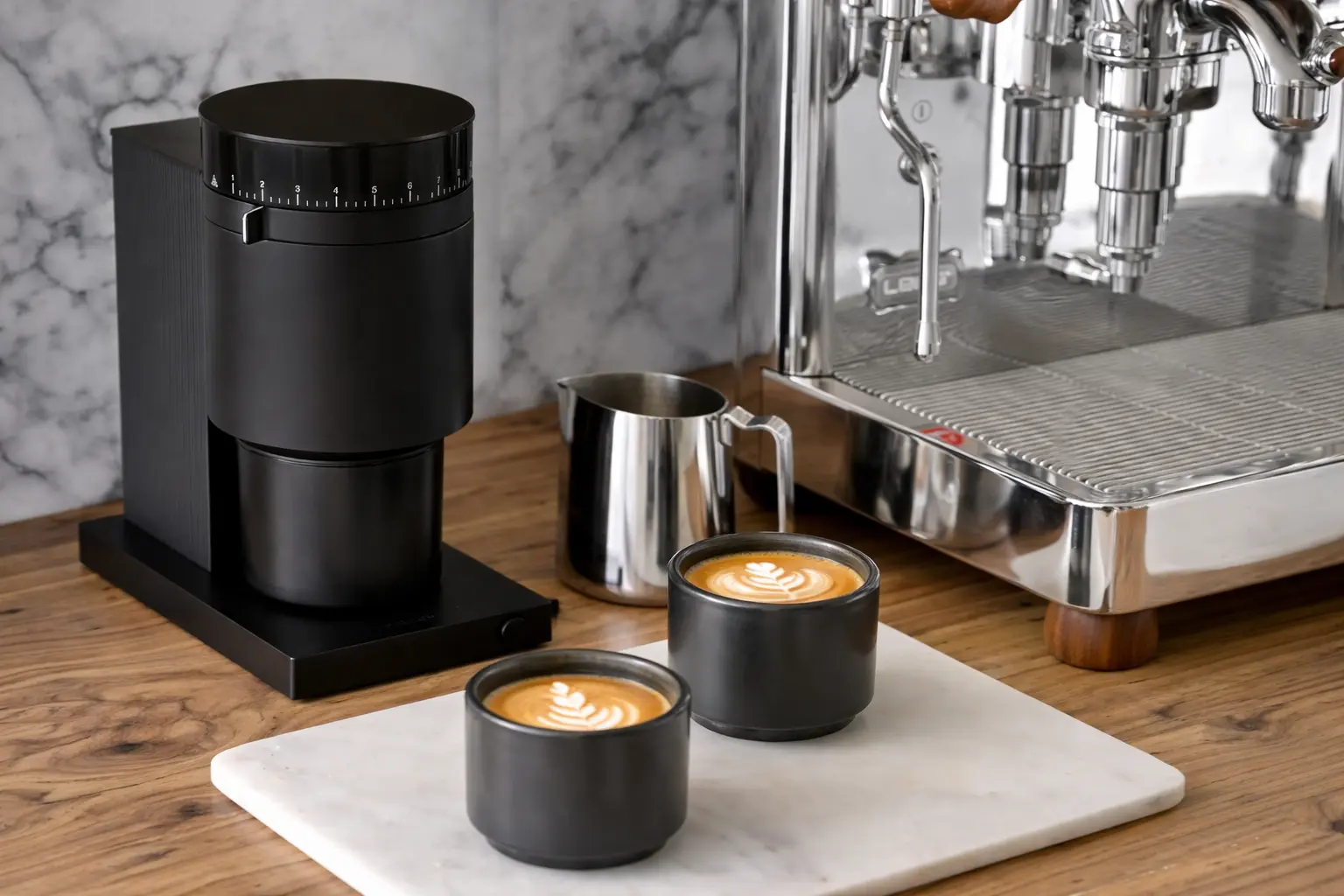
The Fellow Opus suits people who brew AeroPress alongside other methods. It pairs 40 mm conical burrs with 41 main settings and an inner ring for finer adjustment, covering espresso to cold brew, and includes anti-static features that reduce mess. Its finer adjustments help when you move between AeroPress recipes.
The OXO Brew Conical Burr Grinder is the budget electric choice. It offers 15 settings with micro-steps between them and a one-touch timer start. Its steps in the AeroPress range are coarser than the Encore’s or Opus’s, so fine-tuning is less precise, but it is a clear upgrade over a blade grinder and easy to live with.
How Roast Level Changes Your Grind
Roast level affects how easily coffee extracts. Light roasts are denser and less soluble, so they usually need a slightly finer grind, hotter water, or a longer steep to taste sweet rather than sour. Medium roasts are the baseline: start at medium-fine with a one- to two-minute steep and adjust from there. Dark roasts are more porous and soluble, so a slightly coarser grind, cooler water, and a shorter steep help avoid bitterness and ash.
When you switch between coffees, expect to move the grind a step or two rather than keep the same setting. Noting the setting that works for each bag makes it easy to return to. Our best coffee beans for AeroPress guide covers how different coffees behave in the brewer.
Troubleshooting AeroPress Flavor With Your Grinder
Most AeroPress flavor problems can be fixed with one grind adjustment. Start with the most likely cause in the table and change one thing at a time, brewing at least once at each new setting before deciding whether it helped.
| Symptom | Likely cause | Try first |
|---|---|---|
| Sour, thin, or hollow | Under-extraction | Grind finer one or two steps |
| Bitter, harsh, or drying | Over-extraction | Grind coarser one or two steps |
| Press is very hard | Grind too fine or too many fines | Grind coarser; check the burrs are clean |
| Muddy or silty cup | Excess fines | Grind slightly coarser; rinse the filter |
| Bitter and sour together | Uneven grind | Switch from blade to burr; clean the grinder |
If results change from day to day with the same setting, check for stale beans, inconsistent dose, or retention in the grinder. Our AeroPress troubleshooting guide covers problems that are not grind-related, such as leaks, a stiff plunger seal, or a filter that tears, and explains when to replace parts rather than adjust your recipe.
Static, Retention, and Cleaning
Static makes grounds cling to the grinder and catch cup and spray onto the counter. A simple fix is to add a tiny drop of water to the beans and stir before grinding, a technique often called the Ross droplet technique. It reduces static noticeably in most grinders. Tapping the grinder after grinding also releases grounds that have clung inside.
Retention is the coffee left inside the grinder after each use. It matters less for AeroPress than for espresso, but stale grounds still affect flavor if they accumulate. Brush out the burrs and chute every week or two with daily use, and do a deeper clean monthly, removing the burrs where the manufacturer allows. Avoid rice, which can damage burrs or motors. Our grinder cleaning and retention guide walks through it step by step.
Our Pick of the Best Grinders for AeroPress
For most AeroPress brewers, the KINGrinder K6 is the best grinder: precise, repeatable, and portable. If you want electric convenience, choose the Baratza Encore for simplicity and repairability, or the Fellow Opus if you brew several methods. On a tight budget, the Timemore Chestnut C3 is the best value, the Porlex Mini II is the pick for travel, and the OXO Brew is a solid entry-level electric option. Any of them will make better AeroPress coffee than a blade grinder.
Start With the Grinder That Fits Your AeroPress Routine
The KINGrinder K6 suits most AeroPress brewers; the Baratza Encore is the easy electric alternative.
As an Amazon Associate, CoffeeGearHub earns from qualifying purchases.
Editorial bottom line: For AeroPress, a consistent medium-fine grind with small, repeatable steps matters more than any other feature. Choose a burr grinder that fits how many cups you brew, then dial in by changing the grind first.
Frequently Asked Questions
Is a burr grinder necessary for AeroPress?
Not strictly, but it makes the biggest difference of any upgrade. A burr grinder produces even particles, which gives a cleaner cup and an easier press. Blade grinders create a mix of powder and chunks that makes AeroPress coffee muddy, bitter, and sour at once.
What grind size is best for AeroPress?
Medium-fine is the usual starting point, roughly like table salt, for a standard one- to two-minute steep. Go finer for short steeps and concentrates and coarser for longer steeps. Our AeroPress grind size guide gives settings by recipe.
Manual or electric grinder for AeroPress: which is better?
Neither is better in principle. A manual grinder gives more grind quality for the money and travels well, and one AeroPress dose grinds quickly by hand. An electric grinder is faster and easier if you brew several cups a day or share the grinder.
What is the best grinder for AeroPress travel?
A compact hand grinder. The KINGrinder K6 is our pick for quality, and the Porlex Mini II is smaller still and packs easily alongside an AeroPress or AeroPress Go. Both need no power, so they work anywhere you can heat water.
Should I change grind or brew time first when dialing in AeroPress?
Grind first. Keep dose, water, temperature, and time fixed for a few brews and move the grind in small steps until the cup is balanced. Only then fine-tune time or ratio, so you know which change helped and can repeat it next time.
Can I use pre-ground coffee in an AeroPress?
Yes. Choose a medium-fine filter grind rather than espresso grind, and use it quickly, since ground coffee goes stale within days. Fresh grinding with a burr grinder gives noticeably better flavor, especially with lighter roasts and single-origin coffees.
Sources and Further Reading
Specifications come from manufacturer product pages and manuals: KINGrinder (K6 adjustment and grind charts), Baratza (Encore), Fellow (Opus), OXO (Brew Conical Burr Grinder), Timemore (Chestnut C3), and Porlex (Mini II). Brewing guidance draws on AeroPress’s published brewing instructions and the Specialty Coffee Association’s brewing standards. Grind settings vary between individual grinders and beans, so treat them as starting points. CoffeeGearHub did not test these grinders hands-on; comparisons rely on published specifications and independent reviews.
CoffeeGearHub product shortlist
Continue with related products on CoffeeGearHub
Review product categories and current verified merchant offers on CoffeeGearHub before leaving the site.