
Last Updated: March 2026 • 40–50 min read • Cornerstone Guide: Espresso Bean Selection + Roast Science + Dial-In System + Gear Picks

Choosing the best coffee beans for espresso is the single highest-leverage decision in home espresso. Your machine, grinder, and technique can only work with what the bean gives them — and the wrong bean will produce flat, sour, or bitter espresso regardless of how carefully you dial in your shot. The right bean, matched to your roast preference and brewing style, transforms the same machine into something that produces genuinely cafe-quality results. This complete CoffeeGearHub guide explains exactly what to look for in espresso beans, why roast level, origin, and freshness each matter, and gives you our verified top picks across every category — from beginner-friendly dark blends to specialty light roast single origins — with full dial-in guidance for each.
✍️ Editorial note: This guide is researched and written by the editors at CoffeeGearHub.com using published brewing science, SCA brewing standards, roaster tasting notes, and established specialty-coffee community knowledge. Recommendations reflect research consensus and community reputation rather than in-house lab testing. All product links are affiliate links — we may earn a commission at no cost to you.
The 30-Second Answer
For most home espresso setups, a medium to medium-dark roast whole bean coffee, roasted 7–21 days ago, from a reputable specialty roaster is the best starting point. Blends are more forgiving to dial in; single origins offer more distinctive flavour but require tighter technique. Roast level is your first decision — not brand or origin. Light roasts reward high-temp, longer pre-infusion espresso. Dark roasts perform best with lower temperature and faster yield. Fresh beans with a visible roast date outperform any shelf-stable “espresso blend” in a vacuum-sealed can, every time.
- Best Overall: Lavazza Super Crema — the reliable, affordable medium-dark blend that works in any machine
- Best Specialty / Light Roast: Stumptown Hair Bender — the benchmark third-wave espresso blend for fruity, complex shots
- Best for Beginners: Intelligentsia Black Cat Classic Espresso — engineered for consistency across a wide range of machines
- Best Dark Roast: Illy Classico Whole Bean — Italian tradition, reliably smooth, excellent for milk drinks
- Best Budget: Kicking Horse Cliff Hanger Espresso — whole bean, roast-dated, punches well above its price point
Who This Guide Is For — Jump to What You Need
☕ Complete Beginner
Start with the What Makes a Good Espresso Bean section, then go straight to Top Picks.
🔧 Troubleshooter
Jump to the Troubleshooting Matrix — sour, bitter, flat, and channelling fixes are all there.
🧪 Roast Explorer
See Roast Level Deep Dives for light, medium, and dark espresso guidance and recipe parameters.
🔬 Extraction Nerd
Read Extraction Science and Single Origin vs Blends for the full picture.
Table of Contents
- What makes a good espresso bean
- Roast level master reference table
- Top picks: best espresso beans by category
- Roast level deep dives (light, medium, dark)
- Single origin vs blends for espresso
- Processing method: washed, natural, honey
- Freshness and roast date: the most overlooked variable
- Arabica vs Robusta for espresso
What Makes a Good Espresso Bean? The Four Variables That Matter
The term “espresso bean” is one of the most misleading labels in coffee retail. There is no such thing as a bean that is biologically suited to espresso — any Arabica or Robusta coffee can be brewed as espresso. What the label actually signals is that the coffee has been roasted with espresso’s extraction parameters in mind: high temperature, high pressure, short contact time, and very fine grind. Understanding what those parameters demand from a bean tells you exactly what to look for — and what to ignore — when choosing.
Four variables determine whether a bean performs well as espresso: roast level, freshness, processing method, and whether it’s a blend or single origin. Everything else — the name on the bag, the Italian branding, the “espresso” label, even the price — is secondary to getting these four right.
| Variable | Why it matters for espresso | What to look for | Common mistake |
|---|---|---|---|
| Roast level | Determines solubility, extraction speed, and flavour profile under pressure | Medium to medium-dark for most machines; light only if your machine supports high temp/pre-infusion | Buying very dark supermarket beans that extract bitter at every grind setting |
| Freshness (roast date) | CO2 content and aromatic volatiles peak between 7–21 days post-roast | Always buy bags with a visible roast date; use within 4 weeks of that date | Buying beans with a best-before date only — can be months or years post-roast |
| Processing method | Washed = clean, bright, lower body; Natural = fruity, heavier body, more sweetness; Honey = middle ground | Match to your flavour preference; natural processes suit milk drinks, washed suit black espresso | Ignoring processing entirely and attributing all flavour variation to roast level |
| Blend vs single origin | Blends offer consistency and forgiveness; singles offer complexity but require tighter technique | Beginners: start with blends. Experienced: explore single origins once your dial-in is consistent | Starting with a delicate single origin before mastering grind calibration |
Common mistake: buying coffee labelled “espresso roast” from a supermarket without a roast date. Supermarket espresso blends are typically roasted months before they reach shelves, vacuum-sealed to mask staleness, and roasted very dark to provide shelf-stable flavour stability. The result is reliably bitter, flat espresso that no amount of grind adjustment will fix. Freshness is non-negotiable.
Espresso Roast Level — Master Reference Table
Roast level is the most important single factor in espresso bean selection because it directly determines extraction speed under pressure, flavour profile, and optimal brew parameters. Use this table as your starting reference before selecting any specific coffee. If your machine parameters are fixed (common with entry-level semi-automatics), roast level is even more critical — some machines simply cannot produce good espresso from certain roast levels.
| Roast level | Brew temp | Shot time (1:2 ratio) | Grind (K6 clicks) | Flavour profile | Best for | Machine compatibility |
|---|---|---|---|---|---|---|
| Light roast ☀️ | 93–96°C | 28–35s | 8–12 clicks | Fruit, floral, bright acidity, tea-like body | Experienced home baristas; machines with temp control | Requires variable temp + pre-infusion capability |
| Medium-light roast | 91–94°C | 26–32s | 10–14 clicks | Stone fruit, milk chocolate, balanced acidity | Third-wave espresso enthusiasts; specialty machines | Works well with most prosumer machines |
| Medium roast 🌤 | 90–93°C | 25–30s | 12–16 clicks | Caramel, nuts, citrus edge, round body | Most home espresso setups — the universal sweet spot | Compatible with nearly all espresso machines |
| Medium-dark roast | 88–92°C | 24–28s | 14–18 clicks | Dark chocolate, brown sugar, low acidity | Everyday drinkers; excellent with milk | Works in all machines including entry-level |
| Dark roast 🌑 | 88–91°C | 22–26s | 16–20 clicks | Roasted nuts, bittersweet chocolate, smoky | Traditional Italian style; strong, intense shots | Best in machines without temp control — forgiving |
🔬 K6 click reference: All KINGrinder K6 click settings in this guide are measured from zero (burrs touching). Lower clicks = finer grind. Espresso is the finest end of the K6’s range — clicks 8–20 covers the full espresso spectrum. These are starting points; individual grinders and bean densities vary. Adjust 1 click at a time for espresso — the changes are large.
Best Coffee Beans for Espresso: Our Top Picks
These five picks represent the best espresso beans across every category — from the reliable everyday Italian-style medium-dark blend to the complex specialty light roast single origin. Each includes full dial-in parameters, flavour notes, and honest notes on who will get the most from it. All recommendations are for whole bean; pre-ground espresso degrades too quickly to recommend for any discerning home setup.
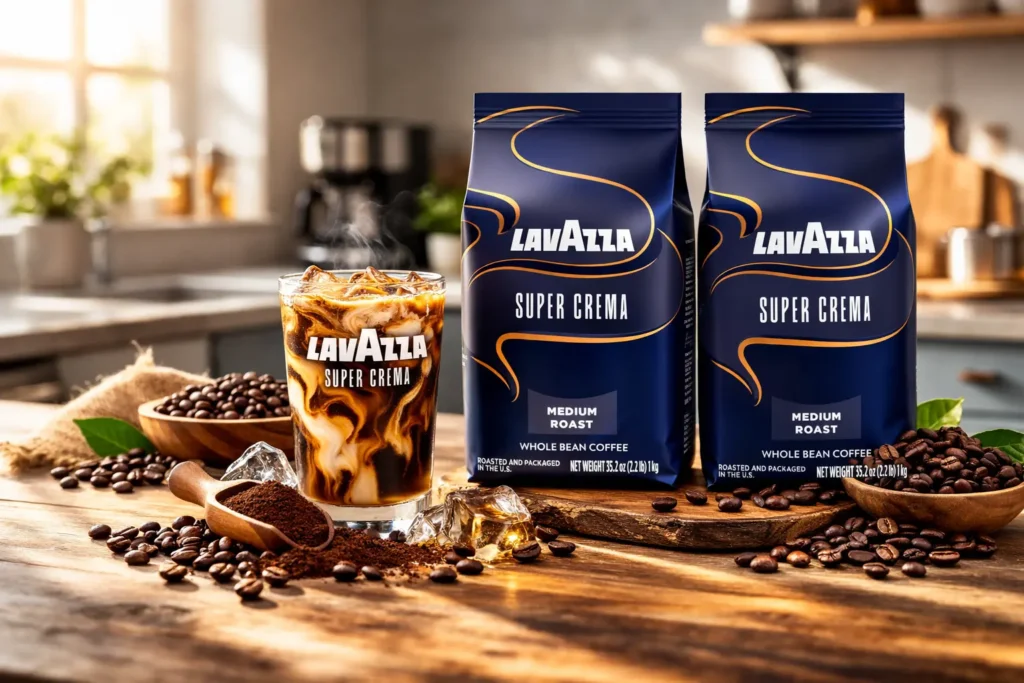
Best Overall: Lavazza Super Crema Whole Bean
Lavazza Super Crema is the most-recommended beginner-to-intermediate espresso bean for a reason: it works in virtually any machine, dials in quickly, produces an excellent crema, and delivers a consistent medium-dark profile that suits both black espresso and milk drinks. The blend is predominantly Arabica with a small Robusta component that adds body and crema stability — exactly the kind of engineering that makes an everyday espresso dependable rather than temperamental. If you own a semi-automatic machine and want reliable, delicious espresso without a lengthy dial-in period, Super Crema is the answer.
- Roast: Medium-dark — hazelnut, brown sugar, dried fruit, mild bitterness
- Blend: 60% Arabica (Central America, Brazil) + 40% Robusta — thick crema, full body
- Dial-in starting point: 18g in / 36g out / 25–28s / 90–92°C / K6: 16–18 clicks
- Best for: milk drinks (cappuccino, flat white), everyday double espresso, beginners
- Note: sold in vacuum-sealed bags — check for a roast date; freshness varies by retailer
Disclosure: CoffeeGearHub may earn from qualifying purchases.
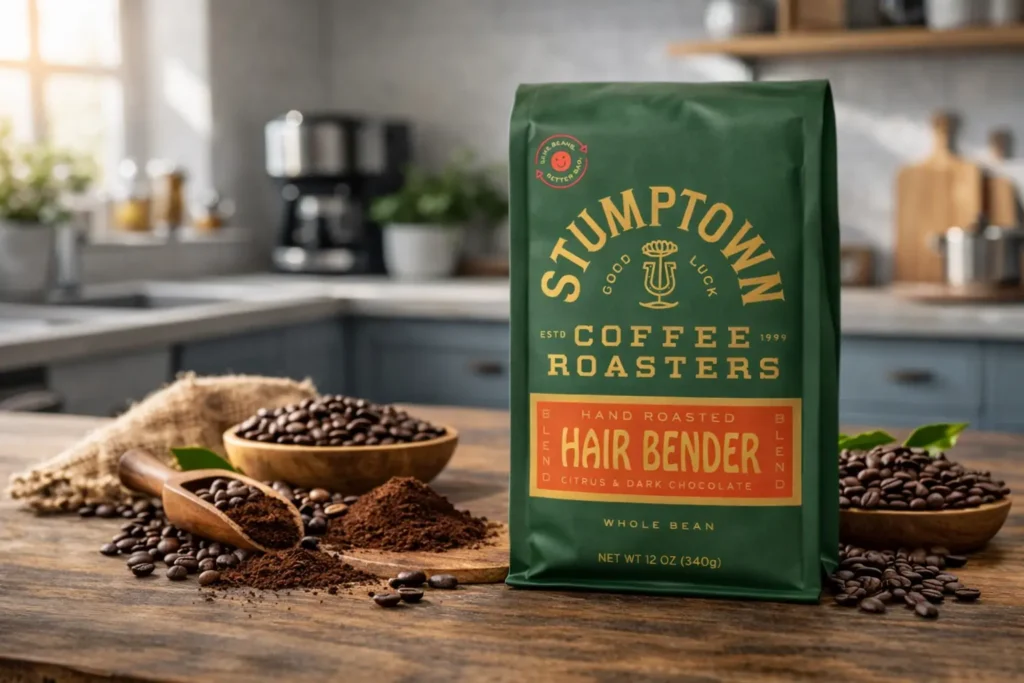
Best Specialty / Light-Medium Roast: Stumptown Hair Bender
Hair Bender is the benchmark third-wave espresso blend in the United States — a medium-light multi-origin blend that changed how American specialty cafes think about espresso. The current version typically incorporates beans from Latin America, East Africa, and Indonesia to build complexity across the full extraction arc: a bright citrus opening, a chocolate and caramel mid-palate, and a clean, lingering finish. It rewards technique — a precise grind, accurate dose, and temperature control between 91–93°C — but pays back with shots that are genuinely more interesting than anything a dark-roasted blend can offer. Stumptown roast-dates every bag and ships to order.
- Roast: Medium-light — dark chocolate, caramel, citrus zest, stone fruit
- Blend: Multi-origin Latin America + East Africa + Indonesia — complex, layered
- Dial-in starting point: 18g in / 36g out / 27–32s / 92–93°C / K6: 12–14 clicks
- Best for: experienced home baristas, black espresso, flat whites
- Note: requires temp-adjustable machine; not ideal for entry-level machines fixed at 92°C+
Disclosure: CoffeeGearHub may earn from qualifying purchases.
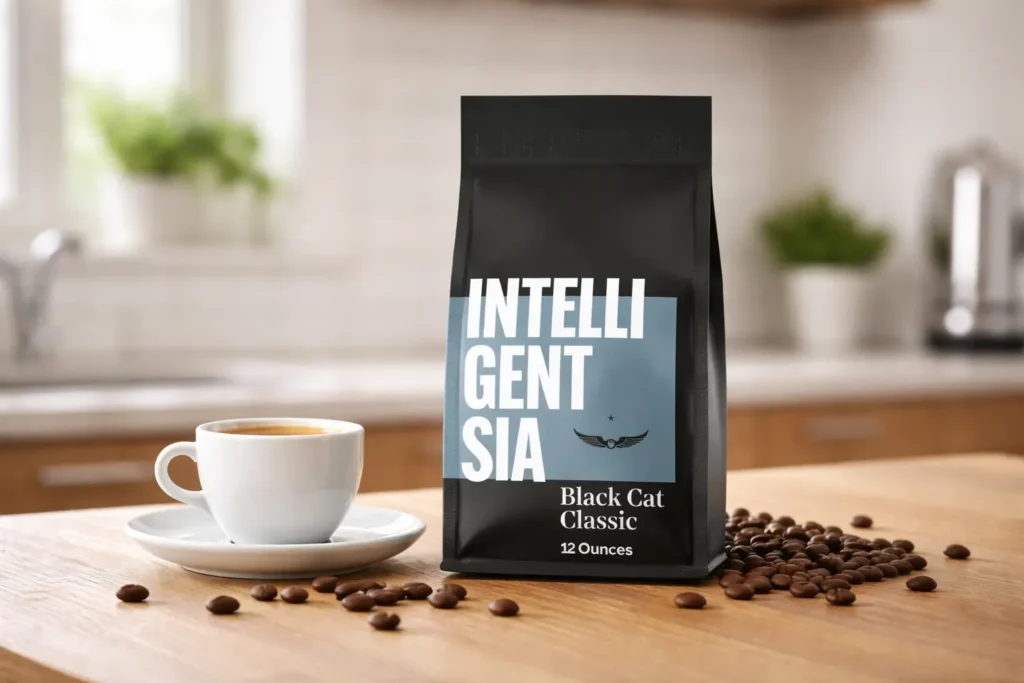
Best for Beginners: Intelligentsia Black Cat Classic Espresso
Black Cat Classic is engineered for consistency — Intelligentsia designed it explicitly to perform across the widest possible range of espresso machines and skill levels. The blend sits at medium roast with Brazilian and Central American components that provide sweetness, body, and low acidity without demanding precise temperature control or ultra-fine grind calibration. It will perform in a budget semi-automatic and in a $3,000 prosumer machine. For anyone who has just bought their first espresso machine and wants shots that taste good while they’re still learning to dial in, Black Cat Classic is the most forgiving specialty espresso bean on the market. Every bag ships with a roast date.
- Roast: Medium — milk chocolate, almond, brown sugar, mild fruit sweetness
- Blend: Brazil + Central America Arabica — wide extraction window, beginner-friendly
- Dial-in starting point: 18g in / 36g out / 25–30s / 91–92°C / K6: 13–15 clicks
- Best for: beginners, milk drinks, machines without temperature control
- Note: roast-dated; best used 10–18 days off-roast for espresso
Disclosure: CoffeeGearHub may earn from qualifying purchases.
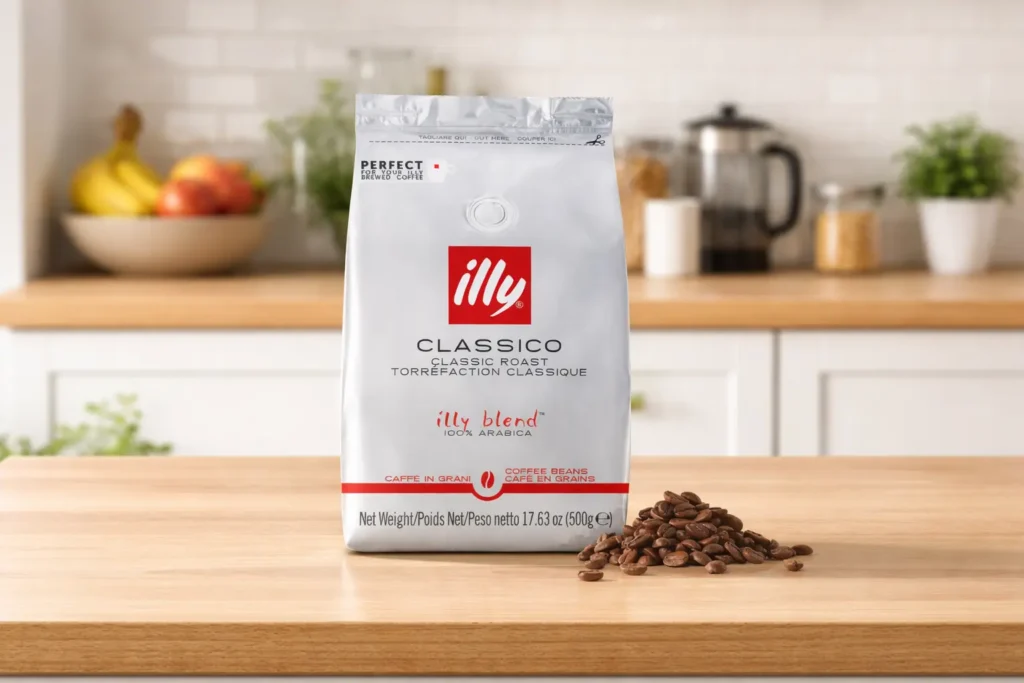
Best Dark Roast Espresso: Illy Classico Whole Bean
Illy Classico is the gold standard for traditional Italian-style espresso — a smooth, low-acidity medium roast (marketed as medium but roasting darker than most third-wave mediums) that delivers the creamy body, bittersweet chocolate flavour, and aromatic richness the Italian espresso tradition is built around. Where most supermarket dark roast espresso tastes ashy and flat, Illy’s nine-arabica-origin blend retains sweetness and complexity even at its darker roast level. The pressurised can preserves freshness significantly better than a standard bag — it’s one of the few non-roast-dated coffees we consider still worth buying. The go-to for anyone who wants traditional espresso for straight shots and milk drinks.
- Roast: Medium (roasted dark by specialty standards) — dark chocolate, caramel, dried fruit, low acidity
- Blend: 9-origin 100% Arabica — Italian-tradition house blend; pressurised freshness can
- Dial-in starting point: 18g in / 36g out / 24–27s / 89–91°C / K6: 17–19 clicks
- Best for: traditional espresso drinkers, milk drinks, reliable everyday dark roast
- Note: pressurised can = extended shelf stability; open cans within 2 weeks
Disclosure: CoffeeGearHub may earn from qualifying purchases.
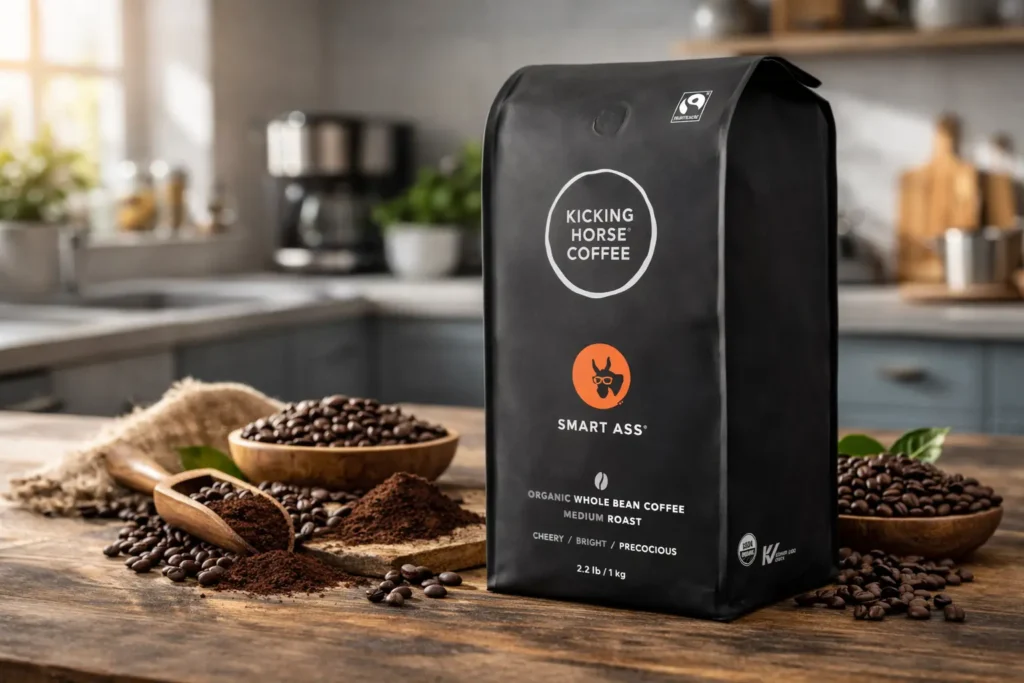
Best Budget Espresso Bean: Kicking Horse Cliff Hanger Espresso
Kicking Horse Cliff Hanger punches well above its price point — a medium-dark whole bean espresso that’s Fairtrade, organic, and available at a cost that undercuts most specialty roasters by a significant margin. The Fairtrade certification mandates sourcing standards that filter out the lowest-quality commodity lots, which is why Cliff Hanger tastes noticeably cleaner and sweeter than other budget options at its price. The roast level is approachable enough for beginners and the body is full enough for milk drinks. It won’t compete with Stumptown or Intelligentsia on complexity — but at its price it doesn’t need to. For anyone building their home setup on a budget, this is the bean to start with.
- Roast: Medium-dark — cocoa, molasses, dark fruit, smooth finish
- Blend: Fairtrade certified Arabica, multi-origin — approachable, reliable
- Dial-in starting point: 18g in / 36g out / 24–27s / 89–91°C / K6: 16–18 clicks
- Best for: budget home setup, daily drinkers, milk-based drinks
- Note: widely available at grocery stores — check roast date when buying in-store
Disclosure: CoffeeGearHub may earn from qualifying purchases.
Roast Level Deep Dives: Light, Medium, and Dark Espresso
Each roast level demands a fundamentally different approach to espresso brewing. Understanding the science behind each roast level explains why the dial-in parameters differ, what symptoms to expect when parameters are off, and how to fix them — before you change the bean.
☀️ Light Roast Espresso
Light roast espresso is the most technically demanding category in home espresso. Dense bean structure, high retained moisture, and lower solubility mean you need more heat, more pressure time, and a finer grind to extract adequately. At the same time, the bright organic acids extract fastest under pressure, which means under-extraction shows up as sharp sourness before under-extraction shows up as weakness.
Parameters: 93–96°C, 30–35s shot time, 1:2 to 1:2.5 ratio, pre-infusion 5–8s, K6: 8–12 clicks
- Signs of under-extraction: sharp sourness, pale blond crema, fast shot (<20s)
- Signs of over-extraction: bitterness overrides acidity, dark crema, slow shot (>40s)
- Fix sour: grind 1 click finer + raise temp 1°C
- Fix bitter: grind 1 click coarser + reduce yield to 1:2
🌤 Medium Roast Espresso
Medium roast is the universal espresso sweet spot. Cell structure is sufficiently broken down for fast extraction, residual moisture is low, and the balance between acidity, sweetness, and bitterness sits in the widest window of any roast level. Medium roast espresso is the most forgiving to dial in and the most consistent to reproduce once dialled in — which is why every major espresso competition uses medium roast as the baseline category.
Parameters: 90–93°C, 25–30s shot time, 1:2 ratio, pre-infusion 3–5s, K6: 12–16 clicks
- Signs of under-extraction: sour or hollow body, thin crema, fast shot
- Signs of over-extraction: drying bitterness at finish, dark crema, slow shot
- Fix sour: grind 1 click finer
- Fix bitter: grind 1 click coarser or lower temp 1°C
🌑 Dark Roast Espresso
Dark roast beans are porous, soluble, and extract extremely fast under pressure. The Maillard and caramelisation reactions that define dark roast flavour produce bitter-forward compounds that dissolve quickly when water temperature is high. The traditional Italian approach — slightly lower temperature, slightly shorter yield — exists precisely to extract the pleasant bittersweet, chocolatey body of a dark roast before the harsh chlorogenic acids dominate the finish.
Parameters: 88–91°C, 22–26s shot time, 1:1.5 to 1:2 ratio, minimal pre-infusion, K6: 16–20 clicks
- Signs of under-extraction: sharp sourness (rare with dark roast), pale crema
- Signs of over-extraction: ashy, dry, harsh — extremely common at standard temps
- Fix bitter: lower temp 2°C + grind 1 click coarser
- Fix flat: grind 1 click finer only — don’t raise temp
🔬 Roast science: The Maillard reaction and caramelisation during roasting progressively break down cell walls, reduce bean density, and convert green coffee’s grassy chlorogenic acids into the brown, bitter compounds (lactones and quinides) that characterise darker roasts. A lighter roast retains more of the original bean structure — denser, harder, requiring more thermal energy and time to dissolve. A darker roast has lost more mass (CO2 and moisture), is more porous, and extracts faster. This is why dark roast espresso needs a coarser grind even though the bean feels more fragile — the extraction rate is already higher.
Single Origin vs Blends for Espresso: Which Is Right for You?
The single-origin vs blend debate is one of the most persistent in specialty espresso — and the right answer depends entirely on your technique level, machine capabilities, and what you want from the cup. Neither is universally better. Each makes different tradeoffs between consistency, complexity, and dial-in difficulty.
| Espresso Blends | Single Origin Espresso | |
|---|---|---|
| Flavour profile | Engineered balance — designed to taste good across a wide extraction window | Origin-forward — expressive, distinctive, can be polarising |
| Consistency | High — blend components offset seasonal variation in any single origin | Lower — flavour changes each harvest; crop year matters |
| Dial-in difficulty | Low — wider sweet spot, more forgiving of imprecise grind or temp | High — narrow sweet spot; 1-click grind changes produce large flavour shifts |
| Machine compatibility | Works in all machines including entry-level and fixed-temp | Performs best with temp-adjustable, pre-infusion-capable machines |
| Best milk drink performance | Excellent — body and sweetness hold up under milk | Variable — some origins (natural Ethiopia) work beautifully; others (washed Kenya) can get lost |
| Recommended for | Beginners, daily drinkers, milk-based drinks, anyone without temp control | Experienced brewers, black espresso, specialty exploration |
Processing Method: How Washed, Natural, and Honey Affect Espresso
Processing method — how the coffee cherry is removed from the bean after harvest — is the second most influential origin variable after roast level. It shapes the body, sweetness, acidity, and flavour character of a bean before any roasting takes place. Understanding processing helps you choose beans that match your flavour preferences and milk drink use case.
Washed (Wet Process)
Cherry pulp is removed before drying — the bean ferments in contact with water. Result: clean, bright, transparent flavour with pronounced acidity and origin clarity. The bean’s intrinsic character comes through without fruit pulp influence.
- Espresso character: bright, clean, high clarity
- Body: light to medium
- Best for: black espresso, ristretto, manual machines
- Milk drinks: can get lost under heavy milk — best in small flat white
Natural (Dry Process)
Cherry dries whole around the bean — fruit sugars ferment directly into the bean. Result: heavy body, intense fruit character (often blueberry, strawberry, tropical), lower acidity. Requires tighter extraction control to prevent fermented or “winey” off-notes.
- Espresso character: fruity, heavy, sweet, complex
- Body: full, syrupy
- Best for: milk drinks (holds up beautifully), sweet black espresso
- Caution: over-extraction produces fermented, boozy off-notes quickly
Honey (Pulped Natural)
Pulp removed but varying amounts of mucilage (the sticky “honey” layer) left on the bean during drying. Result: middle ground between washed clarity and natural sweetness — round, sweet, moderate body, lower acidity than washed but cleaner than natural.
- Espresso character: balanced, sweet, approachable complexity
- Body: medium-full
- Best for: everyday espresso, milk drinks, beginners to single origins
- Note: most consistent single-origin option for espresso beginners
Freshness and Roast Date: The Most Overlooked Variable in Espresso
No amount of dialling in compensates for stale beans. Espresso is the most unforgiving brewing method for freshness because high pressure extracts everything — including the flat, papery, cardboard notes of stale coffee that a filter or AeroPress might partially conceal. Understanding the freshness curve tells you when to brew your beans and when to avoid buying them.
| Days post-roast | CO2 level | Espresso performance | What you’ll taste |
|---|---|---|---|
| 0–5 days | Very high | Poor — too gassy | Uneven extraction, channelling, hollow body, CO2 degassing mid-shot disrupts flavour |
| 5–10 days | Elevated | Improving — still inconsistent | Getting there but bloom is aggressive; shots run fast; acidity can be sharp |
| 10–21 days | Optimal | Peak performance | Maximum sweetness, clarity, and crema stability — the target brewing window |
| 21–35 days | Declining | Good — minor staling beginning | Still excellent for everyday brewing; mild reduction in aromatic complexity |
| 35–60 days | Low | Acceptable — noticeable staling | Flatter crema, reduced sweetness, slight cardboard notes at the finish |
| 60+ days | Depleted | Poor — stale | Flat, hollow, papery — no amount of grind adjustment will improve this |
⚠️ Freshness red flags: Any bag without a roast date (only a best-before date) is almost certainly more than 60 days off-roast at time of purchase. Vacuum-sealed bricks without a one-way degassing valve were packed after degassing, which means the beans sat exposed to oxygen before packing. Neither is automatically disqualifying — Illy’s pressurised can is an exception — but in all other cases, a visible roast date is non-negotiable for espresso quality. Order directly from roasters when possible: most specialty roasters ship within 1–3 days of roasting.
Arabica vs Robusta for Espresso
The Arabica vs Robusta question matters more for espresso than for any other brew method. Under high pressure, Robusta’s higher oil and caffeine content produce a dramatically thicker, more persistent crema and a more intense, full-bodied shot. This is exactly why traditional Italian espresso blends — the ones served in Rome and Naples — have always included Robusta. The specialty coffee movement largely shifted to 100% Arabica espresso in pursuit of cleaner, more nuanced flavour. Both approaches are valid; the right choice depends on what you want from your shot.
| 100% Arabica | Arabica + Robusta Blend | 100% Robusta | |
|---|---|---|---|
| Crema | Good, golden, moderate persistence | Excellent, thick, very persistent | Extreme, heavy, dark brown |
| Body | Light to full depending on roast/origin | Full, rounded, heavy | Very heavy, almost syrupy |
| Flavour | Complex, sweet, fruit/nut/chocolate range | Balanced intensity; rounds out acidity | Earthy, harsh, rubbery — acquired taste |
| Caffeine | ~1.2–1.5% caffeine by weight | ~1.5–2% depending on Robusta % | ~2.7% caffeine — significantly stronger |
| Best for | Specialty espresso, complex flavour, single origins | Traditional Italian espresso, milk drinks | Rare; used in commercial super-automatics for crema |
| Recommended % | 100% | 80–90% Arabica / 10–20% Robusta is typical | Not recommended for home espresso |
Extraction Science: How Your Bean Choice Affects Every Shot
Espresso extraction is fundamentally different from filter or immersion brewing because of pressure. At 9 bars of pressure, water moves through the coffee puck at force — it doesn’t gently diffuse through like in an AeroPress or drip setup. This means extraction happens faster (25–30 seconds vs 2–4 minutes), particle size matters more (espresso grind variation of even 1–2 microns changes shot time), and the compounds extracted are different in profile from filter coffee made from the same beans.
- Acids extract first and fastest (all roasts): citric, malic, acetic acids — brightness, sometimes sharp sourness if extraction ends here. Lighter roasts retain more of these. This is why under-extracted espresso from light roast beans is intensely sour.
- Sugars and aromatics extract next (the target zone): sweetness, body, fruit, nut, chocolate character — this is where well-dialled espresso lives. Achieving this band fully requires the right grind-to-yield ratio for your roast level.
- Bitter compounds extract last (avoid over-reaching): chlorogenic acids, phenols — dry, astringent, harsh finish. Dark roasts accumulate more of these during roasting. High temperature and slow shot times push extraction into this zone.
🔬 Why yield (output weight) matters as much as shot time: The ratio of dry coffee dose to liquid espresso weight (the yield ratio) determines what percentage of the bean’s soluble mass ends up in your cup. A 1:2 ratio (18g in / 36g out) is the specialty standard for balanced espresso. Pulling to 1:2.5 or 1:3 adds sweetness and reduces intensity. Pulling to 1:1.5 concentrates body and reduces brightness. Shot time alone is an incomplete measurement — the same 30-second shot can produce very different espresso depending on whether you stopped at 30g or 40g out. Always weigh your yield.
Dial-In Guide: How to Dial In Any New Espresso Bean
Every new bag of espresso beans requires a dial-in session — even the same coffee from the same roaster will vary slightly between batches, roast dates, and seasons. The dial-in process should be methodical and single-variable. Adjusting grind, dose, yield, and temperature simultaneously makes it impossible to identify what changed the shot.
Starting Baseline Recipe
- Dose: 18g (weighed)
- Target yield: 36g (1:2 ratio)
- Target time: 25–30 seconds
- Temperature: 91°C for medium; 93°C for light; 89°C for dark
- Grind: K6 at 14 clicks (medium starting point)
- Pre-infusion: 3–5 seconds if available
Pull the shot, weigh the yield, time the extraction, taste the result. Adjust only one variable before the next shot.
Taste → Adjustment Order
- Shot ran fast (<20s): grind 1 click finer → re-pull
- Shot ran slow (>40s): grind 1 click coarser → re-pull
- Shot time correct but still sour: raise temp 1–2°C → re-pull
- Shot time correct but still bitter: lower temp 1–2°C → re-pull
- Balanced but too weak: increase dose 0.5g — do not change yield
- Balanced but too intense: increase yield to 40g — do not change dose
Rule: one variable per shot. Always. Write everything down.
Espresso Grind Settings: KINGrinder K6 Reference
The KINGrinder K6’s 100-click adjustment system gives you fine enough control for espresso dial-in — 1-click changes at the espresso range (clicks 8–20) produce meaningful, readable shot time changes. The table below covers the full espresso spectrum from ristretto concentrate to lungo, organised by roast level.
| Espresso style | Roast | K6 clicks | Expected shot time | Yield ratio | Flavour target |
|---|---|---|---|---|---|
| Ristretto | Medium-dark / Dark | 10–14 | 18–22s | 1:1 to 1:1.5 | Intense, sweet, full-bodied — concentrated |
| Standard double (light roast) | Light | 8–12 | 30–35s | 1:2 to 1:2.5 | Bright, complex, fruit-forward, clean finish |
| Standard double (medium roast) | Medium | 12–16 | 25–30s | 1:2 | Balanced — caramel, nut, low acidity |
| Standard double (medium-dark) | Medium-dark | 14–18 | 24–28s | 1:2 | Chocolate, brown sugar, low bitterness |
| Standard double (dark roast) | Dark | 16–20 | 22–26s | 1:1.5 to 1:2 | Traditional Italian — rich, bittersweet |
| Lungo | Medium / Light | 14–18 | 35–45s | 1:3 to 1:4 | Lighter, sweeter, more transparent — longer |
| Milk drink concentrate | Medium / Medium-dark | 12–14 | 20–25s | 1:1.5 | Intense base for cappuccino or latte |
⚠️ K6 espresso note: The K6 is a manual hand grinder — it is capable of espresso-fine grinds but requires more effort and time at espresso settings than at filter settings. At clicks 8–14, grinding 18g takes approximately 2–3 minutes. This is normal for a manual grinder in this price class. The grind quality at espresso settings is sufficient for home semi-automatics; it will not match a dedicated electric espresso grinder like the Niche Zero or DF64 for shot-to-shot consistency, but it produces excellent results for its price.
Best Beans for Milk Drinks vs Black Espresso
Not all espresso beans suit all drink types equally. The bean characteristics that make a stunning black espresso — high acidity, delicate florals, transparent fruit notes — can disappear almost entirely under steamed milk. Conversely, the full body and intense sweetness of a natural-processed medium-dark blend that might taste one-dimensional as a black shot transforms into a cappuccino with exceptional sweetness and depth.
| Drink type | Best roast | Best processing | Recommended beans | Why |
|---|---|---|---|---|
| Black espresso / double shot | Light to medium-light | Washed or honey | Stumptown Hair Bender, Intelligentsia Black Cat | Acidity, complexity, and clarity come through without milk masking |
| Ristretto | Medium to medium-dark | Any | Lavazza Super Crema, Illy Classico | Concentrated short shot rewards heavy body and low acidity |
| Cappuccino / flat white | Medium-dark | Natural or honey | Lavazza Super Crema, Kicking Horse Cliff Hanger | Full body, sweetness, and Robusta component hold up under milk perfectly |
| Latte / cortado | Medium to medium-dark | Natural | Lavazza Super Crema, Intelligentsia Black Cat | High milk ratio demands a bean with enough intensity to stand out |
| Cold brew espresso / iced latte | Medium-dark to dark | Natural | Kicking Horse Cliff Hanger, Illy Classico | Sweetness and body survive dilution from ice; acidity can become harsh cold |
Troubleshooting Matrix: Espresso Bean + Extraction Symptoms → Fixes
Identify your symptom in the table below. Confirm whether the cause is bean-related or technique-related before changing your beans — most espresso problems are grind, dose, or freshness issues that a different bean won’t fix.
| Symptom | Most likely cause | Fix (in order) |
|---|---|---|
| Espresso always sour regardless of grind | Beans too fresh (<7 days post-roast) or temperature too low | Rest beans 3–5 more days → raise temp 2°C → grind finer 1 click |
| Espresso always bitter regardless of grind | Beans too dark for your machine temp, or too stale | Lower temp 2°C → grind 1 click coarser → check roast date (discard if 60+ days) |
| Flat / no crema / pale shot | Stale beans — CO2 depleted | Buy fresh beans with a roast date — no other fix for this |
| Channelling / uneven extraction | Inconsistent grind or poor distribution in portafilter | Upgrade to burr grinder → improve distribution technique (WDT tool) → check tamper level |
| Shot runs too fast even at finest grind setting | Grinder can’t grind fine enough, or beans too stale/porous | Check grinder’s espresso capability → buy fresher beans → check basket size |
| Shot runs too slow even at coarsest usable grind | Beans too fresh (high CO2 causing puck resistance) or dose too high | Rest beans further → reduce dose 0.5g → check for puck swelling |
| Sour AND bitter in same shot | Channelling from uneven distribution — uneven extraction | Improve distribution and tamping → use WDT tool → consider naked portafilter to diagnose |
| Espresso tastes flat/cardboard after switching beans | New beans are significantly older (no roast date) | Source fresh roast-dated beans — stale notes are not solvable through technique |
| Good shots in morning, poor shots after | Machine temperature not stable or grinder warming up changes particle size | Pull a blank shot to purge before each session → check boiler temp stability → purge grinder before dosing |
| Light roast espresso always under-extracts | Machine temperature too low for light roast density | Raise to 93–96°C → extend pre-infusion to 8s → grind 1–2 clicks finer → check machine temp accuracy |
Where to Buy Espresso Beans: Supermarket vs Specialty Roaster
Where you buy your espresso beans matters almost as much as which beans you choose — specifically because freshness is determined by the supply chain, not just the roast date on the bag. Understanding the difference between supermarket, Amazon, and direct-from-roaster purchase helps you get the freshest possible beans for your money.
Direct from Roaster
The freshest possible beans — most specialty roasters ship within 48 hours of roasting. Roast date is always visible. Costs more per bag but you get the full flavour potential of the coffee. Recommended for any light or medium roast espresso.
- ✅ Maximum freshness
- ✅ Roast date always present
- ❌ Higher cost; delivery wait
Amazon / Online Retail
Freshness varies by seller — Amazon fulfilled stock can be significantly fresher than third-party marketplace sellers. Always check for a roast date in product listings. Best for well-known blends (Lavazza, Illy) that ship in high volume and turn over quickly.
- ✅ Convenient; often competitive pricing
- ⚠️ Freshness variable — check roast dates
- ❌ Specialty roasters rarely sell direct on Amazon
Supermarket
Reliable for high-turnover Italian blends (Lavazza, Illy, Kimbo) that sell fast enough to stay reasonably fresh. Acceptable for dark roast blends where 30–45 day freshness is less critical. Avoid supermarket bags without a roast date for light or medium espresso.
- ✅ Immediate availability; lowest cost
- ⚠️ Freshness often unknown without roast date
- ❌ Limited specialty selection
Essential Gear: Grinders and Machines for Espresso Beans
Even the best espresso beans perform only as well as your grinder and machine allow. The two most important pieces of gear for home espresso are a consistent burr grinder and a machine capable of maintaining stable brew temperature. Here are our core recommendations at each price tier.
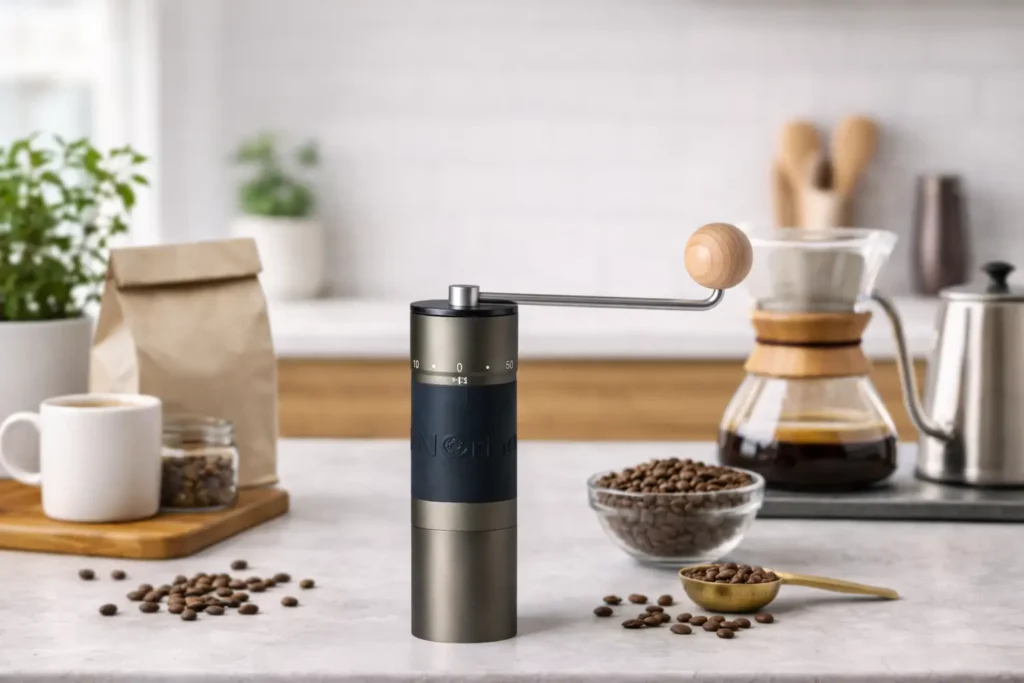
Best Manual Grinder for Espresso: KINGrinder K6
The K6 is our standard manual grinder recommendation across all CoffeeGearHub brewing content — and it earns its place in espresso setups specifically because of its 100-click precision and tight burr-to-burr tolerance at the finest settings. At clicks 8–20 (the full espresso range), it produces a tight particle size distribution that translates into readable shot time changes with every 1-click adjustment. For anyone who wants to dial in espresso beans methodically without spending on an electric grinder, the K6 at espresso settings will outperform blade grinders and most budget electric burr grinders on particle consistency.
- 100 click steps — 1-click changes at espresso range produce clean, readable shot time changes
- 48mm stainless conical burrs — capable from espresso (8 clicks) through coarse filter
- All-metal body — durable for daily espresso dosing
Disclosure: CoffeeGearHub may earn from qualifying purchases.
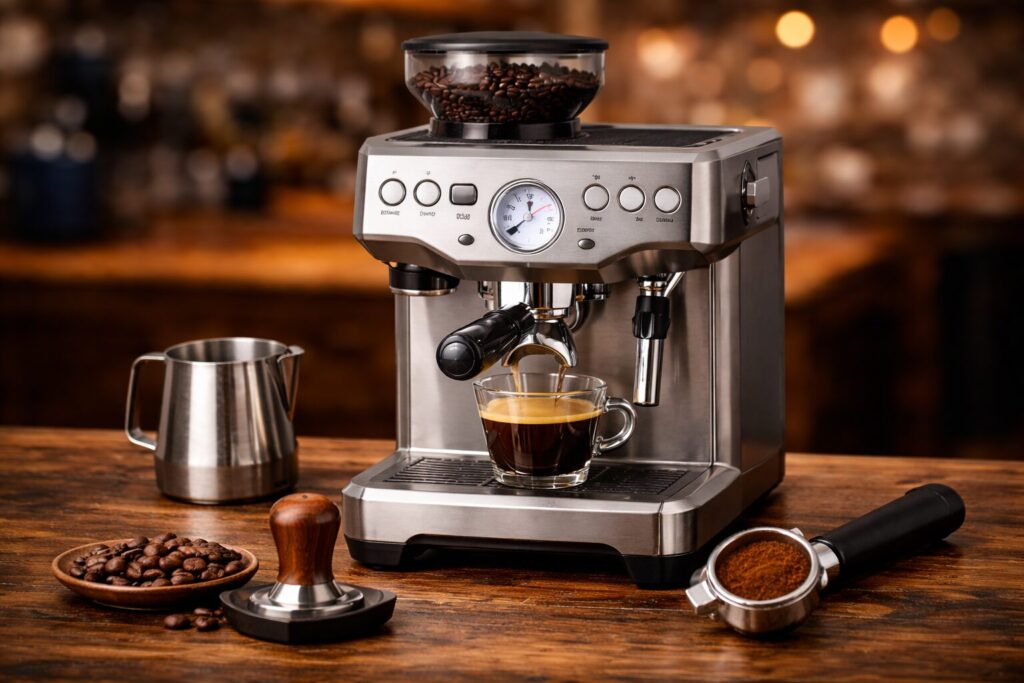
Best All-In-One Machine: Breville Barista Express
The Breville Barista Express combines an integrated conical burr grinder with a temperature-stable thermocoil heating system and a PID temperature controller — making it the most complete single-unit solution for exploring the full roast spectrum in espresso. The integrated grinder covers the full espresso range with 16 adjustable settings, and the machine’s digital temperature control allows you to adjust brew temp for light roast vs dark roast beans without a separate thermometer. For anyone wanting to explore everything from a dark Italian blend to a light Ethiopian single origin on the same machine, the Barista Express provides the temp flexibility that makes each roast performable.
- Integrated conical burr grinder — fresh-ground espresso from the same unit
- PID temperature control — adjustable brew temp covers light and dark roast ranges
- Pre-infusion function — key for light roast espresso dialling in
Disclosure: CoffeeGearHub may earn from qualifying purchases.
Quick Reference: Espresso Bean Cheat Sheet
Bookmark this table for your brew station. All parameters are starting points — adjust grind first (1 click at a time), then temperature, then yield.
| Bean | Roast | Temp | Dose | Yield | Time | K6 clicks | If sour → | If bitter → |
|---|---|---|---|---|---|---|---|---|
| Lavazza Super Crema | Med-dark | 90–92°C | 18g | 36g | 25–28s | 16–18 | Finer 1 click | Coarser + −1°C |
| Stumptown Hair Bender | Med-light | 92–93°C | 18g | 36g | 28–32s | 12–14 | Finer + extend yield | −1°C + coarser |
| Intelligentsia Black Cat | Medium | 91–92°C | 18g | 36g | 25–30s | 13–15 | Finer 1 click | Coarser 1 click |
| Illy Classico | Medium (dark) | 89–91°C | 18g | 36g | 24–27s | 17–19 | Finer 1 click | −2°C + coarser |
| Kicking Horse Cliff Hanger | Med-dark | 89–91°C | 18g | 36g | 24–27s | 16–18 | Finer 1 click | Coarser + −1°C |
Final Takeaway
Roast level first, freshness second, blend vs single origin third. A medium roast whole bean with a roast date between 7 and 21 days old will outperform any stale “premium” espresso in a supermarket can. Start with Lavazza Super Crema or Intelligentsia Black Cat if you’re new to home espresso — both are engineered to be forgiving across machines and technique levels. Once you can pull a consistent 25–30s shot at your target yield, start exploring light roast single origins. Grind 1 click at a time. Weigh everything. Write down what works. Your beans are the foundation — give them the grinder and freshness they deserve and they will reward it in every shot.
FAQs: Best Coffee Beans for Espresso
What are the best coffee beans for espresso?
The best espresso beans depend on your taste preference and roast preference. For balanced everyday espresso, a medium-dark blend like Lavazza Super Crema is the go-to. For specialty single-origin light roast espresso, Stumptown Hair Bender or Intelligentsia Black Cat are top choices. For dark roast traditional espresso, Illy Classico Whole Bean delivers reliable consistency. Choose based on your roast preference first, then origin and processing.
Do you need special espresso beans?
No — any coffee bean can be brewed as espresso. ‘Espresso beans’ is a marketing label, not a botanical category. What matters is roast level, freshness, and grind size. That said, beans roasted specifically for espresso are typically developed with higher pressure extraction in mind, which affects how oils, sugars, and acids balance in the cup. Beans roasted for filter brewing can produce excellent espresso — especially lighter roasts — but require different dial-in parameters.
Are single-origin or blend beans better for espresso?
Blends are engineered for espresso consistency — components are chosen to balance acidity, body, and sweetness across a wide range of extraction variables, making them more forgiving to dial in. Single-origin beans offer more distinctive, origin-forward flavour but are less forgiving: the acidity, sweetness, and body of a single origin can change dramatically with small changes to dose, temperature, or yield. Beginners benefit from blends; experienced home baristas often prefer single origins for their complexity.
What roast level is best for espresso?
Medium to medium-dark roasts are the classic espresso sweet spot — they offer sufficient solubility for fast high-pressure extraction while retaining sweetness and body. Light roasts work well for espresso but require longer pre-infusion, higher brew temperature (93–96°C), and finer grind adjustment. Very dark roasts extract quickly but can produce ashy, bitter, or flat espresso. Most home espresso machines perform best with medium to medium-dark roasts roasted 7–21 days before brewing.
How fresh should espresso beans be?
For espresso, the sweet spot is 7–21 days post-roast. Beans within the first 7 days off-roast are often too gassy — retained CO2 causes uneven extraction and channelling. After 21 days, staling begins to reduce sweetness and aromatic complexity. Pre-ground espresso coffee or beans without a roast date will almost always produce inferior results. Always look for a roast date on the bag, not just a best-before date.
Can I use dark roast beans for espresso?
Yes — dark roasts are the traditional Italian espresso style and work well when brewed correctly. Dark roast beans are highly porous and soluble, so they extract quickly at high pressure. To prevent bitterness, use a coarser grind than you would for medium roast, reduce brew temperature slightly (88–92°C), and target a slightly faster shot time (25–28s for a 1:2 ratio). The reward is a full-bodied, low-acid, chocolate- and caramel-forward espresso that pairs well with milk.
What is the best coffee-to-water ratio for espresso?
A 1:2 ratio (e.g., 18g coffee in, 36g espresso out) in 25–30 seconds is the specialty coffee standard for a balanced double espresso. Traditional Italian style targets a shorter 1:1.5 ristretto. For lighter roasts or lower-acidity blends, stretching to 1:2.5 or 1:3 (lungo) can improve sweetness and reduce intensity. Ratio, not volume, is the reliable starting metric — always weigh your output, not just your dose.
Why does my espresso taste sour?
Sour espresso is almost always under-extraction. The most common causes are: grind too coarse (shot runs too fast), dose too low, water temperature too low, or beans that are too fresh (high CO2). Fix by grinding finer first — 2–3 steps at a time — until the shot slows to 25–30s. If still sour after grind adjustment, raise brew temperature 1–2°C. If using very fresh beans (under 5 days post-roast), rest them 2–3 more days before trying again.
Why does my espresso taste bitter?
Bitter espresso is over-extraction. The most common causes are: grind too fine (shot runs too slow), dose too high, temperature too high, or beans that are stale or very darkly roasted. Fix by grinding coarser first — 2–3 steps — until shot time drops to 25–30s. If bitter with fast shot times, try lower temperature (1–2°C drop). If using dark roast beans, try a longer yield (1:2.5 ratio) to dilute bitterness with more water passing through the puck.
Should I use Arabica or Robusta for espresso?
Arabica is the dominant choice for specialty espresso — it offers sweetness, acidity, and aromatic complexity. Robusta contains roughly twice the caffeine, more chlorogenic acids, and produces a thicker, more persistent crema. Traditional Italian espresso blends often include 10–20% Robusta specifically for crema production and body. Pure Robusta espresso is extremely strong, harsh, and acquired taste. For home espresso, start with 100% Arabica, then experiment with blends that contain some Robusta if you want more intensity and crema.
Continue Learning
ESPRESSO CLUSTER
Using your espresso beans for AeroPress too? Our AeroPress grind size guide covers the same beans at filter settings — with K6 click references for every roast level.
☕
Written by the CoffeeGearHub Editorial Team
CoffeeGearHub is a specialty coffee equipment resource run by home brewers and coffee enthusiasts. Our guides are researched using published brewing science, SCA standards, grinder manufacturer specifications, and established specialty-coffee community knowledge. We review and update our pillar content regularly. About CoffeeGearHub →