

Last Updated: February 17, 2026 | 18–24 min read
Best Coffee Makers (2026)
How to Choose the Right Brewer for Your Routine (and Make It Taste Great)
Most “bad coffee” isn’t your machine—it’s mismatch. The wrong brewer for your routine (or the wrong grinder/ratio/maintenance) can make even expensive equipment taste disappointing. This pillar guide helps you choose the right coffee maker type, compares the main options, and links you to the exact next-step guides to dial in flavor fast.
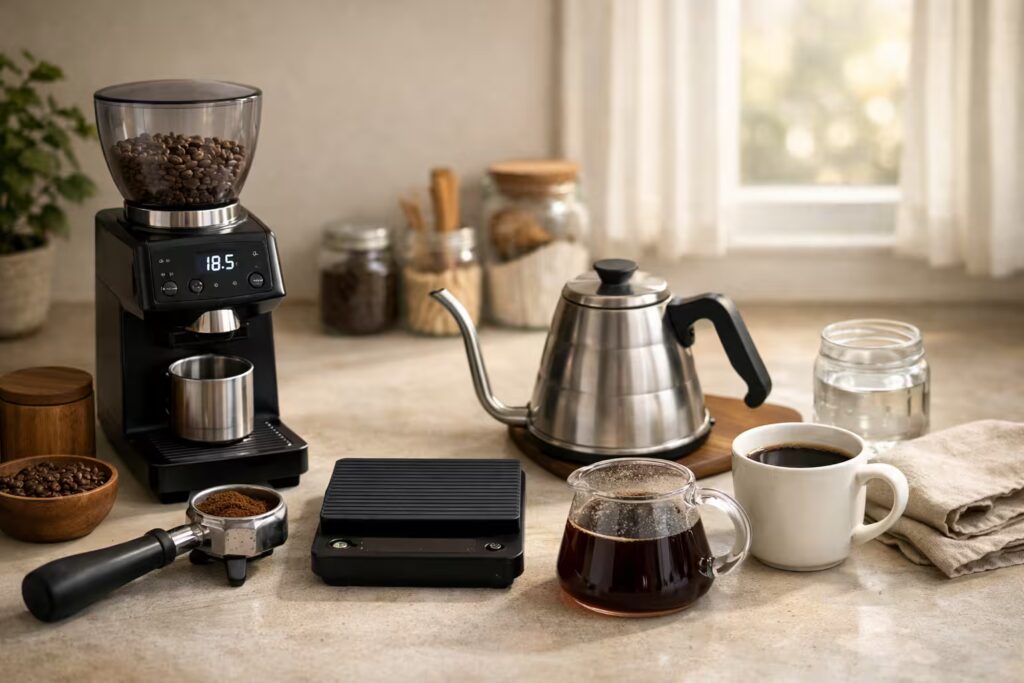
If you’re brand new to home brewing, start with Coffee Brewing Foundations first. It makes every gear decision easier.
☕ Coffee maker types compared | 🎯 Choose your brew method path | 🛠️ What to buy first | 🔧 Fix bad-tasting coffee | 🧼 Maintenance | ❓ FAQs
Key takeaways (save these)
- Pick the brewer you’ll actually use. Convenience beats “theoretical best flavor.”
- Grinder first: a burr grinder improves every brew method more than upgrading machines.
- Use a scale + ratio for consistent sweetness and strength. Start with the Drip Coffee Ratio Guide.
- Fix taste fast with grind size. Use Grind Size Explained when coffee is sour, bitter, weak, or muddy.
- Maintenance matters. Mineral scale + old coffee oils can make good gear taste stale. Keep a simple routine.
Recommended fixes (quick wins)
Before buying a new coffee maker, these three upgrades usually deliver the biggest improvement (and work with any brewer):
Burr grinder
Consistent grind = better extraction. This is the #1 flavor multiplier.
Next: Best Coffee Grinders (2026) and Burr vs Blade
Coffee scale
Repeatable ratios = consistent sweetness, strength, and results.
Next: Best Coffee Scales and Drip Coffee Ratio Guide
Cleaner / descaler
Removes coffee oils + mineral buildup that make brews taste stale, bitter, or “off.”
Coffee maker types compared (quick decision tables)
Start with the type you’ll use most often. Then use the next sections to pick gear and dial in taste.
| Type | Best for | Flavor “vibe” | Effort | Common downside |
|---|---|---|---|---|
| Drip coffee maker | Daily consistency, households, easy mornings | Balanced and sweet (when brewed well) | Low | Cheap brewers can under-extract; needs descaling |
| Pour-over (V60/Kalita/Chemex) | Hands-on brewing, clarity, tasting notes | Bright, aromatic, “layered” | Medium | Technique + kettle + good grinder |
| Espresso machine | Milk drinks, café-style at home | Intense, syrupy when dialed-in | High | More variables; grinder matters a lot |
| Pod / single-serve | Maximum convenience, minimal cleanup | Consistent, but limited freshness/control | Very low | Higher cost per cup; less control |
| French press | Rich body, forgiving brewing | Full-bodied, more oils | Low–medium | Muddy taste if grind too fine |
| AeroPress | Fast single cups, travel-friendly | Clean but strong; flexible | Low–medium | Small capacity |
Which coffee maker fits your routine? (fast match table)
| If you want… | Best match | Why | Next step |
|---|---|---|---|
| “Push button and go” daily coffee | Drip coffee maker | Easy, repeatable, great for multiple cups | Best coffee makers for everyday brewing |
| Clean, nuanced flavor + control | Pour-over | Highlights aromatics and tasting notes | Pour-over brewing setup |
| Lattes/cappuccinos at home | Espresso | Intensity + milk drink compatibility | Best espresso machines (beginners) |
| Fast single cup with minimal gear | AeroPress | Flexible, forgiving, travel-friendly | Dial in coffee at home |
| Bold, full-bodied coffee | French press | Heavy body and oils, low fuss | Grind size guide (avoid “muddy”) |
Choose your brew method path (best next-step guides)
Pick what you brew most often. Use the table below to jump to the best next-step guides for each coffee maker style.
| Brew method | Start here | Best gear guide | Troubleshooting / next upgrade |
|---|---|---|---|
| Pour-over Hands-on, clean flavor | Pour-over brewing setup | Best pour-over coffee makers Best gooseneck kettles | Grind size explained (fix sour/bitter) Dial in coffee at home |
| Drip coffee maker Easy consistency | Best coffee makers for everyday brewing | Drip coffee ratio guide | Common drip coffee mistakes (fixes) Grind size for drip |
| Espresso More variables, bigger payoff | Best espresso machines (beginners) | Beginner espresso guide | Best espresso beans (2026) Espresso grind size basics |
Tip: If you’re unsure, start with drip for daily consistency, then explore pour-over for clarity or espresso for milk drinks.
What to buy first (so your coffee maker actually tastes great)
If you want the most improvement with the least wasted money, follow this order. It works for drip, pour-over, and espresso.
| Priority | Why it matters | Best next link |
|---|---|---|
| 1) Burr grinder | Controls extraction and consistency; biggest taste upgrade | Best coffee grinders (2026) |
| 2) Scale + ratio | Repeatable strength/sweetness; stops “random” coffee | Drip coffee ratio guide |
| 3) Grind size understanding | Fast troubleshooting for sour/bitter/weak/muddy | Grind size explained |
| 4) Beans that match your brew method | Bean style sets flavor ceiling (especially noticeable in pour-over) | Best beans for drip coffee makers |
| 5) Maintenance routine | Prevents rancid oils + mineral scale ruining flavor | Maintenance hub |
Fix bad-tasting coffee (fast diagnosis)
Most taste problems are extraction problems. Change one variable at a time and start with grind size.
If coffee tastes sour / sharp
- Grind slightly finer
- Increase brew time slightly
- Confirm your ratio isn’t too weak
If coffee tastes bitter / harsh
- Grind slightly coarser
- Reduce brew time slightly
- Check for dirty gear (old oils)
For a complete workflow that works across drip, pour-over, and espresso, use: How to Dial In Coffee at Home (Drip, Pour-Over, Espresso).
Coffee maker maintenance (so flavor stays fresh)
Even perfect technique can taste “off” if your brewer is dirty or scaled. Build a simple routine and you’ll get better coffee with less effort.
- → Coffee Equipment Maintenance Hub (cleaning schedules + what matters most)
- → How We Review & Recommend
FAQs
What type of coffee maker is best for beginners?
A good drip coffee maker is usually the easiest start: simple workflow, consistent results, and easy to scale up for multiple cups. Pair it with a burr grinder and a scale for the biggest improvement.
Should I upgrade my coffee maker or my grinder first?
Upgrade your grinder first. A burr grinder improves extraction and consistency for every brew method. Most “bad coffee” issues show up because grind is inconsistent or wrong.
Is pour-over better than drip coffee?
Pour-over can produce clearer, more nuanced flavor—if you’re willing to do a hands-on workflow. A good drip machine can be excellent for daily coffee with less effort. Choose based on routine, not hype.
Why does my drip coffee taste bitter or burnt?
Common causes are grind too fine, stale beans, an overly strong ratio, or dirty/over-scaled equipment. Start by grinding slightly coarser and confirming your ratio, then check cleaning/descaling.
What’s the best coffee-to-water ratio for drip coffee?
A dependable starting point is a standard drip ratio and then adjust for taste. Use our Drip Coffee Ratio Guide for exact grams and easy scaling
Do I need a gooseneck kettle for pour-over?
It’s highly recommended if you want consistent pours and better control, especially with V60-style brewers. See our best gooseneck kettles guide.
Is espresso worth it at home?
Yes if you love milk drinks or espresso-style intensity and you’re willing to dial in grind, dose, and shot time. Start with our beginner espresso machines hub.
How often should I clean or descale my coffee maker?
It depends on water hardness and usage, but regular cleaning prevents rancid oils and mineral buildup from ruining flavor. Use our maintenance hub for simple schedules and what matters most.