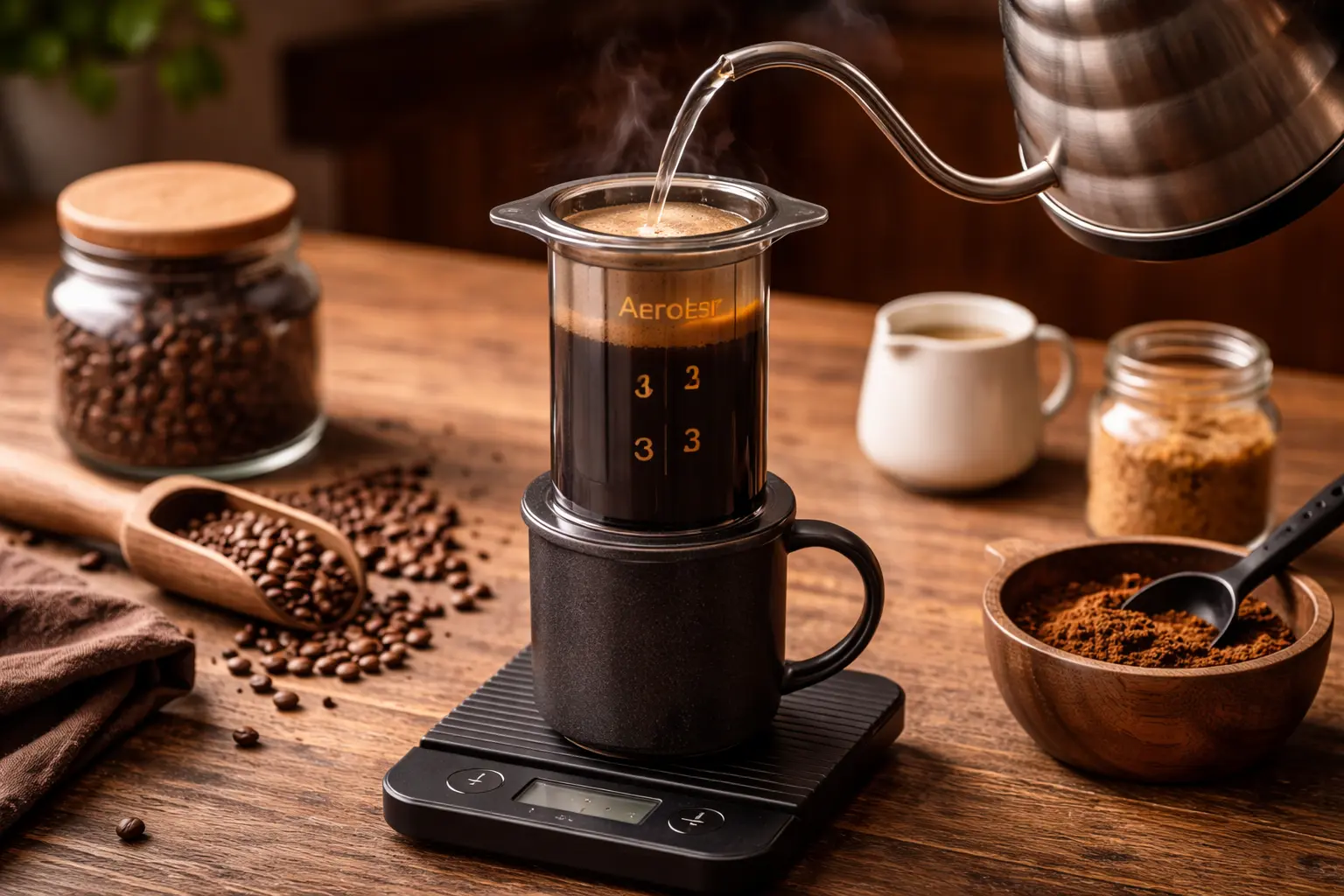
AeroPress is famously forgiving — until your grinder isn’t. If your cups taste sour, thin, bitter, muddy, or stubbornly inconsistent brew after brew, the most common root cause isn’t your water temperature or your recipe. It’s grind quality: too many fines, uneven particle distribution, or adjustment steps too large to land in the sweet spot. This CoffeeGearHub cornerstone guide does three things: helps you choose the right grinder for your actual life, teaches you a reliable AeroPress grind range and dial-in system, and gives you a fast troubleshooting map so you stop wasting beans guessing. Every recommendation is based on real brewing, not specs alone.
📋 What this guide covers: a grinder decision framework, a grind-size map for every brewing goal, a recipe matrix (daily cup / inverted / concentrate / iced), full grinder reviews with dial-in starting points, a one-move troubleshooting system, workflow tips, and an expanded FAQ. Use the Table of Contents to jump to what you need.
Table of Contents
Quick Picks: Best Grinders for AeroPress (2026)
Short on time? These are our top picks optimized for AeroPress’s sweet-spot grind zone: medium-fine, roughly the texture of table salt. Full reviews, dial-in recipes, and comparison tables are below.
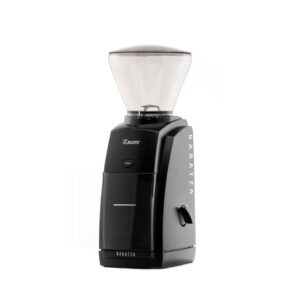
Baratza Encore

- Best for: daily AeroPress + drip
- Why it wins: consistent, easy, repairable
- Ideal grind zone: medium to medium-fine
Kingrinder K6
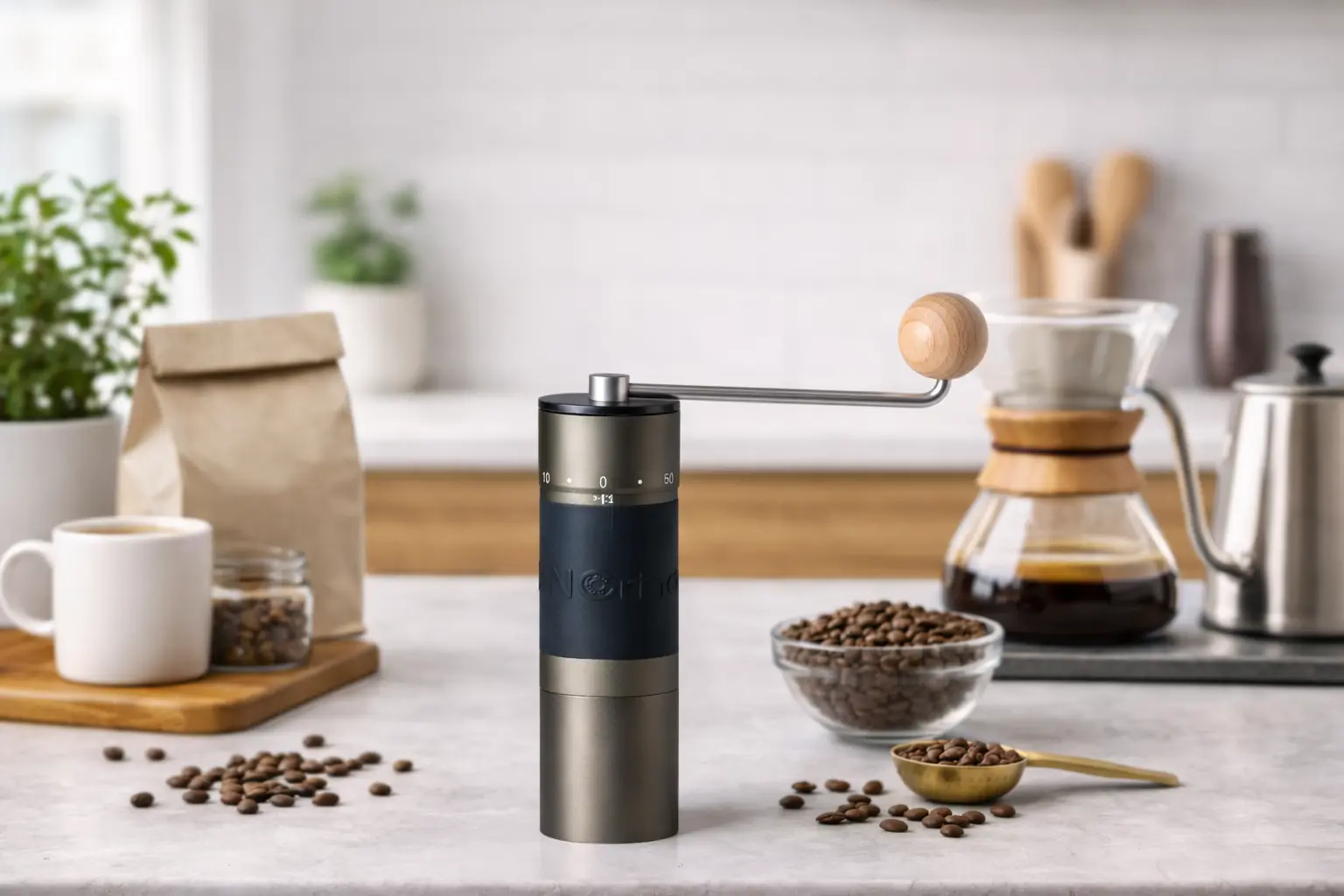
- Best for: travel + home performance
- Why it wins: exceptional uniformity
- Ideal grind zone: medium-fine to fine
Timemore Chestnut C3

- Best for: beginners upgrading from blade
- Why it wins: huge taste jump per dollar
- Ideal grind zone: medium to medium-fine
Fellow Opus
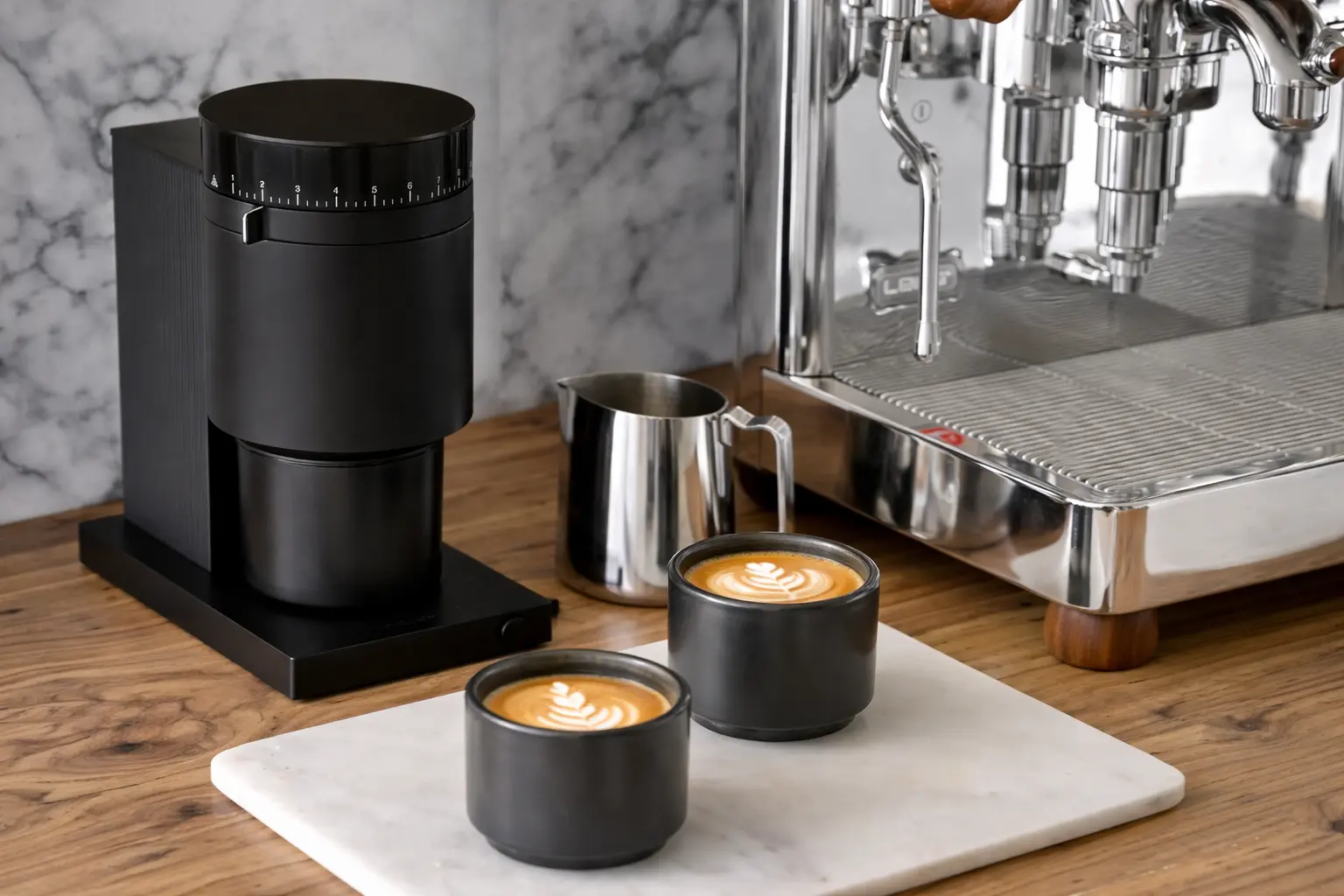
- Best for: multi-brew households
- Why it wins: versatile + modern workflow
- Ideal grind zone: medium to medium-fine
- Price range: $$$
OXO Brew Conical Burr
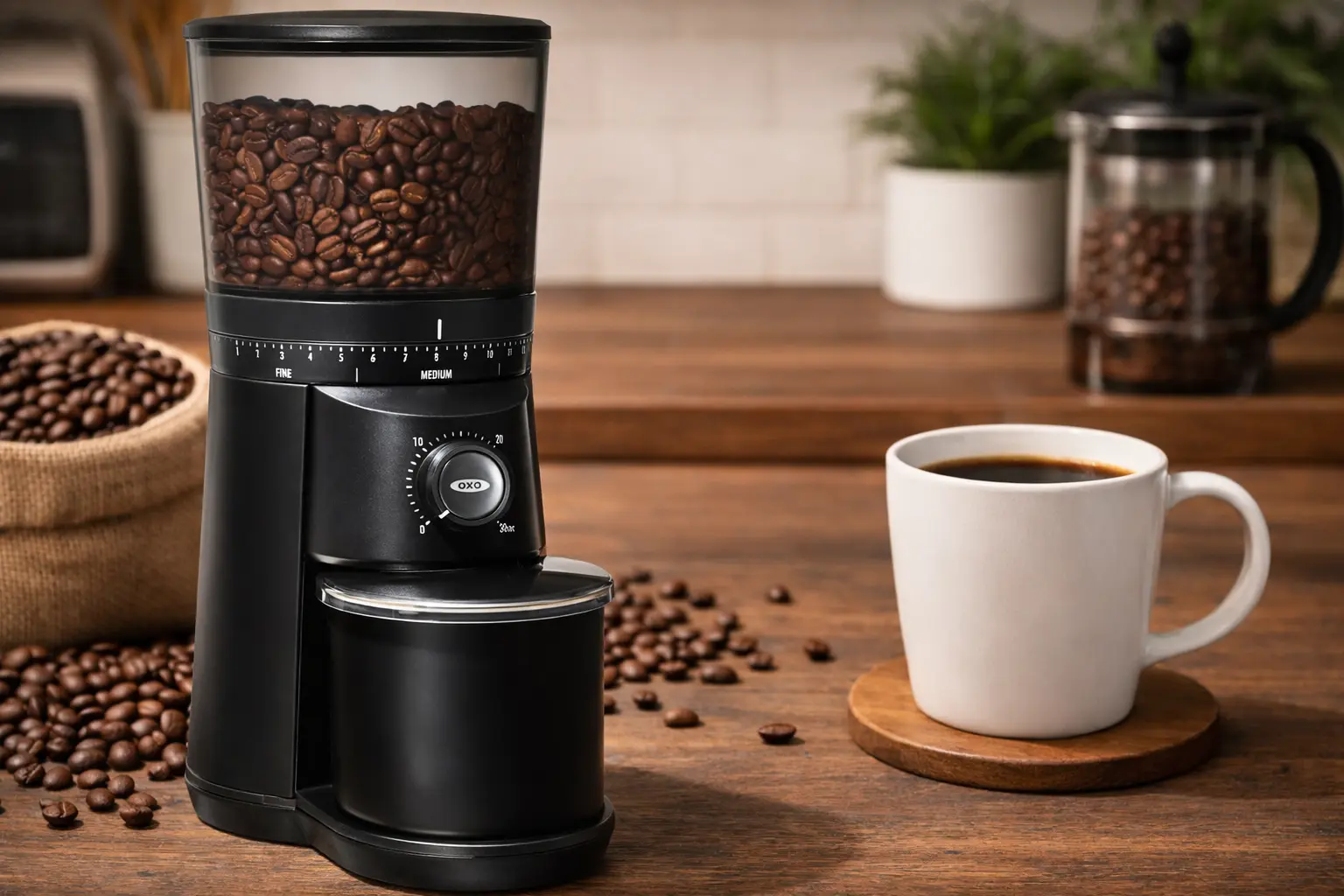
- Best for: simple home setups
- Why it wins: easy workflow + solid results
- Ideal grind zone: medium to medium-fine
- Price range: $$
What Actually Matters in an AeroPress Grinder (The Non-Hype Checklist)
Grinder marketing is full of claims about “premium burrs” and “espresso capability.” For AeroPress, almost none of that matters. AeroPress lives firmly in the medium-fine range — and in that zone, three things move the needle far more than brand names or motor size.
1. Particle Distribution: Fewer Fines = Cleaner Cups
Every grinder produces a mix of particle sizes — a “distribution curve.” A wide curve means lots of fines (dust-like particles) at one end and boulders (coarse chunks) at the other. For AeroPress, this creates a specific problem: when you press the plunger, fine particles push through the filter more easily than large ones, leading to a cup that tastes simultaneously sour (under-extracted coarse particles) and bitter (over-extracted fines). This is why blade grinders taste chaotic — they create an extreme distribution. A good burr grinder tightens this curve so most particles extract together, producing a cleaner, sweeter result.
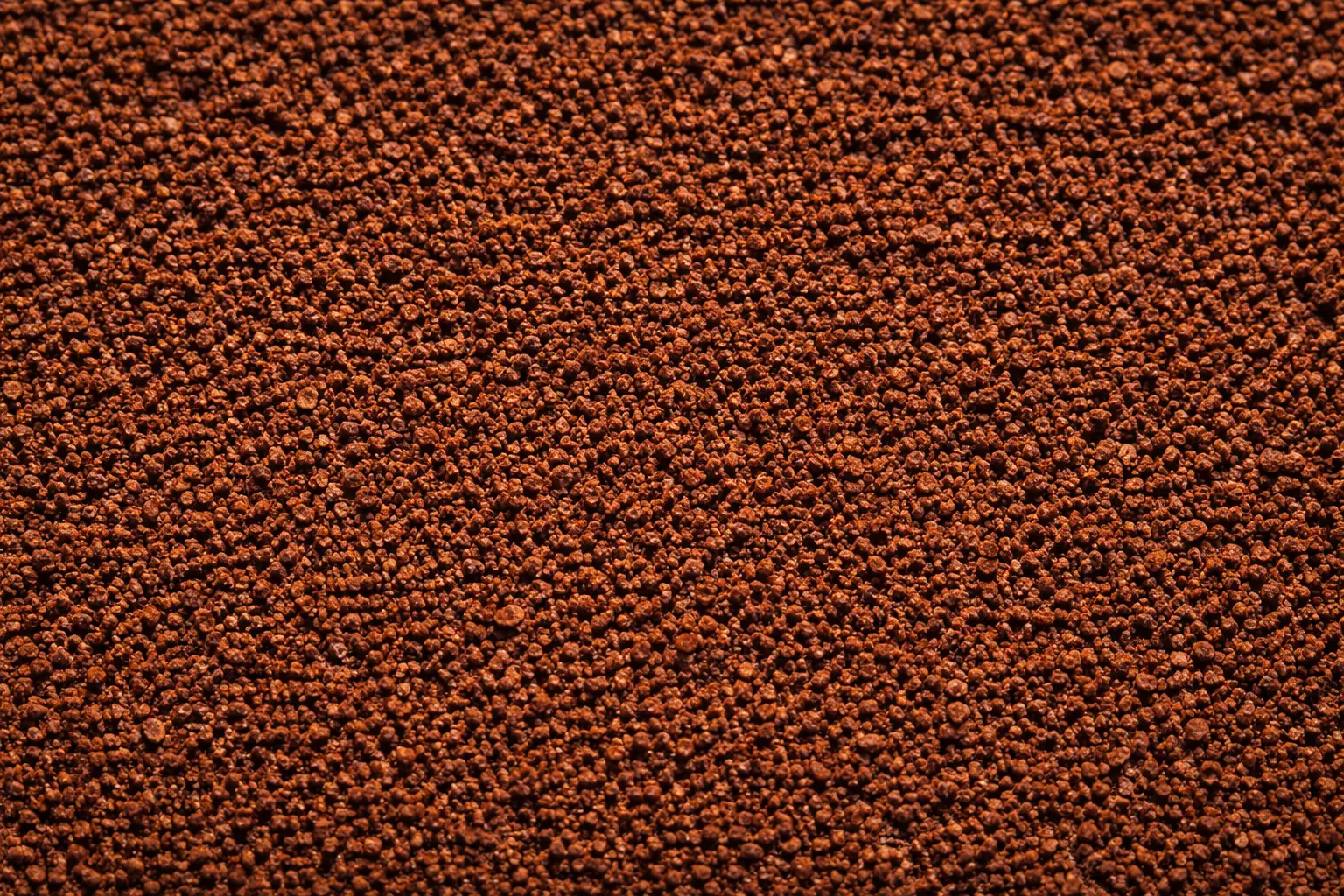
2. Adjustment Resolution: Micro-Steps Beat Big Jumps
AeroPress dialing-in often requires very small grind tweaks. If your grinder has large steps between settings, you’ll frequently find yourself “jumping past” the sweet spot: one setting tastes sour, the next tastes harsh. Many manual grinders have finer resolution in the medium-fine range than budget electrics, which is a big reason experienced home brewers often prefer them. When evaluating a grinder, ask: “Can I make a tiny adjustment without ending up in a completely different flavor territory?”
3. Workflow Consistency: Static + Retention Create Hidden Variables
Two grinders with nearly identical burrs can produce noticeably different cups because of workflow differences. Static causes grounds to spray around the grinder, making your actual dose inconsistent by 0.5–1g or more — enough to shift flavor noticeably. Retention (old coffee trapped inside the grinder) means the first grams out of your grinder might be yesterday’s beans, introducing staleness that muddies clarity. Prioritizing low retention and manageable static makes results repeatable, which is ultimately what daily home brewing demands.
The honest bottom line: For AeroPress, you don’t need “espresso-capable” grinding. You need consistent medium-fine with fine enough adjustment steps and a workflow you’ll actually maintain daily. That’s it.
Burr vs. Blade Grinders for AeroPress: Why It Changes the Cup
This section exists because a significant portion of people getting into AeroPress already own a blade grinder and wonder whether upgrading is actually worth it. The short answer: yes, and more than almost any other upgrade you can make.
A blade grinder works like a blender — spinning blades chop beans randomly. The result is a mix of fine powder and large chunks. In a French press, this is annoying but manageable. In an AeroPress with its short brew window and paper filter, it’s a serious problem. Fines over-extract and push through the filter. Boulders under-extract. The cup tastes simultaneously sour and bitter — a combination that’s hard to diagnose because adjusting toward either problem makes the other worse. There’s no winning with a blade grinder in AeroPress.
A burr grinder works by crushing beans between two abrasive surfaces set a specific distance apart. Because the gap is fixed, the vast majority of particles come out within a narrow size range. The flavor result is cleaner, more balanced, and — critically — repeatable. You can dial in a setting and trust it tomorrow morning.
| Feature | Blade Grinder | Burr Grinder |
|---|---|---|
| Particle consistency | Very inconsistent (fines + boulders) | Tight distribution |
| Flavor result | Sour + bitter simultaneously | Balanced and clean |
| Adjustability | None (just grind longer) | Precise step-by-step control |
| Repeatability | Low (every grind is different) | High (same setting = same cup) |
| Best use case | Spices, emergency backup | All serious coffee brewing |
If you’re currently using a blade grinder and your AeroPress tastes “off” — sour, bitter, muddy — switching to any burr grinder, even a budget manual, will produce a more dramatic improvement than any recipe change. It’s the single highest-leverage upgrade in home coffee brewing.
Manual vs. Electric Grinders for AeroPress: How to Decide
This is one of the most common questions in AeroPress communities, and the answer is genuinely “it depends on your life” — not a cop-out. Here’s a clear breakdown.
When to Choose a Manual Grinder
Manual grinders win in a specific set of circumstances. If you value travel compatibility, a quality manual like the Kingrinder K6 or Timemore C3 can fit in a backpack or carry-on, pairs perfectly with an AeroPress Go, and produces café-level results anywhere you have a kettle. Manual grinders are also significantly quieter — if you brew early in the morning before others wake up, this matters. And in the $50–$150 range, manual grinders typically deliver better grind consistency per dollar than their electric equivalents, because the motor, housing, and electrical components in budget electrics eat into the budget that could go toward burr quality.
The trade-off: grinding 15–18g by hand takes 45–90 seconds depending on the grinder and grind setting. Most people adjust quickly. A few find the routine friction annoying. Be honest with yourself about which camp you’re in before buying.
When to Choose an Electric Grinder
Electric grinders win on convenience and multi-brew scenarios. If you’re making multiple cups in the morning, brewing for two or more people, or also making drip coffee regularly alongside AeroPress, an electric grinder makes the routine dramatically faster. You set a dose, press a button, done. The Baratza Encore in particular has earned its reputation because it’s genuinely reliable, produces consistent medium-fine results day after day, and — importantly — Baratza has excellent parts availability and repair support, meaning a $250 Encore can last a decade with minimal maintenance cost.
The trade-off: electric grinders introduce static (which varies widely by model), have some level of retention, and are not travel-friendly. They also make more noise, which matters in some households.
| Your situation | Recommended type |
|---|---|
| Solo brewer, one cup per morning | Manual (budget wins here) |
| Two or more cups daily | Electric (faster, less fatigue) |
| Travel + AeroPress kit | Manual (compact, light) |
| Also making drip/pour-over | Electric (versatility + speed) |
| Early morning, quiet household | Manual (nearly silent) |
| Budget under $60 | Manual (better value in this range) |
| Budget over $150 | Either (electric narrows quality gap) |
AeroPress Grind Size Map (By Goal, Not Guesswork)
The most common AeroPress advice — “grind like sand” or “medium-fine” — is a fine starting point, but it doesn’t tell you why or what to do when it doesn’t work. This map gives you the full picture: what grind to target, what the finished cup should taste like, and what to adjust if it misses.
The AeroPress brew window is short (usually 1:30–3:00 total), which means extraction is fast. You need enough surface area (fine enough grind) to extract properly in that window, but not so much that extraction overshoots into bitterness before you’ve pressed. Medium-fine hits this balance for most recipes.
| Brew goal | Grind target | Reference texture | What it should taste like | Fix if wrong |
|---|---|---|---|---|
| Clean daily cup (standard method) | Medium-fine | Table salt | Balanced sweetness, bright clarity, smooth | Sour → finer; Bitter → coarser |
| Fuller body (inverted method) | Medium-fine → slightly finer | Fine table salt | Rounder, heavier mouthfeel, more sweetness | Muddy → coarser + less stirring |
| Concentrate for milk drinks | Fine (not espresso fine) | Fine granulated sugar | Dense, bold, chocolatey, holds up to milk | Harsh → coarser or shorter steep |
| Iced AeroPress | Medium-fine | Table salt | Bright, crisp, no muddiness when cold | Thin → finer or add +1–2g dose |
| Light roast (single origin) | Slightly finer than medium-fine | Fine table salt | Bright fruit notes, sweet, complex | Sour → finer still, longer steep |
| Dark roast | Slightly coarser than medium-fine | Coarse table salt | Rich, low bitterness, smooth | Harsh → coarser, shorter steep |
Important: “Medium-fine” means different things on different grinders. On a Baratza Encore, it’s roughly setting 12–16 out of 40. On a Kingrinder K6, it’s a specific click count using its 8-clicks-per-revolution adjustment system. Always start from the manufacturer’s recommended AeroPress setting and adjust by taste rather than by number alone — numbers don’t transfer between grinder models.
The 3-Step AeroPress Dial-In System (Works With Any Grinder)
Most dial-in advice fails because it changes too many variables at once. Change grind and brew time and dose all at the same time, and you’ll never know which change helped. Use this system to converge on the sweet spot efficiently — usually within 3–5 brews on any new bag of beans.
Step 1: Lock Your Base Recipe for 3 Brews
Don’t touch anything else until you’ve used this recipe unchanged:
- Dose: 16g coffee (weigh it — don’t scoop)
- Water: 240g at 195–205°F (just off boil for most kettles)
- Steep: 2:00 (start timer when you add water)
- Press: 25–30 seconds, slow and steady
- Filter: paper (baseline — metal filters introduced later if desired)
Taste the result carefully. Is it sour/thin? Bitter/harsh? Muddy? Watery? Note your answer.
Step 2: Adjust Grind Only — One Small Move at a Time
Keep the recipe identical. Change only grind, one increment at a time.
- Sour / thin: grind one step finer, keep everything else the same
- Bitter / harsh: grind one step coarser, keep everything else the same
- Muddy / silty: grind one step coarser AND reduce stirring
- Watery / hollow: grind one step finer (if it’s already at medium-fine, increase dose by 1g instead)
Repeat until the flavor is close. “Close” means it tastes good, not perfect — you’re looking for sweetness, balance, and absence of sharp sourness or dry bitterness.
Step 3: Only Then Fine-Tune Time or Ratio
Once grind is dialed in, use time or dose to finalize. Add 15–30 seconds to steep if you want more extraction depth without going finer. Add 1–2g of coffee if you want more strength without changing flavor balance. Reduce dose if it’s too strong but flavor is good. This two-stage approach prevents the most common dial-in mistake: chasing a flavor problem with the wrong variable.
💡 New bag of beans? Expect to dial in again. Roast levels, origins, and freshness all shift where a bean wants to be. A light Ethiopian roast will need a different grind setting than a medium-dark Brazilian from the same grinder. The process becomes fast once you’ve done it a few times.
AeroPress Grinder Comparison Table (Full Matrix)
This table focuses on what matters for AeroPress specifically — not broad specs, but medium-fine performance, adjustment resolution, workflow quality, and portability. Use it alongside the deep reviews below.
| Grinder | Type | Best for | Medium-fine consistency | Adjustment resolution | Speed | Static risk | Retention risk | Noise | Travel | Value |
|---|---|---|---|---|---|---|---|---|---|---|
| Baratza Encore | Electric burr | Daily home AeroPress + drip | Excellent | Good (40 steps) | Fast | Medium | Medium | Medium | Low | High |
| Fellow Opus | Electric burr | Multi-brew households | Very good | Good | Fast | Medium | Medium | Medium | Low | Good |
| OXO Conical Burr | Electric burr | Budget electric upgrade | Good–Very good | Fair | Fast | Medium | Medium | Medium | Low | Good |
| Kingrinder K6 | Manual burr | Best manual performance | Excellent | Very good (8 clicks/revolution) | Medium (~65s for 18g) | Low | Very low | Very low | High | Very high |
| Timemore C3 | Manual burr | Best budget manual | Very good | Good | Medium (~75s for 18g) | Low | Very low | Very low | High | Excellent |
| Porlex Mini II | Manual burr (ceramic) | Ultra-portable travel | Good | Fair (larger steps) | Slow–Medium | Low | Very low | Very low | Very high | Good |
How to pick in 10 seconds: Daily home convenience → Encore. Best travel kit → Kingrinder K6. Best low-cost upgrade → Timemore C3 (manual) or OXO (electric). Ultra-compact pack-light travel → Porlex Mini II. Multi-brew modern kitchen → Fellow Opus.
Best Manual Grinders for AeroPress (Deep Reviews)
Manual grinders are the highest “taste-per-dollar” path to a better AeroPress — especially under $150. They’re quiet, compact, and many outperform budget electrics in the medium-fine range. The key is choosing a model with consistent burrs and adjustment steps small enough to dial in precisely.
Kingrinder K6 — Best Manual Performance
Who it’s for: You want near-premium-café clarity and sweetness from your AeroPress without buying an electric grinder — and you’re willing to spend 60–90 seconds hand-grinding in exchange for excellent results and near-zero mess.
The K6 uses 48mm stainless steel burrs in an all-metal body, with an 8-clicks-per-revolution external adjustment ring that gives it exceptional grind precision in the medium-fine AeroPress range. The design keeps static minimal and retention near zero — grounds fall directly into the catch cup. It’s well-built for the price and competes comfortably with grinders costing significantly more.
- What it does best: Tight particle distribution in the medium-fine to fine range; repeatability brew-to-brew; nearly silent operation; easy cleaning
- Real trade-offs: Costs more than budget manuals; still requires hand effort for each cup; not ideal for 3+ cups at once
- Dial-in starting point: Medium-fine setting; 16g / 240g / 195°F / 2:00 steep / 25s press
- Common issue + fix: If bitterness appears as you go finer, stir less and press more slowly before adjusting grind further — aggressive agitation over-extracts fines
Timemore Chestnut C3 — Best Budget Manual Upgrade
Who it’s for: You’re upgrading from pre-ground coffee or a blade grinder and want the largest possible flavor improvement per dollar. You’ll be genuinely surprised how much sweetness and clarity appear in your AeroPress once grind consistency improves.
Crafted with an all-metal aluminum alloy body, the TIMEMORE C3 manual coffee grinder offers outstanding durability and longevity. It grinds faster than many budget manuals and produces very respectable consistency in the medium-fine range. Step size is larger than the K6, which means dialing in takes slightly more patience, but once you find your spot the results hold brew-to-brew.
- What it does best: Strong medium-fine performance for the price; durable construction; easy to clean and travel with
- Real trade-offs: Larger adjustment steps than premium manuals; not as refined in the fine range if you want to brew concentrates
- Dial-in starting point: Medium-fine; if sour go finer; if harsh go coarser and reduce stirring
- Pro tip: Weigh your dose (15–17g) rather than scooping. With budget manuals, consistent dosing matters more than with higher-end grinders, because small dose variation has a bigger impact when grind consistency is slightly lower
Porlex Mini II — Best Ultra-Portable Travel Grinder
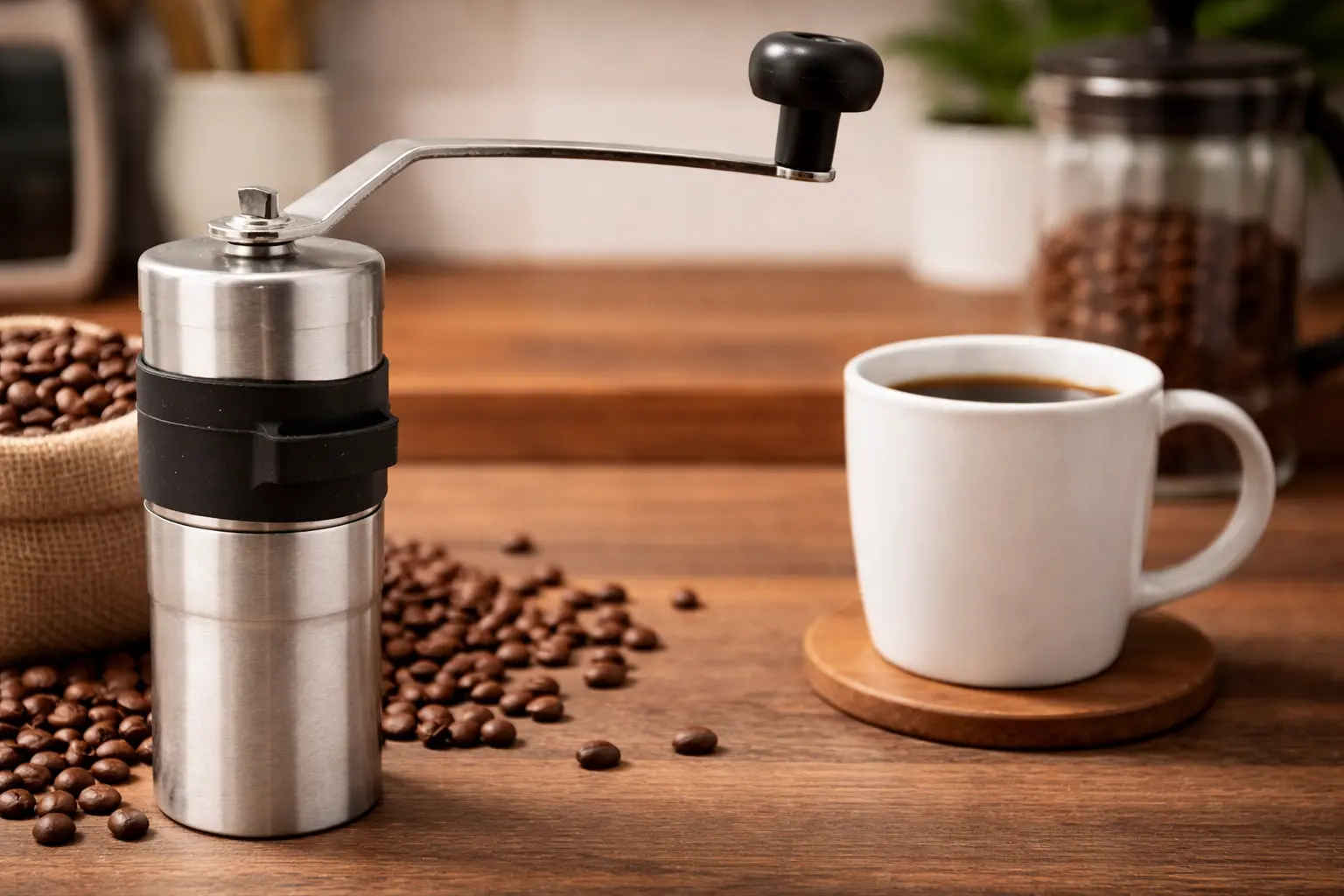
Who it’s for: You want the smallest, toughest, lightest grinder available for travel — the kind that fits inside an AeroPress tube — and you prioritize durability and portability over precision micro-adjustability.
The Porlex Mini II is a ceramic burr grinder in a stainless steel tube body with an internal spring-clip adjustment. It’s been a travel-coffee staple for years because of its durability and its ability to literally store inside the AeroPress chamber. Ceramic burrs are robust — they don’t rust and handle occasional drops. The trade-off is that step size is larger and the ceramic burr feel is different from premium steel — the grind has slightly more fines at medium-fine settings, which shows up as occasional muddiness.
- What it does best: Portability, durability, fits inside AeroPress tube, lightweight
- Real trade-offs: Fewer micro-adjustment steps; some extra fines vs. steel burr options; slower grinding
- Dial-in starting point: Medium-fine; press gently; use paper filters to reduce fines in cup
- Pro tip: Use a slow, controlled press with paper filters for the cleanest possible cup — the Porlex benefits most from this technique
Best Electric Grinders for AeroPress (Deep Reviews)
Electric grinders win on speed and daily convenience. For AeroPress, the best electrics produce consistent medium-fine grinds and keep the weekday morning workflow simple — so your Tuesday cup tastes as good as your weekend cup.
Baratza Encore — Best Overall Electric for AeroPress
Who it’s for: Daily home brewers who want one reliable grinder that handles AeroPress and drip coffee equally well, with zero friction in the morning and long-term support if anything needs fixing.
The Encore has been the entry-level electric recommendation in specialty coffee for years — not because it’s flashy, but because it’s genuinely dependable. 40 grind settings with a conical burr produce consistent medium-fine results. Settings 12–16 are typically the sweet spot for AeroPress. Baratza’s repair ecosystem is unmatched: parts are sold directly on their website, and many repairs are DIY-accessible with basic tools. That matters because a well-maintained Encore can serve you for 7–10+ years.
- What it does best: Repeatability in the medium to medium-fine range; “set it and brew” reliability; easy to clean; repairable long-term
- Real trade-offs: Some grounds retention in the chute; not a dedicated single-dose design; modest static; hopper-based workflow (don’t store beans in hopper long-term)
- Dial-in starting point: Setting 14 medium-fine; 16g / 240g / 200°F / 2:00 steep / 25s press
- Pro tip: If cups taste harsh or “dusty,” try going coarser by 2 settings and pressing more slowly — the Encore at too-fine settings can produce excess fines that over-extract during the press stroke
Fellow Opus — Best Modern “Multi-Brew” Electric Pick
Who it’s for: You brew AeroPress but also dabble in pour-over, want an espresso-style concentrate occasionally, and care about having a grinder that looks good on the counter and has a modern single-dose workflow.
The Fellow Opus trades the Baratza’s long-established brand track record for a more modern, versatile design. It handles the AeroPress range very well and has a wider grind range overall — which means it covers pour-over and concentrated brews without needing a second grinder. The anti-static grounds catch and single-dose design keep workflow cleaner than the Encore. The trade-off is less repair ecosystem history.
- What it does best: Versatility across brew methods; clean single-dose workflow; reduced static vs. hopper-fed designs; modern aesthetics
- Real trade-offs: Shorter track record than Baratza; may take a few brews to nail your AeroPress setting; slightly higher price
- Dial-in starting point: Medium-fine; same base recipe as above; if muddy, coarsen by 1 step and reduce stirring
- Pro tip: Nail your grind setting and write it down — grinder memory is free, and keeping a brew log speeds up future dial-in on new beans dramatically
OXO Brew Conical Burr — Best Budget Electric Upgrade
Who it’s for: You want a plug-in-and-grind experience without the complexity of manual grinding, and you want a clear, noticeable upgrade over blade grinding or pre-ground coffee without paying for premium grinder features you won’t use.
The OXO Brew Conical Burr has a straightforward dial interface and conical burr that performs reliably in the AeroPress range. It’s not the most precise grinder on this list, but it’s easier to operate daily than any manual and produces consistently better results than blade grinding. The integrated scale option (on some models) is genuinely useful for consistent dosing without a separate scale.
- What it does best: Ease of use; consistent results in AeroPress range; good workflow for non-coffee-obsessive households
- Real trade-offs: Fewer micro-adjustment steps; less precision than Encore or Opus; not ideal if you want to push into finer concentrate territory
- Dial-in starting point: Medium-fine; if sour go finer; if harsh go coarser and slow your press stroke
- Pro tip: If your cup tastes “dusty” or dry, reduce agitation and press slower before adjusting dose — excessive stirring plus medium-static grinders can compound over-extraction
AeroPress Recipe Matrix: Grind + Time + Press
Readers don’t just want a grinder — they want results. Use these starter recipes as a baseline and adjust with the dial-in system above. All recipes assume a paper filter and standard AeroPress (not Go). Adjust dose slightly down for the AeroPress Go’s smaller chamber.
| Recipe style | Grind | Dose | Water | Temp | Steep | Press | Best for |
|---|---|---|---|---|---|---|---|
| Classic daily cup | Medium-fine | 16g | 240g | 200°F | 2:00 | 25–30s | Balanced sweetness + clarity |
| Inverted (fuller body) | Medium-fine → slightly finer | 17–18g | 230–250g | 200°F | 2:15–2:30 | 25–35s | Rounder mouthfeel |
| Concentrate (for milk drinks) | Fine (not espresso) | 18–20g | 90–120g | 205°F | 1:00–1:30 | 20–25s | Lattes, milk-based drinks |
| Iced AeroPress | Medium-fine | 16–18g | 200g hot + ice bed | 205°F | 1:45–2:00 | 25s | Bright, refreshing, clear |
| Light roast single origin | Slightly finer than medium-fine | 15–16g | 250g | 205°F | 2:30 | 30s | Complex fruity + floral notes |
| Dark roast | Slightly coarser than medium-fine | 17g | 230g | 195°F | 1:30–2:00 | 20–25s | Rich, chocolatey, smooth |
📌 Note on temperature: Lower temperature (195°F) slows extraction slightly and reduces bitterness — useful for dark roasts and over-extraction issues. Higher temperature (205°F) speeds extraction and helps under-developed light roasts. If you don’t have a temperature-control kettle, “just off boil” (roughly 205°F after resting 30 seconds) is a practical default.
Troubleshooting: Fix AeroPress Taste in One Move
Most people over-correct by changing multiple variables at once, which makes it impossible to know what helped. Use this map to change exactly one thing at a time. In almost every case, grind is the right first adjustment — only move to time or dose once grind is close.
| What you taste | What it usually means | Do this first | Then, if still wrong | Common mistake to avoid |
|---|---|---|---|---|
| Sour, sharp, thin | Under-extraction | Grind finer one step | Steep +15–30s | Don’t increase dose to fix sourness — it adds volume, not extraction |
| Bitter, harsh, drying | Over-extraction or too many fines | Grind coarser one step | Press slower + stir less | Don’t assume more water fixes bitterness — it dilutes but doesn’t fix the root cause |
| Muddy, silty, gritty | Too fine + too much agitation | Coarsen slightly | Reduce stirring + slower press | Don’t switch to metal filter first — fix the grind |
| Watery, hollow | Too coarse or low dose | Grind finer | Increase dose +1–2g | Don’t brew longer first — it can add bitterness without improving body |
| Good flavor but too strong | High concentration | Add bypass water (10–30g) after pressing | Lower dose next brew | Don’t grind coarser to weaken it — you’ll lose sweetness |
| Tastes flat / no brightness | Stale beans or over-extraction | Check bean freshness first | Grind finer + shorter steep | Don’t keep adjusting the grinder if beans are 3+ weeks past roast |
Grind Adjustments by Roast Level: Why Roast Changes Everything
Bean density changes with roast level, and density directly affects extraction speed. This is why “medium-fine” as a starting point is accurate for medium roasts but needs adjustment for light or dark beans.
Light Roasts: Go Finer, Go Hotter, Steep Longer
Light roast beans are denser than dark roasts because the cell structure hasn’t been broken down by heat. This density makes them extract slower — compounds are less accessible. To compensate for AeroPress’s short brew window, you need finer grinding (more surface area) and slightly higher water temperature. Light roasts also benefit from slightly longer steep times. If your light roast AeroPress tastes flat, sour, or lacking sweetness despite medium-fine grind, try going finer in 1-step increments and extending steep to 2:30–3:00.
Medium Roasts: The Baseline
Medium roasts are where AeroPress recipes are most commonly written and tested. Medium-fine is accurate. Standard brew parameters work well. Most of this guide’s base recipes are calibrated for medium roast.
Dark Roasts: Go Coarser, Go Cooler, Shorten Steep
Dark roast beans are physically more porous and brittle because of extended heat exposure. They extract faster — sometimes dramatically so. At the same medium-fine grind a medium roast is perfect on, a dark roast may already taste harsh and bitter. Grind 1–2 steps coarser, drop temperature to 195°F, and shorten steep to 1:30–2:00. Oily dark roasts should also be cleaned from your grinder more frequently, as coffee oils go rancid and introduce off-flavors into future brews.
Workflow: Controlling Static, Retention, and Repeatability
Great grinders still make inconsistent coffee if workflow is sloppy. These are the two most impactful workflow habits to build.
Controlling Static (The RDT Method)
Static electricity is created when coffee grounds rub against grinder surfaces. In low-humidity environments, this can become severe — grounds spray everywhere, cling to the sides of the catch cup, and make it impossible to get a consistent dose into your AeroPress. The solution is RDT (Ross Droplet Technique): before grinding, add a single droplet of water to your beans (or use a small spray bottle to lightly mist them) and toss lightly. The tiny amount of moisture is invisible in the final cup but dramatically reduces static. This one habit makes your grinder feel like a different machine, especially in winter when indoor humidity drops.
Managing Retention (Cleaner Flavor)
Retention refers to ground coffee trapped inside the grinder — in the burr chamber, chute, or catch cup pathway. Stale retained grounds mix with fresh grounds on the next grind, diluting clarity and adding off-flavors. Manual grinders have nearly zero retention because grounds fall directly by gravity. Electric grinders with more complex chutes retain more. To manage retention: keep a consistent routine, grind (and use) at the same time each morning, and run a few grams of beans as a “purge” after changing grind settings to clear old grounds from the previous setting.
Cleaning & Maintenance Schedule
A grinder that isn’t maintained consistently is a grinder that degrades over time — not in a dramatic, obvious way, but in a gradual flavor creep that’s hard to diagnose. Follow this schedule regardless of which grinder you own.
- After each use: Wipe the catch cup and remove any grounds clinging to the exterior. Takes 30 seconds.
- Weekly (light use) / Every 2–3 days (heavy use): Brush the burr chamber and chute with a soft brush per the manufacturer’s instructions. For the Encore, remove the burr carrier and brush. For manuals, disassemble completely.
- Monthly: Deeper clean — burrs out, full wipe-down, inspection for coffee oil buildup. Oil buildup creates a rancid bitterness that blends into every cup.
- Oily/dark beans: Clean more frequently — every 2–3 days minimum. Dark roast oil is the most common source of mystery bitterness that people attribute to their recipe.
- Grinder tablets (electric grinders): Urnex Grindz or similar grinder-cleaning tablets are an effective monthly deep-clean for electric burr grinders — run them through per package instructions before your normal cleaning routine.
FAQs
Is a burr grinder necessary for AeroPress?
Not strictly mandatory, but it’s the single most impactful upgrade you can make for AeroPress. A blade grinder produces wildly inconsistent particle sizes — you’ll simultaneously have over-extracted fines and under-extracted chunks in the same cup, creating a sour-and-bitter mix that’s impossible to fix by adjusting recipes. Any burr grinder, even a budget manual, resolves this. The improvement is immediate and dramatic.
What grind size is best for AeroPress?
Medium-fine is the best starting point for most AeroPress recipes — similar in texture to table salt, slightly finer than drip coffee, coarser than espresso. From there, adjust based on taste: grind finer if cups taste sour or thin, coarser if they taste bitter or harsh. The right grind size also shifts with roast level — light roasts need finer grinding, dark roasts need coarser.
Why does my AeroPress taste bitter even when I follow a recipe exactly?
Several possibilities: your grind may be too fine for your specific bean/roast; you may be pressing too fast (which over-extracts fines at the end of the press stroke); aggressive stirring may be over-agitating fines. Try going one step coarser, pressing slower, and reducing stirring before changing the recipe. Also check bean freshness — stale beans produce bitterness that no grind adjustment fully fixes.
Why does my AeroPress taste sour and thin?
Sour, thin cups indicate under-extraction — compounds that produce sweetness and body haven’t dissolved fully into the cup. Grind finer (more surface area, faster extraction) or steep 15–30 seconds longer. If you’re using light roast beans, the density of the bean itself may be slowing extraction — try both finer grind and slightly higher temperature.
Manual or electric grinder for AeroPress — which is better?
Neither is universally better — it depends on your priorities. Manual grinders offer better taste-per-dollar under $100, near-zero static and retention, travel compatibility, and quiet operation. Electric grinders offer daily convenience, faster grinding for multiple cups, and better multi-brew versatility. If you brew one cup alone each morning, a manual is hard to beat on value. If you’re making 2–3 cups daily or also brewing drip, an electric makes the routine much faster.
How do I reduce muddiness in AeroPress coffee?
Muddiness in AeroPress usually comes from a combination of too-fine grinding and too much agitation. The press forces particles through the filter, and fine particles come through more easily when agitation has already broken them up. Try going slightly coarser, stirring less or more gently, and pressing slower. If using a metal filter, switching to paper for one brew confirms whether fine particles are the source.
What is the best AeroPress grinder for travel?
For pure travel performance, the Kingrinder K6 is the top pick if you want excellent grind quality at a strong value. For ultra-compact packing — especially fitting inside the AeroPress chamber — the Porlex Mini II is the classic choice, trading some adjustment precision for remarkable portability. The Timemore C3 is an excellent middle ground: better grind quality than the Porlex, still compact enough for a backpack.
Should I change brew time or grind first when dialing in AeroPress?
Grind first, always. Grind is the highest-leverage single variable in AeroPress — it directly controls extraction speed and surface area. Adjusting time while grind is wrong just changes the degree of the problem. Once grind is producing a cup that’s close (balanced, no sharp sourness or harsh bitterness), then use time or ratio to fine-tune strength and depth.
How often should I clean my AeroPress grinder?
At minimum, weekly light cleaning (brush chamber and chute) and monthly deeper cleaning (burrs out, full inspection). If you use dark or oily roasts, clean every 2–3 days — oil buildup is the most overlooked source of bitterness in home coffee. Manual grinders need full disassembly monthly. Electric grinders benefit from tablet-based cleaning (Urnex Grindz) in addition to physical brushing.
Can I use pre-ground coffee in an AeroPress?
Yes, but results will be noticeably inferior. Pre-ground coffee begins losing freshness within minutes of grinding — by the time it’s packaged, shipped, and opened, most aromatic compounds have dissipated. You can still make decent AeroPress coffee with pre-ground in a pinch (aim for a medium-fine pre-ground, not espresso grind), but if you’re investing in good beans, grinding fresh immediately before brewing is the single best thing you can do to preserve flavor.