
Bialetti Moka Express Review (2026): Is the Classic Moka Pot Still Worth Buying?
Editorial standards: this Bialetti Moka Express review draws on Bialetti’s published care guidance, comparative testing by America’s Test Kitchen, published brew measurements from The Coffee Locator, and long-term owner reports. Scores are research-based. CoffeeGearHub does not claim hands-on testing where it has not occurred.
At a glance
What this Moka Express review covers
The design and its history, a six-part research scorecard, what the coffee tastes like and why, which size to buy, daily use, aluminum care and seasoning, the real limitations, how it compares with the Venus and Brikka, long-term ownership and spare parts, and our verdict.
Editorial analysis
Cheap, durable, and only as good as your technique
The Moka Express is one of the few coffee makers that most owners never need to replace. Its aluminum body lasts for decades, and the only regular wear part is an inexpensive rubber gasket.
What decides whether you love it is technique. On gentle heat with a medium-fine grind and an early stop, it makes rich, concentrated coffee. On high heat with espresso-fine coffee, it makes bitter coffee, and that is where most negative reviews come from.
The 30-Second Answer
The Bialetti Moka Express is still worth buying in 2026 if you cook on gas or electric and want strong, concentrated coffee for very little money. It earns a research-based 7.8 out of 10: excellent value and durability, rich coffee when brewed on gentle heat, but no induction support without an adapter and a short learning curve.
Choose the stainless Venus or Moka Induction for induction hobs, and the Brikka if you want a slightly more espresso-like cup with light foam.
Compare current options
Start with these representative choices
The classic itself, the stainless alternative for induction kitchens, and a burr grinder that makes the biggest difference to moka coffee.
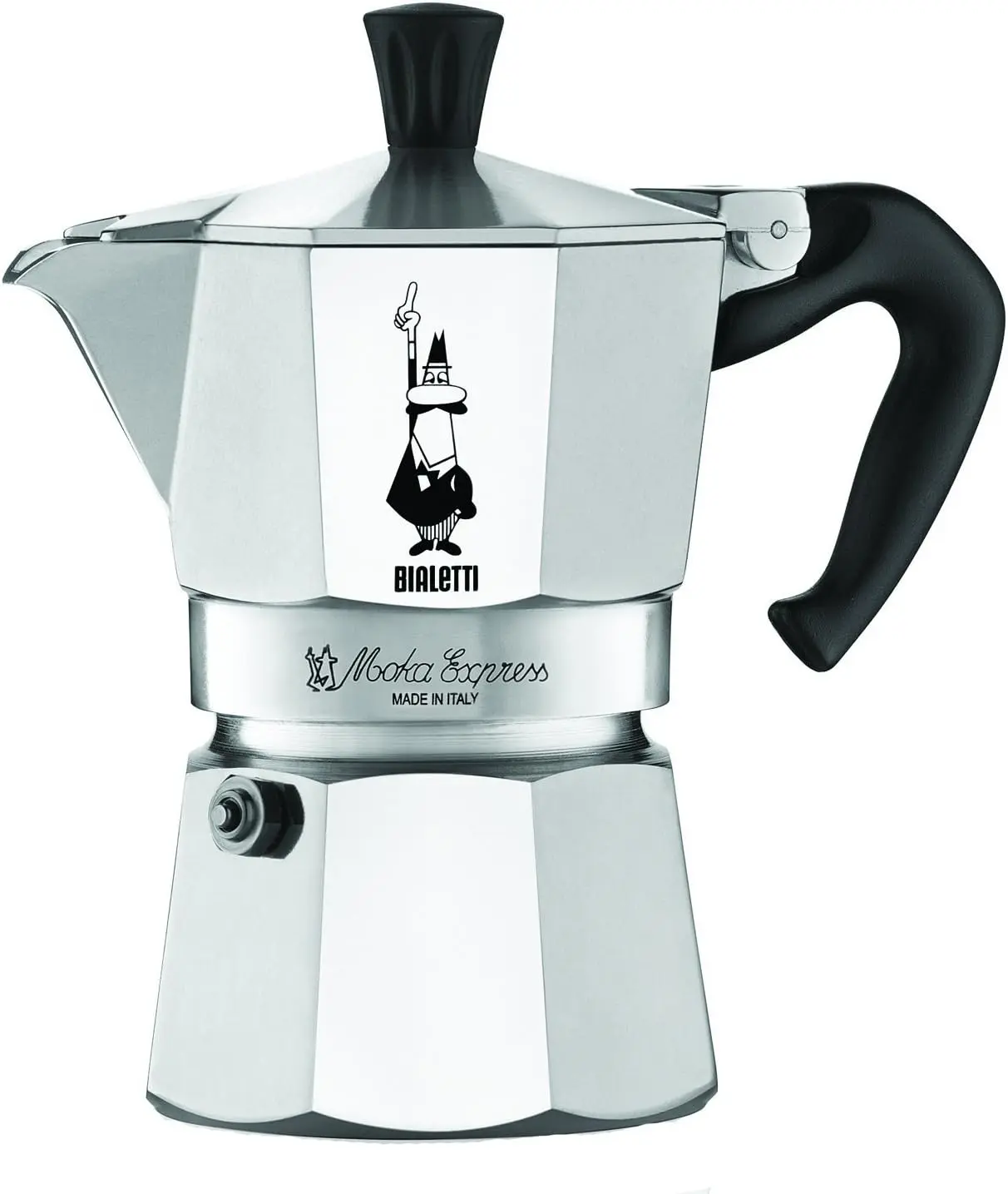
Bialetti Moka Express — The classic
Eight-sided aluminum pot made since the 1930s; the reference point for stovetop coffee on gas and electric hobs.
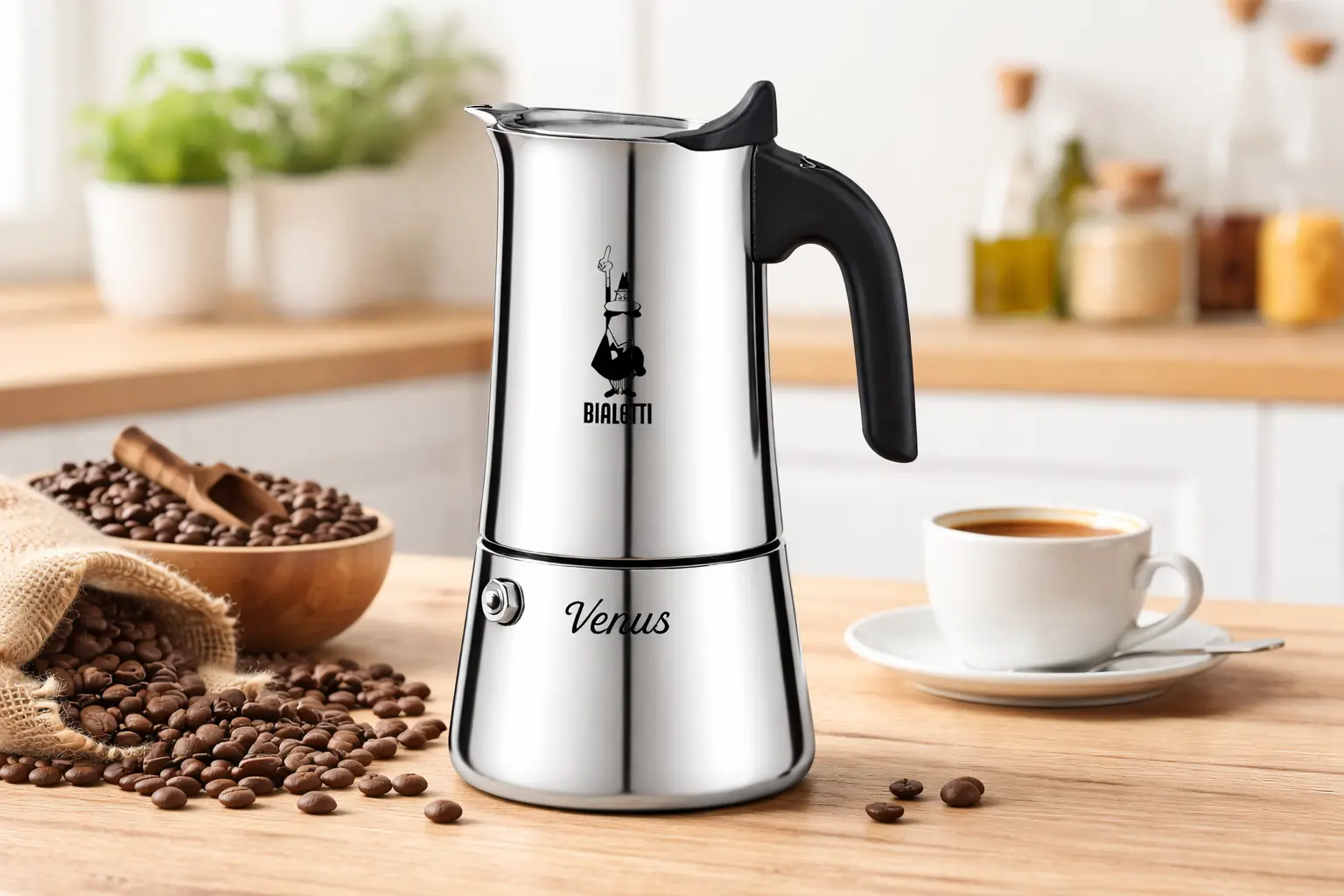
Bialetti Venus — For induction
Stainless steel body that works on induction and tolerates mild soap, at a higher price.
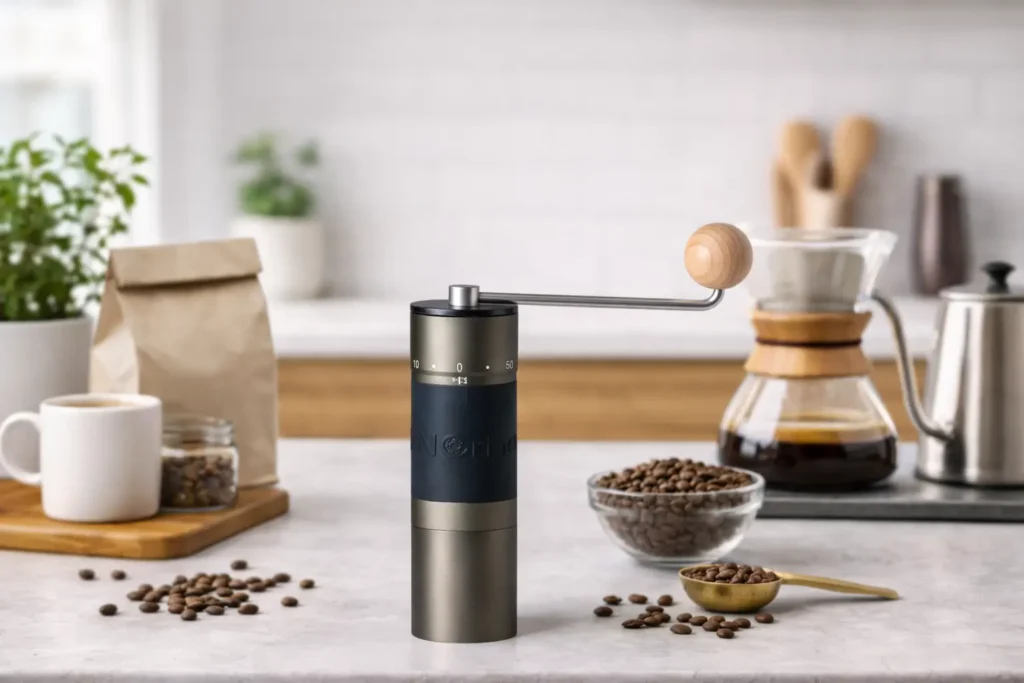
KINGrinder K6 — Grind control
An even medium-fine grind is the single biggest upgrade to moka pot coffee.
Affiliate disclosure: Amazon links may earn CoffeeGearHub a commission at no additional cost to you. Prices and availability can change.
A Design That Has Barely Changed, and That Is the Point
The Moka Express is the eight-sided aluminum pot most people picture when they hear the words moka pot. Bialetti has made it since the 1930s, and the company’s history is closely tied to it: Renato Bialetti, who took over the business after the Second World War, focused the company on this single product and promoted it heavily, and the mustached cartoon mascot still printed on every pot dates from a 1953 sketch by the illustrator Paul Campani. By 2001, according to published company histories, more than 220 million had been produced.
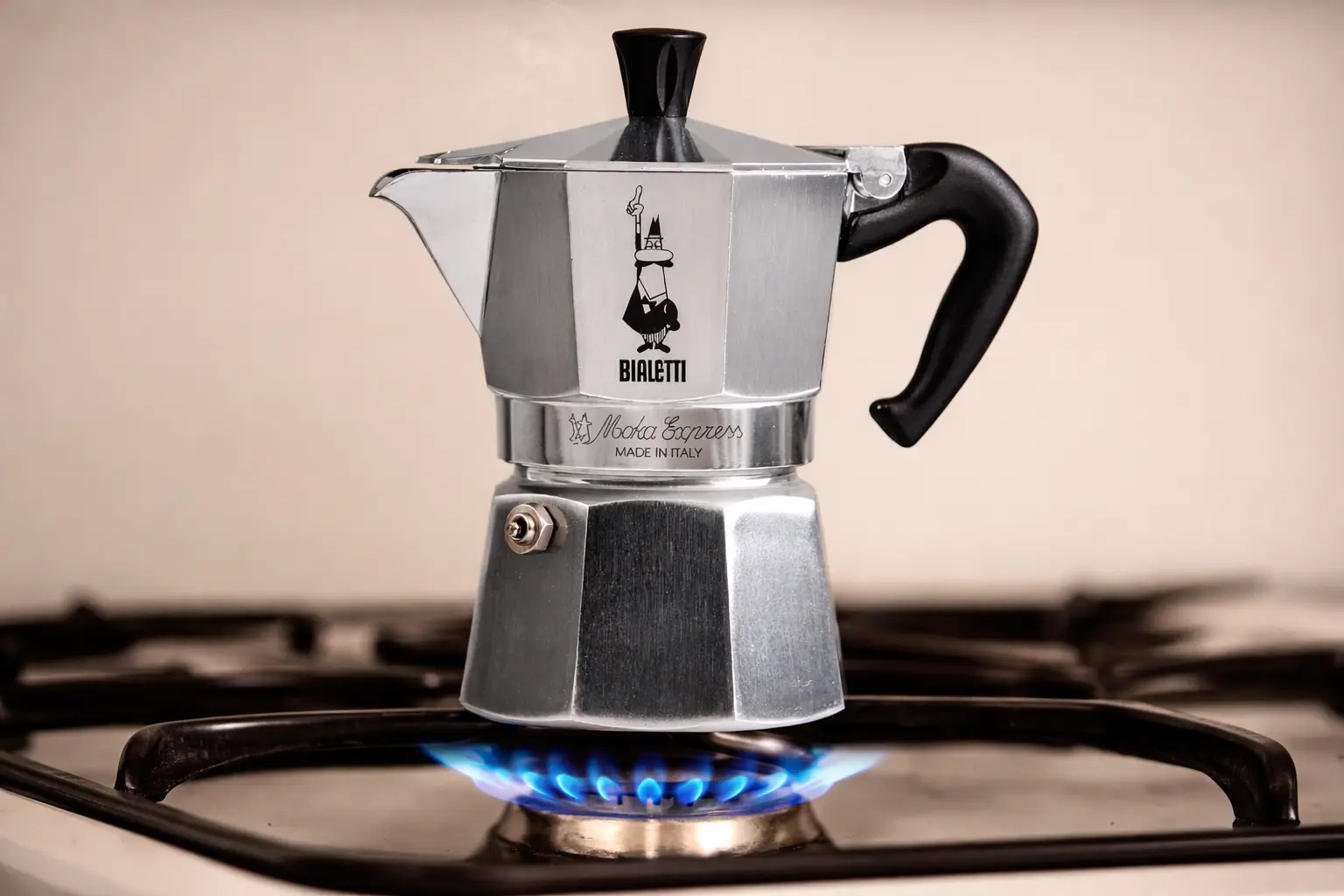
That longevity matters for buyers because the design has been refined by decades of use rather than redesigned for novelty. The three parts, a base for water, a funnel for coffee, and a top chamber for the finished brew, are the same as ever. The faceted aluminum spreads heat evenly, the safety valve sits on the side of the base, and the hinged lid and heat-resistant handle are where most small updates have happened. When America’s Test Kitchen compared moka pots, it named the classic Moka Express its winner and called it the most reliable and user-friendly of the group.
This review is research-based. CoffeeGearHub did not test the pot in-house; instead, the scores below draw on manufacturer guidance, published lab-style measurements, a large comparative test, and long-term owner reports, all credited in the sources section.
The Research Scorecard: 7.8 out of 10
We scored the Moka Express on six criteria that matter to owners over years rather than weeks. Each score reflects the published evidence: brew measurements and comparative testing for coffee quality, owner reports and maker guidance for daily use and care, and current market alternatives for value.
| Criterion | Score | What it reflects |
|---|---|---|
| Brew quality | 8 / 10 | Rich, concentrated coffee when brewed on gentle heat; some grit, no true crema |
| Ease of use | 7 / 10 | Simple parts, but grind, heat, and timing take a few brews to learn |
| Build and durability | 9 / 10 | Cast aluminum body that lasts for years; gasket is the only regular wear part |
| Versatility | 6 / 10 | No induction without an adapter; each pot brews only one batch size well |
| Maintenance | 7 / 10 | Hand wash only and no soap, but no descaling machine or filters to buy |
| Value | 10 / 10 | Among the lowest-cost ways to make strong coffee at home |
| Overall | 7.8 / 10 | Average of the six criteria |
The pattern is clear. The Moka Express wins on value and durability by a wide margin and is held back mainly by two practical limits, induction compatibility and fixed batch size, plus a short learning curve. None of those affect the coffee itself, which is why so many owners keep using the same pot for decades.
What the Coffee Actually Tastes Like
A moka pot is not an espresso machine, and the Moka Express does not pretend otherwise. It brews with steam pressure of roughly one to two bars, compared with about nine for espresso. The Coffee Locator, which logged more than 160 brews over eight weeks, measured moka coffee at about 2.0 to 2.5 percent total dissolved solids, against roughly 9 percent for a shot from an entry-level espresso machine. In plain terms, Moka Express coffee is several times stronger than drip coffee but noticeably lighter in body than true espresso.
Brewed well, that concentrate is rich, chocolatey, and full-flavored, with a heavier body than filter coffee. America’s Test Kitchen described the coffee from the winning Moka Express as rich and complex, while noting the slight grit that every moka pot leaves behind because its metal filter plate lets very fine particles through. Expect no real crema; a thin, short-lived foam is normal.
Brewed badly, the same pot produces harsh, bitter coffee, and almost every bad review traces back to technique rather than the pot. High heat, espresso-fine grind, a tamped basket, or letting the brew run into the sputtering phase all push bitterness up. On medium-low heat with a medium-fine grind and an early stop, the Moka Express is capable of a genuinely excellent cup. Our how to use a moka pot guide walks through the method step by step.
Pick the Size You Will Fill Every Time
Bialetti makes the Moka Express in a wide range of sizes, and choosing correctly matters more than with almost any other brewer. The coffee basket must be filled completely for the pot to brew evenly, so you cannot make a half batch in a large pot. If you want less coffee, you need a smaller pot. A moka cup is also a small Italian serving of roughly 40 to 50 ml, not a mug, which surprises many first-time buyers.
| Pot size | Approximate yield | Best for |
|---|---|---|
| 1-cup | About 40 ml | A single short coffee |
| 3-cup | About 120 ml | One strong serving or one milk drink |
| 6-cup | About 240 ml | Two people, or two milk drinks |
| 9-cup | About 360 ml | Three to four people |
| 12-cup | About 480 ml | Households and guests |
For one person who drinks coffee black, the 3-cup is the classic choice. If you make milk drinks or brew for two, the 6-cup is the better starting point. Many owners eventually keep two sizes. Yields vary slightly with grind and heat, and America’s Test Kitchen measured an average yield of 4.6 ounces and an average brew time of 5 minutes 17 seconds for the size it tested. Our best coffee beans for moka pot guide covers what to put in it.
Living With It Day to Day
In daily use the Moka Express is pleasantly simple. Fill the base with hot water to just below the safety valve, fill the basket level with medium-fine coffee without tamping, screw the top on firmly by the body rather than the handle, and set it on gentle heat. America’s Test Kitchen praised the lid for staying open on its own, which makes it easy to watch the coffee rise, and called the curved handle ergonomic and comfortable to hold.
Expect a brew time of about five to seven minutes, depending on pot size, stove, and whether you start with hot water. Take the pot off the heat when the stream turns pale and begins to gurgle, and cool the base under the tap to stop the flow. A consistent grind helps more than anything else: a burr grinder such as the KINGrinder K6 keeps the grind even from one morning to the next, while a blade grinder produces a mix of dust and chunks that makes the pot unpredictable.
The other habit that improves results is heat control. On gas, keep the flame under the base so it does not lick up the sides and scorch the coffee or the handle. On electric coil and ceramic hobs, use medium-low and remember that the plate keeps heating after you switch it off.
Aluminum: Care, Seasoning, and the Common Questions
The Moka Express is made of aluminum, which heats quickly and evenly and keeps the pot light and inexpensive. It also sets the care rules. Bialetti advises washing aluminum pots by hand with warm water only, without detergent, and never in the dishwasher. Detergent strips the thin coffee-oil layer that builds up inside and can dull or discolor the metal, while dishwasher heat and chemicals also wear the gasket and valve.
New pots can taste metallic. Bialetti recommends brewing and discarding the first few pots before drinking, and The Coffee Locator reported that the metallic note disappeared within about a dozen brews. Some gray discoloration and dullness on the outside over the years is normal and does not affect the coffee. White spots inside the base usually come from water left standing; a gentle scrub with warm water and white vinegar removes them.
If you would rather avoid aluminum altogether, or you simply want a pot you can wash with a little soap, a stainless steel model is the alternative, and it comes with induction compatibility as a bonus. Our how to clean a moka pot guide covers daily rinsing, deep cleaning, and descaling in detail.
Where the Moka Express Falls Short
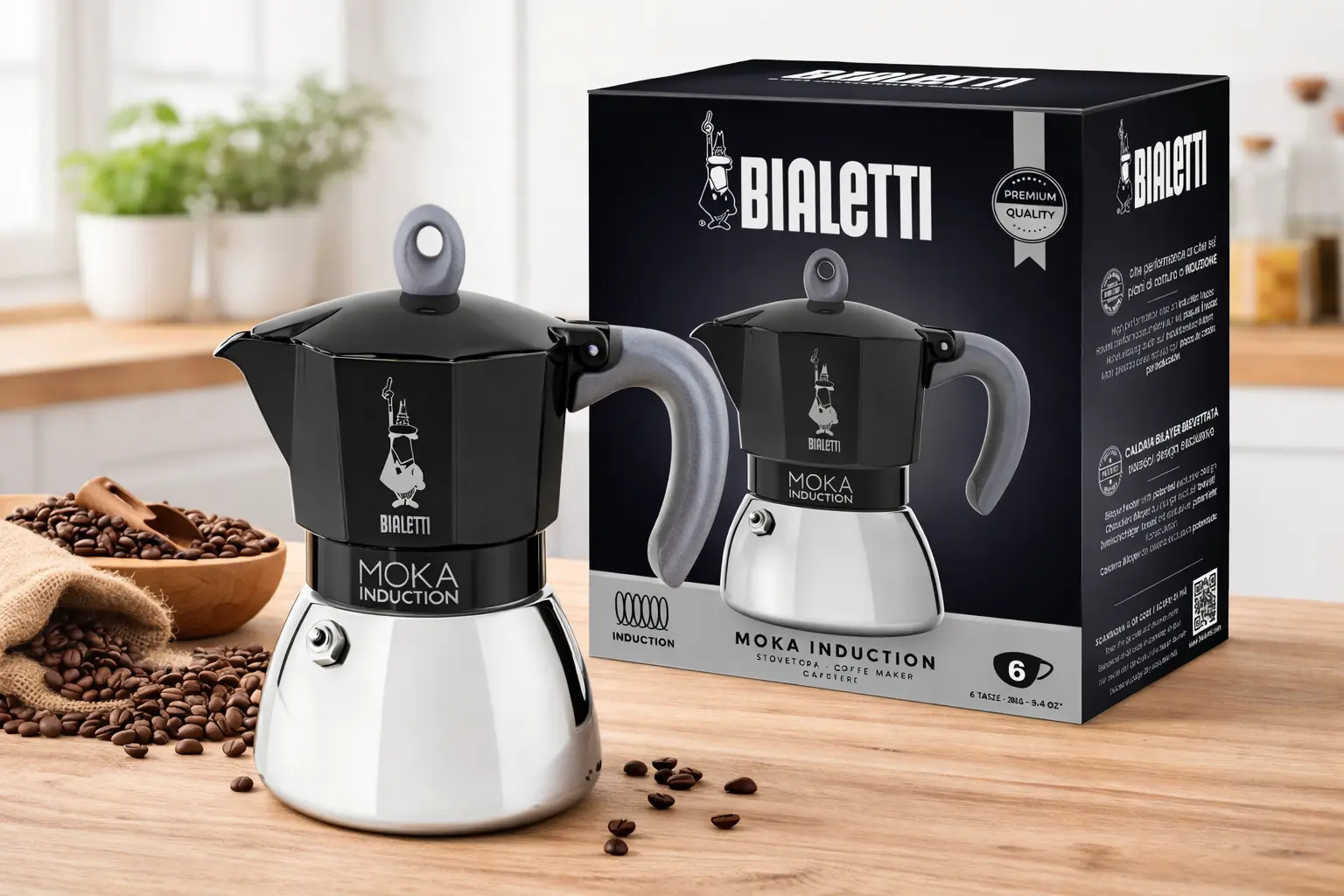
The biggest limitation is induction. The classic aluminum Moka Express is not magnetic, so it will not heat on an induction hob without an adapter plate, which adds cost and heat-up time. If you cook on induction, a stainless pot such as the Bialetti Moka Induction or the Venus is the simpler choice.
The second is batch size. Because the basket must be full, each pot effectively brews one amount. The third is technique: the Moka Express rewards attention, and anyone expecting push-button results will be disappointed for the first few days. Finally, it makes strong coffee, not espresso. If thick crema and real espresso body matter to you, look at an espresso machine instead; our moka pot vs AeroPress comparison is also useful if you are weighing manual brewers.
Smaller complaints come up in owner reviews too: the handle can loosen or scorch if flame reaches it, the pot gets very hot to handle right after brewing, and some owners find the exterior marks easily. None of these are serious, and most are avoided with gentle heat and a towel.
Moka Express, Venus, or Brikka?
Bialetti’s own range covers the main alternatives. The Bialetti Venus is a stainless steel pot with a more modern shape. It works on induction, tolerates mild soap, and does not discolor, at the cost of a higher price and slightly different heat behavior. It suits induction kitchens and anyone who wants easier care.
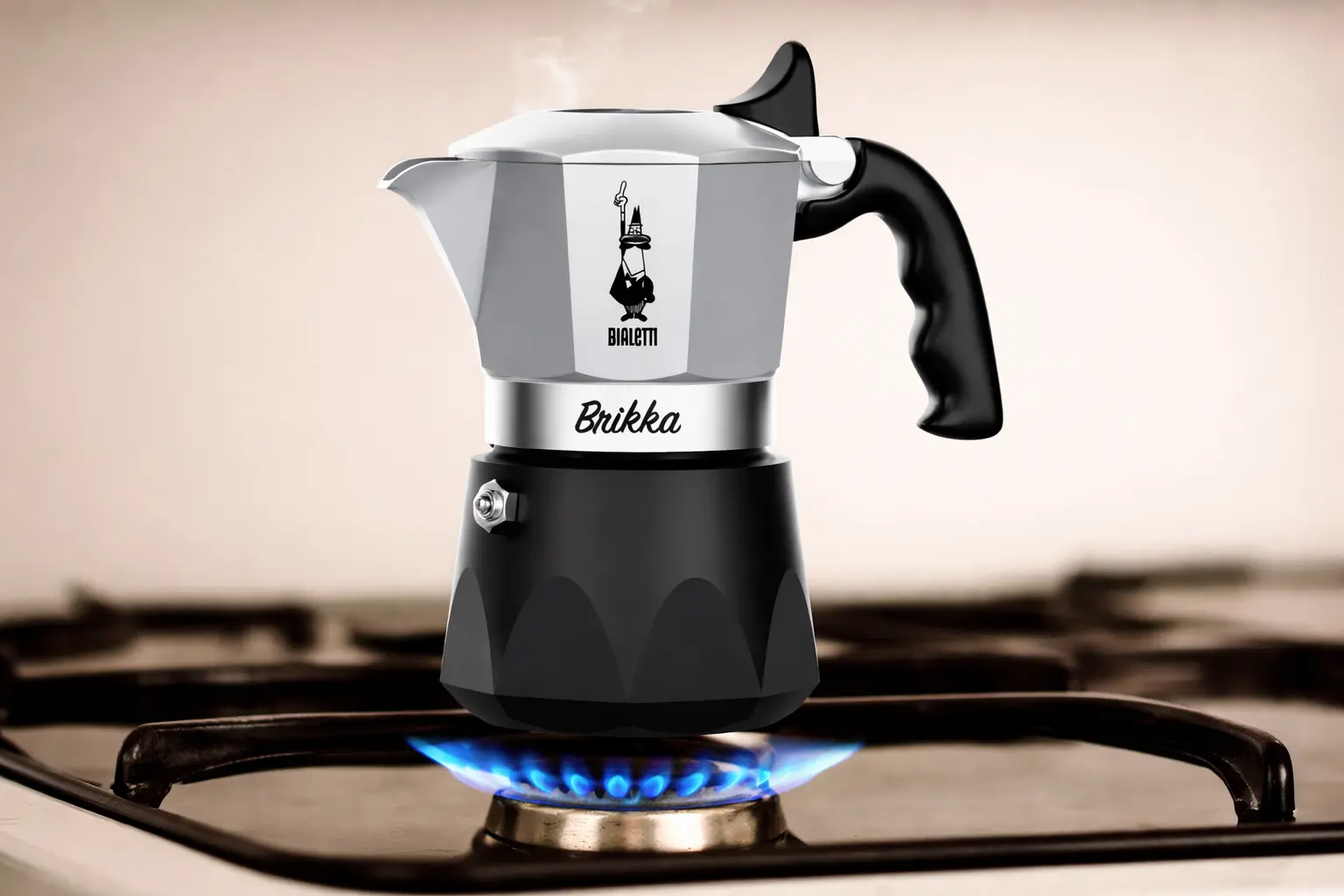
The Bialetti Brikka adds a weighted valve that holds pressure back until it builds a little higher, producing a more concentrated cup with a light foam on top. It is closer to espresso in feel, but it is also a little fussier and pricier. For most buyers who want the classic stovetop experience at the lowest cost, the Moka Express remains the default.
If you are torn, think about your stove and your drinks. Gas or electric and black coffee point to the Moka Express. Induction points to the Venus or Moka Induction. If you mainly make milk drinks and want a little foam on top, the Brikka is worth a look. Our best moka pots guide compares these and other brands in more depth.
Ownership Over the Years: Gaskets and Spare Parts
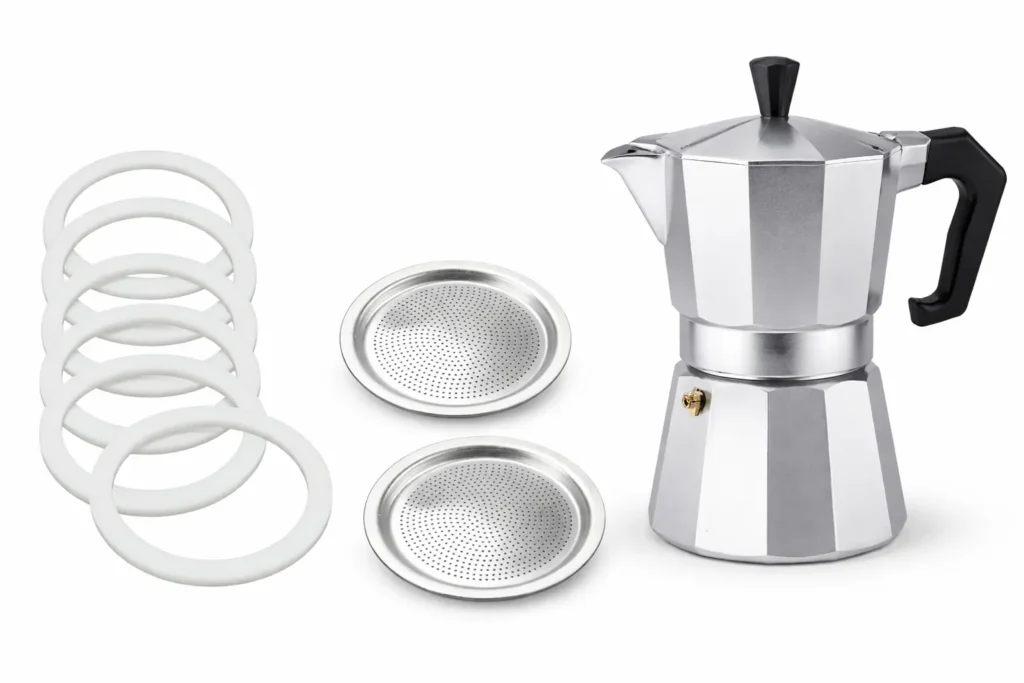
One of the strongest arguments for the Moka Express is that it can be repaired rather than replaced. The aluminum body almost never fails. The rubber gasket that seals the top to the base hardens with heat and eventually leaks, and The Coffee Locator estimates replacing it every 12 to 24 months with regular use. The filter plate, which sits behind the gasket, can also bend or clog over time.
Both parts are inexpensive. A gasket and filter plate set sized to your pot restores the seal and the flow, and fitting it takes a few minutes. Signs that it is time include coffee or steam escaping at the seam, a pot that has to be screwed very tightly to seal, and weak output despite a good grind.
Bialetti also notes that the pot should be stored disassembled and fully dry. Following that advice keeps the gasket from compressing and the aluminum from developing oxidation spots, and it is a large part of why so many decades-old pots still brew well. If something goes wrong with brewing rather than the hardware, our moka pot troubleshooting guide covers sputtering, bitterness, and leaks.
Our Verdict
The Bialetti Moka Express earns its reputation. It is inexpensive, simple, and durable enough to last for decades with nothing more than an occasional new gasket. Brewed with a medium-fine grind on gentle heat and taken off the stove before it sputters, it makes rich, concentrated coffee that works on its own or as the base for milk drinks. Its weaknesses are practical rather than fundamental: it needs an adapter on induction, it brews one batch size per pot, and it takes a few mornings to learn.
Buy the Moka Express if you cook on gas or electric, want strong coffee for very little money, and are happy to spend a few brews learning the technique. Choose the Venus or Moka Induction if you cook on induction, and the Brikka if you want a little more body and foam. Pair any of them with a burr grinder and the gap between a frustrating moka pot and a great one closes quickly.
Start With the Classic
The Moka Express covers gas and electric hobs; the Venus covers induction.
As an Amazon Associate, CoffeeGearHub earns from qualifying purchases.
Editorial bottom line: The Moka Express is cheap, durable, and capable of excellent coffee. Brew on gentle heat with a medium-fine grind, stop before it sputters, wash it by hand, and replace the gasket every year or two. Choose stainless if you cook on induction.
Frequently Asked Questions
Is the Bialetti Moka Express worth buying?
For most people who want strong, concentrated coffee on a gas or electric stove, yes. It is inexpensive, nearly indestructible with basic care, and a full brew takes about five minutes. Skip it if you cook on induction or want true espresso with crema.
What size Moka Express should I buy?
Buy the size you will fill every time, because the basket must be full to brew well. A 3-cup pot makes one strong serving or the base for one milk drink; a 6-cup pot suits two people. Moka cups are small servings of roughly 40 to 50 ml, not mugs.
Does the Moka Express work on induction?
Not on its own. The classic aluminum Moka Express is not magnetic, so it needs an induction adapter plate. Bialetti sells stainless steel models such as the Moka Induction and Venus that work directly on induction hobs.
Can the Moka Express go in the dishwasher?
No. Bialetti says its aluminum pots should be washed by hand with warm water only. Dishwasher detergent dulls and discolors the aluminum and wears out the gasket faster. Our how to clean a moka pot guide covers the full routine.
Why does my new Moka Express taste metallic?
New aluminum pots often taste metallic for the first few brews. Bialetti recommends discarding the first few pots of coffee, and owners report the taste fades as a thin coffee layer builds up inside.
How long does a Moka Express last?
Decades, in many cases. The aluminum body rarely fails; the parts that wear are the rubber gasket and occasionally the filter plate, both of which are inexpensive and easy to replace.
Sources and Further Reading
Product history follows published Bialetti company histories, including the Wikipedia entry on Alfonso Bialetti. Care, first-use, and storage guidance follow Bialetti’s published instructions. Comparative results, including brew time, yield, and handling, come from America’s Test Kitchen’s moka pot review. Brew pressure, dissolved-solids measurements, break-in, and gasket life come from The Coffee Locator’s Moka Express review. Extraction concepts follow the Specialty Coffee Association’s standards. CoffeeGearHub did not test this product hands-on.
CoffeeGearHub product shortlist
Continue with related products on CoffeeGearHub
Review product categories and current verified merchant offers on CoffeeGearHub before leaving the site.