
7 Drip Coffee Upgrades That Improve Taste
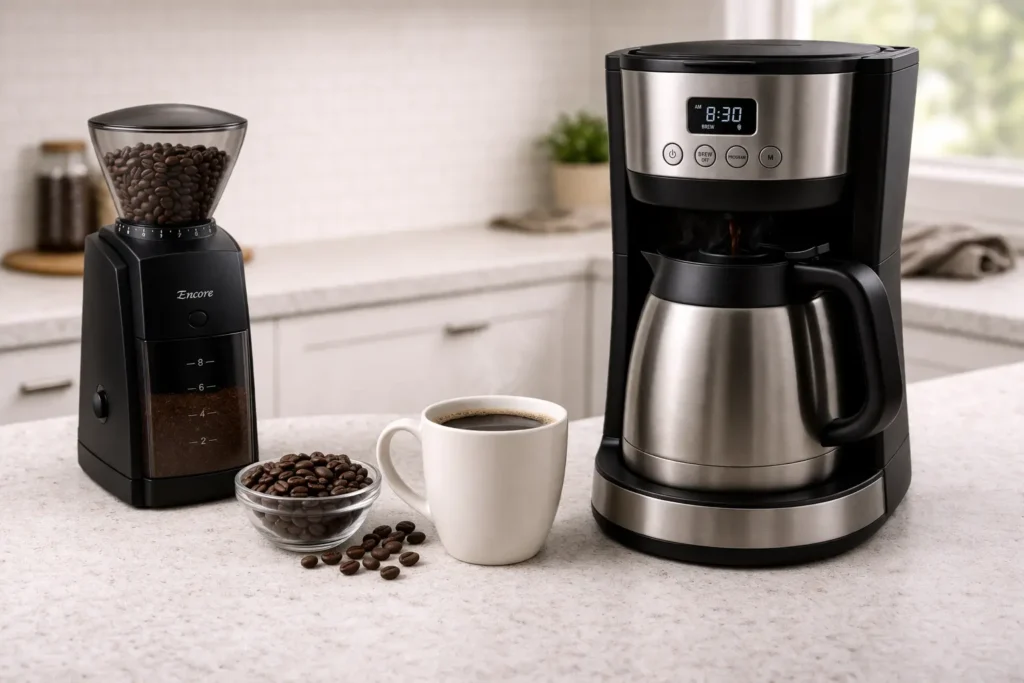
Editorial standards: this guide focuses on repeatable brewing variables, practical ownership, and clearly labeled product examples. Recommendations are separated from technique so the article remains useful even if you already own the equipment.
At a glance
Fix the grinder and coffee first, then evaluate the machine
A new brewer is not automatically the first upgrade. Fresh coffee and a capable burr grinder often improve the cup more than replacing a functioning machine.
Once those basics are stable, temperature, ratio, water, descaling, and thermal storage become easier to evaluate.
Editorial analysis
Work from the biggest bottleneck downward
Coffee quality is limited by the weakest part of the chain. A premium machine cannot rescue stale beans or a blade-ground dose.
The most efficient upgrade path is therefore sequential: grinder, fresh coffee, capable brewer, then smaller refinements.
The 30-Second Answer
Start with fresh whole beans and a burr grinder. Then confirm your machine brews hot enough, use a repeatable ratio and filtered water, descale on schedule, and stop holding finished coffee on a warming plate.
Start with the highest-impact options
Start with these representative choices
These examples make the equipment side of the guide concrete while keeping the main article focused on brewing decisions.
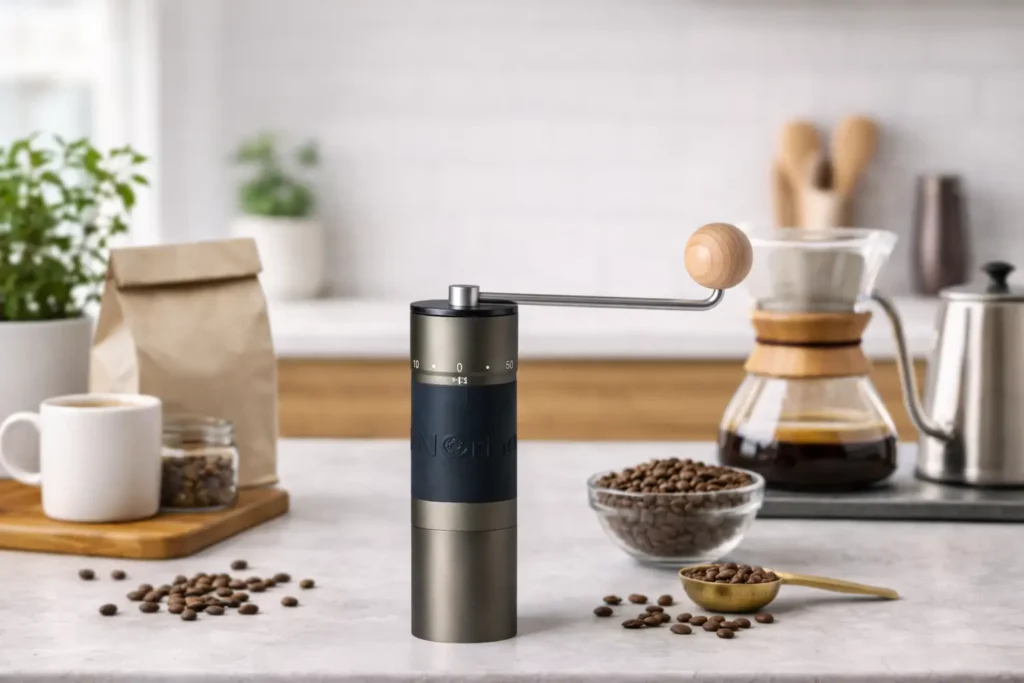
KINGrinder K6 — grinder upgrade
A consistent burr grinder addresses one of the biggest quality limits in many home drip setups.
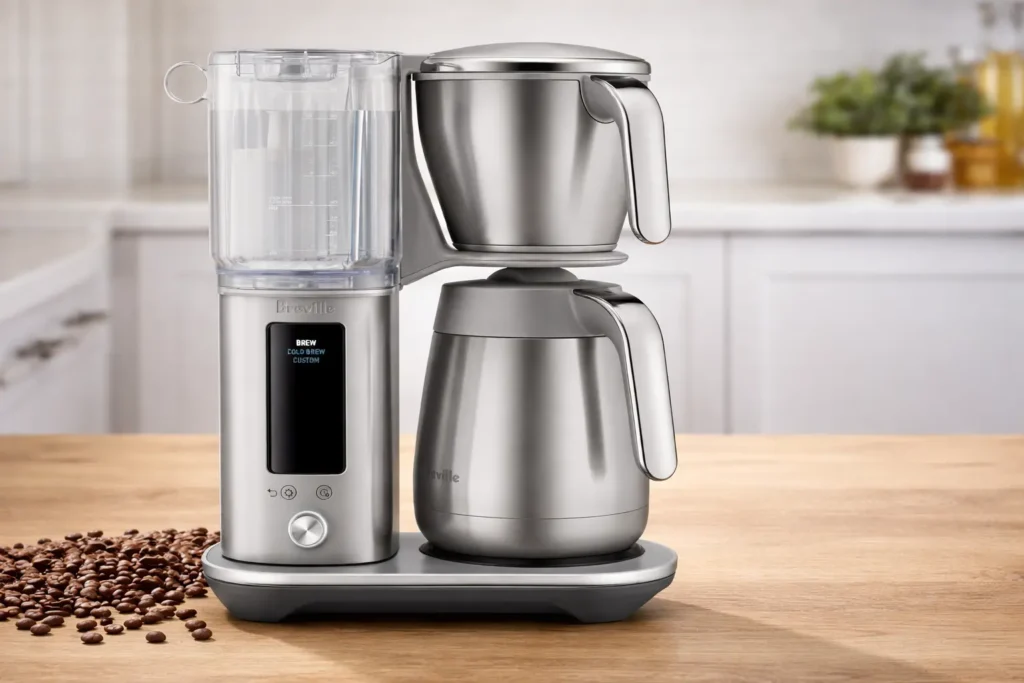
Breville Precision Brewer — machine upgrade
A temperature-controlled drip brewer for setups where the machine itself is the remaining bottleneck.
Affiliate disclosure: Amazon links may earn CoffeeGearHub a commission at no additional cost to you. Prices and availability can change.
Why Most Drip Coffee Underperforms: The Five Root Causes
Before applying any fix, it helps to understand why most home drip coffee falls short of its potential. The causes are almost always the same five, and they stack — each one adds another layer of quality degradation on top of the last. Fixing them in order of impact (the sequence in this guide) produces the fastest, most noticeable improvement per dollar and per minute invested.
| Root cause | How it degrades your cup | How common it is | Fix |
|---|---|---|---|
| Blade grinder or pre-ground coffee | Uneven particle size extracts chaotically — fines over-extract to bitterness while chunks under-extract to sourness; the cup is simultaneously both | Very common — blade grinders are the default entry purchase for most households | Upgrade #1: Switch to a burr grinder |
| Stale beans without a roast date | Aromatic volatiles oxidise after roasting; coffee beyond 40 days produces flat, hollow, papery cups regardless of grind, dose, or machine quality | Very common — most grocery store coffee has no roast date; best-before dates can be 12+ months post-roast | Upgrade #2: Buy fresh roast-dated beans |
| Machine brewing below 92°C | Under-temperature extraction leaves the sweet and aromatic compounds undissolved — coffee tastes sour, thin, and flat | Very common — most budget drip machines don’t reach SCA-standard temperature | Upgrade #3: Get an SCA-certified machine |
| Incorrect ratio — too little coffee | Dilute ratio over-extracts relative to water volume, producing a weak, bitter, thin cup that doesn’t taste like anything specific | Universal — most people use 30–40% less coffee than the SCA Golden Cup standard | Upgrade #4: Weigh and use the correct ratio |
| Warming plate degradation | Glass carafe on a warming plate scorches and oxidises coffee within 20 minutes, producing a stale, burnt-edge bitterness in every cup after the first | Universal — most drip machines include a glass carafe and warming plate | Upgrade #7: Use a thermal carafe |
🔬 Why drip quality varies so much: two machines can use the same basic mechanism and still brew very differently. Water temperature, showerhead coverage, and flow control matter.
A better machine can improve consistency, but only after the basics are in place. Fresh coffee and a capable burr grinder still set the ceiling for the brew.
Upgrade #1: Switch to a Burr Grinder and Grind Fresh
The grinder is the highest-impact upgrade in many drip setups. Blade grinders create a mix of fine dust and large chunks, so different particles extract at very different rates.
A burr grinder narrows that spread. The result is a more even bed, a cleaner extraction, and adjustments that actually respond predictably when you change grind size.
A consistent burr grinder produces particles clustered tightly around a target size. All those particles extract at the same rate across the full brew cycle. The result is extractable compounds released in proportion — acidity first, then sweetness and body, then the small amount of bitter compounds that balance the cup. This is what produces the clean, well-rounded drip coffee that a quality setup consistently achieves from the same beans that produce a mediocre cup in a blade-ground setup.
Grinding fresh matters equally. Ground coffee begins staling immediately as the dramatically increased surface area of ground particles exposes their oils and aromatic compounds to oxygen. Pre-ground coffee purchased at a grocery store may have been ground weeks before purchase and packed months before you open it. Grinding immediately before brewing — within 5 minutes is ideal — captures the full aromatic complexity the bean contains. The improvement from grinding fresh is most noticeable in the first 30 seconds after the brew completes: freshly ground drip coffee has a pronounced, complex aroma that stale pre-ground coffee entirely lacks.
🚫 Blade grinders cannot produce consistent drip coffee. This is not about price — it is about mechanism. A blade grinder spins sharp blades through beans at high speed, producing random-size fragments with no control over particle distribution. No amount of “pulse grinding” or technique adjustment changes the fundamental randomness of the output. A burr grinder at any price tier produces better drip coffee than a blade grinder at any price tier. The KINGrinder K6 is the most accessible starting point.
Upgrade #2: Use Fresh Beans with a Visible Roast Date
Freshness is the quality ceiling of drip coffee — and it is the variable most consistently ignored by home brewers. A stale bean produces a flat, hollow, papery cup in even the best drip machine with the best grinder. A fresh bean with a roast date, used within 35 days of that date, rewards every other improvement you make to your setup. Freshness is not optional; it is the precondition for every other upgrade delivering its full benefit.
The roast date tells you far more about freshness than a distant best-before date. Coffee loses aroma and complexity over time even when the package stays sealed.
When possible, buy whole beans with a visible roast date and use them while they still smell lively and distinct. A stale bag limits every other upgrade in this guide.
| Days since roasting | Drip coffee performance | What you’ll taste |
|---|---|---|
| 0–7 days | Too gassy — minor CO2 issues; minor inconsistency | Slightly hollow bloom; minor extraction unevenness; already quite good |
| 7–35 days | Peak window — maximum aromatic complexity | Full sweetness, clear origin character, aromatic richness — best possible drip result |
| 35–60 days | Declining — minor staling | Slightly reduced aroma lift; some flattening of bright notes; still acceptable |
| 60+ days | Stale — aromatic volatiles significantly depleted | Flat, hollow, papery finish; reduced sweetness; no bright notes — no upgrade fixes this |
💡 Where to buy fresh drip coffee beans: Specialty roasters who ship directly (Stumptown, Intelligentsia, Counter Culture, and many regional roasters) typically ship within 1–3 days of roasting and print the roast date on every bag. Amazon carries some of these roasters but freshness varies by inventory turnover — always check the roast date in the product listing or on delivery before using. Grocery store whole bean coffee from high-turnover brands (Lavazza, Peet’s, Starbucks) is more reliably fresh than their pre-ground equivalents due to higher shelf turnover, but roast dates are still rarely shown.
Upgrade #3: Brew at the Right Temperature — What SCA Certification Actually Means
Water temperature is one of the most important machine-side variables in drip coffee. If the brew water is too cool, extraction can stay thin, sour, and incomplete.
This is why SCA-certified brewers are useful reference points: they are evaluated against temperature and brew-performance targets. If your current machine consistently brews cool, no grind adjustment can fully compensate.
Most budget drip machines brew at 75–85°C. This is not a marginal shortfall — it is a 10–20°C gap from the optimal range that leaves a significant portion of the bean’s desirable compounds unextracted in the basket. No grind adjustment, dose increase, or technique change compensates for a machine that cannot reach proper temperature. The SCA’s Gold Cup certification program tests machines specifically for this: only machines that consistently achieve 92–96°C receive certification. Upgrading from an uncertified budget machine to an SCA-certified machine is the most impactful single hardware improvement available in home drip coffee.
🔬 How to tell if your machine brews at the right temperature: The simplest test is diagnostic — not a thermometer. If your drip coffee consistently tastes sour, thin, and flat despite using fresh beans and a consistent burr grind, and the problem persists even when you grind finer or increase your dose, temperature is almost certainly the cause. Budget machines that under-temperature cannot be fixed by any adjustment inside the machine. If your machine is more than a few years old and has no SCA certification, assume it is not reaching the SCA standard and plan an upgrade accordingly.
Upgrade #4: Use the Correct Coffee-to-Water Ratio
The coffee-to-water ratio is the most universally under-applied variable in home drip brewing. Most people — including experienced home brewers — use significantly less coffee than the SCA Golden Cup standard, producing coffee that is simultaneously weak and over-extracted: the small amount of coffee over-extracts relative to the large amount of water, producing bitterness and astringency without the body and sweetness of a properly dosed cup. The fix is simple and free: use a kitchen scale and the correct ratio.
The SCA Golden Cup Ratio — and How to Apply It
The SCA Golden Cup standard for drip brewing is 55g of coffee per litre of water (approximately 1g per 18ml). This is the ratio that the SCA determined produces optimal extraction yield across a standard drip brew cycle at proper temperature. It is significantly more coffee than most people use. Most home setups run at 30–40g per litre, producing dilute, weak-tasting coffee even from quality beans. Use the table below as your starting reference; adjust by 5g in either direction if you prefer stronger or lighter strength.
| Carafe size | Water volume | SCA standard dose (55g/L) | Strong preference (60g/L) | Light preference (50g/L) |
|---|---|---|---|---|
| 2-cup / single serve | 300ml | 17g | 18g | 15g |
| 4-cup | 500ml | 28g | 30g | 25g |
| 6-cup | 750ml | 41g | 45g | 38g |
| 8-cup | 1,000ml (1L) | 55g | 60g | 50g |
| 10-cup | 1,250ml | 69g | 75g | 63g |
| 12-cup | 1,500ml | 83g | 90g | 75g |
⚠️ Why volume scoops are unreliable: A standard 2-tablespoon coffee scoop holds approximately 10–12g of coffee depending on roast level and bean density — darker, lower-density roasts weigh less per volume than lighter, denser beans. This means two scoops of a dark roast may weigh 18g while two scoops of a light roast weigh 22g from the same scoop. For consistent, reproducible drip coffee, weigh your dose on a kitchen scale every time. The investment in a basic digital scale is the lowest-cost, highest-consistency improvement in the entire upgrade list.
Upgrade #5: Use Filtered Water
Coffee is mostly water, so water quality matters twice: it affects flavor and it affects the machine. Very hard water can leave scale inside the heating system, while heavily chlorinated water can add off-flavors.
Filtered water is a practical middle ground for many households. It can improve taste while slowing scale buildup without stripping the water of every mineral.
A basic carbon filter is enough for many households. It can reduce chlorine and some unwanted flavors while leaving minerals that help coffee extraction.
If your water is extremely hard, you may need a stronger filtration or scale-control approach. The goal is not perfectly pure water; it is pleasant-tasting water that does not overwhelm the brewer with mineral buildup.
Upgrade #6: Descale Your Machine Regularly
Descaling is easy to ignore because scale builds slowly. The problem is that mineral deposits can reduce heating efficiency and water flow long before the machine stops working.
Follow the manufacturer’s descaling interval or shorten it if your water is hard. If brew time increases or flavor becomes flatter over months, maintenance should be one of the first things you check.
The descaling process is straightforward and takes about 30 minutes of mostly unattended time. It should be done every 1–3 months depending on water hardness — more frequently in hard water areas, less frequently where water is softer or filtered. Most quality drip machines include a descale indicator light; if yours doesn’t, set a calendar reminder.
How to Descale a Drip Machine
- Empty the carafe and remove any paper filter and grounds from the basket
- Fill the water reservoir with descaling solution — either a commercial descaler (Urnex Dezcal, diluted per instructions) or a 50/50 mix of white vinegar and water
- Place the empty carafe on the warming plate or thermal base
- Run a full brew cycle without any coffee in the basket — the descaling solution will pass through the heating element, internal tubing, and showerhead
- Discard the liquid in the carafe
- Fill the reservoir with fresh clean water and run a complete brew cycle again — this flushes descaling solution residue
- Repeat the clean water flush cycle once more — two flush cycles total after the descaling cycle
- Your machine is now descaled — brew your next cup as normal
Signs Your Machine Needs Descaling
- Brew cycle taking longer than usual — scale restricts flow rate through the tubing
- Coffee tastes increasingly flat despite using the same beans and grind — brew temperature dropping
- Machine making louder gurgling or straining sounds during brewing
- Descale indicator light illuminated (on machines that have one)
- Visible white or grey deposits around the water reservoir or showerhead
- It has been more than 3 months since the last descale regardless of symptoms
Upgrade #7: Stop Using the Warming Plate
A warming plate keeps coffee hot by applying continuous heat to the bottom of the carafe. That heat also speeds oxidation and can make later cups taste harsher than the first.
The change is gradual but noticeable. If you routinely drink a pot over an hour or more, thermal storage is usually a better way to keep it hot.
The fix is simple: avoid holding brewed coffee on direct heat. Serve it promptly or move it to a thermal carafe.
Vacuum insulation keeps coffee warm without continuously cooking it. If your machine uses a glass carafe and warming plate, a separate thermal carafe can improve every cup after the first.
💡 Warming plate vs thermal carafe — the quality difference in practice: Pour the same freshly brewed batch into a glass carafe on a warming plate and a thermal carafe. Leave both for 45 minutes. Taste both side by side. The warming plate coffee will taste noticeably more bitter, stale, and flat — most people notice the difference immediately. The thermal carafe coffee will taste almost identical to the first cup. This is the most impactful zero-cost improvement you can make to your current setup right now: brew, transfer to a thermal vessel, turn off the machine.
Grind Reference: K6 Click Settings for Drip Coffee
Drip coffee requires a medium grind — the setting that allows water to drain through the basket at a rate that produces 4–6 minutes of total brew time for a standard carafe. All K6 click settings measured from zero (burrs touching). Adjust 3–5 clicks at a time for drip; changes are gradual. If your machine produces 4–6 minutes of brew time at these settings, you are in the correct range — adjust from there based on cup taste.
| Roast level | K6 Clicks | Baratza Encore setting | Grind descriptor | If sour / weak → | If bitter / stalling → |
|---|---|---|---|---|---|
| Light roast | 98–106 | 13–18 | Medium-fine for drip | Finer 3 clicks + raise machine temp if SCA-certified | Coarser 3–5 clicks |
| Medium roast | 104–112 | 15–22 | Medium | Finer 3 clicks | Coarser 3–5 clicks |
| Medium-dark roast | 106–115 | 17–24 | Medium | Finer 3 clicks | Coarser 3–5 clicks |
| Dark roast | 109–121 | 20–26 | Medium to medium-coarse | Finer 3 clicks | Coarser 3 clicks |
🔬 Why dark roast needs a slightly coarser grind for drip: Dark roast beans are more porous and soluble than light or medium roast. They have lost more mass during the roasting process and the cell walls are more broken down. At a medium grind, dark roast beans extract faster per particle than lighter roasts at the same temperature and flow rate. Grinding 3–6 clicks coarser for dark roast compared to medium roast compensates for this increased solubility, keeping the effective extraction yield in the balanced range without over-extracting the bitter compounds that dark roasting produces in higher concentrations.
Grinder Picks for Better Drip Coffee
These are the two grinder picks that cover the full range of drip coffee brewing needs — one manual for highest quality-to-cost ratio and travel capability, one electric for daily volume convenience. Both produce better drip coffee than any blade grinder at any price. All affiliate links use the CoffeeGearHub Amazon Associates tag.
Disclosure: CoffeeGearHub may earn a commission on qualifying purchases through affiliate links on this page, at no cost to you. Our recommendations are editorially independent.
KINGrinder K6 — high-impact manual upgrade
The K6 gives drip brewers repeatable medium-range adjustment without the uneven particle mix of a blade grinder.
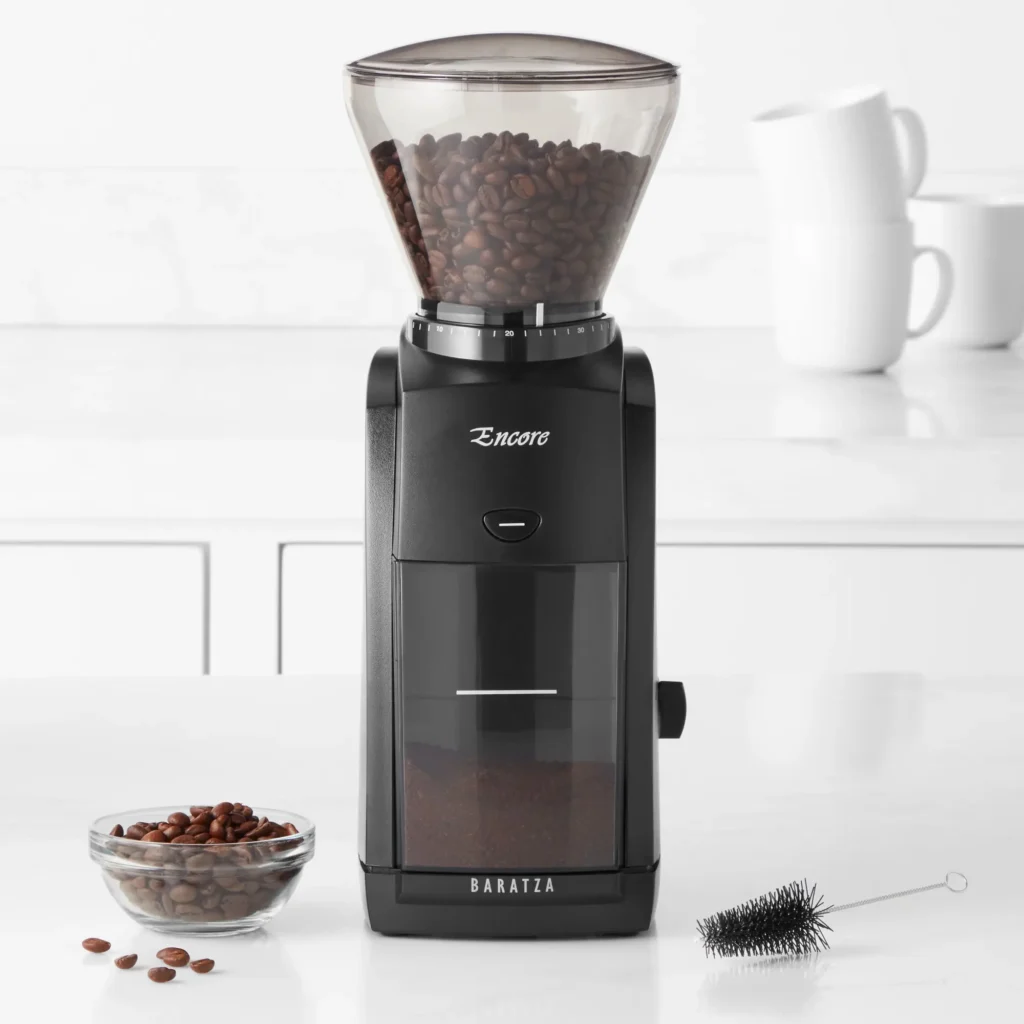
Baratza Encore — electric grinder upgrade
The Encore is useful for households that want burr consistency without hand grinding larger daily doses.
Machine Picks: The Best SCA-Certified Drip Coffee Makers
If your current machine is not SCA Gold Cup certified, upgrading is Upgrade #3 in this guide and produces the most impactful machine-side improvement available. Both picks below are SCA certified, brew with a thermal carafe (no warming plate), and include programmable auto-start for morning convenience. The difference between them is features and form factor, not cup quality — both produce excellent drip coffee from fresh beans and a good grinder.
Breville Precision Brewer — capable automatic upgrade
A strong option when your current brewer cannot maintain good temperature or even saturation.
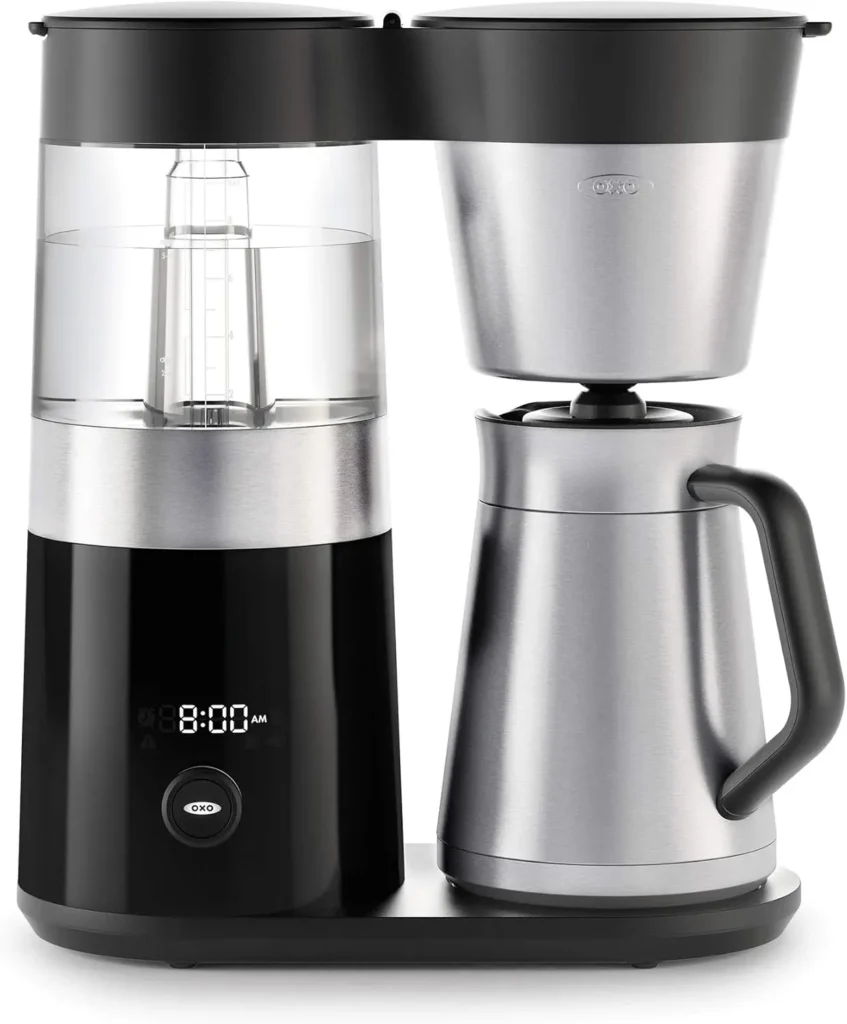
OXO Brew 9-Cup — straightforward SCA-certified option
A simpler path to consistent batch brewing with a thermal carafe and less manual involvement.
Beans Guide: What to Buy and What to Avoid for Drip Coffee
Drip coffee is forgiving of a wider range of roast levels than pour over — medium to medium-dark roasts perform best. But A quality drip machine handles light roast well and dark roast acceptably. The non-negotiables are freshness and grind-to-order. Everything else is preference.
| Bean type | Drip performance | What to expect in the cup | Notes |
|---|---|---|---|
| Medium roast blend, fresh roast date | Excellent — the universal drip sweet spot | Balanced sweetness, mild acidity, clean body — crowd-pleasing everyday cup | Best starting point for any drip setup; Intelligentsia Black Cat, Stumptown Hair Bender |
| Medium-dark roast blend | Excellent — full body, smooth | Dark chocolate, brown sugar, low acidity — classic American drip flavour | Lavazza Super Crema works well in drip; widely available with reasonable freshness |
| Light roast single origin | Good on SCA-certified machines; poor on budget machines | Bright, fruit-forward, more acidity — reveals origin character | Requires proper brew temperature (92–96°C) to extract adequately; poor on budget machines |
| Dark roast (whole bean, roast-dated) | Good — but easy to over-extract | Rich, low-acid, chocolatey — use slightly coarser grind and lower ratio to avoid bitterness | Dark roasts are more soluble — grind 3–6 clicks coarser than medium roast equivalent |
| Supermarket coffee, best-before date only | Poor — almost certainly stale | Flat, hollow, papery, one-dimensional regardless of roast level claim | No roast date = unknown staleness; avoid for any quality-focused setup |
| Pre-ground coffee | Acceptable at best; stales rapidly | Degraded aromatics; reduced complexity vs same beans freshly ground | Use within 2 weeks of opening if pre-ground is unavoidable; never the best option |
Troubleshooting Matrix: Drip Coffee Symptoms → Causes → Fixes
Identify your symptom, work through the most likely cause, and apply fixes in the order listed. As with all coffee brewing: change one variable at a time and note the result before changing another.
| Symptom | Most likely cause | Fix — in order |
|---|---|---|
| Coffee tastes sour, thin, flat | Machine brewing below 92°C — most common in budget machines; or grind too coarse | If budget machine: this is a temperature problem — upgrade to SCA-certified machine. If SCA-certified: grind 3–5 clicks finer → increase dose by 5g → check for scale buildup (descale) |
| Coffee tastes bitter | Grind too fine; ratio too high; warming plate degradation; or machine temperature too high with over-extracted dark roast | Grind 3–5 clicks coarser → reduce dose 5g → transfer to thermal carafe immediately after brewing → for dark roast specifically: grind coarser + slightly lower dose |
| Coffee tastes fine first cup, bitter later | Warming plate scorching coffee in the glass carafe | Transfer entire brew to a thermal carafe immediately after the brew cycle completes — turn off the machine → upgrade to a machine with a built-in thermal carafe |
| Coffee tastes flat and hollow — no aroma or sweetness | Stale beans — aromatic compounds depleted | Buy fresh beans with a roast date within 35 days — no equipment or technique fix for stale beans |
| Coffee tastes weak and watery despite using enough coffee | Blade grinder or excessively coarse burr grind producing particles too large to extract properly in the brew cycle; or machine under-temperature | Switch to a burr grinder → grind 3–5 clicks finer → if already using a burr grinder and SCA-certified machine, increase dose (use ratio guide above) |
| Brew cycle taking noticeably longer than usual | Scale buildup in internal tubing restricting water flow | Descale the machine immediately (see Upgrade #6 above) — this is the most reliable sign that descaling is overdue |
| Coffee quality has gradually declined over months | Progressive scale buildup gradually reducing brew temperature; or beans creeping older | Full descale cycle → if quality still reduced after descaling, run a second cycle → re-evaluate bean freshness (roast date) and grind setting |
| Coffee tastes consistently inconsistent — different every brew | Volume scooping rather than weighing dose; or stale retained grounds in grinder | Weigh every dose with a kitchen scale → purge 2–3g from grinder before each dose → confirm same water volume every brew using the machine’s carafe markings |
| Basket overflows during brewing | Grind too fine — basket filter clogging; or dose too high for basket size | Grind 3–4 clicks coarser immediately → reduce dose by 10g → confirm correct basket size for intended volume |
| Metallic or chemical aftertaste | Chlorine in tap water; or descaler residue not fully flushed | Switch to filtered water → if taste appeared after descaling: run 2 additional clean water flush cycles through the machine → if persistent, check water filter for saturation |
The Upgrade Priority Summary
The seven upgrades are not equal in impact. Start with the grinder and fresh coffee, then make sure the machine can brew at a suitable temperature.
After that, refine ratio, water, maintenance, and how you hold the finished coffee. Working in that order makes each change easier to notice and prevents small improvements from being hidden by a bigger unresolved problem.
FAQs: How to Brew Better Drip Coffee
Why does my drip coffee taste bitter?
Bitter drip coffee is almost always one of three causes: grind too fine (slows flow, over-extracts), ratio too high (too much coffee per ml of water), or coffee left on a warming plate after brewing (scorching and oxidation). Fix by grinding 2–3 steps coarser, reducing your dose by 5g, and transferring brewed coffee to a thermal carafe immediately. If bitterness persists, descale your machine — scale buildup can cause temperature spikes that over-extract.
Why does my drip coffee taste sour or flat?
Sour or flat drip coffee has two common causes: machine brewing below 92°C (the most common cause in budget machines — no grind or dose adjustment can fix a temperature problem) or stale beans without a roast date. If your machine is SCA-certified but coffee still tastes flat, check the roast date on your beans — beans beyond 40 days off-roast produce flat, hollow cups. Grind too coarse also contributes to sourness; try 3–5 clicks finer.
How much coffee should I use for drip?
The SCA Golden Cup standard is 55g of coffee per litre of water. For a 6-cup (750ml) carafe, use 41–45g. For a full 12-cup (1.5L) carafe, use 83–90g. Most home brewers use far less than this, producing weak, under-extracted coffee. Always weigh on a kitchen scale — volume scoops are unreliable because coffee density varies significantly between roast levels and bean origins.
What grind size is best for drip coffee?
Drip coffee requires a medium grind — finer than French press but coarser than pour over or AeroPress. On the KINGrinder K6, medium grind for drip is approximately 101–115 clicks from zero depending on your machine’s flow rate and roast level. On the Baratza Encore, use settings 15–24. Grind too coarse and coffee will be weak and under-extracted. Grind too fine and the basket will clog, slow the brew, and over-extract into bitterness.
Does the machine matter for drip coffee quality?
Yes — significantly. The single most important machine specification is brew temperature. The SCA standard is 92–96°C at the brew head. Most budget drip machines brew at 75–85°C, producing sour, flat, under-extracted coffee that cannot be fixed by any grind or dose adjustment. SCA Gold Cup certified machines (Breville Precision Brewer, OXO Brew 9-Cup) consistently achieve proper temperature and produce dramatically better coffee from the same beans and grind.
How often should I descale my drip coffee maker?
Descale every 1–3 months depending on local water hardness. Signs that descaling is overdue: brew cycle taking longer than usual, coffee tasting flatter despite fresh beans, machine making more noise during brewing, or a visible scale indicator light. Use Urnex Dezcal or a 50/50 white vinegar and water solution — run a full brew cycle, then flush with two full cycles of clean water. Never skip descaling — scale reduces brew temperature and shortens machine life.
Is a burr grinder worth it for drip coffee?
Yes — a burr grinder is the single most impactful upgrade for drip coffee quality. Blade grinders chop coffee unevenly, producing a mix of powder-fine particles and large chunks that extract at wildly different rates through the basket. The result is coffee that is simultaneously bitter (from fines) and sour (from under-extracted chunks) regardless of dose or machine quality. A burr grinder at medium settings produces consistent particles that extract evenly. The KINGrinder K6 is the most accessible starting point; the Baratza Encore is the standard entry electric recommendation.
What water is best for drip coffee?
Filtered tap water is the standard recommendation for home drip coffee. Hard tap water causes scale buildup inside the machine and can impart a chalky or metallic taste. Very soft water or pure distilled water lacks the mineral content needed to facilitate proper extraction. A standard Brita or similar carbon filter produces water in the ideal mineral range for drip brewing and extends machine life by reducing scale accumulation.
Why does my drip coffee taste good fresh but bad after 20 minutes?
This is almost always the warming plate. Glass carafes on warming plates receive continuous low heat from below — this gradually scorches the coffee’s oils and accelerates oxidation, producing a progressively more bitter, stale taste. The fix: transfer brewed coffee to a thermal carafe right after brewing, or upgrade to a machine with a built-in thermal carafe. Thermal carafes keep coffee hot for 1–2 hours without any heat source, preventing scorching entirely.
Can I brew drip coffee with pre-ground coffee?
Yes — pre-ground coffee works in drip machines, but you will never reach the quality ceiling of freshly ground coffee from the same beans. Ground coffee begins staling within minutes as surface area exposed to oxygen increases dramatically. For the best drip coffee possible, buy whole beans with a roast date and grind immediately before brewing. If pre-ground is your only option, buy in small quantities, store in an airtight container away from light and heat, and use within 2 weeks of opening.
CoffeeGearHub product shortlist
Keep improving the setup
Use these CoffeeGearHub guides for the next buying or brewing step.