Nespresso vs Espresso Machine (2026): Which Should You Buy?
Editorial standards: manufacturer specifications, published documentation, practical workflow, maintenance, cost, and product limitations are separated where relevant. CoffeeGearHub does not claim hands-on testing where it has not occurred.
At a glance
What this Nespresso vs espresso machine comparison covers
How capsule machines and portafilter espresso machines brew, whether Nespresso counts as real espresso, taste, daily workflow, milk drinks, cost of ownership, the grinder question, maintenance, and which type fits your routine.
Editorial analysis
You are choosing a routine, not just a machine
A Nespresso machine and a traditional espresso machine can both put a short, crema-topped coffee in your cup, but they ask very different things of you. Nespresso trades control for speed: the coffee, grind, and dose are fixed inside the capsule. An espresso machine hands you every variable, which raises the flavor ceiling and the effort.
That is why the Nespresso vs espresso machine decision usually comes down to habits, not specs. How many drinks you make, whether you drink them straight or with milk, how much time you have in the morning, and whether you would enjoy learning a skill matter more than any pressure rating.
The 30-Second Answer
Choose a Nespresso machine if you want espresso-style coffee in under a minute with no grinding, tamping, or cleanup beyond emptying a capsule bin. Choose a real espresso machine if you want café-quality espresso and milk drinks, control over the beans you use, and a lower cost per drink over time, and you are willing to learn a hands-on routine and buy a grinder.
Nespresso wins on speed, consistency, and simplicity. An espresso machine wins on flavor ceiling, coffee freedom, and long-term running cost. Most buyers can decide by answering one question honestly: do you want to make espresso, or do you just want to have it?
Compare current options
Start with these representative choices
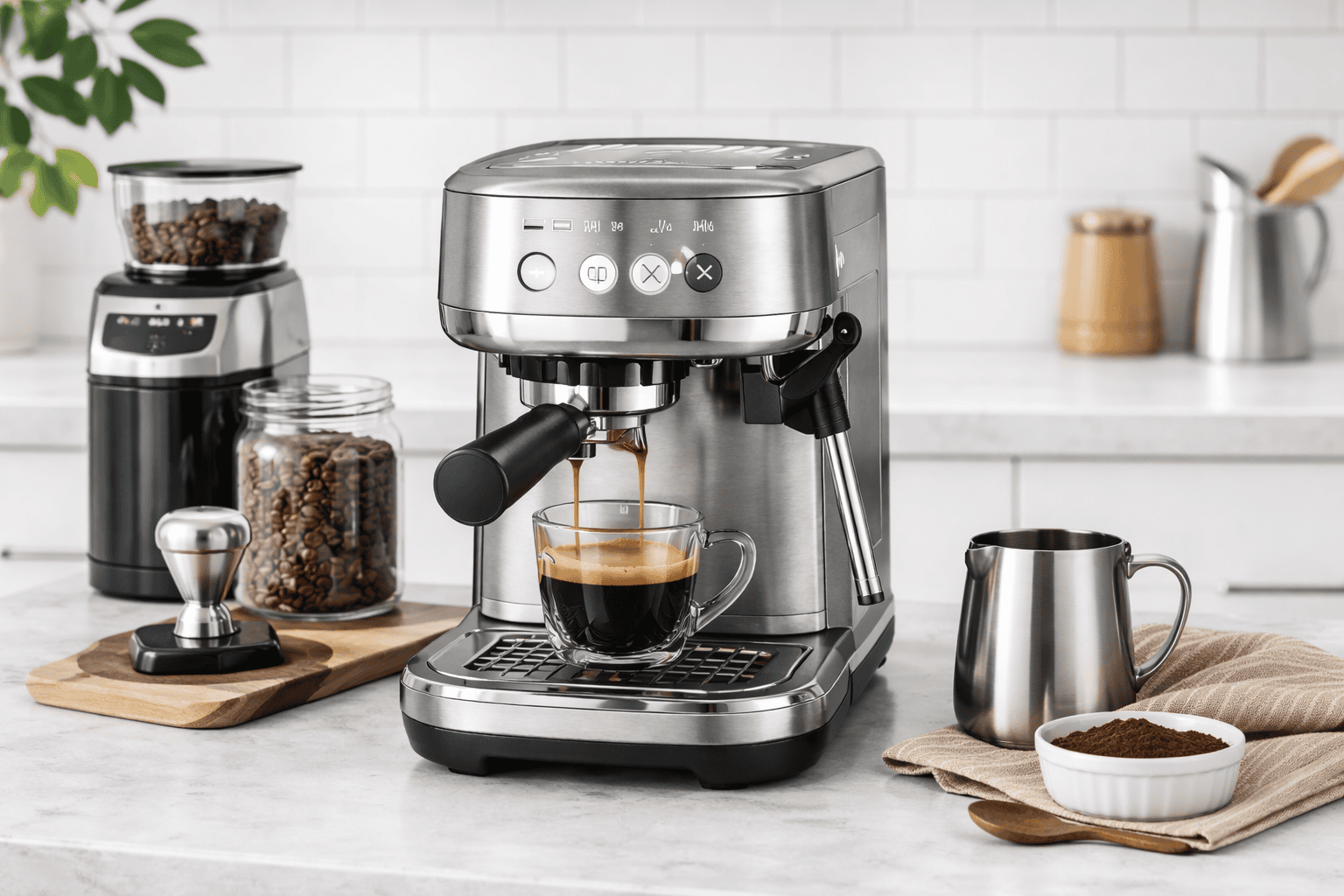
The Essenza Mini is a compact, low-commitment way into Nespresso’s Original capsule line. The Bambino Plus is the espresso machine we point most beginners to because its automatic steam wand removes the hardest part of making milk drinks.
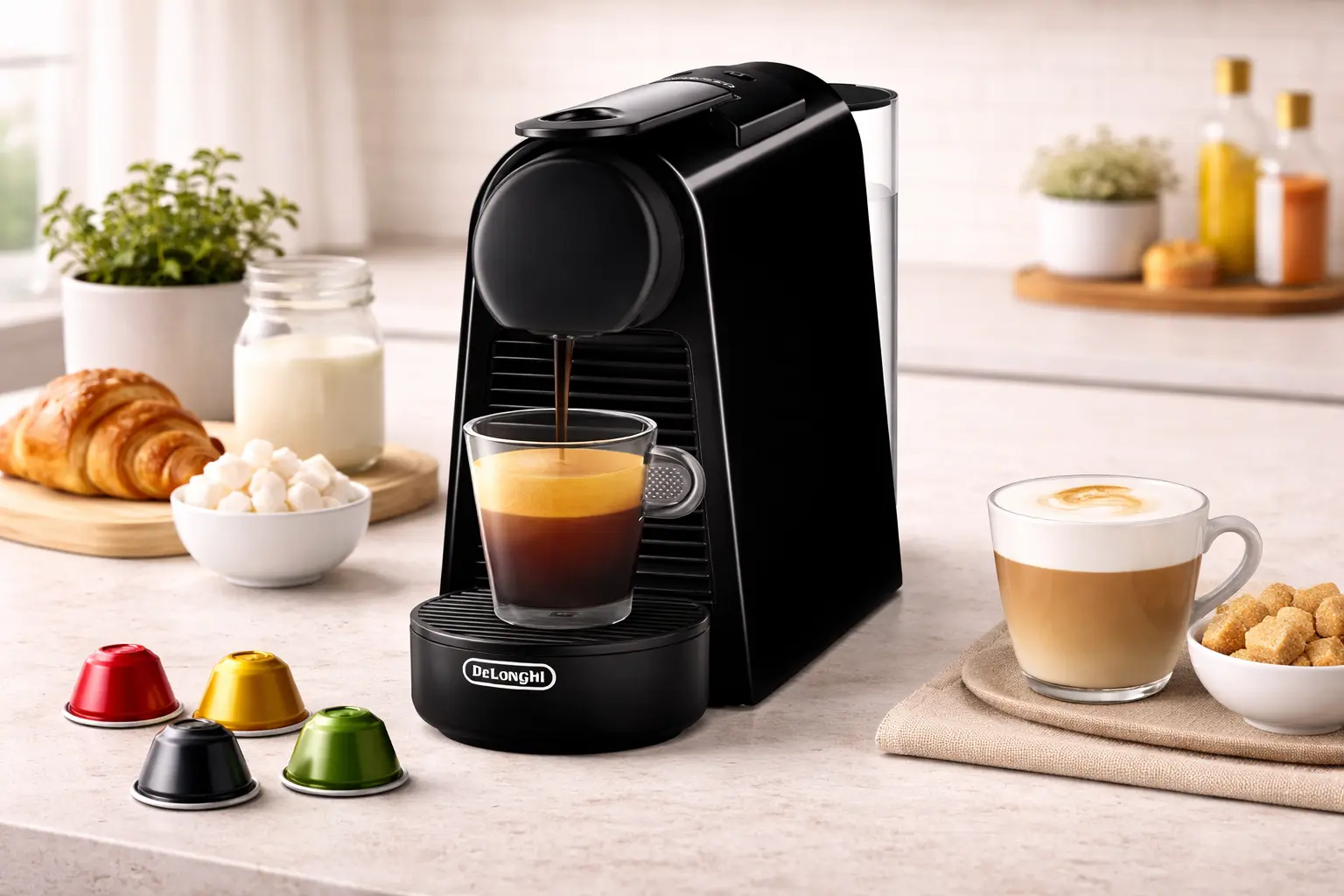
Nespresso Essenza Mini — Capsule pick
A small Original-line machine for espresso and lungo, with access to the widest range of Nespresso and third-party capsules.
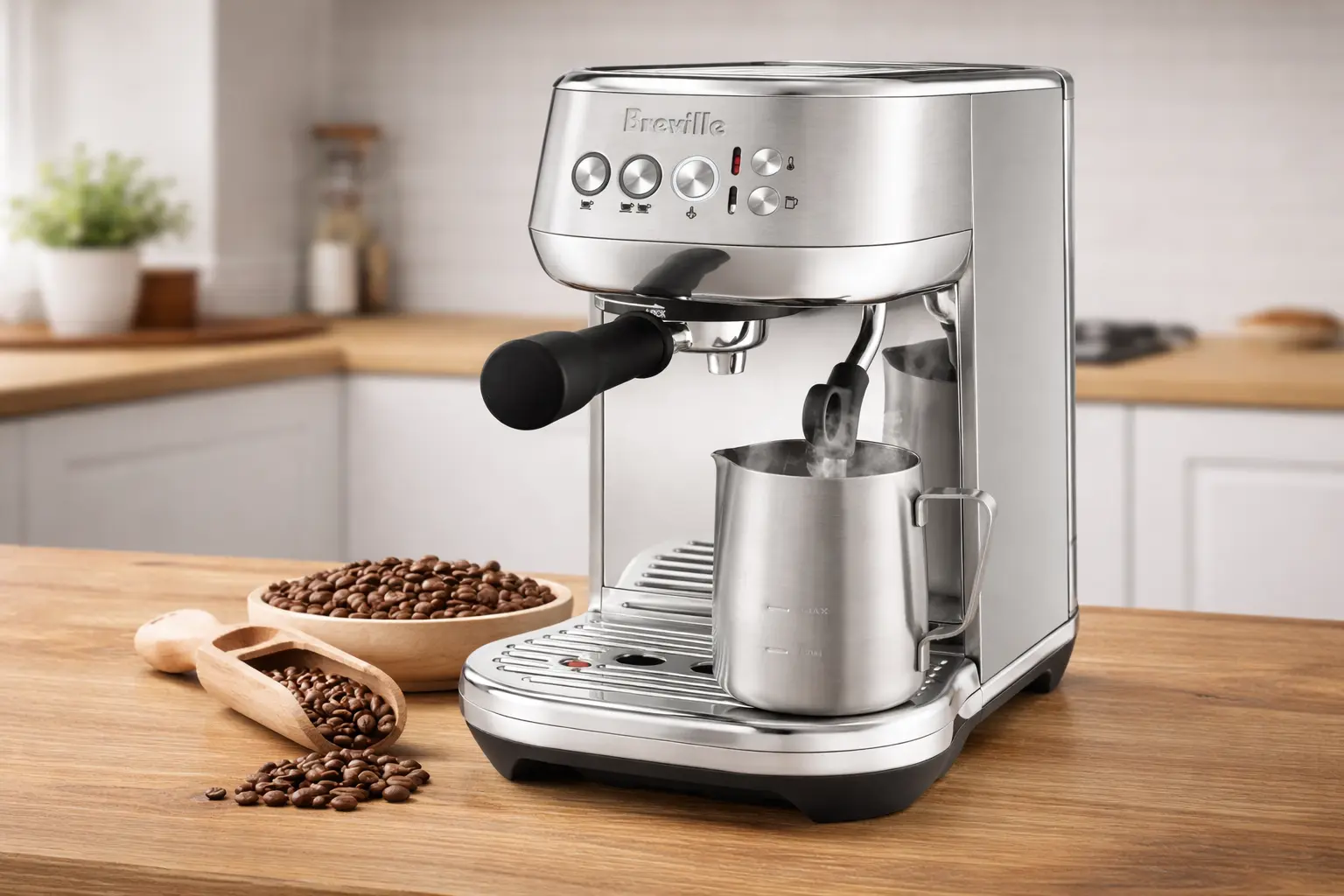
Breville Bambino Plus — Espresso machine pick
A compact 54 mm espresso machine with a 3-second heat-up and an automatic steam wand. Pair it with a capable espresso grinder.
Affiliate disclosure: Amazon links may earn CoffeeGearHub a commission at no additional cost to you. Prices and availability can change.
Nespresso vs Espresso Machine at a Glance
| Nespresso (capsule) | Espresso machine (portafilter) | |
|---|---|---|
| How it brews | Pre-ground coffee sealed in a capsule; Original uses a 19-bar pump, Vertuo spins the capsule | Freshly ground coffee in a portafilter basket, extracted at about 9 bar |
| Coffee per shot | Roughly 5–6 g in an Original capsule | Typically 14–20 g for a double shot (Bambino Plus suggests 18 g) |
| Time per drink | About 1 minute, start to finish | About 3–5 minutes including grinding, tamping, and cleanup |
| Skill needed | None | A learning curve: grind size, dose, tamp, shot timing, milk steaming |
| Control | Choose the capsule and cup size | Control beans, grind, dose, ratio, temperature (on some models), and milk texture |
| Extra gear | Optional milk frother | A capable espresso grinder is essentially required; scale and tamper help |
| Ongoing cost | Capsules: higher cost per drink | Whole beans: usually lower cost per drink |
| Best for | Speed, simplicity, consistency, small kitchens | Flavor, milk-drink quality, bean choice, people who enjoy the process |
How Each One Actually Makes Coffee
A traditional espresso machine forces hot water through a compacted puck of freshly ground coffee at around 9 bar of pressure. You choose the beans, grind them fine, weigh the dose into a portafilter basket, tamp it level, and pull the shot. The grind size controls how fast water flows, and you adjust it until the shot runs in roughly the 25–30 second range for your recipe. The Breville Bambino Plus, for example, uses a low-pressure pre-infusion followed by 9 bar extraction, and Breville lists an 18 g dose for its double basket.
A Nespresso Original machine pierces a sealed aluminum capsule and pumps hot water through it. Nespresso rates Original machines at 19 bar, but that number describes the pump, not the pressure at the coffee. The capsule holds a much smaller dose of pre-ground coffee, commonly cited at about 5–6 grams, and the machine brews a ristretto (25 ml), espresso (40 ml), or lungo (110 ml) at the push of a button.
A Nespresso Vertuo machine works differently. It reads a barcode on the capsule rim and spins the capsule at up to 7,000 rotations per minute while injecting water, a process Nespresso calls Centrifusion. That lets one machine make sizes from a 25 ml ristretto to a 230 ml mug. It is convenient, but it is not pressure extraction in the espresso sense. Our Nespresso Vertuo vs Original guide covers that choice in detail.
The key point: with an espresso machine, the coffee is in your hands. With Nespresso, the coffee was decided when the capsule was sealed.
Is Nespresso Real Espresso?
It is close enough for many people, but it is not the same drink. A Nespresso Original espresso is short, concentrated, and topped with crema, so it looks like espresso and works well in milk drinks. By the strict definitions coffee professionals use, though, it falls short in two ways: the dose is smaller than a typical café shot, and the coffee was ground long before brewing, so some of its aromatics are already gone.
The result is a drink that is consistent and pleasant but usually thinner in body and less layered in flavor than a well-made shot from a portafilter machine with fresh beans. That gap is most noticeable when you drink espresso straight. In a latte, with milk carrying much of the flavor, many people find the difference small enough not to care.
Vertuo coffee is further from espresso. Its thick foam layer comes from the spinning extraction, not from pressure crema, and its larger sizes taste closer to a smooth brewed coffee than to an americano.
Taste and Quality Ceiling
Nespresso has a high floor and a fixed ceiling. Every capsule produces nearly the same cup, every time, without skill. That reliability is the whole appeal. But you cannot make a capsule taste better than it was designed to, and you cannot fix a capsule you do not enjoy except by trying a different one.
An espresso machine has a low floor and a high ceiling. Your first shots may be sour, bitter, or watery while you learn to dial in. Once you have a good grinder and a routine, you can make espresso that tastes noticeably sweeter and more complex than any capsule, using fresh beans from any roaster you like.
That ceiling depends heavily on the grinder. A capable espresso machine paired with a weak grinder will often lose to a good capsule. If you choose the espresso path, budget for the grinder from the start.
Daily Workflow: What Making One Drink Involves
The routine is where most people’s decision is really made. Here is what a typical morning latte looks like on each.
| Step | Nespresso | Espresso machine |
|---|---|---|
| Warm up | About 25–30 seconds on most current machines | From seconds (Bambino Plus ThermoJet) to 15–30 minutes (traditional boiler machines) |
| Prepare coffee | Drop in a capsule | Weigh beans, grind, distribute, tamp |
| Brew | Press a button | Lock in the portafilter, start and stop the shot (or use a preset) |
| Milk | Frother or built-in milk system, one button | Steam wand (automatic on Bambino Plus, manual on most others) |
| Clean up | Capsule drops into a bin | Knock out the puck, rinse the basket, purge and wipe the steam wand |
| Total time | About 1–2 minutes | About 3–5 minutes once practiced |
Three or four extra minutes does not sound like much, but it repeats every day. If you already feel rushed in the morning, that time matters more than any spec sheet. If you see the routine as a small ritual you will enjoy, it becomes part of the appeal.
Milk Drinks: Lattes, Cappuccinos, and Flat Whites
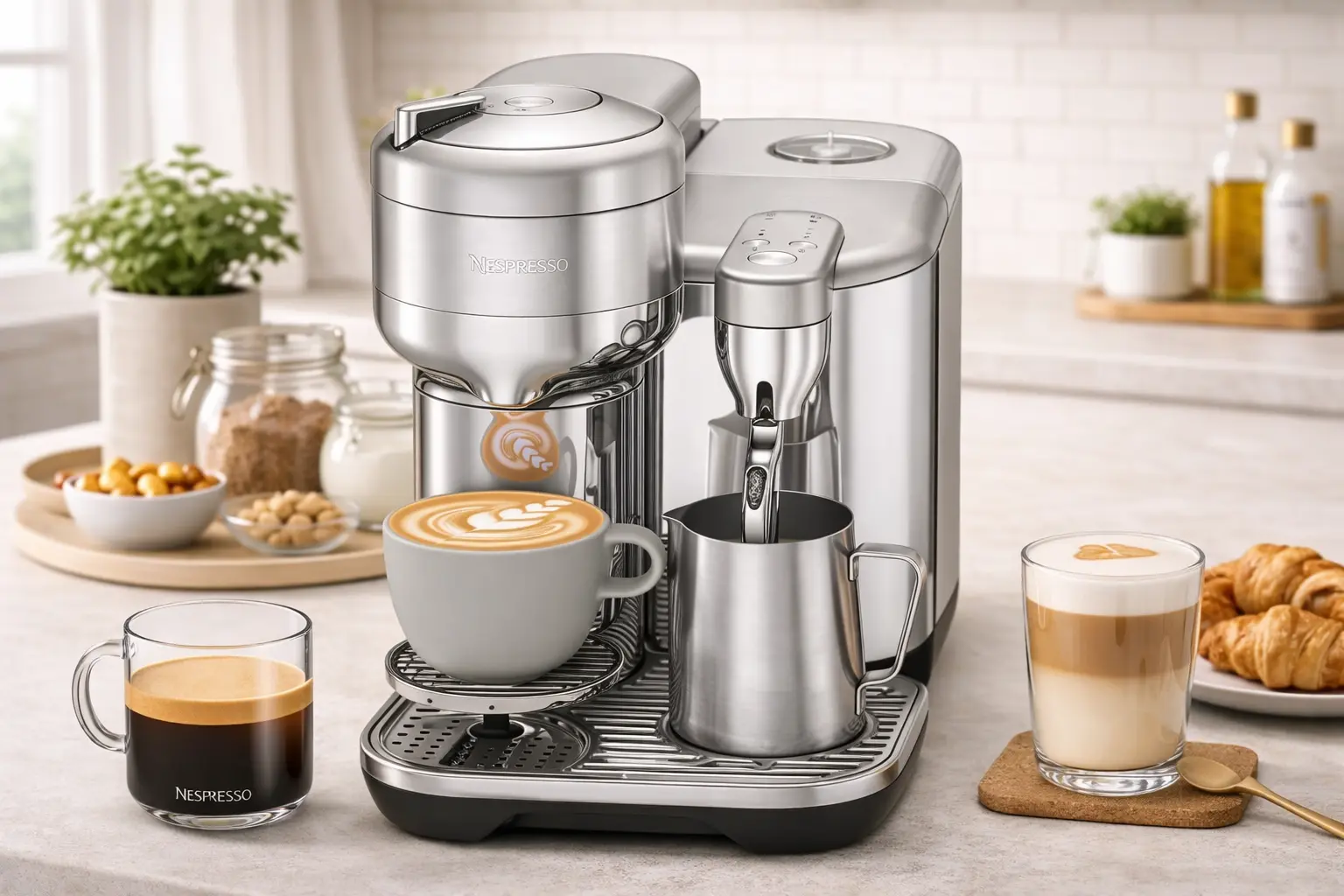
If most of your drinks contain milk, both paths can work well, and the gap in the cup shrinks.
On the Nespresso side, a separate frother such as the Aeroccino 4 makes warm, foamy milk with one button. The Lattissima machines add a milk carafe, and the Creatista Plus adds an automatic steam wand that produces finer, café-style microfoam.
On the espresso-machine side, a steam wand gives you the best milk texture and the most control, but manual steaming takes practice. The Bambino Plus is popular with beginners because its automatic wand lets you choose milk temperature and texture and then steams hands-free.
Our milk steaming guide and latte vs cappuccino vs flat white explainer cover the drinks themselves.
Cost of Ownership: Upfront vs Every Day
The two options flip on cost. Nespresso is inexpensive to start and more expensive to run. An espresso machine is more expensive to start and usually cheaper to run.
Upfront: an entry Nespresso machine is one purchase. An espresso setup is really two: the machine and a grinder that can grind fine and adjust in small steps. A scale, a tamper that fits the basket, and a milk pitcher are useful additions. Budget for the full setup, not just the machine on the box.
Every day: each Nespresso drink uses a capsule, and over a year of daily coffee, capsules typically cost far more than the machine. With an espresso machine, you buy whole beans by the bag. Even though each double shot uses more coffee than a capsule holds, the cost per drink is usually lower, especially with supermarket or bulk specialty beans.
How to compare fairly: count how many drinks you make per week, then compare the cost per drink of the capsules you would actually buy against the beans you would actually buy. The more drinks you make, the faster an espresso setup closes the upfront gap. If you only have a coffee now and then, Nespresso’s lower starting cost may never be overtaken.
Price the Whole Setup Before You Decide
Check the current price of the machine you would buy on each side, then add a grinder to the espresso side. Subscribe & Save can reduce recurring costs on eligible capsules and beans.
As an Amazon Associate, CoffeeGearHub earns from qualifying purchases.
The Grinder Question
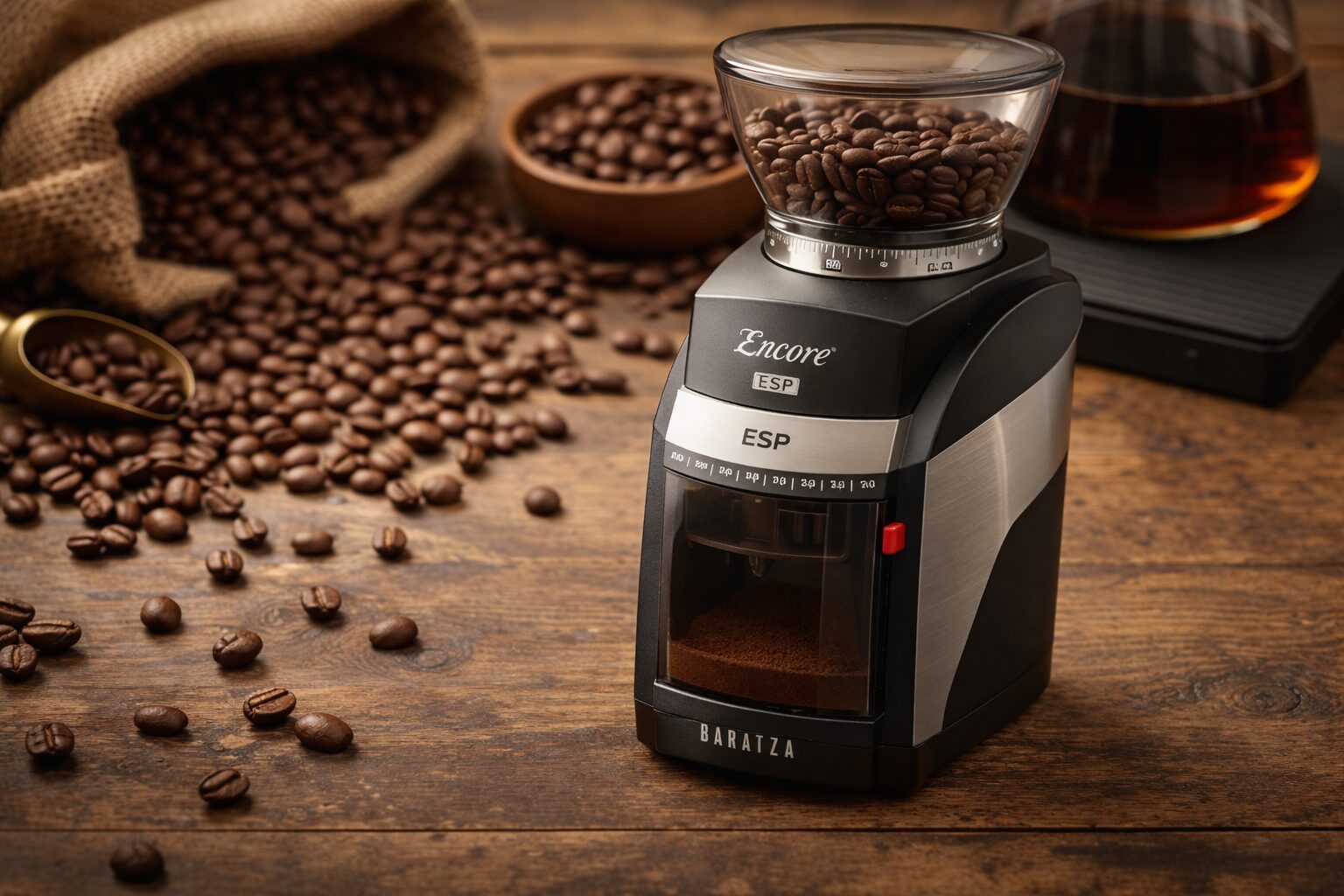
This is the part many espresso-machine buyers miss. Espresso needs a fine, consistent grind that you can adjust in very small steps, because a tiny change in grind size changes how fast the shot runs. Pre-ground supermarket coffee is usually too coarse and goes stale quickly, which leads to fast, sour shots.
A dedicated espresso-capable grinder, such as the Baratza Encore ESP, is the most common pairing for a machine like the Bambino Plus. If you would rather buy one appliance, the Breville Barista Express builds a grinder into the machine.
Nespresso removes this question entirely. If the idea of choosing, adjusting, and cleaning a grinder is unappealing, that is a strong sign capsules suit you better. Our best grinders for espresso guide covers the options if you go the other way.
Coffee Choice and Freshness
With an espresso machine, any whole-bean coffee is fair game: a local roaster, a single origin, a decaf, a classic dark Italian blend. You can buy beans roasted a week ago and grind them seconds before brewing, which is the single biggest reason a good home shot can taste better than a capsule. Our best coffee beans for espresso guide is a good starting point.
With Nespresso, your choice is the capsule menu. The Original line has the broadest selection, because many coffee brands make Original-compatible capsules and reusable stainless-steel capsules let you fill your own grounds. Vertuo capsules are produced within Nespresso’s system, including partner brands, so the range is narrower. Capsules are sealed, so they stay consistent for months, but the coffee inside was ground well before you brew it.
Cleaning and Maintenance
Nespresso: empty the capsule bin and drip tray, rinse the water tank, run a water-only cycle now and then, and descale when the machine prompts you. That is close to the whole list. Nespresso runs a capsule recycling program in the U.S.; check its current options for your area.
Espresso machine: after each session, knock out the puck, rinse the basket and portafilter, and purge and wipe the steam wand immediately so milk does not bake on. Periodically, backflush if your machine supports it, clean the shower screen, wash the drip tray, and descale on schedule. The grinder also needs occasional brushing. None of it is difficult, but it is more routine work. Our espresso machine maintenance guide lays out a schedule.
Counter Space, Noise, and Household Fit
Most Nespresso machines are compact and quiet apart from a short pump hum. An espresso setup takes more space once you add the grinder, a knock box, and a pitcher, and the grinder is the loudest part of the routine, which matters in apartments or for early risers in shared homes.
Households often decide on fairness of use. Anyone can use Nespresso with no instruction. An espresso machine usually ends up being used mostly by the person who learned to dial it in, unless everyone in the house is interested.
Middle-Ground Options
If neither extreme fits, three in-between paths are worth knowing about.
A super-automatic espresso machine grinds whole beans, brews, and often froths milk at the push of a button. You get fresh-ground coffee with Nespresso-like convenience, at a higher upfront cost and with more internal cleaning. See our best super-automatic espresso machines guide and the Philips 3200 LatteGo review.
An all-in-one semi-automatic such as the Breville Barista Express builds the grinder into the espresso machine. You still learn to dial in shots, but you buy and fit one appliance instead of two.
Nespresso Original with reusable capsules lets you fill stainless-steel capsules with your own ground coffee. It adds work and results vary, but it widens your coffee choice and can lower the cost per drink.
Quick Decision Guide
| If this sounds like you… | Better fit |
|---|---|
| “I want coffee in one minute and zero cleanup.” | Nespresso |
| “I drink espresso straight and want the best possible flavor.” | Espresso machine + good grinder |
| “I make two or more milk drinks every day.” | Espresso machine (lower cost per drink, better microfoam), or Nespresso with a milk system if speed matters most |
| “I have one coffee a few times a week.” | Nespresso |
| “I like buying beans from local roasters.” | Espresso machine |
| “Several people with different tastes will use it.” | Nespresso |
| “I want fresh-ground coffee but no learning curve.” | Super-automatic |
| “I want mug-size coffee as well as espresso.” | Nespresso Vertuo |
Common Mistakes When Choosing
Buying an espresso machine without a grinder budget. This is the most common regret. Without an espresso-capable grinder, the machine cannot show what it is capable of, and many buyers conclude espresso at home “doesn’t work.”
Expecting Nespresso to taste like a specialty café. Nespresso is consistent and convenient. It is not a substitute for a carefully dialed shot of freshly ground specialty coffee, especially when drunk straight.
Underestimating the learning curve. Plan on a few days to a few weeks of adjusting grind and dose before shots are reliably good. Our dial-in guide shortens that process.
Comparing machine prices instead of cost per drink. The cheaper box at checkout is not necessarily the cheaper choice after a year of daily coffee. Run the numbers for your own drinking habits.
Choosing for the person you want to be, not the person you are. If you rarely cook from scratch because you value speed, be honest about whether a daily espresso ritual will last past the first month.
Who Should Choose Which?
Choose Nespresso if speed and simplicity matter most, several people will use the machine, you drink coffee occasionally, you have little counter space, or you mainly want a reliable base for milk drinks without learning a skill. Our best Nespresso machines guide covers the models.
Choose an espresso machine if flavor is the priority, you want to use fresh beans from roasters you like, you make several drinks a day, or you enjoy learning a hands-on craft. Start with our Breville Bambino Plus review and best espresso machines for beginners.
Editorial bottom line: Nespresso is the better appliance; an espresso machine is the better coffee. If you want dependable espresso-style drinks with no effort, Nespresso is hard to beat. If you want to make genuinely better espresso, care about the beans, and will use the machine daily, an espresso machine and a good grinder are the stronger long-term choice.
As an Amazon Associate, CoffeeGearHub earns from qualifying purchases. Prices and availability can change at any time.
Frequently Asked Questions
Is Nespresso as good as a real espresso machine?
For convenience and consistency, yes. For flavor, a well-dialed espresso machine with freshly ground beans can produce noticeably richer, more complex espresso. The gap is smaller in milk drinks than in straight shots.
Does Nespresso make real espresso?
Nespresso Original makes a short, concentrated coffee with crema that works like espresso in most drinks, but it uses a smaller dose of pre-ground coffee than a typical café shot. Vertuo uses a spinning extraction rather than pressure, so its drinks are further from traditional espresso.
Why does Nespresso advertise 19 bar if espresso uses 9 bar?
The 19-bar figure is the pump’s rated maximum, not the pressure at the coffee. Espresso is typically extracted at around 9 bar at the puck, and higher pump ratings do not mean better espresso.
Is an espresso machine cheaper than Nespresso in the long run?
Usually, if you make coffee daily. Whole beans typically cost less per drink than capsules, so an espresso setup often recovers its higher upfront cost over time. If you drink coffee only occasionally, Nespresso may stay cheaper overall.
Do I need a grinder for an espresso machine?
For good results, yes. Espresso needs a fine, adjustable grind, and freshly ground beans make the biggest difference to flavor. You can buy a separate espresso-capable grinder or a machine with one built in.
Which is better for lattes?
An espresso machine with a steam wand gives the best microfoam and the lowest cost per drink. Nespresso with a frother or milk system is faster and easier. The Bambino Plus’s automatic steam wand and the Nespresso Creatista Plus sit in the middle, combining good milk texture with less technique.
Can I use my own coffee in a Nespresso machine?
On Original-line machines, yes, with reusable stainless-steel capsules you fill and tamp yourself. Reusable options for Vertuo are limited.
How long does it take to learn an espresso machine?
Most people pull drinkable shots within a few days and consistently good ones within a few weeks, especially if they weigh their dose and change one variable at a time.
Sources and Further Reading
System details were checked against Nespresso’s Vertuo and Original system overview (19-bar Original extraction, Vertuo Centrifusion up to 7,000 rpm, and cup sizes for each system) and Breville’s Bambino Plus product page (54 mm portafilter, ThermoJet 3-second heat-up, low-pressure pre-infusion with 9-bar extraction, 18 g dose, and automatic steam wand). Capsule dose and espresso-extraction context draw on Home Grounds’ Nespresso vs espresso comparison. Machine features and capsule ranges vary by model and market.
CoffeeGearHub product shortlist
Continue with related products on CoffeeGearHub
Review product categories and current verified merchant offers on CoffeeGearHub before leaving the site.
Continue Learning
In this guide
- The 30-Second Answer
- At a Glance
- How Each Brews
- Is Nespresso Real Espresso?
- Taste and Quality
- Daily Workflow
- Milk Drinks
- Cost of Ownership
- The Grinder Question
- Coffee Choice
- Cleaning and Maintenance
- Space and Noise
- Middle-Ground Options
- Quick Decision Guide
- Common Mistakes
- Who Should Choose Which?
- FAQ
- Sources
- Continue Learning