
Latte vs Cappuccino vs Flat White: What’s the Real Difference?
Editorial standards: drink definitions draw on traditional café practice and published coffee references. Café recipes vary by country and chain, so sizes and ratios here are typical ranges rather than fixed rules.
At a glance
What this latte vs cappuccino vs flat white guide covers
Latte vs cappuccino vs flat white explained: cup size, espresso-to-milk ratio, foam texture, how strong each tastes, caffeine, other espresso drinks people confuse them with, how to make all three at home, and which one to order.
Editorial analysis
Same ingredients, different balance
A latte, a cappuccino, and a flat white are all made from the same two ingredients: espresso and steamed milk. What separates them is how much milk goes in, how much air is whipped into that milk, and how big the cup is. Those three choices change the drink more than most people expect, from a mild, creamy latte to a bold, velvety flat white.
The confusion comes from cafés themselves. A cappuccino in Rome is a small, foamy drink; a cappuccino at a large chain can be twice the size and closer to a latte. This guide explains the traditional versions first, then how they are commonly served today, so you can order exactly what you like or make it at home.
The 30-Second Answer
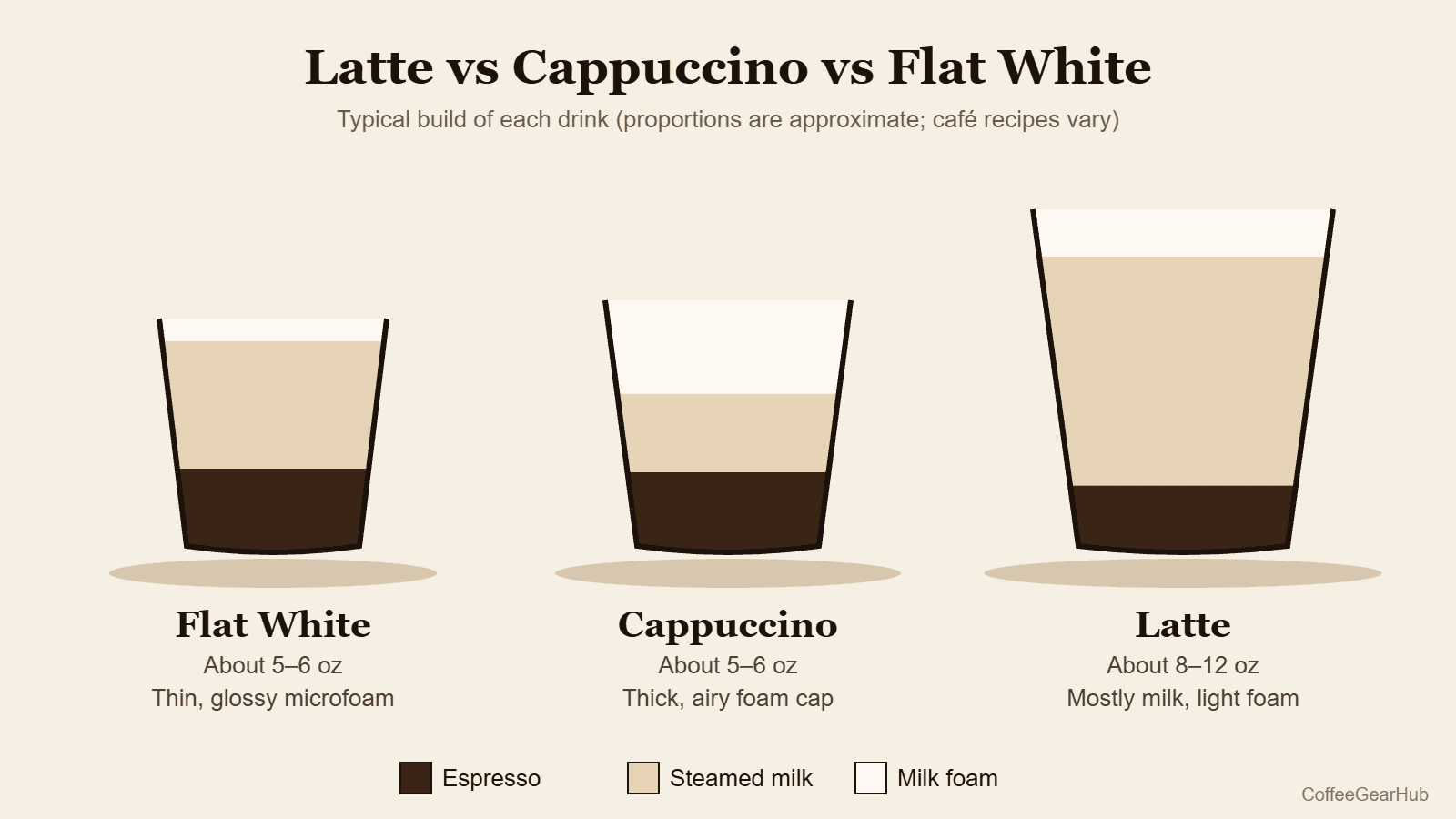
A latte is the milkiest and mildest: espresso with plenty of steamed milk and a thin layer of foam, usually in an 8–12 oz cup. A cappuccino is smaller with roughly equal parts espresso, steamed milk, and thick foam. A flat white is small like a cappuccino but has only a thin layer of silky microfoam, so the coffee tastes strongest.
If you like coffee flavor first, choose a flat white. If you like a light, foamy texture, choose a cappuccino. If you want something smooth, creamy, and mild, choose a latte. All three can be made at home with an espresso machine and steam wand, or with a strong coffee base and a milk frother.
Make them at home
Two easy ways to start
An espresso machine with an automatic steam wand makes all three drinks with the least practice. A standalone frother is the low-cost route if you already brew strong coffee another way.
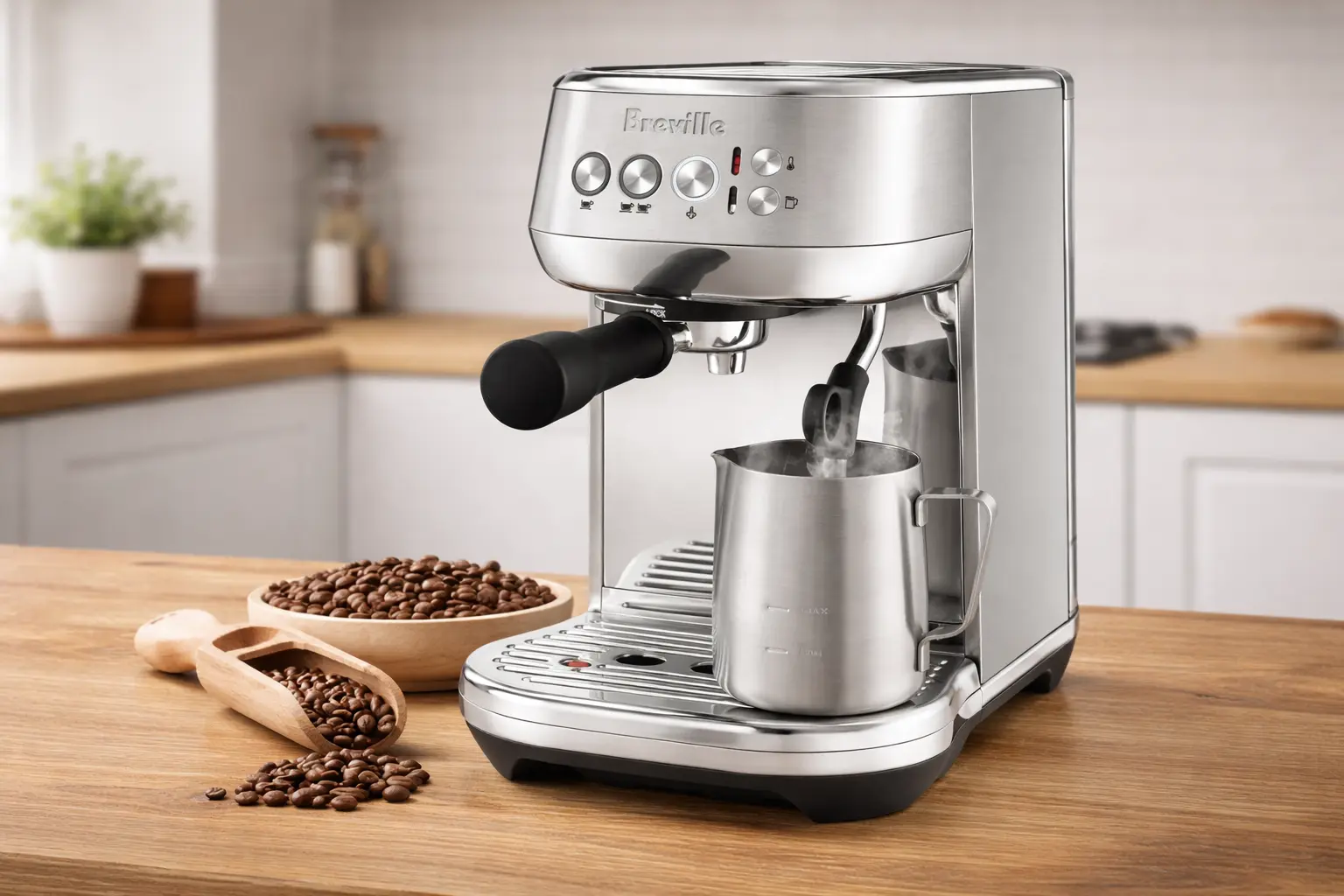
Breville Bambino Plus — espresso and milk
Real espresso plus an automatic steam wand with temperature and foam settings for lattes, cappuccinos, and flat whites.
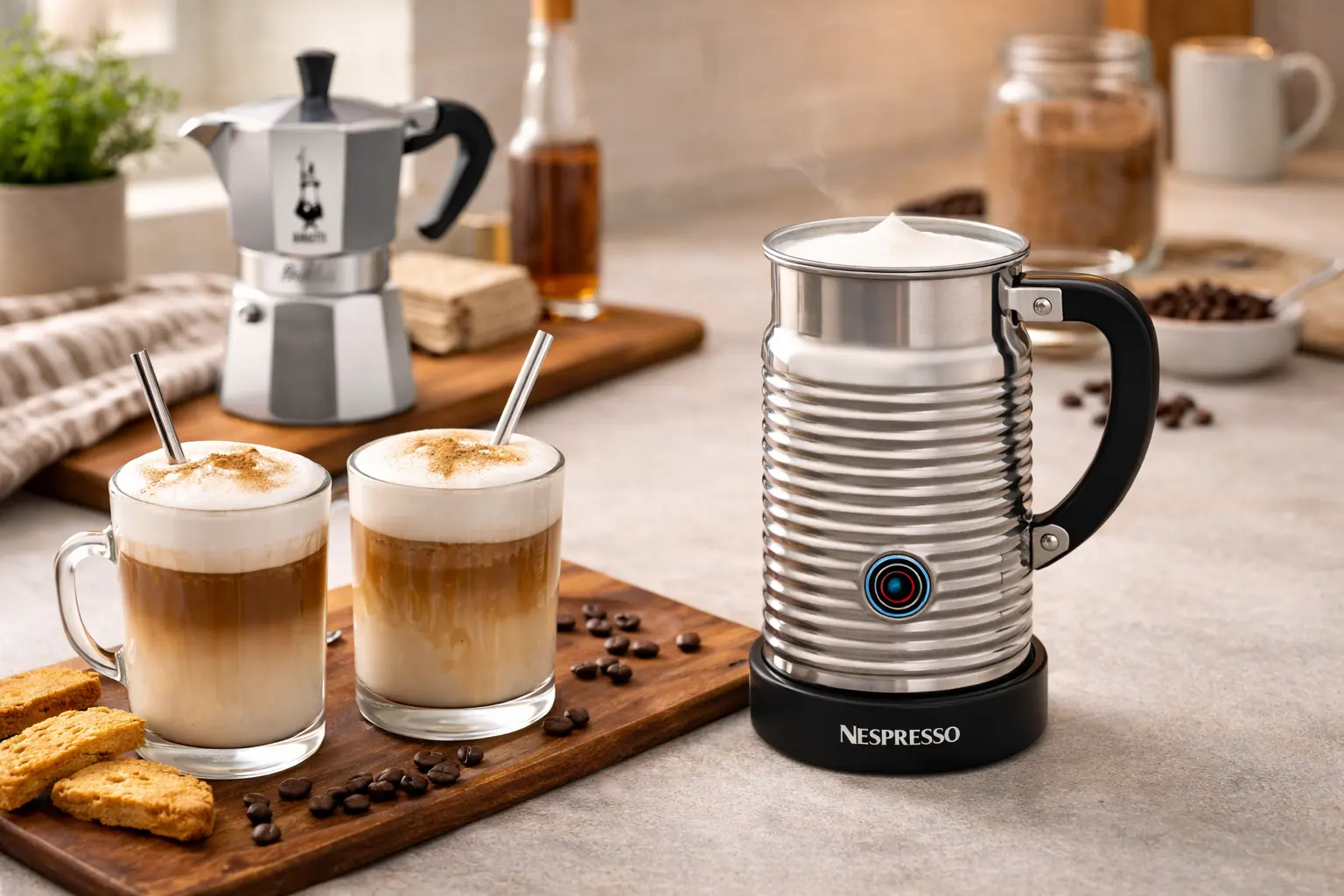
Nespresso Aeroccino 4 — milk only
A countertop frother that heats and foams milk at the touch of a button; pair it with espresso, a moka pot, or an AeroPress.
Affiliate disclosure: Amazon links may earn CoffeeGearHub a commission at no additional cost to you. Prices and availability can change.
Latte vs Cappuccino vs Flat White at a Glance
| Latte | Cappuccino | Flat White | |
|---|---|---|---|
| Typical cup size | 8–12 oz or larger | 5–6 oz (traditional) | 5–6 oz |
| Espresso | 1–2 shots | 1–2 shots | Usually a double shot or ristretto |
| Milk | Lots of steamed milk | Less milk, more foam | Steamed milk with minimal air |
| Foam | Thin layer, about 1 cm | Thick, airy cap, 2 cm or more | Very thin, glossy microfoam |
| Texture | Smooth and creamy | Light and foamy | Velvety and dense |
| Coffee flavor | Mildest | Medium | Strongest |
| Best for | Sweet, creamy drinks and flavor syrups | Foam lovers | Coffee-forward milk drinks |
Note: These are typical café ranges. Chains often serve larger cappuccinos and flat whites, and Italian cafés serve smaller lattes and cappuccinos than most U.S. coffee shops.
What Is a Latte?
A caffè latte is espresso topped with a generous amount of steamed milk and a thin layer of foam, usually around a centimeter. Because milk makes up most of the cup, the latte is the mildest and creamiest of the three. Coffee flavor is present but softened, which is why lattes are the most popular base for vanilla, caramel, and seasonal syrups.
In most U.S. cafés a latte comes in 8, 12, or 16 oz sizes with one or two shots of espresso. The larger the cup, the more milk you get relative to coffee, so a 16 oz latte with a double shot tastes noticeably milder than a 10 oz one. The smooth, pourable milk also makes the latte a favorite canvas for latte art.
If you want a stronger latte, ask for an extra shot or a smaller size rather than a different drink. At home, our espresso brew ratio guide explains how dose and yield change strength before milk is even added.
What Is a Cappuccino?
The traditional Italian cappuccino is a small drink, about 5–6 oz, built from roughly equal parts espresso, steamed milk, and milk foam. The thick, airy foam cap is its defining feature. Because there is less liquid milk than in a latte, the espresso flavor comes through more clearly, but the foam gives the drink a light, almost fluffy mouthfeel.
Cafés also talk about “wet” and “dry” cappuccinos. A wet cappuccino has more steamed milk and less foam, which moves it closer to a latte. A dry cappuccino has more foam and less milk, which makes it lighter and more coffee-forward. If a café’s cappuccino seems indistinguishable from its latte, it is usually being served wet and in a larger cup.
In Italy, cappuccino is traditionally a morning drink. That is a custom rather than a rule, but it explains why it is served small and relatively quickly drunk.
What Is a Flat White?
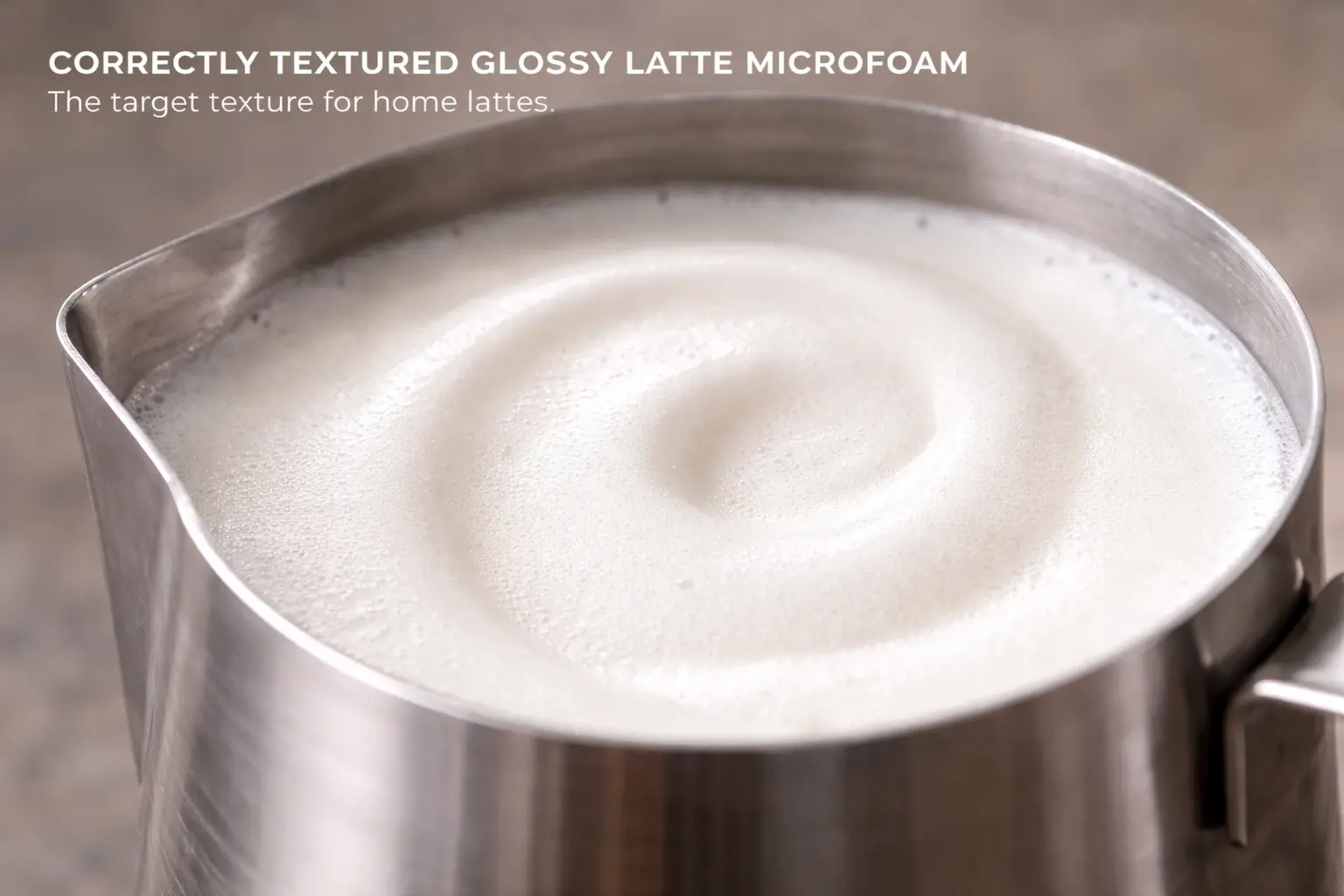
The flat white comes from Australia and New Zealand, where both countries claim to have invented it in the 1980s. It is served in a small cup, around 5–6 oz, and usually built on a double shot of espresso or ristretto. The milk is steamed with very little air, creating a thin layer of glossy microfoam that blends into the drink instead of sitting on top.
That combination of a small cup, a strong espresso base, and dense milk makes the flat white the most coffee-forward of the three. It has a velvety, almost syrupy texture rather than the airy feel of a cappuccino. The name refers to the “flat” surface of the drink, which lacks the dome of foam you see on a cappuccino.
Some chains now sell larger flat whites, which makes them taste closer to a latte. If you want the classic version, choose the smallest size or ask for it in a small cup.
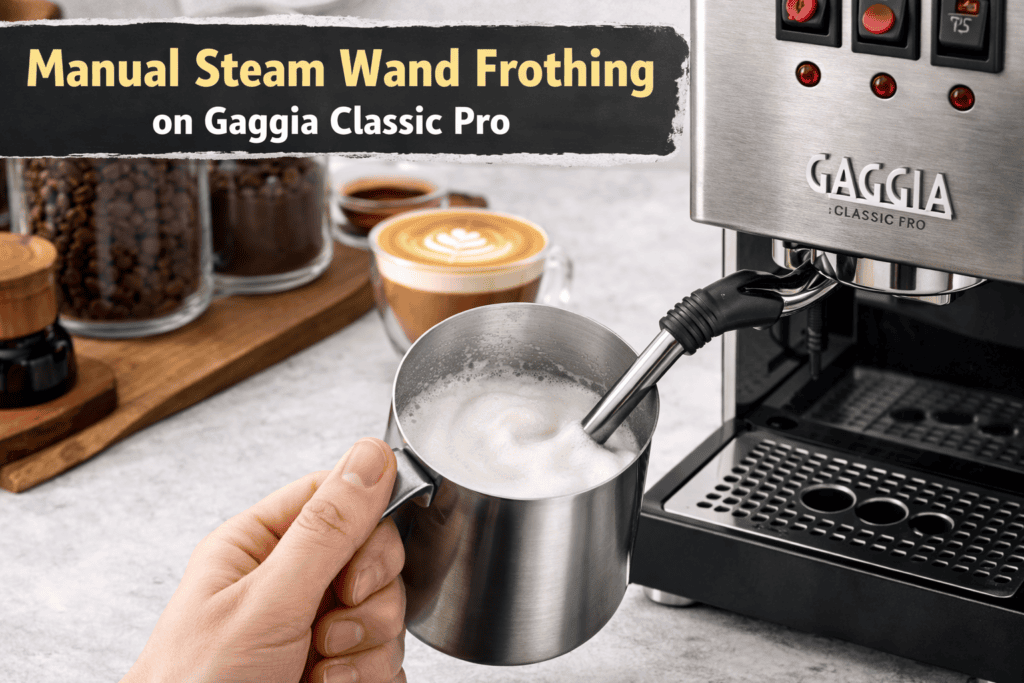
Milk Texture: The Difference You Can Actually Taste
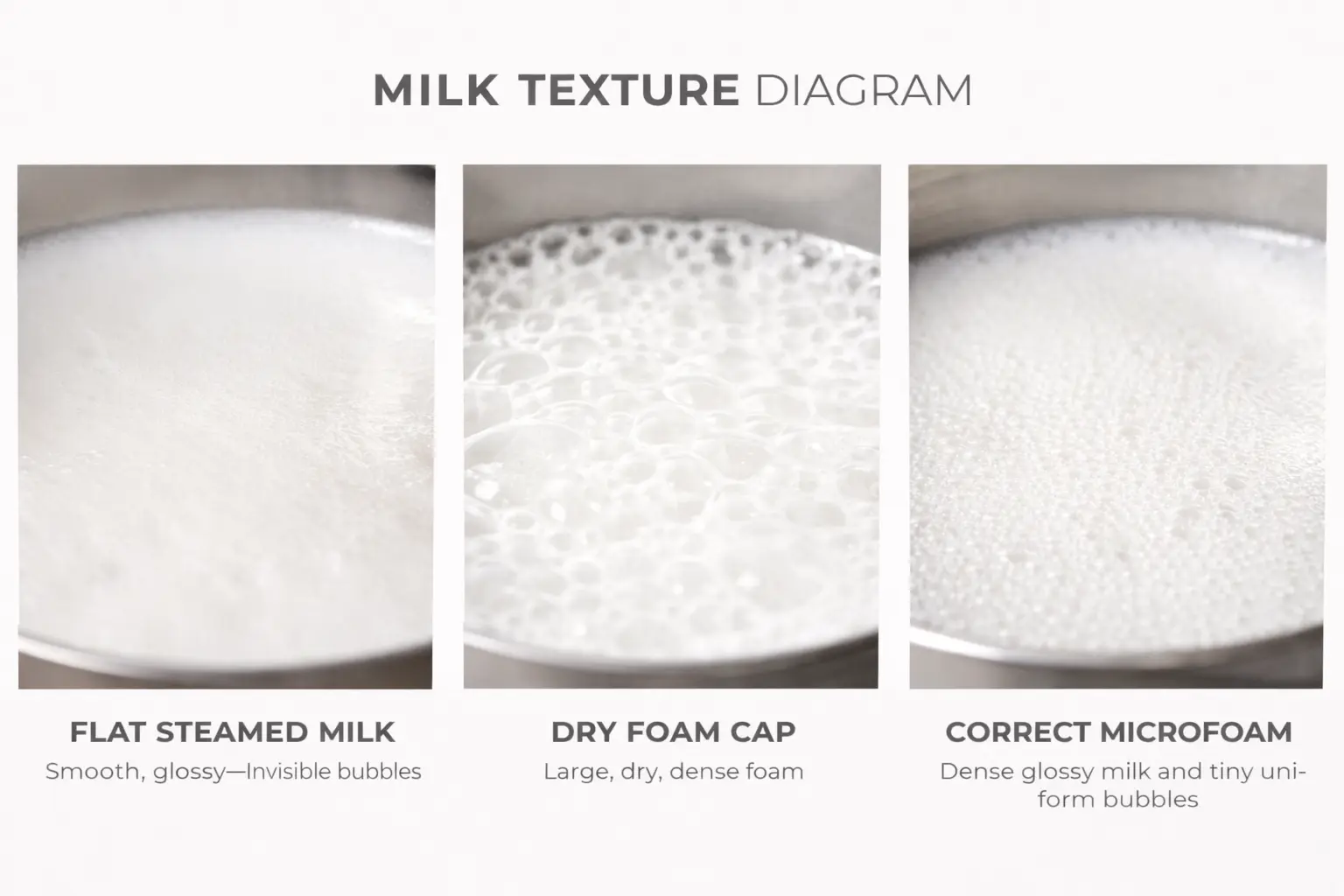
The amount of air introduced while steaming is what really separates these drinks. When a steam wand draws air into the milk, it creates foam; the longer that “stretching” phase lasts, the thicker and lighter the foam becomes.
For a flat white, baristas add only a little air, producing dense microfoam with tiny, invisible bubbles. For a latte, they add slightly more for a thin, pourable foam layer. For a cappuccino, they stretch the milk much longer to build a thick, airy cap.
Temperature matters too. Most cafés steam milk to roughly 130–150°F (about 55–65°C), where it tastes sweetest. Overheated milk loses sweetness and can taste flat or cooked. Our milk steaming guide walks through both stretching and texturing.
Which Is Strongest? Strength vs Caffeine
“Strong” can mean two different things. In terms of taste, the flat white is usually strongest because it pairs a double shot or ristretto with the least milk. The cappuccino comes next, and the latte tastes mildest because milk dilutes the espresso the most.
In terms of caffeine, the drink type does not matter; the number of espresso shots does. A latte, cappuccino, and flat white made with the same double shot contain about the same caffeine. A single espresso shot typically contains somewhere around 60–75 mg of caffeine, though the exact amount depends on the beans and recipe. If you want more caffeine, add a shot; if you want less, choose a single shot or decaf.
Calories follow the milk. Because a latte contains the most milk, it usually has the most calories, while a small cappuccino or flat white has fewer. Switching to a lower-fat or plant-based milk changes calories more than switching drinks.
How They Compare With Other Espresso Drinks
| Drink | What it is | How it differs |
|---|---|---|
| Cortado | Espresso cut with a roughly equal amount of warm milk | Smaller than a flat white, with little or no foam |
| Macchiato | Espresso “marked” with a spoonful of foam | Mostly espresso; much stronger than any of the three |
| Mocha | A latte with chocolate | Sweet and rich; built on the latte format |
| Americano | Espresso diluted with hot water | No milk at all |
| Latte macchiato | Steamed milk with espresso poured on top | Layered in a glass; similar ingredients to a latte |
Chain-specific drinks can add more confusion. A large chain’s caramel macchiato, for example, is closer to a flavored latte than to a traditional macchiato. When in doubt, ask how much milk and foam the drink includes.
How to Make Each Drink at Home
With an espresso machine. Pull a single or double shot, then steam cold milk in a stainless pitcher. For a flat white, add air for only a second or two and focus on swirling the milk into a glossy texture. For a latte, add a little more air. For a cappuccino, keep the wand tip near the surface longer to build thick foam. Machines with automatic milk texturing, such as the Breville Bambino Plus, let you choose the foam level for each drink. If you are starting from scratch, our how to make espresso at home guide covers the shot itself.
Without an espresso machine. Brew a strong coffee base with a moka pot or an AeroPress concentrate, then heat and froth milk with a countertop or handheld frother. The result is not true espresso, but it makes very good home lattes and cappuccinos. Our AeroPress latte guide shows one method step by step.
With a super-automatic. Bean-to-cup machines can make all three drinks at the touch of a button. See our best super-automatic espresso machines guide if convenience matters most.

Home Recipe Starting Points
Flat white: double shot (about 36 g out) plus about 4 oz of milk with minimal foam, in a 5–6 oz cup.
Cappuccino: single or double shot plus about 3–4 oz of milk stretched into thick foam, in a 5–6 oz cup.
Latte: single or double shot plus 6–10 oz of steamed milk with a thin foam layer, in an 8–12 oz cup.
As an Amazon Associate, CoffeeGearHub earns from qualifying purchases.
Latte vs Cappuccino vs Flat White: Which Should You Order?
Choose a latte if you like a smooth, mild, creamy drink, enjoy flavored syrups, or want a larger cup to sip slowly. It is also the easiest drink to make well at home because the milk texture is the most forgiving.
Choose a cappuccino if you love a light, foamy texture and want more coffee flavor than a latte without the intensity of a flat white. Ask for it dry if you want more foam, or wet if you want it creamier.
Choose a flat white if coffee flavor comes first and you want a small, velvety drink. It is the best showcase for good espresso beans, so it is worth trying with a quality roast from our best coffee beans for espresso guide.
Common Mistakes When Making Milk Drinks at Home
Overheating the milk. Milk that gets too hot loses sweetness and stops holding foam well. Stop when the pitcher feels too hot to hold comfortably.
Adding too much air for a flat white. Big bubbles turn a flat white into a small cappuccino. Keep the stretching phase very short and focus on swirling.
Using warm or re-steamed milk. Start with cold milk every time. Re-steaming leftover milk produces thin, bubbly foam.
Choosing the wrong plant milk. Many regular plant milks foam poorly. “Barista edition” oat and soy milks are formulated to steam and foam more like dairy.
Ignoring the espresso. Milk cannot fix a sour or bitter shot. If your drinks taste off, start with our espresso troubleshooting guide.
Editorial bottom line: The latte vs cappuccino vs flat white question comes down to milk and foam. A latte is the largest and mildest, a cappuccino has the thickest foam, and a flat white is the smallest and most coffee-forward. Caffeine depends on the number of espresso shots, not the drink name, so choose by the taste and texture you enjoy.
Frequently Asked Questions
Is a flat white stronger than a latte?
Usually, yes, in taste. A flat white is smaller and often uses a double shot or ristretto with less milk, so the coffee flavor is more concentrated. Caffeine is similar if both use the same number of shots.
Which has more caffeine, a latte or a cappuccino?
Neither by default. Caffeine depends on how many espresso shots are used, not on the amount of milk or foam.
Is a flat white just a small latte?
Not quite. A flat white is smaller, but it also uses milk with much less foam and is usually built on a stronger espresso base, giving it a denser, more coffee-forward taste.
What is the difference between a wet and a dry cappuccino?
A wet cappuccino has more steamed milk and less foam; a dry cappuccino has more foam and less milk.
Which has the fewest calories?
A small cappuccino or flat white usually has fewer calories than a latte because it contains less milk. The type of milk you choose matters more than the drink.
Can I make these drinks without an espresso machine?
Yes. A moka pot or AeroPress can make a strong coffee base, and a milk frother can heat and foam the milk. The results are not identical to espresso but taste very good.
Sources and Further Reading
Drink definitions reflect traditional café practice and published coffee references, including the background on the flat white and cappuccino, and the Italian espresso standards promoted by the Istituto Nazionale Espresso Italiano. Sizes, ratios, and caffeine figures are typical ranges; café recipes vary.
CoffeeGearHub product shortlist
Continue with related products on CoffeeGearHub
Review product categories and current verified merchant offers on CoffeeGearHub before leaving the site.
Continue Learning
Milk and espresso skills
Machines for milk drinks