
Breville Barista Express Review (2026): Is the All-in-One Classic Still Worth Buying?
Editorial standards: manufacturer specifications, published documentation, practical workflow, maintenance, cost, and product limitations are separated where relevant. CoffeeGearHub does not claim hands-on testing where it has not occurred.
At a glance
What this Breville Barista Express review covers
Breville Barista Express review for 2026: the built-in conical burr grinder, espresso quality and the pressure gauge, the manual steam wand, everyday workflow, real limitations, how it compares with the Barista Express Impress, Barista Pro and Barista Touch Impress, and who should buy it.
Editorial analysis
The Barista Express solves the grinder problem in one box
The hardest part of starting home espresso is usually not the machine. It is the grinder. Espresso needs a fine, consistent grind that adjusts in small steps, and buyers who pair a new machine with the wrong grinder often end up with sour, fast shots and no idea why. The Breville Barista Express answers that by building a conical burr grinder directly into the machine, with dose control that drops ground coffee straight into the portafilter.
That one decision explains why the Barista Express (model BES870XL) has stayed one of the most recommended home espresso machines for more than a decade. It is not the fastest, quietest, or most adjustable machine Breville makes, and newer models fix several of its rough edges. This Breville Barista Express review explains what the original still does well, where it falls short, and when one of its newer siblings is the better buy.
The 30-Second Answer
The Breville Barista Express is still worth buying in 2026 if you want real portafilter espresso, a built-in grinder, and full manual control in a single machine. It gives beginners everything they need to learn espresso properly, with a pressure gauge that shows whether each shot is on track.
The trade-offs are a grinder with a limited fine-adjustment range, a manual steam wand that takes practice, and a slower switch from brewing to steaming. If you want easier milk drinks, the Bambino Plus with a separate grinder is simpler. If you want help with dosing and tamping, the Barista Express Impress is the easier upgrade.
Compare current options
Start with these representative choices
The review focuses on the original Barista Express. The Bambino Plus is the most useful comparison for buyers who would rather pick their own grinder and get automatic milk texturing.
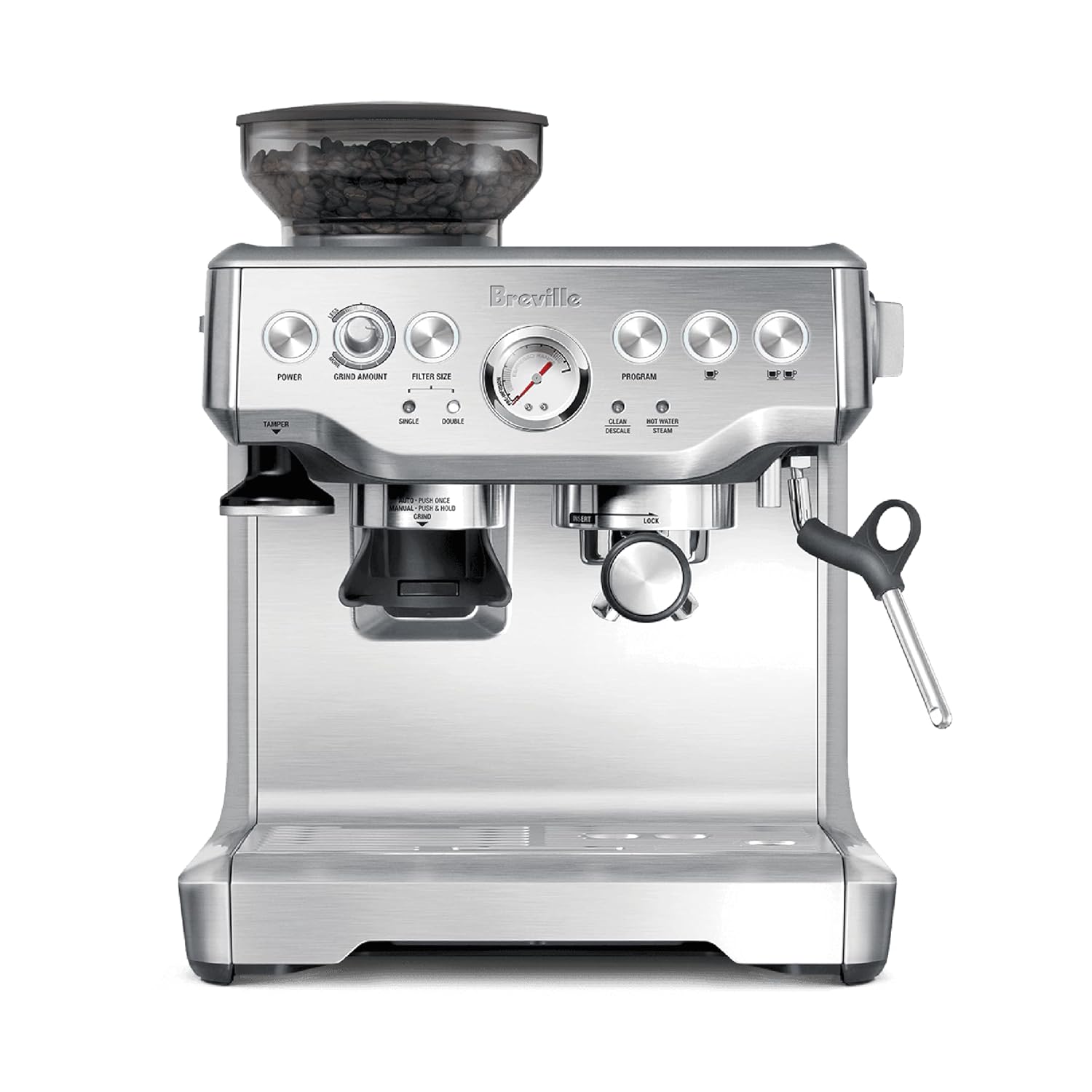
Breville Barista Express — review subject
Semi-automatic espresso machine with a built-in conical burr grinder, pressure gauge, and manual steam wand.
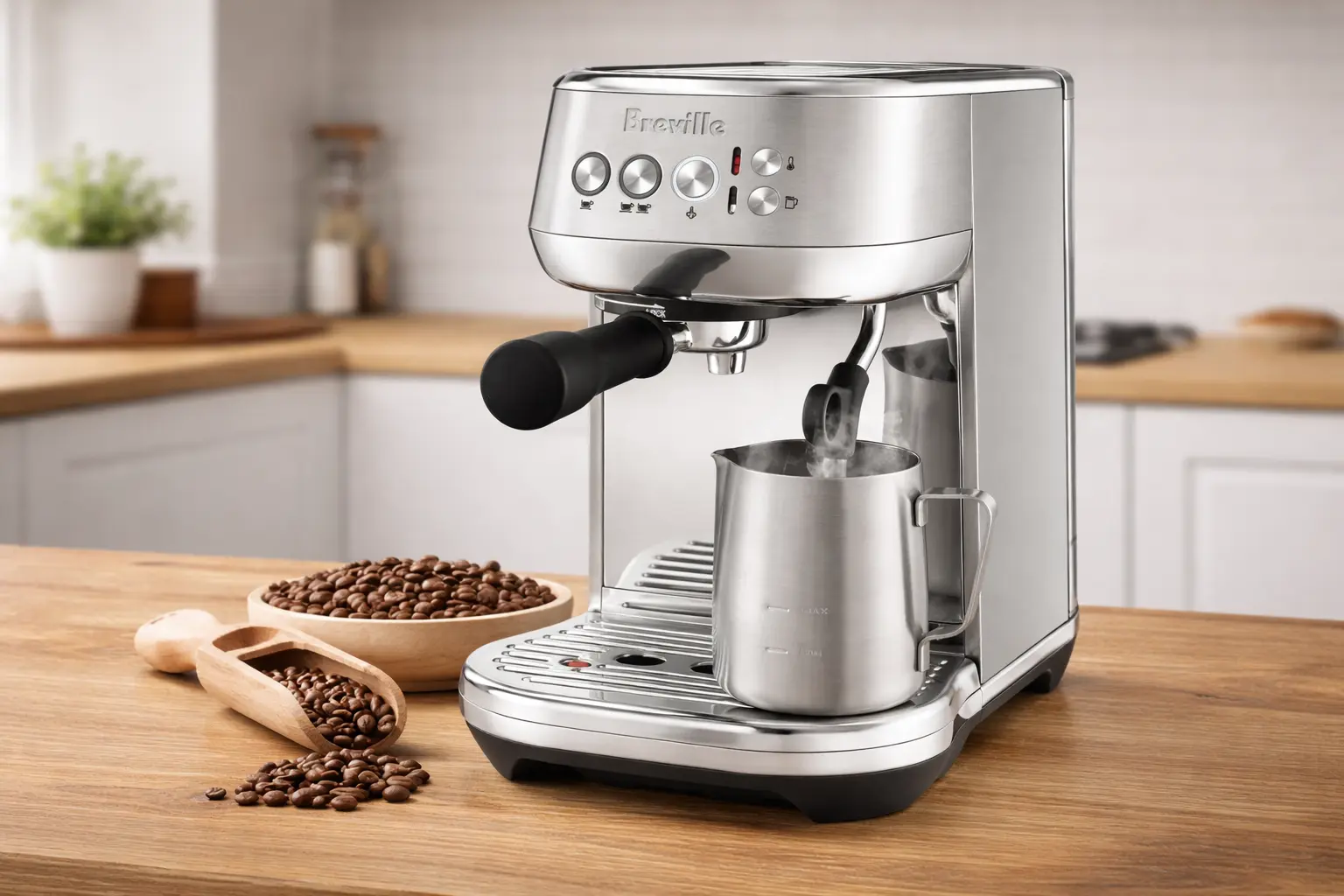
Breville Bambino Plus — comparison reference
A compact alternative with a three-second heat-up and automatic milk texturing; pair it with a separate grinder.
Affiliate disclosure: Amazon links may earn CoffeeGearHub a commission at no additional cost to you. Prices and availability can change.
What the Barista Express Is — and What It Is Not
The Barista Express is a semi-automatic espresso machine with an integrated grinder. You grind directly into a 54mm portafilter, tamp by hand, lock it into the group head, and press a one-cup or two-cup button. The machine handles pre-infusion, extraction pressure, and brew temperature, and it stops the shot at a programmed volume unless you stop it manually.
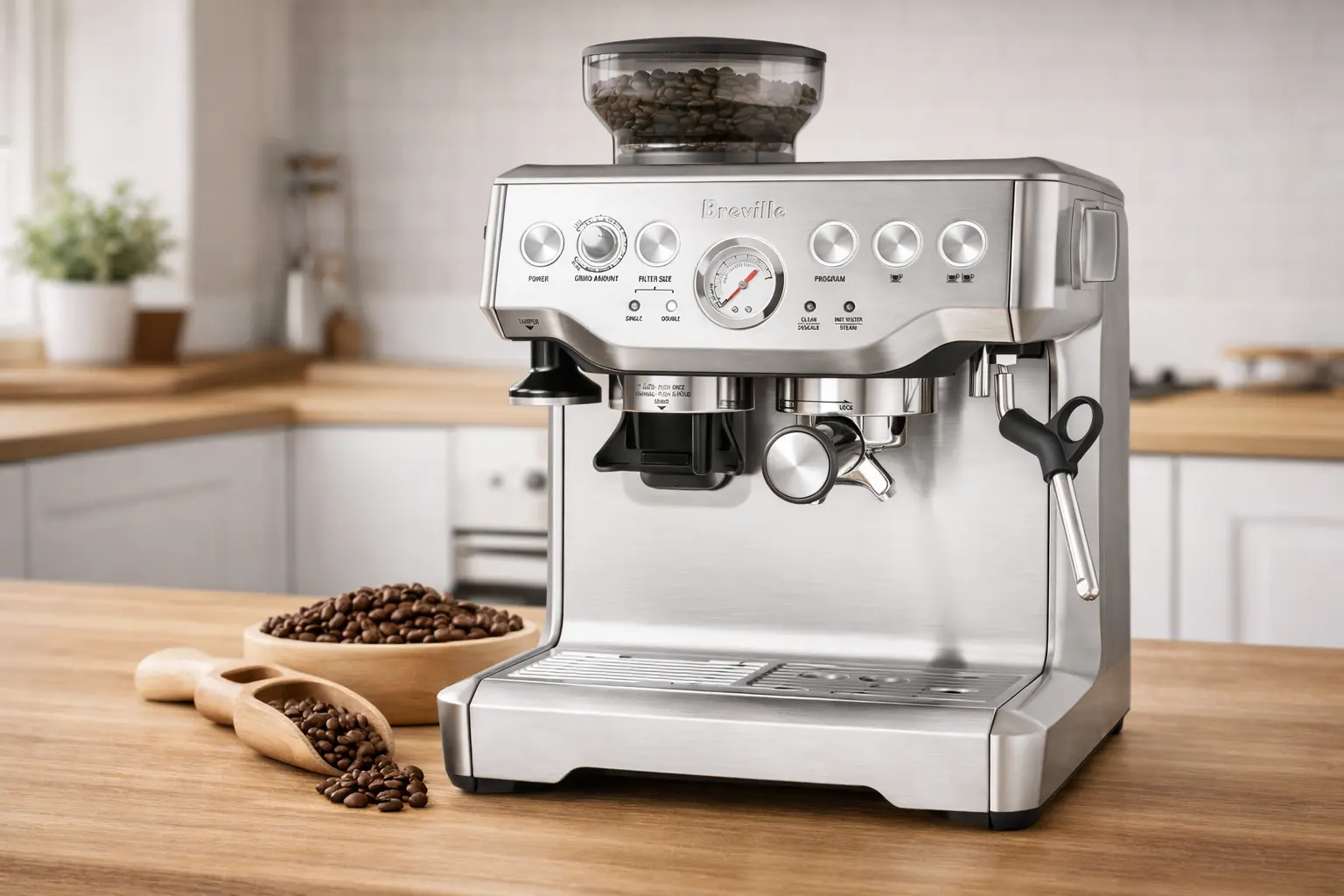
Everything a beginner needs is on the front panel: a grind-amount dial, a grind-size dial on the side, shot buttons, a pressure gauge, a steam wand, and a dedicated hot-water outlet for americanos and tea. Breville includes a tamper, a Razor dose-trimming tool, a stainless milk jug, single-wall and dual-wall baskets, and a water filter for the tank.
It is not an automatic machine. There is no one-touch latte, no automatic tamping, and no milk texturing. Every drink involves grinding, tamping, and steaming by hand, which is exactly why it is such a good machine for learning espresso and less ideal for anyone who wants coffee with minimal effort.
The Built-In Grinder: Its Biggest Strength and Its Main Limit
The integrated conical burr grinder offers 16 grind settings on Breville’s spec sheet, and the grind-amount dial controls how much coffee is dispensed into the portafilter. A half-pound bean hopper sits on top. For beginners, this removes the single biggest buying mistake: choosing a grinder that cannot grind fine enough for espresso.
The limitation is resolution. Sixteen external steps is fewer than a dedicated espresso grinder offers, so the gap between two settings can sometimes be the difference between a shot that runs too fast and one that chokes the machine. Breville’s instruction manual explains how to move the internal upper burr to shift the whole range finer, which most owners only need to do once when using very fresh or light-roasted beans.
For medium and dark roasts in milk drinks, the built-in grinder is usually good enough. Owners who become serious about light-roast espresso often add a separate grinder later. Our espresso grind size guide explains what to look for when a shot runs too fast or too slow, and our best espresso grinders guide covers upgrade options.
Espresso Quality: Pre-Infusion, 9-Bar Extraction, and a Pressure Gauge
Breville describes a low-pressure pre-infusion stage followed by extraction at around 9 bar, driven by a 15-bar Italian pump. The Thermocoil heating system uses PID temperature control to keep brew water at about 200°F. Pre-infusion gently soaks the coffee before full pressure arrives, which helps reduce channeling, one of the most common causes of uneven shots.
The pressure gauge is the feature beginners tend to underrate. It shows whether the shot is landing in the target “espresso range” zone, so you can see immediately whether to grind finer, grind coarser, or adjust the dose. Combined with a small scale, it turns guesswork into a repeatable routine. Our dial-in walkthrough and espresso brew ratio guide explain how to use those readings.
With fresh beans and single-wall baskets, the realistic ceiling is very good home espresso. What you cannot do is adjust brew temperature or profile pressure. That rarely matters for medium and dark roasts in lattes and cappuccinos, but it limits how far enthusiasts can push light roasts.
Manual Steam Wand and Hot Water
The Barista Express uses a manual steam wand. You position the pitcher, control how much air you introduce, and stop when the milk reaches temperature. That gives you full control and is the right way to learn latte art, but it takes practice to produce silky microfoam consistently. Our milk steaming guide walks through the technique step by step.
Because one Thermocoil handles both brewing and steaming, the machine needs a short pause to heat up for steam after you pull a shot. That is fine for one or two drinks, but it makes back-to-back milk drinks slower than on a dual-boiler or heat-exchanger machine.
The dedicated hot-water outlet is a genuine advantage over compact machines such as the Bambino Plus. Americano drinkers can add hot water directly without a kettle.
What Daily Use Looks Like
A typical morning routine is: turn the machine on and let it heat for about a minute, lock in the empty portafilter to warm it, grind into the basket, level and tamp, pull the shot while watching the gauge, then purge and steam milk. Once you are dialed in, that routine is quick. The first week takes longer while you learn the grind setting and dose for your beans.
Weighing the dose and the shot output with a small scale makes the biggest difference to consistency. The Razor tool helps level the dose at the right height, and most owners settle into a routine within a few days. If shots start tasting sour or bitter, our espresso troubleshooting guide covers the usual causes.
Where the Barista Express Falls Short
Grind adjustment range. Sixteen external settings can be coarse for espresso, especially with light roasts, and some owners need to adjust the internal burr.
Slower brew-to-steam switching. The single Thermocoil means a pause between pulling a shot and steaming milk.
Manual everything. Dosing, tamping, and steaming are all by hand. That is great for learning but less ideal for households that want quick, consistent drinks from several people.
54mm accessories. The portafilter is smaller than the 58mm commercial standard, so the accessory choice is narrower than for machines like the Gaggia Classic E24.
Older design. Newer Breville models add faster heat-up, finer grind steps, assisted tamping, and automatic milk. The original Express is the simplest and most proven of the family, but not the most advanced.
Cleaning, Descaling, and Ownership
Daily care means knocking out the puck, rinsing the basket and portafilter, wiping and purging the steam wand after every use, and emptying the drip tray. Breville includes cleaning tablets and a cleaning disc for periodic back-flushing, and the machine shows a clean indicator when a cleaning cycle is due.
The grinder also needs occasional attention. Coffee oils and fines build up in the burrs and chute, so removing the hopper and brushing out the burrs every few weeks keeps the grind consistent. Descaling frequency depends on your water hardness. Our espresso machine maintenance guide and descaling guide explain both routines, and using the included water filter helps reduce scale.
One Box, One Purchase
Because the grinder is built in, a Barista Express setup is usually just the machine plus a small scale for weighing doses and shots. That makes it simpler to budget than a separate machine and grinder, as long as the grinder’s adjustment range suits the beans you drink.
As an Amazon Associate, CoffeeGearHub earns from qualifying purchases.
Breville Barista Express Specifications
| Specification | Barista Express (BES870XL) |
|---|---|
| Heating system | Thermocoil with PID temperature control (about 200°F) |
| Extraction | Low-pressure pre-infusion, then about 9 bar; 15-bar Italian pump |
| Grinder | Integrated conical burr, 16 grind settings, dose control |
| Bean hopper | About 1/2 lb (8 oz) |
| Portafilter | 54mm stainless steel, 18g dose |
| Filter baskets | 1- and 2-cup, single-wall and dual-wall |
| Milk system | Manual steam wand |
| Hot water | Dedicated hot-water outlet |
| Pressure gauge | Yes, front-mounted |
| Water tank | 67 fl oz (about 2 L), removable, with water filter |
| Dimensions | About 12.5 × 13.2 × 15.8 in (W × D × H) |
| Weight | About 23 lb |
| Power | 1600 W, 120 V (U.S.) |
| In the box | 54mm tamper, Razor dosing tool, stainless milk jug, filter baskets, cleaning disc and tablets, water filter |
| Warranty | 1-year limited (U.S.) |
Specification note: Figures are from Breville and authorized-retailer listings. Accessories, colors, and bundles can vary by retailer and region, so verify the exact listing before purchase.
Barista Express vs Express Impress vs Barista Pro vs Touch Impress
Breville sells several machines built around the same idea of a grinder inside an espresso machine. They are easy to confuse, so here is how the original Barista Express fits into the family.
| Barista Express | Express Impress | Barista Pro | Touch Impress | |
|---|---|---|---|---|
| Model | BES870 | BES876 | BES878 | BES881 |
| Heating | Thermocoil | Thermocoil | ThermoJet (about 3 seconds) | ThermoJet (about 3 seconds) |
| Grind settings | 16 | 25 | 30 | 30 |
| Tamping | Manual | Assisted lever tamp | Manual | Assisted lever tamp |
| Milk | Manual wand | Manual wand | Manual wand | Automatic or manual |
| Controls | Buttons and pressure gauge | Buttons and pressure gauge | LCD display | Touchscreen |
| Best for | Learning espresso by hand | Easier, more consistent dosing | Speed and finer grind control | Maximum convenience |
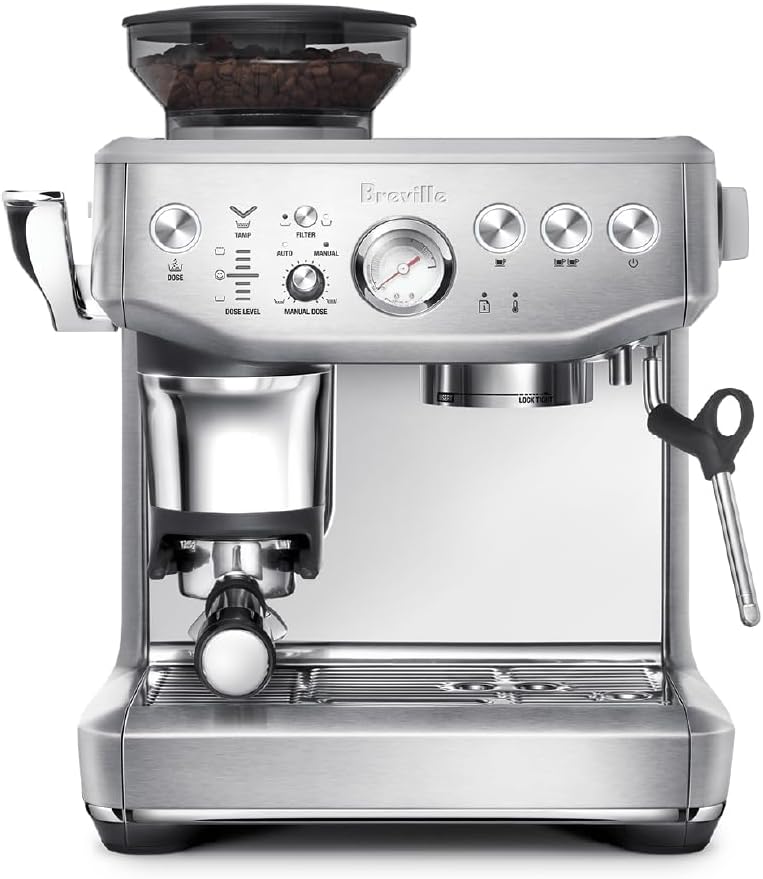
Barista Express Impress
Adds a lever that tamps for you and intelligent dosing that adjusts the next dose, plus finer grind steps.
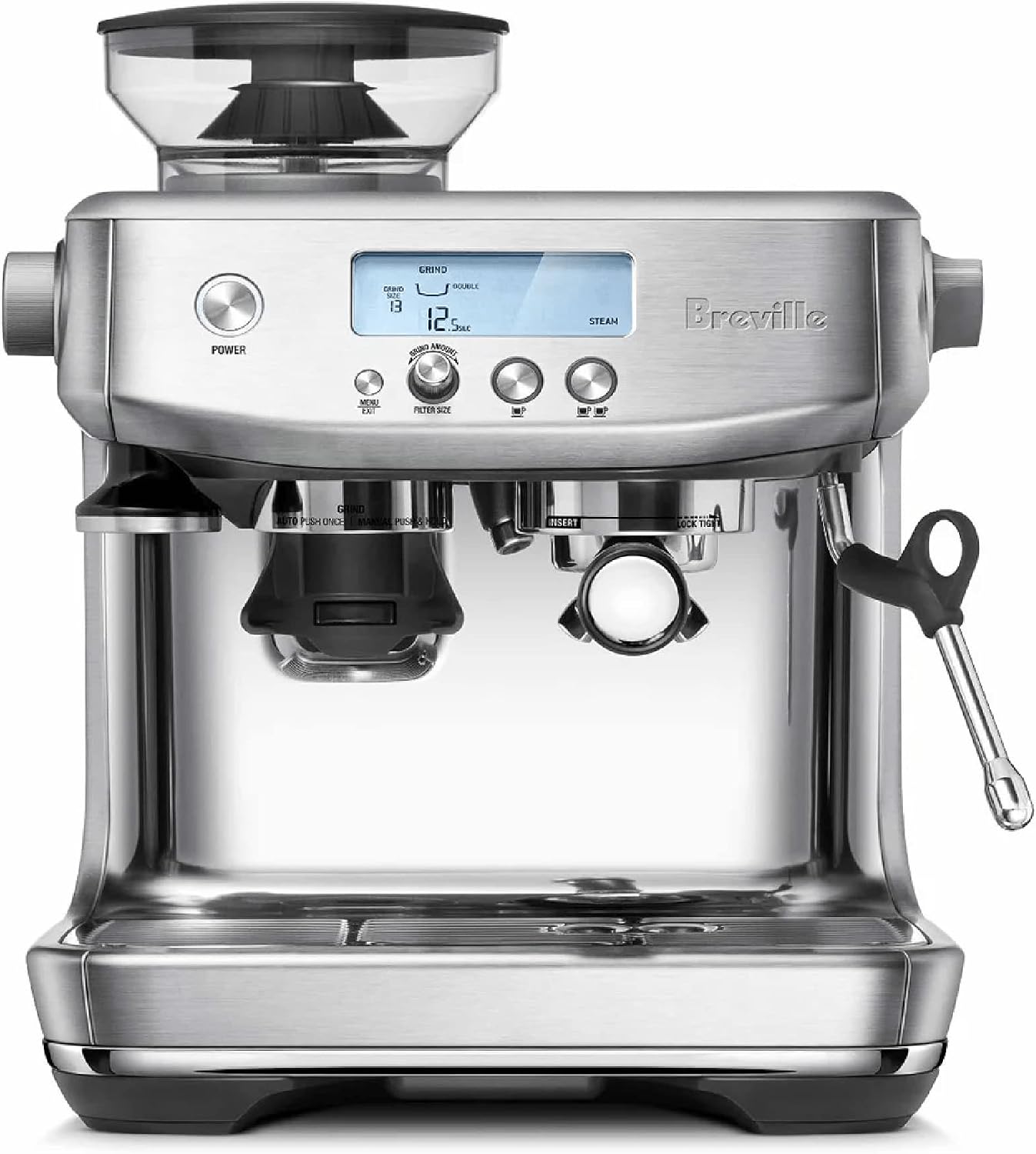
Barista Pro
ThermoJet heat-up, 30 grind settings, a digital display, and faster switching to steam.
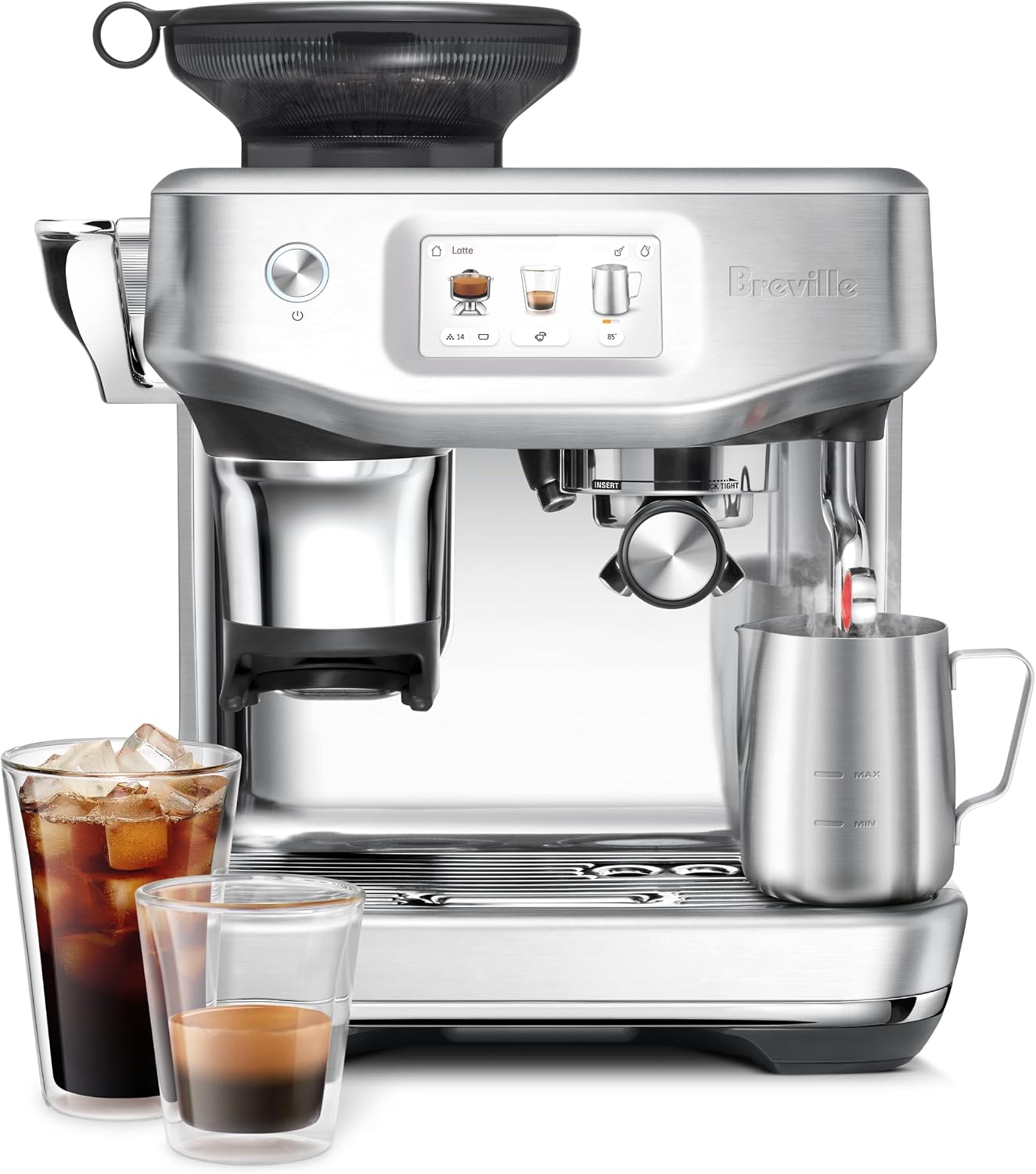
Barista Touch Impress
Touchscreen guidance, assisted tamping, and automatic milk texturing for the most hands-off workflow.
The original Express remains the simplest and most proven of the four. Choose the Express Impress if inconsistent tamping and dosing worry you, the Barista Pro if heat-up speed and finer grind steps matter most, and the Touch Impress if you want café drinks with the least technique. Every step up adds convenience, not a fundamentally different espresso method.
Barista Express vs Bambino Plus With a Separate Grinder
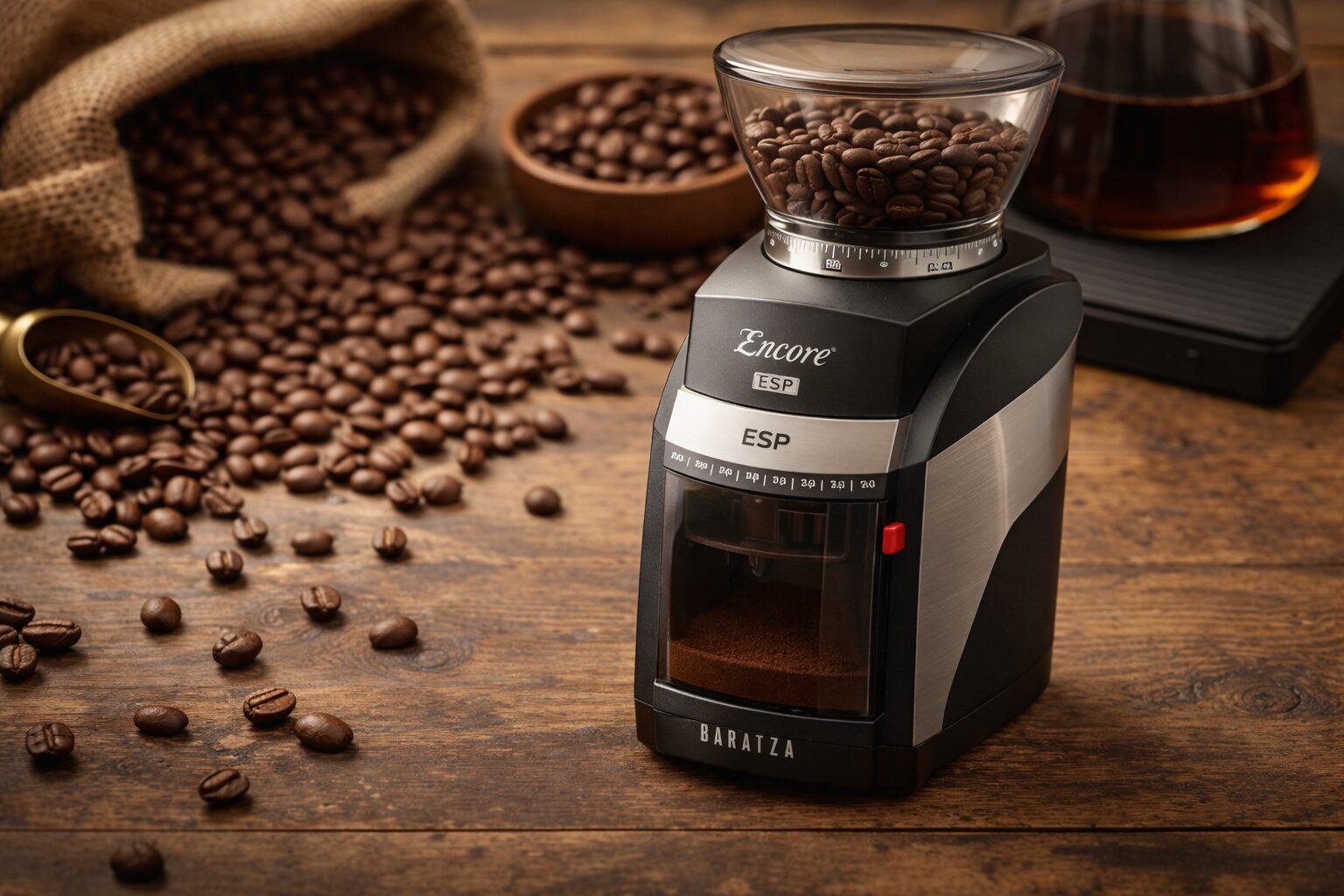
The most common alternative to the Barista Express is a Bambino Plus paired with a dedicated espresso grinder such as the Baratza Encore ESP. That setup gives you a three-second heat-up, automatic milk texturing, and a grinder with finer espresso adjustment. It also lets you upgrade the grinder or the machine independently later.
The Barista Express wins on simplicity: one purchase, one footprint, a pressure gauge, and a hot-water outlet. The two-piece setup wins on milk convenience and grind flexibility. If you mostly drink lattes and want them fast, read our Breville Bambino Plus review. If you want to learn every step by hand, the Barista Express is the more complete package.
For a wider look at options, see our best home espresso machines guide and our do you need a grinder for espresso? explainer.
Common Barista Express Mistakes to Avoid
Using stale or pre-ground coffee in single-wall baskets. Fresh whole beans, roasted within the last few weeks, make dialing in far easier. Our best coffee beans for espresso guide covers good starting options.
Changing several variables at once. Adjust grind size first, keep the dose steady, and change one setting at a time while watching the gauge.
Over-filling the basket. Too much coffee leaves no headroom, causing the puck to hit the shower screen. Use the Razor tool to trim the dose to the right height.
Skipping grinder cleaning. Oils and fines in the burrs make the grind drift over time. A quick brush-out every few weeks keeps results consistent.
Who Should Buy the Barista Express in 2026?
The Barista Express is a strong fit for beginners who want to learn real espresso technique, do not already own a grinder, and want one machine that covers espresso, milk drinks, and americanos. Its pressure gauge and manual controls make it an excellent teaching machine, and its long track record means accessories, guides, and replacement parts are easy to find.
It is a weaker fit for buyers who want fast, hands-off lattes, households making several milk drinks in a row, and enthusiasts focused on light-roast espresso. Those buyers are better served by the Barista Touch Impress, a Bambino Plus with a separate grinder, or one of the best super-automatic espresso machines if they want no technique at all.
Editorial bottom line: This Breville Barista Express review comes down to one point: the Barista Express is still one of the most complete ways to start making real espresso at home. A built-in grinder, pressure gauge, manual steam wand, and hot-water outlet cover every drink in one box. Accept its coarser grind steps and hands-on workflow, or step up to the Impress or Pro for more convenience.
As an Amazon Associate, CoffeeGearHub earns from qualifying purchases. Prices and availability can change at any time.
Frequently Asked Questions
Is the Breville Barista Express good for beginners?
Yes. Its built-in grinder, pressure gauge, and included accessories give beginners everything needed to learn espresso. Expect a short learning curve while you dial in grind size and practice steaming milk.
How many grind settings does the Barista Express have?
Breville lists 16 grind settings. The upper burr can also be moved internally to shift the whole range finer if your beans need it.
What is the difference between the Barista Express and the Barista Express Impress?
The Impress adds an assisted tamping lever, intelligent dosing that adjusts the next dose automatically, and more grind settings. Brewing and steaming work much the same.
Does the Barista Express have a hot water outlet?
Yes. A dedicated hot-water outlet lets you make americanos and tea without a kettle.
What size is the Barista Express portafilter?
It uses a 54mm portafilter designed for an 18-gram dose, so buy 54mm tampers, baskets, and distribution tools.
Sources and Further Reading
Specifications and feature descriptions were checked against Breville’s official Barista Express product information, the Barista Express instruction book, and authorized-retailer specification listings, including Whole Latte Love. Model comparisons use Breville’s published specifications for the BES876, BES878, and BES881. Exact bundles and colors vary by retailer.
CoffeeGearHub product shortlist
Continue with related products on CoffeeGearHub
Review product categories and current verified merchant offers on CoffeeGearHub before leaving the site.
Continue Learning
Espresso machine guides
Espresso technique
In this guide
- The 30-Second Answer
- What the Barista Express Is
- The Built-In Grinder
- Espresso Quality
- Manual Steam Wand and Hot Water
- What Daily Use Looks Like
- Where It Falls Short
- Cleaning, Descaling, and Ownership
- Specifications
- Express vs Impress vs Pro vs Touch Impress
- Barista Express vs Bambino Plus
- Common Mistakes
- Who Should Buy It?
- Frequently Asked Questions
- Sources and Further Reading
- Continue Learning