
Breville Barista Pro vs Barista Express (2026): Is the Pro Worth the Upgrade?
Editorial standards: this comparison uses Breville’s published specifications, independent comparison data from Complete Home Barista, and CoffeeGearHub’s existing Breville reviews. CoffeeGearHub does not claim hands-on testing where it has not occurred.
At a glance
What this Barista Pro vs Barista Express comparison covers
The key differences at a glance, heat-up and the ThermoJet versus Thermocoil systems, grinder range, controls and display, milk steaming and switching from brewing to steam, espresso quality, daily workflow, size, maintenance and reliability, alternatives, and who should buy each machine.
Editorial analysis
Same espresso foundation, different speed and convenience
The Barista Pro and Barista Express share the same basic recipe: a built-in conical burr grinder, a 54 mm portafilter, low-pressure pre-infusion, PID temperature control, and a manual steam wand. Pull the same coffee through both with good technique and the shots will be closer than the price gap suggests.
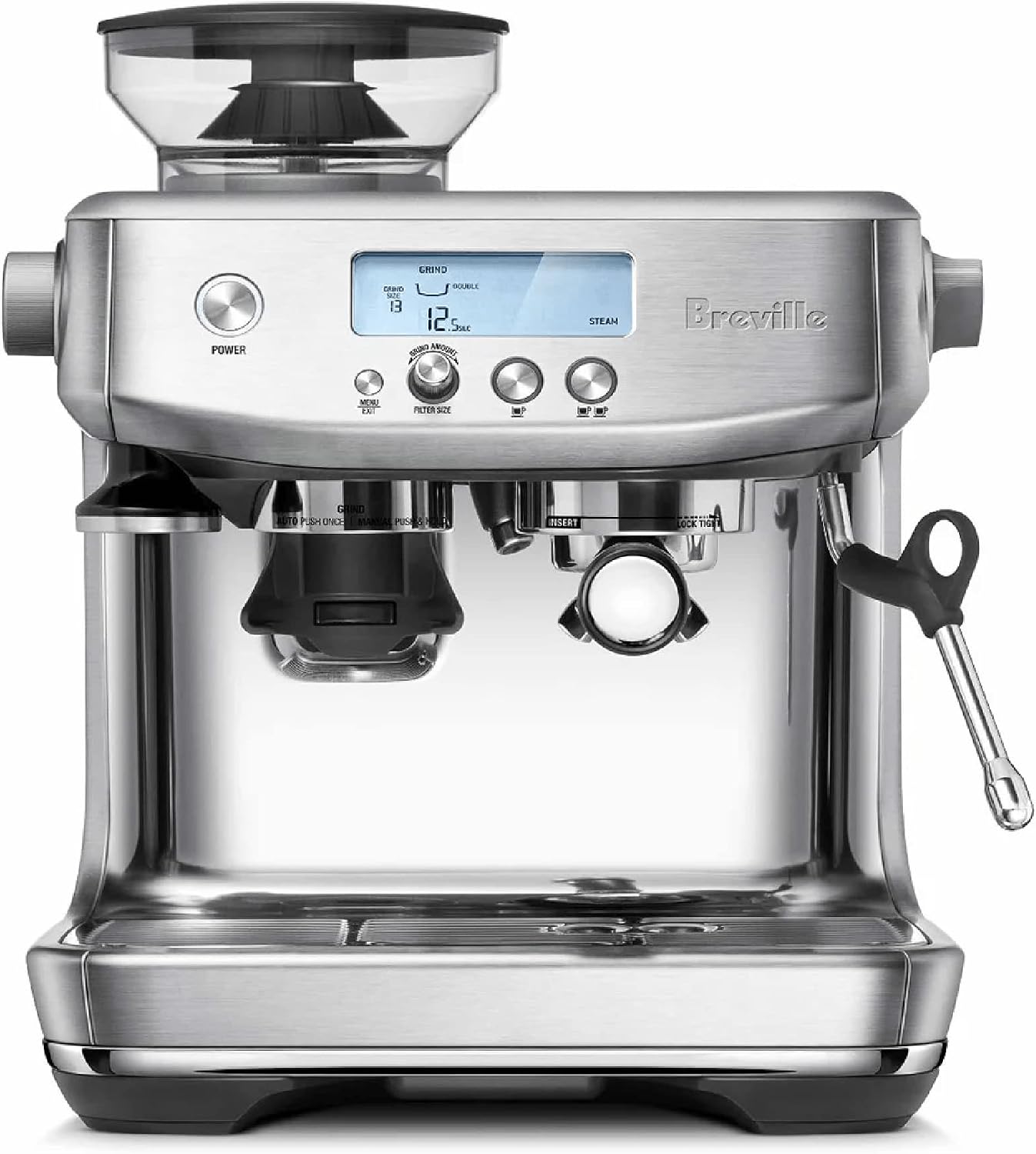
What the Pro adds is speed and polish. Its ThermoJet heating system is ready in about three seconds and switches to steam almost instantly, its grinder has nearly twice as many settings, and an LCD display replaces the Express’s analog pressure gauge. Whether that is worth paying more for depends mostly on how many milk drinks you make.
The 30-Second Answer
Choose the Breville Barista Pro if you make milk drinks most days and value speed: it heats in about 3 seconds, moves from brewing to steam with almost no wait, and has a 30-setting grinder and digital display. Choose the Breville Barista Express if you want the better value and mostly drink espresso or Americanos; it shares the same 54 mm format, PID, and pre-infusion, with a 16-setting grinder and analog pressure gauge.
Both include an integrated grinder, so neither needs a separate purchase to get started. Our Barista Express review covers the Express in depth.
Compare current options
Start with these representative choices
The two machines compared here, plus a compact alternative if you would rather buy a separate grinder.
Breville Barista Pro — Fastest workflow
ThermoJet heat-up in about 3 seconds, 30 grind settings, LCD display, and quick brew-to-steam switching.
Breville Barista Express — Best value all-in-one
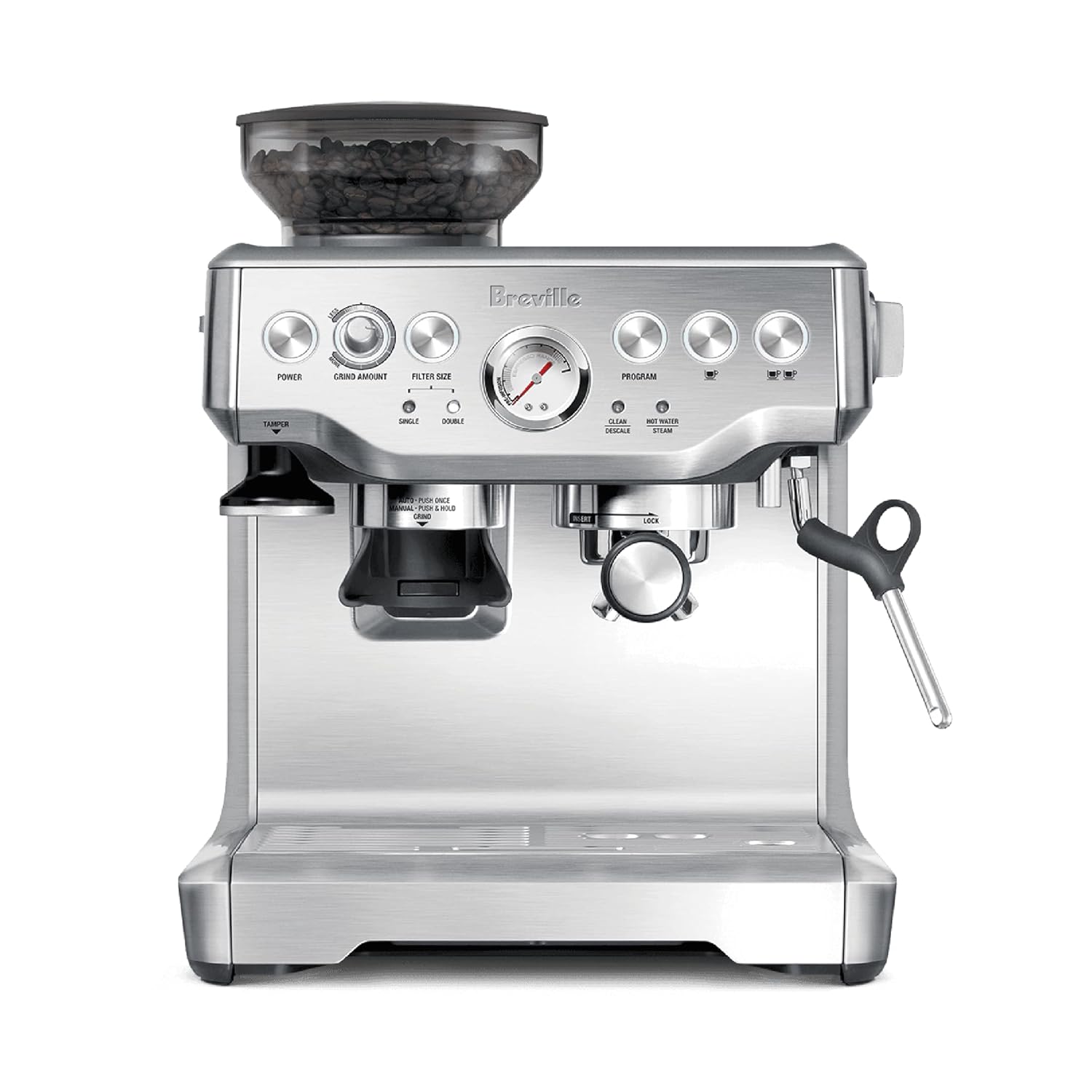
Thermocoil heating, PID, 16 grind settings, and an analog pressure gauge in a proven design.
Breville Bambino Plus — Compact alternative
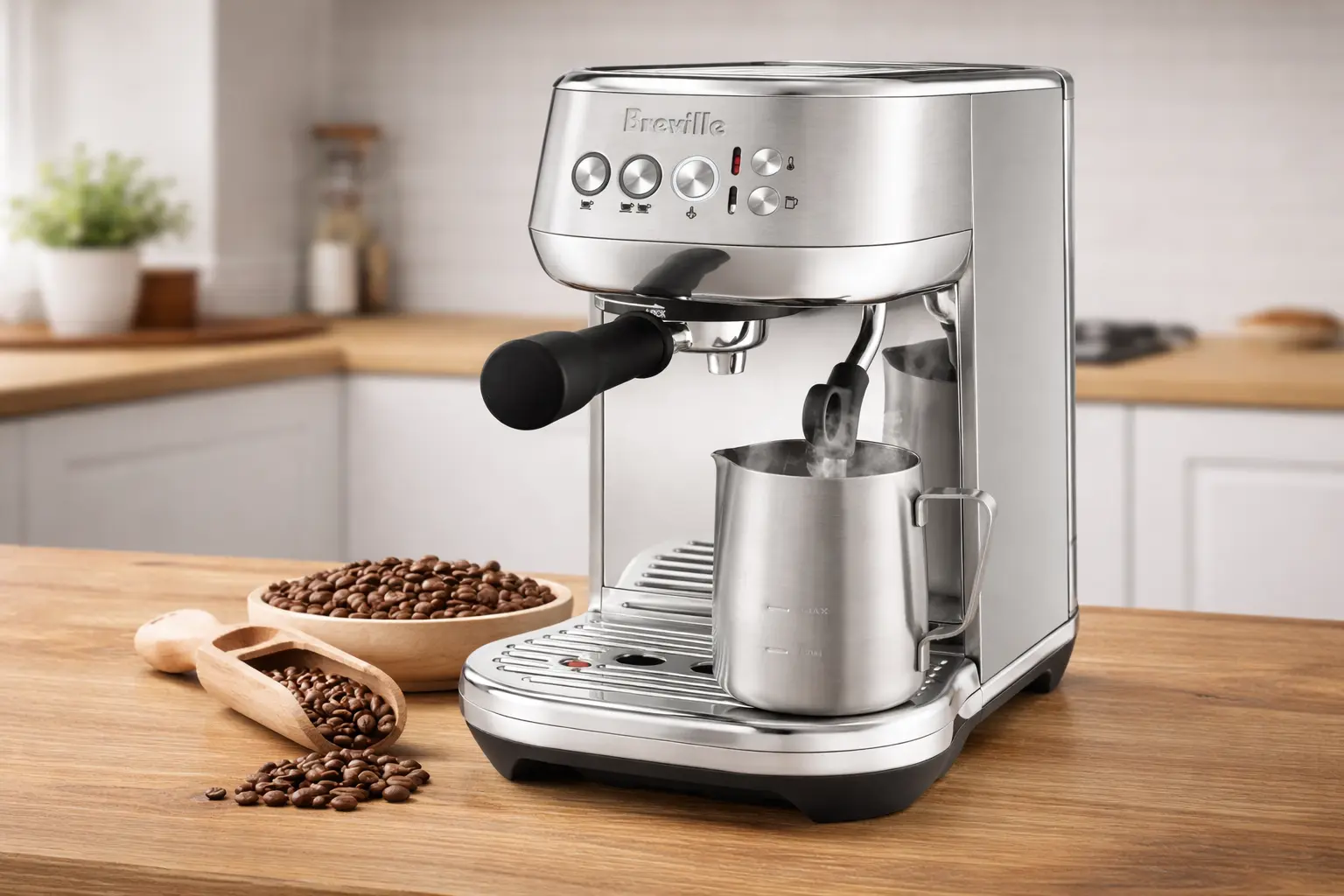
ThermoJet speed and automatic milk texturing without a built-in grinder; pair it with a separate grinder.
Affiliate disclosure: Amazon links may earn CoffeeGearHub a commission at no additional cost to you. Prices and availability can change.
Barista Pro vs Barista Express at a Glance
The two machines look similar on the counter and share Breville’s 54 mm portafilter platform, but the differences show up the moment you switch them on. The table summarizes the specifications that matter most, drawn from Breville’s product pages and Complete Home Barista’s comparison.
| Feature | Barista Pro (BES878) | Barista Express (BES870) |
|---|---|---|
| Heating system | ThermoJet | Thermocoil |
| Heat-up | About 3 seconds | About 45 seconds (reported) |
| Brew to steam | Near instant | Short wait after brewing |
| Temperature control | PID, adjustable | PID |
| Grind settings | 30 | 16 |
| Pre-infusion | Low-pressure | Low-pressure |
| Controls | LCD display and buttons | Dials and analog pressure gauge |
| Portafilter | 54 mm | 54 mm |
Everything that shapes the espresso itself, including portafilter size, pre-infusion, pump pressure, and PID temperature control, is shared. The differences are about speed, grind adjustment, and how the machine communicates with you. That is why the right choice depends far more on your routine than on cup quality.
Heating: ThermoJet vs Thermocoil
The biggest difference is the heating system. The Barista Pro uses Breville’s ThermoJet, which Breville says reaches extraction temperature in about 3 seconds and uses less energy than its older Thermoblock designs. In practice, you can turn the machine on, grind, and brew without waiting.
The Barista Express uses a Thermocoil system with PID control. It is reliable and delivers water at a stable temperature, but Complete Home Barista reports a heat-up of around 45 seconds, and you still want to run water through the group to warm the portafilter. Neither machine is slow compared with a traditional boiler machine, but the Pro removes almost all waiting, which adds up if you make several drinks a day.
Temperature control is closer than the heating systems suggest. Breville lists PID control on both machines, which keeps brew water stable shot to shot. The Pro adds user-adjustable temperature through its menu, which helps when a light roast tastes sour or a dark roast tastes harsh; the Express also allows small temperature offsets, but only through a less obvious programming sequence described in its manual.
The Built-In Grinder: 30 Settings vs 16
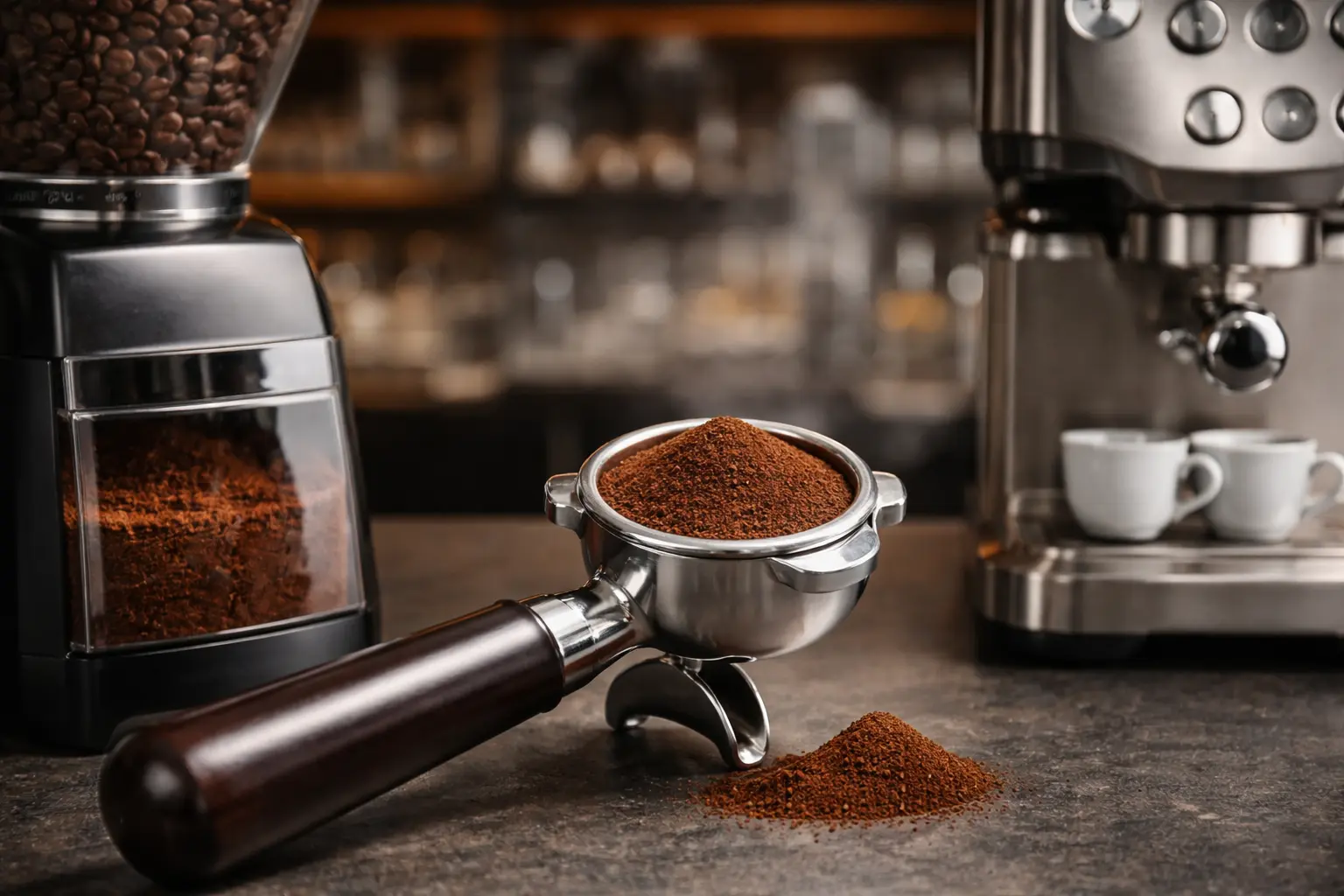
Both machines include an integrated conical burr grinder with dose control, which is their main appeal: you do not need to buy a separate grinder to start making espresso. The difference is resolution. The Pro offers 30 grind settings to the Express’s 16, so each step is a smaller change in particle size. Breville’s current Pro listing describes its burrs as Baratza European precision burrs.
Finer steps make dialing in easier, especially with light roasts or when a shot is running just slightly fast or slow. Express owners can extend the range by adjusting the internal upper burr, a common tweak described in Breville’s documentation, but the Pro gives more control out of the box. Our how to dial in espresso guide explains how to use either grinder systematically.
Controls and Display
The Barista Express uses dials, buttons, and an analog pressure gauge on the front. The gauge is genuinely useful while learning: it shows whether a shot is extracting in the expected pressure range, giving instant feedback when the grind is too coarse or too fine. Some owners love this visual cue; others find it a distraction once they are weighing shots.
The Barista Pro replaces the gauge with an LCD display that shows grind setting, grind time, shot time, and temperature. Settings are adjusted with buttons and a dial, and the shot timer helps you track extraction without a separate timer. Neither system is objectively better; the Pro feels more modern and precise, while the Express feels more traditional and tactile.
Programming works similarly on both: you can set single and double shot volumes and grind amounts so that one button press repeats your recipe. That convenience is useful on busy mornings, but it measures time and volume rather than weight, so check your yield on a scale whenever you change beans or grind settings.
Milk Steaming and Brew-to-Steam Switching
Both machines have a manual steam wand capable of microfoam for latte art. The practical difference is the wait. Because the Pro’s ThermoJet heats so quickly, it switches from brewing to steaming almost instantly, while the Express needs a short pause after the shot before steam is ready. Complete Home Barista lists this as one of the main reasons to choose the Pro.
If you make one latte a day, that wait is minor. If you make several milk drinks in a row, it becomes noticeable every morning. Either way, a proper pitcher such as the Rattleware 12 oz helps, and our how to make a latte at home guide walks through the technique.
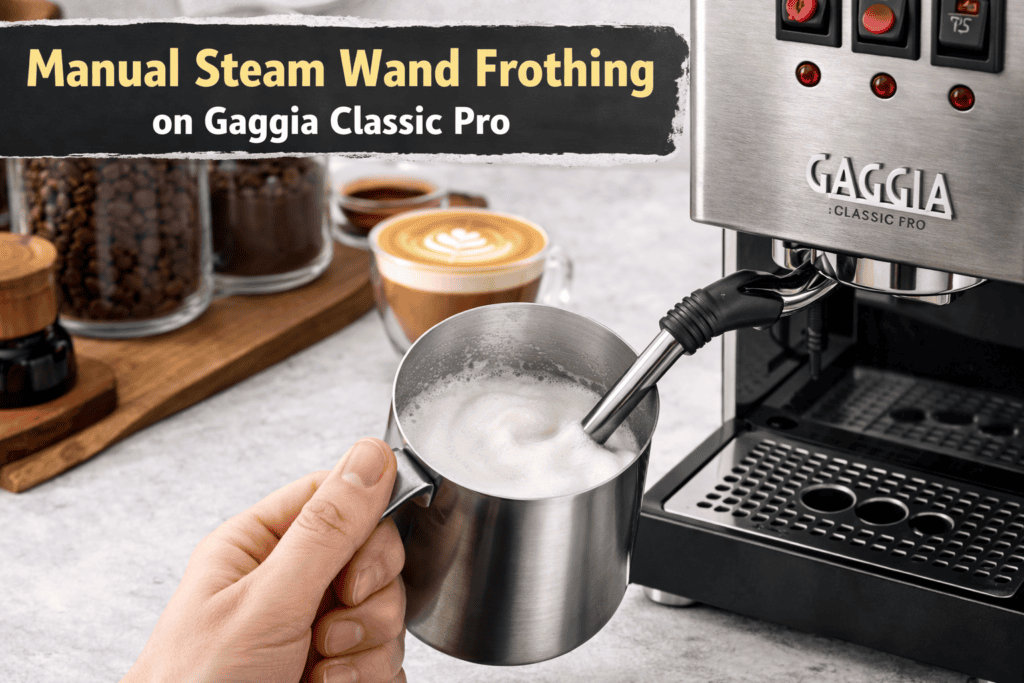
Steaming technique is the same on both: purge the wand, start with cold milk, stretch briefly near the surface, then sink the tip to spin the milk until it reaches about 60 to 65 degrees Celsius. Neither machine textures milk automatically, unlike the Bambino Plus, so expect a short learning curve. Wipe and purge the wand straight after every use so milk does not dry inside the tip.
Espresso Quality: Closer Than You Think
With the same beans, dose, and recipe, the two machines produce similar espresso. Both use a 54 mm portafilter, low-pressure pre-infusion before full pressure, and PID temperature control, so the extraction itself is very similar. The Pro’s advantages are indirect: finer grind steps make it easier to land the shot you want, and adjustable temperature gives more room to tune light or dark roasts.
For most home baristas, technique and beans matter more than the choice between these machines. A 0.1 g scale such as the Timemore Black Mirror Basic 2, a well-fitting 54 mm tamper, and a WDT tool will improve shots on either machine. Our best espresso accessories guide covers what to add first.
Daily Workflow and Size
A morning with the Pro is short: switch on, grind, tamp, brew, and steam with almost no waiting. The Express adds a brief warm-up and a pause before steaming, but the rest of the workflow is identical, including grinding directly into the portafilter and tamping with the included tamper.
Both are mid-sized machines that need counter space and clearance for the bean hopper on top. Complete Home Barista lists both with a 2 L water tank and a half-pound bean hopper, and Breville’s listings show similar footprints. Measure under your cabinets before buying either one.
Which Is Better for Beginners?
Both machines are designed as all-in-one starting points, and both come with the essentials: a portafilter with single and dual-wall baskets, a tamper, a milk jug, and cleaning tools. The dual-wall, or pressurized, baskets are forgiving with pre-ground coffee or an imperfect grind, which helps in the first few weeks. Once your grind is close, switching to the single-wall baskets is what unlocks better flavor on either machine.
The learning curve differs in small but real ways. The Express’s pressure gauge teaches you to read extraction visually, which some beginners find more intuitive than numbers. The Pro’s display gives you exact grind settings and a shot timer, which suits people who like to track recipes precisely. Neither will make espresso for you; both reward weighing your dose and yield and changing one variable at a time.
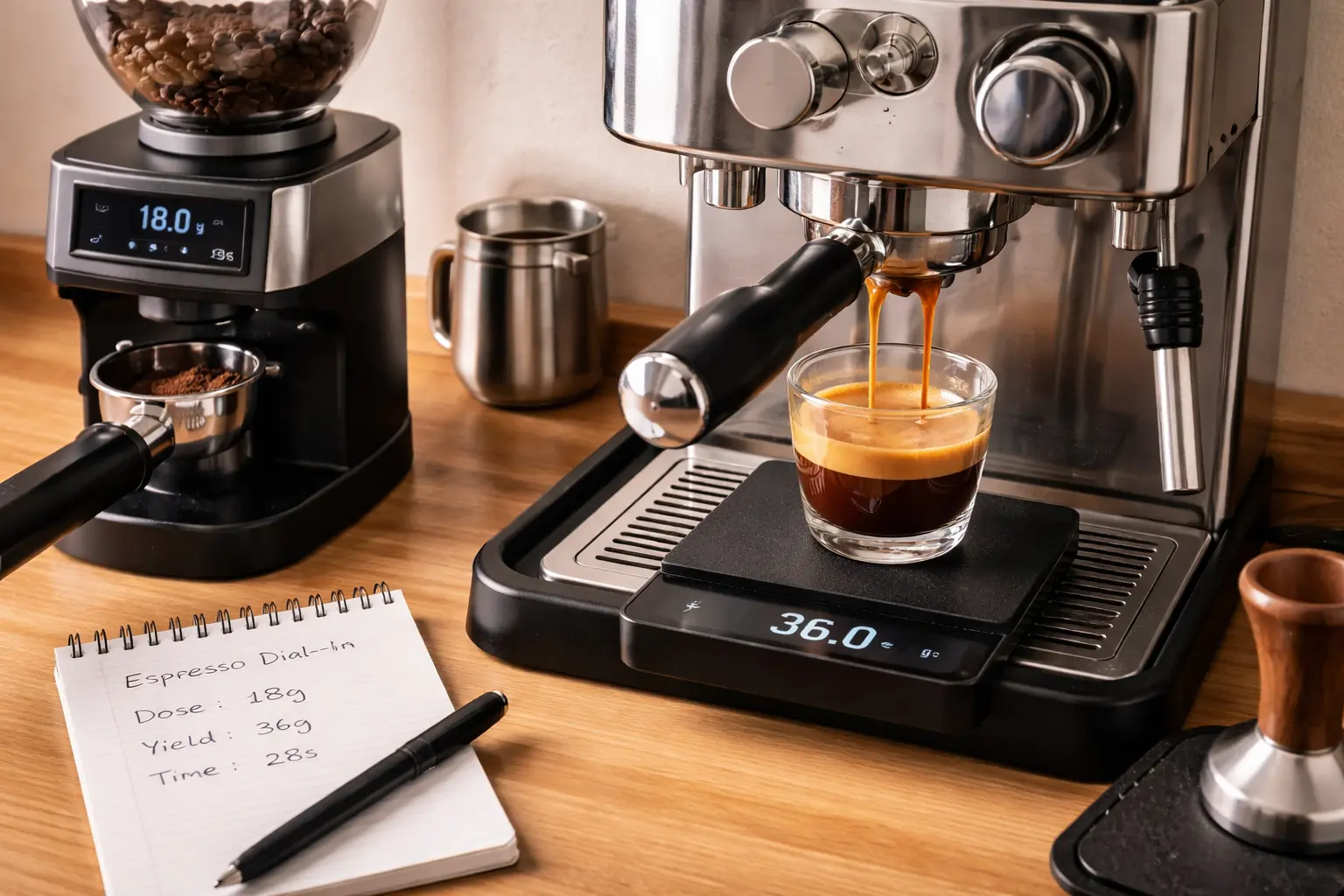
A sensible first-week routine on either machine is to pick one coffee, use a double basket with about 18 g in, aim for roughly 36 g out, and adjust only the grind until the shot runs in 25 to 35 seconds and tastes balanced. Write the setting down. Once that baseline works, milk drinks and recipe tweaks become much easier to learn.
Match the Machine to Your Routine
If you are still undecided, think about the drinks you actually make and how many. The table below matches common routines to the better fit.
| Your routine | Better fit | Why |
|---|---|---|
| Two or more milk drinks daily | Barista Pro | Near-instant switch from brewing to steam |
| Mostly espresso or Americanos | Barista Express | Same espresso fundamentals for less |
| Light roasts, precise dialing in | Barista Pro | 30 grind steps and adjustable temperature |
| Learning by visual feedback | Barista Express | Analog pressure gauge |
| Fast weekday mornings | Barista Pro | About 3-second heat-up |
| Tightest budget for an all-in-one | Barista Express | Long-running, widely available model |
Neither machine is a bad choice for any of these routines; the table simply shows where each one’s strengths pay off most. If your answers are split, the deciding question is usually how often you steam milk.
Maintenance and Reliability
Maintenance is similar on both: purge and wipe the steam wand after each use, rinse the portafilter and baskets, run the cleaning cycle with Breville’s cleaning tablets when prompted, replace the water filter, and descale on a schedule matched to your water hardness. Clean the grinder burrs periodically to prevent stale coffee oils building up.
The Barista Express has been on the market far longer and has a large owner base, which means abundant troubleshooting guides and replacement parts. Complete Home Barista describes it as the better value with proven reliability. The Pro’s ThermoJet system is newer but widely used across Breville’s range. Our espresso machine maintenance guide covers a schedule for either machine.
Extras You Will Still Want
An integrated grinder means neither machine needs a separate grinder to get started, but a few inexpensive extras make a bigger difference than the gap between the two machines. A 0.1 g scale is the most important, because the built-in dosing and shot buttons work by time and volume rather than weight. Weighing dose and yield is what makes a recipe repeatable from one day to the next.
The included tampers on both machines are serviceable but light, and many owners upgrade to a better-fitting 54 mm tamper. A WDT tool helps break up the clumps that integrated grinders often produce, and filtered water reduces scale in the heating system. None of these change which machine you should buy, but they will improve whichever one you choose.
It is also worth planning for the grinder’s limits. Integrated grinders are convenient but cannot be upgraded separately; if you later want a better grinder, you will be buying a standalone one anyway. That is the main argument for the alternative route of a Bambino Plus with a separate grinder, covered below.
Alternatives Worth Considering
If you like the Pro’s speed but want a better grinder, consider the Breville Bambino Plus paired with a separate grinder such as the Baratza Encore ESP. The Bambino Plus shares the ThermoJet heating and adds automatic milk texturing, and a dedicated grinder can be upgraded later without replacing the whole machine. Our Bambino Plus vs Barista Express comparison covers that route.
If you want more hands-on control and a machine built to last, the Gaggia Classic Pro E24 with a separate grinder is another path, covered in our Gaggia Classic Pro E24 review. Breville’s Express Impress adds assisted dosing and tamping to the Express format for buyers who want even more guidance.
Which Should You Buy?
Buy the Breville Barista Pro if you make milk drinks most days, often make more than one drink at a time, or simply want the fastest, most modern version of Breville’s all-in-one. The 3-second heat-up, near-instant switch to steam, 30-setting grinder, and shot timer make daily use smoother.
Buy the Breville Barista Express if value matters most, you mainly drink espresso or Americanos, or you like the feedback of an analog pressure gauge. It shares the Pro’s 54 mm format, PID, and pre-infusion, so the espresso itself is very similar, and its long track record means parts and help are easy to find.
If you are torn, decide based on milk. People who mostly drink straight espresso rarely notice the Pro’s speed advantage, while people who make two lattes every morning notice it every single day. Whichever you choose, budget for a scale and a better tamper, and expect to spend the first week dialing in; both machines reward that effort with very good espresso for the price.
Choose Your Breville All-in-One
The Pro is faster and more refined; the Express is the better value with the same espresso fundamentals.
As an Amazon Associate, CoffeeGearHub earns from qualifying purchases.
Editorial bottom line: The Barista Pro and Barista Express make similar espresso. The Pro’s advantages are speed, a 3-second heat-up and near-instant steam, plus a finer 30-setting grinder and digital display. Buy the Pro for frequent milk drinks and convenience; buy the Express for value.
Frequently Asked Questions
What is the main difference between the Barista Pro and Barista Express?
Heating and convenience. The Barista Pro uses a ThermoJet system that heats in about 3 seconds and switches to steam almost instantly, plus a 30-setting grinder and LCD display. The Barista Express uses a Thermocoil system with a 16-setting grinder and an analog pressure gauge.
Does the Barista Pro make better espresso than the Barista Express?
Not dramatically. Both use a 54 mm portafilter, PID temperature control, and low-pressure pre-infusion, so with the same beans and good technique their shots are similar. The Pro’s finer grind adjustment can make dialing in easier.
Is the Barista Pro worth the extra money?
It is if you make milk drinks most days or value a fast morning routine. If you mostly drink espresso or Americanos and want the best value, the Barista Express is the better buy.
Do both machines have PID temperature control?
Yes. Breville lists PID temperature control for both the Barista Express and the Barista Pro.
Which is easier for beginners?
Both are beginner-friendly all-in-ones. The Pro’s display and faster heat-up make it slightly more convenient, while the Express’s pressure gauge gives useful visual feedback while you learn.
What size tamper do the Barista Pro and Express use?
Both use 54 mm portafilters, which take a tamper of about 53 to 53.5 mm. Our best espresso accessories guide covers sizing.
Sources and Further Reading
Specifications follow Breville’s product pages for the Barista Pro and Barista Express. Comparison data, including heat-up and steam-ready times, follows Complete Home Barista’s Barista Pro vs Barista Express comparison. Technique follows CoffeeGearHub’s dial-in and milk steaming guides.
CoffeeGearHub product shortlist
Continue with related products on CoffeeGearHub
Review product categories and current verified merchant offers on CoffeeGearHub before leaving the site.