
Best Espresso Accessories (2026): Tamper, WDT Tool, Puck Screen, Knock Box and More
Editorial standards: recommendations are based on what each accessory is designed to fix, published explanations of puck preparation, manufacturer listings, and CoffeeGearHub’s existing espresso guides. Sizes should always be checked against your machine’s basket before buying. CoffeeGearHub does not claim hands-on testing where it has not occurred.
At a glance
What this espresso accessories guide covers
Which accessories actually improve espresso and which are optional, the right tamper for 54 mm and 58 mm machines, how a WDT tool and puck screen work, dosing funnels, tamping mats, scales, knock boxes, backflushing and cleaning tablets, precision baskets and bottomless portafilters, a sizing guide for common machines, and the order to buy everything in.
Editorial analysis
Most accessories fix one problem: uneven pucks
Almost every useful espresso accessory exists to make the coffee bed in the basket more even, more repeatable, or easier to keep clean. Water under pressure takes the easiest path through the puck, so clumps, loose spots, and tilted tamps all become channels that over-extract some coffee and under-extract the rest.
That makes the accessory question simpler than the market suggests. A good tamper, a scale, and a WDT tool fix the most common causes of uneven shots. Cleaning tools keep the machine tasting right. Everything else is a refinement that pays off once those basics are in place.
The 30-Second Answer
The espresso accessories that matter most are a properly sized tamper, a 0.1 g scale, and a WDT tool. Together they fix the biggest causes of sour, bitter, or inconsistent shots. Add a knock box and cleaning tablets for daily convenience and machine care, then consider a puck screen, dosing funnel, precision basket, or bottomless portafilter as upgrades.
Size is everything: Breville Bambino and Barista Express machines use 54 mm baskets, while the Gaggia Classic and most prosumer machines use 58 mm. Check your basket before buying any tamper, screen, or funnel.
Compare current options
Start with these representative choices
The three accessories most worth buying first. Every pick below is chosen for what it does, not tested by us; check the size against your basket.
Normcore V4 Tamper, 58.5 mm — Consistent tamps
A spring-loaded, self-leveling tamper for 58 mm baskets that delivers the same pressure every time. A Breville-sized option is covered below.
MHW-3Bomber Needle Distributor — Breaks up clumps
Fine needles stir out clumps and even the coffee bed before tamping, the single cheapest fix for channeling.

Timemore Black Mirror Basic 2 — Repeatable recipes
A 0.1 g scale with a timer for weighing dose and yield, the foundation of dialing in.
Affiliate disclosure: Amazon links may earn CoffeeGearHub a commission at no additional cost to you. Prices and availability can change.
Which Espresso Accessories Matter Most
Espresso is unforgiving because water is pushed through the coffee at around 9 bar of pressure. If the coffee bed has a weak spot, such as a clump, a loose edge, or a tilted tamp, the water rushes through it. That is channeling, and it produces a shot that tastes sour and bitter at the same time. Most of the accessories in this guide exist to prevent it, measure it, or clean up after it.
The table ranks each accessory by how much it typically helps. Essentials fix problems almost every home barista has; upgrades are worth it once your grinder, recipe, and basic technique are already working.
| Accessory | What it fixes | Priority | Size to check |
|---|---|---|---|
| Tamper | Uneven or inconsistent tamping | Essential | 54 mm or 58 mm basket |
| Scale (0.1 g) | Guesswork in dose and yield | Essential | Fits under your portafilter |
| WDT tool | Clumps and channeling | Essential | Any size |
| Knock box | Messy puck disposal | Daily convenience | None |
| Cleaning tablets | Coffee oil buildup | Machine care | Machine type |
| Blind basket | Backflushing three-way machines | Machine care | 58 mm for Gaggia |
| Puck screen | Dirty shower screen, soupy pucks | Upgrade | Basket diameter |
| Dosing funnel | Spilled grounds | Upgrade | Basket diameter |
| Precision basket | Inconsistent factory baskets | Upgrade | 54 mm or 58 mm portafilter |
| Bottomless portafilter | Hidden channeling | Diagnostic upgrade | Machine-specific |
Tamper: The First Upgrade for Most Machines
The plastic or lightweight tampers bundled with many home machines are often slightly undersized and hard to keep level, which leaves a ring of loose coffee at the edge of the basket and tilts the puck. Water then runs down the loose side. A tamper that fits the basket closely and presses flat removes both problems.
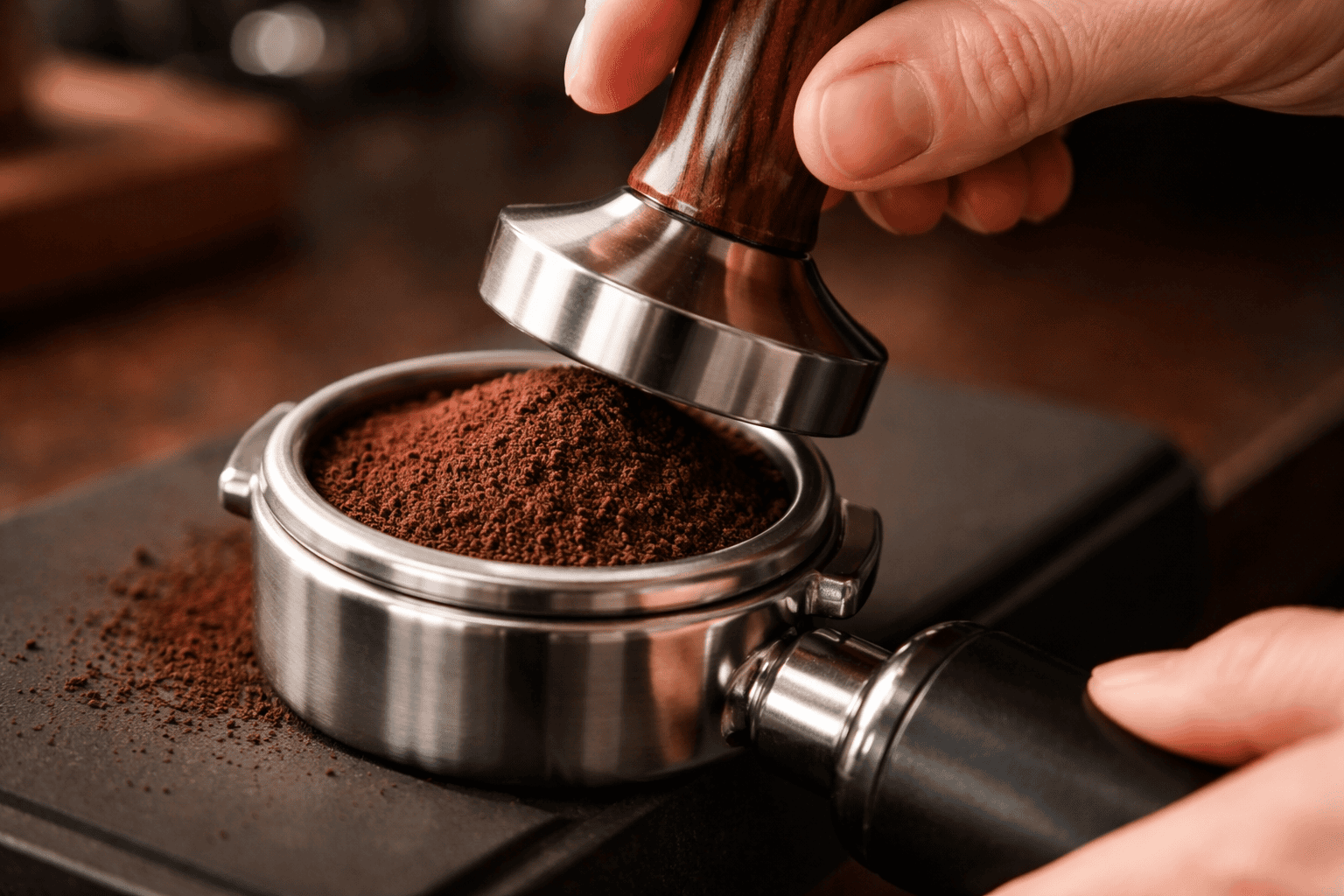
Spring-loaded, self-leveling tampers make this nearly automatic. The Normcore V4 spring-loaded tamper in 58.5 mm sits on the basket rim and applies the same pressure every time, so tamp force stops being a variable. For Breville’s 54 mm machines, use a BREYSIA tamper sized for Breville’s 54 mm baskets instead. The exact force matters far less than consistency: press until the coffee stops compressing, keep it level, and do it the same way every shot.
Fit matters more than brand. A tamper only a millimeter too small leaves the edge loose, while one too large will not enter the basket. If you later switch to a precision basket, check that your tamper suits its slightly straighter walls.
WDT Tool: The Cheapest Fix for Channeling
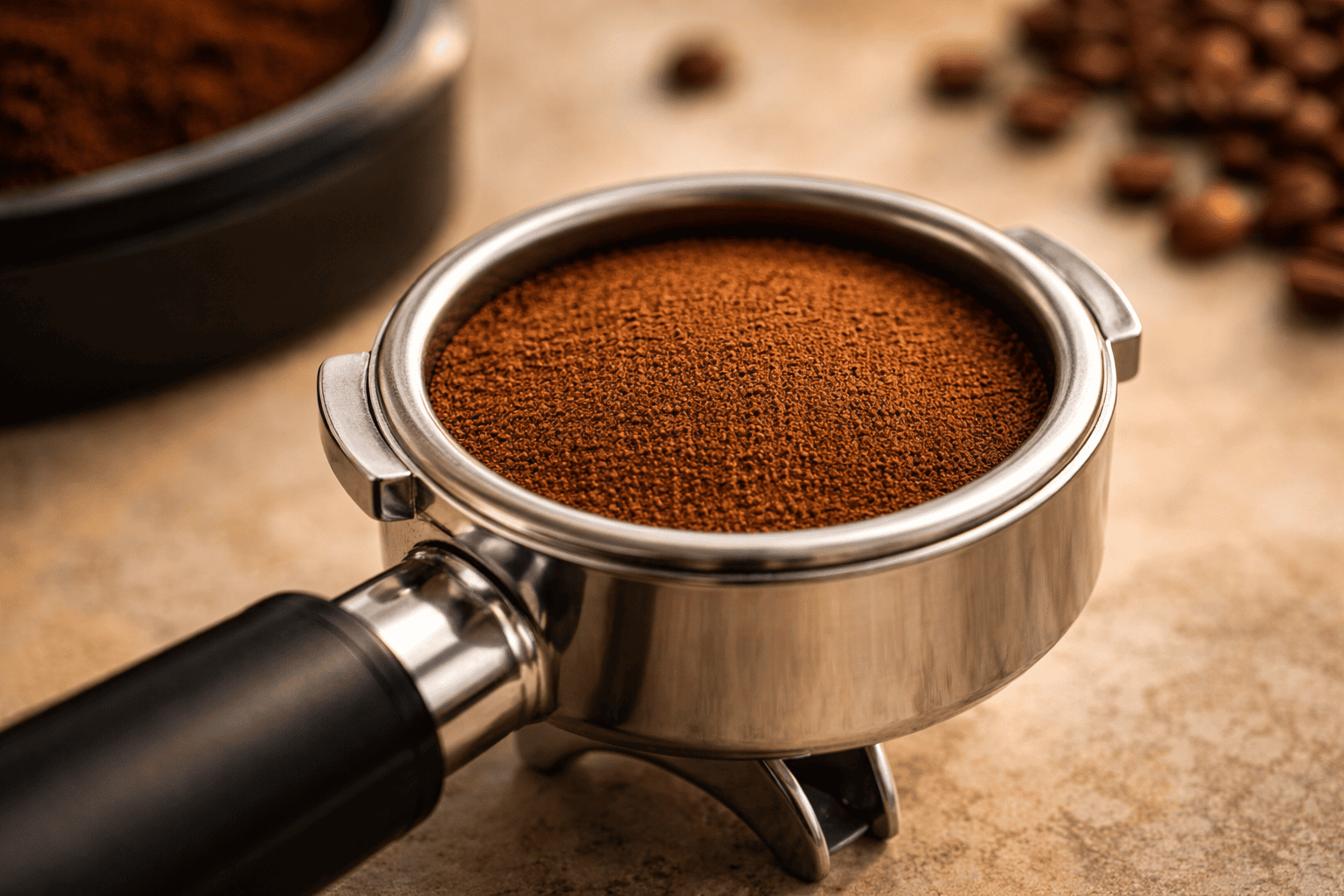
The Weiss Distribution Technique is named after John Weiss, a home espresso enthusiast who shared it on CoffeeGeek and Home-Barista in December 2005, according to Daily Coffee News. His original tool was a single thin needle and a cut-down yogurt cup used as a funnel. The idea is simple: stir the freshly ground coffee in the basket to break up clumps and spread the grounds evenly before tamping.
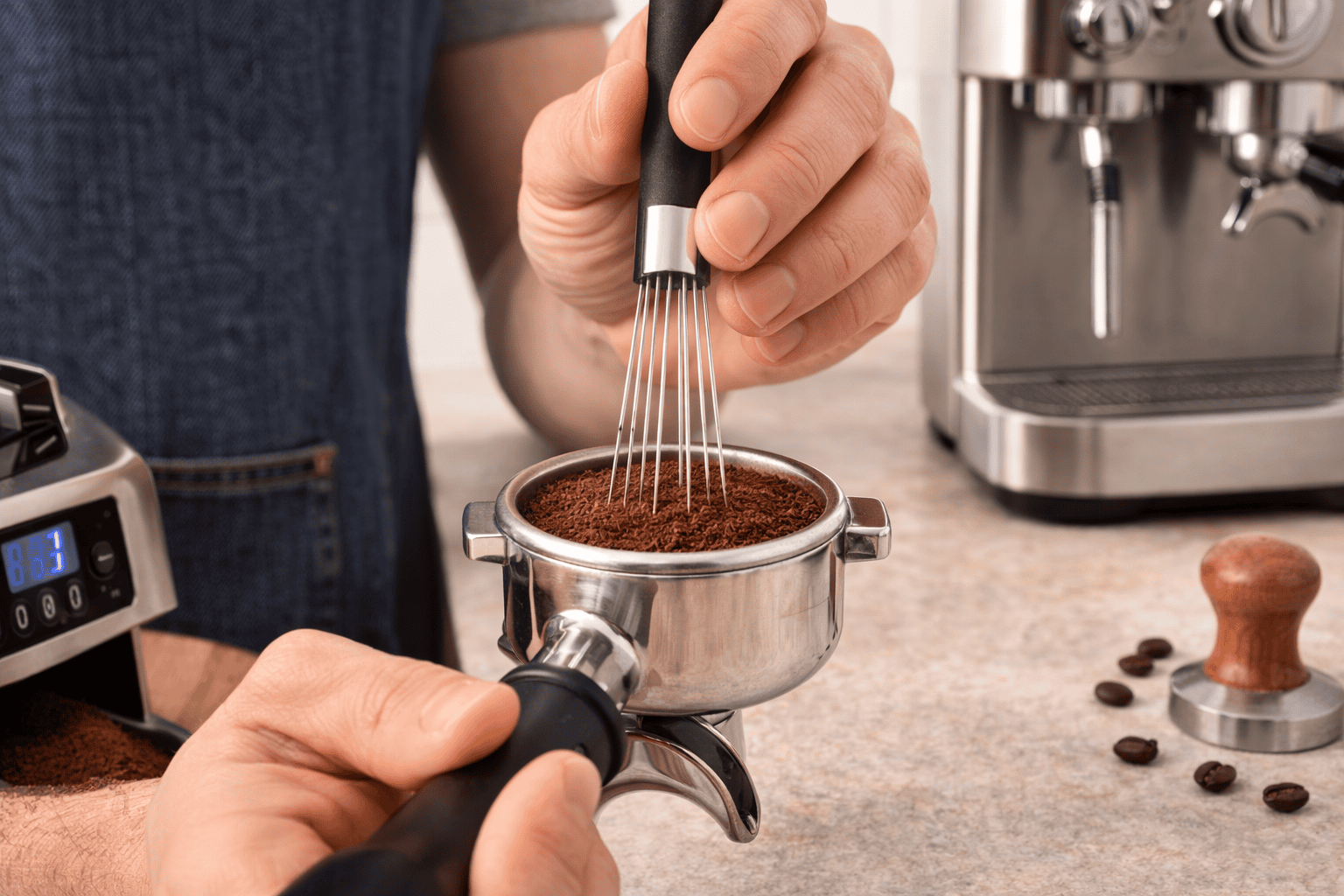
Most grinders produce some clumps, especially with fresh, oily beans and fine espresso grinds. Those clumps create dense and loose zones in the puck, and loose zones become channels. Stirring with fine needles, typically 0.1 to 0.5 mm thick on modern tools, breaks them apart without compacting the bed. The MHW-3Bomber needle distributor uses several fine needles in a handle so a few circular passes cover the whole basket.
Technique is forgiving. Stir in small circles from the bottom of the bed to the top, finish with a few light passes across the surface, then tap the portafilter gently to settle the grounds before tamping. It adds a few seconds per shot and is usually the most noticeable improvement for the money.
Scale: Measure Dose and Yield
Dialing in espresso means changing one variable at a time, and you cannot do that without knowing exactly how much coffee went into the basket and how much espresso came out. A scale that reads to 0.1 g and has a built-in timer turns espresso from guesswork into a recipe you can repeat and adjust.
Compact scales that fit on the drip tray under the portafilter are easiest to use. The Timemore Black Mirror Basic 2 is a popular choice, and our best espresso scales guide compares more. A typical starting recipe is 18 g of coffee to about 36 g of espresso in 25 to 35 seconds; our espresso brew ratio guide explains how to adjust from there.
Weighing also helps with puck consistency. Dosing the same weight every time keeps the coffee bed at the same height in the basket, so the gap between the puck and the shower screen stays constant and your tamper and puck screen behave the same way shot after shot. If a recipe stops working, the scale tells you whether the dose, the yield, or the time has drifted before you start changing the grind.
Puck Screen: Cleaner Group, Easier Knock-Outs
A puck screen is a thin metal disc placed on top of the tamped coffee. Its main benefit, according to Seattle Coffee Gear, is keeping grounds from being drawn up onto the shower screen when the pump shuts off, which reduces oil and fines buildup around the group. Many users also find pucks come out drier and easier to knock out.
The effect on flavor is modest. Seattle Coffee Gear describes any taste difference as subtle and suggests beginners focus on fundamentals first, since a screen cannot rescue a poorly prepared puck. A screen also adds a prep and rinse step to every shot and needs periodic soaking in cleaner so its fine mesh does not clog. Very thick screens can take up headspace and may require a small dose or grind change.
If you want one, sizing is critical: too large and it will not sit flat, too small and grounds escape around the edge. The Normcore 58.5 mm puck screen suits 58 mm baskets, and the Normcore 53.5 mm puck screen is made for Breville’s 54 mm baskets.
Dosing Funnel and Tamping Mat
A dosing funnel is a short collar that sits on top of the basket. It catches grounds as they leave the grinder and keeps them in the basket while you stir with a WDT tool, which can otherwise flick coffee across the counter. Funnels such as the Normcore 58 mm dosing funnel sit securely on the portafilter rim while you dose and stir. It is a small tool, but it makes WDT faster and tidier, especially with fuller baskets.
A silicone corner tamping mat protects your counter and gives the portafilter a stable, level place to sit while you tamp. Corner mats hook over the counter edge so the portafilter spout hangs off the side, letting the basket sit flat. It is the least technical item in this guide, but a level surface makes a level tamp easier.
Knock Box: Daily Convenience
Used espresso pucks are wet, messy, and bad for drains. A knock box gives you a padded bar to rap the portafilter against so the puck drops out cleanly, then holds a few days of used grounds. The Normcore knock box is a compact option; whichever you choose, a removable bar and a non-slip base make emptying and cleaning simpler.
Empty it every day or two to prevent mold, and rinse it regularly. Used coffee grounds can go in compost or a garden bin rather than the sink. If your pucks come out soupy rather than as a firm disc, the cause is usually a dose too small for the basket or the absence of a three-way solenoid, and a puck screen or slightly higher dose can help.
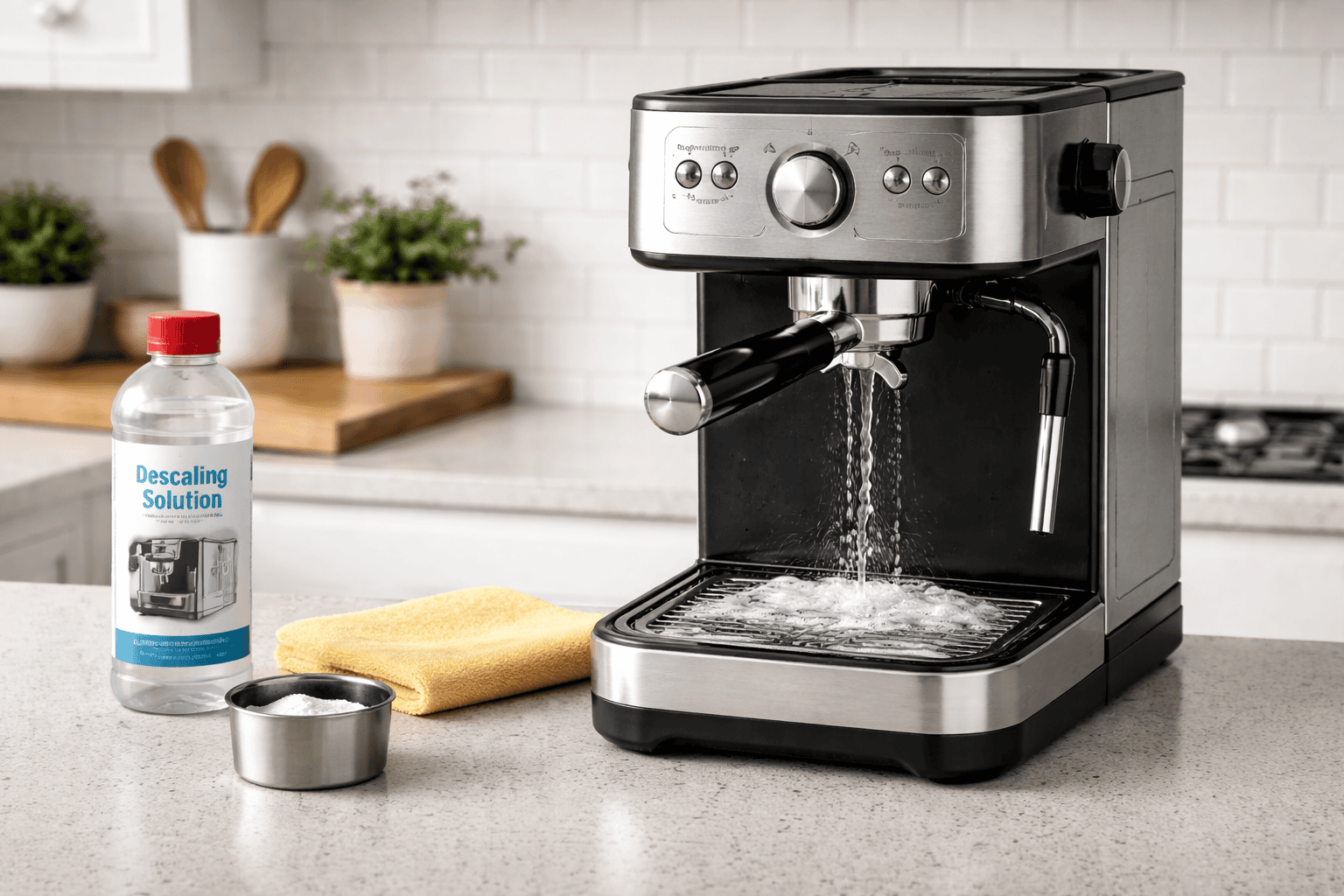
Cleaning Tools: Blind Basket and Cafiza
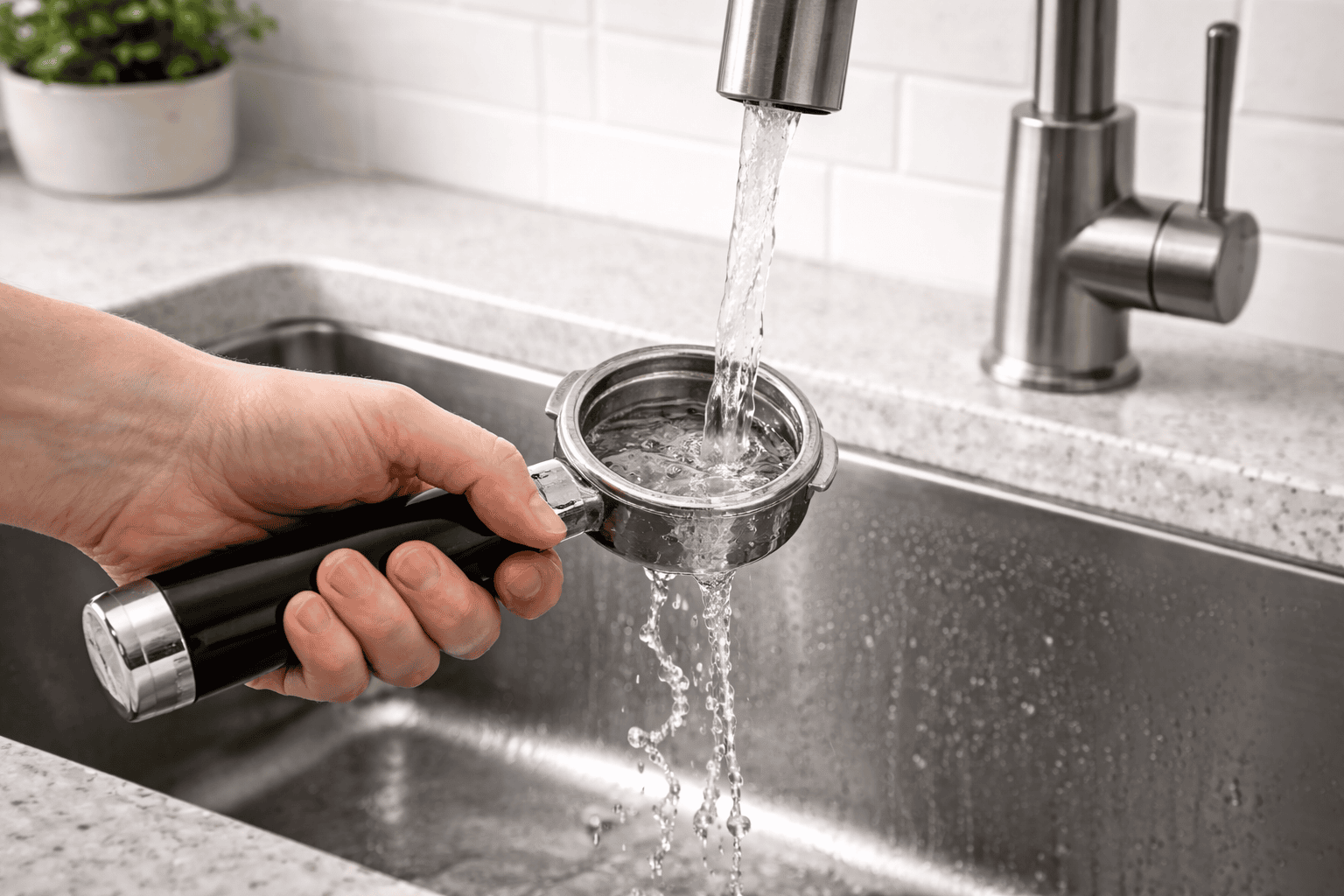
Coffee oils build up in the group head, shower screen, and valves over time, and old oils turn rancid and taint every shot. Machines with a three-way solenoid valve, including the Gaggia Classic, can be backflushed: you lock in a 58 mm blind basket, a basket with no holes, and run the pump so pressure forces water back through the solenoid and out of the drain, carrying residue with it.
Water backflushes clear loose grounds; a cleaning tablet or powder such as Urnex Cafiza dissolves the oils. Follow your manufacturer’s guidance for how often to use a cleaner, since too-frequent chemical backflushing can dry out group gaskets on some machines. Cafiza is also useful for soaking baskets, puck screens, and portafilters, which hold oils in their fine holes.
Breville machines such as the Bambino and Barista Express do not backflush the same way; they use their own cleaning disc and tablets in a guided cleaning cycle, so check your manual before buying a blind basket. Our espresso machine maintenance guide sets out a schedule, and filtered water from a Brita pitcher slows scale buildup.
Precision Baskets and Bottomless Portafilters
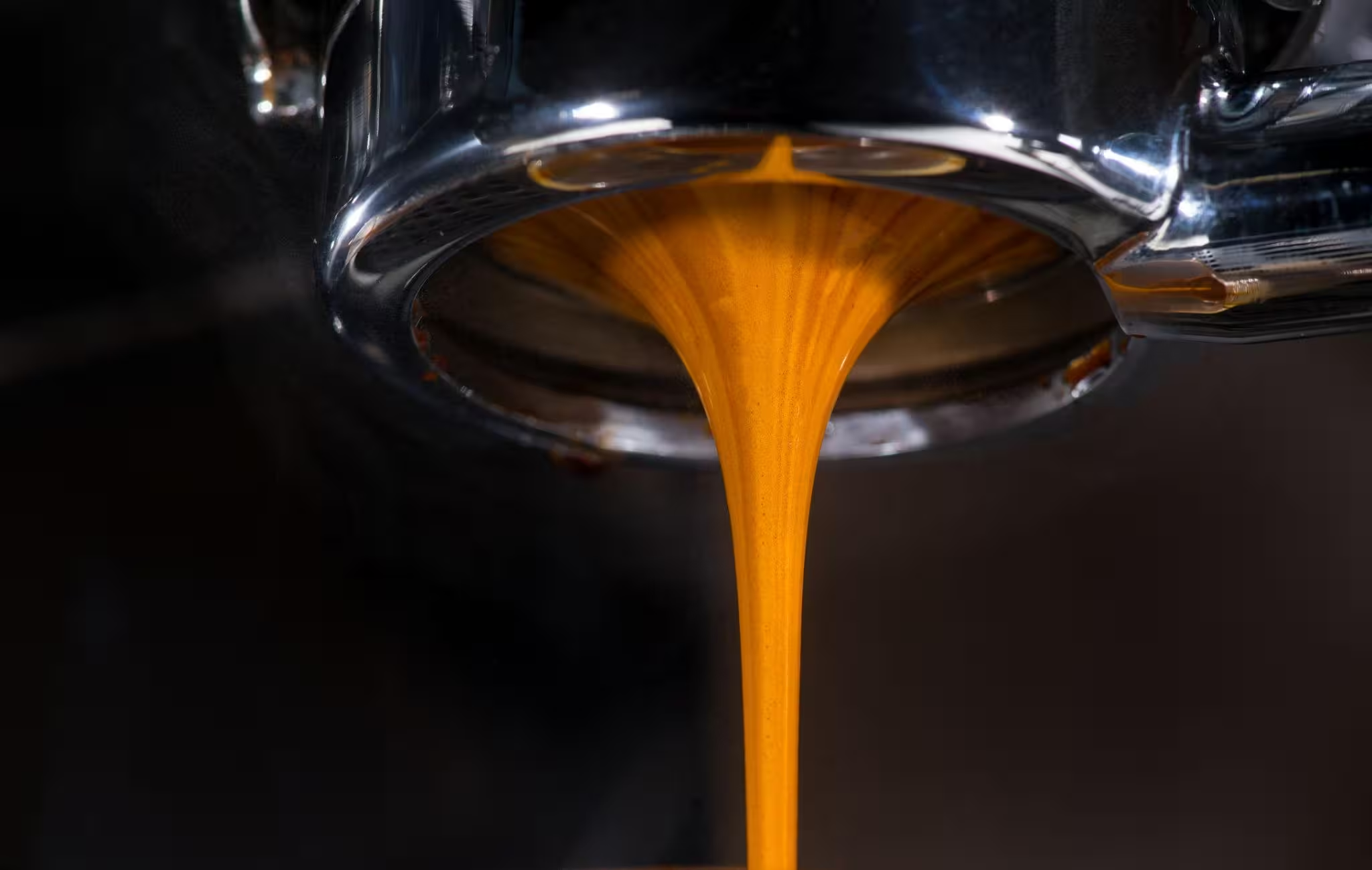
Factory baskets vary in hole size and spacing, which can cause uneven flow. Precision baskets are made to tighter tolerances with consistent holes across the base, so water flows more evenly through a well-prepared puck. For Breville’s 54 mm machines, a 54 mm precision basket made for Breville portafilters is a straightforward upgrade; for 58 mm machines such as the Gaggia Classic, a non-pressurized 58 mm precision basket is the equivalent upgrade, and IMS and VST make well-known alternatives. Precision baskets reward good grinding and puck prep; they can expose weaknesses that a forgiving stock basket hides, so expect to adjust your grind after switching.
A bottomless portafilter removes the spouts and the bottom of the portafilter so you can watch espresso emerge from the underside of the basket. A well-prepared puck produces a single centered stream; channeling shows up as sprays, spurts, or pale spots. The 54 mm bottomless portafilter fits Breville’s 54 mm machines; confirm compatibility with your exact model before buying. It is a learning tool rather than a flavor upgrade, and pairs naturally with a WDT tool, since you can see the effect of better distribution immediately.
Sizing Guide for Popular Machines
Accessory sizes follow the basket, not the machine brand, and a few millimeters make the difference between a perfect fit and a useless tool. Use this table as a starting point, then confirm the exact size in your manual or by measuring the inside of your basket.
| Machine | Basket | Tamper | Puck screen | Notes |
|---|---|---|---|---|
| Breville Bambino / Bambino Plus | 54 mm | 53–53.5 mm | 53.5 mm | Uses Breville cleaning cycle |
| Breville Barista Express / Pro | 54 mm | 53–53.5 mm | 53.5 mm | Bottomless portafilters available |
| Gaggia Classic Pro / E24 | 58 mm | 58–58.5 mm | 58.5 mm | Backflush with a blind basket |
| Most prosumer machines | 58 mm | 58–58.5 mm | 58.5 mm | Check basket depth for screens |
Machines with smaller 51 mm baskets, common on some De’Longhi models, need their own size of tamper and screen. When in doubt, measure the inside diameter of the basket at the rim with a ruler or calipers before ordering.
What to Buy First
If you are building a setup from scratch, buy in order of impact. First, a properly sized tamper and a 0.1 g scale, because they make every other change measurable and repeatable. Second, a WDT tool, which tackles the most common cause of uneven extraction. Third, a knock box and cleaning supplies, because daily convenience and a clean machine keep you making espresso rather than dreading the cleanup.
Only then look at upgrades. A dosing funnel and tamping mat make the routine tidier. A puck screen keeps the group cleaner. A precision basket or bottomless portafilter helps once you are dialing in with confidence and want to see or reduce the last bits of channeling. None of these can make up for a weak grinder, which remains the single biggest influence on espresso quality; our best espresso grinders guide covers that choice.
For milk drinks, a stainless steaming pitcher such as the Rattleware 12 oz is the one milk accessory most worth adding. Our how to make a latte at home guide shows how to use it.
Some popular accessories are easy to skip. Leveling and distribution tools that spin across the top of the coffee mostly level the top layer rather than breaking up clumps deeper in the bed, so a WDT tool usually does more. Calibrated tampers with click mechanisms solve the same problem as a spring-loaded tamper. Decorative extras such as shot glasses and branded cups look good but do not change the coffee. Spend first on the tools that change how evenly water flows through the puck.
Start With the Essentials
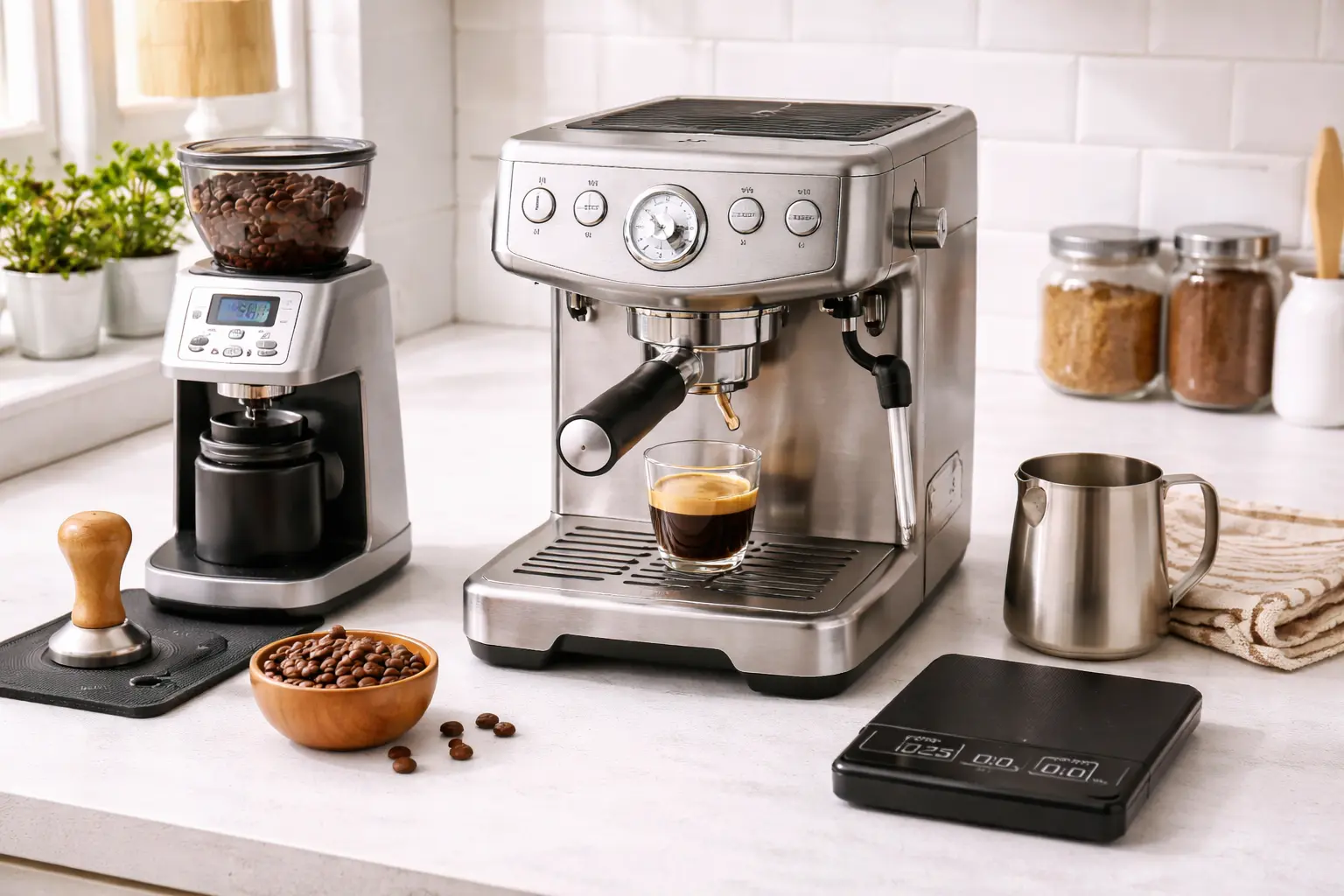
A well-fitting tamper and a WDT tool fix the most common causes of uneven shots.
As an Amazon Associate, CoffeeGearHub earns from qualifying purchases.
Editorial bottom line: Buy a properly sized tamper, a 0.1 g scale, and a WDT tool first; add a knock box and cleaning tablets next. Puck screens, dosing funnels, precision baskets, and bottomless portafilters are worthwhile upgrades once the basics are in place. Always match accessory size to your basket: 54 mm for most Breville machines, 58 mm for the Gaggia Classic.
Frequently Asked Questions
What espresso accessories do I actually need?
Start with a properly sized tamper, a 0.1 g scale, and a WDT tool. A knock box and cleaning tablets come next. Puck screens, dosing funnels, precision baskets, and bottomless portafilters are useful upgrades rather than essentials.
What size tamper do I need for a Breville?
Breville Bambino, Bambino Plus, Barista Express, and Barista Pro machines use 54 mm baskets, which take a tamper of about 53 to 53.5 mm. The Gaggia Classic and most other machines use 58 mm baskets, which take a 58 to 58.5 mm tamper.
Is a WDT tool worth it?
Yes, for most home baristas. Stirring the grounds with fine needles breaks up clumps and evens the coffee bed, which reduces channeling. It is inexpensive and adds only a few seconds to each shot.
Do puck screens improve espresso?
Mostly they keep the shower screen cleaner and make pucks easier to knock out. Any taste difference is usually subtle, so treat a puck screen as a convenience upgrade once your basic technique is solid.
How often should I backflush my espresso machine?
Machines with a three-way solenoid, such as the Gaggia Classic, can be backflushed with water regularly and with a cleaning tablet periodically according to the manufacturer’s instructions. Many Breville machines use their own cleaning cycle and disc instead, so follow your manual.
Why use a bottomless portafilter?
A bottomless portafilter shows the underside of the basket during extraction, so you can see channeling as sprays or uneven streams. It is a diagnostic tool that helps you improve puck preparation.
Sources and Further Reading
WDT history follows Daily Coffee News’ interview with John Weiss. Puck screen benefits and limitations follow Seattle Coffee Gear’s puck screen guide. Sizing follows manufacturer and retailer listings; confirm your basket diameter before buying. Technique follows CoffeeGearHub’s dial-in, troubleshooting, and maintenance guides.
CoffeeGearHub product shortlist
Continue with related products on CoffeeGearHub
Review product categories and current verified merchant offers on CoffeeGearHub before leaving the site.