
How to Make a Latte at Home: Step-by-Step Guide (2026)
Editorial standards: this guide is based on established barista technique, published milk-science guidance on steaming temperatures, manufacturer instructions, and CoffeeGearHub’s existing espresso and milk guides. CoffeeGearHub does not claim hands-on testing where it has not occurred.
At a glance
What this latte guide covers
What a latte actually is, the ratios and cup sizes, the equipment you need, how to pull the shot, a seven-step method with a steam wand, the science of milk temperature and texture, how to make a latte without an espresso machine, choosing milk, flavored and iced lattes, beginner latte art, and how to fix common problems.
Editorial analysis
A latte is mostly milk, so milk technique decides the drink
A typical latte is a double shot of espresso under three to five times as much steamed milk. That proportion explains why so many homemade lattes disappoint: the espresso can be good and the drink still taste flat if the milk is scalded, foamy, or separated.
The good news is that the milk technique is learnable in a week of mornings. Get the temperature right, add only a little air, and keep the milk spinning until it turns glossy. Everything else in this guide supports those three habits.
The 30-Second Answer
To make a latte at home, pull a double shot of espresso (about 18 g of coffee to 36 g of liquid) into a warm 8 to 12 oz cup, then steam 150 to 200 ml of cold milk to about 60 to 65°C (140 to 150°F), adding only enough air to grow it by about a quarter. Swirl the milk until glossy and pour it into the espresso, finishing with a thin layer of foam.
No espresso machine? Brew a strong moka pot or AeroPress concentrate and use an electric frother such as the Nespresso Aeroccino; our how to froth milk without a steam wand guide covers every method.
Compare current options
Start with these representative choices
Three common routes to a home latte. Our best espresso machines for beginners and best milk frothers guides compare more options.
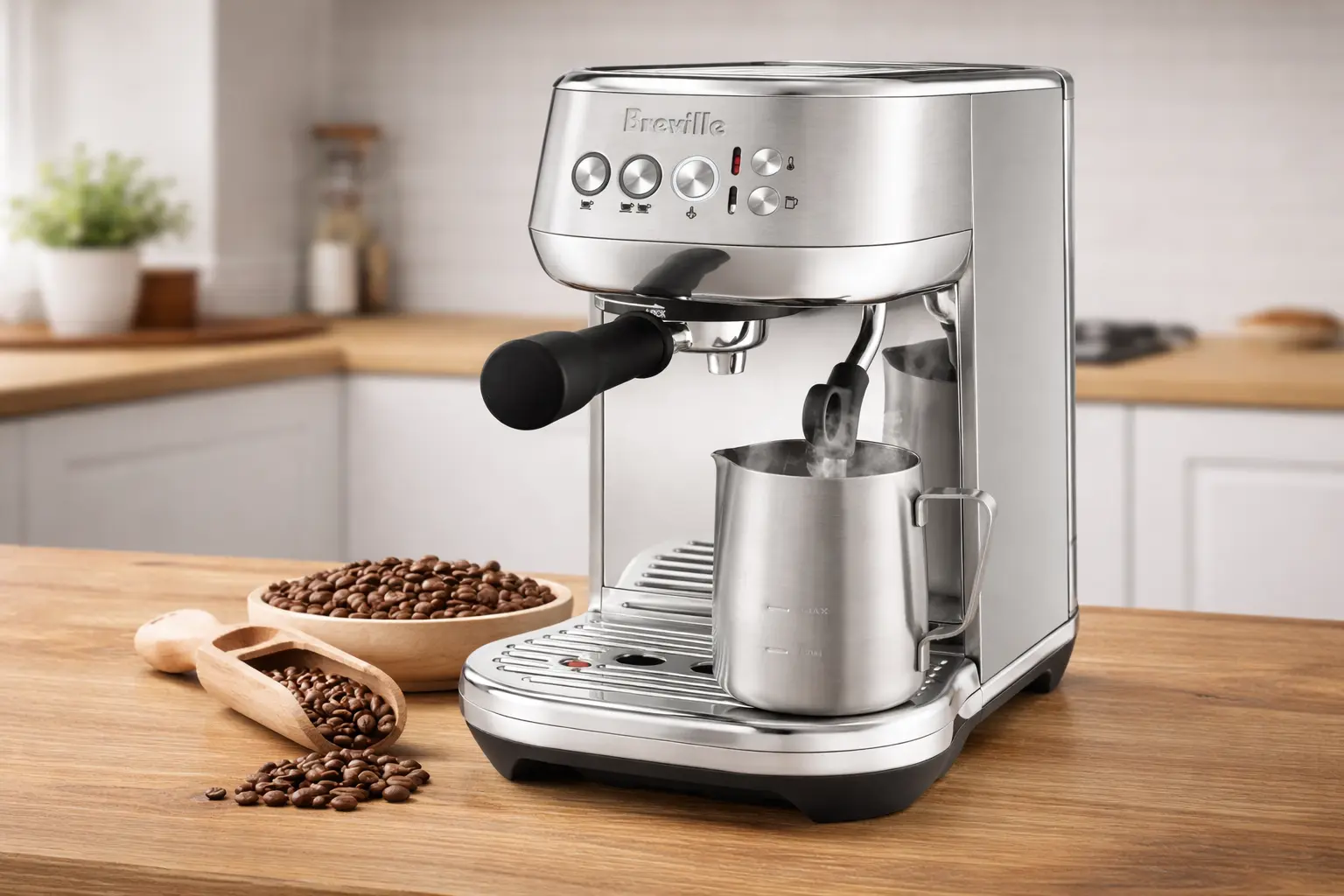
Breville Bambino Plus — Easiest machine for lattes
Fast heat-up, PID temperature control, and automatic milk texturing that sets temperature and foam for you.
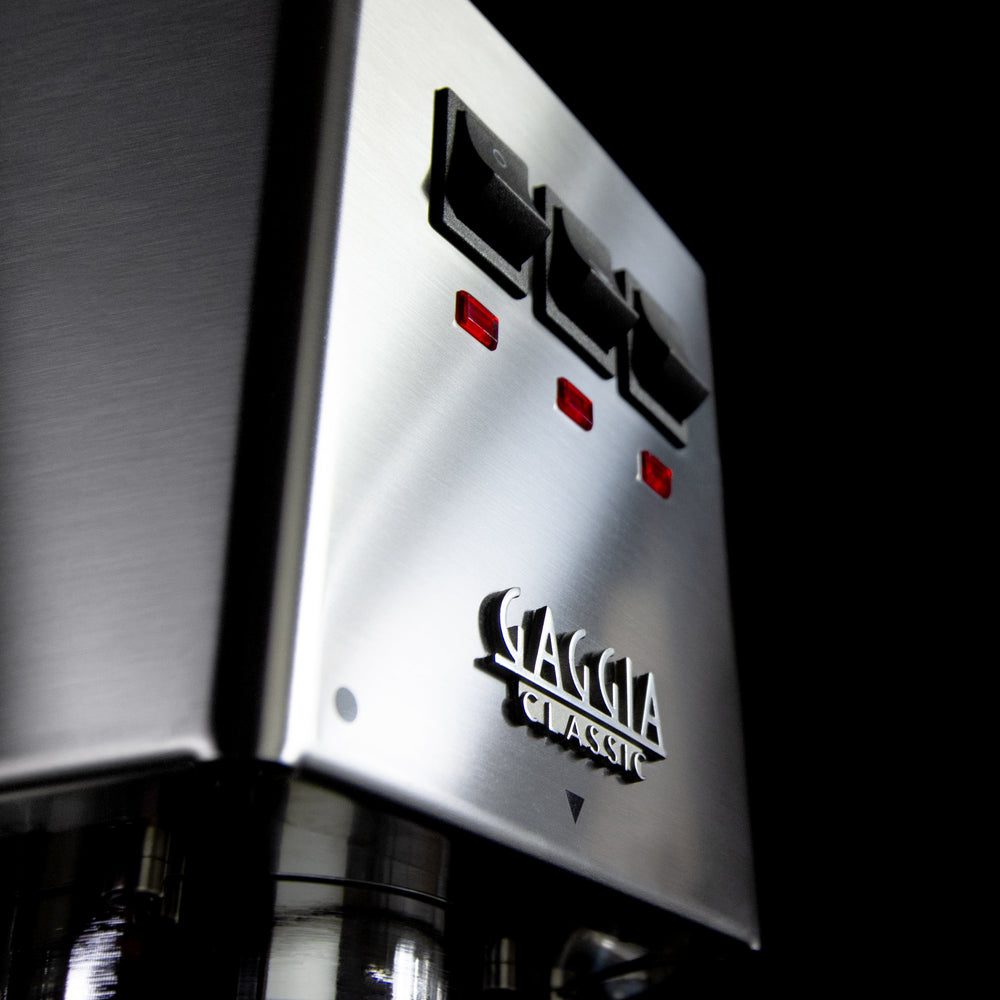
Gaggia Classic Pro E24 — For learning manual steaming
A powerful commercial-style steam wand and 58 mm group for people who want to master milk by hand.
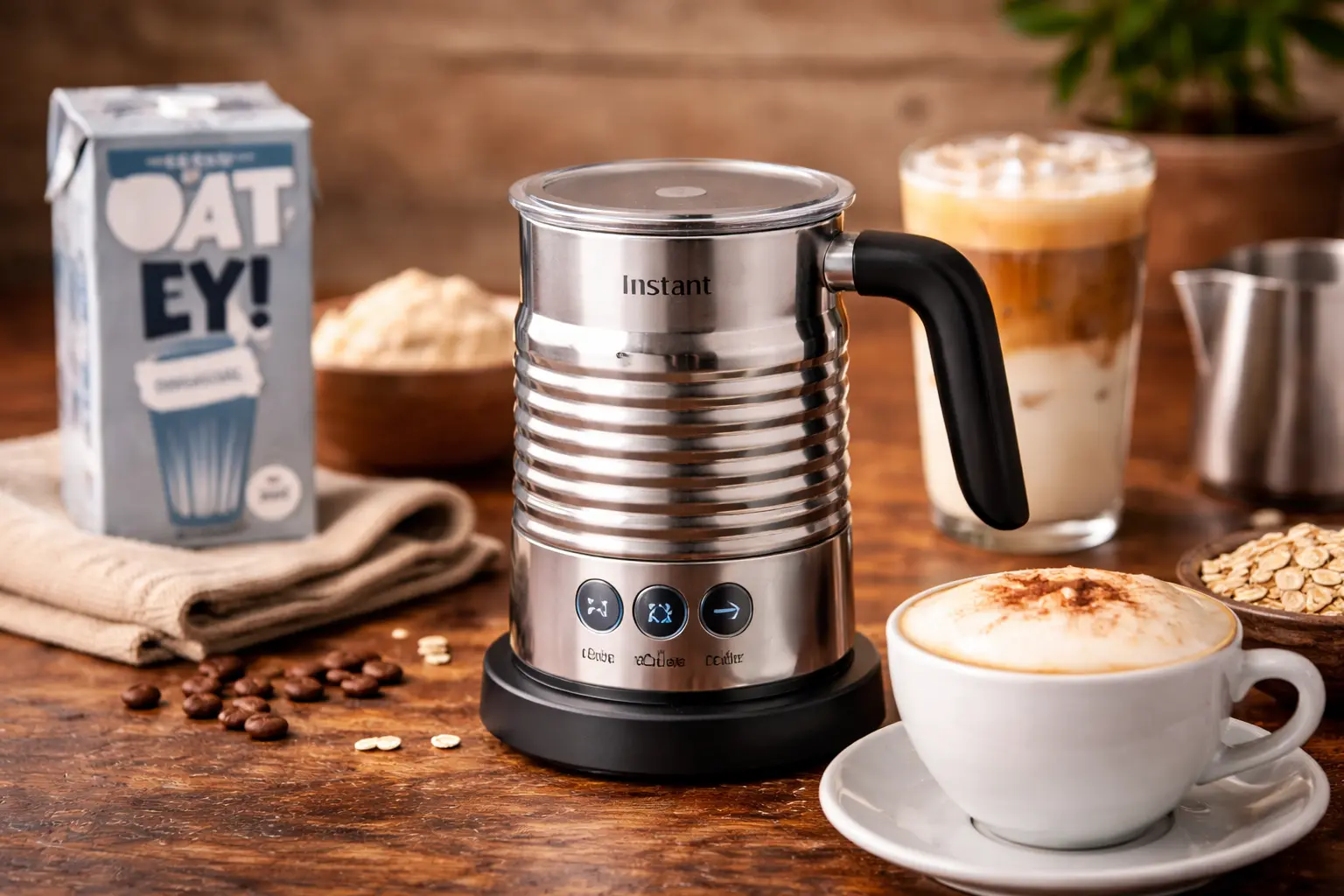
Nespresso Aeroccino 4 — No espresso machine needed
Heats and froths milk at the touch of a button, with settings for hot foam, hot milk, and cold foam.
Affiliate disclosure: Amazon links may earn CoffeeGearHub a commission at no additional cost to you. Prices and availability can change.
What a Latte Actually Is
A caffè latte is espresso with a large amount of steamed milk and a thin layer of microfoam on top. It sits at the milky, mellow end of the espresso-drink family: a cappuccino uses less milk and more foam, a flat white uses less milk and very thin foam, and a cortado is close to equal parts espresso and milk. Our latte vs cappuccino vs flat white guide compares them in detail.
Because milk makes up most of the drink, a latte is forgiving of imperfect espresso but unforgiving of bad milk. Silky, sweet, properly heated milk carries the coffee’s flavor; milk that is boiled, bubbly, or separated buries it. That is why most of this guide is about milk.
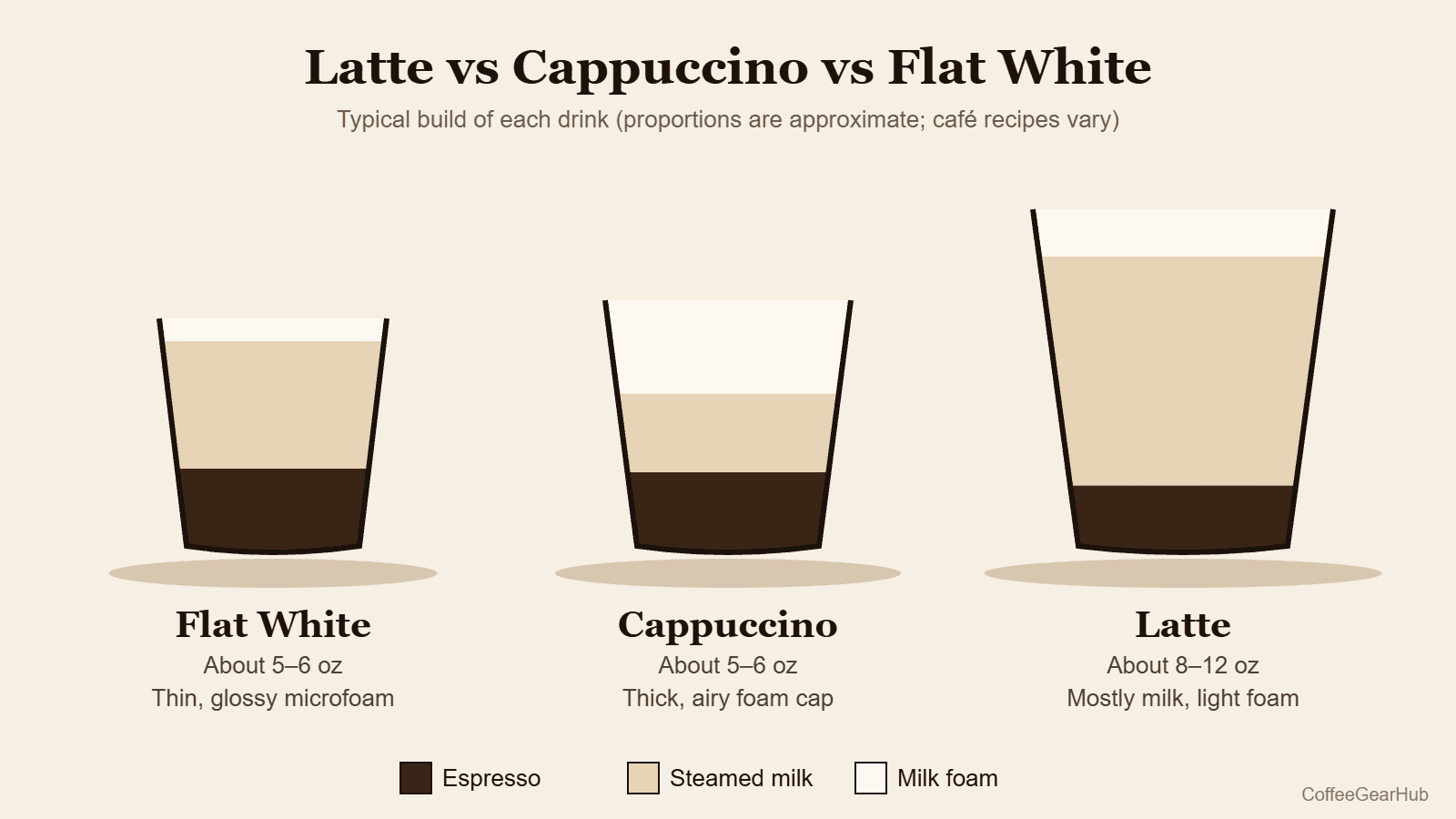
Cup size changes the balance more than people expect. A double shot holds its own in a 10 oz latte, but in a 16 oz mug it becomes a coffee-flavored milk drink. If you like large lattes, add a third shot rather than more milk. The table gives practical starting points.
| Cup size | Espresso | Steamed milk | Foam |
|---|---|---|---|
| 8 oz | Double shot (about 36 g) | About 150 ml | Thin, about 1 cm |
| 10–12 oz | Double shot (36–40 g) | 180–250 ml | Thin, about 1 cm |
| 16 oz | Triple shot | About 330 ml | Thin, about 1 cm |
| Iced 12 oz | Double shot | About 150 ml cold | None or cold foam |
What You Need
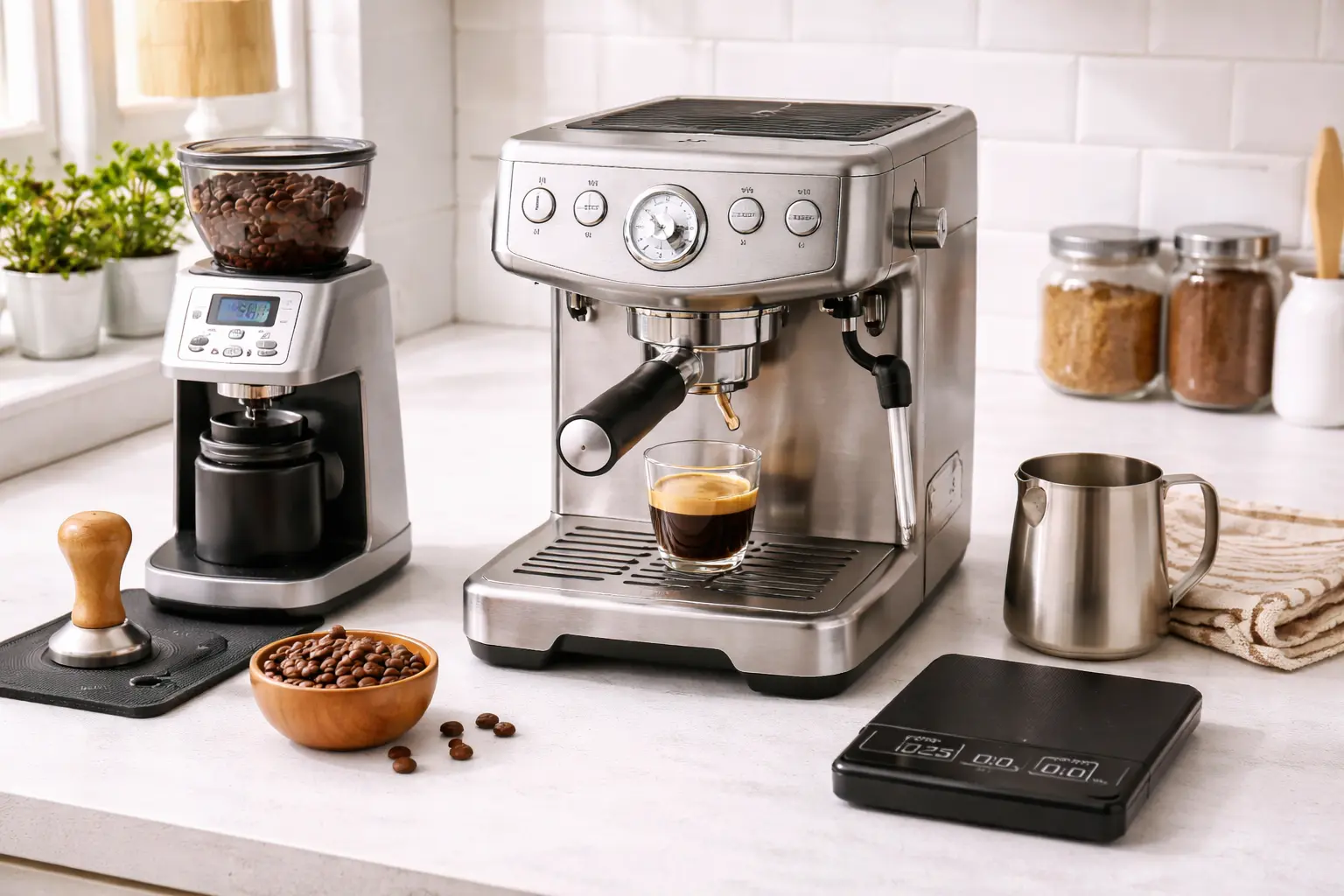
The classic setup is an espresso machine with a steam wand, a burr grinder that can grind fine enough for espresso, a stainless milk pitcher, and a scale. A 12 oz pitcher such as the Rattleware 12 oz suits a single latte; its spout and shape help the milk spin and pour cleanly. A 0.1 g scale like the Timemore Black Mirror Basic 2 makes shots repeatable from one morning to the next. Our best espresso accessories guide covers the rest of the kit.
Machine choice mostly decides how much of the milk work you do. The Breville Bambino Plus can texture milk automatically to a set temperature and foam level, which removes most of the learning curve. A manual wand such as the one on the Gaggia Classic Pro E24 is more powerful and teaches real barista technique, but it takes practice. If you are choosing a grinder, the Baratza Encore ESP is an approachable espresso-capable option, and our best espresso grinders guide compares more.
Start With a Good Double Shot
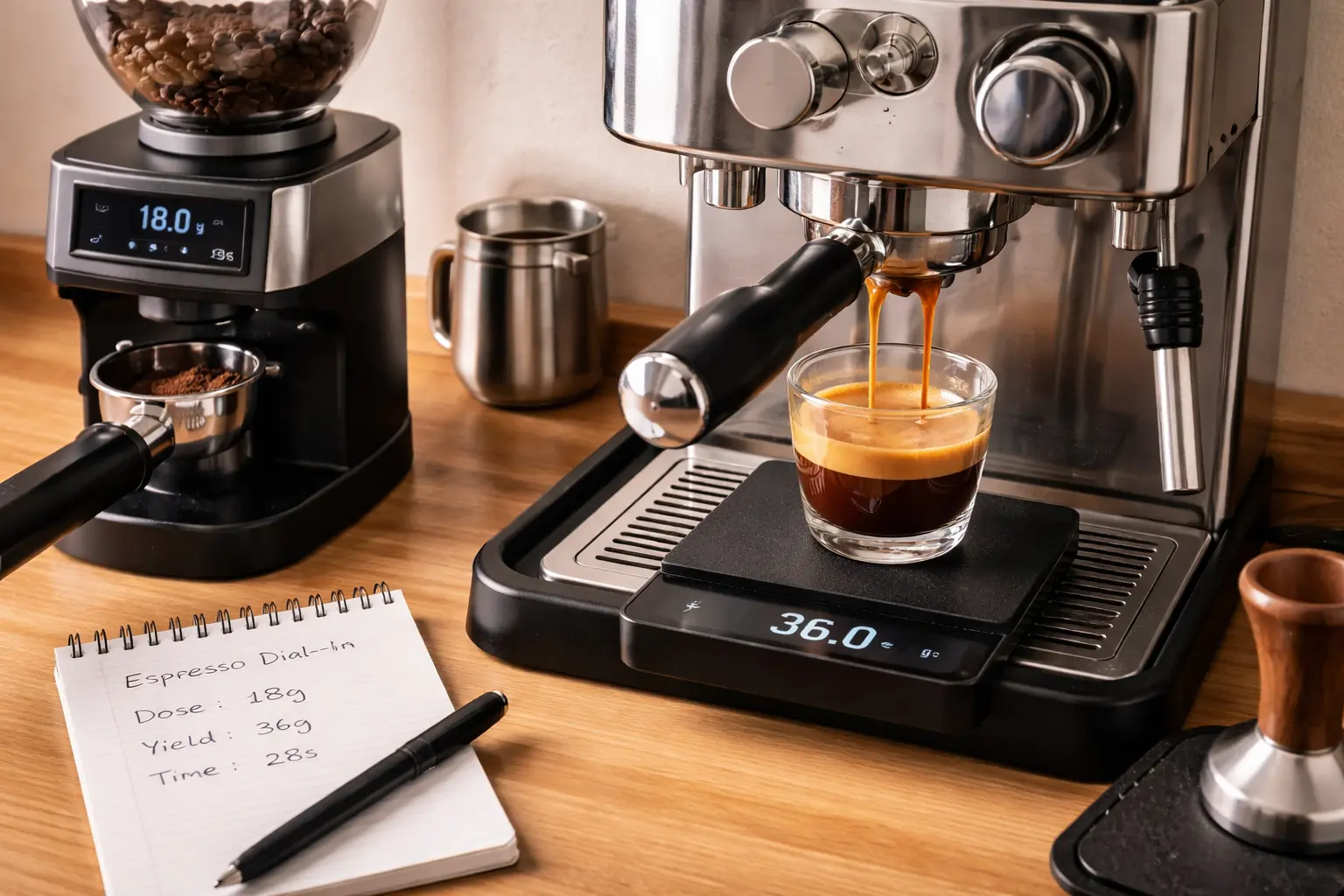
A latte needs enough coffee to be tasted through the milk, so use a double shot. A reliable starting recipe is about 18 g of finely ground coffee in, about 36 g of espresso out, in 25 to 35 seconds. If the shot runs fast and tastes sour, grind finer; if it runs slow and tastes bitter, grind coarser. Our how to dial in espresso and espresso brew ratio guides explain the adjustments.
Medium and medium-dark roasts are popular for lattes because their chocolate and caramel flavors stand up well to milk, while very light roasts can taste thin or sharp under a lot of milk. Fresh beans, roasted within the last few weeks, matter more than roast level. Pull the shot straight into the warmed cup so you can pour the milk in as soon as it is ready.
How to Make a Latte, Step by Step
With the shot pulled and the cup warm, the whole latte takes about five minutes. These steps assume a machine with a manual steam wand; with automatic milk texturing, the machine handles steps four through six for you.
- Warm your cup. Fill an 8 to 12 oz cup with hot water, or set it on the machine’s cup warmer, so the drink does not lose heat the moment you pour.
- Pull a double shot. Dose about 18 g of finely ground coffee, tamp evenly, and pull about 36 g of espresso in 25 to 35 seconds straight into the warmed, emptied cup.
- Prepare the milk. Pour cold milk into a stainless pitcher to just below the base of the spout, about 150 to 200 ml for a 10 to 12 oz latte.
- Purge and position the wand. Open the steam wand for a second to clear condensed water, then place the tip just below the milk surface, slightly off center.
- Stretch briefly. Open the steam fully and let the tip draw in air with a gentle hiss for 3 to 5 seconds, until the milk grows by about a quarter.
- Texture and heat. Raise the pitcher slightly so the tip sinks and the milk spins in a whirlpool. Stop at about 60 to 65°C, when the pitcher is too hot to hold for more than a few seconds.
- Groom and pour. Wipe and purge the wand, tap the pitcher and swirl until glossy, then pour into the center of the espresso from a few inches up, lowering the spout near the end to finish with a thin layer of foam.
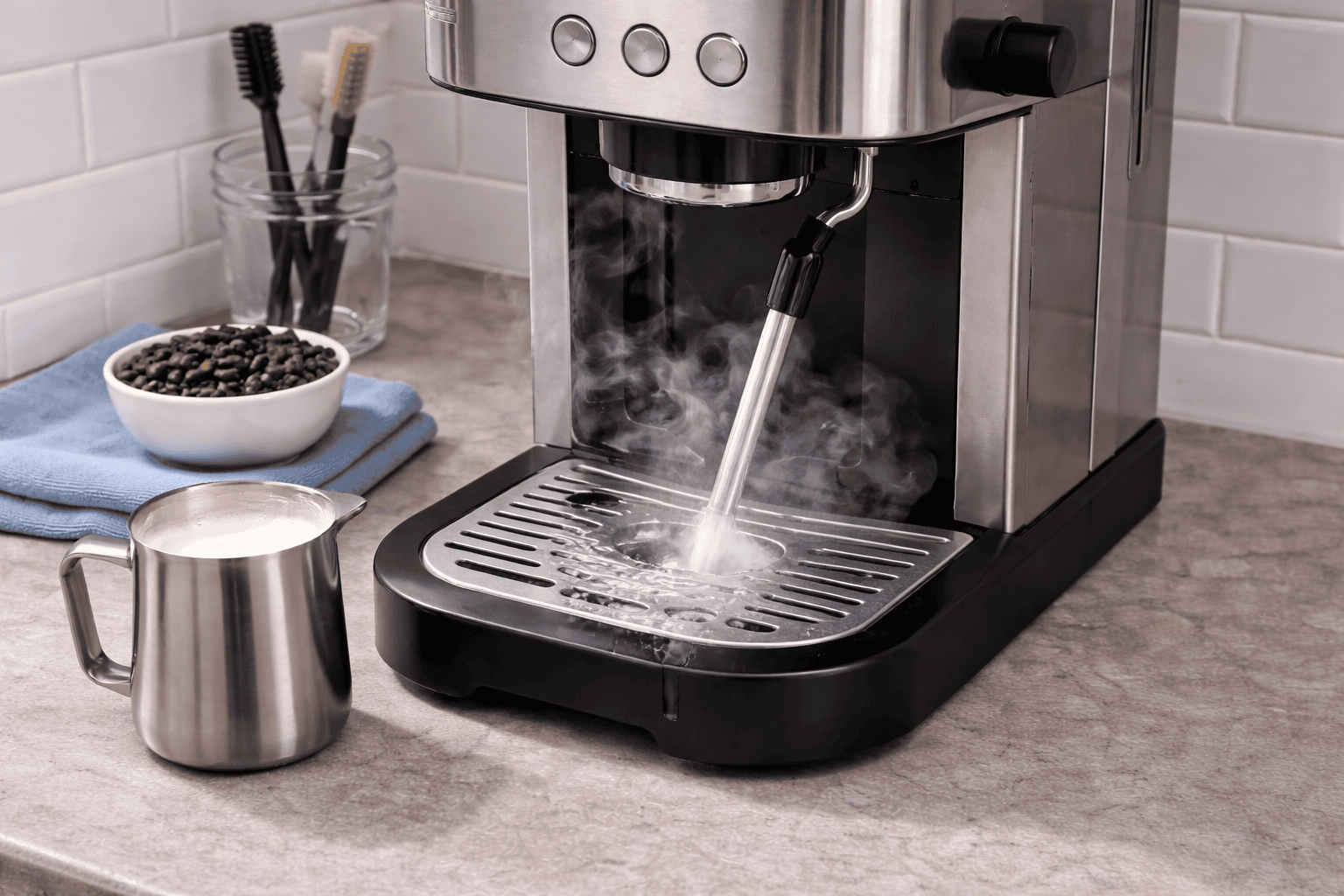
The two most common beginner mistakes both happen in steps five and six. The first is adding too much air: if the milk keeps hissing and growing, you are making cappuccino foam rather than latte milk. Lower the tip once the milk has grown by about a quarter. The second is overheating: milk that screams, boils, or smells cooked has gone past 70°C, and no amount of swirling will bring its sweetness back.
Clean the wand immediately after every use. Wipe it with a damp cloth and purge it for a second or two, before milk dries inside the tip. Dried milk blocks the holes, weakens steam pressure, and spoils the next drink.
The Science of Milk Temperature and Texture
Milk has three parts that matter for a latte. Proteins wrap around air bubbles and hold them in place, which is what makes foam possible. Fat adds body and a creamy feel, and whole milk makes the most stable, silky microfoam. Lactose, milk’s natural sugar, tastes sweeter as milk warms, which is why well-steamed milk tastes sweet without any added sugar.
Temperature controls all three. Published barista guidance puts the sweet spot at roughly 55 to 65°C (130 to 150°F). Below that, milk tastes flat and the drink cools quickly. Above about 70°C, proteins break down, sulfur-like cooked flavors appear, sweetness drops, and foam collapses faster. Without a thermometer, use your hand: at around 60°C the pitcher is very hot but you can hold it for a few seconds; when you cannot hold it at all, you have gone too far.
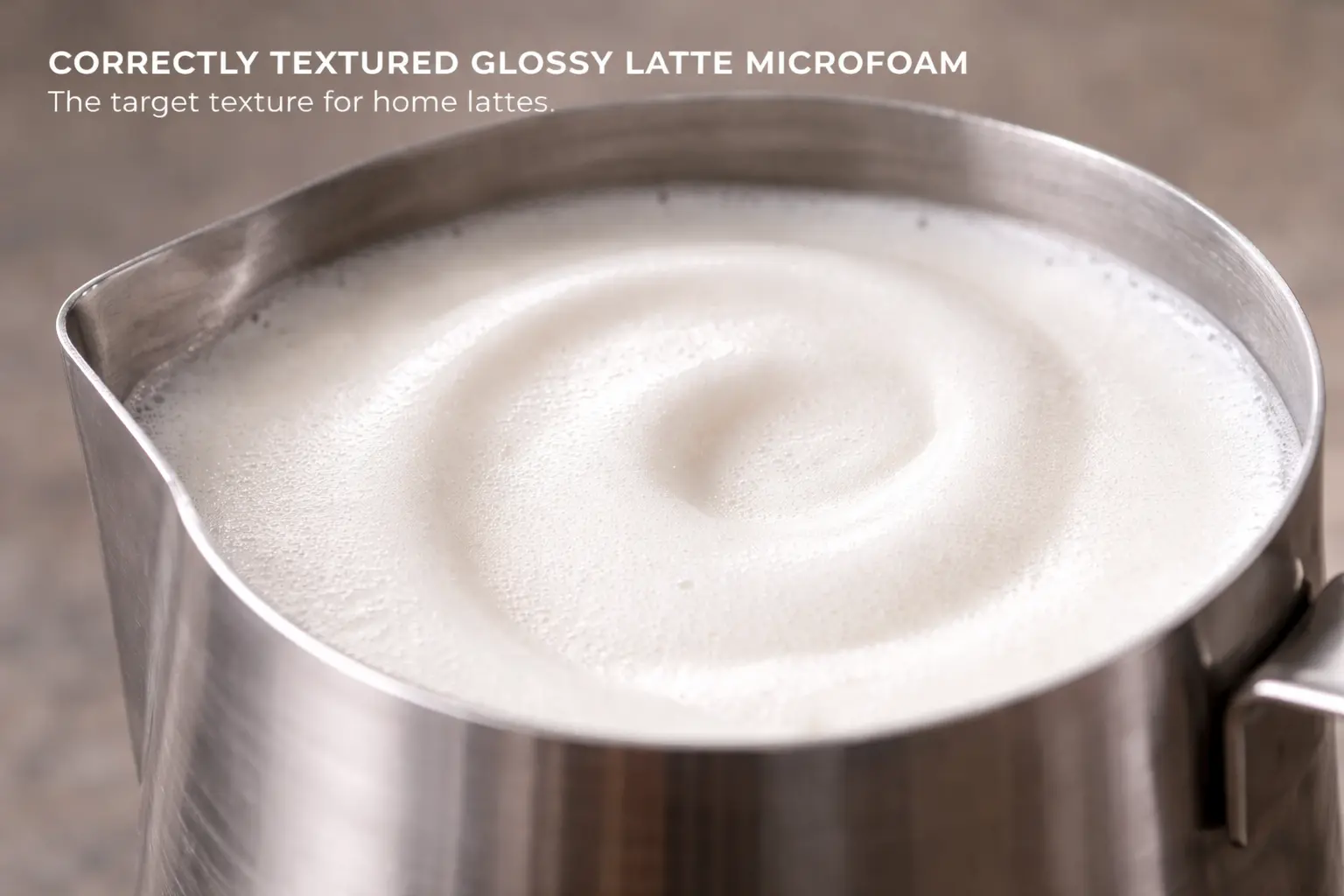
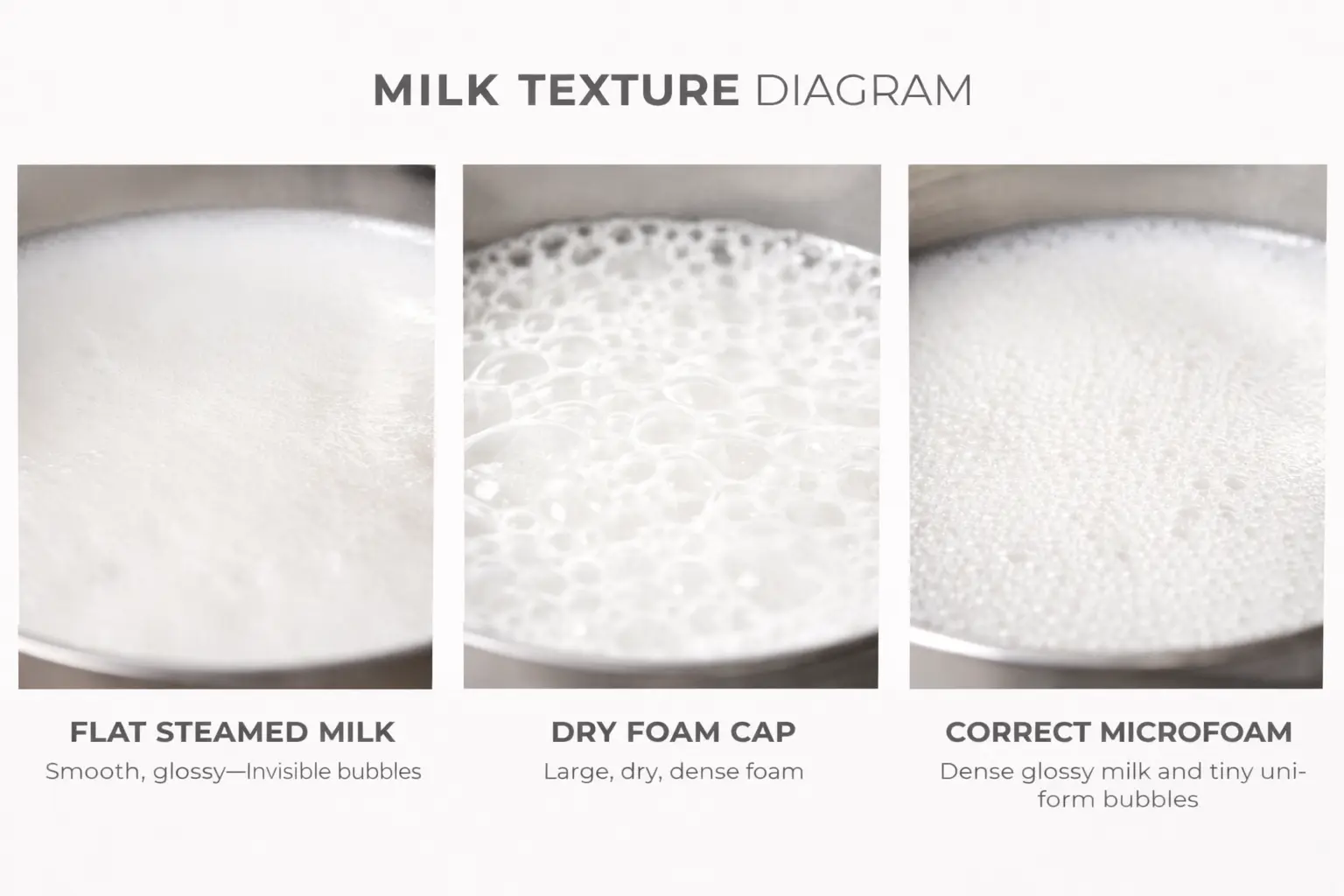
Texture is the other half. Microfoam is milk with air bubbles so small you cannot see them, giving a glossy, wet-paint surface. It pours as one liquid and blends into the espresso, rather than sitting on top as a dry cap. That glossy texture is the main visible difference between a café latte and a homemade one.
How to Make a Latte Without an Espresso Machine
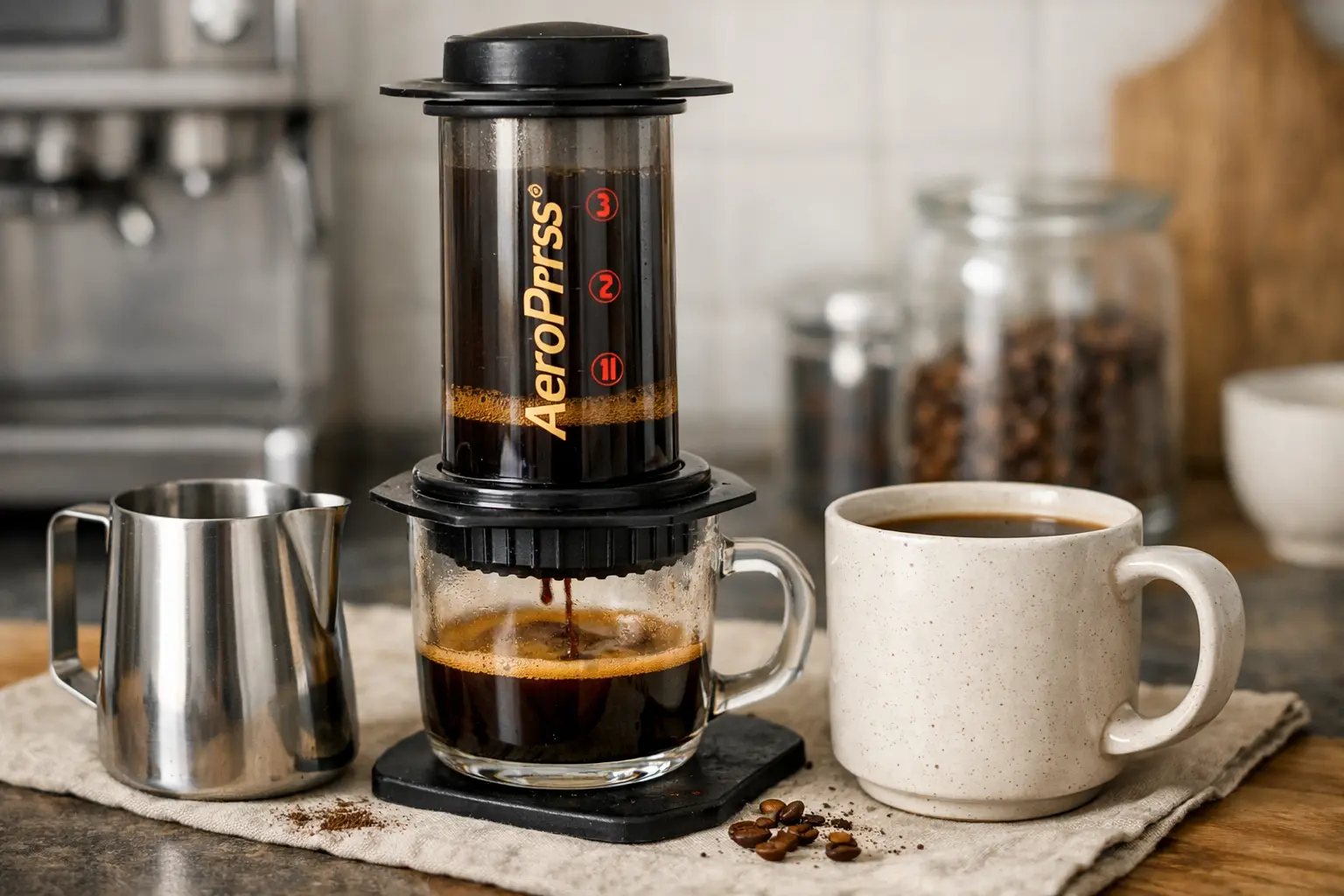
You can make a very good latte-style drink without an espresso machine; it simply will not be identical to one made with true espresso. Start with a strong coffee concentrate. A moka pot produces rich, intense coffee that stands up well to milk, and an AeroPress brewed short and strong works just as well; our AeroPress latte recipe gives exact ratios. Capsule machines are the fastest route.
Then froth the milk. An electric frother such as the Nespresso Aeroccino 4 heats and froths in one step, and the Breville Milk Café adds temperature control for silkier milk. A budget handheld wand like the Zulay Milk Boss works if you warm the milk first, and a French press pumped gently makes surprisingly fine microfoam. Our how to froth milk without a steam wand guide covers seven methods in detail.
Choosing the Right Milk
Whole dairy milk is the easiest to steam well: its balance of fat and protein makes stable, silky microfoam and a naturally sweet drink. Two-percent milk foams easily but tastes lighter, and skim milk makes lots of stiff foam with a thin body, which suits a cappuccino better than a latte.
For plant milks, look for barista versions. Independent comparisons from coffee retailers have found barista oat milks steam closest to dairy, with smooth texture and a neutral flavor, while almond and soy can foam well but are harder to pour and more prone to separating in hot, acidic coffee. Plant milks also prefer slightly lower steaming temperatures, around 55 to 60°C. Whatever you choose, start with fresh, cold milk straight from the fridge.
Lactose-free dairy milk is worth knowing about too. It steams much like regular milk, but because its lactose has already been broken down into simpler sugars, it tastes noticeably sweeter, which many latte drinkers enjoy. Milk that has been steamed once and cooled should not be reused for a second latte; it loses sweetness and will not foam properly again, so steam only what you need.
Flavored and Iced Lattes

Flavored lattes are simply a latte with syrup in the cup. Add about 15 to 20 ml of vanilla, caramel, or hazelnut syrup to the cup before pulling the shot, so the hot espresso dissolves and mixes it, then pour in the milk as usual. For a mocha, stir a spoon of good cocoa or chocolate sauce into the espresso first. Seasonal favorites like a pumpkin spice latte follow the same pattern with a spiced syrup and a dusting of cinnamon on top.
An iced latte skips steaming entirely. Fill a glass with ice, add a double shot of espresso, and pour in about 150 ml of cold milk. Pour the espresso over the ice before the milk, so it chills quickly and does not shock the milk. For a café-style finish, top it with cold foam made with an electric frother’s cold setting, or use cold brew concentrate in place of espresso.
Beginner Latte Art
Latte art is a test of milk texture more than artistic talent. It needs glossy microfoam with no visible bubbles, a fresh shot with crema, and a confident pour. Start by tilting the cup toward the pitcher and pouring from a few inches above the center of the espresso; this lets the milk sink and mix under the crema. When the cup is about half full, bring the spout close to the surface and the white foam will start to float on top.
A simple heart is the best first shape: once the white circle appears, keep pouring steadily until it grows, then lift the pitcher slightly and pull it forward through the circle. Expect your first dozen attempts to be blobs, and judge your progress by how the latte tastes rather than how it looks. Practicing with water and a drop of dish soap in the pitcher is a cheap way to rehearse the pour without wasting milk.
Two details make the biggest difference once the basics are in place. Pour soon after steaming, while the foam and milk are still fully combined, and use a cup with a rounded bowl rather than straight sides, which gives the milk room to flow and form a pattern. A pitcher with a sharp, narrow spout gives finer control than a wide one.
Building a Repeatable Morning Routine
The fastest way to improve is to make the same latte the same way every morning. Keep the variables fixed: the same beans, the same dose and yield, the same pitcher filled to the same line, and the same cup. When every step is consistent, you can taste the effect of one change at a time, whether that is a finer grind, a shorter stretch, or stopping the steam a few degrees earlier.
Order matters on a single-boiler machine. Most home baristas pull the shot first and steam second, because espresso holds its quality for a minute or two while poorly timed milk separates quickly. On machines that need time to build steam pressure after brewing, switch to steam as soon as the shot finishes and prepare the pitcher while it heats. If you make two lattes, steam enough milk for both in a larger pitcher and split the pour, rather than steaming twice.
Finally, keep a short cleaning habit. Purge and wipe the wand after each drink, rinse the pitcher right away, and knock out and rinse the portafilter. Those thirty seconds keep the next morning’s latte tasting as good as this one, and they prevent the milk residue that slowly weakens steam pressure and spoils flavor.
Troubleshooting Common Latte Problems
| Problem | Likely cause | Fix |
|---|---|---|
| Big, soapy bubbles | Too much air, or not enough texturing | Stretch for 3–5 s only, then sink the tip and spin |
| Milk tastes burnt | Heated past about 70°C | Stop when the pitcher is too hot to hold |
| Foam separates from milk | Waited too long before pouring | Swirl right before pouring and pour promptly |
| Latte tastes weak | Too much milk or a fast shot | Use a double shot and a smaller cup |
| Latte tastes bitter | Over-extracted shot or dark roast | Grind coarser or try a medium roast |
| Milk will not foam | Old milk or a non-barista plant milk | Use fresh cold milk or a barista version |
Most problems trace back to air, heat, or timing. If you change only one thing at a time, and steam the same amount of milk in the same pitcher each morning, you will find the cause quickly. Our how to steam milk guide goes deeper on wand technique, and our espresso troubleshooting guide covers shot problems.
If your lattes are consistently good but not great, look at the coffee itself before buying new equipment. Stale beans, beans ground long before brewing, and pre-ground coffee all produce thin, flat espresso that disappears under milk. Fresh beans and a capable grinder often improve a latte more than a new machine would.
Make Better Lattes at Home
An easy machine with automatic milk, or a simple frother if you do not have an espresso machine.
As an Amazon Associate, CoffeeGearHub earns from qualifying purchases.
Editorial bottom line: A great home latte is a double shot of espresso, 150 to 250 ml of milk steamed to about 60 to 65°C, and only a little air, swirled until glossy and poured promptly. Master the milk and the rest follows.
Frequently Asked Questions
What is the ratio of espresso to milk in a latte?
Most lattes use a double shot of about 36 to 40 g of espresso with 150 to 250 ml of steamed milk, roughly one part espresso to three to five parts milk, topped with a thin layer of foam about 1 cm deep.
What temperature should milk be for a latte?
About 55 to 65°C (130 to 150°F). Milk tastes sweetest in this range; above about 70°C it begins to taste cooked and the foam breaks down faster.
Can I make a latte without an espresso machine?
Yes. Brew a strong concentrate with a moka pot, AeroPress, or capsule machine, and froth warm milk with an electric frother, French press, or handheld wand. The result is not identical to espresso, but it makes an excellent milk drink.
What is the difference between a latte and a cappuccino?
A latte has more milk and a thin layer of silky foam, while a cappuccino is smaller with a thicker, airier foam cap. Our latte vs cappuccino vs flat white guide compares them.
Why does my latte taste weak?
Usually there is too much milk for the coffee, or the espresso is under-extracted. Use a double shot, keep the drink to 8 to 12 oz, and check that the shot is not running fast and sour.
What milk is best for lattes?
Whole dairy milk is the easiest to steam into silky microfoam. For plant milks, barista versions of oat milk steam most like dairy.
Sources and Further Reading
Milk temperature guidance follows Cru Kafe’s science of frothed milk and Complete Home Barista’s guide to burnt milk. Milk behavior follows Clive Coffee’s milk comparison. Equipment details follow manufacturer instructions, and technique follows CoffeeGearHub’s how to steam milk, espresso brew ratio, and dial-in guides.
CoffeeGearHub product shortlist
Continue with related products on CoffeeGearHub
Review product categories and current verified merchant offers on CoffeeGearHub before leaving the site.