
How to Clean Pour-Over Gear (2026): V60, Chemex, Kalita Wave, and Kettle
Quick picks
Pour-over gear at a glance
Picks are based on published specifications, manufacturer documentation, and owner reports. As an Amazon Associate, CoffeeGearHub earns from qualifying purchases.
Editorial standards: this guide draws on manufacturer care guidance, professional roaster and barista cleaning advice, and common home-brewer practice. CoffeeGearHub does not claim hands-on testing where it has not occurred.
At a glance
What this guide covers
Daily, weekly, and deep cleaning for a V60, Chemex, and Kalita Wave, what can go in the dishwasher, and how to care for the kettle and paper filters.
Editorial analysis
Pour-over gear is easy to clean
Pour-over drippers are simple. The paper filter catches the grounds, so the dripper itself only needs a quick rinse. Most of the cleaning work is removing the thin film of coffee oil that builds up over a few weeks.
The exceptions are the Chemex, with its narrow neck and wooden collar, and the kettle, which collects mineral scale if your water is hard. Both are easy with the right routine.
The 30-Second Answer
Rinse your dripper with hot water after every brew, wash it with soap about once a week, and deep clean with a half-and-half vinegar and water mix only when you see stains or cloudiness.
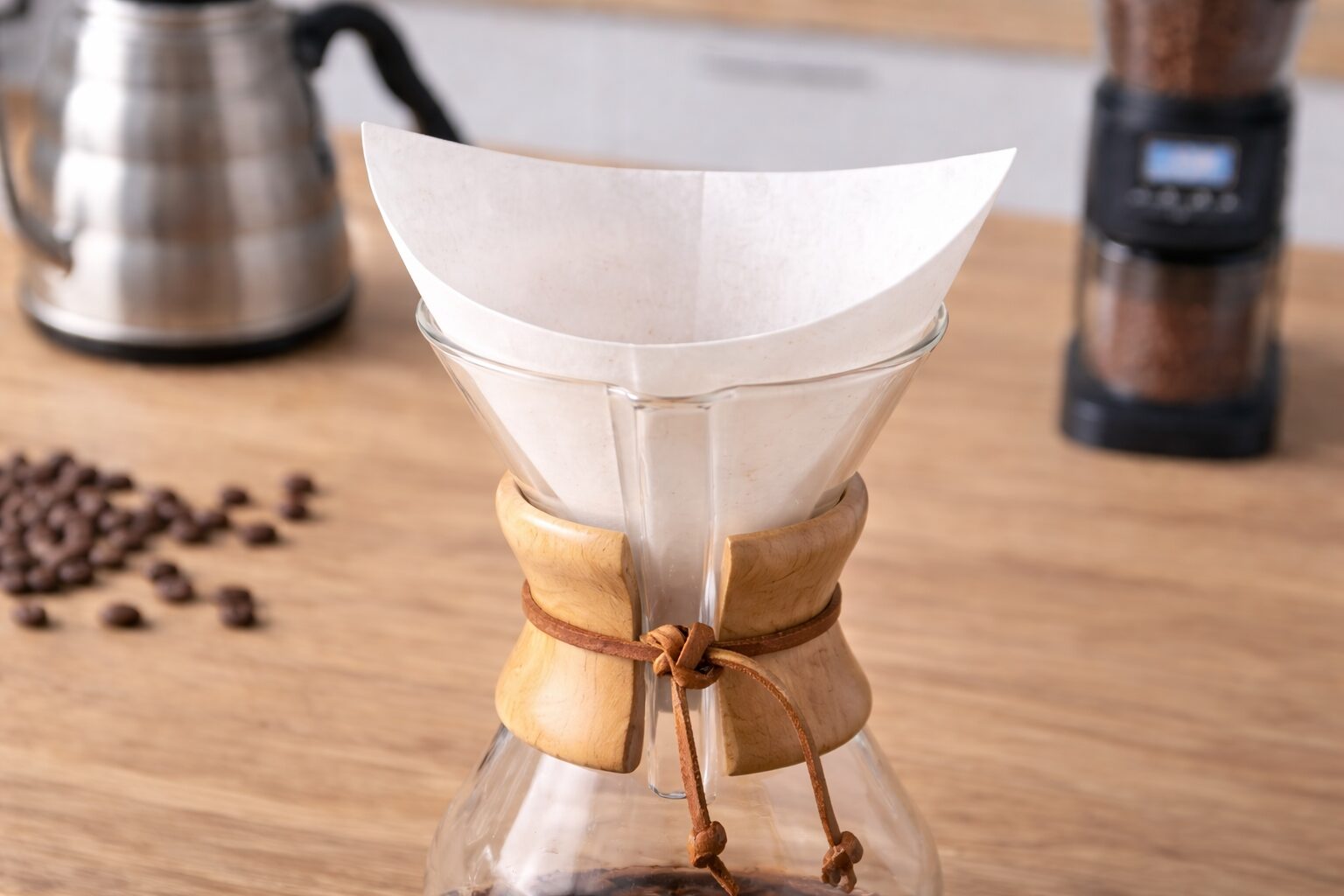
For a Chemex, remove the wooden collar and tie before washing, and use a long-handled brush for the inside.
Shopping Black Friday or Cyber Monday? See our coffee gear deals page for the moka pot, AeroPress, grinder and espresso picks worth buying on sale.
If your dripper is cracked, deeply stained, or you want a simple replacement, the Hario V60 is a low-fuss pick that is easy to clean and works with our V60 recipe.
The brewer you use matters less than the habit of rinsing it right after brewing, while the oils are still easy to wash away.
Daily Care: Rinse After Every Brew
Lift out the paper filter and grounds, then rinse the dripper or carafe with hot water. Do it while the dripper is still warm, because coffee oils stay soft and rinse away easily. This 15-second step prevents most staining and odor.
Never reuse paper filters. A used filter holds oils and fines that make the next cup taste stale.
Cleaning a Hario V60
Wash a V60 with warm water and dish soap about once a week, using a soft sponge. Plastic, glass, ceramic, and metal V60s are all simple to clean. Roasters and barista guides describe V60 cleaning as easy, and many note that the dripper is dishwasher friendly, but check the instructions for your material.
For coffee stains on plastic, a short soak in warm soapy water or diluted vinegar followed by a rinse usually does it.
Cleaning a Chemex
Remove the wooden collar and the tie, and wash them by hand. The glass can be washed with warm water, dish soap, and a long-handled bottle brush with a plastic or wood handle, so the glass is not scratched. Many sources describe the glass carafe as dishwasher safe if the collar is removed and the carafe is positioned carefully, though hand washing is gentler.
For stains or cloudy glass, fill with equal parts warm water and white vinegar, let it sit to loosen coffee oils and mineral film, then scrub, rinse, and wash again with soap so no vinegar taste is left. Sprudge describes a household-item method for the same job.
Our how to use a Chemex guide covers the brewing side.
Cleaning a Kalita Wave and Other Drippers
Kalita Wave drippers come in stainless steel, glass, and ceramic. Stainless steel is the simplest: rinse, then wash with soap. Glass and ceramic need careful handling, and some drippers are top-rack dishwasher safe, though you should check the manufacturer’s manual for your model. The flat bed and small holes mean it is worth checking that no grounds are trapped in the drainage holes after washing.
Cleaning Your Gooseneck Kettle
Rinse the outside, and if the water is hard, descale the inside every few weeks to months by following the kettle maker’s instructions. Mineral scale slows heating and can affect taste. If you use an electric kettle like our Fellow Stagg EKG, check the manual for its descaling process, and never submerge the base. Our water quality guide explains why water hardness matters.
| Gear | After every brew | Weekly | Deep clean |
|---|---|---|---|
| Hario V60 | Discard filter, rinse | Soap wash | Warm soapy soak or diluted vinegar |
| Chemex | Discard filter, rinse | Soap wash; brush inside | 1:1 vinegar and water, then soap wash |
| Kalita Wave | Discard filter, rinse | Soap wash; check holes | Warm soapy soak |
| Gooseneck kettle | Empty and dry | Wipe exterior | Descale per maker’s instructions |
| Paper filters | Discard | – | – |
Recommended dripper

What Can Go in the Dishwasher?
| Item | Dishwasher? | Notes |
|---|---|---|
| Hario V60 | Often yes | Check the instructions for plastic, glass, and ceramic versions |
| Chemex glass carafe | Often yes | Remove the wooden collar and tie; place carefully |
| Chemex collar and tie | No | Hand wash only |
| Kalita Wave | Varies | Check the manual for your material |
| Gooseneck kettle | No | Descale by hand following the maker’s instructions |
Our Verdict
Rinse after every brew, wash weekly, and save vinegar for stains and cloudiness. For a Chemex, remove the wooden collar before washing. That is all pour-over gear needs. For the AeroPress equivalent, see our AeroPress cleaning guide, and for the moka pot, see how to clean a moka pot.
Replace a Worn Dripper
A new dripper is a small purchase and a quick way to get a fresh start.
As an Amazon Associate, CoffeeGearHub earns from qualifying purchases.
Editorial bottom line: Rinse right after brewing, wash weekly, and deep clean with vinegar only when needed. Remove the Chemex collar before washing the glass.
Frequently Asked Questions
How do I clean a Hario V60?
Throw away the paper filter, rinse the dripper with hot water after brewing, and wash it with warm soapy water about once a week. Plastic, glass, and ceramic V60s are easy to clean because the filter holds back the grounds.
Is a Chemex dishwasher safe?
The glass carafe is generally described as dishwasher safe, but you must remove the wooden collar and tie first and wash them by hand. Place the carafe carefully so it does not knock against other items, because glass can chip.
How do I remove coffee stains from a Chemex?
Fill it with equal parts warm water and white vinegar, let it sit to loosen coffee oils and mineral film, and scrub with a long-handled bottle brush. Then wash again with dish soap and rinse well so there is no vinegar taste.
How often should I deep clean pour-over gear?
A daily rinse and a weekly soap wash cover most needs. Deep cleaning with vinegar is only needed when you see cloudiness, a white mineral film, or stubborn coffee oil, which may be a few times a year.
Can I put a Kalita Wave in the dishwasher?
It depends on the material. Some drippers are top-rack dishwasher safe, but you should check the manufacturer’s instructions for your exact model. Glass and ceramic need careful placement, and stainless steel is the easier option.
Do I need to descale a gooseneck kettle?
If you have hard water, yes, because mineral scale builds up inside the kettle and affects heating and taste. Follow the kettle maker’s descaling instructions, and see our water quality guide for how water hardness affects your coffee.
Sources and Further Reading
Cleaning methods draw on Sprudge’s Chemex cleaning guide, roaster and barista care advice such as Two Chimps Coffee’s brewing device guide, and common home practice. Always check the care instructions for your exact model. CoffeeGearHub did not test these products hands-on.
CoffeeGearHub product shortlist
Continue with related products on CoffeeGearHub
Review product categories and current verified merchant offers on CoffeeGearHub before leaving the site.