
How to Use a Chemex: Ratio, Grind, and a Step-by-Step Recipe (2026)
Editorial standards: this guide draws on Chemex’s published brewing and care instructions, Specialty Coffee Association brewing concepts, and widely used pour-over recipes. Equipment is suggested on published specifications. CoffeeGearHub does not claim hands-on testing where it has not occurred.
At a glance
What this Chemex guide covers
Why the Chemex brews differently from other pour-overs, the gear you need, how to fold and seat the filter, the ratio and grind to start with, a seven-step recipe for a 6-cup Chemex, amounts for other sizes, fixing slow, fast, sour, or bitter brews, and cleaning the brewer.
Editorial analysis
The thick filter is the whole story
Almost everything distinctive about Chemex coffee comes from its heavy bonded paper. It holds back oils and fine particles, which is why the cup tastes so clean, and it slows the flow, which is why the Chemex needs a coarser grind than a V60.
Once you grind for the filter rather than for “pour-over” in general, and seat the paper so it does not block the air channel, the Chemex becomes one of the most forgiving manual brewers there is, especially for larger batches.
The 30-Second Answer
To use a Chemex, rinse a bonded filter with the triple-layer side over the spout, add 30 g of medium-coarse coffee, and bloom with 60 g of water at about 93 to 96°C. Pour in slow spirals to 500 g by two minutes, then let it drain. Aim for about four to four and a half minutes in total.
If it drains too slowly, grind coarser; if it rushes through and tastes thin, grind finer. A gooseneck kettle and a scale make every brew repeatable.
Compare current options
Start with these representative choices
The brewer itself, a kettle that pours slowly enough to control the brew, and a grinder that produces an even medium-coarse grind.
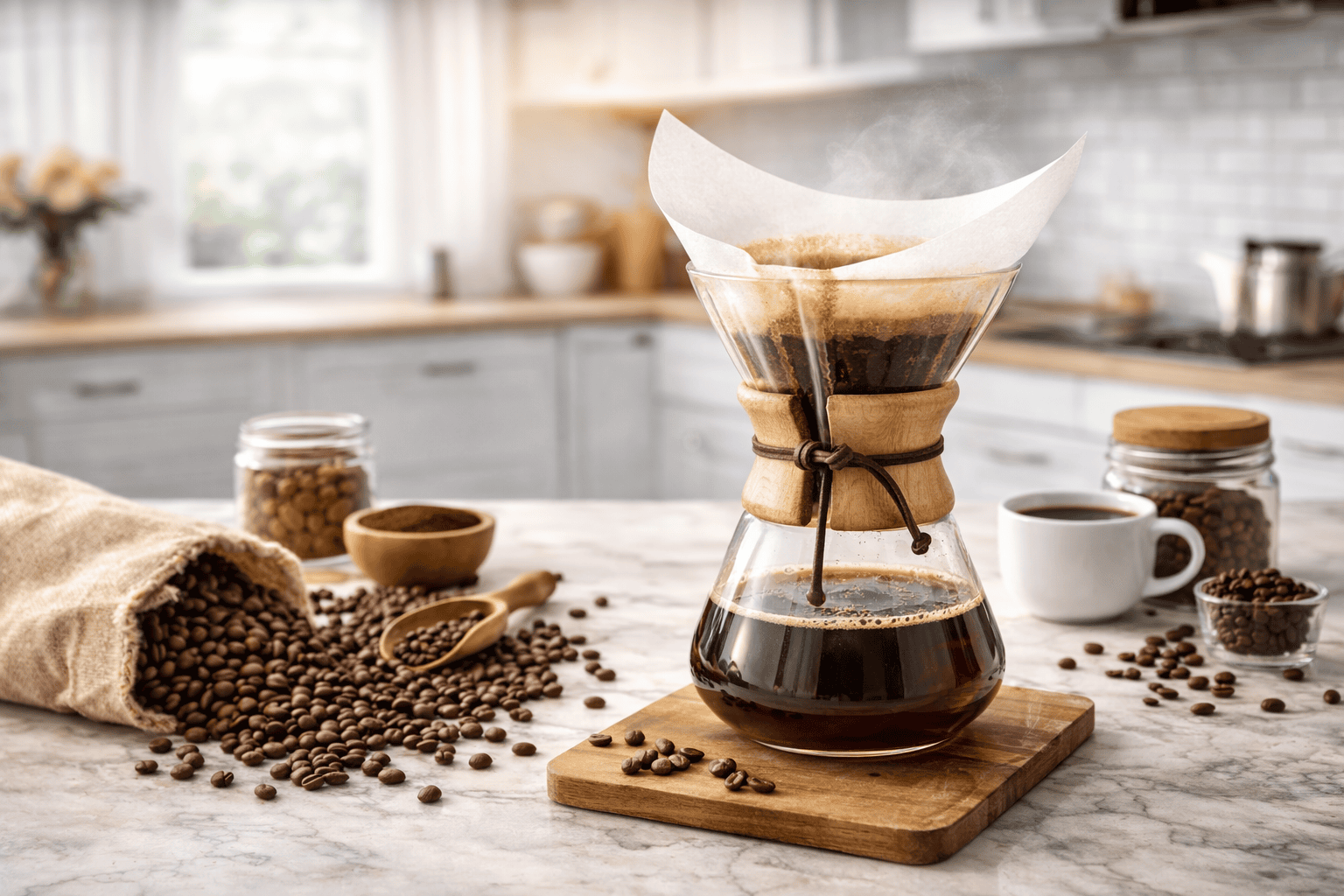
Chemex Classic — The brewer
Non-porous glass and a thick bonded filter give the clean, bright cup Chemex is known for, from one mug to a full carafe.
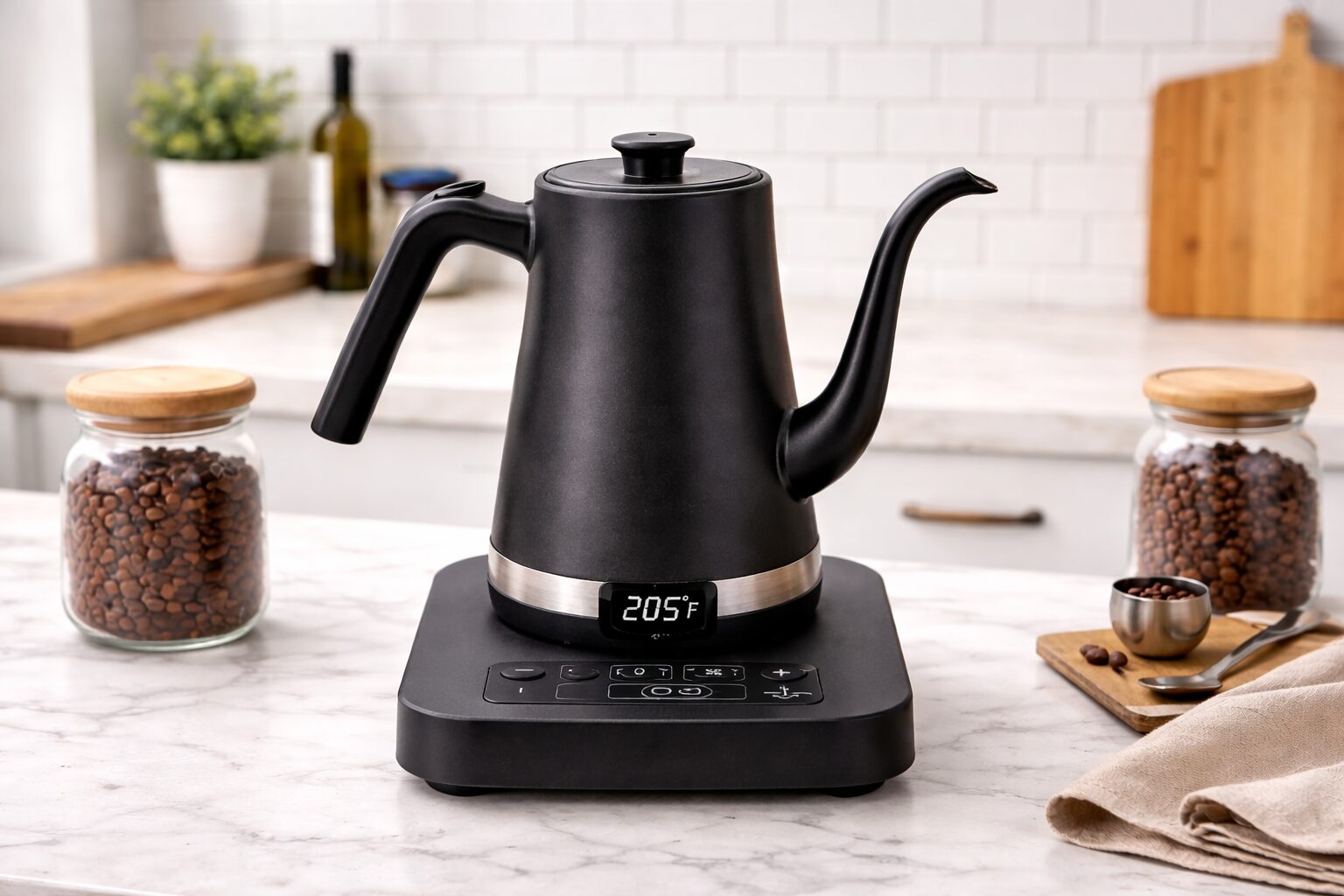
Fellow Stagg EKG Pro — Pour control
A slow, precise gooseneck spout and set-and-hold temperature make the bloom and spiral pours easy to repeat.
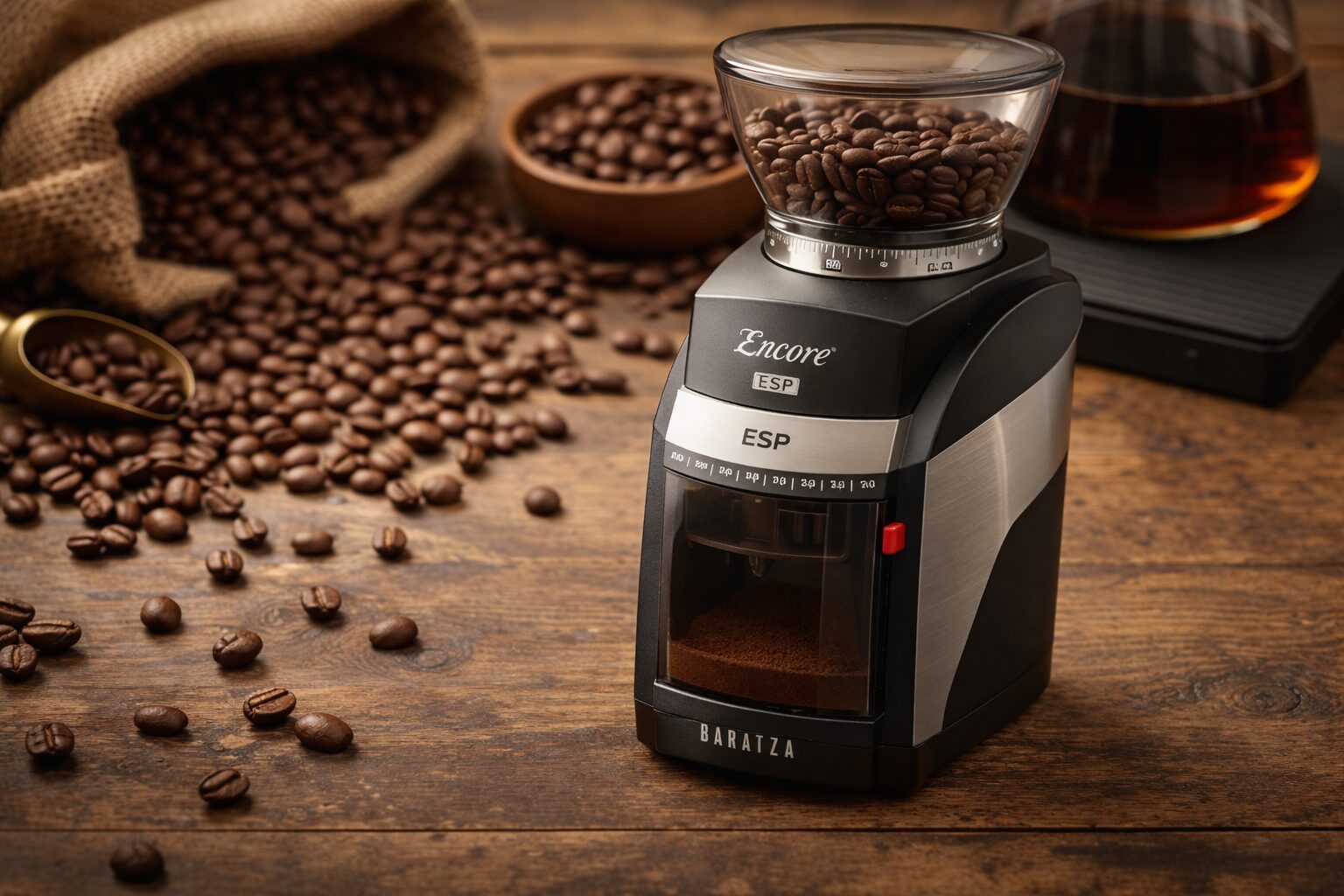
Baratza Encore ESP — Even grind
A consistent medium-coarse grind keeps drawdown predictable, which is what makes Chemex brews repeatable.
Affiliate disclosure: Amazon links may earn CoffeeGearHub a commission at no additional cost to you. Prices and availability can change.
Why the Chemex Brews Differently
The Chemex is a single piece of heat-resistant glass shaped like an hourglass, with a wooden collar tied around its waist. Chemist Peter Schlumbohm designed it in 1941, and the basic shape has barely changed since. The top half holds the filter and coffee; the bottom half is the carafe you pour from, so there is nothing to transfer and nothing to wash except the glass.
What really sets it apart is the filter. Chemex bonded filters are noticeably heavier than standard cone papers. That extra thickness traps more of the coffee’s oils and fine particles, so the cup tastes exceptionally clean and bright, with a lighter body than a French press or even a V60. It also slows water down, which changes how you need to grind and pour.
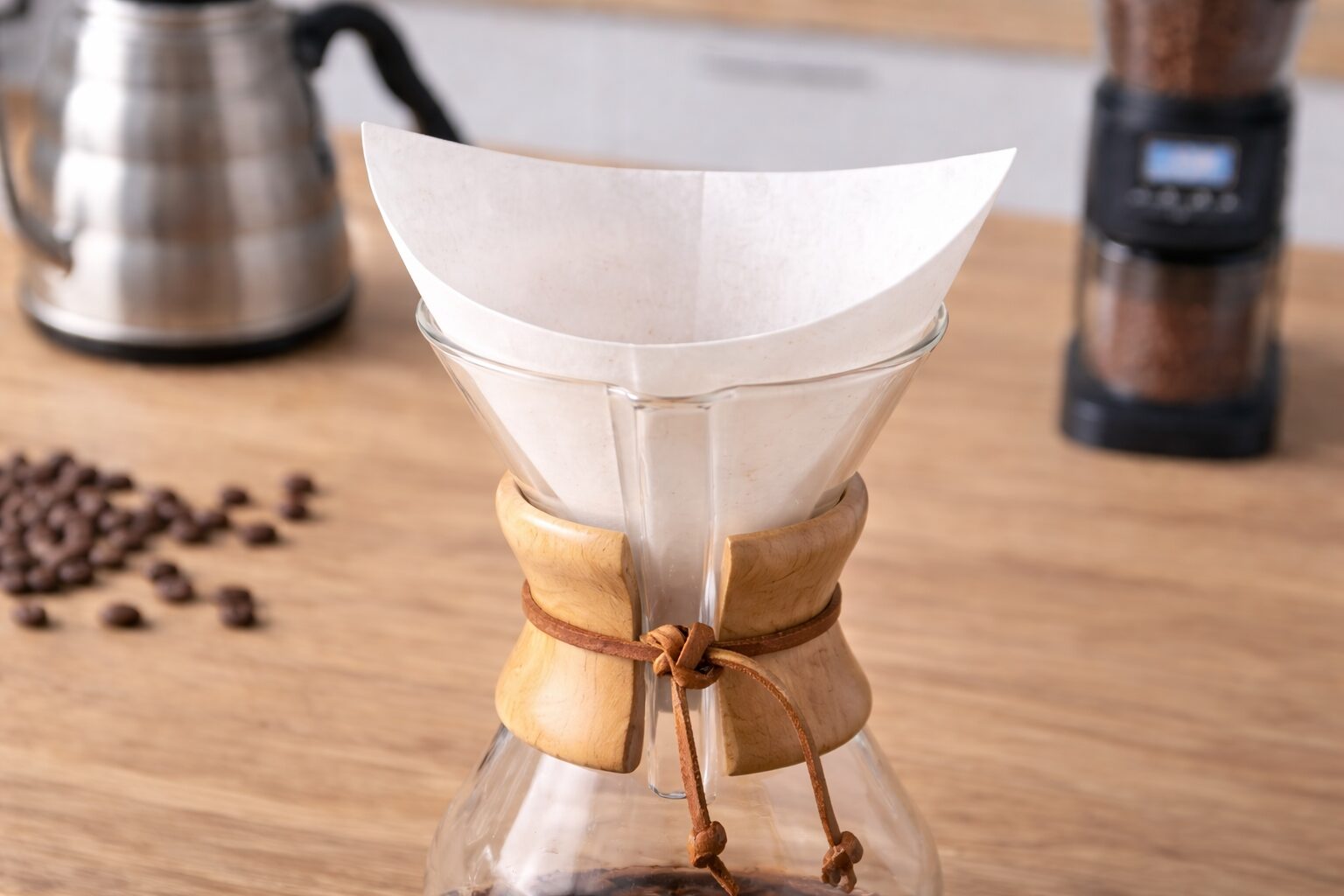
The other feature that matters is the air channel, a groove molded into the glass beneath the spout. As coffee drips into the carafe, displaced air escapes up that channel. If the filter seals against it, air cannot escape, and the brew slows or stalls. Seating the filter correctly, with its thick side over the spout, keeps the channel open. Our V60 vs Chemex vs Kalita Wave comparison explains how the Chemex cup differs from the other two popular drippers.
The Gear You Actually Need
Beyond the Chemex itself, you need filters made for it, a kettle, a scale, and a grinder. The 6-cup Classic is the most popular size because it brews anywhere from one large mug to about three, while the 8- and 10-cup models suit households that brew a full pot. Chemex “cups” are small, roughly 5 ounces each, so a 6-cup Chemex makes about two generous mugs.
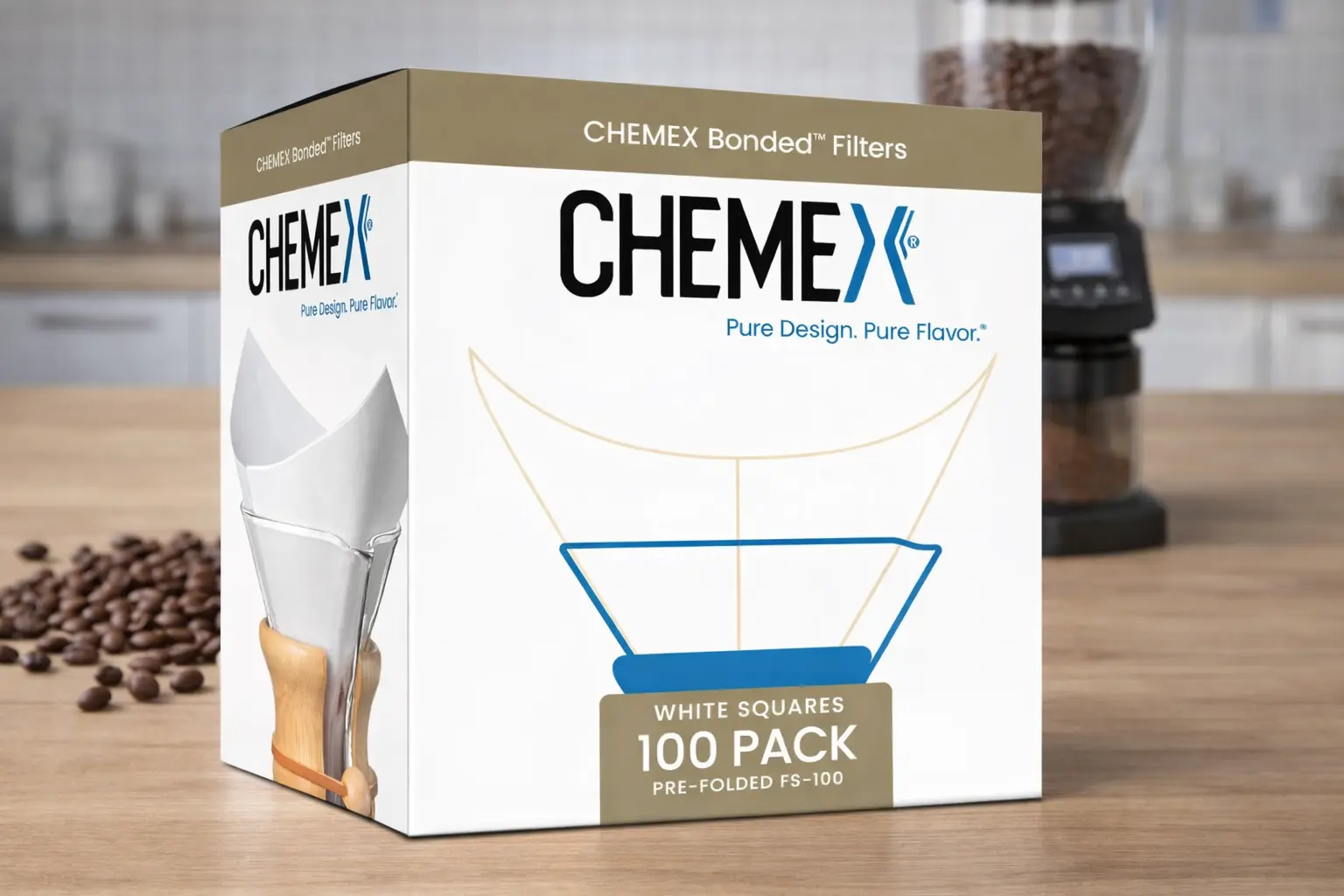
Square, half-moon, and circle filters all fit; the difference is mostly how they fold. Pre-folded squares are the easiest to seat correctly. White and natural papers both work, though natural papers benefit most from a thorough rinse.
A gooseneck kettle is close to essential. The Chemex rewards a slow, steady pour, and a standard kettle dumps water too fast to control. The Fellow Stagg EKG Pro combines a narrow spout with set-and-hold temperature, so you can heat to your target and pour without checking a thermometer. Our best gooseneck kettles guide covers cheaper stovetop options too.
A scale with a timer turns the recipe into numbers you can repeat. The Timemore Black Mirror reads to 0.1 g and tracks time, which is all a Chemex brew needs. Our guide on how to use a coffee scale shows how to weigh as you pour.
Ratio and Grind: Start Coarser Than You Think
A good starting ratio for the Chemex is about 1:16, such as 30 g of coffee to 500 g of water. That lands in the middle of the range the Specialty Coffee Association uses for filter coffee and makes a balanced, medium-strength cup. If you like it stronger, move to 1:15; for a lighter, more tea-like cup, try 1:17. Change the ratio only after the grind is right, because grind has the bigger effect on flavor.
Grind medium-coarse, roughly like coarse sand or kosher salt. That is coarser than you would use for a V60, because the thick Chemex filter already slows the flow. Grinding too fine is the most common Chemex mistake: the paper clogs, the brew takes seven or eight minutes, and the cup turns bitter and flat. An even grind matters as much as the setting, since fine dust is what clogs the filter fastest. That is where a burr grinder like the Baratza Encore ESP earns its place.
Water just off the boil, around 93 to 96°C (200 to 205°F), suits most medium and light roasts. Darker roasts extract more easily and can taste harsh at the top of that range, so drop a few degrees for them. Our pour-over grind size chart and pour-over water temperature guide go into both in more detail.
Fold and Seat the Filter Correctly
Getting the filter right takes ten seconds and prevents most slow brews. A Chemex filter, once folded, has one side with three layers of paper and one side with a single layer. Place it in the brewer with the thick, three-layer side against the spout. That side is sturdy enough not to collapse into the air channel, so air can escape as coffee drips and the brew keeps flowing.
Then rinse the filter thoroughly with hot water. Rinsing removes papery flavors, which are especially noticeable with natural, unbleached filters, and it warms the glass so the coffee does not cool as it brews. Pour the rinse water out through the spout while holding the filter in place, or lift the filter slightly to drain it. Do not skip this step; it is one of the easiest ways to improve a Chemex cup.
If you ever notice the brew stalling halfway, check the filter first. A filter that has slipped or been seated with its single-layer side over the spout can seal against the glass, and lifting it slightly to let air in will often restart the flow immediately.
Step-by-Step Chemex Recipe (6-Cup)
This recipe makes about 450 ml of coffee, enough for two mugs, in a 6-cup Chemex. Some of the 500 g of water stays behind in the wet grounds, which is why the yield is smaller than the water you pour. Follow the same steps each time so that changes in taste can be traced to the grind or ratio rather than to technique, and weigh everything on the scale rather than judging by eye.
- Heat the water to about 93 to 96°C. Heat extra for rinsing the filter.
- Fold and rinse the filter with the triple-layer side over the spout, then discard the rinse water.
- Grind 30 g of coffee medium-coarse, add it to the filter, and shake the brewer gently to level the bed.
- Bloom. Start the timer and pour about 60 g of water to wet all the grounds. Wait 30 to 45 seconds while the coffee releases gas.
- Pour in stages. Pour in slow spirals from the center outward to 250 g by about one minute, then to 500 g by about two minutes. Keep the water level steady rather than filling to the brim.
- Let it draw down. Let the water drain through. The brew should finish around four to four and a half minutes in total.
- Remove the filter and serve. Lift out the filter, give the carafe a swirl to mix the coffee, taste, and adjust the grind next time if needed.
Pour gently, avoiding the very edge of the filter where water can bypass the coffee. A quick swirl of the brewer after the final pour helps the bed settle flat, which encourages even extraction. Our how to make pour-over coffee guide explains bloom and pouring technique across all drippers.
| Chemex size | Coffee | Water | Target total time |
|---|---|---|---|
| 3-cup (one large mug) | 20 g | 320 g | About 3:30 |
| 6-cup (two mugs) | 30 g | 500 g | About 4:00 to 4:30 |
| 8-cup (three mugs) | 42 g | 700 g | About 5:00 |
| 10-cup (four mugs) | 50 g | 800 g | About 5:30 |
Larger batches take longer because there is more coffee for the water to move through and a deeper bed for it to pass. If a big brew runs well past these times, go a little coarser rather than shortening your pours. For the 8- and 10-cup sizes, split the water into four pours instead of two after the bloom, so the bed never sits under a tall column of water, which keeps the flow even and the extraction balanced.
Adjust the Recipe to Your Taste
Once your brew lands in the target time, the recipe becomes a starting point you tune by taste. The cleanest way to do that is to change one thing per brew and keep notes. If the cup tastes balanced but a little weak, keep the grind and move the ratio toward 1:15 by adding a couple of grams of coffee. If it tastes strong and heavy, move toward 1:17. Ratio changes alter strength without changing the character of the cup very much.
Grind changes alter character. Going finer increases extraction, bringing out more sweetness and body until it tips into bitterness; going coarser does the opposite, emphasizing brightness and clarity until it tips into sourness. A good habit is to move the grinder one step at a time and note both the total brew time and how the coffee tastes. After a few brews you will know exactly where your grinder’s sweet spot is for the beans you buy most often.
Pour speed is the last lever. Slower, gentler pours keep the bed calm and usually produce a cleaner cup, while faster, more agitated pours extract more and add body. Most people get the best results by keeping the pour steady and leaving agitation to a single gentle swirl at the end. If you change beans, start again from the base recipe rather than carrying over every tweak, since a new coffee may need a different grind.
Fixing Slow, Fast, Sour, or Bitter Brews
Total brew time is the best clue to what went wrong. A Chemex that takes far longer than the target almost always has a grind that is too fine or a filter blocking the air channel. The coffee will often taste bitter, drying, and muddy. Grind a couple of steps coarser and recheck that the thick side of the filter sits over the spout. If the brew still crawls, your grinder may be producing lots of fines, which a better burr grinder fixes more reliably than any setting.
A brew that finishes in two or three minutes and tastes thin, sour, or watery is under-extracted. Grind finer, pour more slowly, and make sure the bloom is wetting all the grounds. If the cup tastes both sour and bitter, the extraction was uneven: water may have channeled down one side of the bed, often because the pours were too fast or aimed at the filter wall.
Flat or papery coffee usually means the filter was not rinsed, or the beans are stale. Very dark roasts can also taste harsh in a Chemex; try slightly cooler water and a touch coarser grind. When in doubt, change one variable per brew and taste the difference. Our pour-over troubleshooting guide covers more symptoms and fixes.
Which Coffee Tastes Best in a Chemex
The Chemex’s clean cup shows off coffees with clear, distinctive flavors. Light and medium roasts, especially washed coffees from Ethiopia, Kenya, and Colombia, often taste bright, floral, or fruity in a way that heavier brewers can muddy. If you have been curious about single-origin coffee, the Chemex is one of the best ways to taste the differences between origins.
Darker roasts work too, and many people prefer them in a Chemex because the filter strips away some of the oiliness that can make dark coffee taste heavy. Just bring the temperature down slightly and expect a smoother, chocolatey cup rather than a bold, syrupy one. Whatever you choose, buy whole beans with a roast date and grind them just before brewing, since the Chemex’s clarity also makes stale flavors easier to notice.
Because it brews larger batches easily, the Chemex is also a good choice for serving guests or brewing a pot for the morning. It makes good iced coffee as well: brew directly over ice in the carafe, using about a third of the water weight as ice and grinding a little finer to compensate for the shorter contact time.
Cleaning and Caring for Your Chemex
Cleaning is simple because the Chemex is just glass. After brewing, discard the filter and grounds, rinse the brewer with hot water, and let it dry. Every few days, wash it with warm soapy water and a long bottle brush to reach the bottom of the carafe, where coffee oils gradually build up and add a stale taste.
The glass is dishwasher safe once the wooden collar is removed, so untie the leather lace and take the collar off first. The collar itself should only be wiped clean; do not soak it or put it in the dishwasher. For stubborn brown residue, a soak in warm water with a little baking soda or a dedicated coffee cleaner usually lifts it off without scrubbing.
Chemex says the Classic brewer can sit on a low gas flame or electric range to keep coffee warm, using a wire grid on gas. In practice, coffee tastes best fresh, and prolonged heating makes it flat and bitter, so brew the amount you will drink within half an hour. Treat the glass gently: sudden temperature shocks, such as cold water on a hot carafe, are the main risk to it.
Our Recommendation
To use a Chemex well, think filter first: seat the thick side over the spout, rinse it, and grind medium-coarse. Start with 30 g of coffee to 500 g of water at about 93 to 96°C, bloom, pour in stages to finish by two minutes, and aim for a four-minute total. A 6-cup Chemex, a gooseneck kettle like the Fellow Stagg EKG Pro, and an even grinder like the Baratza Encore ESP give you everything you need to repeat a great cup every morning.
Build a Simple Chemex Setup
The brewer and a gooseneck kettle cover most of what a great Chemex cup needs.
As an Amazon Associate, CoffeeGearHub earns from qualifying purchases.
Editorial bottom line: The Chemex is easy once you grind for its thick filter. Go medium-coarse, keep the triple-layer side over the spout, rinse the paper, and adjust the grind by total brew time and taste.
Frequently Asked Questions
What is the best coffee to water ratio for a Chemex?
Start around 1:16, such as 30 grams of coffee to 500 grams of water. Use 1:15 for a stronger cup and 1:17 for a lighter one. Our coffee brew ratio guide explains how ratio changes strength.
Why is my Chemex taking so long to drain?
The grind is usually too fine, or the filter’s single-layer side is against the spout and blocking the air channel. Grind coarser and seat the triple-layer side over the spout.
Do I have to use Chemex filters?
Chemex bonded filters are designed for the brewer’s shape and give its typical clean cup. Reusable metal cones fit too, but they let more oils and fines through, so the coffee tastes heavier. Our pour-over filter comparison covers the trade-offs.
Should I rinse the Chemex filter?
Yes. Rinsing with hot water removes papery flavor and preheats the glass. Pour the rinse water out before adding coffee.
Can I keep Chemex coffee warm on the stove?
Chemex says the Classic brewer can be kept warm on a low gas flame or electric range with a wire grid. Avoid prolonged heating, which makes coffee taste flat and bitter.
How do I clean a Chemex?
Remove the wood collar and wash the glass with warm soapy water and a long brush. The glass itself is dishwasher safe once the collar is removed.
Sources and Further Reading
Brewer history, filter design, and care instructions follow Chemex’s published product information and brewing guide. Ratio and extraction ranges follow the Specialty Coffee Association’s brewing standards. Equipment details come from Fellow (Stagg EKG Pro), Baratza (Encore ESP), and Timemore (Black Mirror) product documentation. CoffeeGearHub did not test these products hands-on; recommendations rely on published specifications and widely used brewing practice.
CoffeeGearHub product shortlist
Continue with related products on CoffeeGearHub
Review product categories and current verified merchant offers on CoffeeGearHub before leaving the site.