
Coffee Bloom Explained (2026): What It Is, How Long to Bloom, and Why It Matters

Quick picks
Bloom gear at a glance
Picks are based on published specifications, manufacturer documentation, and owner reports. As an Amazon Associate, CoffeeGearHub earns from qualifying purchases.
Editorial standards: this guide draws on Specialty Coffee Association freshness research, barista education sources, and widely used brewing practice. CoffeeGearHub does not claim hands-on testing where it has not occurred.
At a glance
What this guide covers
What the bloom is, why it happens, how much water and time to use, how freshness changes it, and how it applies to pour-over, French press, AeroPress, and espresso.
Editorial analysis
The bloom is gas leaving the coffee
Roasting forms carbon dioxide inside coffee beans. Over the days and weeks after roasting, the beans slowly release it. When hot water meets the grounds, the remaining gas escapes at once, and that is the bubbling and puffing you see.
That gas matters because it pushes water away from coffee particles. Letting most of it escape in a short first pour helps the main pour wet the coffee evenly instead of racing through uneven spots.
The 30-Second Answer
Bloom by pouring about two to three times the coffee weight in hot water, wetting every ground, and waiting 30 to 45 seconds before the main pour.
It matters most with fresh coffee, because fresh grounds hold the most carbon dioxide. With older coffee the bloom is small, but the wetting step still helps even extraction.
Shopping Black Friday or Cyber Monday? See our coffee gear deals page for the moka pot, AeroPress, grinder and espresso picks worth buying on sale.
Compare current options
Start with these representative choices
Three tools that make blooming easy to get right.
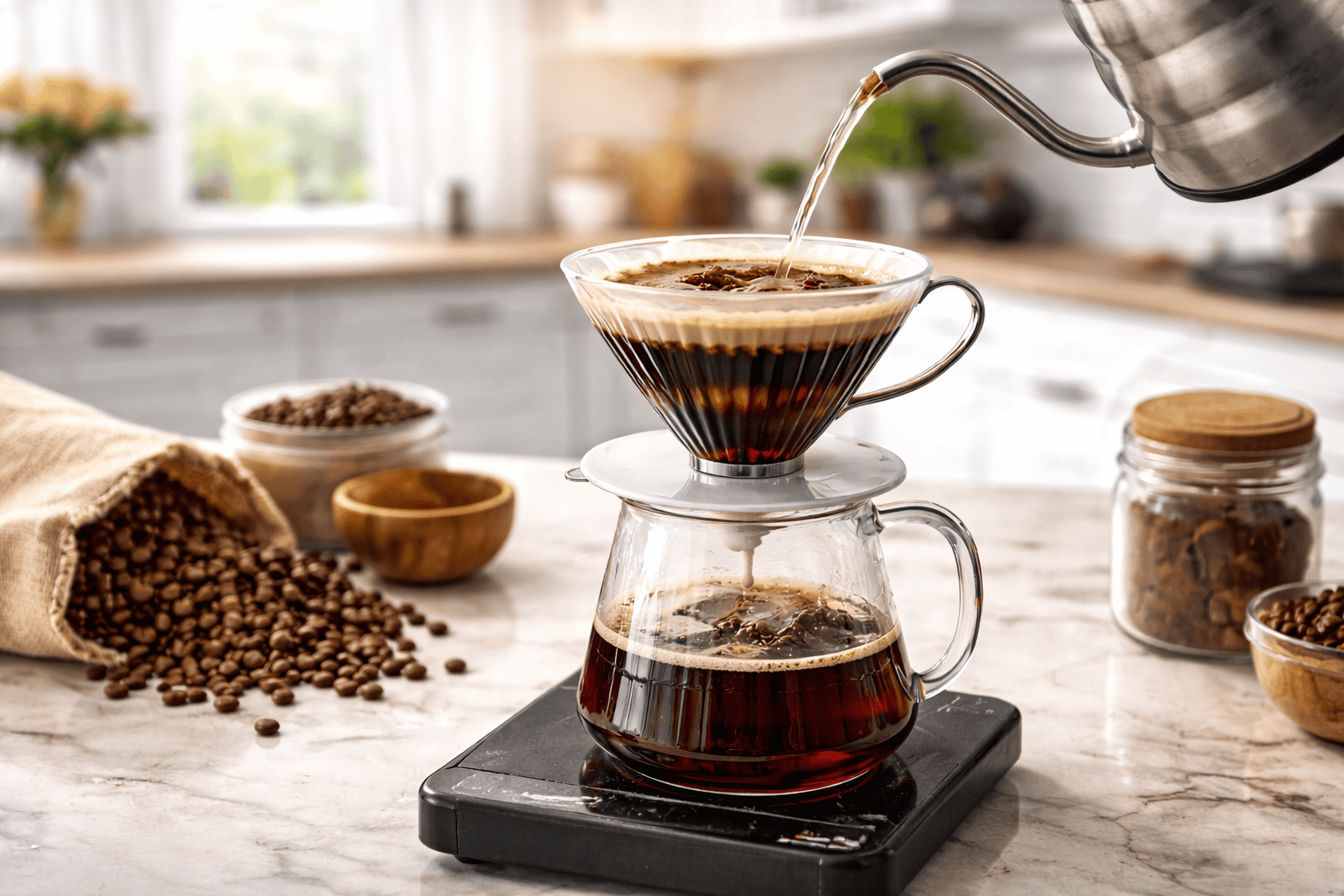
Hario V60 – Dripper
A cone dripper where the bloom and bed are easy to see.
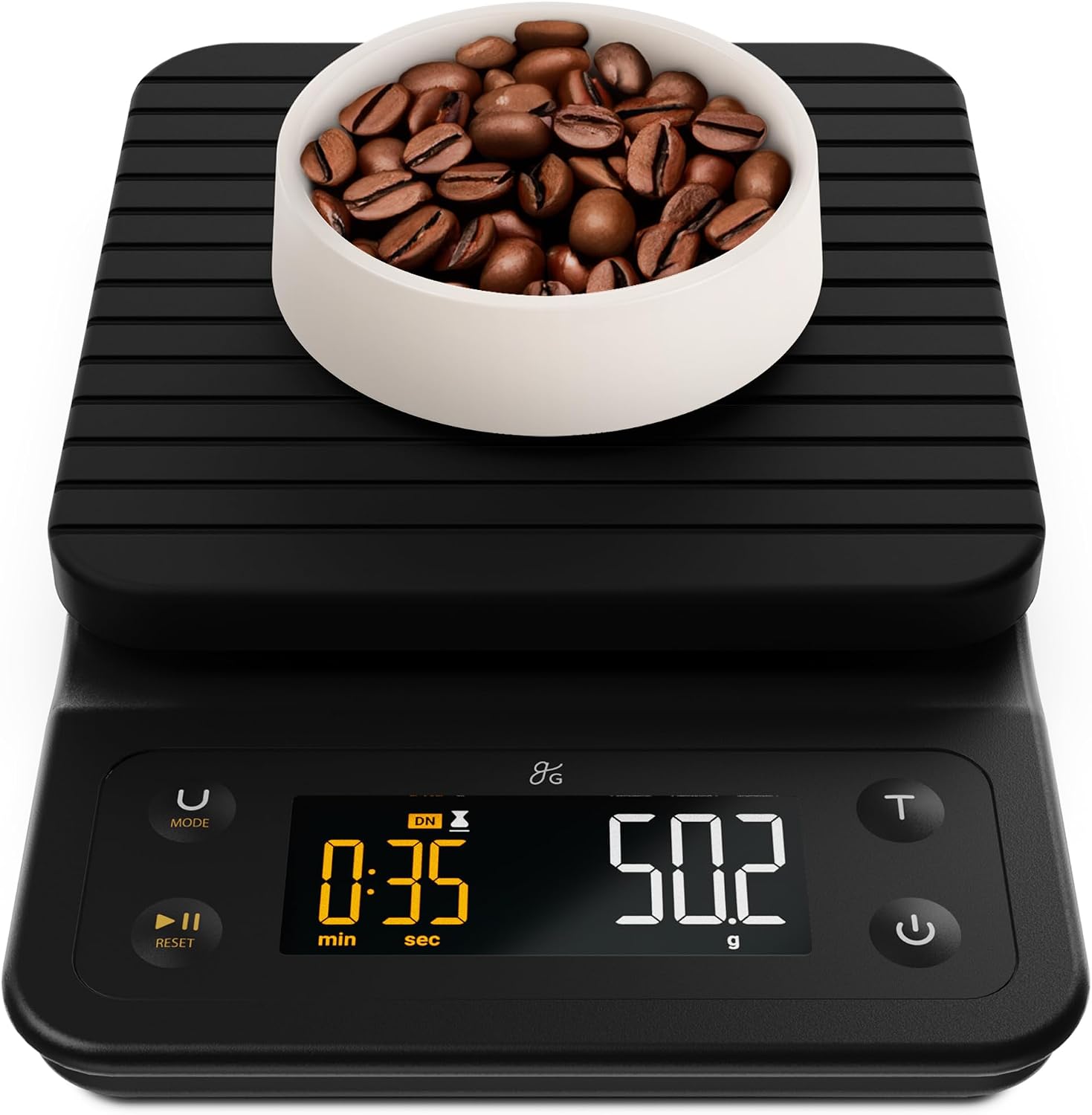
Greater Goods Scale – Timing
Weigh your coffee and bloom water with a built-in timer.
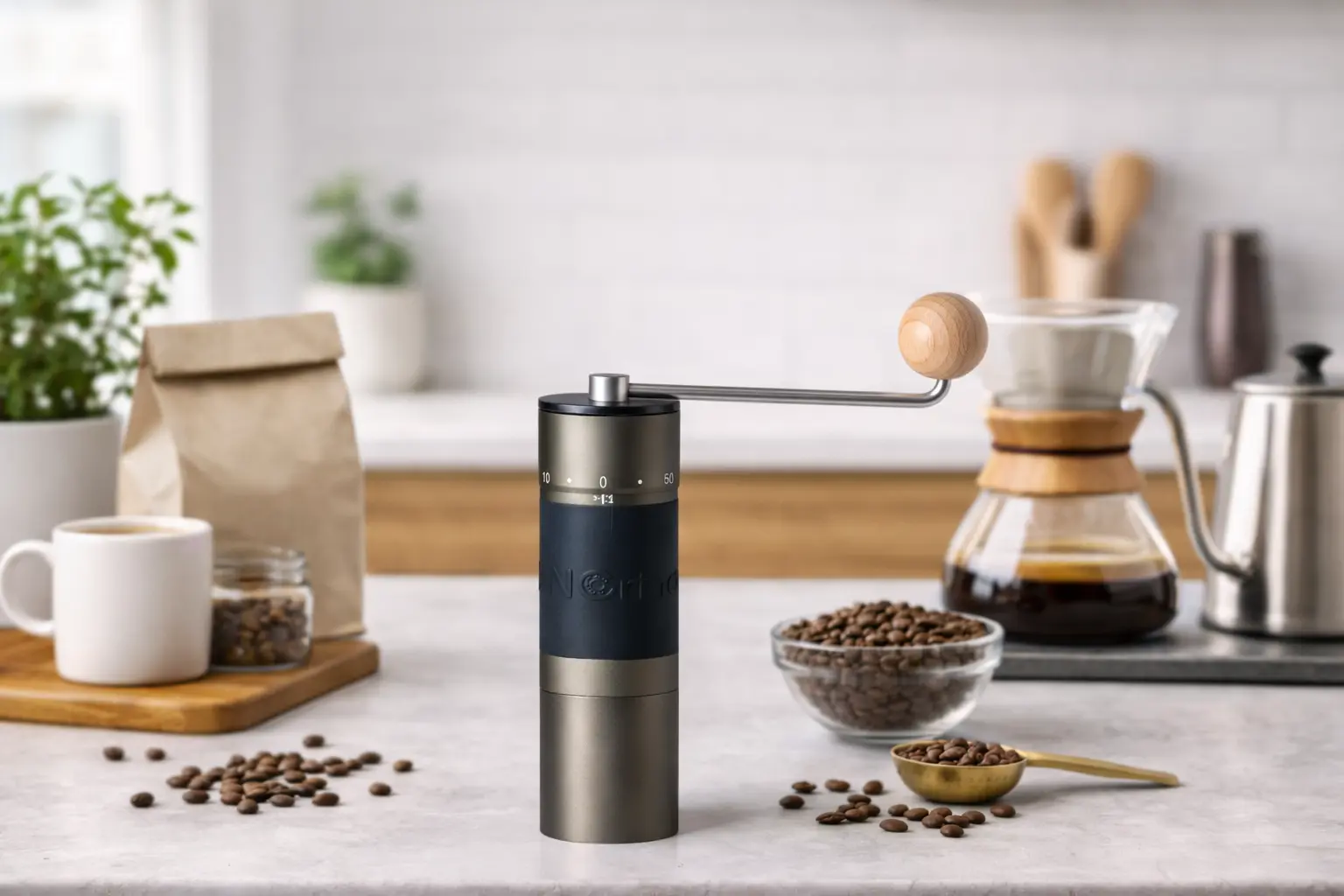
KINGrinder K6 – Fresh Grind
Grinding just before brewing keeps the gas in the coffee.
Affiliate disclosure: Amazon links may earn CoffeeGearHub a commission at no additional cost to you. Prices and availability can change.
What the Bloom Actually Is
When coffee is roasted, the heat produces carbon dioxide that stays trapped in the structure of the bean. Over time it escapes in a process called degassing. The Specialty Coffee Association notes that this degassing is fastest in roughly the first 20 days after roasting and then slows dramatically.
Pour hot water over the grounds and the remaining gas rushes out. You see it as bubbles and a swelling dome of coffee. The fresher the beans, the bigger the bloom. Our pour-over guide and Hario V60 recipe both start with a bloom for this reason.
Why Bloom Matters for Extraction
Carbon dioxide does not mix with water, so gas escaping from the grounds can push water aside and leave dry pockets in the coffee bed. Water then flows unevenly, and some coffee is over-extracted while some is under-extracted. The cup can taste flat, sour, and bitter at the same time.
A short bloom helps in three ways. It wets the grounds evenly before the main pour, it lets most of the gas escape, and it gives you a visual cue about how fresh the coffee is. If the coffee barely moves, it is probably older.
How to Bloom: Water, Time, and Technique
| Step | Starting point | Why |
|---|---|---|
| Bloom water | 2 to 3 times the coffee weight (40 to 60 g for 20 g of coffee) | Enough to wet every ground, not enough to start the full extraction |
| Bloom time | 30 to 45 seconds | Gives most of the gas time to leave the bed |
| Agitation | Gentle swirl or a small stir | Wets dry clumps at the edges and on top |
| Water temperature | Your normal brewing temperature | Cooler water slows degassing, so a cooler brew may need a longer bloom |
For a full walkthrough of water temperature, see pour-over water temperature. For brew ratios across methods, see our brew ratio guide.
Recommended dripper

Recommended scale

How Freshness Changes the Bloom
Coffee roasted within the past couple of weeks has the most gas and the biggest bloom. Very fresh coffee can also be uneven in the brew bed, which is why many brewers let beans rest for several days after roasting. Older coffee, or coffee ground long before brewing, has already lost most of its gas, so the bloom is small.
A weak bloom is a useful clue, not a failure. If a freshly opened bag barely puffs, check the roast date. Our coffee freshness guide explains how long beans stay at their best.
Bloom in Other Brew Methods
| Method | Bloom or equivalent | Typical time |
|---|---|---|
| Pour-over (V60, Chemex, Kalita) | Bloom pour of 2 to 3 times coffee weight | 30 to 45 seconds |
| Automatic drip | Not adjustable on most machines; some have a pre-wet cycle | Machine-controlled |
| French press | Grounds form a foamy raft; break it with a stir | About 4 minutes steep, stir at the start |
| AeroPress | Wet the grounds and wait | About 30 seconds |
| Espresso | Pre-infusion at low pressure | A few seconds, machine-controlled |
| Moka pot | No bloom step | Not applicable |
Our Verdict
Bloom if you brew pour-over or other filter coffee, especially with beans roasted in the past few weeks. Use about two to three times the coffee weight in water, wait 30 to 45 seconds, and start your main pour on a flat, wet bed. Use a scale, and grind fresh if you can. See our coffee scale guide for how to weigh water as you pour.
Get the Bloom Right
A scale and a cone dripper make the bloom easy to measure and easy to see.
As an Amazon Associate, CoffeeGearHub earns from qualifying purchases.
Editorial bottom line: Pour two to three times the coffee weight in hot water, wait 30 to 45 seconds, then pour the rest. Fresh coffee blooms more; older coffee blooms less, but the wetting step still helps.
Frequently Asked Questions
What is the coffee bloom?
The bloom is the bubbling and swelling that happens when hot water first hits fresh coffee grounds. Roasting creates carbon dioxide that stays trapped in the beans and releases over time. When water arrives, the remaining gas escapes quickly and makes the grounds puff up.
How long should coffee bloom?
About 30 to 45 seconds is a good starting point for most pour-over and filter coffee. Very fresh coffee may bloom more and benefit from the longer end, while older coffee blooms less and does not need the extra time.
How much water should I use to bloom?
A common starting point is about two to three times the weight of the coffee. For 20 g of coffee that is roughly 40 to 60 g of water. The goal is to wet all the grounds evenly without starting the main pour.
Does coffee bloom matter with old coffee?
Much less. Coffee degasses naturally in the days and weeks after roasting, so older beans have little carbon dioxide left and show a small bloom. A short bloom still wets the grounds evenly, so it does no harm.
Do you bloom coffee in a French press or AeroPress?
You can. In a French press the grounds form a foamy raft on the water, which you break up with a stir. In an AeroPress, wetting the grounds and waiting about 30 seconds is a common opening step. Neither is essential for stale coffee.
Is there a bloom in espresso?
The espresso equivalent is pre-infusion: a low-pressure phase that wets the puck before full pressure begins. It does a similar job of wetting the coffee evenly and letting gas escape before the main extraction.
Sources and Further Reading
Degassing timelines follow the Specialty Coffee Association’s overview of freshly roasted coffee. Bloom technique and timing draw on barista education resources such as Seattle Coffee Gear’s bloom guide. CoffeeGearHub did not test these products hands-on.
CoffeeGearHub product shortlist
Continue with related products on CoffeeGearHub
Review product categories and current verified merchant offers on CoffeeGearHub before leaving the site.