
V60 vs Chemex vs Kalita Wave: Which Pour-Over Brewer Fits Your Routine? (2026)
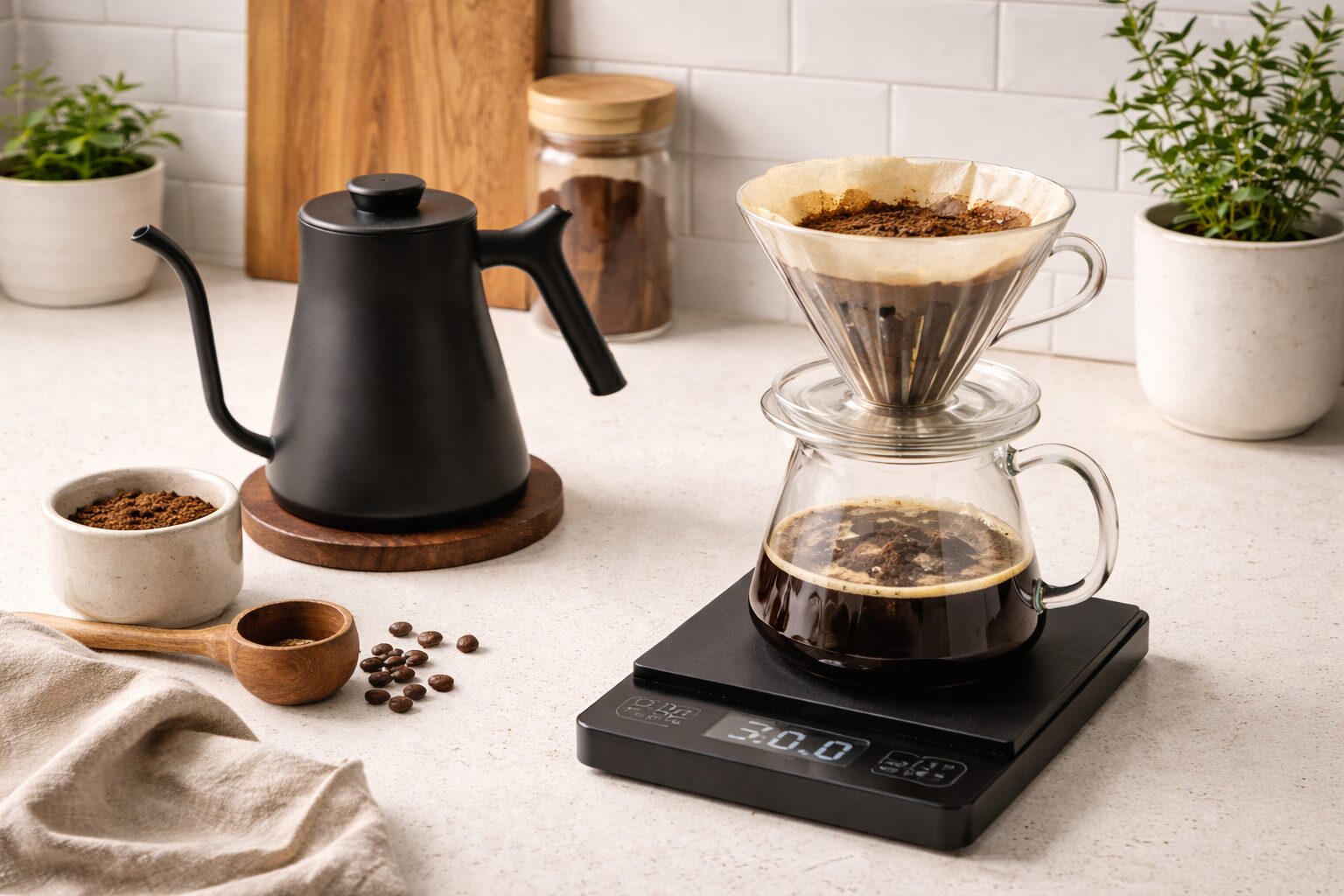
Editorial standards: this comparison draws on Hario, Chemex, and Kalita published specifications and filter documentation, Specialty Coffee Association brewing standards, and owner and reviewer reports. Recipes are starting points to adjust by taste. CoffeeGearHub does not claim hands-on testing where it has not occurred.
At a glance
Choose around workflow, not a universal winner
How each brewer’s geometry and filter shape the cup, the filters themselves, flow rate, starting recipes, grinder sensitivity, batch size, ongoing cost, a side-by-side comparison, and which brewer fits which routine.
Editorial analysis
Control, clean filtration, or repeatability
The V60 gives you the most control and shows technique most clearly. The Chemex pairs very thick filters with a built-in carafe for clean, larger batches. The Kalita Wave builds flow resistance into the brewer so cups are easier to repeat.
None is better in every way. The useful question is which design matches your grinder, how many cups you brew, the flavor you prefer, and how much attention you want to give the pour each morning.
The 30-Second Answer
Choose the Hario V60 if you enjoy dialing in and want bright, high-clarity cups from light roasts. Choose the Chemex if you brew for two or more and like a very clean, smooth cup. Choose the Kalita Wave if you want the most forgiving, repeatable daily brewer.
Whichever you pick, a consistent burr grinder and a gooseneck kettle matter more than the brewer itself.
Compare current options
Start with these representative choices
The three brewers compared in this guide, each suited to a different routine.
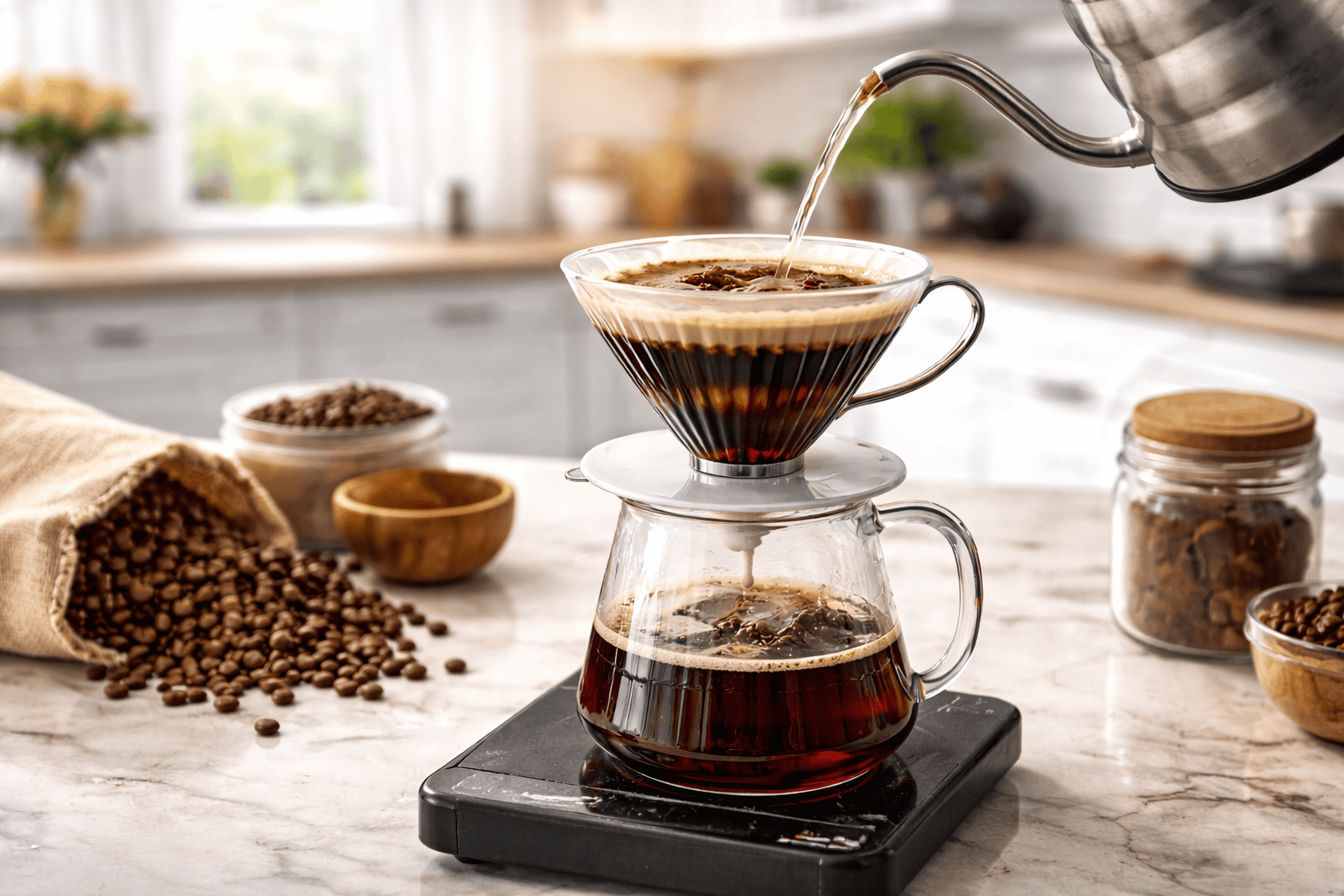
Hario V60 — Most control
A steep cone with one large drain hole for bright, detailed cups and maximum technique control.
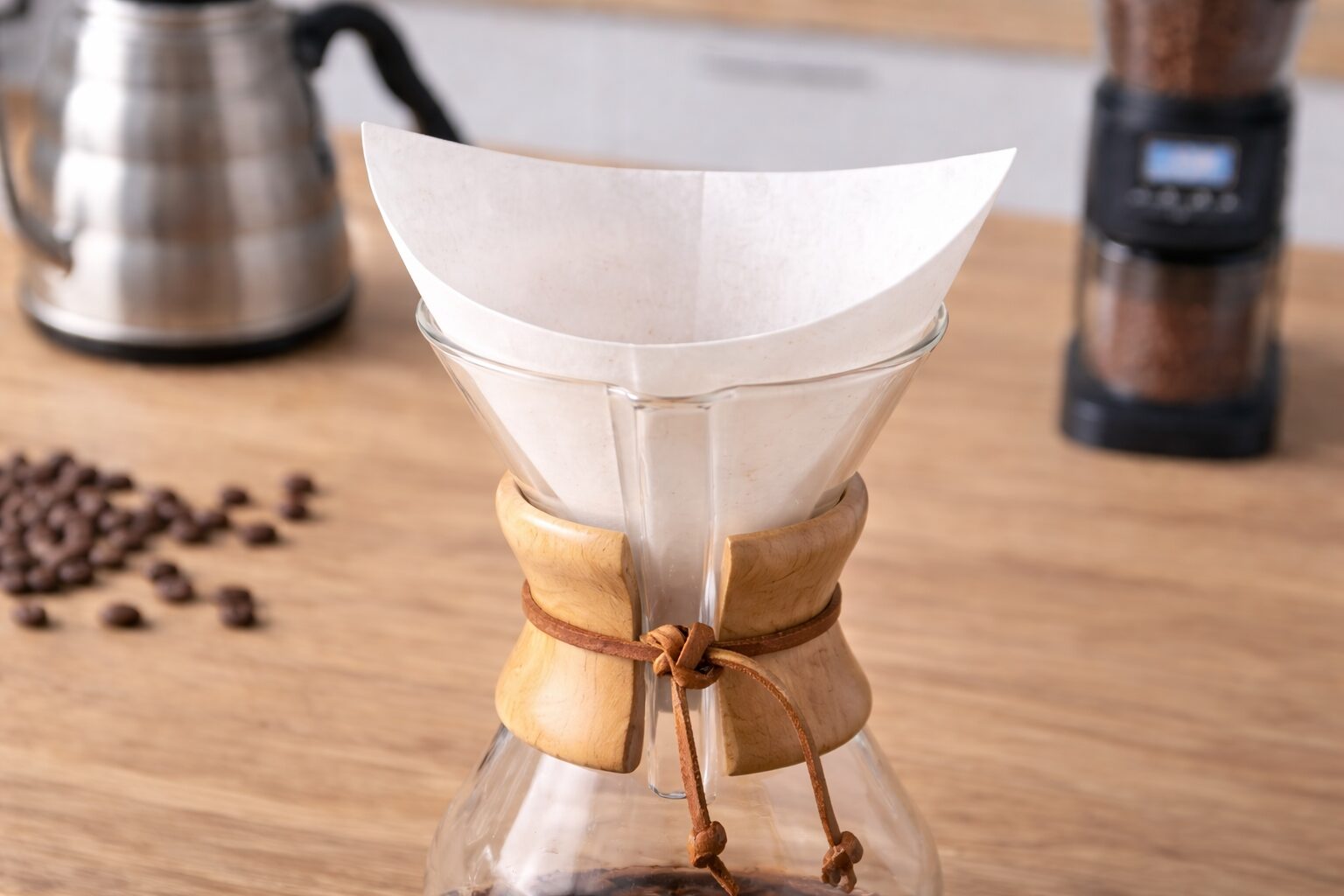
Chemex — Cleanest cup
A brewer and carafe in one, with thick bonded filters for clean, multi-cup batches.
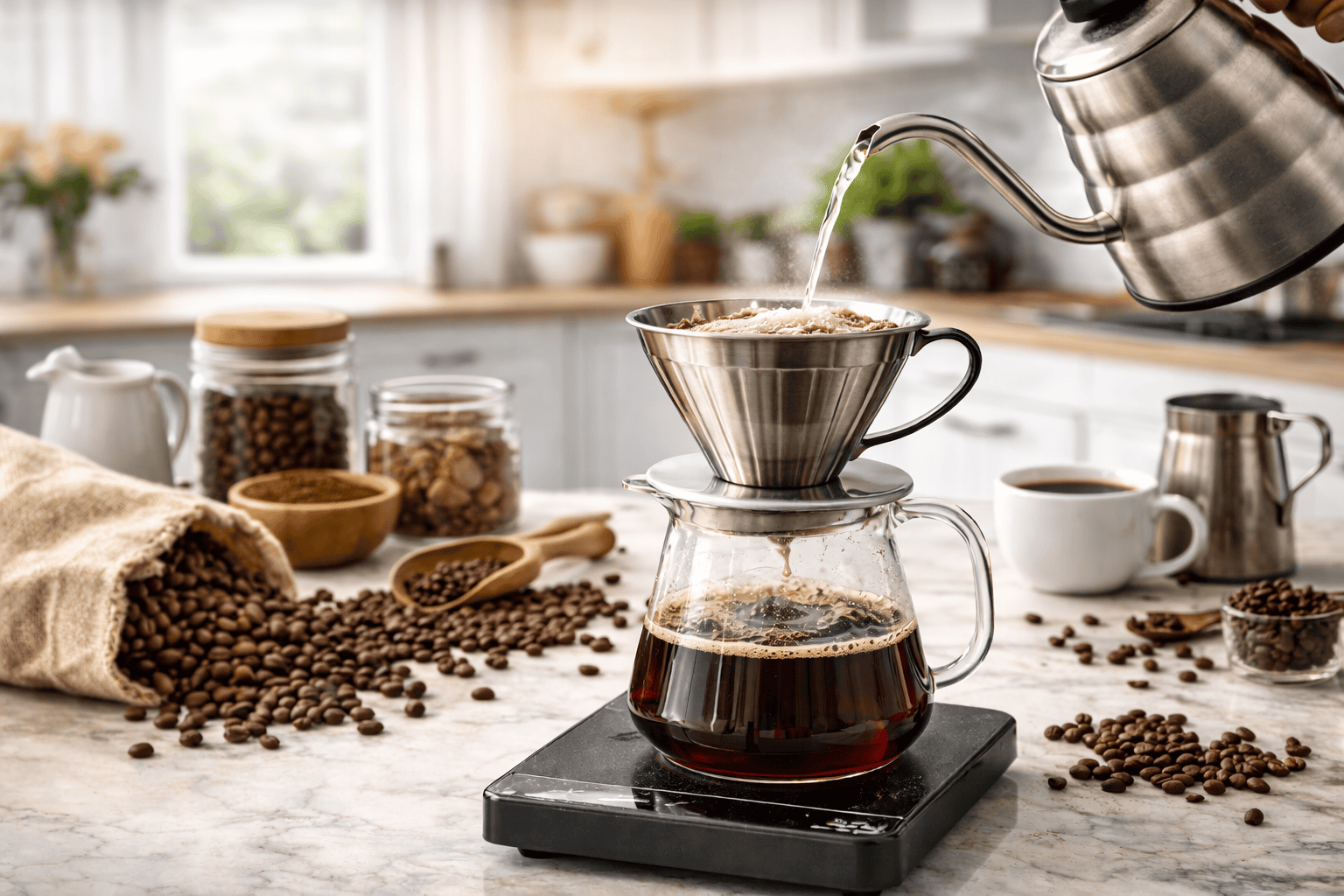
Kalita Wave — Most forgiving
A flat bed with three small holes that evens out flow for repeatable daily cups.
Affiliate disclosure: Amazon links may earn CoffeeGearHub a commission at no additional cost to you. Prices and availability can change.
Start With Brewer Design, Not Brand
The V60, Chemex, and Kalita Wave are all manual pour-over brewers, but each creates a different brewing environment. Bed shape, drainage, and filter thickness change how quickly water moves through the coffee and how much technique the brewer asks of you. That is why the comparison starts with mechanics rather than looks.
The V60 is a steep 60-degree cone with one large opening and spiral ribs, so it adds little resistance of its own and lets your pour control flow. The Chemex is a shallower cone whose very thick bonded filter slows the brew and removes more oils and fines. The Kalita Wave has a flat bed and three small holes that spread water evenly and add built-in resistance.
| Design factor | V60 | Chemex | Kalita Wave |
|---|---|---|---|
| Bed shape | Steep cone | Shallower cone | Flat bottom |
| Drainage | One large hole | Thick filter limits flow | Three small holes |
| Filter | Thin cone paper | Thick bonded paper | Fluted wave paper |
| Emphasis | Control and clarity | Clean batches | Even, repeatable cups |
The brewer does not decide extraction on its own. Grind, water temperature, dose, ratio, and pouring still do most of the work. What changes is how much the design amplifies mistakes or smooths them out, which matters far more day to day than which brewer is more popular.
The Filters: Thin, Bonded, and Fluted
Filters shape the cup as much as the brewer. Hario’s cone filters are thin and let more fine particles and a little oil through, which keeps body and highlights bright, delicate flavors. They are cheap and sold almost everywhere, and you can choose bleached or unbleached paper; rinse either well to remove papery taste.
Chemex bonded filters are substantially thicker than standard paper. They trap more oils and fines, producing an exceptionally clean cup with a lighter body, and their weight slows the drawdown. Fold them with the three-layer side toward the spout so air can escape, and rinse generously to preheat the glass and remove paper flavor.
Kalita Wave filters are fluted, with folds that hold the paper away from the brewer walls. That reduces contact between filter and brewer, keeps flow even through the flat bed, and helps prevent the paper from sealing against the sides. They are less common in shops but easy to buy online. Our pour-over filter comparison also covers metal and cloth options.
Flow Rate and Drawdown
Flow rate is how quickly brewed coffee drains, and it is the main way these brewers differ in practice. The V60 drains fastest, so it is very sensitive to grind size and pouring speed: fines can clog the single hole and slow the brew, while a coarse grind lets water rush through. That sensitivity is what makes it rewarding and also what makes it frustrating at first.
The Chemex drains slowest because of its thick filter, especially with larger batches, which is why it usually needs a slightly coarser grind. The Kalita Wave sits between them, with its three small holes metering the flow so drawdown times stay consistent from brew to brew. Use total brew time as a diagnostic: if it runs well over target, grind coarser; if it rushes through, grind finer.
Hario V60: Maximum Control
The Hario V60 is the most open of the three. Its single large drain hole responds immediately to grind, agitation, and pouring, so changes are easy to taste. When dialed in, it highlights clarity and separation between flavors, which is why it is the favorite brewer for light-roast single origins.
The trade-off is that an uneven grind or inconsistent pour can produce a cup that tastes sharp and drying at once. A good starting point is 20 grams of coffee to about 300 to 320 grams of water, a 40 to 60 gram bloom, and two or three steady pours, aiming for roughly two and a half to three and a half minutes. Plastic versions hold heat well and are nearly unbreakable. Our Hario V60 recipe walks through it step by step.
Chemex: Clean Filtration and Larger Batches
The Chemex combines brewer and serving carafe, and its thick bonded filters retain more oils and fines than other papers. The result is a very clean, smooth cup with a lighter body that many people find easy to drink black. Its glass and wood-collar design also makes it a handsome serving vessel.
It shines with multi-cup batches. A common starting point for a six-cup Chemex is about 42 grams of coffee to 650 grams of water with a medium to medium-coarse grind, aiming for four to five minutes. Too fine a grind or heavy stirring can stall the drawdown. The glass needs more care than a plastic V60, so handle it gently when cleaning.
Kalita Wave: The Forgiving Daily Brewer
The Kalita Wave uses a flat bed and three small holes, spreading coffee evenly and adding flow resistance that the V60 lacks. It is less sensitive to small differences in pouring and grind, so balanced, sweet cups are easier to repeat even on busy mornings.
Flavor sits between the other two: more body than a Chemex and slightly less extreme clarity than a carefully dialed V60. Start with 20 grams to 320 grams of water, a medium grind, a 50 gram bloom, and one or two steady pours. If it stalls, grind coarser. Stainless steel versions are durable and travel well, while ceramic is stable on the counter.
Starting Recipes Compared
For the V60, use about 1:15 to 1:17 with a medium-fine grind and water around 93 to 96°C. For the Chemex, use about 1:15 to 1:16 with a medium to medium-coarse grind at similar temperatures and expect a longer brew. For the Kalita Wave, use about 1:15 to 1:16.5 with a medium grind and water around 92 to 95°C.
Treat these as starting points rather than rules. Taste, then change one variable at a time: grind finer if the cup is sour or thin, coarser if it is bitter or drying. Darker roasts generally prefer slightly cooler water and a coarser grind. Our pour-over guide explains each step in more detail.
Grinder Sensitivity
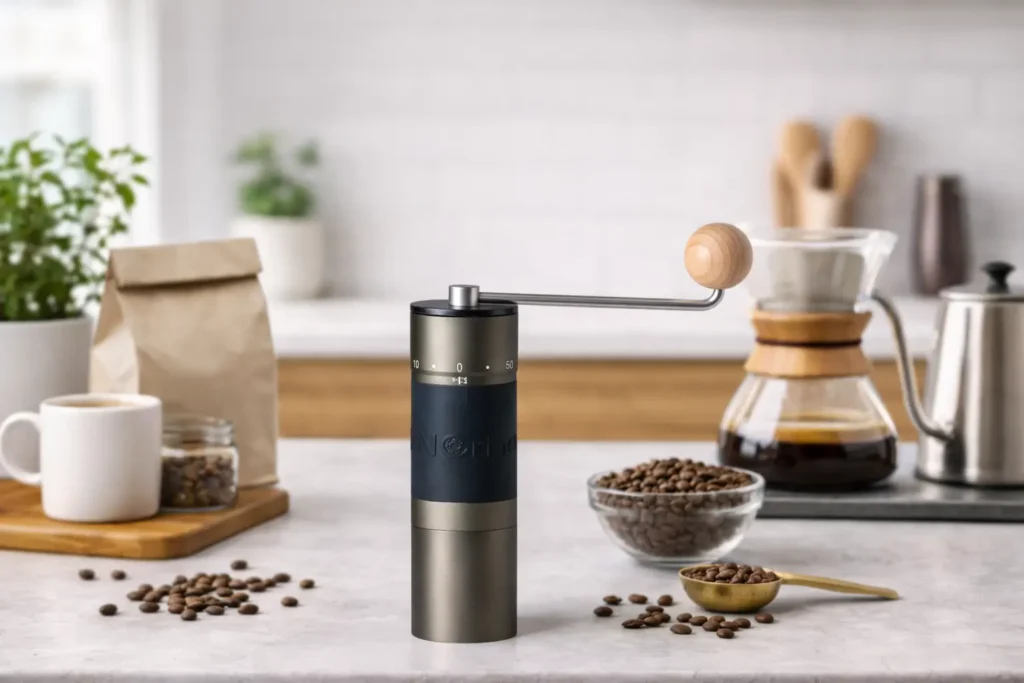
Grinder quality matters for all three, but the V60 exposes an uneven grind most clearly because nothing slows the water except the coffee bed. The Chemex’s thick filter and the Kalita’s flat bed and small holes both buffer small inconsistencies, so they are more forgiving of an entry-level grinder.
A consistent burr grinder such as the KINGrinder K6 covers the medium-fine to medium-coarse range all three use. A blade grinder will struggle with any of them. Our pour-over grind size chart lists starting settings for each brewer.
Batch Size and Capacity
The V60 and Kalita Wave are at their best for one or two cups, though larger sizes of each exist. They brew directly into a mug or small server, which suits single drinkers and households where people drink coffee at different times.
The Chemex is built for batches. Its larger sizes comfortably brew for three or four people and serve straight from the carafe. Brewing a single small cup in a large Chemex often drains too quickly and tastes thin, so match the brewer to how many cups you usually make.
Ownership Cost
The V60 is the least expensive way in, especially the plastic version, and its filters are cheap and widely sold. The Chemex costs more up front but includes the serving carafe, and its thick filters cost more per brew. The Kalita sits between them on brewer cost, and its filters are easy to buy online though less common in shops.
Breakage matters too. Plastic V60s and steel Kalitas are nearly indestructible, while the Chemex is glass and needs careful handling. Over years of daily use, filter availability and durability matter more than a small difference in purchase price. A gooseneck kettle is worth budgeting for whichever brewer you choose.
Materials and Heat Retention
Each brewer comes in several materials, and the choice mostly affects heat and durability rather than flavor. Plastic V60s are inexpensive, hold heat surprisingly well because they are thin and insulating, and survive drops. Ceramic versions look and feel premium but absorb a lot of heat, so preheat them thoroughly with hot water before brewing. Glass and metal V60s fall between the two.
The Kalita Wave is most common in stainless steel, which is durable and travels well, with ceramic and glass alternatives. The Chemex is borosilicate glass with a wood collar, or an all-glass handle version. Whatever the material, rinsing the filter with hot water both removes paper flavor and preheats the brewer, which keeps the slurry temperature steady through the brew.
Which Coffees Suit Each Brewer
The V60 is the classic match for light roasts and washed single origins from Ethiopia, Kenya, and Central America, because its thin paper and fast flow keep floral and fruity notes vivid. It can make excellent medium roasts too, but it is the brewer people reach for when they want to taste what makes a particular coffee distinctive.
The Kalita Wave is forgiving across roast levels and particularly good with medium roasts, bringing out caramel and chocolate sweetness with a rounder body. The Chemex suits people who want a smooth, clean cup from almost any coffee, and its thick filter softens the edges of darker roasts. Our best coffee beans for pour-over guide suggests coffees for each style.
The Rest of the Setup
All three brewers benefit from the same supporting gear. A gooseneck kettle gives you a slow, steady pour, which matters most for the V60 and helps the Kalita and Chemex too. A temperature-control kettle lets you match water temperature to the roast without guessing.
A scale with a timer turns pour-over from guesswork into a repeatable recipe, because you can weigh coffee and water and track brew time. Together with a consistent burr grinder, a kettle and scale do more for cup quality than switching brewers. Our pour-over brewing setup guide lists a complete starter kit.
V60 vs Chemex vs Kalita Wave: Side by Side
| Category | V60 | Chemex | Kalita Wave |
|---|---|---|---|
| Cup style | Bright, detailed | Very clean, lighter body | Balanced, sweet |
| Technique demand | Highest | Moderate | Lowest |
| Grinder sensitivity | High | Moderate | Lower |
| Best batch size | 1–2 cups | 2–6 cups | 1–2 cups |
| Durability | Excellent in plastic | Glass needs care | Excellent in steel |
Troubleshooting Each Brewer
With the V60, a fast, sour brew usually means the grind is too coarse or the pour too aggressive, while a slow, bitter brew points to fines clogging the drain. Grind slightly finer or coarser and pour in a steady spiral. With the Chemex, a stalled drawdown almost always means the grind is too fine for the thick filter; go coarser before changing anything else.
With the Kalita Wave, uneven extraction often comes from pouring directly on the filter walls or not wetting the whole bed during the bloom. Pour into the center in small circles and make sure the bloom saturates every ground. Our pour-over troubleshooting guide covers more fixes.
Which Brewer Fits Your Routine?
Choose the V60 if brewing is part of the hobby, you drink one cup at a time, and you want to taste the differences between light-roast coffees. It rewards a good grinder and a steady pour with the most expressive cups.
Choose the Chemex if you regularly brew for two or more people and prefer a very clean, smooth cup served from an attractive carafe. Choose the Kalita Wave if you want reliable, balanced cups every morning with the least fuss, especially if your grinder is good but not exceptional. Many brewers eventually own two of the three for different days. Our flat bottom vs cone guide goes deeper on the V60 and Kalita.
Pick Your Pour-Over Brewer
The Kalita Wave is the forgiving start; the V60 is the expressive choice.
As an Amazon Associate, CoffeeGearHub earns from qualifying purchases.
Editorial bottom line: The V60 offers the most control and the brightest cups, the Chemex the cleanest cup and the best batch brewing, and the Kalita Wave the easiest, most repeatable daily routine. Match the brewer to how many cups you make and how much attention you want to give the pour, and pair it with a consistent burr grinder.
Frequently Asked Questions
Is the V60 harder to use than the Kalita Wave?
Yes. The V60’s single large drain hole lets grind size and pouring pattern control flow directly, so it is more sensitive to technique. The Kalita Wave’s flat bed and three small holes add flow resistance that smooths out small inconsistencies.
Which pour-over brewer makes the best-tasting coffee?
It depends on taste. The V60 tends to produce the brightest, most detailed cups, the Chemex the cleanest and smoothest, and the Kalita Wave the most balanced and sweet. All three make excellent coffee when dialed in.
Can you use a Chemex for one cup?
You can, but the Chemex works best at larger batches. A small dose in a large Chemex often drains too quickly and tastes thin. For single cups, a V60 or Kalita Wave is usually the better tool.
Which is better for beginners, the V60 or the Kalita Wave?
The Kalita Wave. Its flat bed and restricted drainage produce consistent cups even when pouring is not perfect. Many people start with a Kalita and add a V60 once their technique and grinder improve.
Are Kalita Wave filters hard to find?
They are less common in grocery stores than V60 or Chemex filters but easy to buy online. Buying a larger pack keeps a steady supply on hand.
Which brewer is best for light roasts?
The V60. Its thin paper and fast flow preserve bright acidity and floral, fruity notes. The Chemex and Kalita Wave tend to round those flavors out into a smoother, sweeter cup.
Sources and Further Reading
Brewer and filter details come from Hario, Chemex, and Kalita published product information. Brewing temperatures, ratios, and extraction concepts follow the Specialty Coffee Association’s brewing standards, and grind guidance draws on Baratza published information. CoffeeGearHub did not test these brewers in-house; recommendations draw on published information and owner and reviewer reports.
CoffeeGearHub product shortlist
Continue with related products on CoffeeGearHub
Review product categories and current verified merchant offers on CoffeeGearHub before leaving the site.