
Best Gooseneck Kettles for Pour-Over Coffee (2026 Guide)
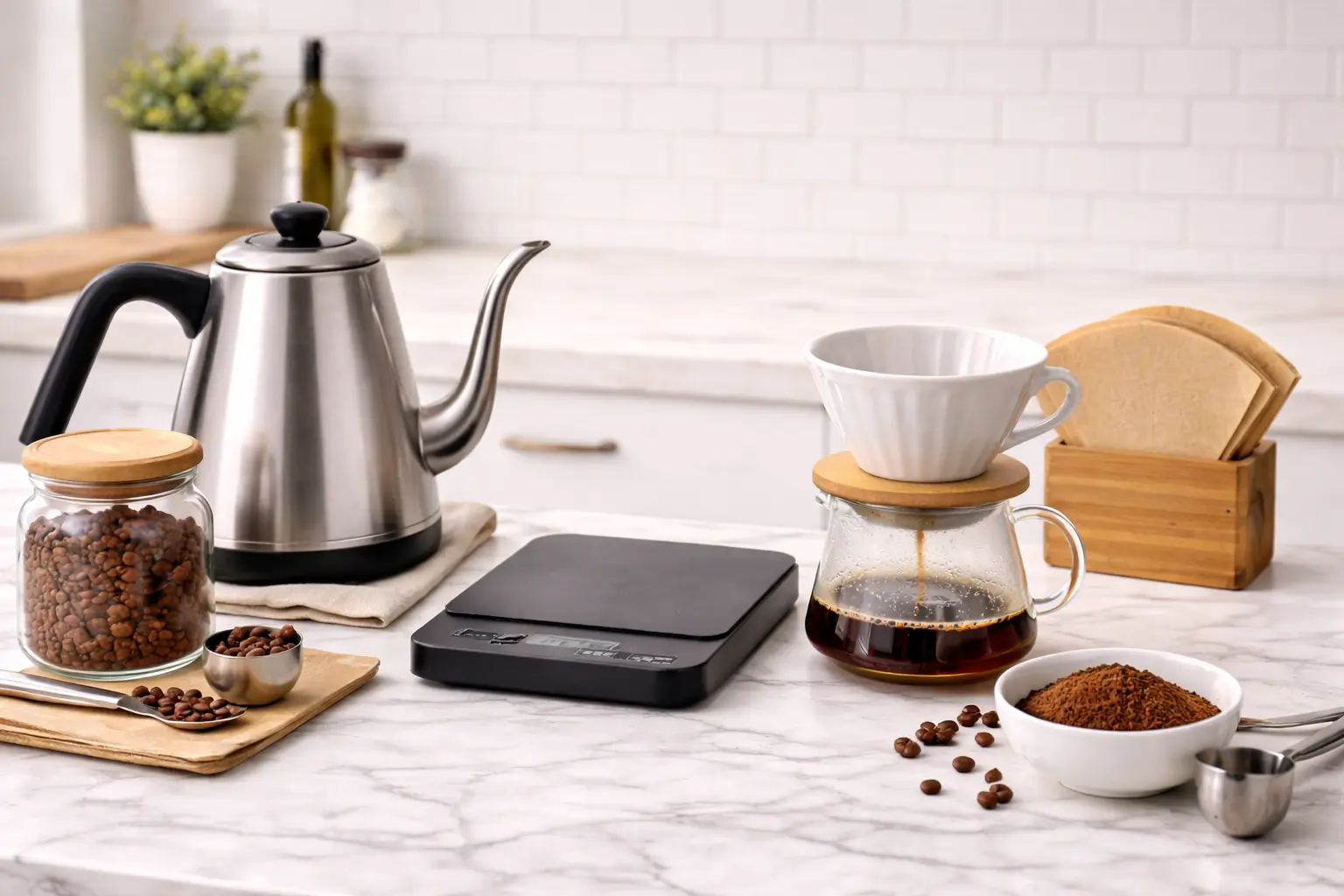
Editorial standards: picks are based on manufacturer specifications, independent lab results from TechGearLab, Tom’s Guide, and Coffee Review, long-term owner reports, and how each kettle fits a home pour-over routine. CoffeeGearHub does not claim hands-on testing where it has not occurred.
At a glance
What this gooseneck kettle guide covers
Why the spout matters for pour-over, what separates a great kettle from an adequate one, a comparison with independent lab scores, the best picks for precision, all-round use, budget, and stovetop brewing, electric vs stovetop, what temperature to set, and how to size and care for a kettle.
Editorial analysis
Pour control is the reason to buy; temperature control is the reason to pay more
Any kettle can heat water. A gooseneck exists for one job: letting water out slowly, in a thin stream, exactly where you aim it. That is what makes pour-over even and repeatable, and it is the first thing to judge in any kettle.
Temperature control is the second decision. A variable-temperature electric kettle removes a thermometer and a guessing step from every brew, and the best ones hold the water at temperature while you grind. Independent lab data shows budget and mid-priced electrics now come close to the premium models on overall scores, so the real question is how much you value the very best pour.
The 30-Second Answer
For most pour-over brewers, the Fellow Stagg EKG Pro is the best gooseneck kettle: independent testing ranks its pour control first, and it is accurate at coffee temperatures. The OXO Brew gooseneck scores just as well overall for less and holds a full liter; the COSORI is the budget electric pick; and the Hario V60 Buono is the stovetop standard.
If you already own a reliable thermometer, a stovetop gooseneck gives you the pour control for far less. Our Fellow Stagg EKG review covers the top pick in depth.
Compare current options
Start with these representative choices
Three kettles that cover most pour-over routines. The comparison table below adds budget and alternative picks.
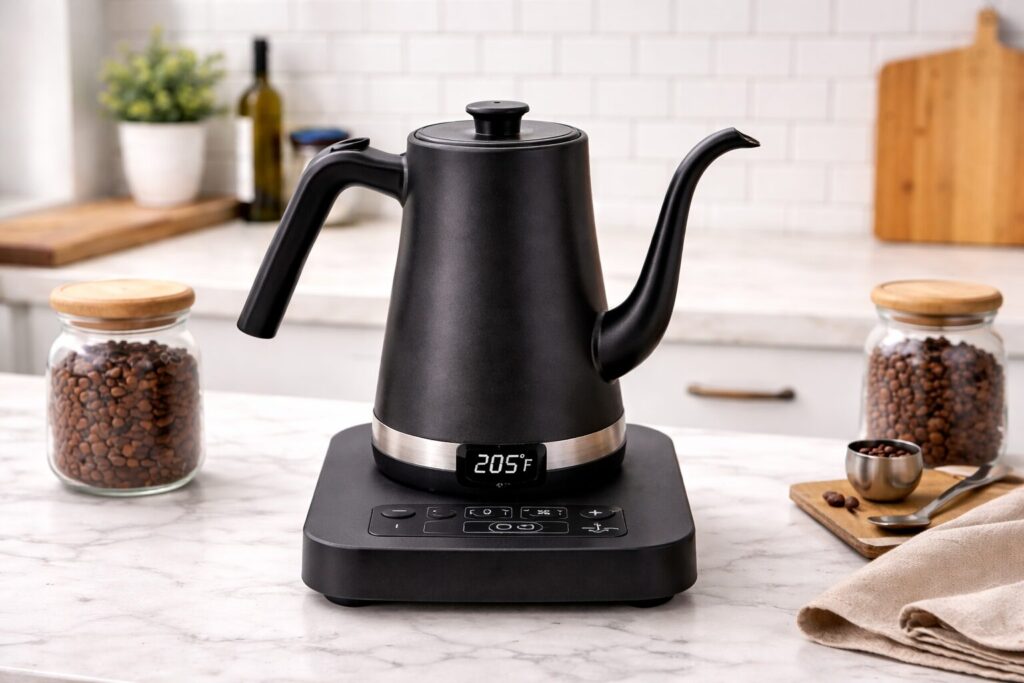
Fellow Stagg EKG Pro — Best for pour-over precision
Best-in-class pour control, to-the-degree temperature, adjustable hold, scheduling, and a brew timer in a 0.9 L kettle.
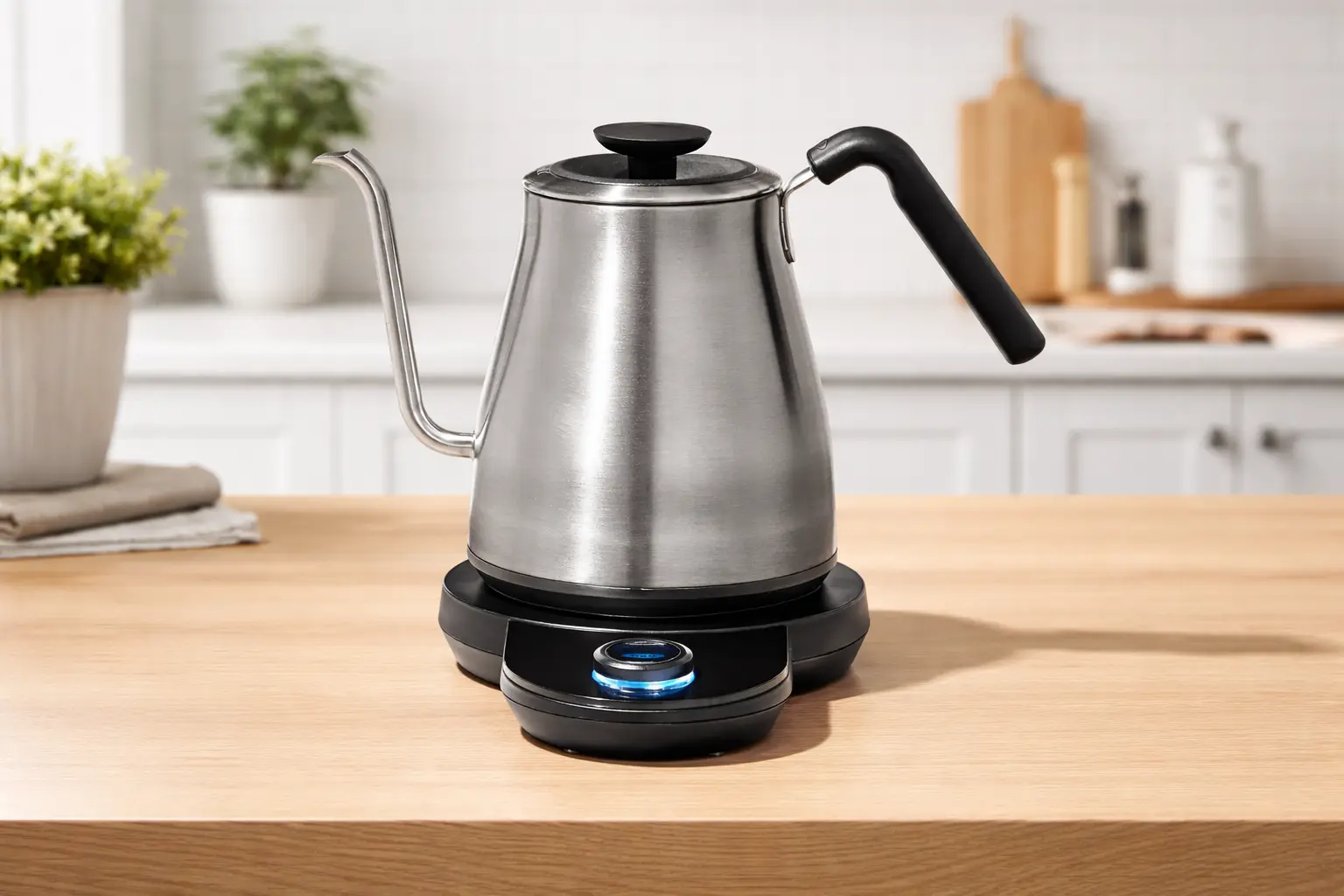
OXO Brew — Best all-round electric
Adjustable temperature, a built-in timer, a 30-minute hold, and a full 1.0 L capacity, with a comfortable grip.
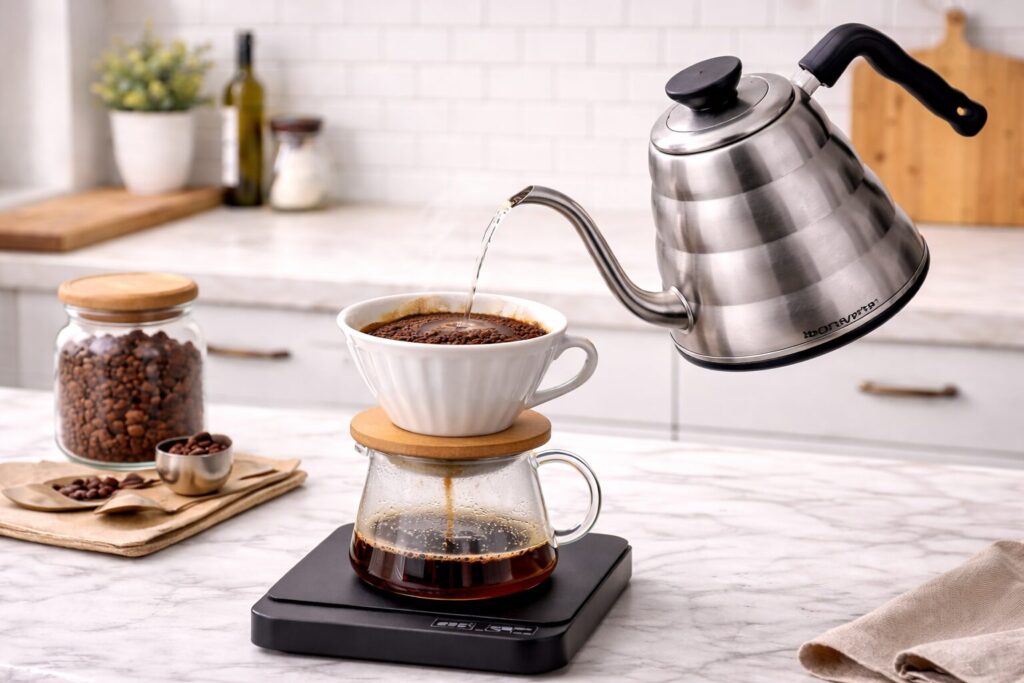
Hario V60 Buono — Best stovetop
The long-standing stovetop standard with a fine, controllable spout. Pair it with a thermometer for temperature control.
Affiliate disclosure: Amazon links may earn CoffeeGearHub a commission at no additional cost to you. Prices and availability can change.
Why a Gooseneck Matters for Pour-Over
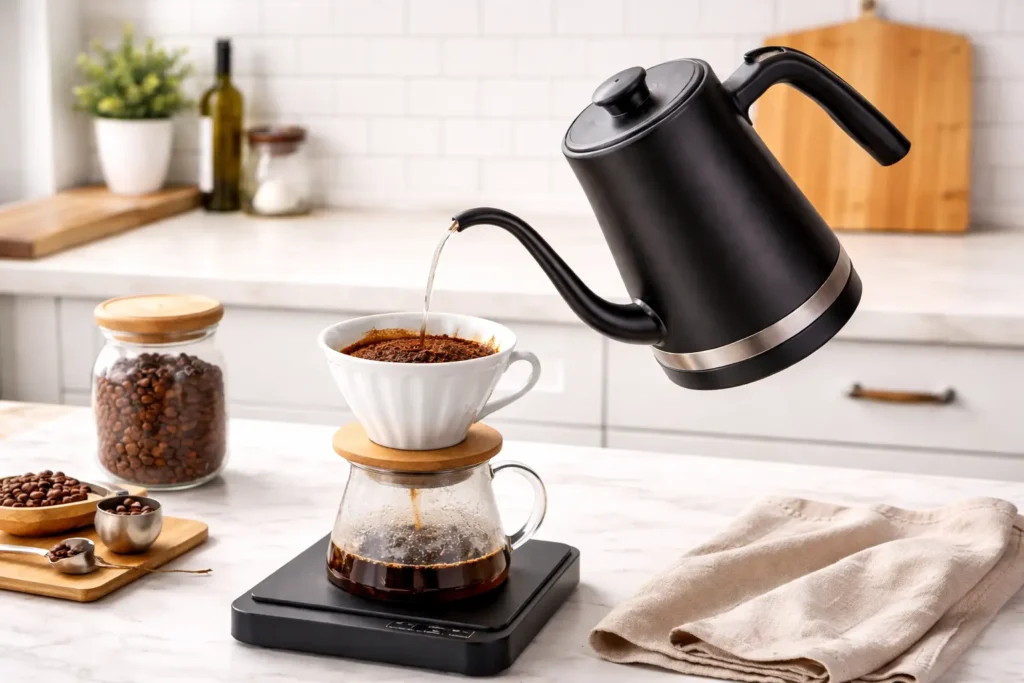
A gooseneck kettle is defined by its spout: a long, narrow neck that rises from the base of the kettle and arcs forward to a fine tip. That shape slows and narrows the stream, so you control how fast water leaves the kettle and exactly where it lands. A standard kettle’s short, wide spout cannot do either; tilt it slightly and water rushes out in a wide, splashing stream.
Pour-over is essentially a water-delivery exercise. You are managing where water hits the coffee bed and how fast it saturates the grounds. A slow, even spiral wets the bed uniformly, while a fast, uncontrolled pour floods one area, digs channels, and leaves other grounds dry. The result is a cup that is over-extracted and bitter in places and under-extracted and sour in others. A gooseneck turns that from a matter of luck into a matter of technique.
Handle design is the other half of control. Because flow rises with tilt, a kettle whose weight sits too far forward forces you to over-tilt and over-pour. The best kettles balance the spout with the handle so that small wrist movements change the flow gently. Our how to make pour over coffee and Hario V60 recipe guides show how pour speed fits into a full recipe.
What Separates a Great Gooseneck Kettle from an Adequate One
Spout geometry comes first. Look for a long, curved neck with a narrow tip angled slightly downward, so the stream starts cleanly at a gentle tilt and stays thin as you pour. A short neck or a wide tip makes slow pours difficult no matter how careful you are. Handle balance comes next: a counterweighted handle positioned to balance the spout lets you modulate flow with your wrist rather than fighting the kettle’s weight.
Temperature control is where electric kettles earn their price. A variable-temperature kettle that sets to the degree, shows the current temperature, and holds it for a while removes a thermometer and a timing step from every brew. Presets are fine for most people, but true to-the-degree control matters if you brew a lot of light roasts or tea. Accuracy varies more than marketing suggests: in TechGearLab’s tests, kettles that scored well at coffee temperatures were often much less accurate at low green-tea temperatures.
Materials and capacity round it out. Choose stainless steel in the water path, with as little plastic touching hot water as possible, and match capacity to how you brew. Around 0.8 to 0.9 liters covers one or two pour-over cups plus a filter rinse; a liter or more suits a large Chemex or brewing for several people. Overfilling any kettle makes the pour harder to control, so buy a size that fits your usual batch rather than the largest available.
Some features matter more than they look. A hold function is the one most owners use every day, because it keeps water ready while you grind, rinse the filter, and weigh the coffee. A display that shows the current temperature as well as the target makes it easy to see when the water is ready without waiting for a beep. A built-in brew timer is a nice extra if your scale lacks one. App connectivity and scheduling are genuinely useful to some people, but reviewers of the Stagg EKG Pro found the app the least reliable part of the kettle, so treat smart features as a bonus rather than a reason to buy.
The Best Gooseneck Kettles Compared
The table summarizes our picks. Lab scores are TechGearLab’s overall ratings out of 100, where tested; specifications follow manufacturer and retailer listings.
| Kettle | Type | Size | Temp control | Lab score |
|---|---|---|---|---|
| Fellow Stagg EKG Pro | Electric | 0.9 L | 1° steps | 76 (Top Pick, pour-over) |
| OXO Brew | Electric | 1.0 L | Adjustable | 77 (Editors’ Choice) |
| COSORI | Electric | 0.8 L | 5 presets | 72 |
| Bonavita | Electric | 1.0 L | 1° steps | 54 |
| Brewista Artisan | Electric | 1.0 L | Adjustable | Not tested |
| Hario V60 Buono | Stovetop | Varies | None | Not tested |
Fellow Stagg EKG Pro: Best for Pour-Over Precision
The Fellow Stagg EKG Pro is the kettle independent testers most consistently praise for pouring. TechGearLab’s tester called its pour quality the best they had experienced and gave it a Top Pick award for pour-over; Tom’s Guide measured a controllable flow from about 1.5 to 25 grams per second. The long, low spout and counterbalanced handle make slow, steady spirals feel natural.
Temperature control is excellent where coffee is brewed. TechGearLab scored it 9.0/10 for accuracy at coffee temperatures, though only 6.1/10 at green-tea temperatures, and Coffee Review found the original EKG’s display within 1 to 3°F of a thermocouple. The Pro sets from 104 to 212°F, holds for 15 to 60 minutes, and adds scheduling, altitude adjustment, and a brew timer; the original EKG starts at 135°F and holds for an hour. Note that the current Pro connects over Wi-Fi for firmware updates rather than offering Bluetooth brewing control.
The trade-offs are price, a 0.9-liter capacity, a short cord, and owner reports of temperature sensors and handles failing after a year or two in a minority of units. Fellow’s standard warranty is two years in the US and Canada. Our Fellow Stagg EKG review scores it 7.8/10 on the research and covers each point in depth.
OXO Brew: The Best All-Round Electric
The OXO Brew adjustable-temperature gooseneck kettle edged the Stagg in TechGearLab’s overall ranking, 77 to 76, and took its Editors’ Choice award. Testers praised its soft, ergonomic grip and measured it slightly faster to boil, at 2.9 minutes in their standard test. Its coffee-temperature accuracy scored 8.2/10, a little behind the Stagg’s 9.0, and its spout, while good, is not quite as fine.
Practically, it is the more versatile kettle. It holds a full liter, has a built-in timer, and beeps when it reaches temperature, though it holds heat for 30 minutes rather than an hour. If one kettle needs to handle pour-over, tea, and general kitchen duty, the OXO is the more sensible choice.
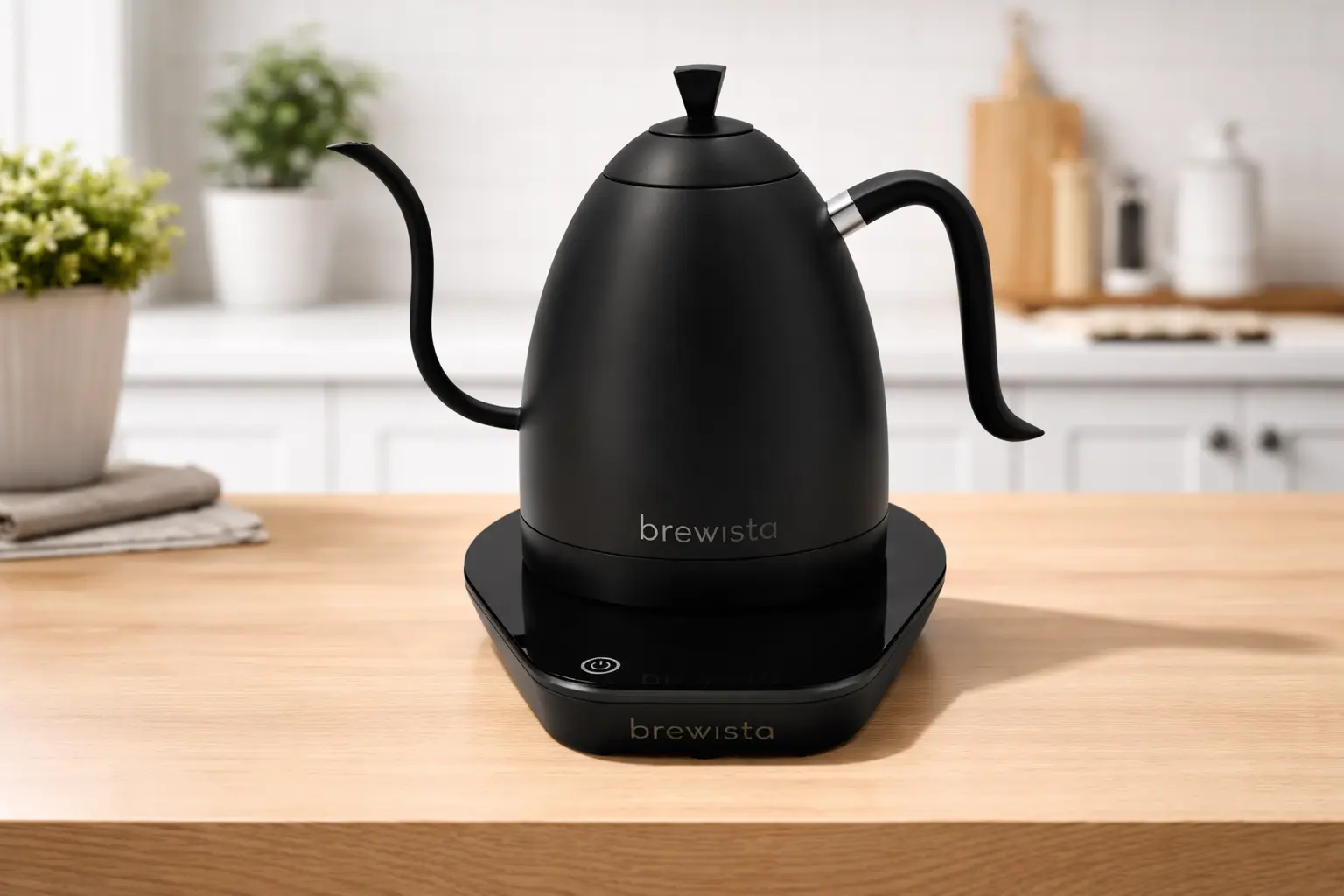
The Brewista Artisan is a well-regarded alternative in the same class: one liter, variable temperature from about 140 to 210°F, a built-in timer, and a keep-warm function of up to an hour. We found no independent lab data for it, so we list it as an option rather than a top pick.
COSORI and Bonavita: Budget Electric Options
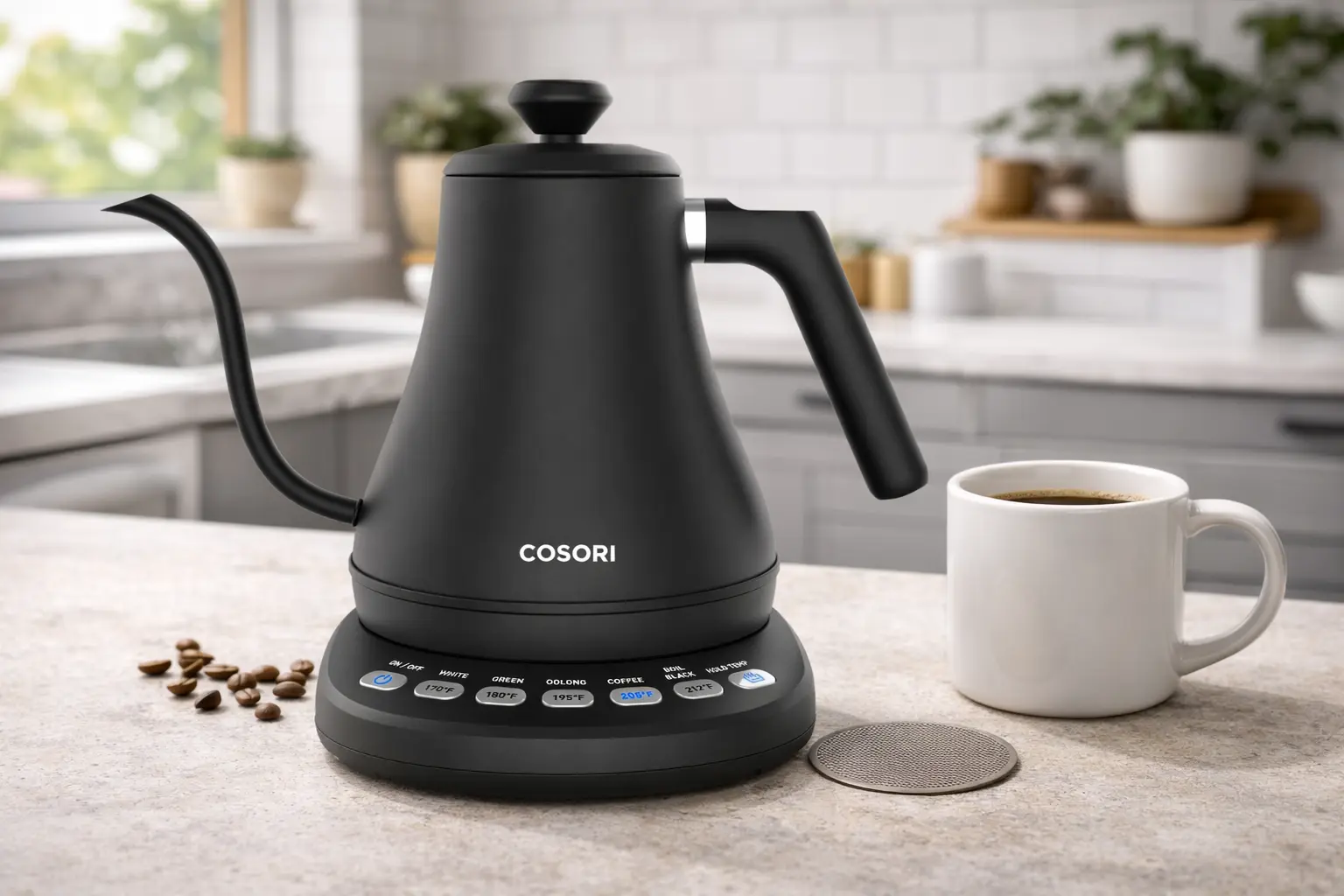
The COSORI electric gooseneck kettle is the budget pick most reviewers point to, and Reviewed suggested it directly as the cheaper alternative to the Stagg. COSORI lists 0.8 liters, a 1200 W heater that boils a full kettle in about three to five minutes, five temperature presets, and a hold of up to an hour, with stainless steel in the housing, lid, and spout. It scored 72/100 overall with TechGearLab, a respectable result for the price.
The catch is low-temperature accuracy: TechGearLab scored it only 2.0/10 at green-tea temperatures, against 6.9/10 at coffee temperatures. For coffee it is a strong value; for delicate teas, check the water with a thermometer.
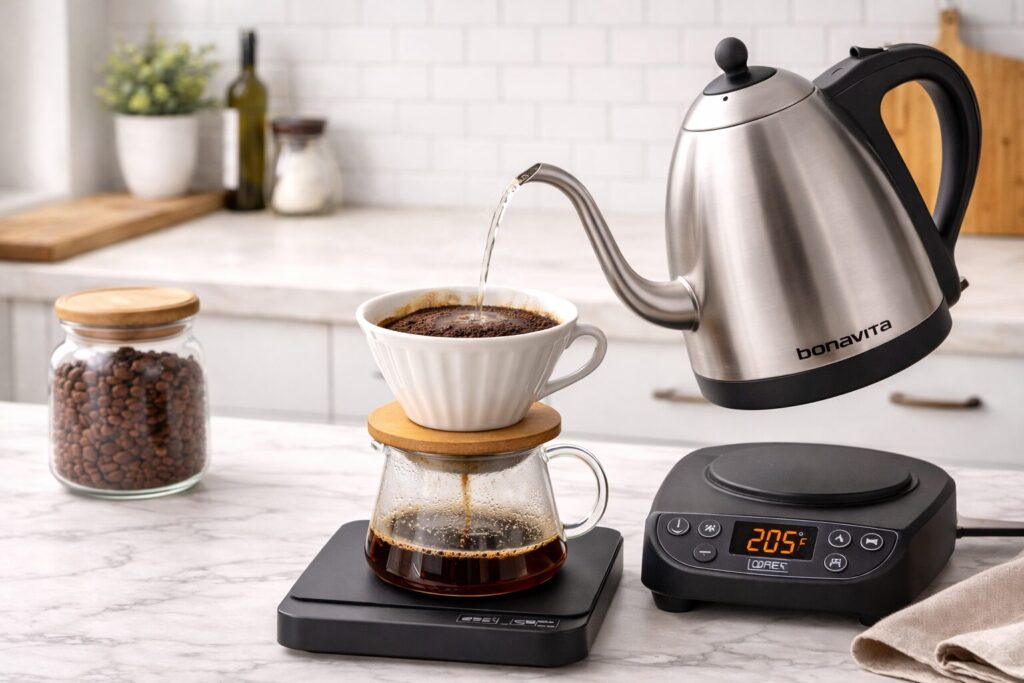
The Bonavita variable-temperature gooseneck kettle offers degree-by-degree control, a real-time temperature display, a 60-minute hold, and a one-liter body. In TechGearLab’s testing it was accurate, scoring 8.2/10 at coffee temperatures and 7.7/10 at green-tea temperatures, the best low-temperature result of the group, but it was slow to boil at 5.4 minutes and its stream was less precise, which pulled its overall score down to 54/100. It suits tea drinkers and patient pour-over brewers more than anyone in a hurry.
Hario V60 Buono and Stovetop Gooseneck Kettles
The Hario V60 Buono has been the stovetop standard for pour-over for years, with a fine, controllable spout and a simple stainless body that works on gas and most electric hobs; check the listing for induction compatibility. It comes in several sizes, has no electronics to fail, and is the least expensive way to get genuine gooseneck pour control.
Stovetop kettles have no temperature control, so you need a way to manage it. The simplest is to bring water to a boil and let it rest for about 30 seconds to a minute, which drops it into the low 200s°F; a clip-on or instant-read thermometer makes it exact. Electric kettles add convenience and hold functions, but a stovetop gooseneck paired with a thermometer gives up nothing in the cup. Our pour-over brewing setup guide covers building a full kit on a budget.
Choosing between the two comes down to routine. Electric kettles heat faster than most stovetops, shut off automatically, and can hold water at temperature while you grind and weigh, which is why most daily pour-over brewers end up with one. Stovetop kettles are lighter, last longer, store anywhere, and work during a power cut or on a camping stove. If you brew once a day at a consistent temperature, either works; if you switch between coffee and tea, or between light and dark roasts, an electric kettle’s quick temperature changes save real effort.
What Temperature to Set, and Why It Matters
Water temperature controls how quickly coffee extracts. Hotter water pulls out solubles faster, which helps dense, lightly roasted beans that are hard to extract; cooler water slows extraction, which keeps darker, more soluble roasts from turning bitter. These are good starting points to adjust by taste.
| Brew | Starting temperature |
|---|---|
| Pour-over, light roast | 205–210°F (96–99°C) |
| Pour-over, medium roast | 200–205°F (93–96°C) |
| Pour-over, dark roast | 195–200°F (90–93°C) |
| AeroPress | 175–205°F (80–96°C) |
| French press | 195–205°F (90–96°C) |
| Green tea | 160–180°F (71–82°C) |
Temperature works together with grind. If a cup tastes sour, try finer grinding or hotter water; if it tastes bitter, go coarser or a few degrees cooler. A couple of degrees matter far less than a grind change, so change one variable at a time. Our pour-over water temperature guide and coffee extraction science explainer go deeper.
Choosing a Size, and Keeping a Kettle in Good Shape
For one or two cups of pour-over, 0.8 to 0.9 liters is plenty, with enough left to rinse a filter and preheat the server. If you regularly brew a large Chemex, fill a French press, or make tea for several people, choose a one-liter kettle such as the OXO, Bonavita, or Brewista. Remember that the deliberately slow maximum flow of a precision kettle like the Stagg makes filling large brewers tedious.
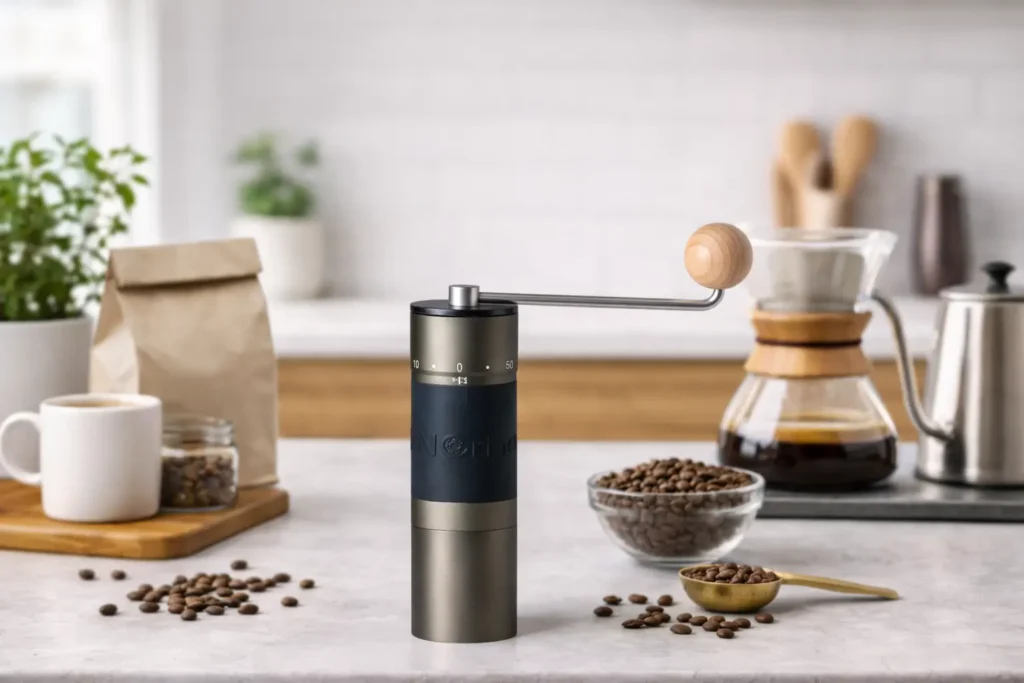
Scale is the main enemy of any kettle. Mineral buildup affects taste and can make temperature readings drift, so descale every month or two with diluted white vinegar or a citric acid solution, heat it, let it sit, and rinse several times. Filtered water slows buildup and improves flavor; our water quality guide explains why. Never immerse an electric base, and pair the kettle with a consistent burr grinder such as the KINGrinder K6 so the precision you paid for shows up in the cup.
Which Gooseneck Kettle Should You Buy?
If pour-over is your daily ritual and you want the best pour available, buy the Fellow Stagg EKG Pro. If you want one electric kettle that does pour-over well and everything else easily, the OXO Brew scores as well overall and holds more water. On a budget, the COSORI covers coffee temperatures well, and the Bonavita suits tea drinkers who want low-temperature accuracy. If you already have a thermometer or prefer no electronics, the Hario V60 Buono gives you genuine gooseneck control for the least money.
Pour With More Control
A gooseneck kettle is the most noticeable single upgrade for pour-over coffee.
As an Amazon Associate, CoffeeGearHub earns from qualifying purchases.
Editorial bottom line: Buy for pour control first and temperature control second. The Fellow Stagg EKG Pro pours best, the OXO Brew is the best all-rounder, the COSORI is the budget electric, and the Hario V60 Buono is the stovetop standard.
Frequently Asked Questions
Do I need a gooseneck kettle for pour-over?
Not strictly, but it makes the biggest single difference to consistency. A gooseneck lets you pour slowly and place water exactly, which keeps the coffee bed even and avoids channeling. Our pour-over guide shows how pour speed fits into a recipe.
Should I buy an electric or stovetop gooseneck kettle?
Electric if you want to set a temperature and walk away, especially with a hold function. Stovetop if you want simplicity, durability, and no electronics, and you are happy to use a thermometer or let boiled water rest briefly.
What temperature should my kettle be for pour-over?
About 200 to 205°F (93 to 96°C) for most medium roasts, hotter for light roasts and cooler for dark ones. Our pour-over water temperature guide explains why.
What size gooseneck kettle do I need?
About 0.8 to 0.9 L covers one or two pour-over cups plus a filter rinse. Choose 1.0 L or more if you brew a large Chemex or several cups at once.
Is the Fellow Stagg EKG worth it?
For daily pour-over, yes: lab testing ranks its pour control first. If you mainly want water at a set temperature, the OXO Brew or COSORI does most of the job for less. Our Stagg EKG review has the full research-based verdict.
How often should I descale a gooseneck kettle?
Every month or two in most homes, more often with hard water. Use diluted white vinegar or citric acid, heat, let it sit, and rinse well. Filtered water slows scale; see our water quality guide.
Sources and Further Reading
Kettle scores and measurements come from TechGearLab’s electric kettle tests, Tom’s Guide’s Stagg EKG review, Coffee Review, and Reviewed’s EKG Pro review. Specifications follow Fellow, COSORI, Seattle Coffee Gear (OXO), and Brewista retailer listings. Brewing temperatures follow the Specialty Coffee Association brewing standards and CoffeeGearHub’s pour-over water temperature guide.
CoffeeGearHub product shortlist
Continue with related products on CoffeeGearHub
Review product categories and current verified merchant offers on CoffeeGearHub before leaving the site.