
Fellow Stagg EKG Review (2026): Is This Pour-Over Kettle Worth It?
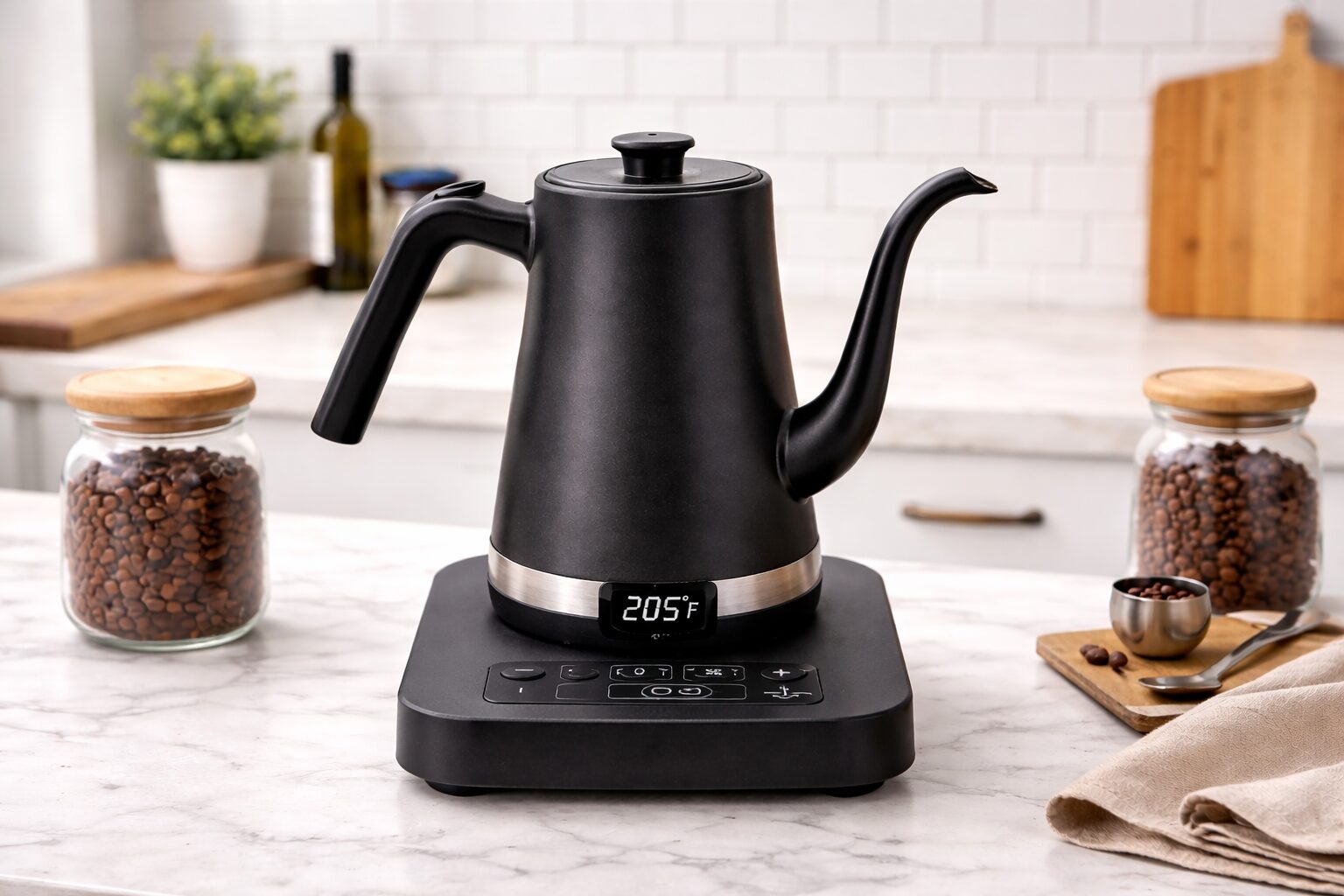
Editorial standards: this review synthesizes Fellow’s published specifications, measured results from five independent reviewers and labs, long-term owner reports, and warranty terms. Every score below is tied to a cited source. CoffeeGearHub does not claim hands-on testing where it has not occurred.
At a glance
What this Stagg EKG review covers
A scored verdict, full specifications and model history, what independent lab testing found on pour control, temperature accuracy and heating speed, daily use, EKG vs EKG Pro, what owners report after a year or two, how it handles each brew method, a head-to-head comparison with OXO, COSORI, Bonavita, Brewista and Hario, and who should buy it or skip it.
Editorial analysis
The Stagg wins on pour, not on everything
Across the independent tests we reviewed, one result is consistent: no electric kettle pours better than the Stagg EKG. Its temperature control is also excellent where coffee lives, between roughly 195 and 210°F. That combination is why it remains the default recommendation for serious pour-over brewers.
The same data also shows where it falls short. Budget and mid-priced rivals now come close on overall lab scores, the Stagg is less precise at low tea temperatures, and a minority of owners report reliability problems after a year or two. A premium kettle should be judged on all of that, not just on how it looks on the counter.
The 30-Second Answer
The Fellow Stagg EKG earns a 7.8/10 research score: it has the best pour control of any electric kettle tested, accurate temperature at coffee-brewing settings, a useful hold mode, and a built-in brew timer. Buy it if you brew pour-over most days. If you mainly want hot water at a set temperature, the OXO Brew or COSORI gooseneck scores nearly as well in lab testing for less.
If you are buying new, the Stagg EKG Pro is the version our links point to: it uses the same body and spout but adds scheduling, altitude adjustment, and adjustable hold times. Our best gooseneck kettles guide compares the wider field.
Compare current options
Start with these representative choices
Three kettles for different budgets and routines. The Stagg is our main subject; the other two are the alternatives we would weigh against it.
Fellow Stagg EKG Pro — Best for pour-over precision
The Stagg’s precise spout and to-the-degree control, plus scheduling, adjustable hold, and a brew timer in a 0.9 L kettle.
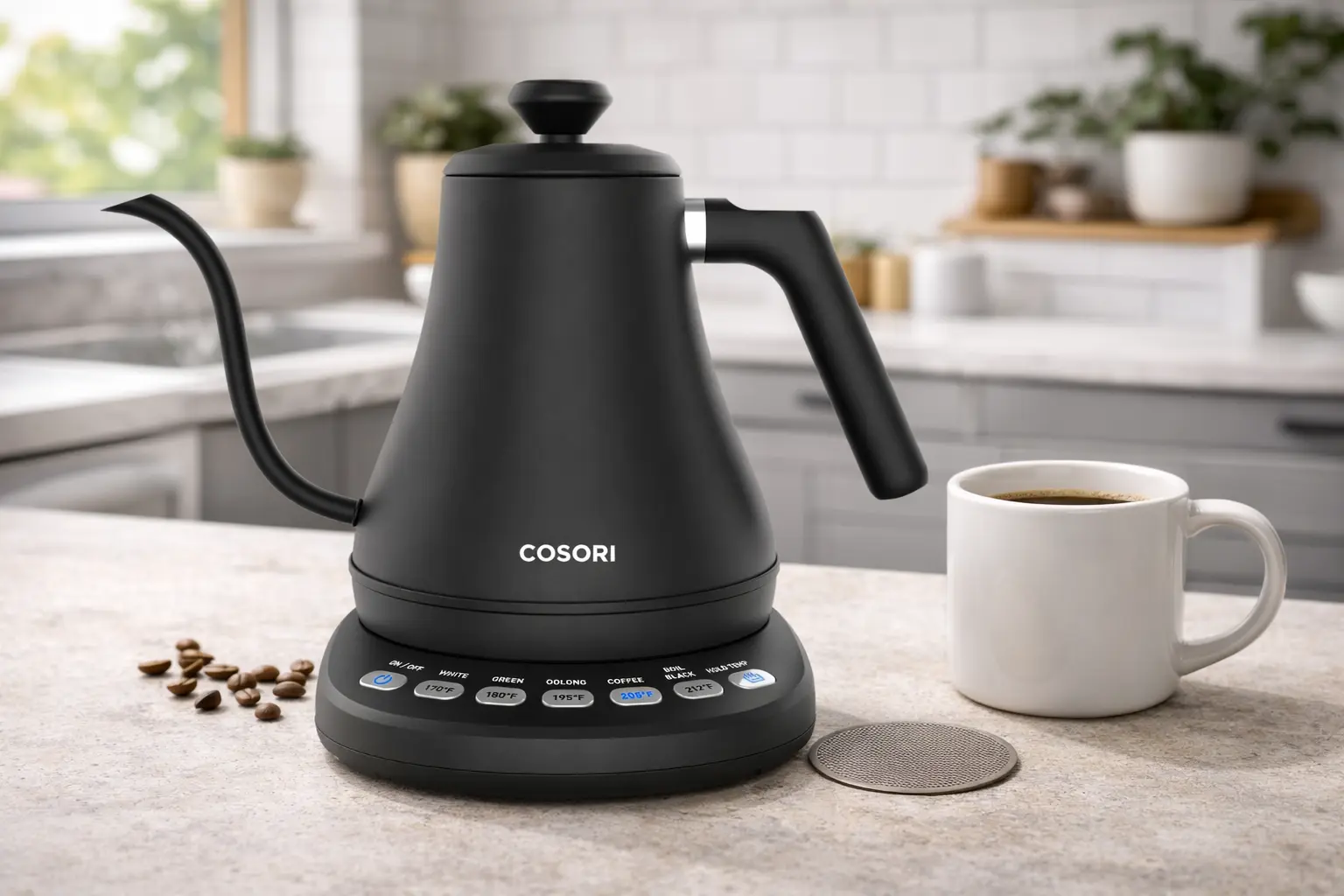
COSORI Gooseneck — Best budget electric
Five temperature presets, a one-hour hold, and a 1200 W heater in a 0.8 L gooseneck kettle at a fraction of the price.
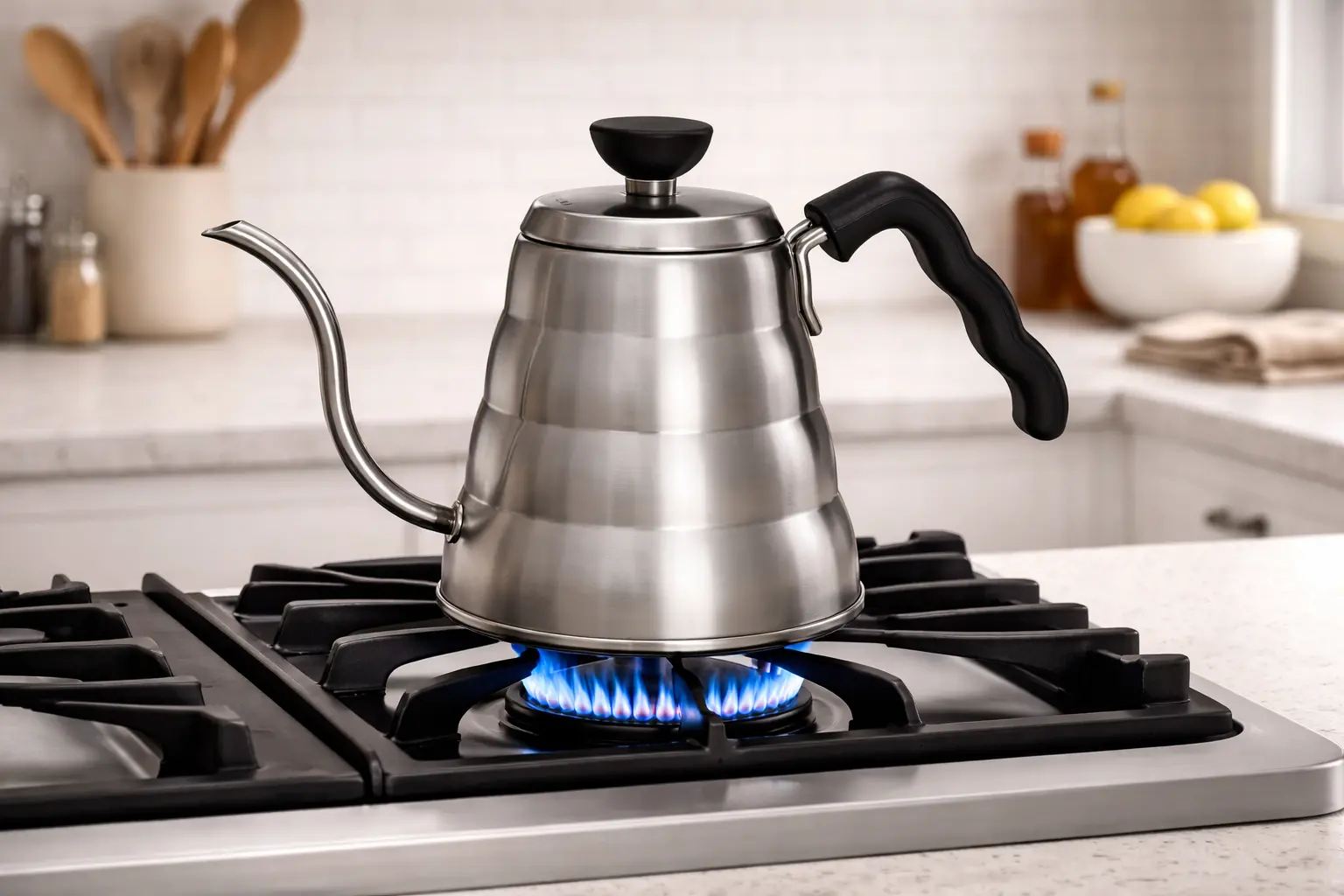
Hario V60 Buono — Best stovetop option
A classic stovetop gooseneck with a fine spout. Pair it with a thermometer if you want temperature control.
Affiliate disclosure: Amazon links may earn CoffeeGearHub a commission at no additional cost to you. Prices and availability can change.
Our Research-Based Score
CoffeeGearHub research score
7.8 / 10 overall, weighted toward pour-over use
We do not test kettles ourselves, so this score is built differently from a hands-on review. For each criterion, we compared what independent labs and long-form reviewers actually measured: TechGearLab’s side-by-side kettle tests, Tom’s Guide’s timed boil and flow measurements, Coffee Review’s thermocouple comparison, and Reviewed’s and Gear Patrol’s experience with the Pro. We then weighed that evidence against owner reports and warranty terms. Pour control and temperature accuracy carry the most weight, because they are the reasons people buy this kettle; value and durability carry enough weight to keep the score honest.
The result is a kettle that earns a perfect mark for the thing it was designed to do and ordinary marks for the things every kettle has to do. That split is the most useful way to think about the Stagg before you buy one.
Specifications and Model History
Fellow launched the Stagg EKG on Kickstarter in December 2016 as an electric version of its stovetop Stagg pour-over kettle, alongside an EKG+ variant that connected over Bluetooth to Acaia’s brewing app. The plain EKG became the version most people bought. In October 2022, Fellow replaced the top of the range with the Stagg EKG Pro and a Pro Studio Edition, which kept the same body, spout, and handle but redesigned the base, display, and software. The Studio Edition adds a glass base and metal accents; functionally it matches the Pro.
| Spec | Stagg EKG | EKG Pro |
|---|---|---|
| Capacity | 0.9 L | 0.9 L |
| Power | 1200 W | 1000–1200 W |
| Temperature range | 135–212°F | 104–212°F |
| Hold | 60 min | 15–60 min |
| Display | LCD with brew timer | Color screen with timer |
| Extras | °F/°C switch | Scheduling, altitude, Wi-Fi updates |
| Weight | About 2.8 lb | About 3.1 lb with base |
| Cord | About 2 ft | 2.5 ft |
| Warranty | 2 years | 2 years, extendable |
Both versions use 304 stainless steel for the body and lid, with a plastic base, and both come in several colors, some with wooden handle and lid pulls. The Bluetooth EKG+ is worth knowing about only because some older articles still describe app control as a Stagg feature; the current Pro connects over Wi-Fi, and only for firmware updates. For pour-over brewers, the specifications that matter most are the identical spout and temperature control, which is why most of this review applies to either model.
Pour Control: The One Category It Wins Outright
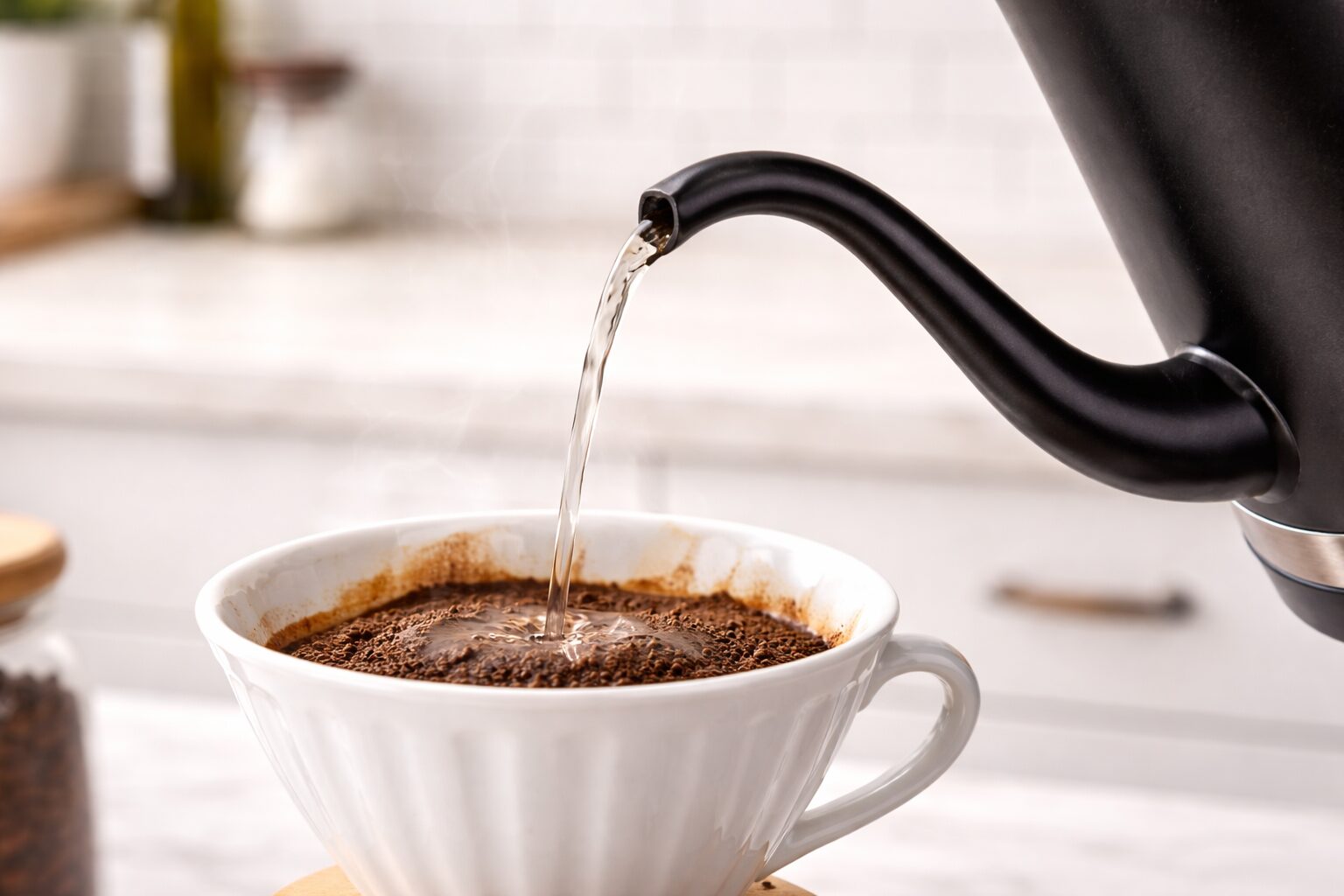
Pour control is the reason to buy a gooseneck kettle, and it is where the evidence on the Stagg is most consistent. TechGearLab’s tester wrote that its “pour quality was simply the best I’ve ever experienced,” and gave it a Top Pick award specifically for pour-over. Coffee Review described a spout that lets even “the subtlest of dribbles” remain intentional. Tom’s Guide put numbers on it, measuring a controllable flow from as little as 1.5 grams per second up to about 25 grams per second.
Two design choices explain the result. The spout is long, narrow, and exits low on the body, so the stream starts cleanly and stays thin as you tilt. The handle is counterbalanced, which moves the kettle’s weight back toward your hand and makes a slow, steady spiral feel natural rather than effortful. Together they make it easier to pour a gentle bloom and hold an even pace for the two to three minutes a V60 or Kalita brew takes.
The flip side, which TechGearLab listed as a con, is that the Stagg pours slowly at full tilt. That matters little for pour-over but makes filling a large French press or several mugs tediously slow. Our Hario V60 recipe and how to make pour over coffee guides show how pour speed fits into a full recipe, and our pour-over troubleshooting guide explains how uneven pouring leads to channeling.
What Independent Testing Shows
The table below collects the measured results we found from five independent sources. They tested different units in different years, sometimes the original EKG and sometimes the Pro, so the numbers are best read as a pattern rather than as one lab’s verdict.
| Source | Model | Key findings |
|---|---|---|
| TechGearLab | EKG (current) | 76/100, Top Pick for pour-over; coffee accuracy 9.0/10, green tea 6.1/10; boil about 3 min |
| Tom’s Guide | EKG | Full 0.9 L boil in 5:10; flow 1.5–25 g/s; held 212°F for an hour |
| Coffee Review | EKG (original) | Display 1–3°F above a thermocouple; rated 9.5/10 |
| Reviewed | EKG Pro | 205°F in just under 5 min; scheduled start unreliable |
| Gear Patrol | EKG Pro | Buggy app; no interior fill markings |
Three conclusions stand out. First, temperature control is excellent where coffee is brewed. TechGearLab’s 9.0/10 at coffee temperatures and Coffee Review’s 1 to 3°F display offset both point to a kettle you can trust between about 195 and 210°F, and Coffee Review added that no kettle it tested truly aced accuracy. The difference between 203 and 205°F is far smaller in the cup than a change in grind size or ratio. Our pour-over water temperature guide and coffee extraction science explainer show why.
Second, the Stagg is less precise at low temperatures. TechGearLab’s green-tea accuracy score of 6.1/10 is much lower than its coffee score, and some Fellow kettle owners report overshoot when setting the kettle around 80 to 85°C. If delicate green or white teas are a big part of your routine, that is a real consideration; for coffee it rarely matters.
Third, heating speed is ordinary. TechGearLab measured about three minutes in its standard test, slightly slower than the OXO Brew at 2.9 minutes and faster than the COSORI at 3.6 and the Bonavita at 5.4. Tom’s Guide’s 5 minutes 10 seconds for a full 0.9 liters is typical for a 1200 W kettle. The hold mode, on the other hand, performed exactly as promised: Tom’s Guide found it kept water at 212°F for a full hour.
What Daily Use Looks Like
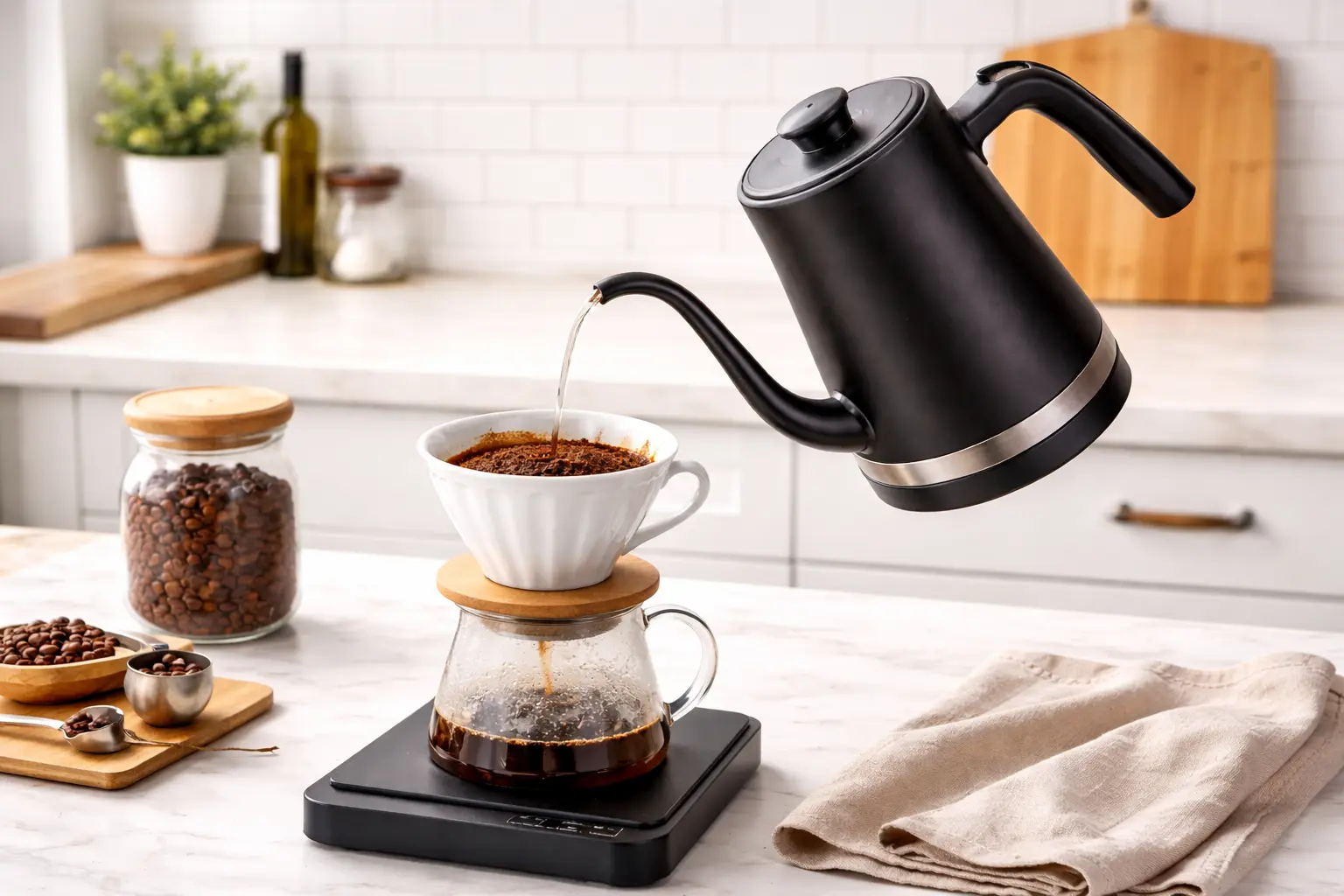
Day to day, the Stagg is simple to live with. Fill it, set a temperature on the dial, press start, and the display shows both the target and the current water temperature as it climbs. Coffee Review called it the most informative kettle display it had seen. A PID controller eases the heater off as it approaches the target, so the water settles where you set it instead of overshooting at coffee temperatures. It is also quiet: Tom’s Guide measured 51 decibels at boil, and Coffeeness noted it was so quiet that the reviewer first wondered whether it was on.
The built-in stopwatch is a small but genuinely useful touch. Switch the display to the timer when you start pouring, and you can track bloom and total brew time without a separate scale timer. The 0.9 liter capacity suits one or two cups, with enough left over to rinse a paper filter and preheat the server.
There are everyday quirks too. The kettle has no interior volume markings beyond the max fill line, which Gear Patrol called out, so you either weigh your water or learn the level by eye. The cord is short, under three feet, which may mean rearranging the counter. The original EKG has no audible alert when it reaches temperature, and Reviewed found the Pro’s chime too quiet to hear across a kitchen. The body is hand-wash only, and the base must never be immersed.
Stagg EKG vs EKG Pro: Which Version to Buy
Because the Pro uses the same body, spout, and handle, it does not pour any better than the original. What it adds is software and convenience. The headline feature is scheduling: you can set the kettle the night before so the water is hot when you walk into the kitchen. The Pro also adds altitude adjustment, which prevents boil-over and spitting from the lid at elevation, adjustable hold times from 15 to 60 minutes, a guide mode with suggested temperatures, a full-color display, an audible chime, and a lower 104°F minimum.
Reviews of the Pro are positive but not uncritical. Reviewed found the unmarked buttons took time to learn, had trouble getting the kettle to respond to a scheduled start even after firmware updates, and found the chime too quiet. Gear Patrol called the companion app buggy and questioned whether Wi-Fi added much, while still recommending the Pro to new buyers because the price gap was small. TechGearLab listed a non-intuitive interface and the need to set your altitude manually among its cons.
For most new buyers, the Pro is the version to get, and it is the one our Amazon links point to. It is worth the modest premium if you want to wake up to hot water or live at altitude, and its adjustable hold and lower temperature range are useful extras. If you can find the original EKG and prefer the simplest controls, it pours identically. If you already own an original EKG, there is little reason to upgrade.
Long-Term Reliability: What Owners Report
Lab tests measure a new kettle. Owner reviews show what happens after a year or two of daily use, and here the picture is more mixed than the Stagg’s reputation suggests. Fellow’s Trustpilot page held a 2.3 out of 5 rating from about 50 reviews when we checked, covering all Fellow products rather than the Stagg alone. The recurring kettle complaints were specific: temperature readings that became erratic after roughly 18 months to two years, overshoot at lower settings, handles that loosened and lids that cracked within the first year, and frustration with email-only support and claims made after the warranty had expired.
That evidence needs context. Trustpilot reviews are a small, self-selected sample, and people with problems are far more likely to post than people whose kettle simply works. Long-form reviewers such as Coffeeness described the Stagg as sturdy and well made, and it remains one of the most frequently recommended premium kettles. Still, the complaints are consistent enough, and they line up with TechGearLab’s weaker low-temperature result, that we treat durability as a genuine risk rather than a fluke. That is why durability and support score 6/10.
You can reduce the risk. Fellow’s standard warranty is two years in the US and Canada, with an option to extend, so keep your proof of purchase. Descale every month or two with diluted white vinegar or a citric acid solution, because mineral buildup on the heating plate and sensor is a common cause of drifting readings in any kettle. Using filtered water slows that buildup and improves flavor; our water quality for better coffee guide explains why, and a Brita pitcher is an easy starting point.
Finally, treat the handle gently. Several owner complaints involve the handle loosening, so avoid lifting a full kettle by the lid knob or setting it down hard on the base. Our guide to maintaining your coffee equipment covers descaling schedules for kettles and brewers alike.
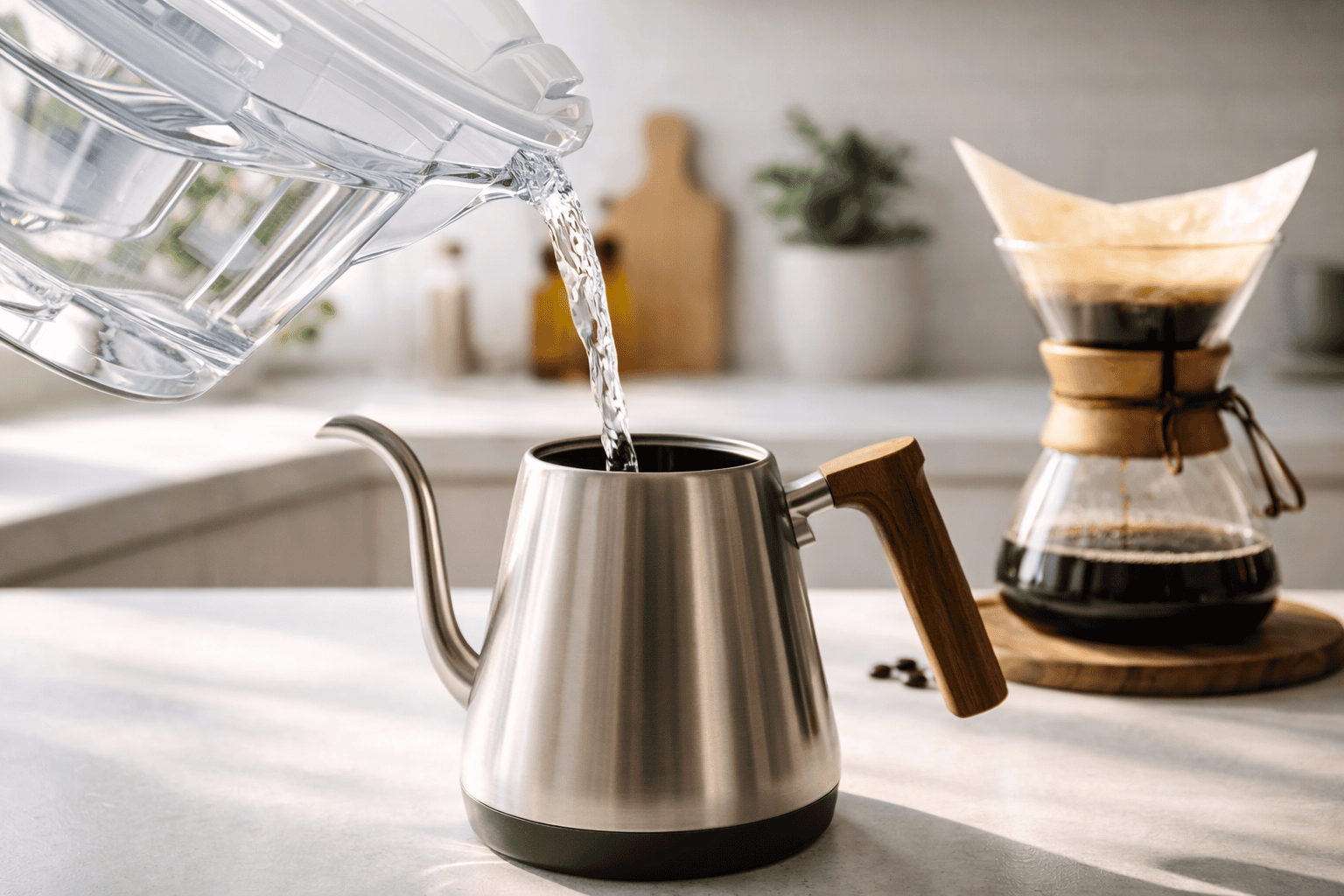
How It Performs by Brew Method
For cone pour-over such as the V60, the Stagg is close to ideal. Light roasts usually want 205 to 210°F, medium roasts 200 to 205°F, and dark roasts 195 to 200°F, all within the range where the kettle tested most accurately. The slow, controllable stream makes the gentle center pours of a V60 recipe easy to repeat, and the timer handles bloom and total brew time. Flat-bottom brewers such as the Kalita Wave benefit in the same way, since even pulse pours matter more than speed. Our V60 vs Chemex vs Kalita Wave comparison covers the brewers themselves.
The Chemex is where capacity starts to bite. A 0.9 liter fill covers a typical 500 to 700 gram Chemex brew plus a filter rinse, but not much more, so larger batches mean refilling mid-brew. For AeroPress, the kettle’s precise low-to-mid temperatures suit recipes in the 175 to 205°F range, and pour control matters less; our best kettles for AeroPress guide covers cheaper options that work just as well there.
French press is the Stagg’s weakest coffee use. You want 195 to 205°F, which it handles well, but the deliberately slow maximum flow makes filling a large press tedious, and the capacity limits batch size. For tea, it covers everything from green tea at 160 to 180°F to boiling water for black and herbal teas, but TechGearLab’s lower green-tea accuracy and owner reports of overshoot at low settings suggest checking with a thermometer if precise low temperatures matter to you.
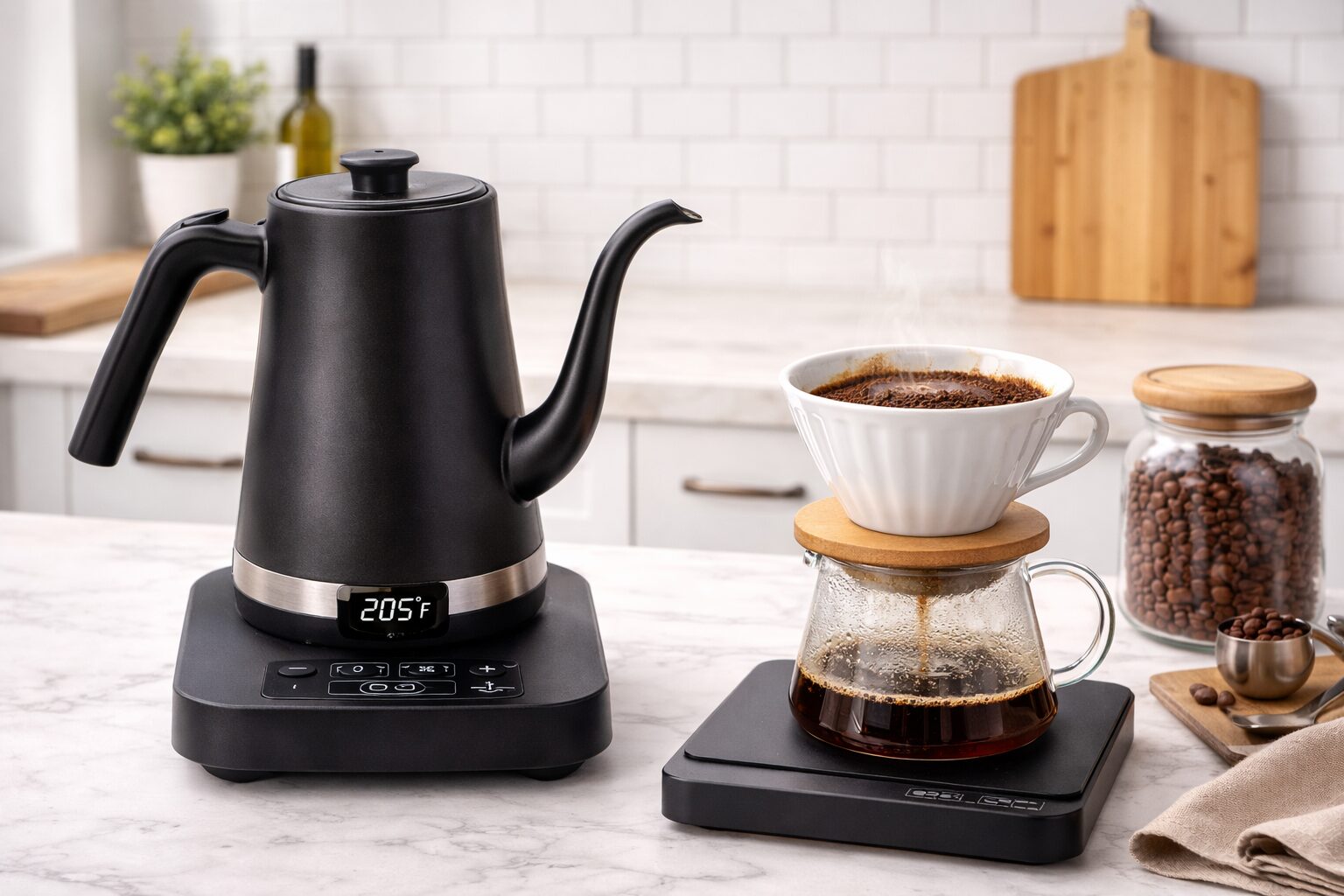
Whatever the brewer, the kettle is one part of a system. Pair it with a scale that reads to 0.1 g and a grinder that produces an even pour-over grind, and the kettle’s precision actually shows up in the cup. Our pour-over brewing setup guide, coffee brew ratio guide, and best coffee scales guide cover the rest of the routine.
Stagg EKG vs the Competition
Lab scores make the Stagg’s position clear. In TechGearLab’s testing it scored 76 out of 100, just behind the OXO Brew gooseneck at 77, which took the overall Editors’ Choice, and ahead of the COSORI at 72 and the Bonavita at 54. In other words, the Stagg is not the best all-round kettle on paper; it is the best pour-over kettle. The table compares the main alternatives using manufacturer and retailer specifications; lab scores are TechGearLab’s, out of 100.
| Kettle | Size | Temp control | Lab score |
|---|---|---|---|
| Fellow Stagg EKG Pro | 0.9 L | 1° steps | 76 (Top Pick) |
| OXO Brew | 1.0 L | Adjustable | 77 (Editors’ Choice) |
| COSORI | 0.8 L | 5 presets | 72 |
| Bonavita | 1.0 L | 1° steps | 54 |
| Brewista Artisan | 1.0 L | Adjustable | Not tested |
| Hario V60 Buono | Varies | None (stovetop) | Not tested |
The OXO Brew adjustable-temperature gooseneck kettle is the Stagg’s closest rival. TechGearLab praised its ergonomic, soft-grip handle, measured it slightly faster to boil, and scored it 8.2/10 for coffee-temperature accuracy against the Stagg’s 9.0. It holds a full liter, has a built-in timer, and beeps when it reaches temperature, but holds heat for 30 minutes rather than an hour. If you want one kettle for coffee, tea, and general kitchen use, it is the more practical choice.
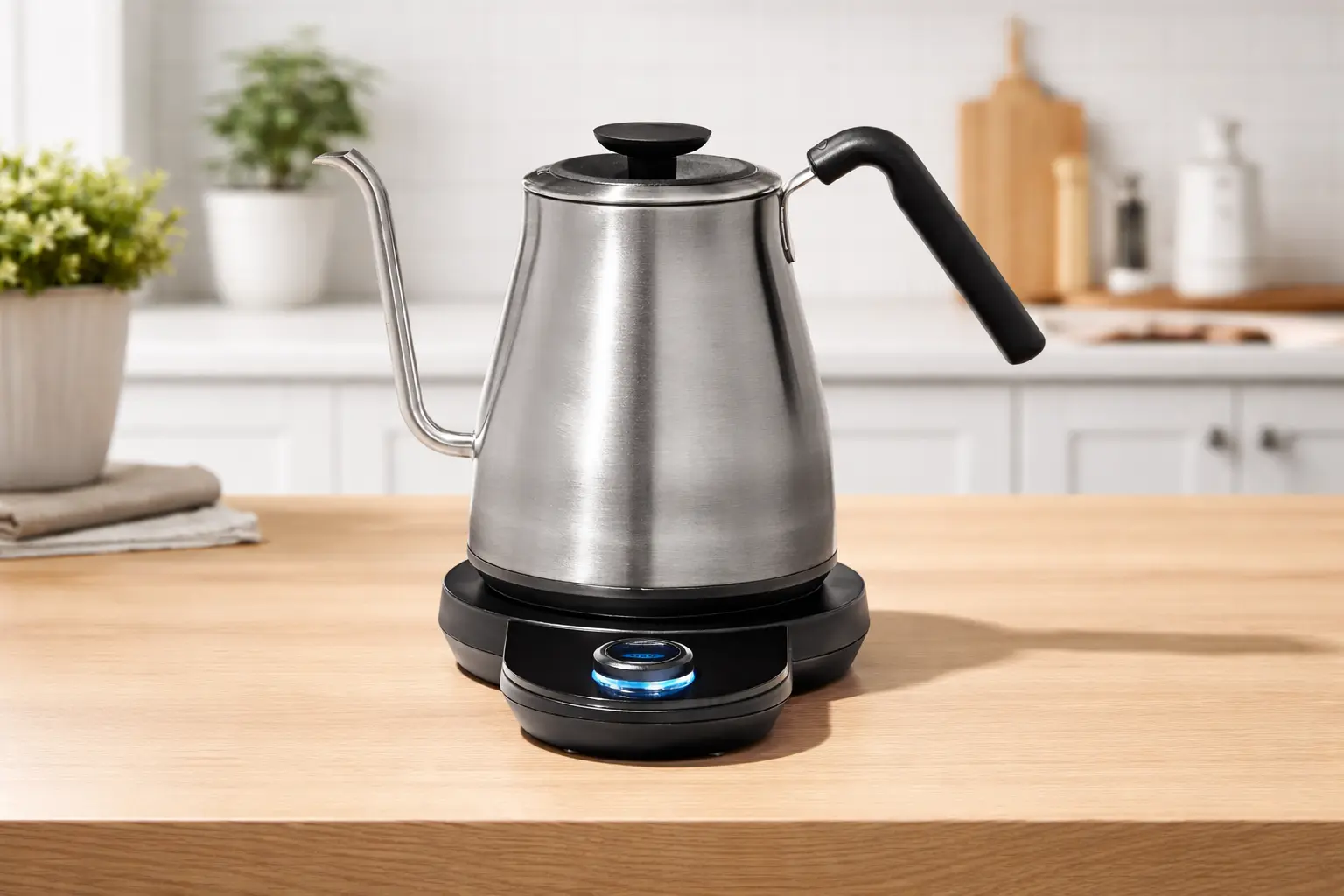
The COSORI electric gooseneck kettle is the budget pick most reviewers point to, and Reviewed suggested it directly as the cheaper alternative. COSORI lists 0.8 liters, a 1200 W heater, five presets, and a one-hour hold. It scored a respectable 72/100 overall, but only 2.0/10 for green-tea accuracy, so it suits coffee far better than delicate teas.
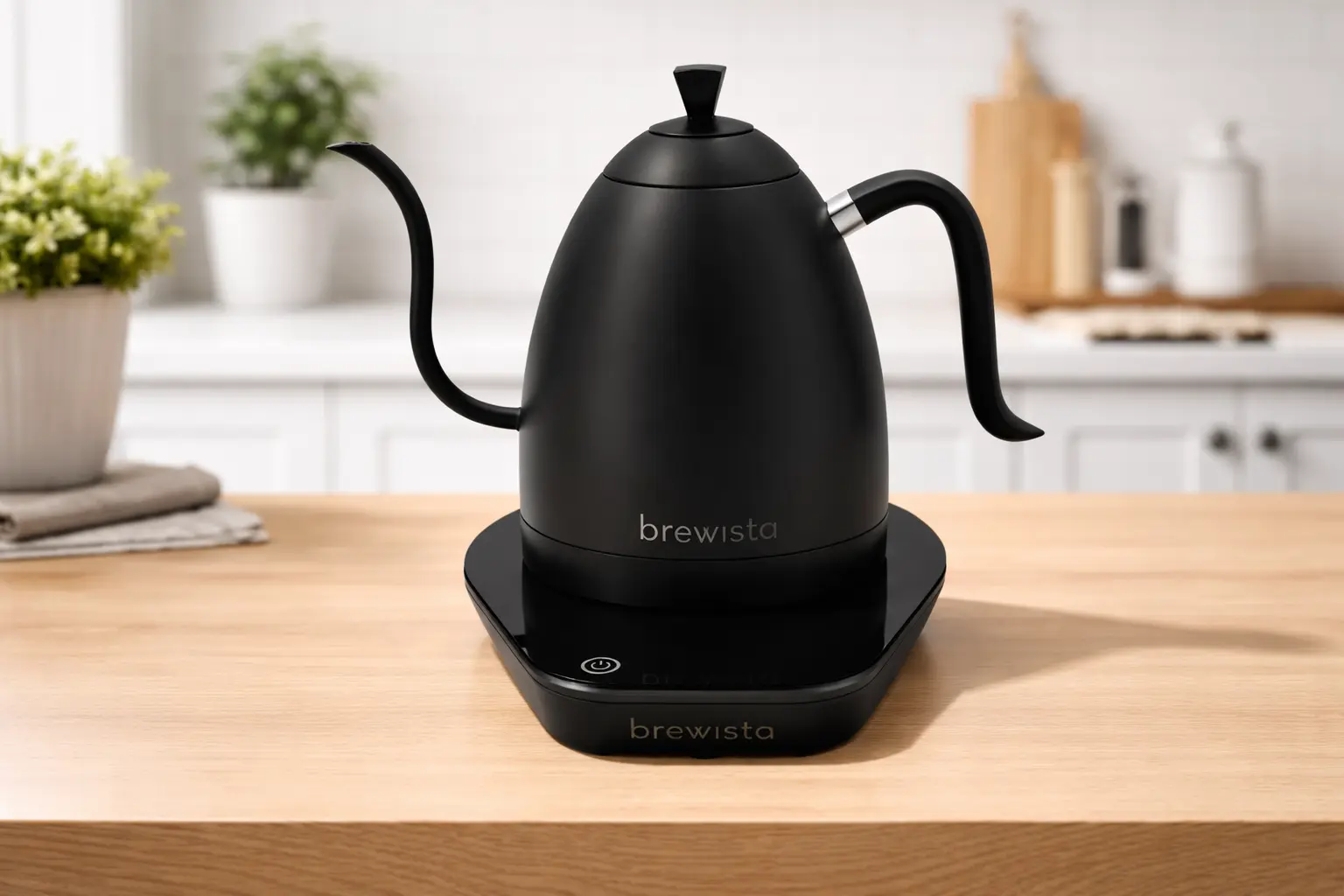
The Bonavita variable-temperature kettle offers degree-by-degree control and a one-liter body, and it tested well for accuracy, but TechGearLab found it slow to boil at 5.4 minutes with a less precise stream. The Brewista Artisan is a well-regarded one-liter alternative with variable temperature, a timer, and a one-hour keep-warm function, though we found no independent test data for it.
If you prefer a stovetop kettle, the Hario V60 Buono remains a long-standing favorite with a fine, controllable spout. It has no temperature control, so let boiling water rest briefly or use a thermometer, but it is durable and has no electronics to fail.
Who Should Buy the Stagg EKG, and Who Should Skip It
Buy the Fellow Stagg EKG Pro if you brew pour-over most mornings and care about the pour as much as the result. The evidence is unanimous that nothing pours better, its temperature control is accurate where coffee is brewed, and its hold mode and timer fit naturally into a daily routine. Its design is part of the appeal too, and for many owners that matters.
Skip it if you need more than about 0.9 liters at a time, if you mostly make French press or tea for several people, or if you want a kettle that excels at low tea temperatures. Skip it too if reliability concerns outweigh pour quality for you; the OXO Brew scores as well overall in lab testing, holds more water, and costs less. On a tight budget, the COSORI covers coffee well, and the Hario Buono is the simplest stovetop option.
Pour With More Control
A precise gooseneck kettle makes slow, even pours easy and is one of the most noticeable upgrades for pour-over coffee.
As an Amazon Associate, CoffeeGearHub earns from qualifying purchases.
Editorial bottom line: The Stagg EKG earns a 7.8/10 research score: best-in-class pour control and accurate coffee temperatures, offset by a premium price, small capacity, weaker low-temperature accuracy, and some owner reliability concerns. Buy it if pour-over is your daily ritual; choose the OXO Brew or COSORI if you want most of the benefit for less.
Frequently Asked Questions
Is the Fellow Stagg EKG worth it?
For people who brew pour-over most days, yes: independent testing consistently ranks its pour control first. If you mainly need hot water at a set temperature, the OXO Brew or COSORI gooseneck scores nearly as well overall for less. Our best gooseneck kettles guide compares them.
What is the difference between the Stagg EKG and the EKG Pro?
They share the same 0.9 L body, spout, and handle. The Pro adds a color display, scheduled heating, altitude adjustment, adjustable hold times from 15 to 60 minutes, a guide mode, Wi-Fi firmware updates, and a lower 104°F minimum temperature.
How accurate is the Stagg EKG’s temperature?
Very accurate at coffee temperatures: TechGearLab scored it 9.0/10 there, and Coffee Review found the display within 1 to 3°F of a thermocouple. It is less precise at low green-tea temperatures, where TechGearLab scored it 6.1/10. Our pour-over water temperature guide explains why a few degrees matter less than grind.
How long does the Stagg EKG last?
Many owners use one for years, but a minority report erratic temperature readings after about 18 months to two years, or a loose handle and cracked lid. Fellow’s standard warranty is two years in the US and Canada, with an option to extend, so keep your proof of purchase.
How fast does the Stagg EKG heat water?
Tom’s Guide measured 5 minutes 10 seconds to boil a full 0.9 L, and Reviewed measured just under 5 minutes to reach 205°F. Smaller amounts heat faster. That is mid-pack: the OXO Brew and COSORI were slightly quicker in TechGearLab’s test.
How do I descale a Stagg EKG?
Fill it with a descaling solution such as diluted white vinegar or citric acid, heat it, let it sit, then rinse several times with fresh water. Never submerge the base. Filtered water slows scale; see our water quality guide.
Sources and Further Reading
Specifications follow Fellow’s Stagg EKG product page and retailer listings. Measured results come from TechGearLab’s electric kettle tests, Tom’s Guide’s Stagg EKG review, Coffee Review’s Stagg EKG review, Reviewed’s EKG Pro review, and Gear Patrol’s EKG Pro review. Owner experience draws on Fellow’s Trustpilot reviews and Coffeeness’s Fellow kettle review. Model history follows Sprudge’s coverage of the 2016 Kickstarter launch and the 2022 Pro series. Competitor specifications follow COSORI, Seattle Coffee Gear (OXO), and Brewista retailer listings. Brewing temperatures draw on CoffeeGearHub’s pour-over water temperature guide.
CoffeeGearHub product shortlist
Continue with related products on CoffeeGearHub
Review product categories and current verified merchant offers on CoffeeGearHub before leaving the site.