
Best Espresso Scales (2026): Compact, Fast Picks for Dialing In Shots
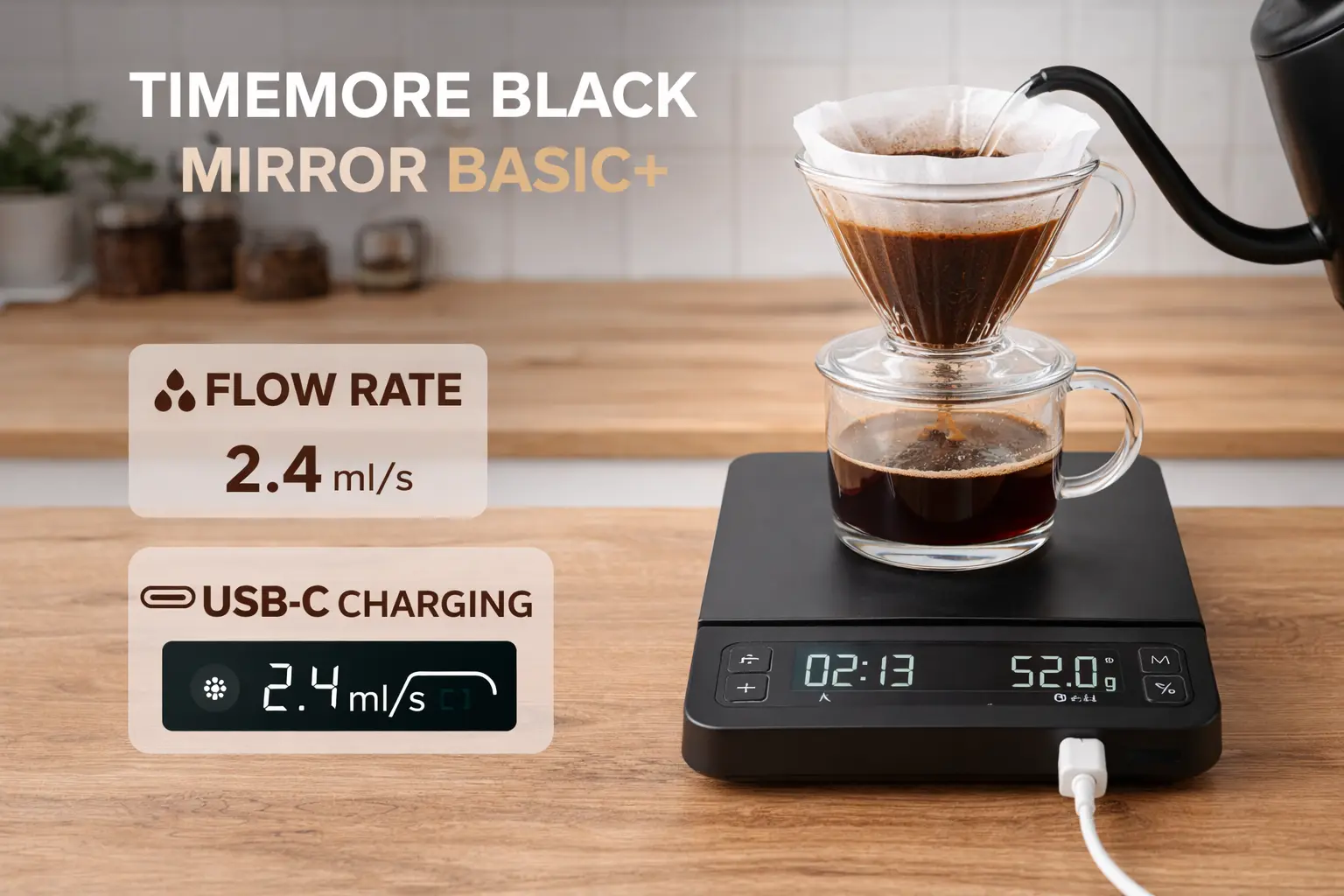
Editorial standards: recommendations are based on manufacturer specifications, published documentation, and espresso-workflow fit. Product dimensions and features are taken from manufacturer and retailer listings; verify the exact model before you buy. CoffeeGearHub does not claim hands-on testing where it has not occurred.
At a glance
What this espresso scale guide covers
Why espresso needs a scale, the features that actually matter (size, response speed, auto-timer, flow rate), our picks from compact budget models to premium smart scales, and how to use a scale to dial in shots.
Editorial analysis
For espresso, the scale has to fit under the portafilter
Almost any 0.1 g kitchen scale can weigh a dose. The difference with espresso is that you also weigh the shot as it pours, on the drip tray, under the portafilter. That makes footprint, height, and how quickly the reading updates far more important than maximum capacity.
A good espresso scale lets you weigh beans, start a timer automatically when the first drops land, and stop the shot at a target yield. Those three habits do more for consistency than most machine upgrades.
The 30-Second Answer
For most home espresso setups, the Timemore Black Mirror Basic 2 is the best value: 0.1 g resolution, an espresso mode with auto-timer, and flow-rate display. If your drip tray is small, choose the more compact Timemore Black Mirror Nano. If you want a premium, app-connected scale, the BOOKOO Themis Ultra adds fast response, waterproofing, and ratio modes.
Whatever you buy, check that the scale fits on your drip tray with a cup on top before ordering. That single measurement rules out more scales than any feature list.
Compare current options
Start with these representative choices
Three espresso-capable choices: an all-round value pick, a compact drip-tray pick, and a premium smart scale.
Timemore Black Mirror Basic 2 — Best overall value
2 kg capacity, 0.1 g resolution, espresso and filter modes with auto-timer, flow-rate display, and USB-C charging. Works for pour-over too.
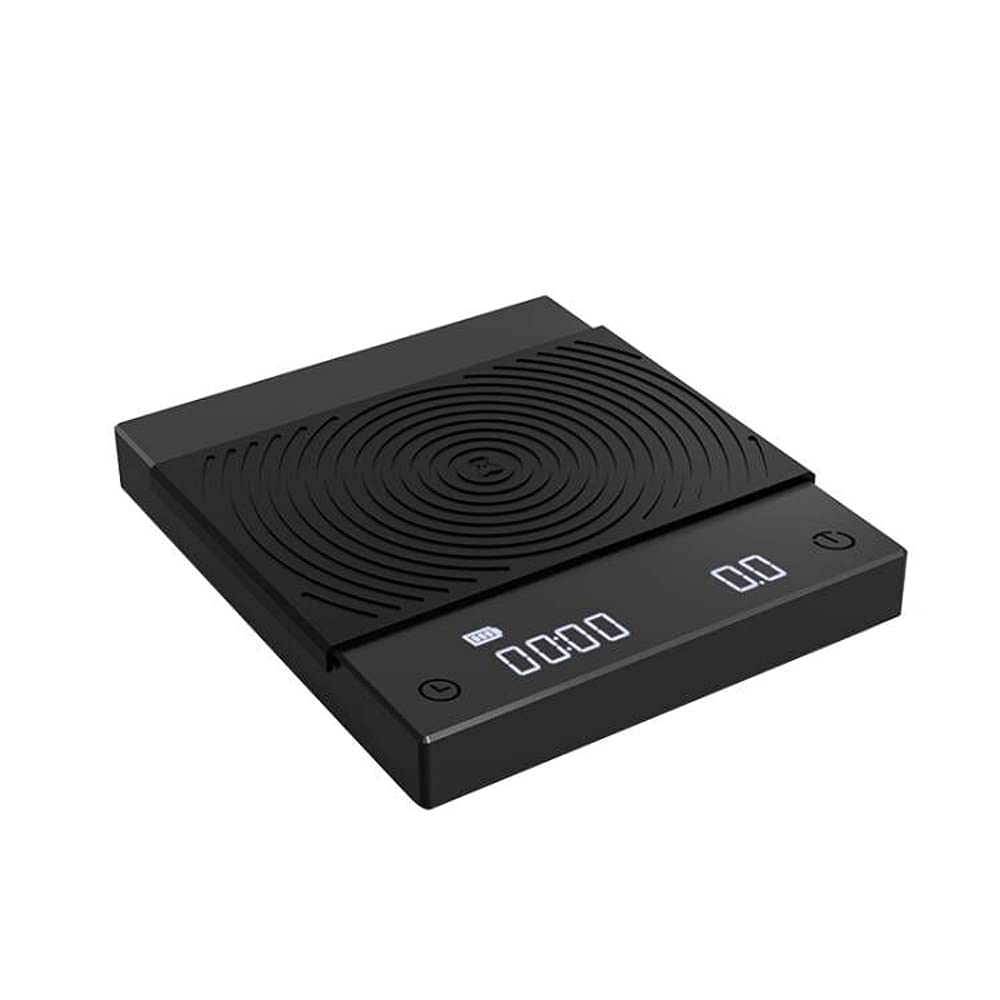
Timemore Black Mirror Nano — Best compact
A smaller footprint designed to sit on espresso drip trays, with 0.1 g resolution, auto-timing, flow rate, and USB-C charging.
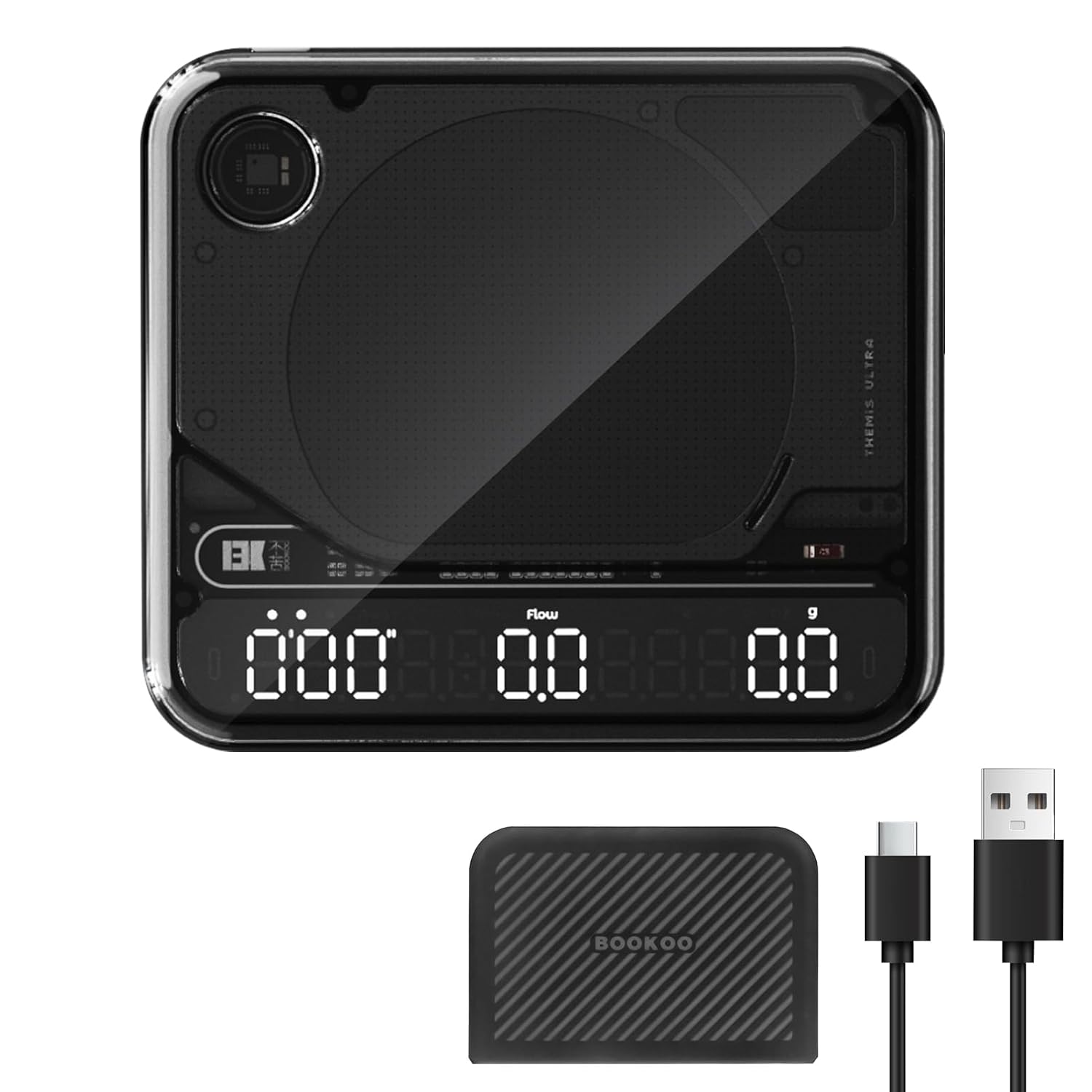
BOOKOO Themis Ultra — Best premium
A fast-responding smart scale with flow and ratio modes, Bluetooth app support, an IP67 waterproof rating, and USB-C charging.
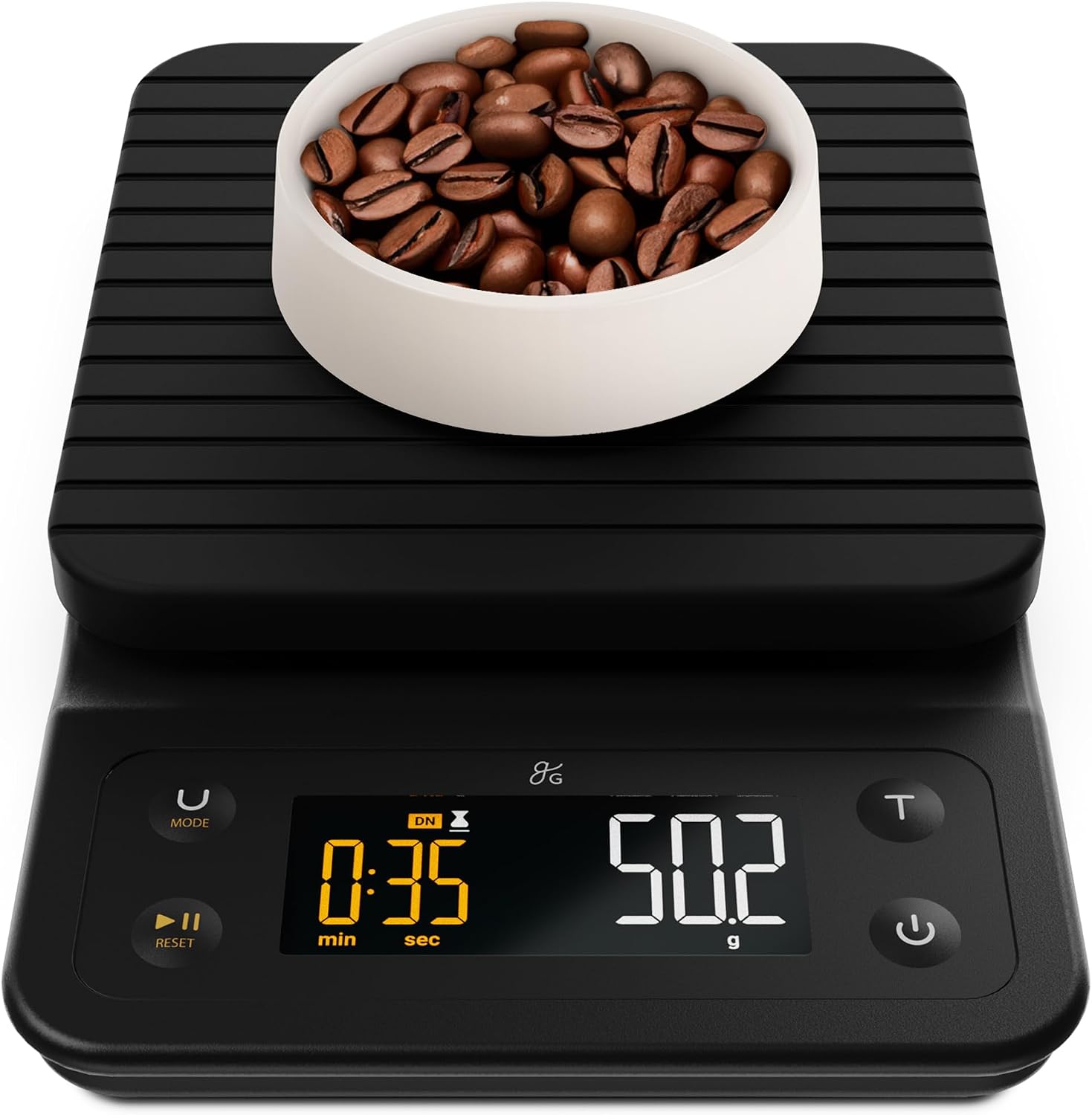
Greater Goods Digital Coffee Scale — Best budget
An inexpensive 0.1 g kitchen-style scale for weighing doses on the counter. No built-in timer, and the platform is usually too large to sit on an espresso drip tray.
Affiliate disclosure: Amazon links may earn CoffeeGearHub a commission at no additional cost to you. Prices and availability can change.
Why Espresso Needs a Scale
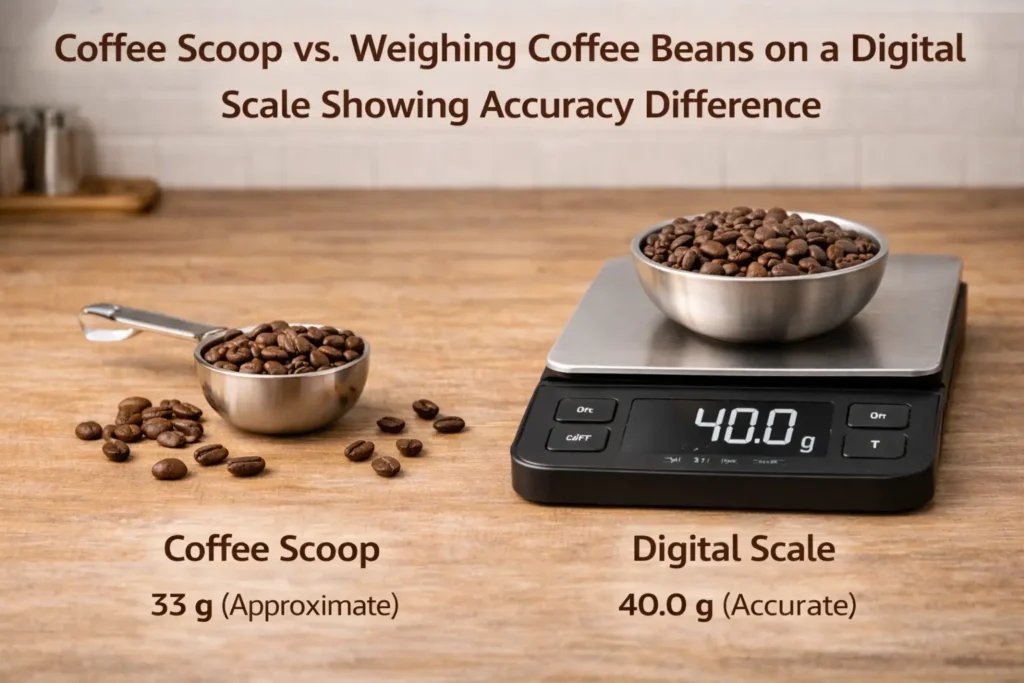
Espresso is measured in grams, not scoops or cups. A typical starting recipe is a 1:2 ratio: for example, 18 g of ground coffee in, about 36 g of espresso out, in roughly 25–35 seconds. Change any one of those numbers by a couple of grams and the shot tastes noticeably different.
Without a scale, you are adjusting the grinder while the dose and yield quietly change too, which makes dialing in feel random. With a scale, you lock the dose and target yield, then adjust only the grind. Our espresso brew ratio guide explains the numbers, and how to dial in espresso shows the workflow.
Volumetric shot buttons on many machines help, but they measure water going in, not espresso coming out. Weighing the yield is more accurate, especially as beans age.
What Matters in an Espresso Scale
| Feature | Why it matters | What to look for |
|---|---|---|
| Footprint and height | It must fit on the drip tray with a cup on top, under the portafilter | Measure your drip tray and the clearance under the spouts before buying |
| 0.1 g resolution | Doses and yields are small; 1 g steps are too coarse | 0.1 g readability across the range you use |
| Response speed | A slow display lags the real shot weight, so you stop late | Fast, steady readings; premium scales advertise about a second or less |
| Auto-timer / espresso mode | Starts timing when flow begins, so you can focus on the shot | A mode that starts on weight change or flow |
| Flow-rate display | Shows how fast espresso is pouring; useful for spotting channeling and dialing in | Grams per second readout |
| Water resistance and heat pad | Drips and heat from the cup are constant on a drip tray | Silicone pad or splash resistance |
| Battery and charging | Daily use drains batteries | USB-C rechargeable, reasonable runtime, auto-off |
| Capacity | Rarely limiting for espresso | 2 kg is plenty; it also covers pour-over |
Best Espresso Scales: Our Picks
Timemore Black Mirror Basic 2 — Best Overall Value
Best for: most home espresso setups, and anyone who also brews pour-over.
The Basic 2 is the scale we point most readers to. Timemore lists a 2 kg capacity with 0.1 g resolution, three brewing modes (standard, espresso, and filter), an auto-timer, a flow-rate readout, and a USB-C rechargeable battery. A silicone pad protects it from drips and heat.
Fit: its footprint is about 13 × 15 cm and under 3 cm tall. That suits roomy drip trays and the counter, but measure carefully on compact machines such as the Breville Bambino Plus.
Watch-outs: larger than espresso-specific minis; response is quick for the price but not at premium-scale level.
Timemore Black Mirror Nano — Best Compact Espresso Scale
Best for: small drip trays and espresso-first workflows.
The Nano is Timemore’s espresso-sized model. Retail listings describe a footprint of roughly 3.9 × 4.5 inches (about 10 × 11 cm), 2 kg capacity with 0.1 g resolution, automatic timing triggered by weight change, flow-rate monitoring, and USB-C charging with an auto-off. The tilted display is designed to be readable when the scale sits under a portafilter.
Watch-outs: the small platform is less convenient for pour-over kettles and carafes; check that your cup still fits on top.
BOOKOO Themis Ultra — Best Premium Espresso Scale
Best for: enthusiasts who want fast response, app logging, and a scale they can rinse under the tap.
The Themis Ultra is BOOKOO’s flagship coffee scale. BOOKOO lists it at 127 × 112 × 18 mm and about 380 g, with a 2 kg capacity, 0.1 g readability, and a response time under 100 milliseconds. It has weight, flow, and ratio modes (flow and ratio can start automatically), shows time, flow rate, and weight on screen together, and carries an IP67 waterproof rating. A 2,000 mAh battery charges over USB-C, and Bluetooth connects to the BOOKOO app as well as third-party apps such as Beanconqueror.
Watch-outs: at about 12.7 × 11.2 cm it is larger than the Nano, so measure your drip tray first. It also costs more than the Timemore options; most home baristas will not taste the difference, and the payoff is speed, waterproofing, and app features.
Greater Goods Digital Coffee Scale — Budget Dosing Scale
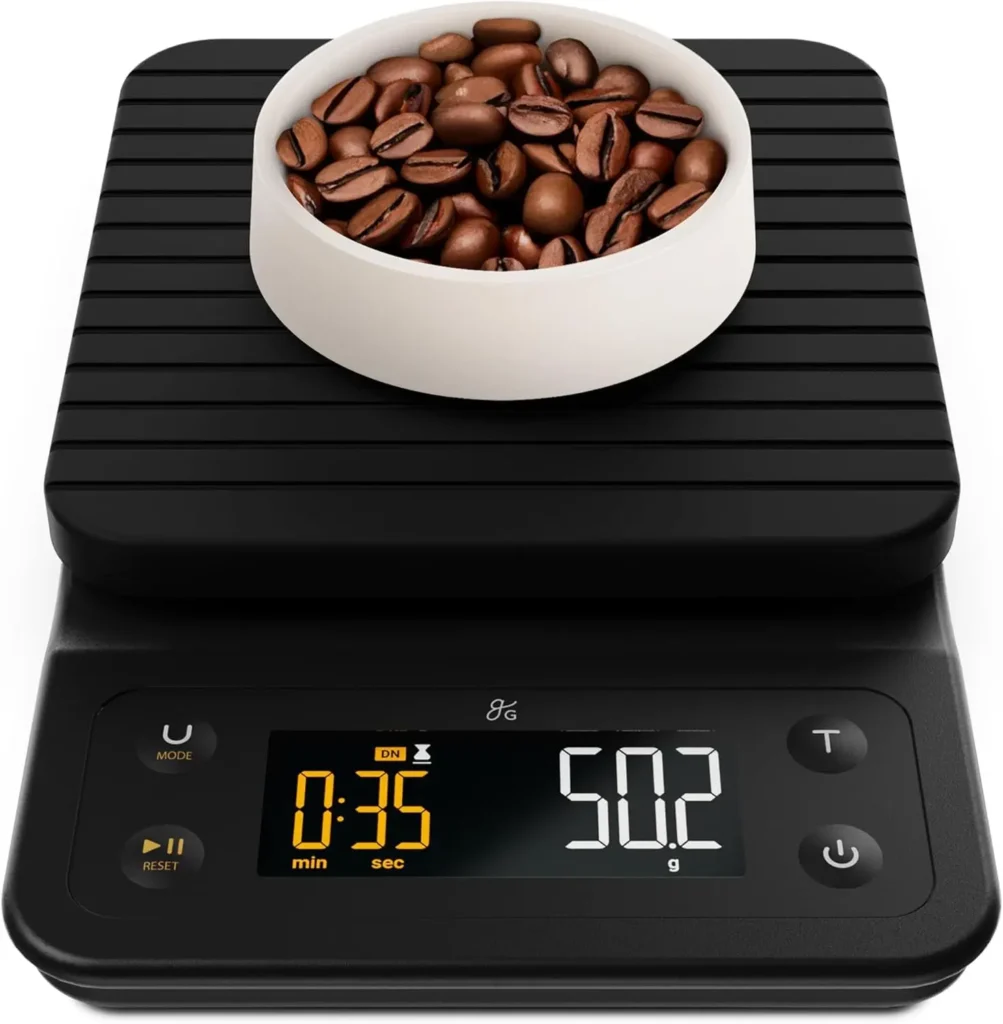
Best for: weighing doses on the counter on a tight budget.
If you mainly want to weigh your coffee dose before grinding and do not need to weigh shots on the drip tray, an inexpensive kitchen-style coffee scale like this one does the essential job. Our best coffee scales guide covers it for drip and pour-over.
Watch-outs: larger platforms often do not fit on espresso drip trays, and budget displays can lag during fast shots. Treat it as a dosing scale, and upgrade to an espresso-specific scale if you want to weigh yield in real time.
Also consider: Timemore Black Mirror Basic Plus
The previous-generation Basic Plus remains widely sold and is our top pick in the best coffee scales guide for general brewing. If you find it discounted, it handles espresso dosing and yield well; the Basic 2 adds faster response, flow rate, and modes tuned for espresso. View Basic Plus on Amazon.
Espresso Scales Compared
| Scale | Footprint (approx.) | Resolution / capacity | Auto-timer | Flow rate | Best for |
|---|---|---|---|---|---|
| Timemore Basic 2 | 13.1 × 15.2 cm | 0.1 g / 2 kg | Yes (espresso and filter modes) | Yes | Best value, espresso + pour-over |
| Timemore Nano | About 10 × 11 cm | 0.1 g / 2 kg | Yes | Yes | Small drip trays |
| BOOKOO Themis Ultra | 12.7 × 11.2 cm | 0.1 g / 2 kg | Yes (auto-start modes) | Yes, real-time | Premium speed, app, waterproof |
| Greater Goods | Kitchen-scale size | 0.1 g / 3 kg | No | No | Budget dosing on the counter |
Dimensions and features are from manufacturer and retailer listings and can change between production runs. Always confirm the current listing.
Start with the Value Pick
The Timemore Basic 2 covers espresso dosing, yield, timing, and pour-over in one scale. Measure your drip tray first if your machine is compact.
As an Amazon Associate, CoffeeGearHub earns from qualifying purchases.
How to Check Whether a Scale Fits Your Machine
- Measure the width and depth of your drip tray grate.
- Measure the height from the grate to the bottom of the portafilter spouts.
- Subtract the height of the cup you use for espresso. What remains is the maximum scale height.
- Compare against the scale’s footprint and height. A scale can overhang slightly, but it must sit level and stable.
- If clearance is tight, consider a shorter cup or a compact scale such as the Nano.
Compact machines, such as the Breville Bambino and Bambino Plus, have small drip trays, so compact scales are usually the safer choice. Our Bambino Plus vs Barista Express comparison covers those machines.
How to Use a Scale to Dial In Espresso
- Weigh the dose. Tare a dosing cup or the portafilter and weigh your beans or grounds. Start with the basket’s rated dose, often 18 g for a double.
- Set your target yield. Start at about double the dose (for example, 36 g out for 18 g in).
- Place the cup on the scale and tare. Put the scale on the drip tray, the cup on the scale, and zero it.
- Start the shot and timer. In espresso mode, the timer starts automatically when flow begins.
- Stop at your target yield. Stop slightly before the number, since a few grams usually drip after you stop.
- Taste and adjust grind. Shot ran fast and tastes sour? Grind finer. Ran slow and tastes bitter? Grind coarser. Keep dose and yield fixed while you adjust.
For grind targets by shot time, see our espresso grind size chart; for taste problems, the espresso troubleshooting guide.
Care and Maintenance
Wipe the scale after each session, especially around buttons and the charging port. Use the included silicone or heat pad to protect the surface from hot cups and drips. Do not submerge any of these scales. Recharge before the battery runs low mid-shot, and recalibrate occasionally using the manufacturer’s procedure if readings drift.
Which Espresso Scale Should You Buy?
Choose the Timemore Basic 2 if you want one scale for espresso and pour-over at a sensible price and your drip tray has room. Choose the Timemore Nano if your machine is compact or you only brew espresso. Choose the BOOKOO Themis Ultra if you want the fastest response, waterproofing, and app features, and your drip tray has room. Use a budget kitchen-style scale only for weighing doses on the counter.
Editorial bottom line: A scale is the cheapest meaningful espresso upgrade. Lock in your dose and yield with a 0.1 g scale that fits your drip tray, and dialing in becomes a one-variable job: grind.
As an Amazon Associate, CoffeeGearHub earns from qualifying purchases. Prices and availability can change at any time.
Frequently Asked Questions
Do I really need a scale for espresso?
If you want consistent shots, yes. Weighing the dose and the yield lets you change only one variable, the grind, while you dial in. Volumetric buttons measure water, not the espresso in your cup.
What resolution should an espresso scale have?
0.1 g. Espresso doses and yields are small, and 1 g steps are too coarse to dial in accurately.
Can I use a regular kitchen scale for espresso?
For weighing the dose, often yes, if it reads in 0.1 g steps. For weighing the shot, many kitchen scales are too large for the drip tray and too slow to track a fast pour.
What is an auto-timer on a coffee scale?
A mode that starts the timer automatically when weight starts changing, such as when espresso begins dripping into the cup, so you do not have to press a button mid-shot.
Is a premium scale like the Themis Ultra worth it?
For most home baristas, a Timemore scale is enough. The Themis Ultra’s advantages are faster response, waterproofing, ratio modes, and app integration, which matter most to enthusiasts who log their shots.
How big should an espresso scale be?
Small enough to sit level on your drip tray with a cup on top under the portafilter. Measure your drip tray and clearance first; compact espresso scales are around 10 cm square.
What ratio should I use for espresso?
Start around 1:2, for example 18 g in and 36 g out in roughly 25–35 seconds, then adjust to taste. See our espresso brew ratio guide.
Sources and Further Reading
Specifications were checked against manufacturer and retailer documentation, including BOOKOO’s Themis Ultra product page, Timemore’s Black Mirror Nano product page, and retailer listings for the Timemore Black Mirror Basic 2. Specifications vary by production run and region.
CoffeeGearHub product shortlist
Continue with related products on CoffeeGearHub
Review product categories and current verified merchant offers on CoffeeGearHub before leaving the site.