
Colombian Coffee Guide: Regions, Flavor, Grades & How to Brew It (2026)
Editorial standards: origin information is drawn from producer-organization data, coffee-trade references, and published origin reports. Flavor descriptions are typical tendencies, not guarantees; roast style and processing change the cup. CoffeeGearHub does not claim hands-on testing where it has not occurred.
At a glance
What this Colombian coffee guide covers
Why Colombian coffee tastes the way it does, the main growing regions and their typical flavors, what Supremo, Excelso, and “100% Colombian” really mean on a bag, processing and varieties, and how to brew Colombian beans well.
Editorial analysis
“Colombian” tells you the country; the region and roaster tell you the cup
Colombia is famous for balanced, approachable coffee: medium body, caramel or chocolate sweetness, and a clean, often citrus-like acidity. That reputation is earned, but it hides how varied the country really is. A washed coffee from high in Nariño can taste bright and juicy, while a Santander coffee often leans toward chocolate and a heavier body.
The most useful way to shop is to read past the word “Colombian” to the region, the processing, and the roast date. This guide explains each label so you can choose deliberately.
The 30-Second Answer
Colombian coffee is typically balanced and sweet, with medium body, caramel or chocolate notes, and clean, bright acidity. It is one of the most versatile origins for home brewing, working well in drip, pour-over, French press, and espresso.
For a classic, crowd-pleasing cup, buy a medium roast. For brighter, fruit-forward coffee, look for high-altitude southern regions such as Huila or Nariño. “Supremo” and “Excelso” describe bean size, not flavor quality, so the roast date and region matter more.
Compare current options
Start with these representative choices
Three easy ways into Colombian coffee: a fruit-forward Huila, a classic Supremo-grade bag, and a bright high-altitude Nariño. Each links to a current Amazon listing; check the roast date before you buy.
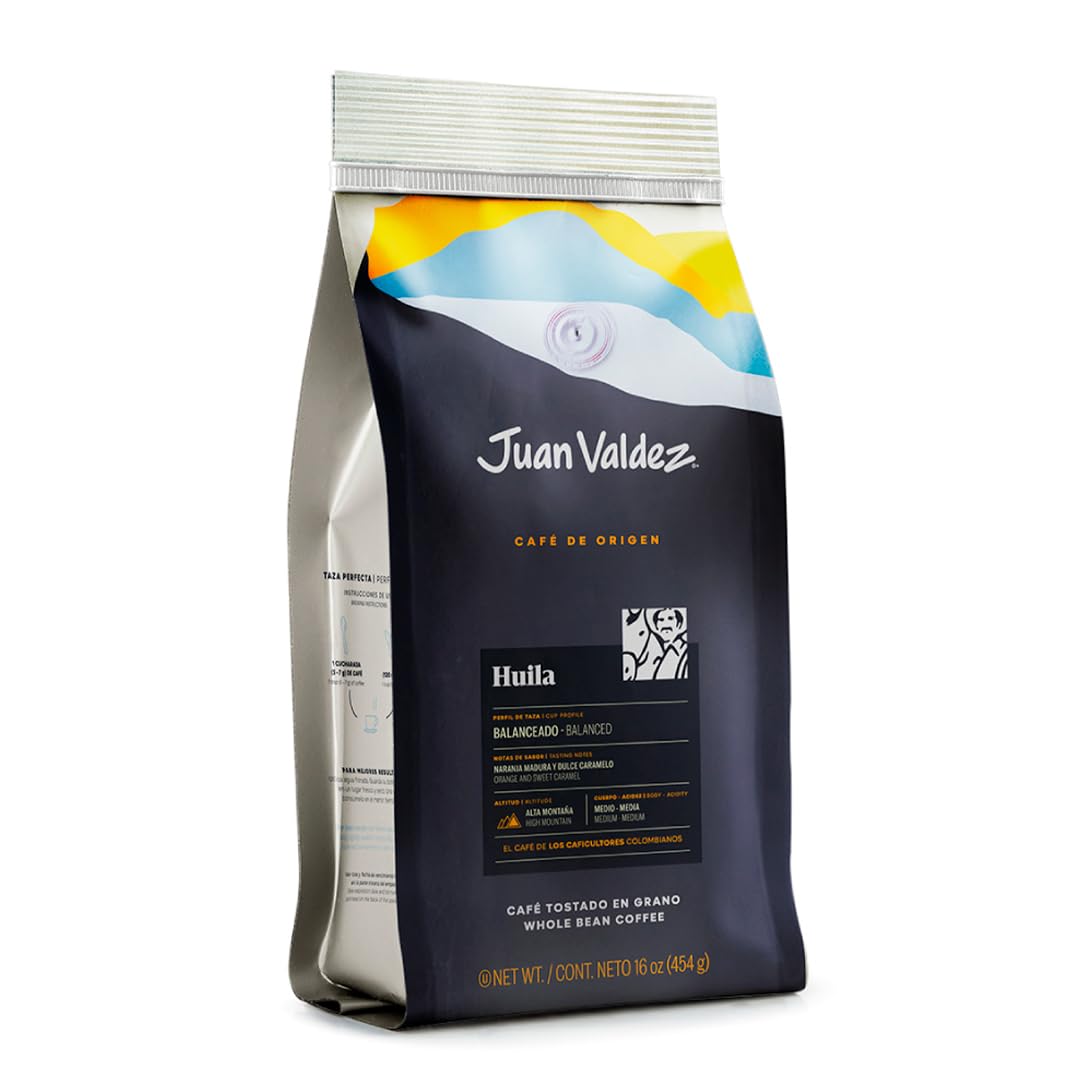
Colombia Huila — Fruity and complex
Huila coffees are often described as juicy and fruit-forward with good body. A strong choice for pour-over and AeroPress.
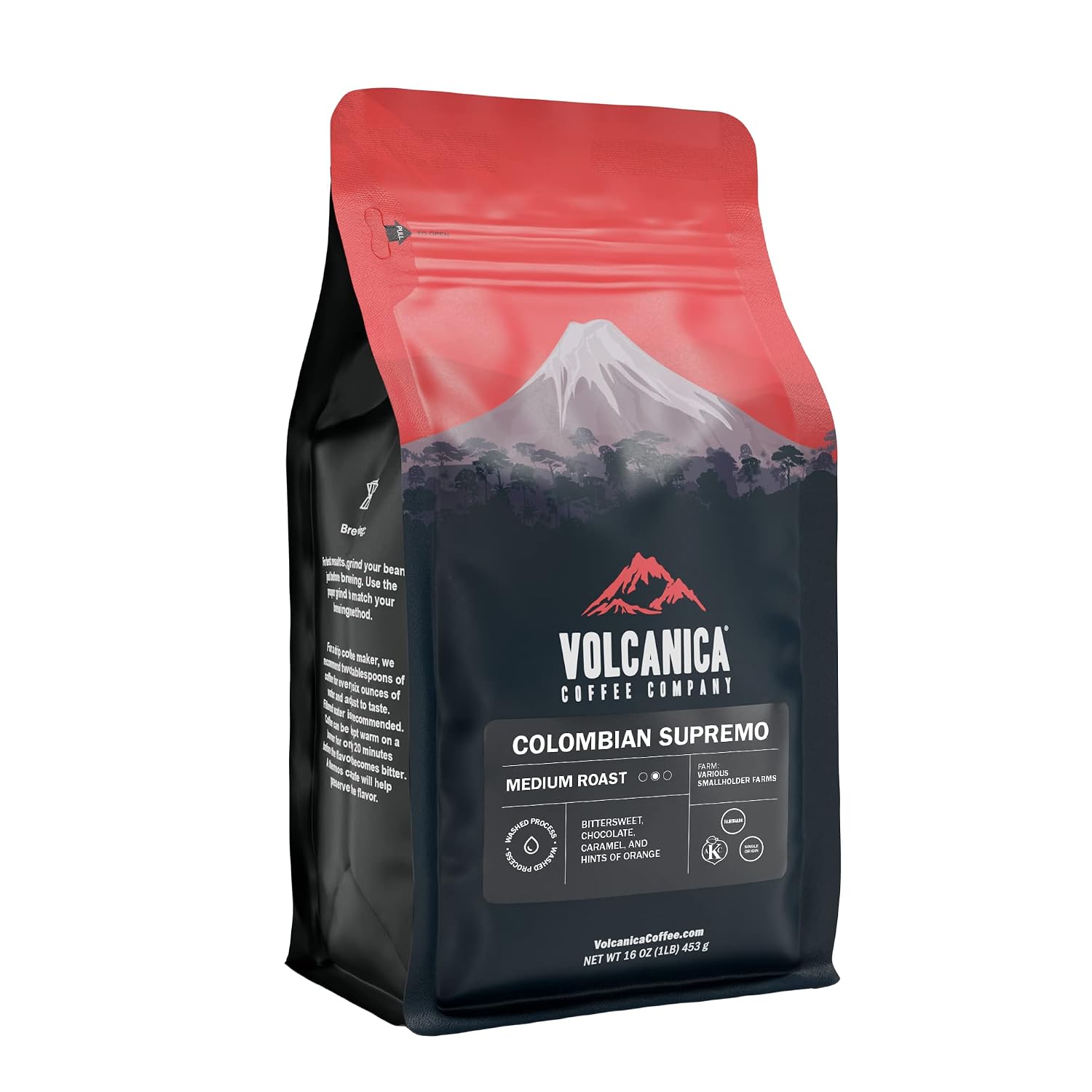
Colombian Supremo — Classic all-rounder
Large-screen beans from many regions, usually roasted medium for a balanced, chocolatey, everyday cup. Easy in drip and French press.
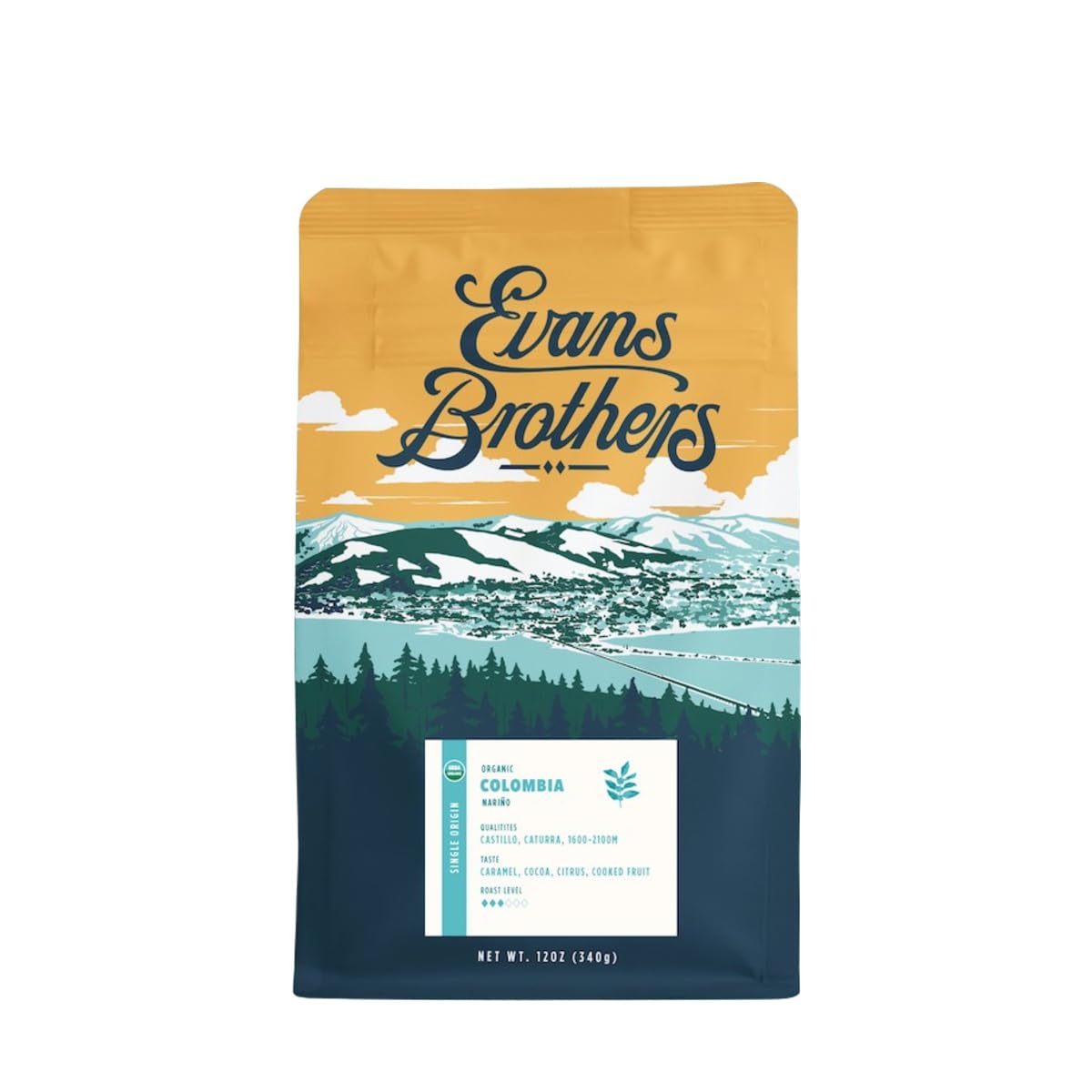
Colombia Nariño — Bright high-altitude
Grown at very high elevations in the south; often bright, sweet, and citrusy. Best showcased with a light-to-medium roast and pour-over.
Affiliate disclosure: Amazon links may earn CoffeeGearHub a commission at no additional cost to you. Prices and availability can change.
Why Colombian Coffee Tastes the Way It Does
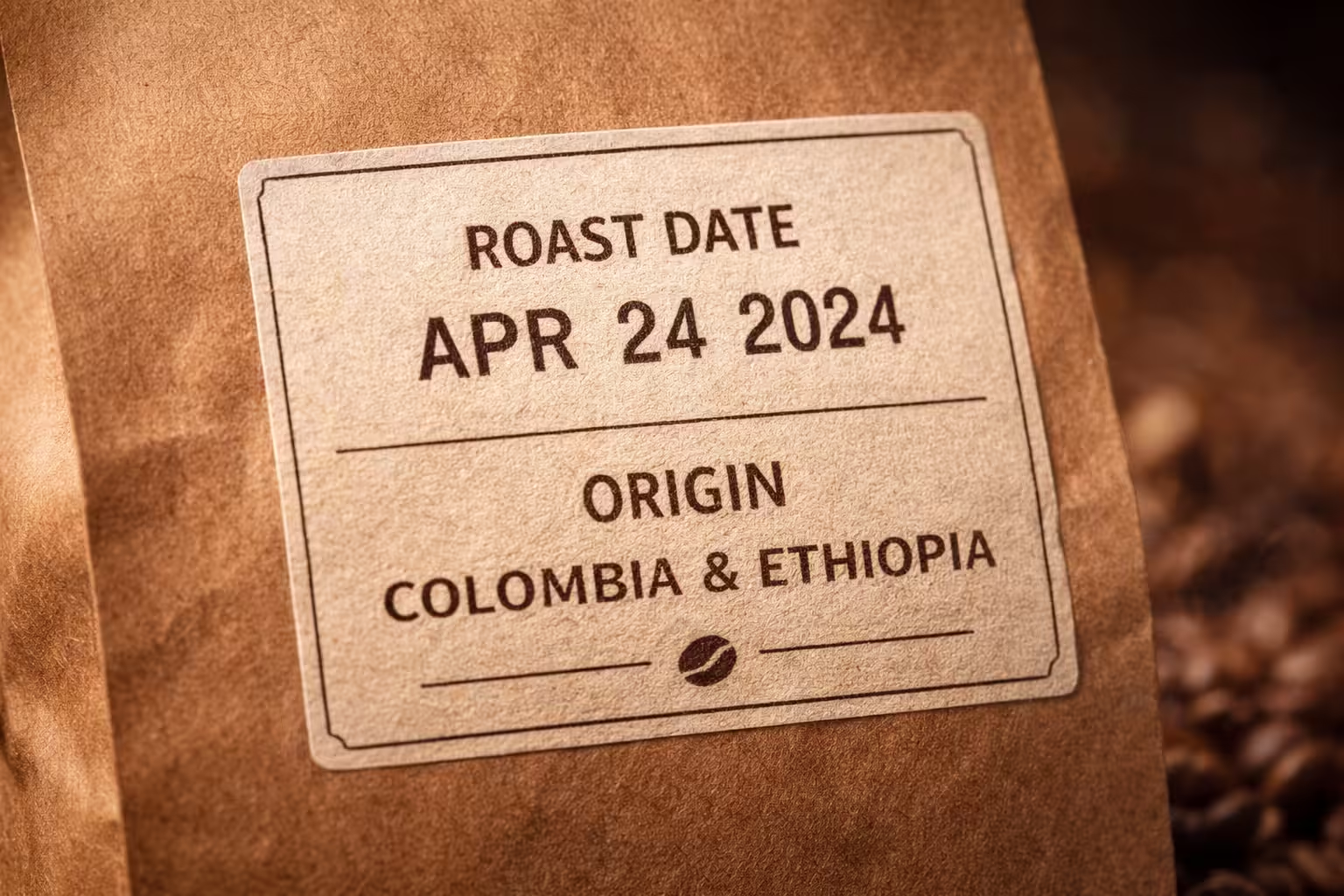
Altitude and mountains. Colombian coffee grows along the Andes, commonly at roughly 1,200 to 2,300 meters. Cooler temperatures at elevation slow cherry ripening, which tends to build sweetness and acidity.
Arabica and washed processing. Colombia grows Arabica, and most of it is washed. Washed processing removes the fruit before drying, which usually produces a clean cup that shows acidity and clarity rather than heavy fruit or fermentation flavors.
Two harvests. Because of its position near the equator, much of Colombia has a main harvest and a smaller secondary harvest called the mitaca. That means fresh-crop Colombian coffee is available for more of the year than from many origins.
Smallholder farms. Colombian coffee is grown largely by smallholders; the national coffee growers’ federation represents more than 500,000 coffee-farming families. That makes lot-to-lot variety the norm.
What Colombian Coffee Typically Tastes Like
| Attribute | Typical Colombian profile | What changes it |
|---|---|---|
| Sweetness | Caramel, brown sugar, milk chocolate | Roast level and freshness |
| Acidity | Medium to bright; often citrus, red apple, or stone fruit | Altitude (higher is usually brighter) and roast (lighter keeps more acidity) |
| Body | Medium, round | Brew method; French press and espresso add body |
| Finish | Clean and balanced | Processing: honey and natural lots add fruit and body |
These are tendencies, not rules. Roasters increasingly sell honey, natural, and experimental-fermentation Colombian lots that taste much fruitier than the classic washed profile. The tasting notes on the bag are your best guide.
Colombian Coffee Regions and Their Flavors
Colombia has many coffee-growing departments. These are the names you will see most often on specialty bags.
| Region | Where | Typical cup | Good for |
|---|---|---|---|
| Huila | South-central Andes | Often juicy, fruity, and complex with good body | Pour-over, AeroPress, drip |
| Nariño | Far south, near Ecuador; some farms above 2,000 m | Bright, sweet, citrusy; high clarity | Pour-over, light roasts |
| Cauca | Southwest, high plateaus | Sweet and balanced with clean acidity | Pour-over and drip |
| Tolima | Central Andes | Often noted for bright, citric acidity | Pour-over, iced coffee |
| Antioquia | Northwest | Lighter body, citrus, bright and juicy | Drip and pour-over |
| Coffee Triangle (Caldas, Quindío, Risaralda) | Central-west; UNESCO Coffee Cultural Landscape | Classic balanced Colombian: caramel, chocolate, mild citrus | Everyday drip, French press, espresso |
| Santander | Northeast, generally lower elevations | Often chocolate and tobacco notes, heavier body | French press, espresso, milk drinks |
| Sierra Nevada | Caribbean north | Often softer acidity, nutty and chocolate | Espresso and drip |
Region descriptions are generalizations from coffee-trade and origin reports. A single farm, variety, or processing choice can move a coffee far from its regional stereotype.
Supremo, Excelso, and “100% Colombian”: What the Labels Mean
Supremo and Excelso are size grades, not flavor grades. In trade listings, Supremo usually refers to larger beans (commonly screen 17 and above), while Excelso refers to slightly smaller beans (commonly screen 15–16) and is Colombia’s standard export grade. Bean size helps roasting consistency, but it says little about how the coffee tastes. A small-screen, high-altitude specialty lot can easily outscore a Supremo commodity coffee.
“100% Colombian” means the coffee comes only from Colombia, as opposed to a blend that includes other origins. Café de Colombia is a protected geographical designation recognized in the European Union since 2007, tied to Colombian origin and production standards.
Single-origin or single-farm bags name a region, farm, or cooperative and are usually the best way to find distinctive flavors. Look for a roast date on every bag; freshness matters more than any grade.
Processing and Varieties
Washed is Colombia’s traditional and dominant process, giving clean, bright cups. Honey and natural lots leave more fruit on the bean during drying and taste fruitier and heavier. Some producers now sell experimental fermentations with intense, wine-like or tropical flavors; these are a deliberate style, not the classic Colombian profile.
Common varieties include Castillo and Colombia, rust-resistant varieties developed by Colombia’s coffee research center, Cenicafé, as well as traditional Caturra, Typica, and Bourbon, and newer specialty varieties such as Pink Bourbon and Geisha on some farms. Disease-resistant varieties now make up most of the national crop.
Choosing a Roast Level
| Roast | What you get from Colombian beans | Best brew methods |
|---|---|---|
| Light | Bright citrus and fruit, tea-like clarity | Pour-over, AeroPress |
| Medium | The classic: caramel, chocolate, balanced acidity | Drip, pour-over, French press, cold brew |
| Medium-dark | Deeper chocolate, lower acidity, more body | Espresso, moka pot, milk drinks |
| Dark | Roast-driven bittersweet, smoky; origin character fades | Espresso, strong drip |
If you are unsure, start with a medium roast. Colombian coffee is often the origin roasters use to show a balanced medium profile. Our roast levels guide explains the differences in depth.
How to Brew Colombian Coffee
Colombian coffee is forgiving across methods, which is part of its popularity. A few starting points:
Drip: about 1:16, medium grind. A dependable everyday cup. See our drip coffee ratio chart.
Pour-over: about 1:15–1:16, medium-fine grind, water around 93–96°C. Best for showing Huila and Nariño brightness. See how to make pour-over coffee.
French press: about 1:15, coarse grind, 4 minutes. Brings out body and chocolate. See the French press brew guide.
Espresso: medium or medium-dark Colombian coffees make sweet, balanced shots and excellent milk drinks. Start around 1:2. See espresso brew ratio.
Cold brew: medium roasts give smooth, chocolatey concentrate. See our cold brew ratio chart.
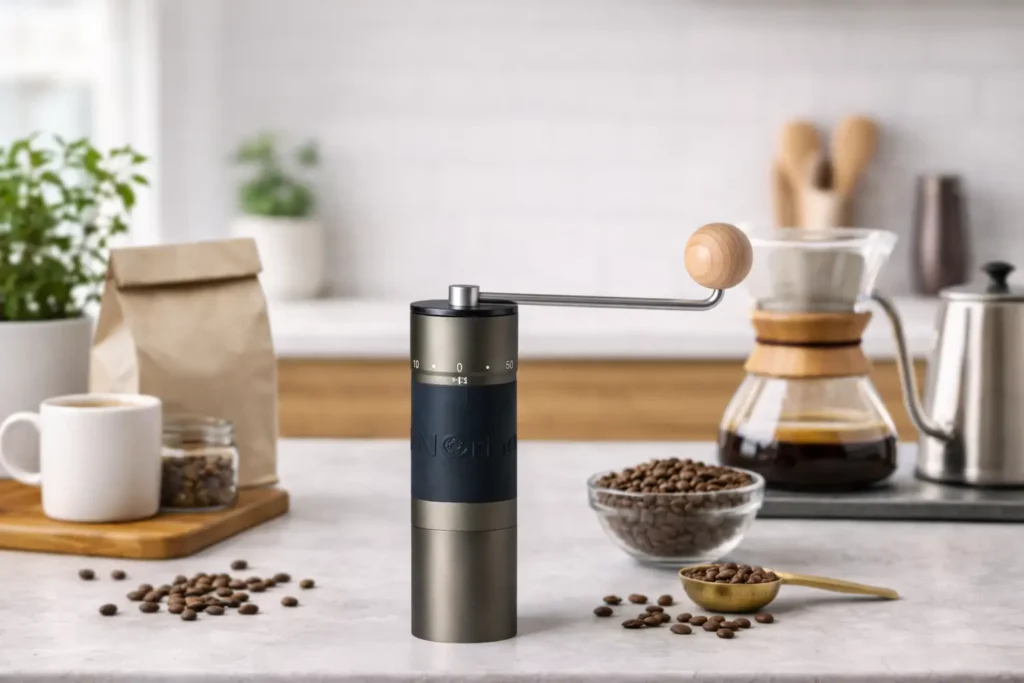
Whatever the method, grind fresh with a burr grinder and use filtered water. Our water quality guide explains why water often matters as much as the beans.
Brew Colombian Coffee at Its Best
A consistent burr grinder and a simple pour-over dripper let Colombian coffee’s sweetness and acidity come through clearly.
As an Amazon Associate, CoffeeGearHub earns from qualifying purchases.
Colombian vs Other Popular Origins
| Origin | Typical profile | Choose it if you like |
|---|---|---|
| Colombia | Balanced, caramel and chocolate sweetness, clean citrus acidity | An approachable, versatile everyday cup |
| Ethiopia | Floral, citrus, berry; light body (washed) or jammy fruit (natural) | Bright, aromatic, fruit-forward coffee |
| Brazil | Nutty, chocolate, low acidity, heavy body | Smooth espresso and low-acid cups |
| Central America | Clean, sweet, bright; varies by country | Balanced cups with a bit more brightness |
| Sumatra (Indonesia) | Earthy, herbal, heavy body, low acidity | Bold, full-bodied, low-acid coffee |
Read our Ethiopian coffee guide for the most contrasting origin, and our coffee bean buying guide for choosing beans by taste.
How to Buy Good Colombian Coffee
- Check the roast date. Aim to brew within roughly two to four weeks of roasting.
- Look for a region (Huila, Nariño, Cauca, and so on) rather than only “Colombian.”
- Note the process. Washed for a clean, classic cup; honey or natural for fruitier flavors.
- Match the roast to your brewer using the table above.
- Buy whole bean and grind just before brewing.
- Do not pay extra for “Supremo” alone; it is a size grade, not a guarantee of flavor.
Store beans airtight, away from light and heat. See how to store coffee beans.
Editorial bottom line: Colombian coffee earns its reputation for balance and versatility. Choose a medium roast for a classic cup, a high-altitude southern region such as Huila or Nariño for brightness, and judge every bag by its region, process, and roast date rather than its size grade.
Frequently Asked Questions
What does Colombian coffee taste like?
Typically balanced and sweet, with caramel or chocolate notes, medium body, and clean, often citrus-like acidity. High-altitude southern regions can be brighter and fruitier.
Is Colombian coffee good for espresso?
Yes. Medium and medium-dark Colombian coffees make sweet, balanced espresso and work very well in milk drinks.
What does Supremo mean on Colombian coffee?
Supremo is a bean-size grade, usually the largest screen sizes. It does not guarantee better flavor; region, processing, freshness, and roast matter more.
Is Colombian coffee Arabica?
Yes. Colombia grows Arabica coffee, including varieties such as Castillo, Colombia, Caturra, Typica, and Bourbon.
Which Colombian region is best?
It depends on taste. Huila and Nariño are known for brighter, fruitier coffees; the Coffee Triangle for classic balance; Santander for chocolatey, heavier cups.
Is Colombian coffee low in acidity?
Not usually. It typically has medium to bright acidity. For lower acidity, choose a darker roast or a Brazilian or Sumatran coffee.
When is Colombian coffee harvested?
Much of Colombia has a main harvest and a smaller mitaca harvest each year, with timing that varies by region. That gives fresh-crop Colombian coffee through much of the year.
What roast is best for Colombian coffee?
Medium is the most versatile. Choose light for pour-over brightness and medium-dark for espresso and milk drinks.
Sources and Further Reading
Origin facts were checked against published references, including Coffee production in Colombia (producer federation, Coffee Cultural Landscape, Café de Colombia protection, Cenicafé), StoneX’s report on FNC 2024–2025 production data, Coffee Geography’s regional overview, and 1Zpresso’s Colombian coffee guide (altitudes, harvests, varieties, export grading). Regional flavor notes are generalizations; individual lots vary.
CoffeeGearHub product shortlist
Continue with related products on CoffeeGearHub
Review product categories and current verified merchant offers on CoffeeGearHub before leaving the site.