
Bialetti Venus Review (2026): The Best Stainless Steel Moka Pot for Induction?
Quick picks
Bialetti Venus review at a glance
Picks are based on published specifications, tests, and owner reports. As an Amazon Associate, CoffeeGearHub earns from qualifying purchases.
Editorial standards: this Bialetti Venus review draws on Bialetti’s published specifications and care instructions, published tests by Homes and Gardens and Whole Latte Love, an owner’s side-by-side brew trial, and large volumes of owner reviews. Scores are research-based. CoffeeGearHub does not claim hands-on testing where it has not occurred.
At a glance
What this Venus review covers
The stainless design, sizes and specifications, a six-part research scorecard, coffee quality, brew times on different stoves, how to brew with it, cleaning and care, the real weaknesses, how it compares with the Moka Express, Moka Induction, and Brikka, and our verdict.
Editorial analysis
The easy choice for induction kitchens
The Venus makes the same rich, concentrated coffee as Bialetti’s aluminum pots. What it adds is stainless steel: it works on induction, never discolors, and tolerates a little mild soap.
What it costs you is a higher price and slower heating from cold. Start with hot water and both matter less. On gas, the cheaper Moka Express is still the value pick.
The 30-Second Answer
The Bialetti Venus is worth buying in 2026 if you cook on induction or want a stainless steel moka pot that is easy to care for. It earns a research-based 7.9 out of 10: excellent versatility and durable 18/10 stainless steel, the same rich moka coffee as Bialetti’s classics, but a higher price than aluminum and slow brewing from cold water.
On gas or electric, the aluminum Moka Express is the better value; for a stronger, foamier cup, look at the Brikka.
Compare current options
Start with these representative choices
The Venus itself, the aluminum classic it is most often compared with, and the grinder upgrade that improves any moka pot.
Bialetti Venus — Our pick for induction
Stainless steel moka pot that works on induction in the 4-cup size and up, with a modern curved body.
Bialetti Moka Express — Best value
The classic aluminum pot for gas and electric stoves, at a lower price.
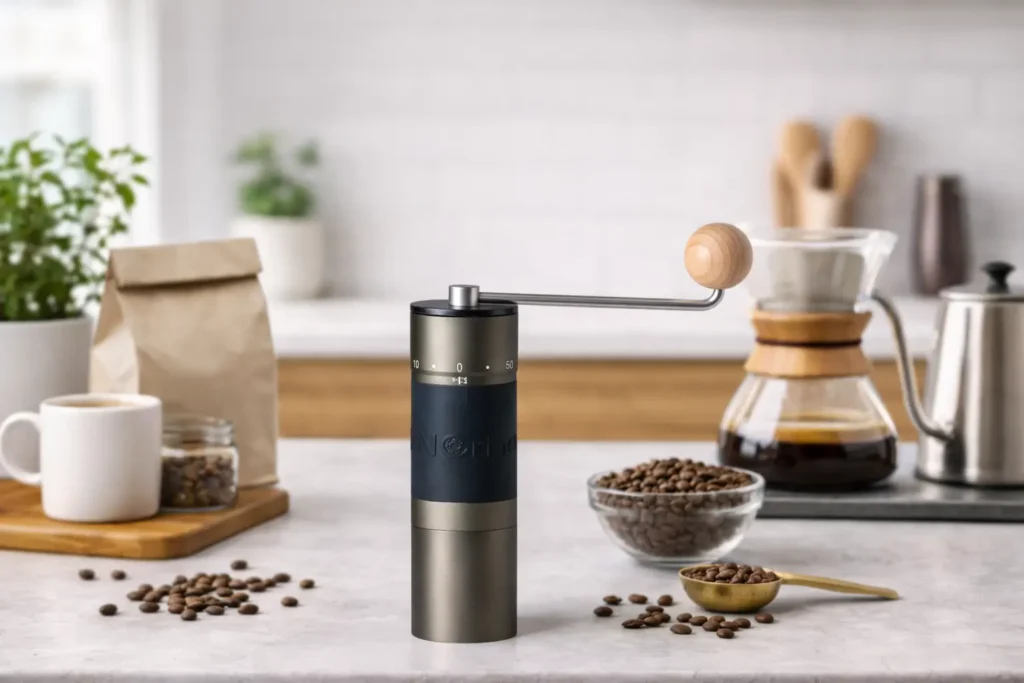
KINGrinder K6 — Grind control
An even medium-fine grind is the single biggest upgrade to moka pot coffee.
Affiliate disclosure: Amazon links may earn CoffeeGearHub a commission at no additional cost to you. Prices and availability can change.
What the Bialetti Venus Is: The Stainless Moka Pot
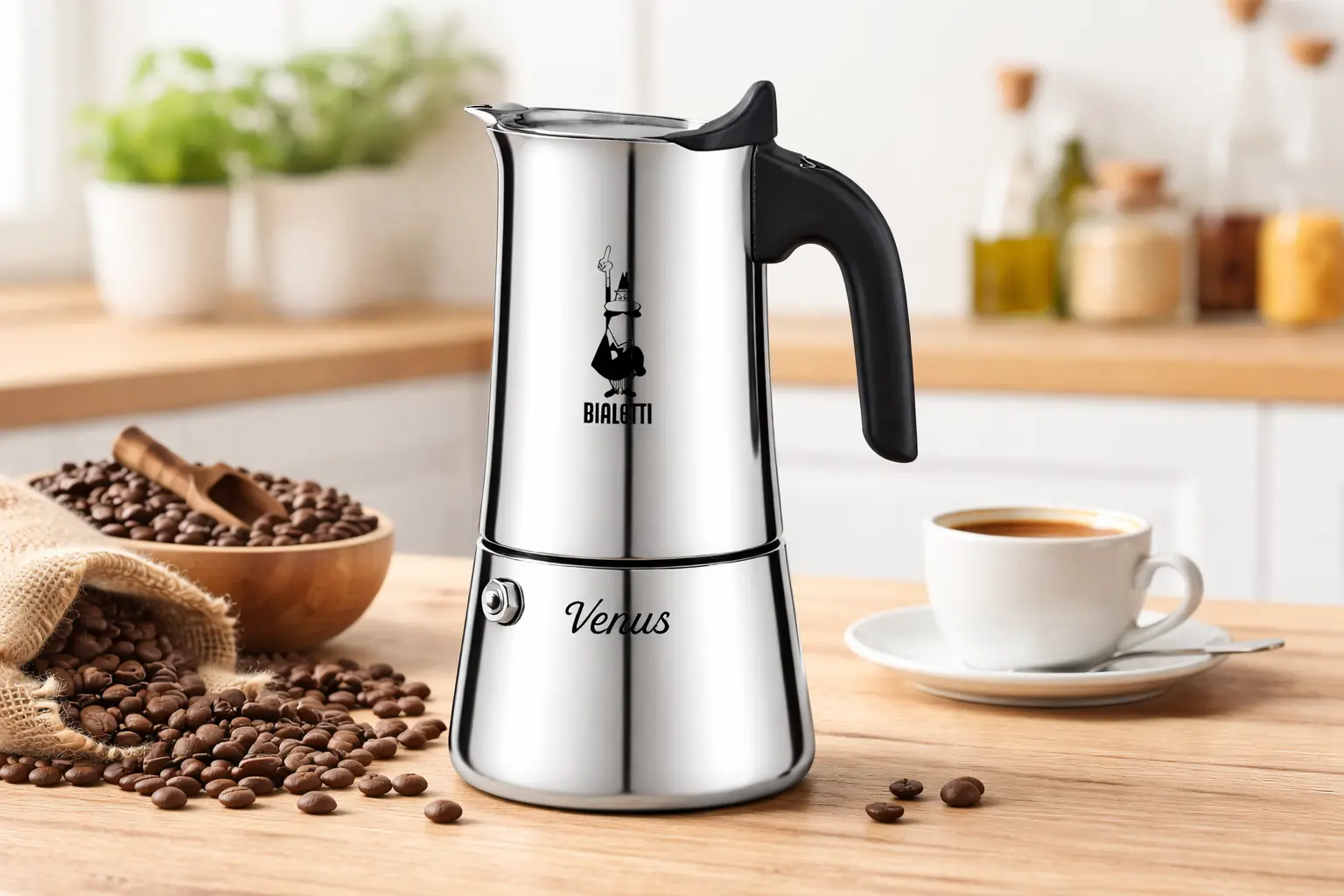
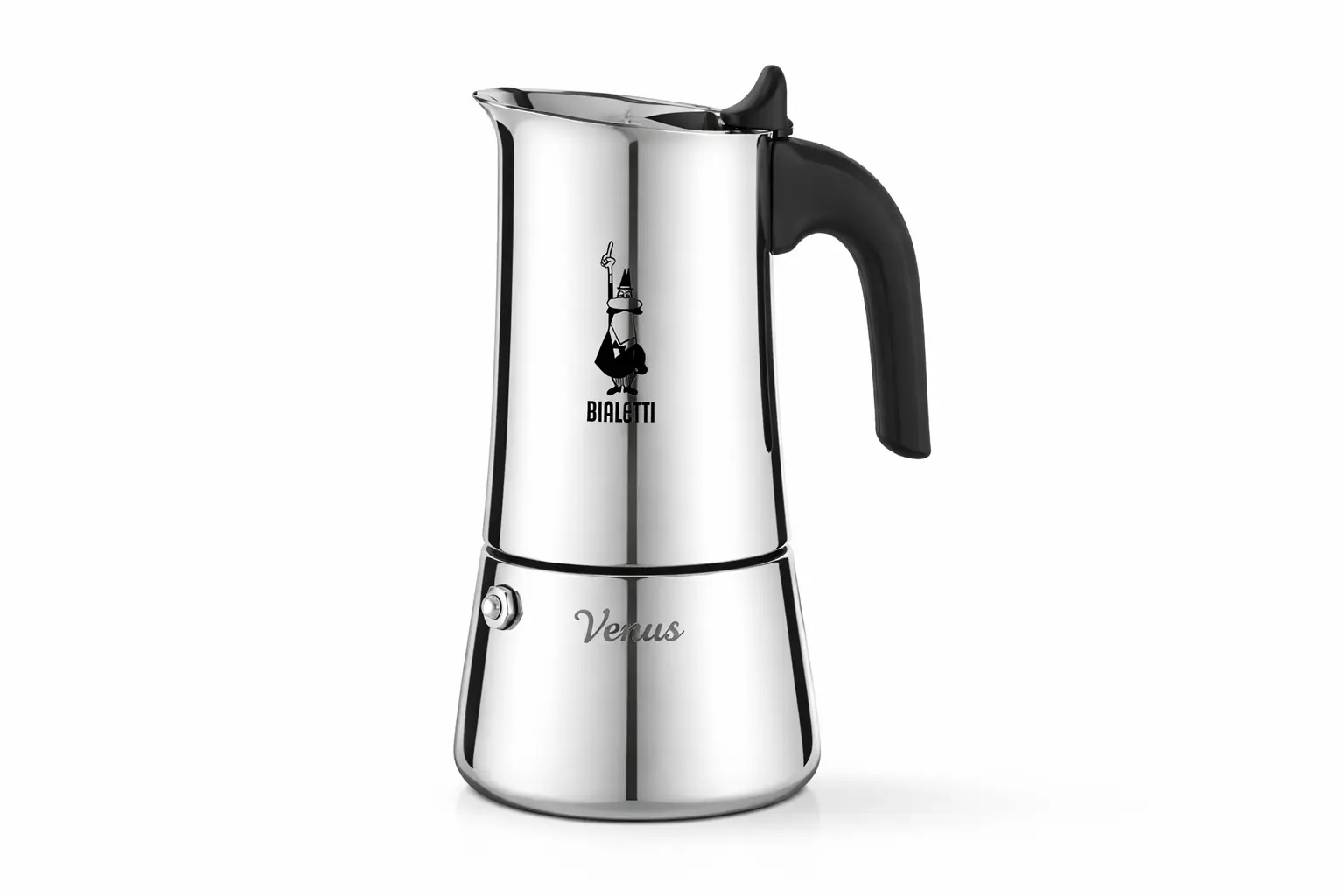
The Bialetti Venus is a stainless steel moka pot with a smooth, curved body that looks very different from the faceted aluminum Moka Express. It brews the same way: water in the base, ground coffee in a funnel basket, and coffee pushed up into the top chamber by steam pressure. What changes is the material, the shape, and what that means for your stove and your cleaning routine.
The body is 18/10 stainless steel, a food-grade alloy that resists rust and does not discolor the way aluminum does. The inside of the base is sandblasted and uncoated. The Venus has a drip-less spout, a heat-resistant handle, and Bialetti’s patented safety valve on the side of the base. According to Whole Latte Love, the current New Venus has water-chamber walls about 20 percent thicker than earlier versions, and it is made in China with a one-year warranty.
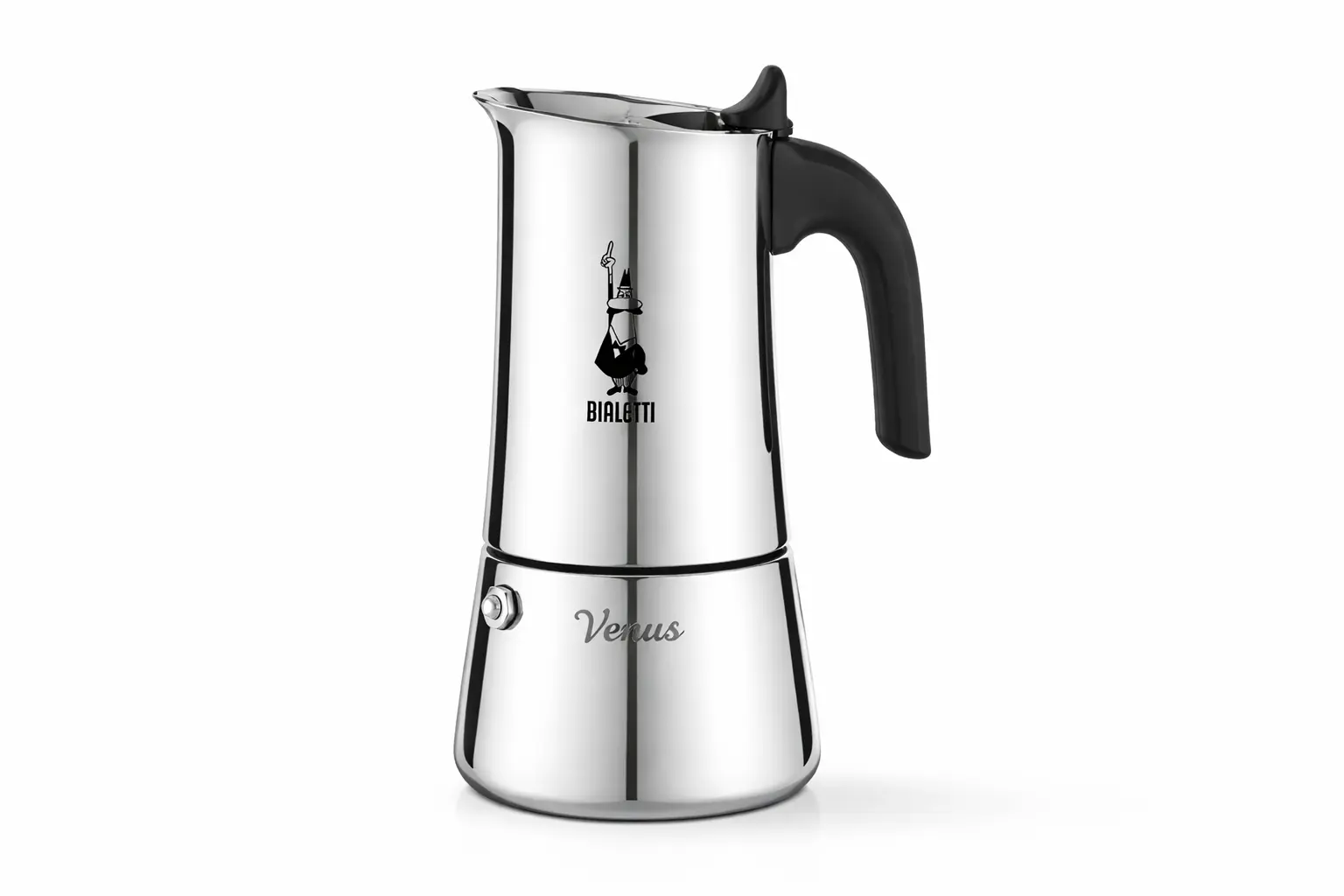
The main reason to choose it is induction. Most aluminum moka pots, including the Moka Express, are not magnetic, so they will not heat on an induction hob without an adapter. The Venus works directly on induction in its 4-, 6-, and 10-cup sizes, as well as on gas, electric, and ceramic stoves. Our best induction moka pots guide compares it with the other options.
This review is research-based. CoffeeGearHub did not test the Venus in-house. The scores below draw on Bialetti’s published specifications and care guidance, published tests by Homes and Gardens and Whole Latte Love, an owner’s side-by-side trial, and large volumes of owner reviews, all credited in the sources section.
Venus Sizes and Specifications
The Venus comes in four sizes. The figures below follow Bialetti’s published product information. As with any moka pot, the basket must be full to brew well, so choose the size you will fill every time rather than the largest one.
| Size | Brewed coffee | Height | Base width | Induction |
|---|---|---|---|---|
| 2-cup | About 85 ml | About 14 cm | About 8 cm | No, needs an adapter |
| 4-cup | About 170 ml | About 17 cm | About 9.5 cm | Yes |
| 6-cup | About 235 ml | About 20 cm | About 10.5 cm | Yes |
| 10-cup | About 460 ml | About 23 cm | About 13 cm | Yes |
For one person who drinks coffee black, the 4-cup is the practical choice. The 6-cup suits two people or two milk drinks and is the size most reviews cover. The 10-cup is for households and guests. Base width matters on induction: smaller bases may not trigger large zones, which is why the 2-cup is not listed as compatible. Our moka pot sizes guide explains how cup ratings translate to real servings.
The Research Scorecard: 7.9 out of 10
We scored the Venus on the same six criteria we use for every moka pot, so the results compare directly with our Bialetti Moka Express review.
| Criterion | Score | What it reflects |
|---|---|---|
| Brew quality | 7.5 / 10 | Rich, concentrated coffee; slightly smaller basket than the Moka Express |
| Ease of use | 7.5 / 10 | Simple parts and a cool handle; slow from cold water |
| Build and durability | 8 / 10 | 18/10 stainless steel with thicker walls; some sharp edges |
| Versatility | 9 / 10 | Works on every stove type, including induction from 4-cup up |
| Maintenance | 8 / 10 | No discoloration or oxidation; hand wash recommended |
| Value | 7.5 / 10 | Costs more than aluminum, but avoids an induction adapter |
| Overall | 7.9 / 10 | Average of the six criteria |
The Venus edges ahead of the Moka Express on versatility and maintenance and falls slightly behind on value. The coffee itself is very similar. Which pot is right comes down mostly to your stove: on induction the Venus is the simpler, more practical choice; on gas, the cheaper aluminum classic is hard to beat.
Owner sentiment is consistently positive. Homes and Gardens rated the 6-cup Venus about 4.5 out of 5 after testing, and Amazon listings show an average of about 4.4 stars across more than 29,000 ratings at the time of writing.
What the Coffee Tastes Like
Like every moka pot, the Venus brews with steam pressure of roughly one to two bars, far below the nine bars of an espresso machine. The result is strong, concentrated coffee, several times stronger than drip but lighter in body than espresso, with no real crema. Brewed well, it is rich, full-bodied, and often chocolatey. Our moka pot vs espresso machine comparison explains the difference in detail.
Stainless steel does not change the flavor in any meaningful way once the pot is broken in, though it avoids the metallic taste that some new aluminum pots give for their first brews. Bialetti still recommends discarding the first three brews from a new Venus, which also rinses out any manufacturing residue.
The basket is a little smaller than the Moka Express in the same nominal size. In one owner’s side-by-side trial, the Venus basket held roughly 24 grams of coffee against about 28 grams for the Moka Express, and the Venus finished brewing 49 seconds sooner. That was a single trial rather than a controlled test, but it matches the general impression that Venus coffee is very slightly lighter. Homes and Gardens used about 30 grams in its 6-cup tests.
As with any moka pot, technique matters more than the pot. A medium-fine grind, an untamped basket, gentle heat, and taking the pot off before it sputters make the difference between a rich cup and a bitter one. Our moka pot grind size and best coffee beans for moka pot guides cover both.
Heating and Brew Time on Different Stoves
Stainless steel heats more slowly than aluminum, and the Venus’s brew time reflects that. In Homes and Gardens’ test of the 6-cup on an electric stove, starting with cold water took about 13 minutes before coffee began to flow and 20 to 22 minutes to finish. Starting with hot water cut that to about 8 minutes to first coffee and 10 minutes in total.
The lesson is simple: fill the base with hot water from a kettle. Besides saving time, a hot start shortens how long the coffee grounds sit on the heat, which reduces bitterness. On induction, heat-up is usually faster, but a medium setting still gives better control than full power. On gas, keep the flame under the base so it does not lick up the sides.
Owners and testers agree that the handle stays cool while the body and lid get very hot, so open the lid by its knob and hold the pot only by the handle. Homes and Gardens also noted that the lid edge and funnel rim are sharp, so take care when cleaning.
How to Brew With the Venus
The Venus brews like any Bialetti moka pot, with a few details from Bialetti’s instructions worth following. Before the first real cup, brew and discard three pots of coffee. For each brew, fill the base with hot water to just below the safety valve, never above it. Fill the funnel level with medium-fine ground coffee without pressing it down, and wipe any grounds off the rim so the gasket seals.
Screw the top on firmly, holding the base with a towel and the top by the body, not the handle. Bialetti specifically warns against using the handle to tighten or unscrew the pot. Set it on low to medium heat with the lid open, and take it off the heat as soon as the coffee stream turns pale and starts to gurgle. Cool the base under a cold tap to stop the brew, stir the coffee in the top chamber, and serve.
A consistent grind helps more than anything else. A burr grinder such as the KINGrinder K6 keeps the grind even from day to day, while a blade grinder produces a mix of dust and chunks that makes any moka pot unpredictable. Our how to use a moka pot guide covers each step with photos, and our best grinders for moka pot guide compares grinder options.
Cleaning and Care: Follow Bialetti, Not the Dishwasher
The care advice for the Venus is less consistent than it should be. Some retailers, including Whole Latte Love, and some reviews describe the Venus as dishwasher safe. Bialetti’s own product information says to wash it by hand. When the maker and a retailer disagree, follow the maker: hand washing protects the gasket, the safety valve, and the finish, and it is quick with a stainless pot.
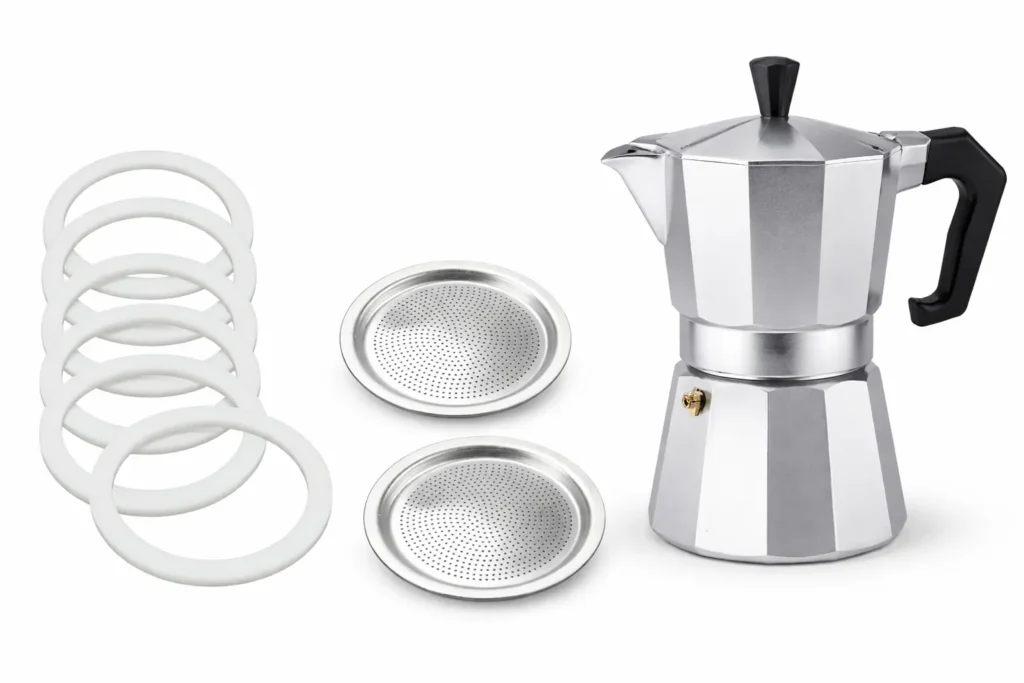
Rinse each part with warm water after use. Unlike aluminum, stainless steel tolerates a little mild dish soap when needed, which makes it easier to remove coffee oils. Dry every part and store the pot disassembled so the gasket does not stay compressed. Homes and Gardens recommends replacing the gasket about once a year with regular use; a gasket and filter plate set sized to your pot restores the seal in a few minutes.
Mineral deposits can build up in the base in hard-water areas. A brew of equal parts water and white vinegar, run without coffee and followed by two rinse brews, removes most scale. Our how to clean a moka pot guide covers daily rinsing, deep cleaning, and descaling, and the moka pot troubleshooting guide covers leaks and sputtering.
Where the Venus Falls Short
The Venus’s weaknesses are minor but worth knowing before you buy.
It is slow from cold. Stainless steel heats more slowly than aluminum, and a cold start on electric can take well over ten minutes before coffee appears. Starting with hot water solves most of this.
It costs more than aluminum. The Venus is more expensive than the Moka Express in comparable sizes. On induction that premium is easy to justify, because it avoids buying an adapter plate. On gas, it is harder to argue for unless you strongly prefer stainless steel.
Some edges are sharp. Testers have noted that the lid edge and funnel rim are sharp enough to catch fingers during cleaning.
The 2-cup is not induction compatible. If you want a small pot for induction, the 4-cup is the smallest that works directly.
Long-term reports are mixed on small parts. A minority of owners report rust spots or safety valve issues after long use. These reports are anecdotal and uncommon relative to the large number of positive reviews, and drying the pot fully after each use reduces the risk.
Venus vs Moka Express, Moka Induction, and Brikka
Bialetti’s own range covers the main alternatives, and the right one depends on your stove and what you want in the cup.
| Model | Material | Induction | Best for |
|---|---|---|---|
| Bialetti Venus | 18/10 stainless steel | Yes, 4-cup and up | Induction kitchens, easy care, modern style |
| Bialetti Moka Express | Aluminum | Adapter needed | Gas and electric stoves, lowest cost |
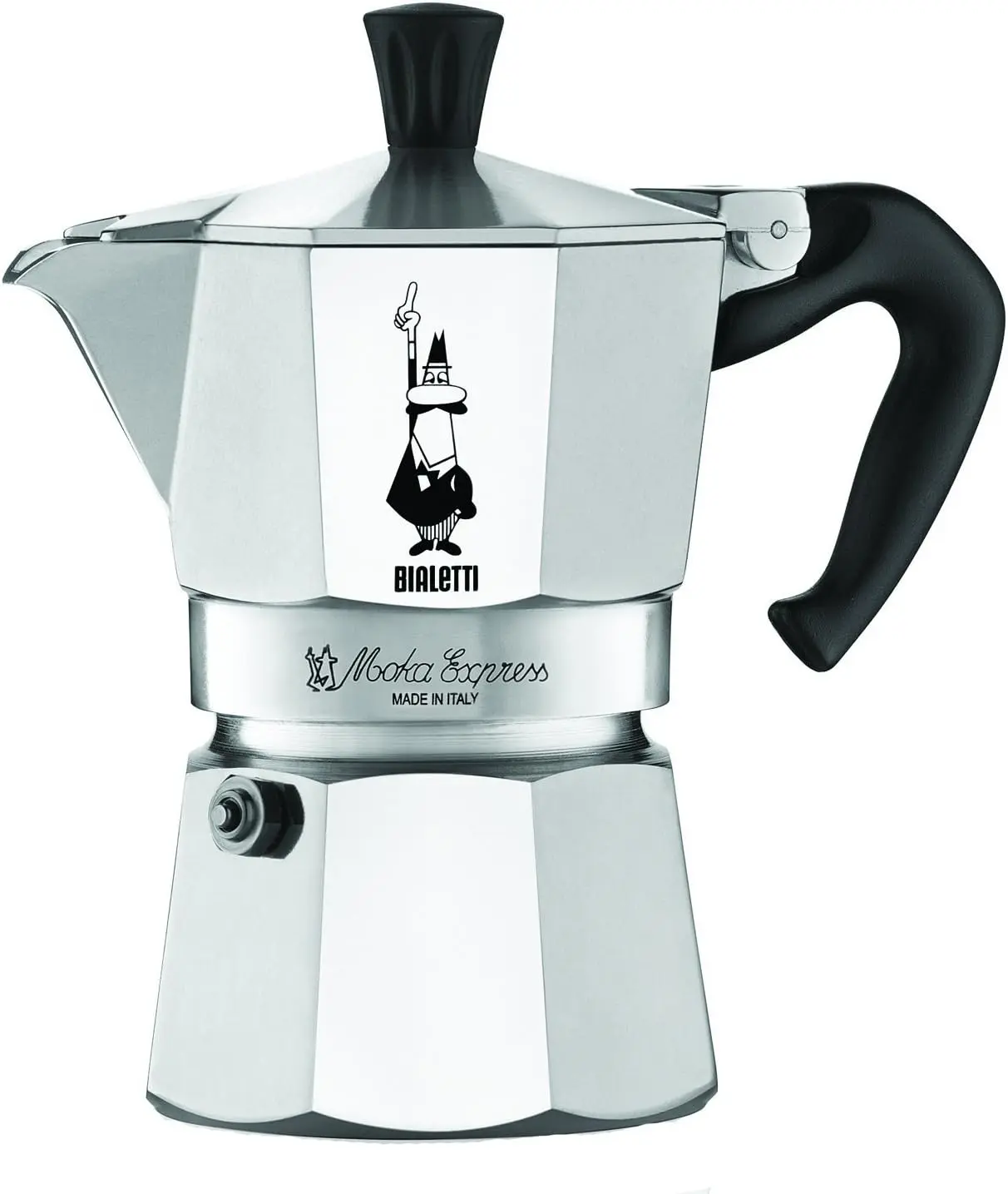
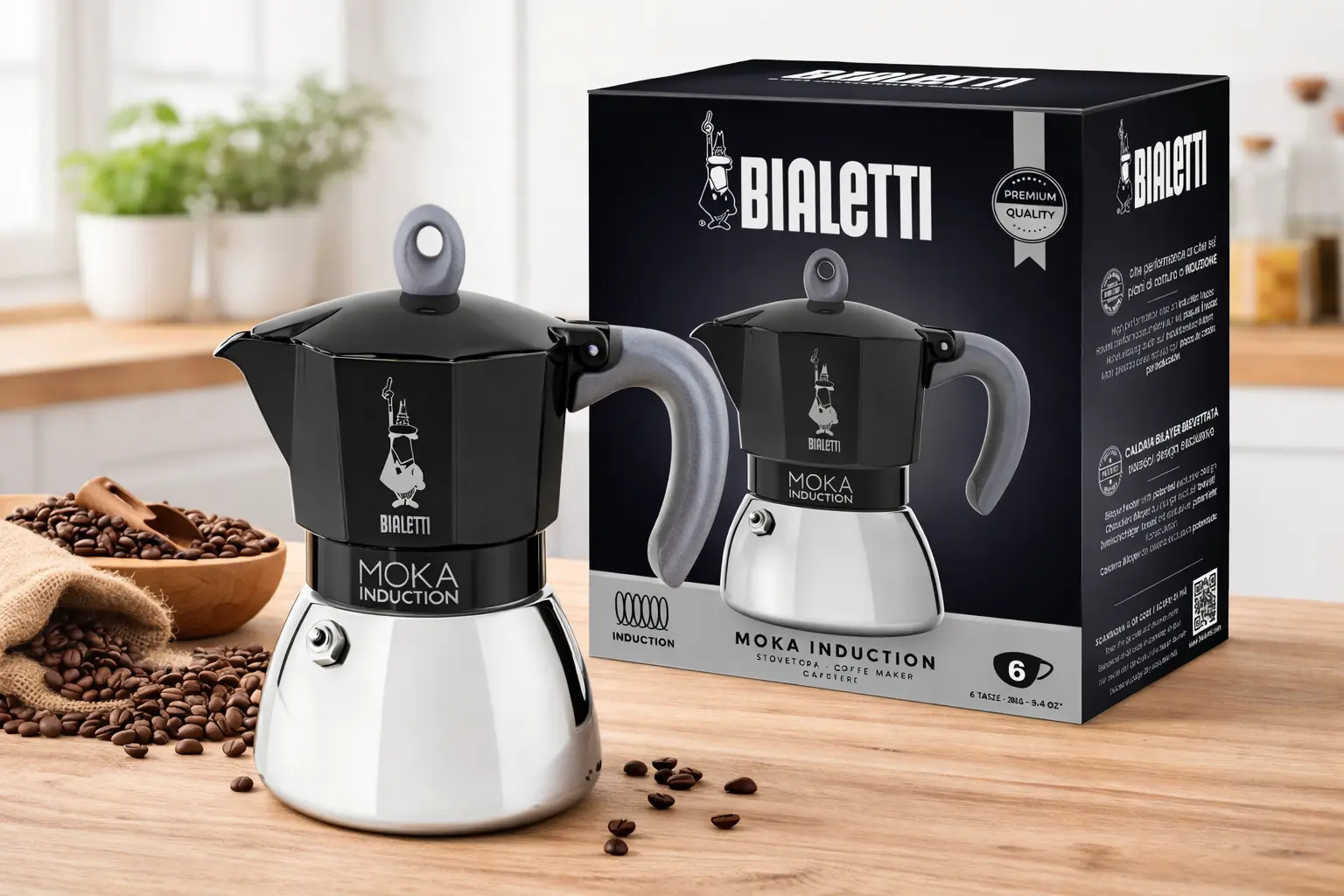
| Bialetti Moka Induction | Aluminum top, stainless base | Yes | Classic look on induction |
| Bialetti Brikka | Aluminum | Adapter needed | Stronger coffee with light foam |
The Moka Express is the classic and the best value on gas and electric. It is lighter, cheaper, and heats faster, but needs hand washing without soap and an adapter for induction. The Moka Induction keeps the classic eight-sided look with a magnetic stainless base, a good choice if you love the Moka Express style but cook on induction.
The Brikka adds a weighted valve that builds a little more pressure, producing a stronger cup with a layer of light foam. It is the closest a moka pot gets to espresso, but it is aluminum and needs an adapter on induction. For a broader comparison across brands, see our best moka pots guide.
Our Verdict
The Bialetti Venus is the moka pot to buy if you cook on induction or simply prefer stainless steel. It makes the same rich, concentrated coffee as Bialetti’s aluminum classics, works on every stove type from the 4-cup size up, never discolors, and tolerates a little mild soap. Its weaknesses are small: it is slow from cold water, costs more than aluminum, has a few sharp edges, and the 2-cup is not induction compatible.
Buy the Bialetti Venus if you have an induction hob, want a pot that is easy to keep looking new, or like its modern shape. Choose the Moka Express if you cook on gas or electric and want the lowest price, and the Brikka if you want a stronger, foamier cup. Whichever you choose, start with hot water, use a medium-fine grind, and pair it with a burr grinder. Our moka pot accessories guide covers the extras worth having.
The Stainless Moka Pot for Every Stove
The Venus covers induction and easy care; the Moka Express is the lower-cost classic for gas and electric.
As an Amazon Associate, CoffeeGearHub earns from qualifying purchases.
Editorial bottom line: The Bialetti Venus is a durable, versatile stainless moka pot and the simplest Bialetti choice for induction. Start with hot water, brew on gentle heat, hand wash it, and replace the gasket about once a year. On gas and electric, the cheaper Moka Express remains the value pick.
Frequently Asked Questions
Is the Bialetti Venus worth buying?
Yes, if you cook on induction or want a stainless steel moka pot that does not discolor or need aluminum-style care. It makes the same rich, concentrated coffee as other Bialetti moka pots and works on every stove type in the 4-cup size and up. If you cook on gas and want the lowest price, the aluminum Moka Express is still the better value.
Does the Bialetti Venus work on induction?
The 4-, 6-, and 10-cup Venus models work directly on induction hobs because their stainless steel base is magnetic. The 2-cup model is too small to be detected by most induction zones and is not listed as induction compatible, so it needs an adapter plate.
Is the Bialetti Venus dishwasher safe?
Bialetti advises washing the Venus by hand rather than in the dishwasher, even though some retailers list it as dishwasher safe. Follow the maker: rinse with warm water and a little mild soap if needed, dry every part, and store it disassembled. Our how to clean a moka pot guide covers the full routine.
How much coffee does a 6-cup Venus make?
Bialetti’s published figures put the 6-cup Venus at about 235 ml of brewed coffee, enough for two or three small servings or two milk drinks. The 4-cup makes about 170 ml and the 10-cup about 460 ml. Moka cups are small Italian servings, not mugs.
Why does my Venus take so long to brew?
Usually because it starts with cold water on a moderate burner. In one published test on an electric stove, a 6-cup Venus took around 13 minutes to start brewing from cold water but about 8 minutes from hot water. Fill the base with hot water from a kettle to cut the wait and reduce bitterness.
Is the Venus better than the Moka Express?
It depends on your stove. The Venus is better for induction kitchens and anyone who prefers stainless steel and easier cleaning. The Moka Express is cheaper, lighter, and the reference design for gas and electric stoves. Coffee quality is broadly similar when both are brewed well.
Sources and Further Reading
Specifications, sizes, brewed volumes, induction compatibility, first-use, assembly, and hand-washing guidance follow Bialetti’s published product information and instructions. Material details, the thicker New Venus walls, country of manufacture, and warranty come from Whole Latte Love’s product information. Brew times, dose, handling notes, gasket advice, and rating come from Homes and Gardens’ Bialetti Venus review. Basket size and brew-time comparison with the Moka Express come from an owner’s side-by-side trial published on YouTube. Brew pressure concepts follow the Specialty Coffee Association’s standards. CoffeeGearHub did not test this product hands-on.
CoffeeGearHub product shortlist
Continue with related products on CoffeeGearHub
Review product categories and current verified merchant offers on CoffeeGearHub before leaving the site.