
How to Make a Latte With a Moka Pot (No Espresso Machine Needed)
Quick picks
Moka pot latte gear at a glance
Picks are based on published specifications and owner reports. As an Amazon Associate, CoffeeGearHub earns from qualifying purchases.
Editorial standards: this moka pot latte guide draws on published brew measurements, manufacturer instructions for moka pots and frothers, Specialty Coffee Association brewing concepts, and widely used barista practice for milk temperature and ratios. CoffeeGearHub does not claim hands-on testing where it has not occurred.
At a glance
What this guide covers
Why moka coffee works as a latte base, the equipment you need, how to brew a stronger base, which milk to use and how hot, four ways to froth milk without a steam wand, a step-by-step recipe, ratios for cappuccinos, flat whites, and iced lattes, and troubleshooting.
Editorial analysis
Strong base, less milk, fine foam
Moka coffee is milder than espresso, so a moka pot latte needs a stronger, cleaner base and a little less milk than a café recipe. Those two adjustments make the biggest difference.
The milk does the rest. Whole or barista oat milk heated to about 60 degrees Celsius and frothed into fine foam turns strong stovetop coffee into a genuinely satisfying latte.
The 30-Second Answer
To make a moka pot latte, brew a strong moka coffee on gentle heat, then combine about 60 to 80 ml of it with 180 to 240 ml of milk heated to roughly 55 to 65 degrees Celsius and frothed with an electric frother, a handheld wand, or a French press. Use a medium-dark roast, a medium-fine grind, and only the first two-thirds of the brew for the strongest base.
It will taste milder than a café latte because moka coffee is less concentrated than espresso, so use a little less milk than you would with espresso.
Compare current options
Start with these representative choices
The stovetop brewer that makes the coffee, the easiest way to froth milk, and the moka pot that gets closest to espresso.
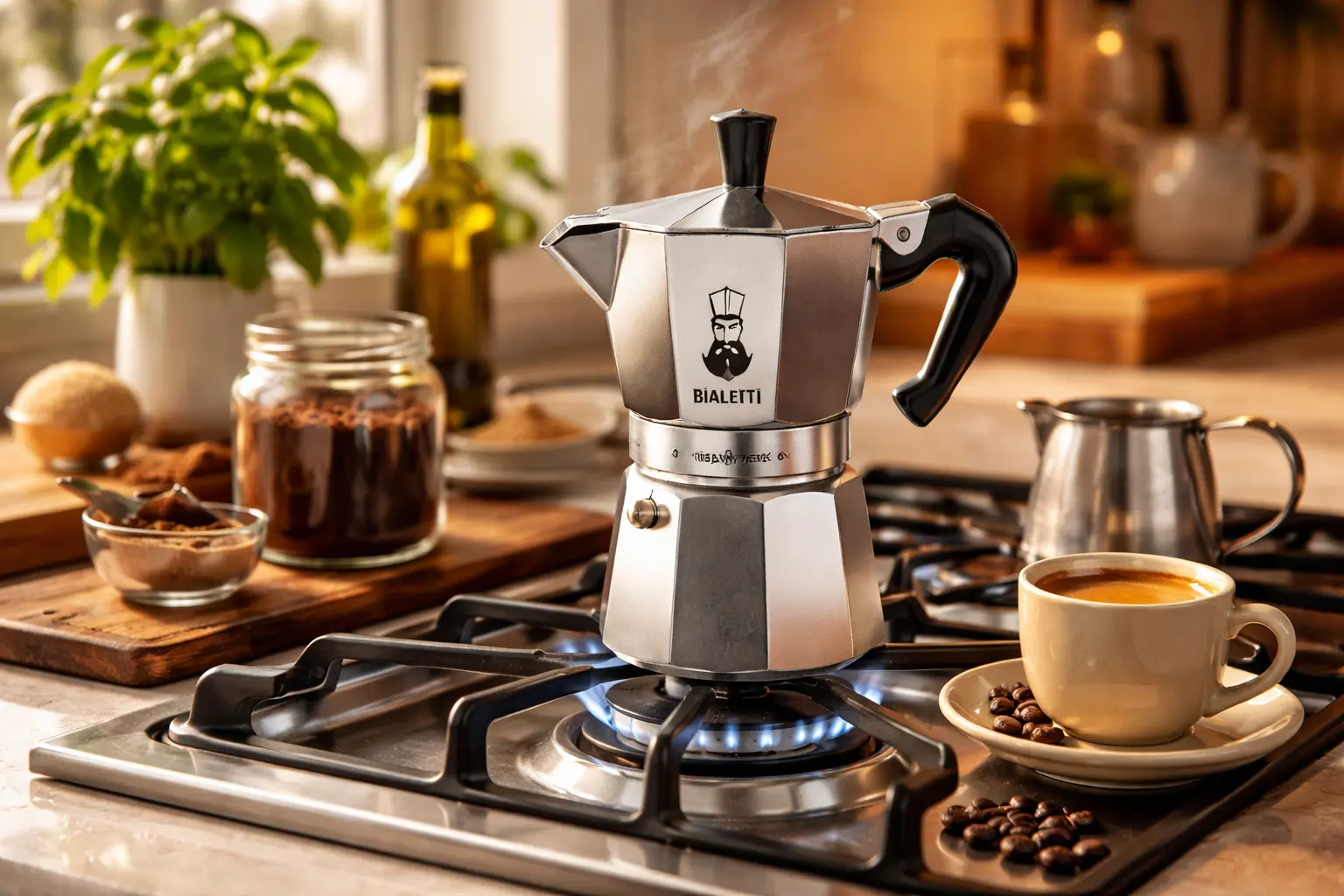
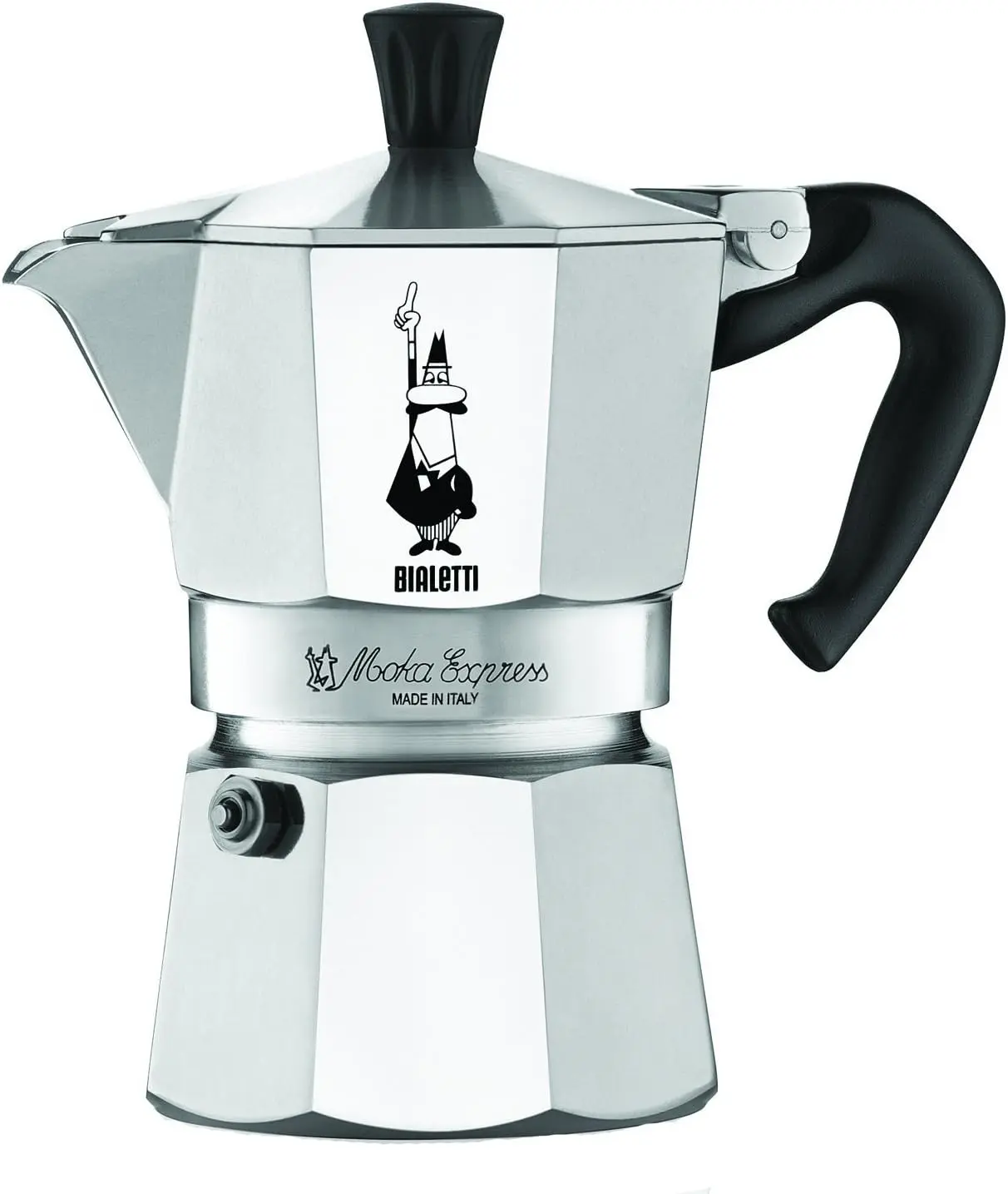
Bialetti Moka Express — The coffee base
Strong, concentrated stovetop coffee that stands up to milk better than drip coffee.
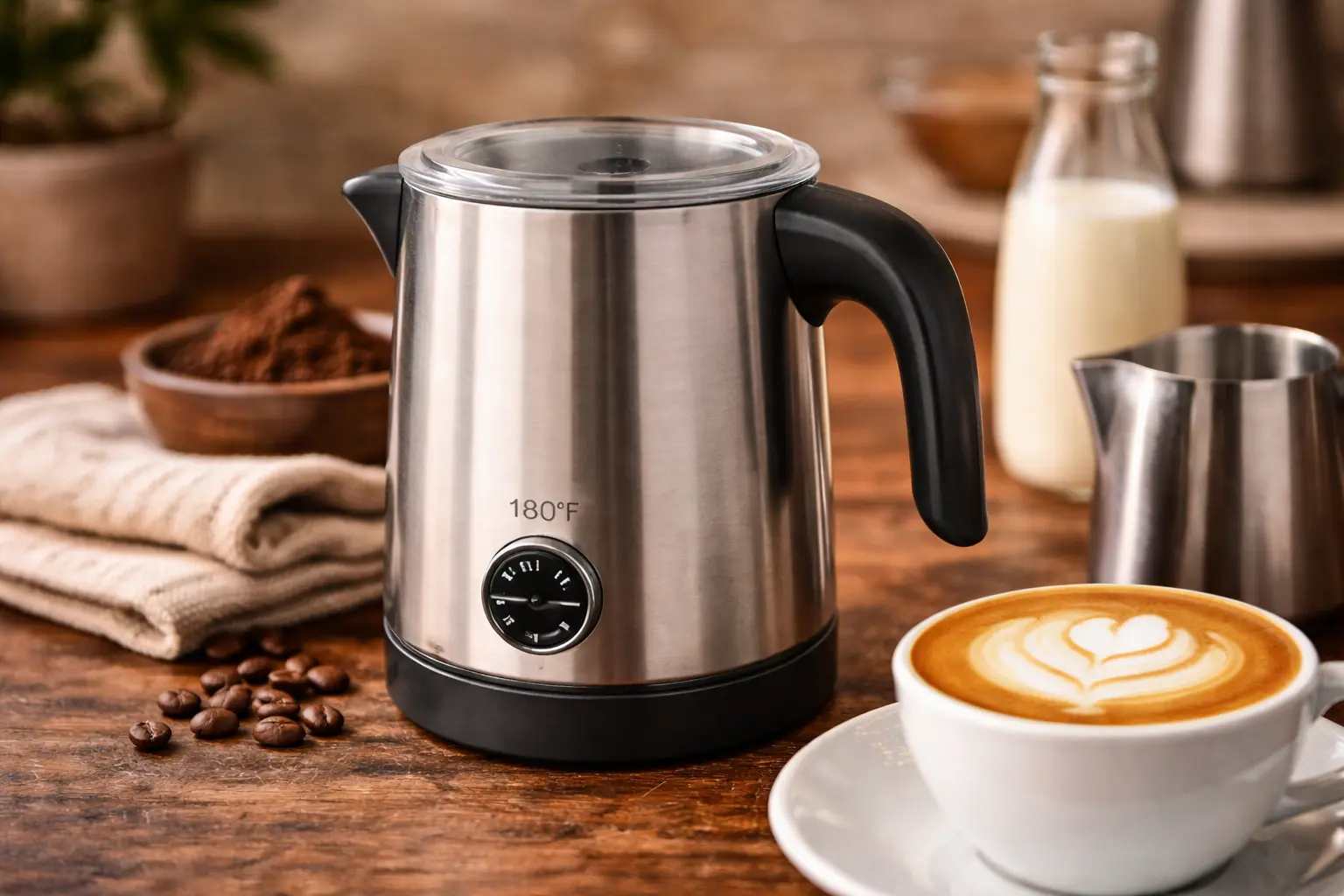
Breville Milk Café — Easiest milk
Heats and froths milk in one step, with settings for latte and cappuccino foam.
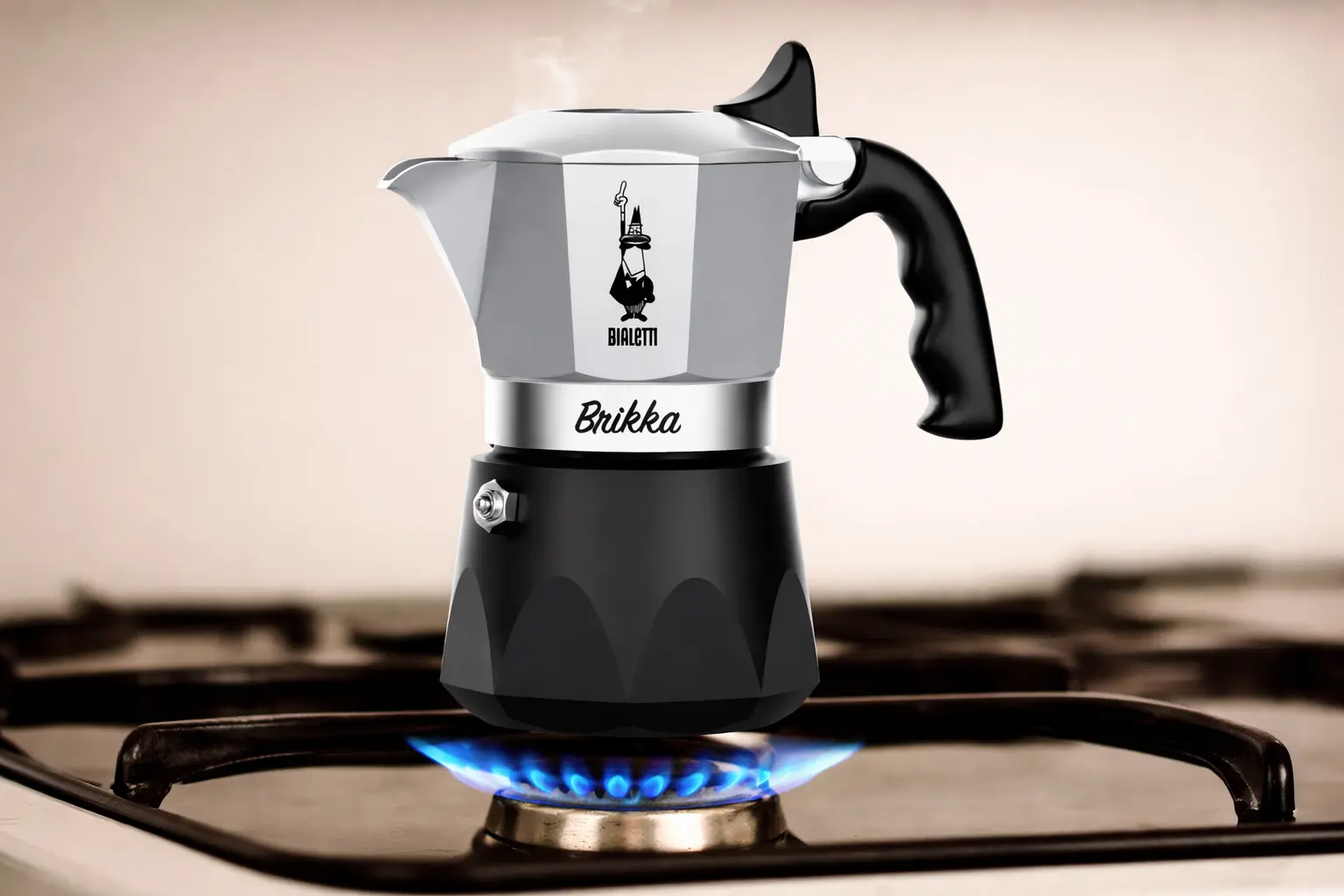
Bialetti Brikka — Stronger base
A weighted valve gives a more concentrated brew that carries through milk.
Affiliate disclosure: Amazon links may earn CoffeeGearHub a commission at no additional cost to you. Prices and availability can change.
Why a Moka Pot Makes a Good Latte Base
A latte is espresso and steamed milk, usually in a ratio of about one part coffee to three or more parts milk, topped with a thin layer of foam. Most people do not own an espresso machine, but many own a moka pot, and it is the closest low-cost substitute. Moka coffee is several times stronger than drip coffee, so it does not disappear under milk the way an ordinary cup would.
It is worth being clear about the difference. A moka pot brews at roughly one to two bars of steam pressure, while an espresso machine uses about nine. Published measurements put moka coffee at around 2.0 to 2.5 percent dissolved solids against roughly 9 percent for espresso. A moka pot latte therefore tastes milder and rounder than a café latte, with less of the sharp coffee intensity. With a few adjustments to the brew and the milk, it is still an excellent everyday drink.
Those adjustments are what this moka pot latte guide is about: brewing a slightly stronger moka base, choosing the right milk, frothing it well without a steam wand, and getting the proportions right. If you are weighing whether to buy an espresso machine instead, our moka pot vs espresso machine comparison explains the trade-offs in full.
What You Need for a Moka Pot Latte
You need three things: a moka pot, a way to heat and froth milk, and a mug. A burr grinder and a scale help but are optional if you buy freshly ground coffee for moka pots. The table below summarizes the equipment and the main options for each.
| Item | What it does | Good options |
|---|---|---|
| Moka pot | Brews the strong coffee base | Bialetti Moka Express (gas or electric), Venus or Moka Induction (induction), Brikka (stronger) |
| Milk frother | Heats and aerates the milk | Electric jug frother, handheld wand, or a French press |
| Saucepan or microwave mug | Heats milk if your frother does not | Any small pan or microwave-safe jug |
| Burr grinder (optional) | Gives an even medium-fine grind | A hand burr grinder such as the KINGrinder K6 |
| Thermometer (optional) | Keeps milk below the scalding point | Any clip-on or instant-read thermometer |
If you already own a moka pot, a frother is the only thing you are likely to need. For choosing the pot itself, our best moka pots guide covers every major model, and moka pot sizes explains how much coffee each size really makes. As a rule, a 3-cup pot makes one strong latte, and a 6-cup pot makes two.
Brew a Stronger Moka Base for Milk
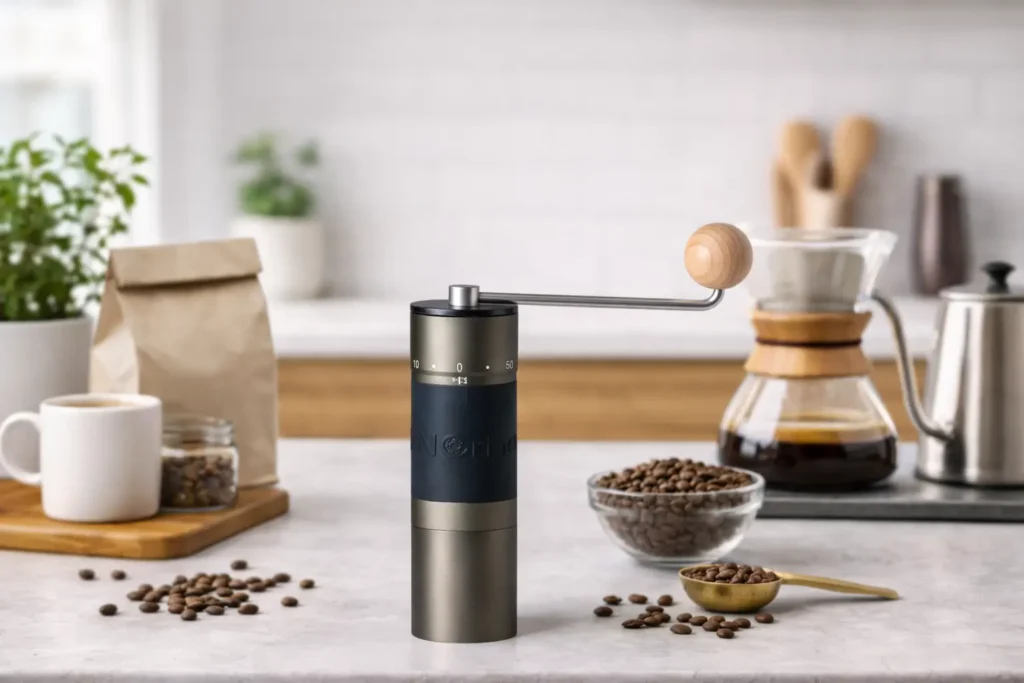
Milk softens coffee, so the base needs to be as rich and clean as you can make it. Start with a medium or medium-dark roast; the chocolate and caramel notes of these roasts carry through milk far better than bright, acidic light roasts. Our best coffee beans for moka pot guide has specific suggestions.
Grind medium-fine, slightly coarser than espresso. A consistent grind matters more than almost anything else, because a mix of dust and chunks makes moka coffee both bitter and weak at the same time. A hand burr grinder such as the KINGrinder K6 gives an even grind at around 65 to 75 clicks from zero. Our moka pot grind size guide shows what the grounds should look like.
Fill the funnel level to the top without tamping, and start with hot water from a kettle filled to just below the safety valve. Hot water shortens the time the grounds sit on the heat, which reduces bitterness. Brew on low to medium heat with the lid open, and take the pot off as soon as the stream turns pale and starts to gurgle. Cool the base under a cold tap to stop the brew, then stir the coffee in the top chamber before pouring.
For a stronger base, the simplest adjustment is to use only the first two-thirds of the brew. The early coffee is the most concentrated; the last third is thinner and more bitter. If you want a more espresso-like base, the Bialetti Brikka uses a weighted valve to build a little more pressure and produces a more concentrated coffee with light foam. Our how to use a moka pot guide covers the full method step by step.
Choosing the Right Milk
The milk is most of a moka pot latte, so it is worth choosing deliberately. Whole dairy milk is the default for good reason: its fat gives a creamy, rounded texture and its proteins build stable foam. Reduced-fat milk foams easily, sometimes into large stiff bubbles, but tastes thinner. Skim milk makes plenty of foam but very little body.
For plant-based lattes, barista-edition oat milk is the closest substitute for dairy. Barista formulas usually include added fat and stabilizers that help them foam and resist splitting in hot coffee. Regular almond and soy milks can work, but they are more likely to separate or produce thin foam. Our best milk for lattes guide compares the main options and how each behaves when frothed.
Temperature matters as much as type. Aim for about 55 to 65 degrees Celsius, or roughly 130 to 150 degrees Fahrenheit. In that range milk tastes naturally sweet and foams well. Above about 70 degrees Celsius it starts to taste cooked and the foam collapses quickly. If you heat milk on the stove, take it off as soon as small bubbles form around the edge, well before it simmers.
Four Ways to Froth Milk Without a Steam Wand
Without an espresso machine’s steam wand, you need another way to add air to the milk. Each method below works; they differ in convenience, cost, and foam quality.
| Method | Foam quality | Ease | Best for |
|---|---|---|---|
| Electric jug frother | Fine, consistent foam | Easiest: heats and froths in one step | Daily lattes with minimal effort |
| Handheld wand frother | Good, slightly airier foam | Easy, but heat the milk first | The lowest-cost option |
| French press | Surprisingly fine foam | Moderate: pump the plunger 20 to 30 times | Anyone who already owns one |
| Shaken jar | Light, coarse foam | Easy, but less controllable | Occasional use with no gear |
An electric jug frother such as the Breville Milk Café is the most convenient option. You pour cold milk in, choose a setting, and it heats and froths at the same time, stopping automatically at the right temperature. That consistency is why it is the best choice for anyone making lattes every day.
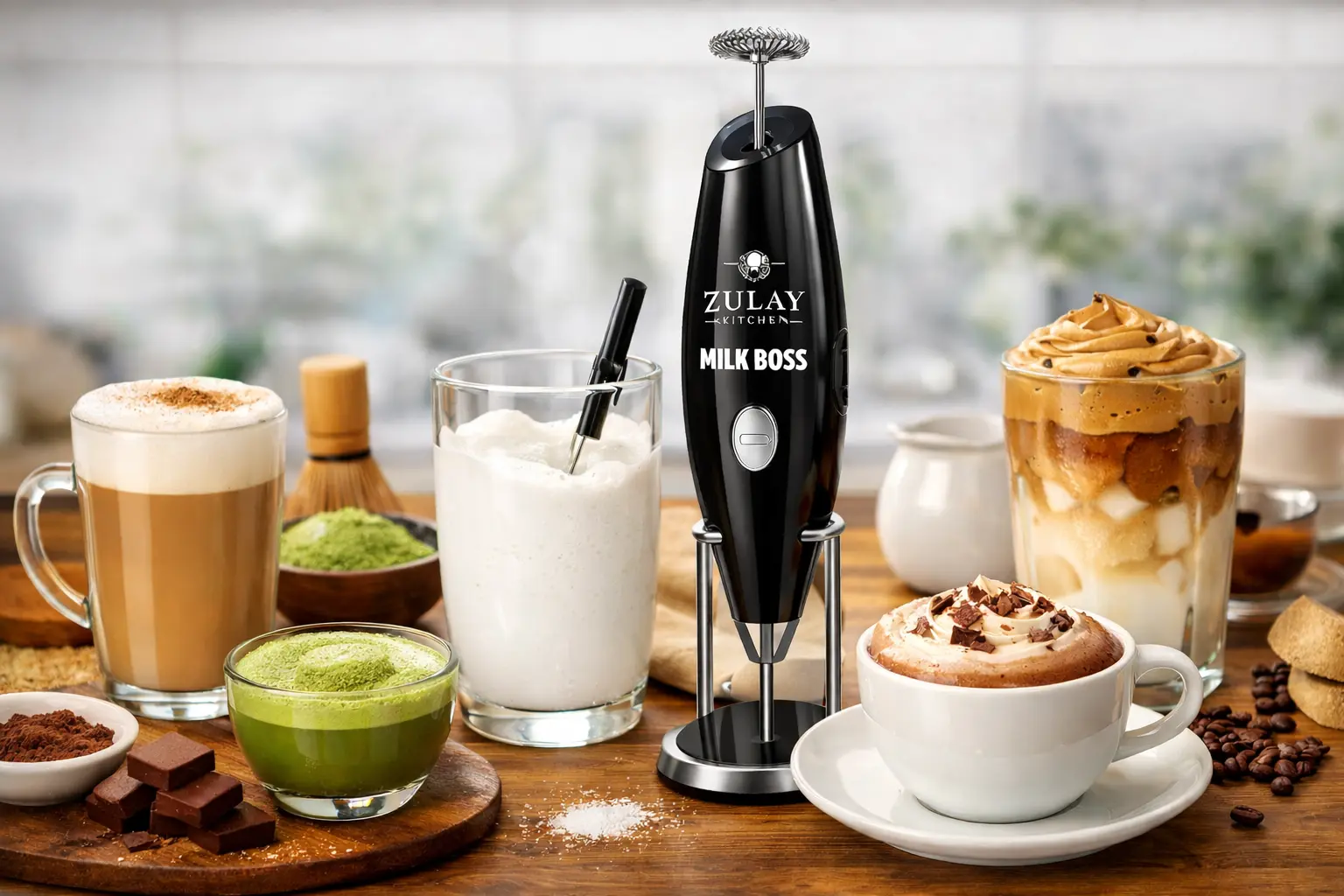
A handheld wand such as the Zulay Milk Boss costs much less and takes up almost no space. Heat the milk first, then hold the wand just below the surface for a few seconds to draw in air before lowering it to spin the milk into a smooth texture. Tap the jug on the counter and swirl it to pop large bubbles.
A French press is a good free option if you already own one. Pour in warm milk to no more than a third full, then pump the plunger briskly 20 to 30 times. The mesh breaks the air into small bubbles, producing foam that is closer to microfoam than most handheld wands achieve.
Shaking warm milk in a sealed jar is the last resort: it makes light, coarse foam that works for a casual latte. Whichever method you use, swirl the milk before pouring so the foam and liquid milk blend into a glossy texture. Our how to froth milk without a steam wand guide covers each method in detail, and best milk frothers for lattes compares specific frothers.
Step-by-Step Moka Pot Latte Recipe
This moka pot latte recipe makes one drink of about 300 ml using a 3-cup moka pot. Double everything for two lattes with a 6-cup pot.
1. Grind and fill. Grind about 15 to 17 grams of medium or medium-dark coffee medium-fine, enough to fill a 3-cup funnel level without pressing. Wipe the rim clean.
2. Add hot water. Fill the base with hot water from a kettle to just below the safety valve. Hold the hot base with a towel and screw on the top firmly, holding the pot by its body rather than the handle.
3. Brew gently. Set the pot on low to medium heat with the lid open. Coffee should flow out in a slow, steady, dark stream. When it turns pale and starts to gurgle, take the pot off and cool the base under a cold tap.
4. Heat and froth the milk. While the coffee brews, heat and froth about 180 to 240 ml of milk to roughly 55 to 65 degrees Celsius using your chosen method. Tap and swirl the jug to smooth out large bubbles.
5. Combine. Stir the moka coffee, then pour about 60 to 80 ml into a warm mug. Pour the milk in steadily, holding back the foam with a spoon at first, then let a thin layer of foam finish the top.
6. Taste and adjust. If the moka pot latte tastes weak, use less milk or only the first two-thirds of the brew next time. If it tastes bitter, lower the heat, grind slightly coarser, and stop the brew earlier.
For the classic espresso-based method, our how to make a latte at home guide covers machines and steam wands, and how to steam milk explains the technique if you later upgrade.
Cappuccino, Flat White, Iced Latte, and More
Once you have a good moka base and frothed milk, other café drinks are mostly a matter of proportions. The table below gives starting ratios using moka coffee. Because moka coffee is milder than espresso, these use a little less milk than café versions.
| Drink | Moka coffee | Milk | Foam |
|---|---|---|---|
| Latte | 60 to 80 ml | 180 to 240 ml | Thin layer |
| Cappuccino | 60 to 80 ml | About 120 ml | Thick, airy layer |
| Flat white | 80 to 100 ml | About 120 ml | Very thin, silky |
| Cortado | 60 ml | About 60 ml | Minimal |
| Iced latte | 80 ml, slightly cooled | 150 to 180 ml cold milk | None, over ice |
For a cappuccino, froth longer to build more foam and spoon it generously on top. Our how to make a cappuccino at home guide and latte vs cappuccino vs flat white explain the differences. For a cortado, mix equal parts coffee and warm milk with very little foam; cortado vs macchiato covers both.
For an iced latte, let the coffee cool for a minute, pour it over a glass full of ice, and add cold milk. Flavored lattes are simple too: stir a little vanilla, caramel, or cinnamon syrup into the coffee before adding milk so it dissolves evenly. Our how to make iced coffee at home guide has more cold-drink ideas.
Troubleshooting Moka Pot Lattes
The latte tastes weak or milky. This is the most common complaint. Use less milk, use only the first two-thirds of the brew, or switch to a slightly darker roast. A Brikka or a finer, more even grind from a burr grinder also helps.
The latte tastes bitter or burnt. The moka coffee is over-extracting. Lower the heat, start with hot water, grind a little coarser, and stop the brew as soon as it starts to gurgle. Milk that has been overheated can also taste burnt, so check its temperature.
The foam is big and bubbly. Too much air went in too quickly, or the milk was too cold when frothed with a handheld wand. Froth for a shorter time, then tap the jug and swirl it before pouring. A French press or electric frother usually gives finer foam.
The milk will not foam. Check the milk type and temperature. Very cold or very hot milk foams poorly, and some plant milks need a barista formula. Our moka pot troubleshooting guide covers problems with the coffee itself, such as sputtering and leaks.
Our Recommendation
A moka pot latte will not match a café latte made with true espresso and a steam wand, but it comes closer than most people expect, and it costs far less. The keys to a great moka pot latte are a strong, clean moka base, whole milk or a barista oat milk heated to the right temperature, a frother that adds fine foam, and a slightly lower milk ratio than a café would use.
Start with a Bialetti Moka Express and an electric frother such as the Breville Milk Café for the easiest daily routine, or a handheld wand to keep costs down. If you later find yourself wanting real espresso and microfoam, an entry machine such as the Breville Bambino Plus is the natural next step.
Make Café-Style Lattes at Home
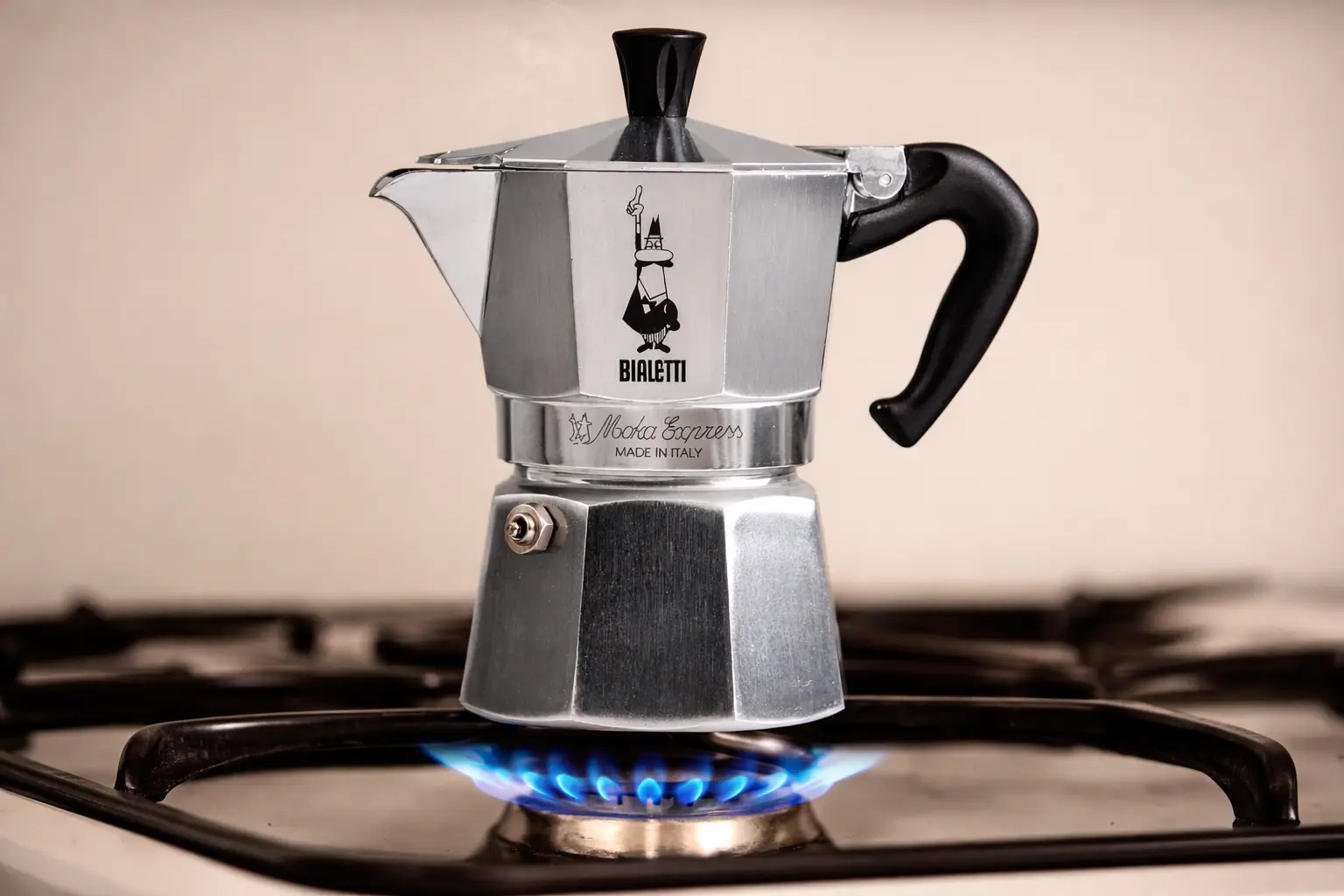
The Moka Express brews the coffee; the Milk Café heats and froths the milk in one step.
As an Amazon Associate, CoffeeGearHub earns from qualifying purchases.
Editorial bottom line: Brew a strong, clean moka base on gentle heat, use only the best part of the brew, froth whole or barista oat milk to about 60 degrees Celsius, and use a little less milk than a café would. That combination makes a satisfying moka pot latte without an espresso machine.
Frequently Asked Questions
Can you make a real latte with a moka pot?
A moka pot latte is a very good latte-style drink. A moka pot does not make true espresso, so the coffee is less concentrated and the drink tastes milder than a café latte, but strong moka coffee with well-frothed milk is satisfying and costs far less. Using a little less milk keeps the coffee flavor forward.
How much moka coffee do I need for one latte?
About 60 to 80 ml of moka coffee per latte works well, which is roughly half the output of a 3-cup pot. Combine it with 180 to 240 ml of hot, frothed milk. A 3-cup pot makes one strong latte or two smaller ones; a 6-cup pot makes two to three.
What is the best way to froth milk for a moka pot latte?
An electric frother is the easiest and most consistent, because it heats and froths in one step. A handheld wand frother is the cheapest option and works well with milk heated on the stove. A French press is a good free alternative if you already own one. Our how to froth milk without a steam wand guide compares every method.
What milk is best for a moka pot latte?
Whole dairy milk froths and tastes best for most people, because its fat and protein give a creamy, stable foam. For plant-based lattes, barista-edition oat milk performs closest to dairy. Our best milk for lattes guide covers the options in detail.
How hot should the milk be for a latte?
Aim for about 55 to 65 degrees Celsius, or roughly 130 to 150 degrees Fahrenheit. In that range milk tastes sweetest and foams well. Above about 70 degrees Celsius it starts to taste cooked and the foam breaks down faster.
Can I make an iced latte with a moka pot?
Yes. Brew the moka coffee, let it cool for a minute, and pour it over a glass full of ice, then add cold milk. Because the ice dilutes the drink, brew slightly stronger than usual or use a little less milk.
Sources and Further Reading
Moka pot pressure and dissolved-solids measurements come from The Coffee Locator’s published moka pot testing. Moka pot brewing guidance follows Bialetti’s published instructions. Frother operation follows manufacturer product information. Milk temperature ranges reflect widely published barista practice. Brewing and extraction concepts follow the Specialty Coffee Association’s standards. CoffeeGearHub did not test these products hands-on.
CoffeeGearHub product shortlist
Continue with related products on CoffeeGearHub
Review product categories and current verified merchant offers on CoffeeGearHub before leaving the site.