
Timemore C3 vs KINGrinder K6: Which Budget Hand Grinder Should You Buy?
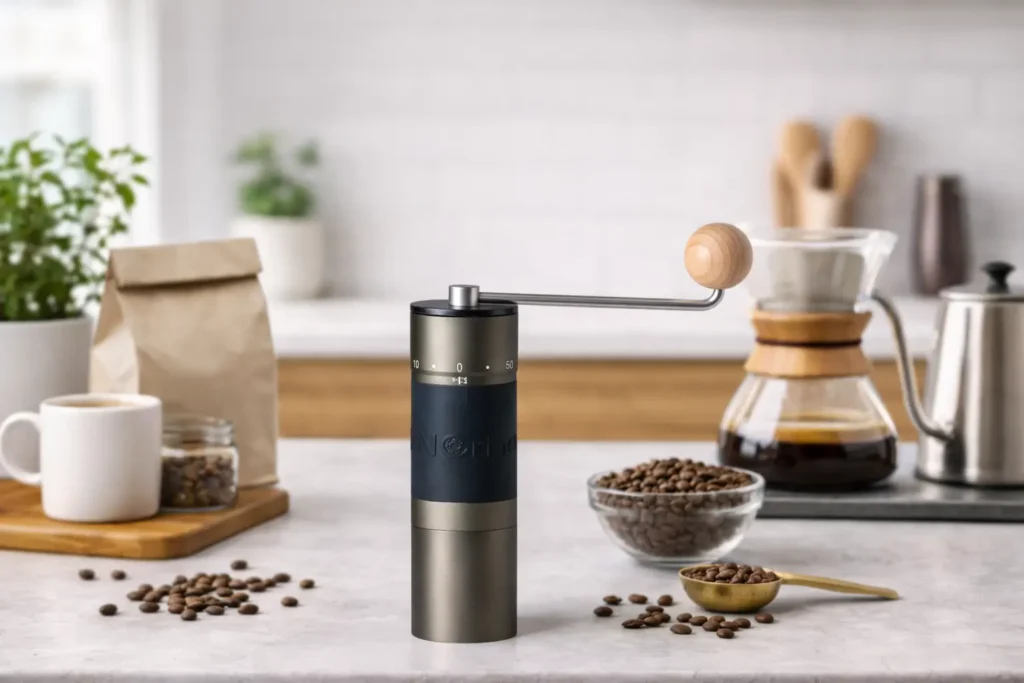
Quick picks
Timemore C3 vs KINGrinder K6 at a glance
Picks are based on published specifications and independent measurements. As an Amazon Associate, CoffeeGearHub earns from qualifying purchases.
Editorial standards: this Timemore C3 vs KINGrinder K6 comparison draws on manufacturer specifications, independent grind-time and consistency measurements, published reviewer notes, and owner reports. CoffeeGearHub does not claim hands-on testing where it has not occurred.
At a glance
What this comparison covers
Specifications side by side, burr size, adjustment, espresso capability, filter coffee and settings by brew method, speed, capacity and portability, build and cleaning, who should buy which, and our verdict.
Editorial analysis
Espresso decides it
Both grinders make good filter coffee. The difference is fine adjustment: the K6’s 16-micron steps handle espresso, while the C3S’s 83-micron steps do not.
If you will never pull a shot, the lighter, cheaper C3S is a smart buy. If espresso is anywhere in your future, the K6 saves you buying a second grinder.
The 30-Second Answer
Buy the KINGrinder K6 if you brew espresso or several methods: its 48 mm burrs, 16-micron steps, and external dial make it the better all-rounder and the better value per gram of grind quality. Buy the Timemore C3S if you only brew filter coffee and want a lighter, cheaper grinder; it makes clean pour-over but its 83-micron steps are too coarse for espresso.
Travelers who only brew filter coffee should look at the folding-handle Timemore C3 Pro.
Compare current options
Start with these representative choices
The two grinders in this comparison, plus the folding-handle Timemore that many travelers prefer.
KINGrinder K6 — Best all-rounder
48 mm burrs and 16-micron steps that handle espresso through French press.
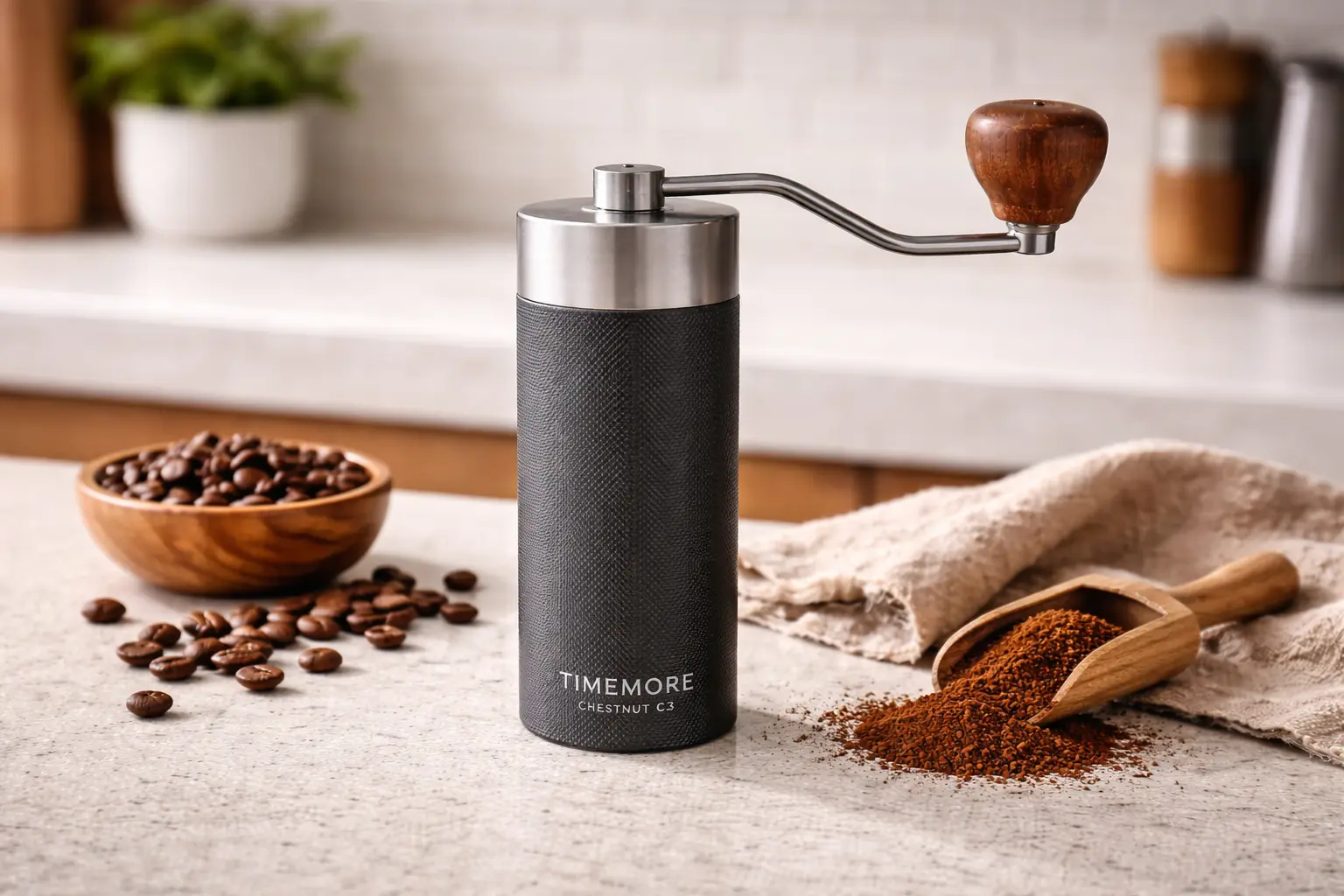
Timemore C3S — Best budget filter
38 mm S2C burrs, clean pour-over, and a lighter, smaller body.

Timemore C3 Pro — Travel pick
The C3 design with a folding handle that packs down easily.
Affiliate disclosure: Amazon links may earn CoffeeGearHub a commission at no additional cost to you. Prices and availability can change.
Timemore C3 vs KINGrinder K6: The Short Version
The KINGrinder K6 and the Timemore Chestnut C3 series are two of the most recommended budget hand grinders, and they are often cross-shopped. They are aimed at slightly different buyers. The K6 is an all-rounder built around large 48 mm burrs and very fine 16-micron adjustment, which makes it capable of espresso as well as filter coffee. The C3S is a lighter, simpler filter grinder with 38 mm burrs and coarser steps of about 83 microns, at a lower price.
If you brew espresso, or think you might, the K6 is the clear choice. If you only brew pour-over, AeroPress, moka pot, or French press and want the lowest cost or the smallest grinder, the C3S is a strong option. The rest of this Timemore C3 vs KINGrinder K6 comparison explains why, using published specifications, manufacturer guidance, and independent reviewer measurements.
This comparison is research-based. CoffeeGearHub did not test these grinders in-house; sources are credited at the end.
| Specification | KINGrinder K6 | Timemore C3S |
|---|---|---|
| Burrs | 48 mm stainless steel, heptagonal conical | 38 mm S2C660 stainless steel conical |
| Step size | About 16 microns per click | About 83 microns per click |
| Clicks per rotation | 60 | 12 |
| Adjustment | External ring under the handle | Internal dial under the burr |
| Capacity | About 25 to 35 g | About 25 g |
| Weight | About 630 g | Lighter; C3S Pro listed at about 530 g |
| Espresso | Capable, with effort | Not recommended (C3 ESP version available) |
| Best for | Espresso and filter in one grinder | Budget filter coffee and travel |
Burrs: 48 mm vs 38 mm
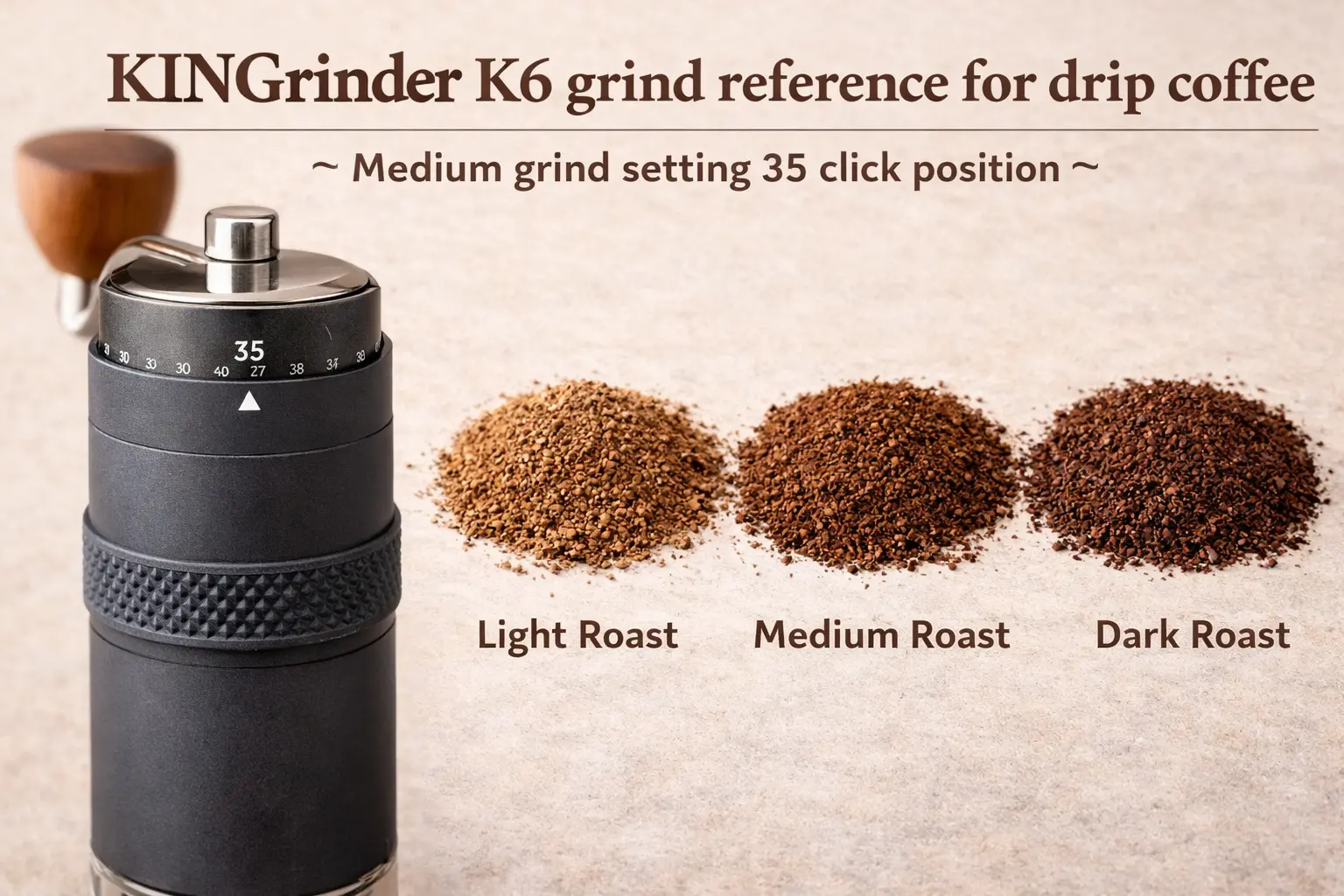
The biggest physical difference is burr size. The K6 uses 48 mm heptagonal conical burrs, while the C3S uses Timemore’s 38 mm S2C660 conical burrs. Larger burrs have more cutting surface, so they generally grind more coffee per turn and can produce a more even grind. The K6’s burr size is usually associated with hand grinders costing much more.
That does not make the C3S burrs poor. Timemore’s S2C design is well regarded for filter coffee, and Brew Coffee Home described its pour-over as clean, with clarity and well-rounded flavor. Where the burr difference shows most is at fine settings, where the K6’s larger burrs and finer steps give it the edge for espresso.
For grind consistency, independent measurements favor the K6. A particle analysis by the 9 Bar Benchmark, cited by Barista Life, recorded a coefficient of variation of about 2.2 percent for the K6 at an espresso setting, a strong result for any hand grinder. Both grinders are a large step up from blade grinders, which our burr vs blade grinders guide explains.
Adjustment: Fine Steps vs Simple Clicks
Adjustment is where the two grinders differ most in daily use. The K6 has 60 clicks per rotation, each moving the burrs about 16 microns, set from an external ring just under the handle. You can change grind size without taking anything apart, and the small steps let you make the tiny changes espresso needs.
The C3S has 12 clicks per rotation, each about 83 microns, set from a dial underneath the burr. To change the setting you remove the catch cup, hold the handle still, and turn the dial. Brew Coffee Home noted that this is less convenient than an external dial. For filter brewing, where you rarely change settings, the larger steps are not a problem and are easy to count. For espresso, they are too coarse.
Timemore addresses this with the C3 ESP, a version with a 30-click dial and about 23-micron steps intended for espresso. It is a meaningful improvement over the C3S for fine grinding, but the K6’s 16-micron steps still offer finer control, and the K6 keeps its external dial.
One caution applies to the K6: its zero point can shift slightly after disassembly, and its exposed ring can be bumped. The C3S’s internal dial is harder to knock out of place. Our KINGrinder K6 review covers those quirks in detail.
Espresso: A Clear Win for the K6
If espresso matters to you, the decision is easy. The K6’s 16-micron steps let you adjust a shot one or two clicks at a time, and most owners find espresso around 35 to 45 clicks from zero. Our K6 grind settings chart lists starting points for every brew method.
The standard C3S is not suited to espresso. In Brew Coffee Home’s testing, setting 7 was too fine and setting 8 ran too fast, with no step in between. That gap is too large to dial in a shot on a non-pressurized basket. The C3 ESP narrows the gap, though its reviewer still sometimes adjusted dose to hit a target yield. Espresso on any hand grinder takes effort: about 40 seconds of steady grinding for an 18-gram dose on the K6.
If you are new to espresso grinding, our espresso grind size guide explains what you are aiming for, and do you need a grinder for espresso covers whether a separate grinder is worth it. For a wider list, see our best grinders for espresso guide.
Filter Coffee: Closer Than You Might Expect
For pour-over, AeroPress, moka pot, and French press, the gap between the two narrows. Both produce a clean, even filter grind, and many brewers would be happy with either. The K6’s filter coffee is often described as bright and high in clarity, with pronounced acidity. The C3S produces clean, well-rounded pour-over and is a favorite budget pick for exactly that reason.
The practical differences are workflow and speed. The K6’s larger burrs grind filter doses quickly, and its external ring makes switching between methods easy. The C3S’s coarser steps are simple to count for filter, and its smaller body suits one person brewing one cup. The table below shows published starting settings for each grinder by brew method.
| Brew method | KINGrinder K6 (clicks from zero) | Timemore C3S (clicks from zero) |
|---|---|---|
| Espresso | 35 to 45 | 7 to 8 (not recommended) |
| Moka pot | 65 to 75 | 9 to 11 |
| V60 pour-over | 90 to 105 | 13 to 16 |
| Automatic drip | 100 to 115 | 15 to 17 |
| French press | 135 to 150 | 17 to 20 |
These are starting points only; zero points vary between individual grinders, and beans and recipes change the ideal setting. For brewer-specific guidance, see our pour-over grind size guide and best grinders for pour-over. If AeroPress is your main brewer, best grinders for AeroPress compares both with alternatives.
Speed, Capacity, and Portability
Large burrs make the K6 quick for a hand grinder. Brew Coffee Home timed about 30 seconds for 15 grams at a pour-over setting on the K6. On the C3S, the same reviewer timed about 25 seconds for 10 grams at setting 13, a little slower per gram. Either is fine for one or two cups; for several cups in a row, the K6’s speed adds up.
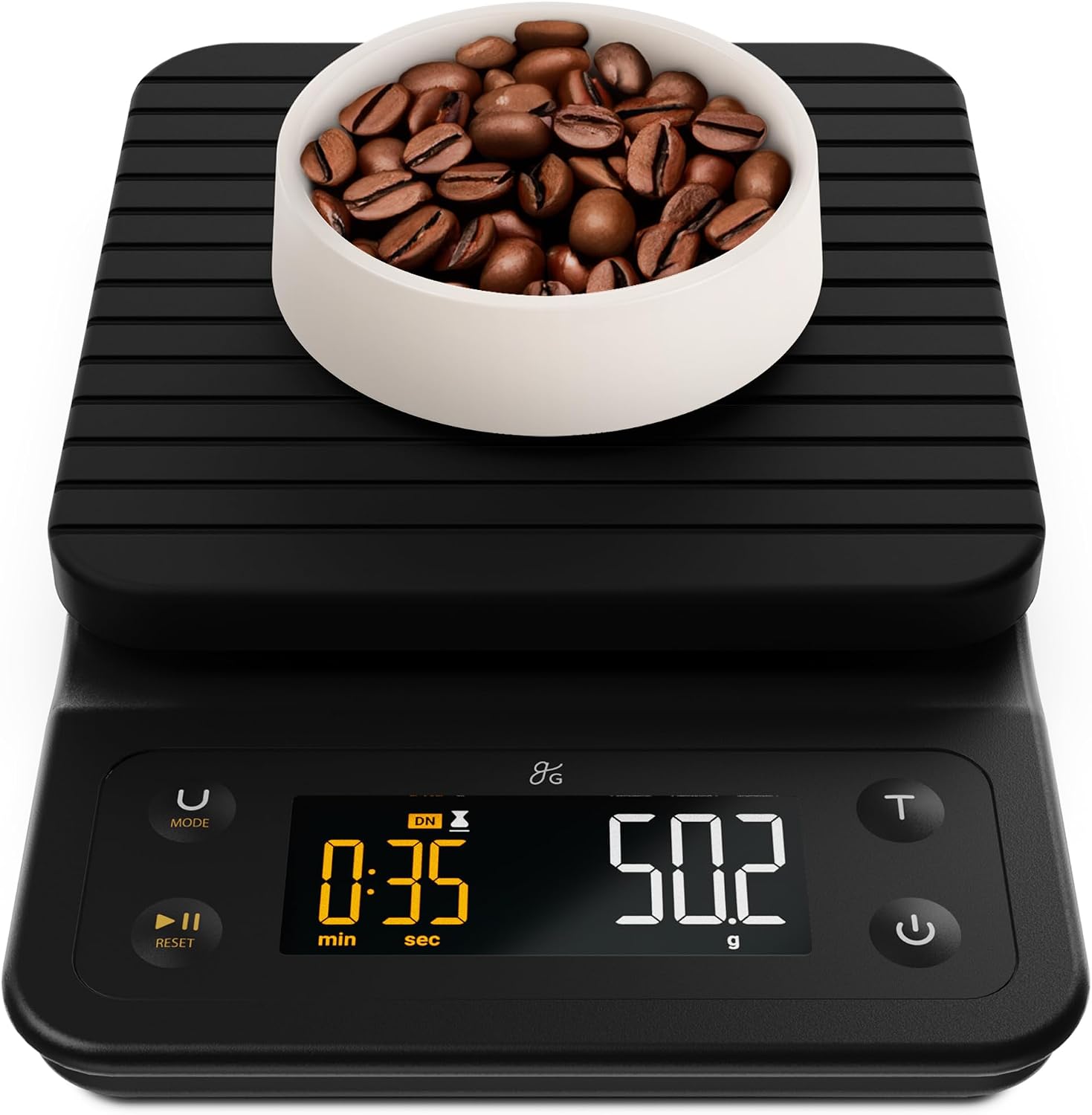
Capacity is similar: the C3S holds about 25 grams, and the K6 about 25 to 35 grams depending on the beans. Both handle a single large pour-over or a double espresso dose. Weighing your beans matters with both, and a small scale such as the Greater Goods coffee scale keeps doses consistent.
Portability favors Timemore. The K6 weighs about 630 grams and is solid on the counter but noticeable in a bag. The C3S is smaller and lighter, and the Timemore C3 Pro adds a folding handle that packs down neatly. If the grinder will spend much of its life in a travel kit, that matters. For more on the trade-offs between hand and electric grinding, see manual vs electric coffee grinders.
Build, Cleaning, and Long-Term Ownership
Both grinders use aluminum bodies and stainless steel burrs. Reviewers generally describe the K6 as solid and well built, though less polished than premium grinders such as the 1Zpresso K-Ultra or Comandante C40. Brew Coffee Home found the C3S’s materials less robust than Timemore’s more expensive Chestnut X models, which is expected at its price.
Cleaning is similar for both. Each disassembles for brushing out trapped grounds, and both should be kept dry to avoid corrosion. The K6 reports very low retention, about 0.1 grams, which helps when switching between brew methods. Remember to re-check the K6’s zero point after a deep clean. Our grinder cleaning and retention guide covers the routine for both.
Neither grinder is likely to need replacing for years with basic care. The main long-term question is whether your brewing will grow into espresso. If it might, buying the K6 now avoids buying a second grinder later.
Timemore C3 vs KINGrinder K6: Which Should You Buy?
The right choice depends mostly on whether you brew espresso and how much portability matters. The table below matches common situations to the better fit.
| If you… | Better choice | Why |
|---|---|---|
| Brew espresso or plan to | KINGrinder K6 | 16-micron steps make dialing in practical |
| Only brew pour-over or AeroPress on a budget | Timemore C3S | Clean filter grind at a lower price |
| Travel often with your grinder | Timemore C3 Pro | Smaller, lighter, folding handle |
| Switch between several brew methods | KINGrinder K6 | External dial and wide range |
| Want the most grind quality per dollar | KINGrinder K6 | 48 mm burrs at a budget price |
| Want more refinement than either | 1Zpresso K-Ultra | Magnetic cup, folding handle, premium finish |
For most home brewers who want one grinder to cover everything, the K6 is the better long-term buy. It costs more than the C3S but brings espresso capability, faster grinding, and much finer adjustment. The C3S remains an excellent choice for anyone who is certain they only brew filter coffee, wants the smallest and lightest option, or is buying a first burr grinder on a tight budget.
If you want to step up from both, the 1Zpresso K-Ultra adds polish and convenience at a higher price; our K6 vs K-Ultra comparison covers that choice. For the full field, see best manual coffee grinders.
Our Verdict
The KINGrinder K6 wins the Timemore C3 vs KINGrinder K6 comparison for most buyers. Its 48 mm burrs, 16-micron steps, and external dial make it one of the few budget grinders that handles espresso well, and it grinds filter coffee quickly and cleanly too. Its weaknesses are convenience details: weight, a zero point that needs re-checking after cleaning, and an exposed ring.
The Timemore C3S is the better pick for a narrower group: filter-only brewers on a tight budget and travelers who want the smallest grinder. It makes clean, well-rounded pour-over, but its coarse steps rule out espresso. Choose the KINGrinder K6 if you want one grinder for everything, and the Timemore C3S if filter coffee is all you brew.
Pick Your Hand Grinder
The K6 covers espresso through French press; the C3S is the lighter budget pick for filter coffee.
As an Amazon Associate, CoffeeGearHub earns from qualifying purchases.
Editorial bottom line: Buy the KINGrinder K6 if you brew espresso or several methods and want the most grind quality for the money. Buy the Timemore C3S, or the folding-handle C3 Pro, if you only brew filter coffee and value a smaller, lighter grinder at a lower price.
Frequently Asked Questions
Is the KINGrinder K6 better than the Timemore C3?
For espresso and for anyone who wants fine adjustment, yes. The K6 has larger 48 mm burrs, 16-micron steps, and an external dial. For filter coffee on a budget or for travel, the Timemore C3S is a strong, lighter alternative that makes clean, well-rounded pour-over. Our KINGrinder K6 review covers the K6 in depth.
Can the Timemore C3 grind for espresso?
The standard C3S is not a good espresso grinder. Its steps of about 83 microns are too large to dial in a shot, and Brew Coffee Home found one setting too fine and the next too fast. Timemore’s C3 ESP version uses a 30-click dial with about 23-micron steps for espresso, but the K6’s 16-micron steps give finer control.
Which is faster, the K6 or the C3?
The K6 generally grinds faster per dose because its 48 mm burrs cut more coffee with each turn. Published timings put the K6 at about 30 seconds for 15 grams of pour-over coffee, while the C3S took about 25 seconds for 10 grams. Exact times vary with beans and grind setting.
Which grinder is better for travel?
The Timemore C3S. It is smaller and lighter than the K6, which weighs about 630 grams. The C3S Pro adds a folding handle that makes packing easier. The K6 still travels well for anyone who wants espresso capability on the road.
What C3 setting should I use for pour-over?
Timemore and Brew Coffee Home suggest about 13 to 16 clicks from zero for pour-over on the C3S, 9 to 11 for moka pot, and 17 to 20 for French press. On the K6, the equivalent pour-over range is about 90 to 105 clicks for V60. Our K6 grind settings chart covers every method.
Should I buy the K6 or the 1Zpresso K-Ultra instead?
If you want more polish, the K-Ultra adds a magnetic catch cup, a folding handle, and refined finish at a higher price. If value matters most, the K6 offers similar grind quality for less. Our K6 vs K-Ultra comparison covers that decision.
Sources and Further Reading
KINGrinder K6 specifications follow KINGrinder’s published product information. Timemore C3S, C3S Pro, and C3 ESP specifications follow Timemore’s published model information as listed by authorized retailers. Grind times, espresso findings, and C3 settings come from Brew Coffee Home’s K6 and Timemore C3 reviews. The K6 consistency figure comes from the 9 Bar Benchmark particle analysis as reported by Barista Life. Extraction concepts follow the Specialty Coffee Association’s standards. CoffeeGearHub did not test these products hands-on.
CoffeeGearHub product shortlist
Continue with related products on CoffeeGearHub
Review product categories and current verified merchant offers on CoffeeGearHub before leaving the site.