
Moka Pot vs French Press (2026): Strength, Taste, Grind, and Which to Buy
Quick picks
Moka pot vs French press at a glance
Picks are based on published specifications, manufacturer documentation, and owner reports. As an Amazon Associate, CoffeeGearHub earns from qualifying purchases.
Editorial standards: this moka pot vs French press comparison draws on Specialty Coffee Association brewing concepts, published brew-strength measurements, manufacturer instructions, and owner reports. CoffeeGearHub does not claim hands-on testing where it has not occurred.
At a glance
What this comparison covers
How each brewer works, strength and flavor, grind size and ratio, milk drinks, batch size, cleanup, stove compatibility, and which one to buy for the way you drink coffee.
Editorial analysis
Choose by the cup you want, not by the brewer
A moka pot and a French press both cost little, need no electricity of their own, and sit in the same corner of the kitchen, so they are often compared. They make very different coffee. The moka pot uses steam pressure to push water up through a bed of coffee and produces a short, intense brew. The French press steeps coarse coffee in hot water and makes a full-bodied, filter-strength cup.
That difference decides most of the choice. If you want strong coffee, espresso-style drinks, or lattes, the moka pot fits. If you want a big mug or a pot to share with a heavy, rounded body, the French press fits. Many home brewers end up owning both.
The 30-Second Answer
Buy a moka pot if you want strong, concentrated coffee or a base for lattes; buy a French press if you want a full mug or a pot to share with a rich, heavy body.
Both are inexpensive and easy to learn. The Bialetti Moka Express is the classic stovetop choice and the Bodum Chambord is the classic press. Whichever you pick, a burr grinder makes the biggest difference to the cup.
Shopping Black Friday or Cyber Monday? See our coffee gear deals page for the moka pot, AeroPress, grinder and espresso picks worth buying on sale.
Compare current options
Start with these representative choices
The classic stovetop brewer, the classic French press, and a low-sediment press for people who dislike grit.
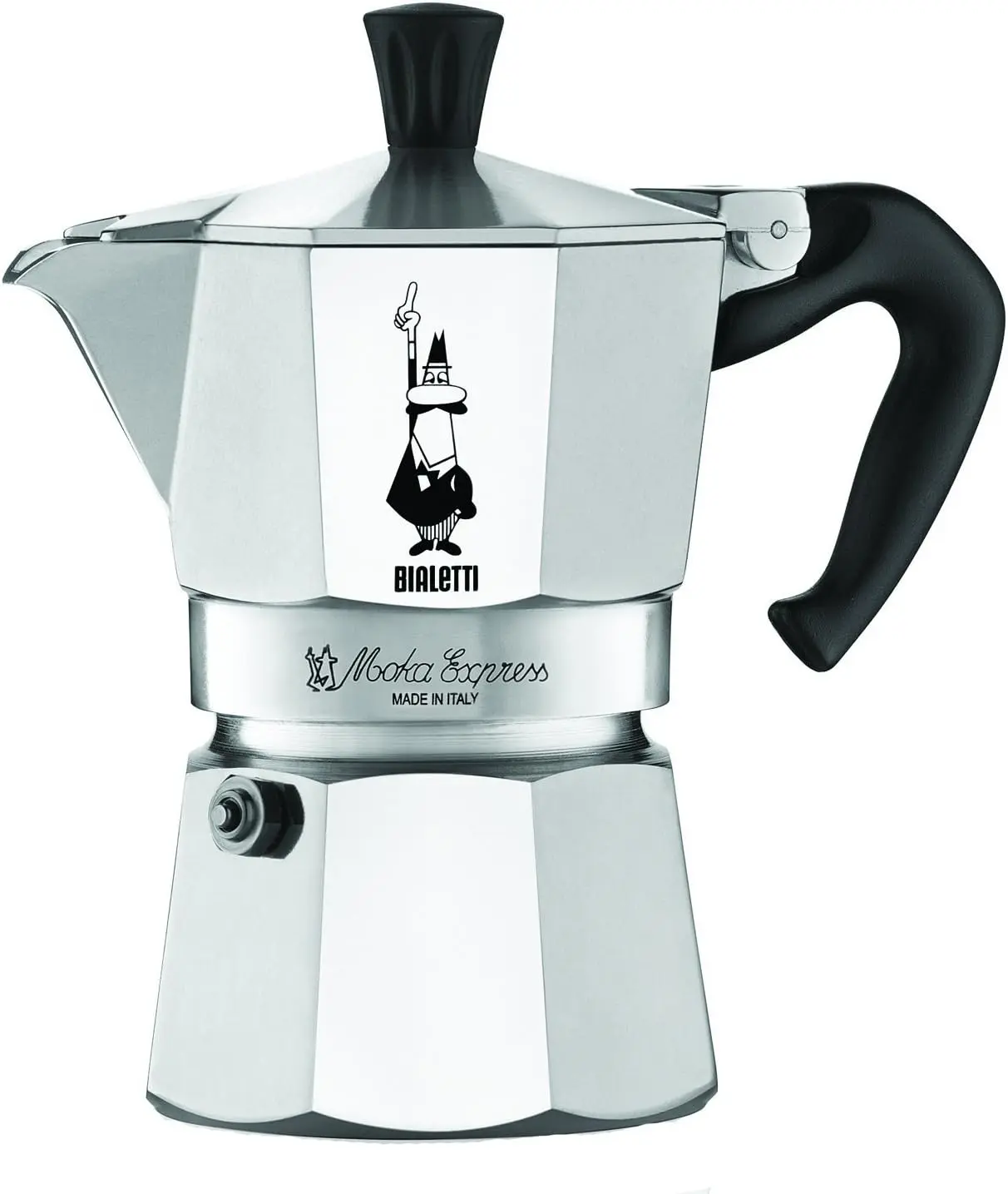
Bialetti Moka Express — Best moka pot
The original eight-sided aluminum pot for strong coffee on gas and electric stoves.
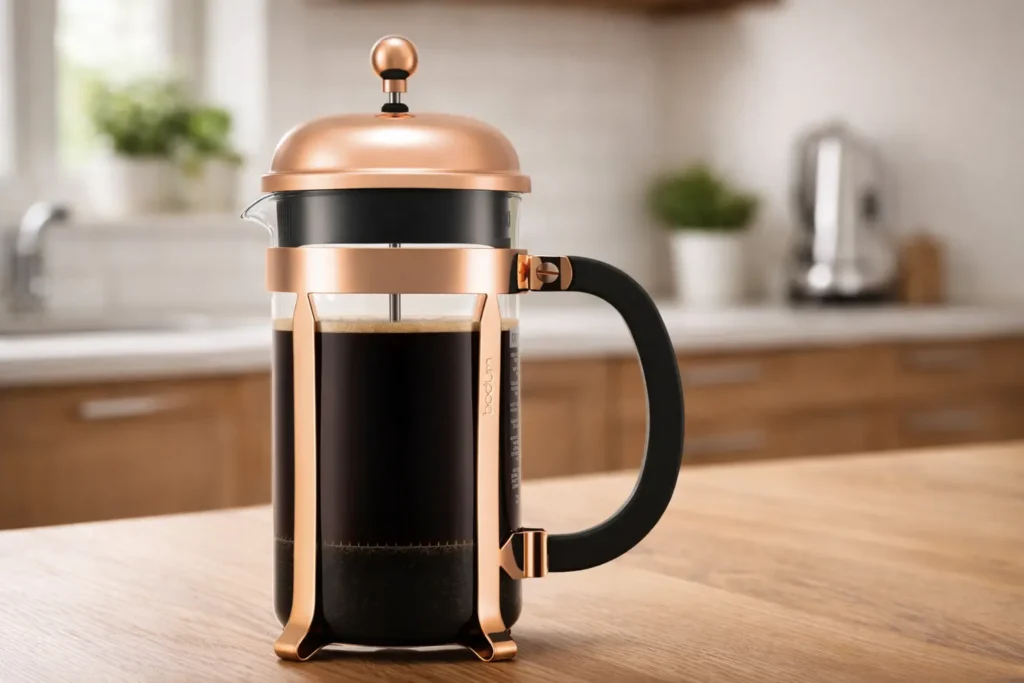
Bodum Chambord — Best classic press
A glass beaker in a steel frame with a simple mesh filter, sold in several sizes.
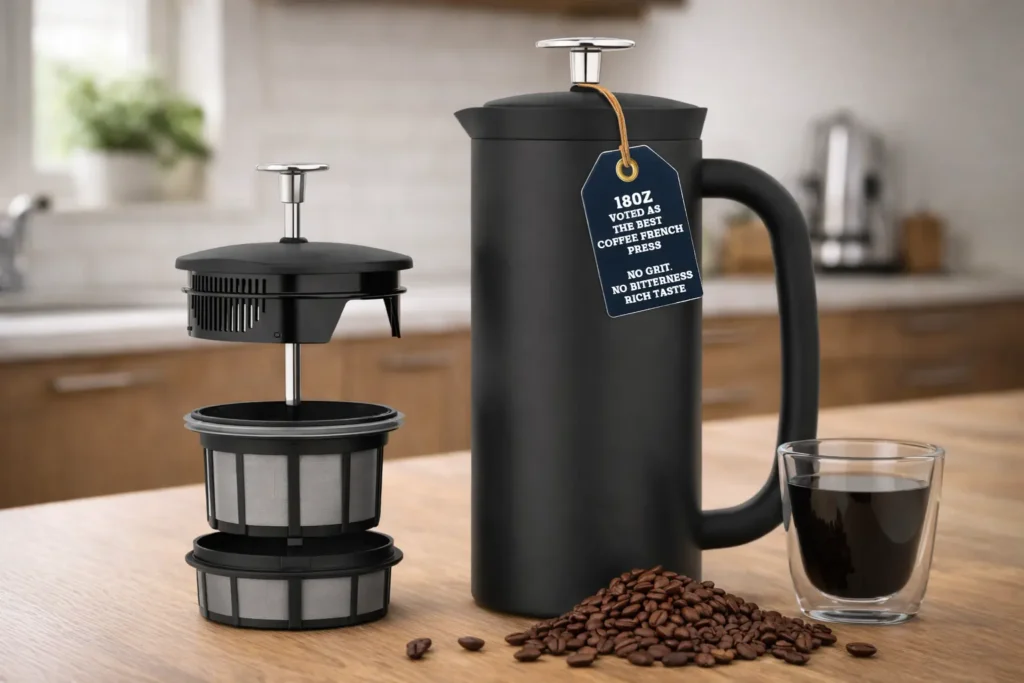
Espro P7 — Least sediment
Double micro-filters catch far more fines than a standard mesh, for a cleaner press cup.
Affiliate disclosure: Amazon links may earn CoffeeGearHub a commission at no additional cost to you. Prices and availability can change.
The Short Version: Pressure vs Immersion
A moka pot is a pressure brewer. Water in the lower chamber heats, steam pressure builds to roughly one to two bar, and that pressure pushes hot water up through a basket of medium-fine coffee into the top chamber. The result is a small volume of strong coffee in about five minutes.
A French press is an immersion brewer. Coarse coffee sits in hot water for about four minutes, then a mesh plunger separates the grounds. Nothing forces the water through the coffee, so extraction is gentler and the cup is filter strength. The metal mesh lets oils and fine particles through, which gives French press coffee its heavy body and its trace of sediment.
| Factor | Moka pot | French press |
|---|---|---|
| Brewing method | Steam pressure, about 1 to 2 bar | Immersion, no pressure |
| Strength | Concentrated, roughly double filter strength | Filter strength |
| Body and texture | Thick and intense | Heavy and rounded, some sediment |
| Grind | Medium-fine | Coarse |
| Typical ratio | Fill the basket level, about 1:7 to 1:10 | About 1:15 to 1:16 |
| Brew time | About 4 to 6 minutes on the stove | About 4 minutes steeping |
| Batch size | Fixed by pot size, small servings | Up to about 1 liter in a large press |
| Milk drinks | Strong enough for lattes | Too weak for convincing lattes |
| Heat source | Stovetop (induction needs a compatible pot) | Kettle only |
| Cleanup | Rinse three parts, no soap on aluminum | Dump grounds, rinse mesh and beaker |
In short: the moka pot trades volume for intensity, and the French press trades intensity for body and volume.
How a Moka Pot Brews
Fill the base with hot water to just below the safety valve, fill the funnel basket with medium-fine coffee without tamping, screw on the top, and set the pot over moderate heat. As the base heats, pressure drives water up through the coffee and the brew flows into the upper chamber.
Take it off the heat when the stream turns pale and starts to sputter, and cool the base under the tap to stop extraction. That last step is what keeps moka coffee sweet rather than burnt. Our how to use a moka pot guide covers each step, and moka pot sizes explains how much each pot makes.
If you cook on induction, an aluminum Moka Express will not heat without an adapter disc. A stainless pot with a magnetic base, such as the Bialetti Venus, works directly; see our best induction moka pots.
How a French Press Brews
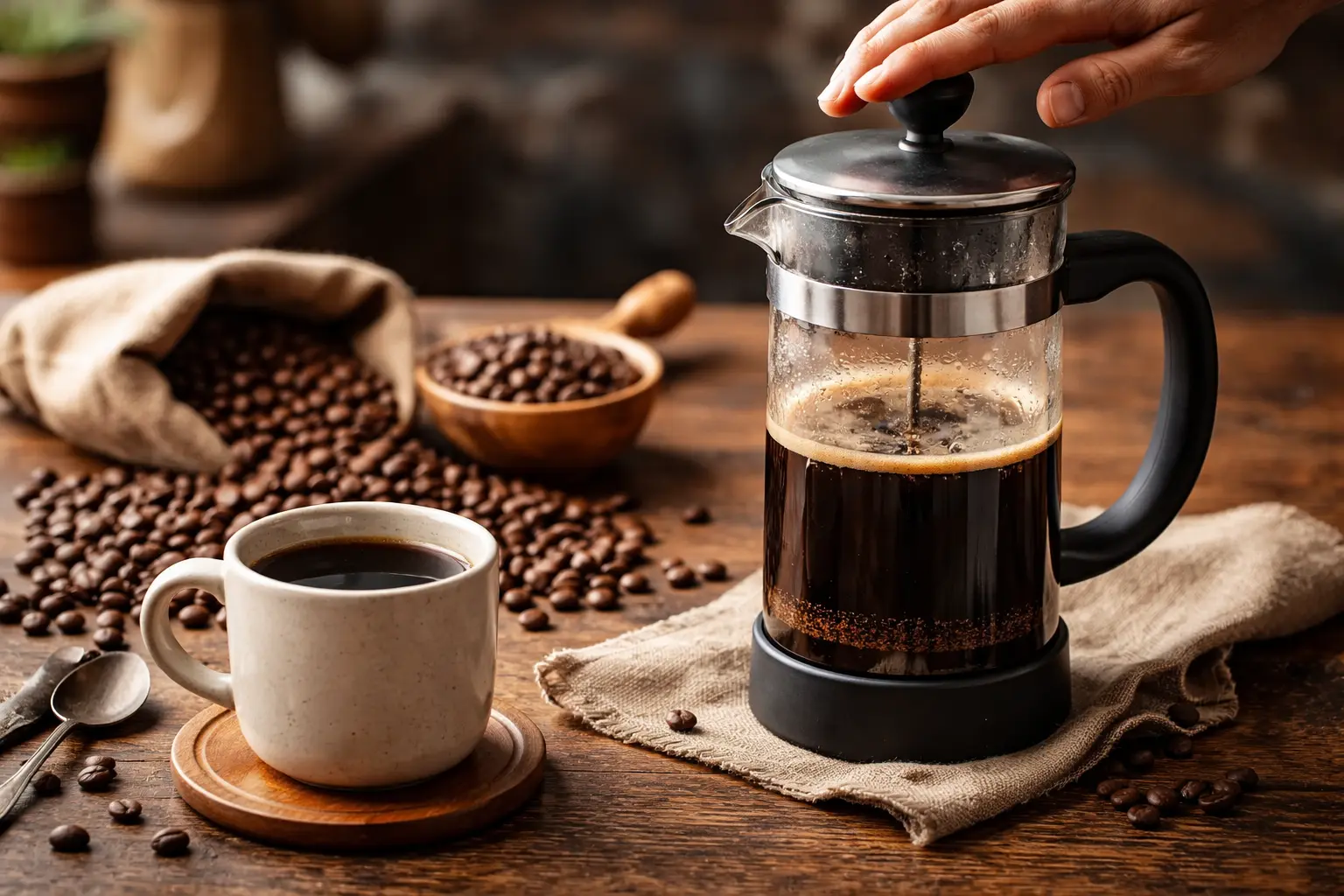
Add coarse coffee to the beaker, pour in water just off the boil, stir, and put the lid on with the plunger raised. After about four minutes, break the crust, skim the foam if you like, and press slowly. Pour right away, or decant, so the coffee does not keep extracting on the grounds.
A standard mesh filter is what gives the press its full texture, and also its grit. Waiting a few minutes before pressing lets fines settle and gives a cleaner cup. Our French press brew guide and French press ratio chart walk through the method.
Taste, Strength, and Body
Strength is the clearest difference. Moka coffee typically lands around 2 to 2.5 percent dissolved solids, while a French press cup sits in the normal filter range of roughly 1.2 to 1.5 percent. The moka pot tastes intense, dark, and slightly bitter-sweet, with a thick texture that recalls espresso. It is not espresso, though, and it has no lasting crema.
French press coffee is softer and rounder. The oils that a paper filter would catch stay in the cup, giving a heavy mouthfeel and a fuller expression of chocolatey, nutty, and fruity notes at normal drinking strength. The trade-off is sediment at the bottom of the cup, which some people enjoy and others dislike.
Both brewers are forgiving of roast level, but they lean in different directions. Medium to medium-dark roasts suit the moka pot because they extract easily without turning harsh. The French press shows off a wider range, from medium-light to dark. See our best coffee beans for moka pot and best coffee beans for French press.
Grind Size and Ratio
The two brewers sit at opposite ends of the grind range. A moka pot wants medium-fine, a little coarser than espresso, so water can pass through the basket without stalling. A French press wants coarse, like rough sea salt, so the mesh can hold back the grounds and the long steep does not over-extract.
| Moka pot | French press | |
|---|---|---|
| Grind | Medium-fine | Coarse |
| KINGrinder K6 starting point | 65–75 clicks | 135–150 clicks |
| Ratio | Level basket, about 1:7 to 1:10 | About 1:15 to 1:16 |
| If it tastes bitter | Grind coarser, lower the heat, stop earlier | Grind coarser or shorten the steep |
| If it tastes thin or sour | Grind finer, fill the basket fully | Grind finer or extend the steep |
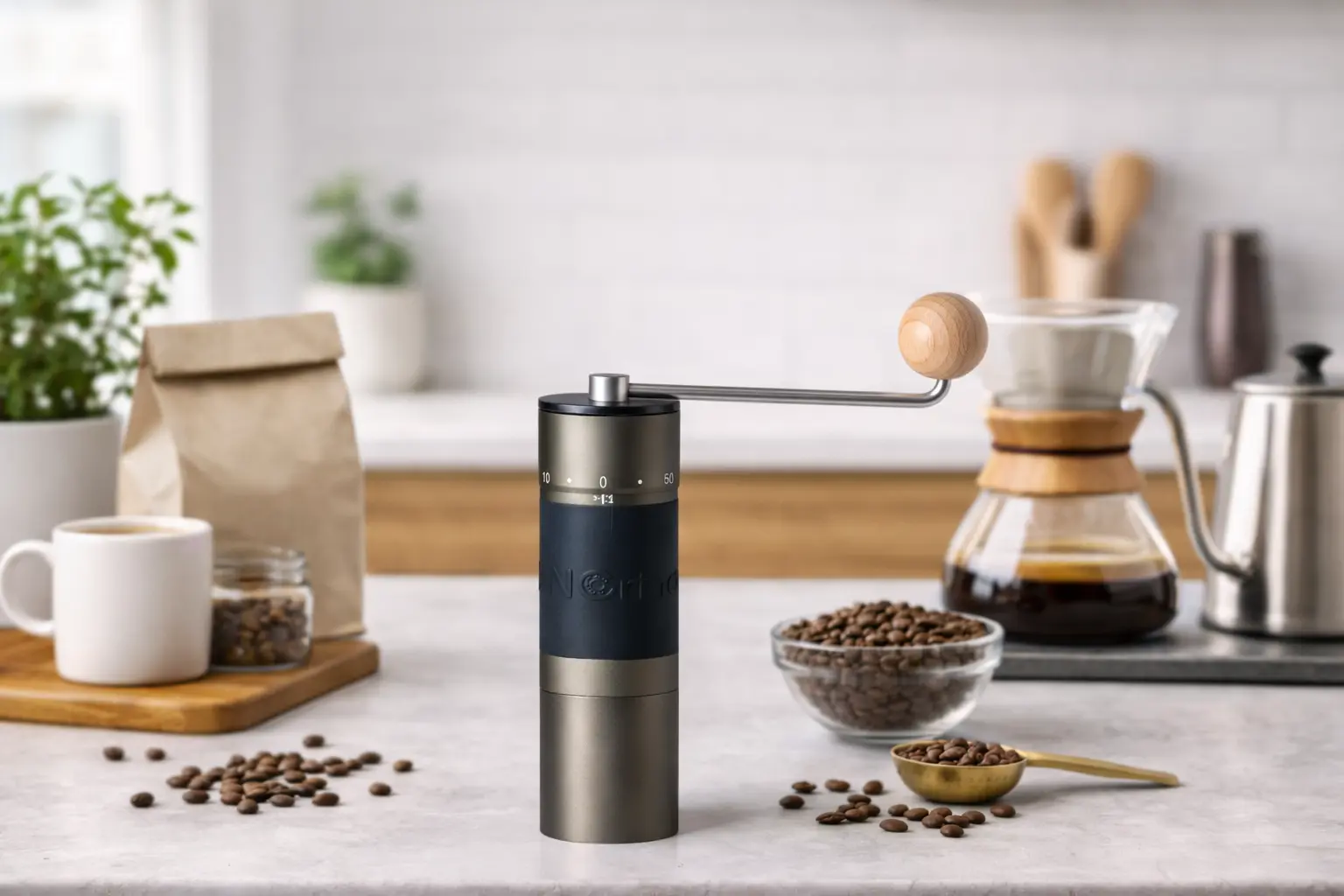
Because the settings are so far apart, one grinder with a wide, repeatable range is useful if you own both brewers. The KINGrinder K6 has an external numbered dial, so you can switch from moka to press and back without losing your place.
Full click ranges for every method are in our K6 grind settings chart, and the moka pot grind size and French press grind size guides explain how to dial in by taste.
Our grinder pick for both brewers

Lattes and Milk Drinks
This is where the moka pot pulls clearly ahead. Its concentrated coffee keeps its flavor when you add three or four times as much milk, so it makes a convincing stovetop latte or cappuccino. Our moka pot latte recipe covers the ratios.
French press coffee gets lost in milk. It is fine with a splash, but a latte made from it tastes like milky filter coffee. The press does have a useful milk trick, though: pump the plunger in warm milk and it makes a reasonable foam. See how to froth milk without a steam wand.
Batch Size, Convenience, and Cleanup
A French press scales easily. A large press makes about a liter, enough for several mugs, and you can brew less in the same press. A moka pot brews best when filled to its rated size, so its output is fixed. A 6-cup pot makes about 300 ml of strong coffee, which is two or three small servings rather than six mugs.
Cleanup favors the moka pot slightly. Knock out the puck, rinse the three parts with warm water, and let them dry; aluminum pots should not go in the dishwasher. A French press leaves wet grounds in the beaker, and the mesh filter needs an occasional take-apart clean. Our moka pot cleaning and French press cleaning guides cover both.
If you hate sediment, the Espro P7 uses two fine micro-filters to catch far more of it than a standard mesh, at a higher price.
Which Should You Buy?
| If you… | Better choice | Why |
|---|---|---|
| Want strong, espresso-style coffee | Moka pot | Concentrated coffee in small servings |
| Drink lattes or cappuccinos | Moka pot | Strong enough to taste through milk |
| Want a big mug or coffee for several people | French press | Brews up to about a liter at once |
| Like a heavy, oily body | French press | Metal mesh keeps the oils in the cup |
| Want the simplest routine | French press | Pour, wait, press |
| Have no stove, only a kettle | French press | Needs only hot water |
| Cook on induction | Either, with the right moka pot | Choose a magnetic stainless pot for induction |
If you are torn, think about the cup you reach for most. One or two strong coffees, often with milk, point to the moka pot. A pot of coffee to sip through the morning points to the French press. They cost little enough that owning both is common, and the same burr grinder serves both.
Best moka pot

Our Verdict
The moka pot and the French press are both excellent, cheap, durable brewers that answer different needs. The moka pot makes strong, concentrated coffee and the best stovetop base for milk drinks. The French press makes a full-bodied, filter-strength cup in larger amounts with almost no technique.
Choose the Bialetti Moka Express for strength and lattes, the Bodum Chambord for a classic press, and pair either with a burr grinder such as the KINGrinder K6. For more options see best moka pots and our moka pot vs AeroPress comparison.
Pick the Brewer That Matches Your Cup
The Moka Express suits strong coffee and lattes; the Chambord suits a full mug or a pot to share.
As an Amazon Associate, CoffeeGearHub earns from qualifying purchases.
Editorial bottom line: A moka pot makes strong, concentrated coffee; a French press makes a full-bodied, filter-strength cup. Choose by the drink you want, and use a burr grinder with either.
Frequently Asked Questions
Is moka pot coffee stronger than French press coffee?
Yes, by a wide margin. A moka pot brews a small, concentrated coffee using steam pressure, while a French press is an immersion brewer that makes filter-strength coffee. Moka coffee has roughly twice the dissolved solids of a typical French press cup, so it tastes much stronger and stands up better to milk.
Does a moka pot or French press have more caffeine?
Per ounce, moka coffee has more caffeine because it is more concentrated. Per serving, a large mug of French press coffee can match or exceed a small moka serving, because you drink more liquid and use more coffee overall. The total depends on how much coffee you brew with, not the brewer alone.
Which is easier for beginners, a moka pot or a French press?
The French press is slightly easier. You add coarse coffee and hot water, wait four minutes, and press. A moka pot needs the right grind, an unpacked basket, and attention to heat so it does not over-extract. Both are easy to learn within a few mornings.
Can you make a latte with a French press?
You can use a French press to froth warm milk by pumping the plunger, but French press coffee itself is too weak to make a convincing latte. A moka pot is the better base for milk drinks because its coffee is concentrated enough to taste through the milk.
Do you need a burr grinder for a moka pot or French press?
A burr grinder improves both. A moka pot needs a consistent medium-fine grind, and a French press needs an even coarse grind to limit sludge and bitterness. A hand grinder such as the KINGrinder K6 covers both settings.
Which brewer is better for making coffee for several people?
The French press. A large press brews about a liter at once, while a moka pot’s output is set by its size and arrives as small, strong servings. For a group, a French press is simpler; for one or two strong coffees, a moka pot fits better.
Sources and Further Reading
Brewing concepts follow the Specialty Coffee Association’s standards. Moka pot pressure and strength figures come from published moka pot measurements. Brewing steps follow Bialetti and Bodum instructions. KINGrinder K6 settings follow CoffeeGearHub’s K6 grind settings chart. CoffeeGearHub did not test these products hands-on.
CoffeeGearHub product shortlist
Continue with related products on CoffeeGearHub
Review product categories and current verified merchant offers on CoffeeGearHub before leaving the site.