
KINGrinder K6 Review (2026): The Best-Value Hand Grinder for Espresso and Pour-Over?
Quick picks
KINGrinder K6 review at a glance
Picks are based on published specifications and independent measurements. As an Amazon Associate, CoffeeGearHub earns from qualifying purchases.
Editorial standards: this KINGrinder K6 review draws on KINGrinder’s published specifications, independent grind-time and consistency measurements, reviewer cupping notes, and long-term owner reports. Scores are research-based. CoffeeGearHub does not claim hands-on testing where it has not occurred.
At a glance
What this K6 review covers
The burrs and build, full specifications, a six-part research scorecard, grind consistency, espresso performance, grind settings for every brew method, daily workflow, the real weaknesses, how it compares with the K-Ultra, Timemore C3S, and electric grinders, and our verdict.
Editorial analysis
Premium grind quality, budget convenience
The K6 puts 48 mm burrs and 16-micron adjustment steps into a grinder that costs far less than most rivals with similar specifications. That combination is why it handles espresso as well as filter coffee.
What you give up is polish: no magnetic cup, a dial whose numbers repeat every rotation, and a zero point that needs re-checking after cleaning. If those details do not bother you, it is hard to find more grind quality for the money.
The 30-Second Answer
The KINGrinder K6 is worth buying in 2026 if you want a hand grinder that handles both espresso and filter coffee without paying premium prices. It earns a research-based 8.1 out of 10: excellent grind quality and value from 48 mm burrs and 16-micron steps, held back by convenience details and the effort espresso grinding takes.
Choose the 1Zpresso K-Ultra if you want a more refined grinder with a magnetic cup and numbered dial, and an electric grinder if you brew for several people every day.
Compare current options
Start with these representative choices
The K6 itself, the premium hand grinder it is most often compared with, and the electric step-up for anyone who would rather not crank.
KINGrinder K6 — Best value
48 mm conical burrs, 16-micron steps, and a range that covers espresso through French press.
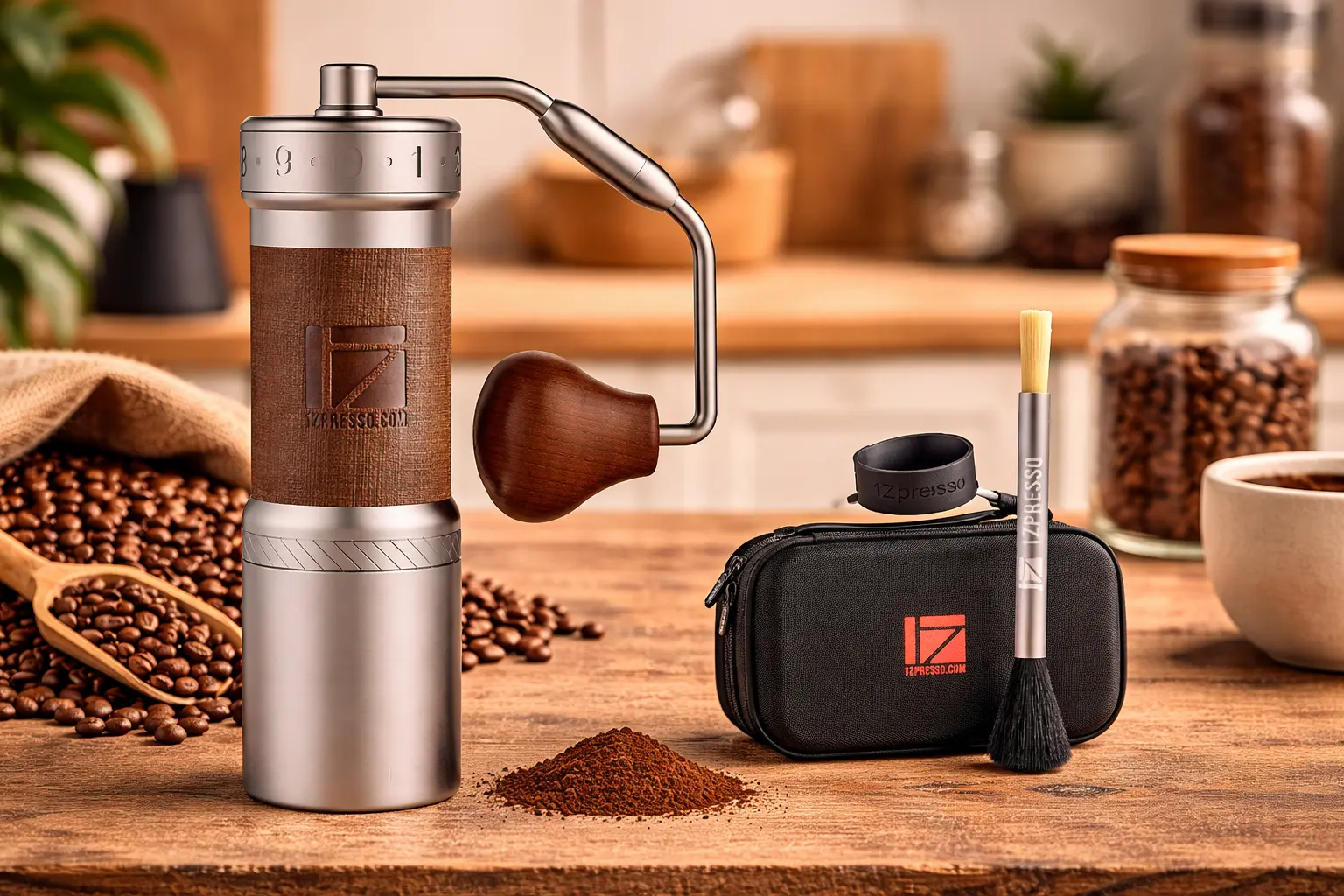
1Zpresso K-Ultra — Premium upgrade
Magnetic catch cup, numbered dial, folding handle, and a more refined finish.
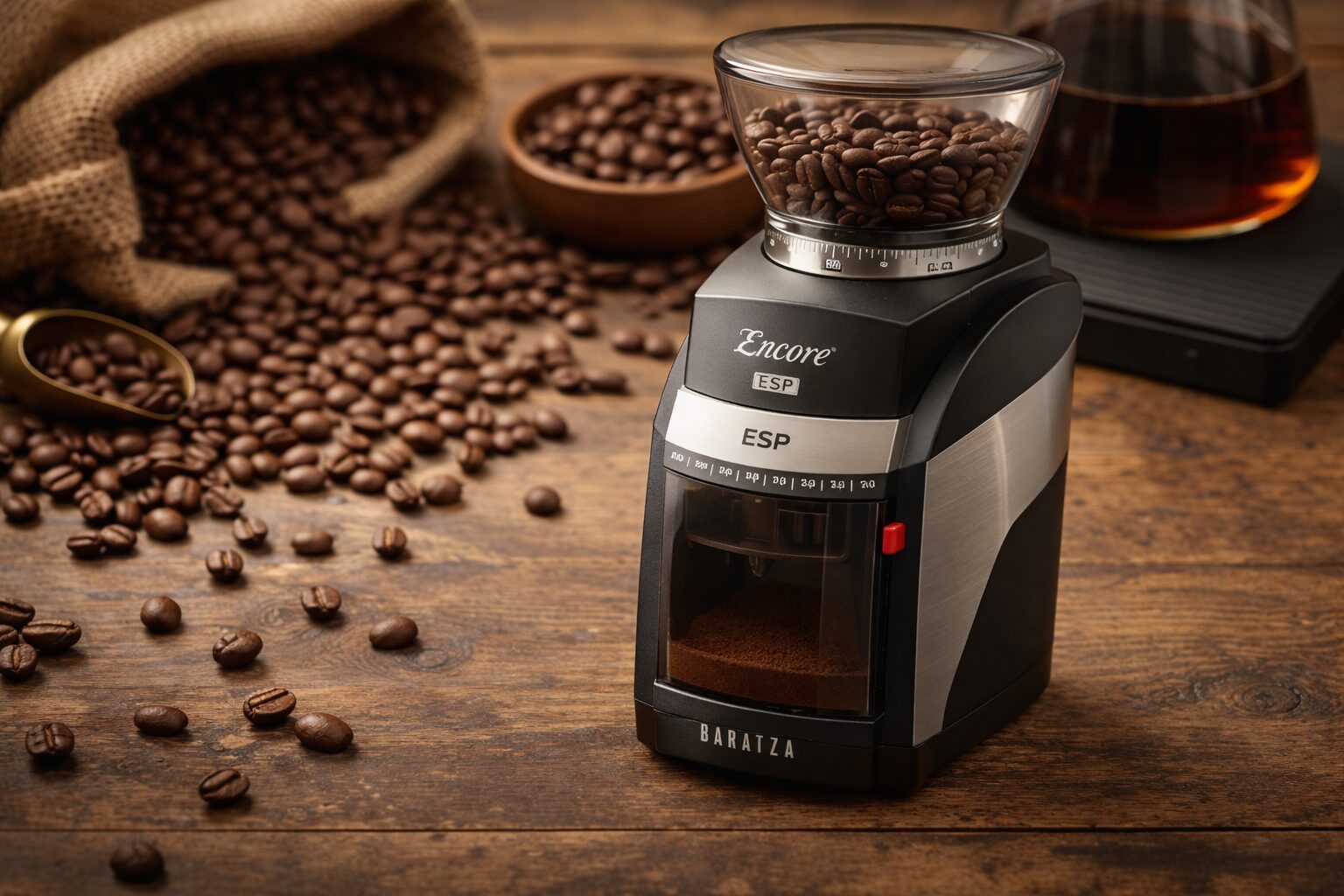
Baratza Encore ESP — Electric option
An entry electric grinder with a dedicated espresso range for people who would rather not crank.
Affiliate disclosure: Amazon links may earn CoffeeGearHub a commission at no additional cost to you. Prices and availability can change.
What the KINGrinder K6 Is: Big Burrs in a Budget Body
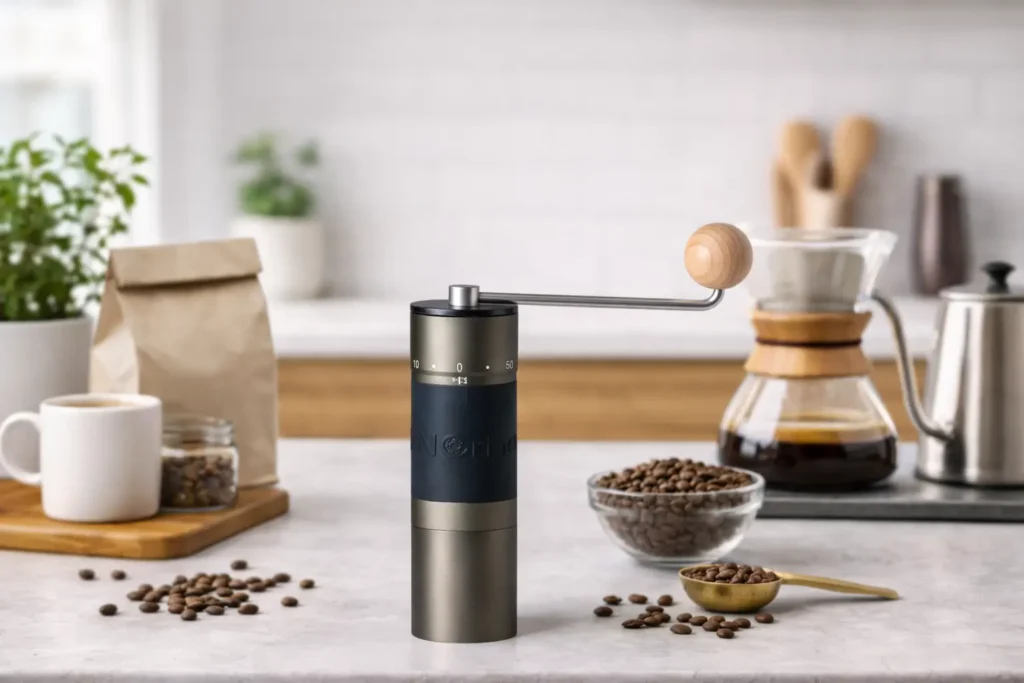
The KINGrinder K6 is a manual burr grinder built around a set of 48 mm stainless steel conical burrs with a heptagonal, seven-sided cutting profile. That burr size is the headline. Most hand grinders in the same price bracket use burrs in the 38 to 40 mm range, and larger burrs generally grind faster and more evenly for each turn of the handle. The K6 brings a burr size usually associated with grinders costing two or three times as much into the budget category.
Around those burrs sits a straightforward aluminum body with a capacity of roughly 35 grams of whole beans, enough for a large pour-over or a double shot with room to spare. The grinder weighs about 630 grams, so it feels solid in the hand without being too heavy to travel. The adjustment ring sits at the top under the handle, and the catch cup threads onto the bottom. It disassembles without tools for cleaning.
KINGrinder positions the K6 as an all-rounder: one grinder that can handle espresso, pour-over, AeroPress, moka pot, and French press. That claim is more credible than it is for most budget grinders because of the fine adjustment steps, which are covered in detail below.
This review is research-based. CoffeeGearHub did not test the K6 in-house. The specifications, measurements, and owner experience below come from the manufacturer’s published specifications, independent reviewers who measured grind times and consistency, and long-term owner reports, all credited in the sources section.
KINGrinder K6 Specifications at a Glance
The numbers below are drawn from KINGrinder’s published specifications and consistent retailer listings. Capacity figures vary slightly between sources because bean density and roast level change how many grams fit in the hopper.
| Specification | KINGrinder K6 | Why it matters |
|---|---|---|
| Burrs | 48 mm stainless steel, heptagonal conical | Larger burrs grind faster and more evenly per turn |
| Adjustment | About 16 microns per click, 60 clicks per rotation | Fine enough steps to dial in espresso |
| Usable range | About 4 rotations, roughly 240 clicks | Covers Turkish to cold brew in one grinder |
| Capacity | About 25 to 35 g of beans | Enough for a double shot or a large pour-over |
| Weight | About 630 g | Solid and stable, still travel-friendly |
| Body | Aluminum alloy | Durable and light, finish less refined than premium rivals |
| Catch cup | Threaded, not magnetic | Secure, but slower to remove |
| Retention | About 0.1 g reported | Very little old coffee left behind |
Two specifications stand out for buyers. The first is the 16-micron step, which is finer than many premium grinders, including the 1Zpresso K-Ultra at about 20 microns per step. The second is the very low retention, which means you get out almost exactly what you put in, an important trait for single-dosing espresso and for switching between brew methods.
The Research Scorecard: 8.1 out of 10
We scored the K6 on six criteria that matter over months of daily use. Each score reflects the published evidence: consistency measurements and reviewer cupping for grind quality, timed grinding tests for workflow, and comparison with current alternatives for value.
| Criterion | Score | What it reflects |
|---|---|---|
| Grind consistency | 8.5 / 10 | Large burrs and strong published consistency figures at espresso settings |
| Espresso capability | 8 / 10 | 16-micron steps make dialing in practical; grinding fine takes effort |
| Filter coffee | 8.5 / 10 | Clear, bright pour-over with good separation, per reviewer cupping |
| Ease of use | 7 / 10 | Zero point easy to lose after cleaning; dial numbers repeat each rotation |
| Build and portability | 7 / 10 | Solid aluminum body, but heavier than travel grinders and less polished |
| Value | 9.5 / 10 | Grind quality that competes with grinders costing far more |
| Overall | 8.1 / 10 | Average of the six criteria |
The pattern is clear. The K6 wins on grind quality and value and loses points on convenience details: the threaded cup, the adjustment ring that is easy to bump, and the need to re-find zero after a deep clean. None of those affect what ends up in the cup, which is why it has become one of the most recommended budget hand grinders.
The Coffee Locator, which rated the K6 across eight criteria on a five-point scale, reached a similar conclusion: its highest marks went to value and filter performance, its lowest to portability and build finish.
Grind Quality and Consistency
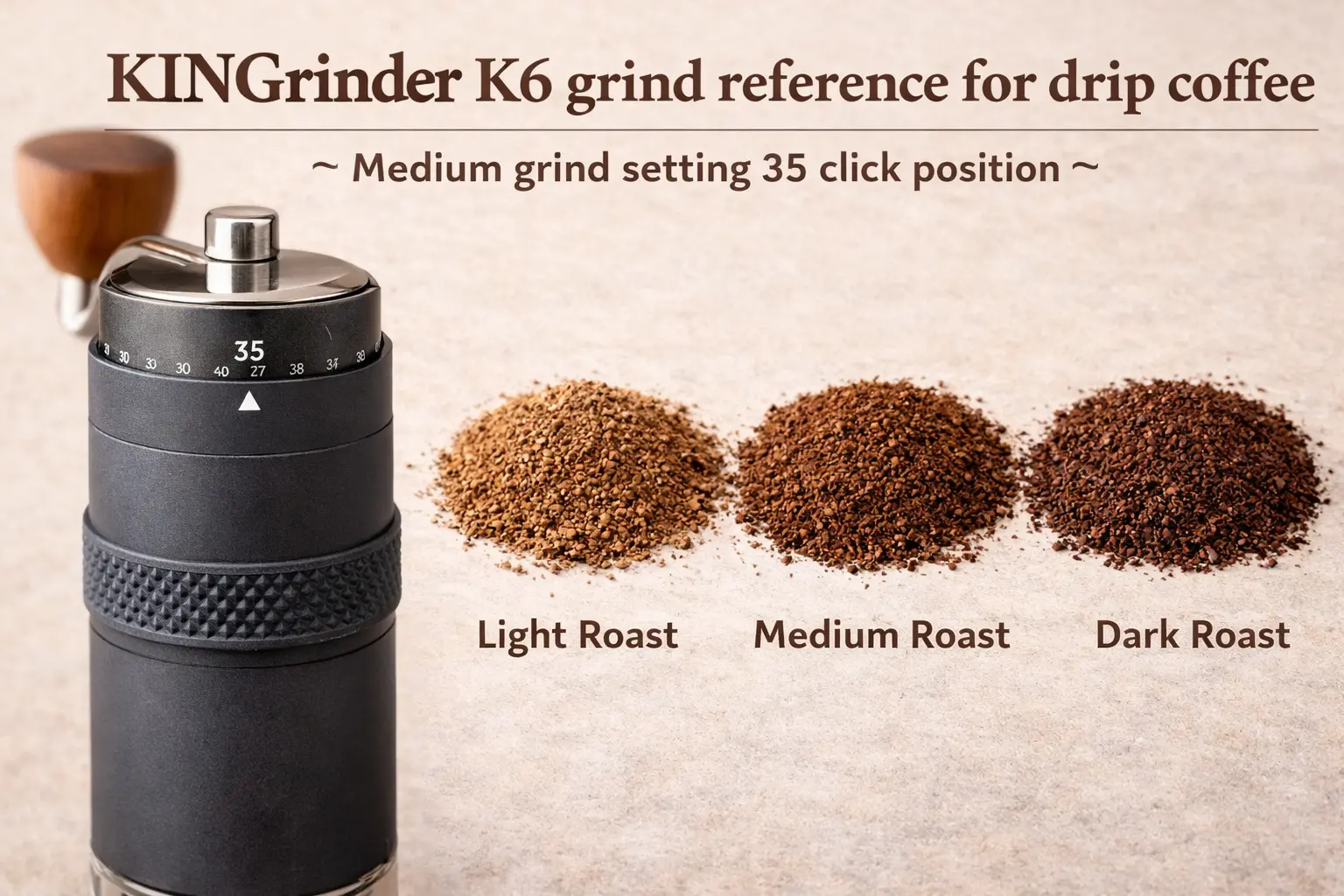
Grind consistency is the reason to buy a burr grinder at all, and it is where the K6 earns most of its reputation. Consistency matters because coffee particles of very different sizes extract at different rates: fines over-extract and turn bitter, boulders under-extract and taste sour. A grinder that produces a tight spread of particle sizes makes coffee that tastes clearer and is easier to repeat.
Independent measurements back up the K6’s reputation. A particle analysis by the 9 Bar Benchmark, cited by Barista Life, recorded a coefficient of variation of about 2.2 percent at a 30-click espresso setting, a strong result for any hand grinder. Reviewers who cupped filter coffee from the K6 describe a bright, high-clarity cup with pronounced acidity, while noting that the K-Ultra produced a slightly cleaner, lighter-bodied cup in side-by-side comparisons.
In practice, that profile suits light and medium roasts brewed as pour-over or AeroPress especially well, where clarity and acidity are what people are paying for. Darker roasts also work, but the K6’s brightness is less of an advantage there. If you are upgrading from a blade grinder or an entry electric burr grinder, the difference in clarity is usually obvious from the first cup. Our burr vs blade grinders guide explains why.
Low retention helps too. Owners and reviewers report about 0.1 grams of coffee left in the grinder after a dose, so stale grounds from yesterday are not mixed into today’s cup. A quick tap on the body after grinding clears most of what remains.
Can the K6 Really Grind for Espresso?
Yes, and this is what separates it from many budget hand grinders. Espresso demands both a fine grind and very small adjustment steps, because a change of a few microns can move a shot from sour to bitter. With 16 microns per click, the K6 lets you make those small changes, and its consistency at espresso settings is the strongest part of its published performance.
Most owners find espresso in roughly the mid-30s to mid-40s clicks from zero, depending on the machine, basket, and beans. Brew Coffee Home reported a starting point of 34 clicks for espresso. From there, adjust one or two clicks at a time: finer if the shot runs fast and sour, coarser if it runs slow and bitter. Our how to dial in espresso guide walks through the process step by step, and the espresso grind size guide explains what you are aiming for.
The trade-off is effort. Grinding espresso by hand is slow and tiring compared with filter grinding, because the burrs are close together and every turn does more work. Brew Coffee Home timed roughly 40 seconds to grind 18 grams for a double shot. That is manageable for one or two drinks a day, but anyone pulling several shots back to back will feel it, and that is the point where an electric espresso grinder starts to make sense.
One more practical note: because the K6 is a hand grinder, it pairs best with machines that accept a fine, consistent grind, such as a Gaggia Classic Pro or Breville Bambino Plus. If you are deciding whether a separate grinder is worth it at all, our do you need a grinder for espresso article covers that decision.
K6 Grind Settings by Brew Method
The table below lists starting points in clicks counted from zero, where the burrs just touch. These ranges match our full KINGrinder K6 grind settings chart. Every bean and brewer is a little different, so treat them as a place to begin and adjust by taste.
| Brew method | Starting range (clicks from zero) | Adjustment tip |
|---|---|---|
| Turkish coffee | 18 to 25 | Finest usable setting; grind slowly |
| Espresso | 35 to 45 | Move one or two clicks at a time |
| Moka pot | 65 to 75 | Finer than filter, coarser than espresso |
| AeroPress | 70 to 85 | Go finer for short steeps, coarser for long |
| V60 pour-over | 90 to 105 | Adjust by drawdown time |
| Kalita Wave | 95 to 110 | Slightly coarser than V60 |
| Chemex | 105 to 120 | Thick filter needs a coarser grind |
| Automatic drip | 100 to 115 | Medium grind for flat-bottom baskets |
| French press | 135 to 150 | Coarse to limit sludge |
| Cold brew | 145 to 160 | Coarsest setting for long steeps |
The wide range is one of the K6’s real strengths. Unlike grinders designed mainly for filter coffee, it handles both ends of the spectrum, which makes it a practical choice if you brew espresso on weekends and pour-over during the week. For specific brew methods, our best grinders for moka pot, best grinders for AeroPress, and best grinders for French press guides compare the K6 with method-specific alternatives.
Daily Use: Speed, Effort, and Workflow
For filter coffee, the K6 is quick for a hand grinder. Brew Coffee Home timed about 30 seconds to grind 15 grams at a pour-over setting, helped by the large burrs, which cut more coffee with each turn than smaller burr sets. Most people grinding one or two cups a day will find that easy to fit into a morning routine.
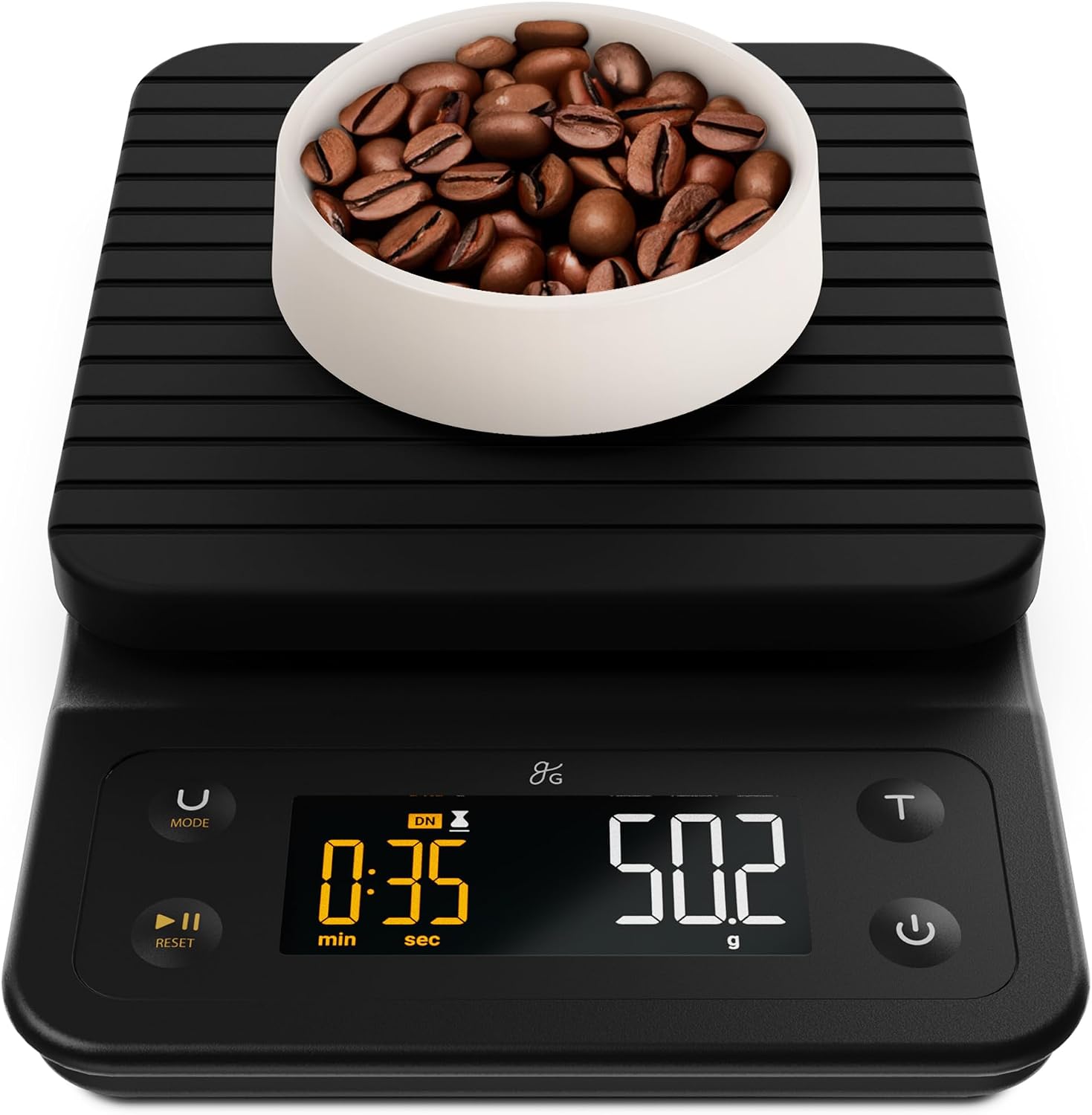
The workflow is simple: weigh your beans, pour them into the top, grind, unscrew the catch cup, and brew. Weighing matters more than people expect, because the grinder’s capacity and your brew ratio both depend on grams rather than scoops. A small coffee scale such as the Greater Goods coffee scale makes that step quick. The catch cup threads on rather than snapping magnetically, which is secure but a little slower than the magnetic cups on premium grinders.
Owners also note that the catch cup has no rubber base, so it can slide on smooth counters, and that the 630-gram weight is reassuring for stability while grinding but noticeable in a travel bag. The larger hex drive shaft means some owners attach a cordless drill for faster grinding. Drill users generally recommend a drill with at least 15 Nm of torque on a low speed, but this is an owner workaround rather than a manufacturer feature.
Cleaning is straightforward. The grinder disassembles without tools, and a dry brush removes trapped grounds from the burrs. Avoid water on the burrs unless you can dry them completely. Our grinder cleaning and retention guide covers the full routine.
Where the KINGrinder K6 Falls Short
The K6’s weaknesses are mostly about convenience and finish rather than coffee quality, but they are real and worth knowing before you buy.
The zero point is easy to lose. After taking the grinder apart for cleaning, the zero point can shift slightly on reassembly. That matters most for espresso, where one or two clicks make a visible difference. The fix is simple, re-finding zero by turning finer until the burrs touch, but it is an extra step that premium grinders largely avoid.
The adjustment ring is exposed. Because the dial sits on the outside under the handle, it can be bumped while grinding or handling, changing your setting without you noticing. Many owners mark their usual settings with a small dot of paint or tape. The printed numbers repeat with each rotation, so you still need to track total clicks from zero.
Espresso grinding takes effort. Forty seconds of steady cranking is fine for one shot, less fine for four. If you make several espresso drinks a day, an electric espresso grinder is the more comfortable choice.
Finish is a tier below premium rivals. Reviewers consistently describe the K6 as solidly built but less refined than the 1Zpresso K-Ultra or Comandante C40. A few owners have reported surface rust on bearings or burrs after leaving moisture in the grinder; we could not verify how common that is, but keeping the grinder dry avoids it.
K6 vs K-Ultra, Timemore C3S, and Electric Grinders
The most common comparison is with the 1Zpresso K-Ultra. The K-Ultra uses 20-micron steps over 100 clicks per rotation, holds about 35 to 40 grams, weighs about 700 grams, and adds a magnetic catch cup, a folding handle, a more detailed numbered dial, and a carry case. Reviewers who compared them found the K-Ultra’s filter coffee slightly cleaner and lighter in body, and the K6’s brighter and more acidic. For most people, the K6 delivers most of that quality for considerably less money. Our K6 vs K-Ultra comparison goes into detail.
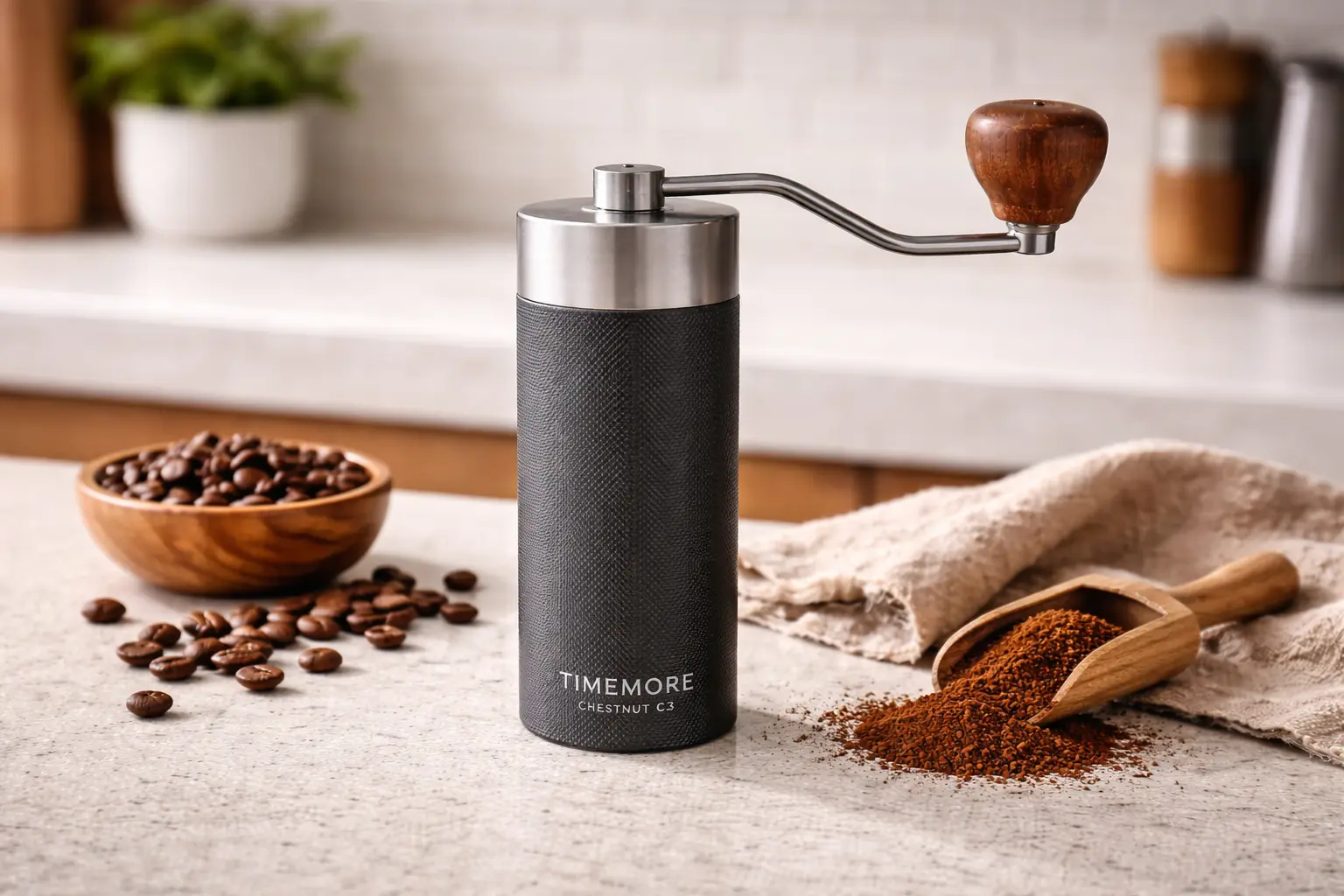
At the other end, the Timemore C3S is lighter, at roughly 420 grams, and cheaper, but uses smaller 38 mm burrs and holds only about 20 to 25 grams. It is a good filter grinder and a capable travel grinder, but it lacks the fine adjustment the K6 brings to espresso. Our Timemore C3 vs KINGrinder K6 comparison covers that matchup in detail. The Comandante C40, with 39 mm burrs and a weight of about 510 grams, remains a respected premium choice for filter coffee, at a much higher price.
If you would rather not grind by hand at all, an entry electric grinder such as the Baratza Encore ESP is the natural comparison. It grinds faster with no effort and includes a dedicated espresso range, but it is louder and bulkier, and our Encore ESP review notes that its filter grind is not as uniform as a good hand grinder.
The broader choice is covered in our manual vs electric coffee grinders guide. In short, the K6 makes sense if you grind one to three doses a day and want the best grind quality per dollar. An electric grinder makes sense if you brew for a household or pull several shots in a row.
Our Verdict
The KINGrinder K6 is one of the best-value grinders available in 2026. Its 48 mm burrs and 16-micron steps give it grind quality and adjustment that compete with hand grinders costing far more, and it is one of the few budget grinders that genuinely handles both espresso and filter coffee well. Low retention, tool-free cleaning, and a solid aluminum body round out a strong package.
Its weaknesses are convenience rather than coffee: a zero point that needs re-checking after cleaning, an exposed dial whose numbers repeat each rotation, a threaded rather than magnetic catch cup, and a finish a tier below premium rivals. Espresso grinding is also real work. Buy the KINGrinder K6 if you want the most grind quality for your money and brew one to three doses a day. Choose the K-Ultra if you value refinement and convenience, the Timemore C3S if you mostly brew filter coffee on the go, and an electric grinder if you brew for several people. For a wider comparison, see our best manual coffee grinders guide.
Get the Best-Value Hand Grinder
The K6 covers espresso through French press; the K-Ultra adds refinement and a magnetic cup.
As an Amazon Associate, CoffeeGearHub earns from qualifying purchases.
Editorial bottom line: The KINGrinder K6 offers premium-level grind quality at a budget price. Find zero carefully, mark your favorite settings, keep it dry, and expect espresso grinding to take some effort. For most home brewers it is the hand grinder to beat on value.
Frequently Asked Questions
Is the KINGrinder K6 good for espresso?
Yes, for a hand grinder at its price it is one of the most capable espresso options. Its 16-micron steps let you make the small adjustments espresso needs, and published consistency measurements at espresso settings are strong. The trade-off is effort: grinding 18 grams for a double shot takes roughly 40 seconds of steady cranking.
What K6 setting should I use for pour-over?
Most V60 brewers start between about 90 and 105 clicks from zero, with Kalita Wave and Chemex a little coarser. Treat that as a starting point and adjust by five to ten clicks based on taste and drawdown time. Our K6 grind settings chart lists every method.
How many clicks does the K6 have?
The adjustment ring has 60 clicks per full rotation, and each click moves the burrs about 16 microns. The usable range spans roughly four rotations, or about 240 clicks, which covers everything from Turkish coffee to cold brew.
How do I find zero on the KINGrinder K6?
Turn the adjustment ring toward finer until the burrs just touch and the handle stops turning freely, with the grinder empty. That point is zero, and all click settings are counted from it. Re-check it whenever you take the grinder apart for cleaning, because the zero point can shift slightly on reassembly.
Is the K6 better than the 1Zpresso K-Ultra?
Not better, but much better value. The K-Ultra adds a magnetic catch cup, a more detailed numbered dial, a folding handle, and a more refined finish, and some reviewers find its filter coffee slightly cleaner. The K6 delivers comparable grind quality for considerably less money. Our K6 vs K-Ultra comparison covers the details.
Can you use a drill with the KINGrinder K6?
Many owners do. The K6 uses a larger hex shaft than most hand grinders, and drill users generally recommend a drill with at least 15 Nm of torque on a low speed setting. Using a drill is at your own risk and may not be covered by the warranty.
Sources and Further Reading
Specifications follow KINGrinder’s published product information and consistent retailer listings. Grind times and starting espresso settings come from Brew Coffee Home’s K6 review. The consistency figure comes from the 9 Bar Benchmark particle analysis as reported by Barista Life. Category scores and the K-Ultra comparison draw on The Coffee Locator’s K6 review and published comparisons by independent reviewers. Competitor specifications follow 1Zpresso, Timemore, and Comandante published information. Extraction concepts follow the Specialty Coffee Association’s standards. CoffeeGearHub did not test this product hands-on.
CoffeeGearHub product shortlist
Continue with related products on CoffeeGearHub
Review product categories and current verified merchant offers on CoffeeGearHub before leaving the site.