
Siphon vs Pour-Over Coffee (2026): Taste, Effort, and Which to Choose
Editorial standards: this comparison is based on manufacturer documentation, published brewing guides, established specialty-coffee practice, and CoffeeGearHub’s existing siphon and pour-over guides. CoffeeGearHub does not claim hands-on testing where it has not occurred.
At a glance
What this siphon vs pour-over comparison covers
How each method extracts coffee, how the cups usually differ, the skill and gear each one needs, cost and cleanup, recipes to start with, and a clear recommendation for different kinds of coffee drinkers.
Editorial analysis
Both make clean coffee; they get there in opposite ways
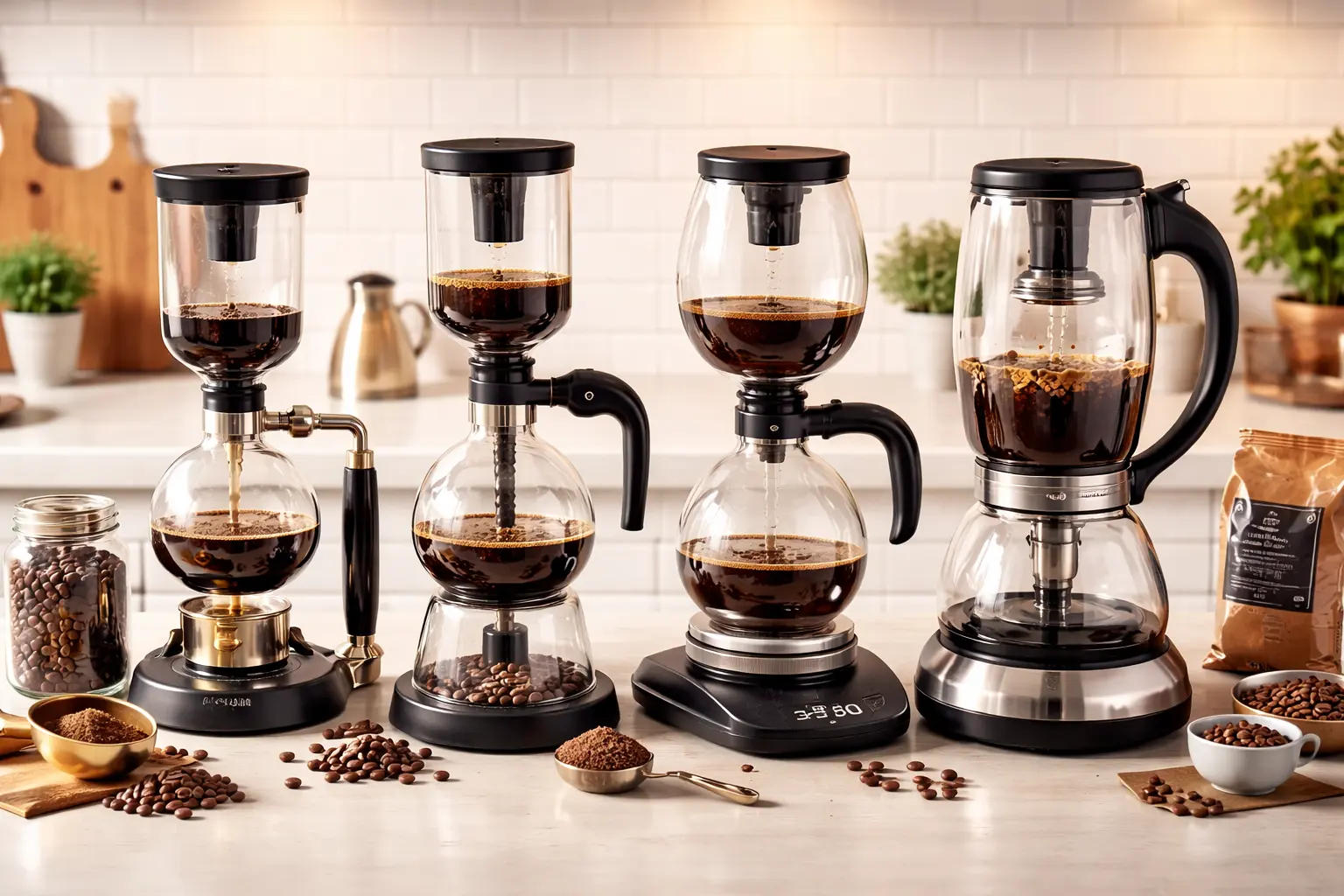
Siphon and pour-over are both known for clean, aromatic cups, which is why people compare them. Underneath, they work differently. Pour-over is percolation: water flows through a bed of coffee and out the bottom. Siphon is full immersion: all the coffee and water steep together, then a vacuum pulls the brew through a filter.
That difference decides almost everything else: which variables you control, what goes wrong, and how much attention each method asks for. Neither is better in absolute terms. The right choice depends on whether you would rather control a pour or control heat and time.
The 30-Second Answer
Choose pour-over if you want the simplest, cheapest route to clean, bright coffee every day. Choose siphon if you enjoy the ritual, want a very aromatic cup with a little more body, and do not mind glass, a heat source, and extra cleanup.
Pour-over rewards pouring technique and grind adjustments. Siphon takes pouring out of the equation and replaces it with heat control and timing. For most people starting out, a V60 or Kalita Wave is the easier first step; a siphon makes a great second brewer.
Compare current options
Start with these representative choices
Representative starting points for each method. Our best siphon coffee makers and best pour-over coffee makers guides compare more options.
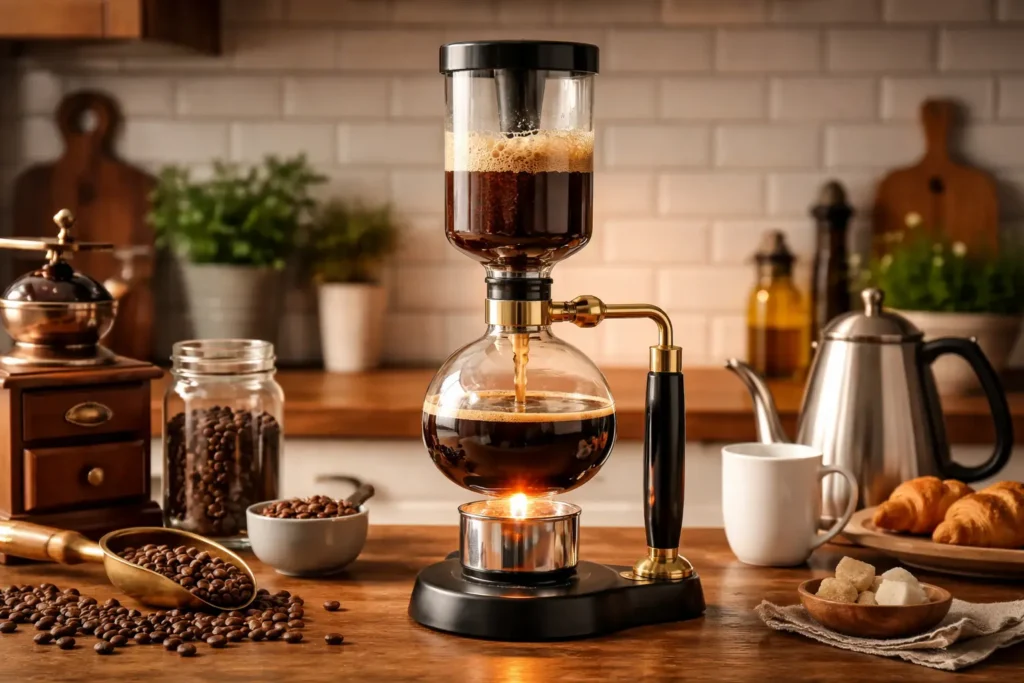
Hario Technica — Classic siphon
The reference tabletop siphon with an alcohol burner and cloth filter. Upgradeable to a butane burner for faster, adjustable heat.
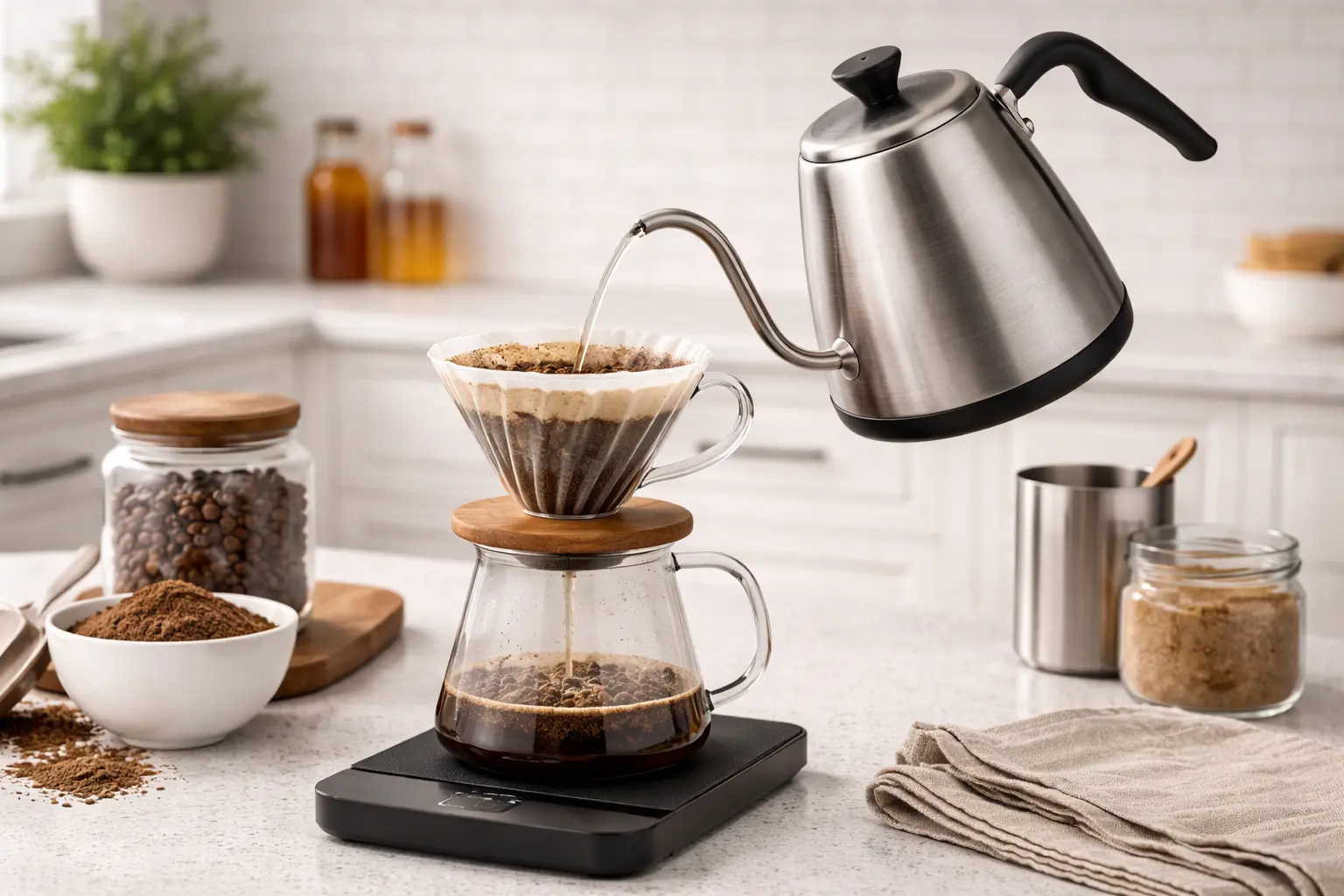
Hario V60 — Classic cone pour-over
A cone dripper with one large hole. Fast flow and lots of control; the most popular way into pour-over.
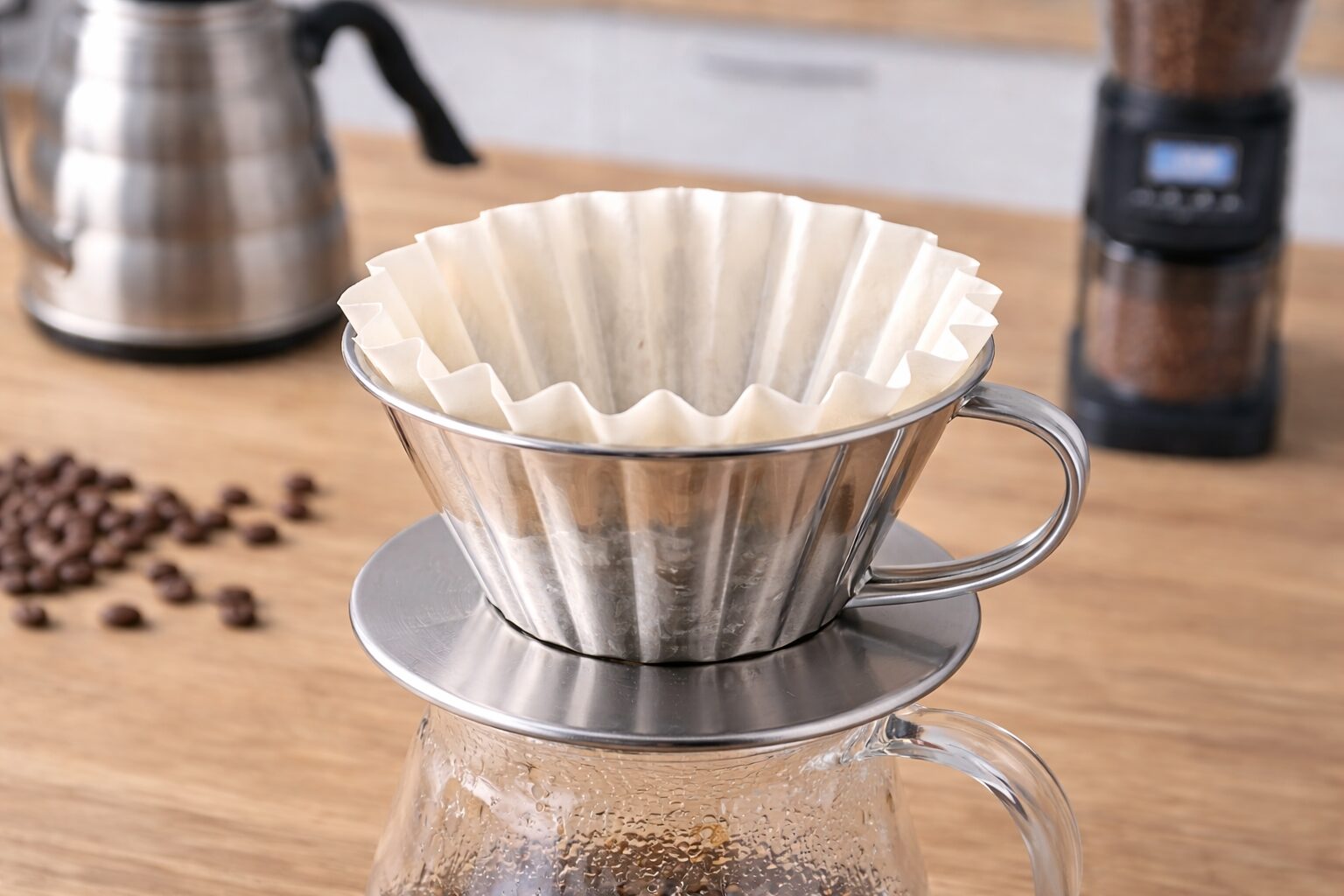
Kalita Wave 185 — Forgiving flat-bottom
A flat-bottom dripper with three small holes that slow and even out the flow, so small pouring mistakes matter less.
Affiliate disclosure: Amazon links may earn CoffeeGearHub a commission at no additional cost to you. Prices and availability can change.
How Each Method Works
Pour-over: percolation
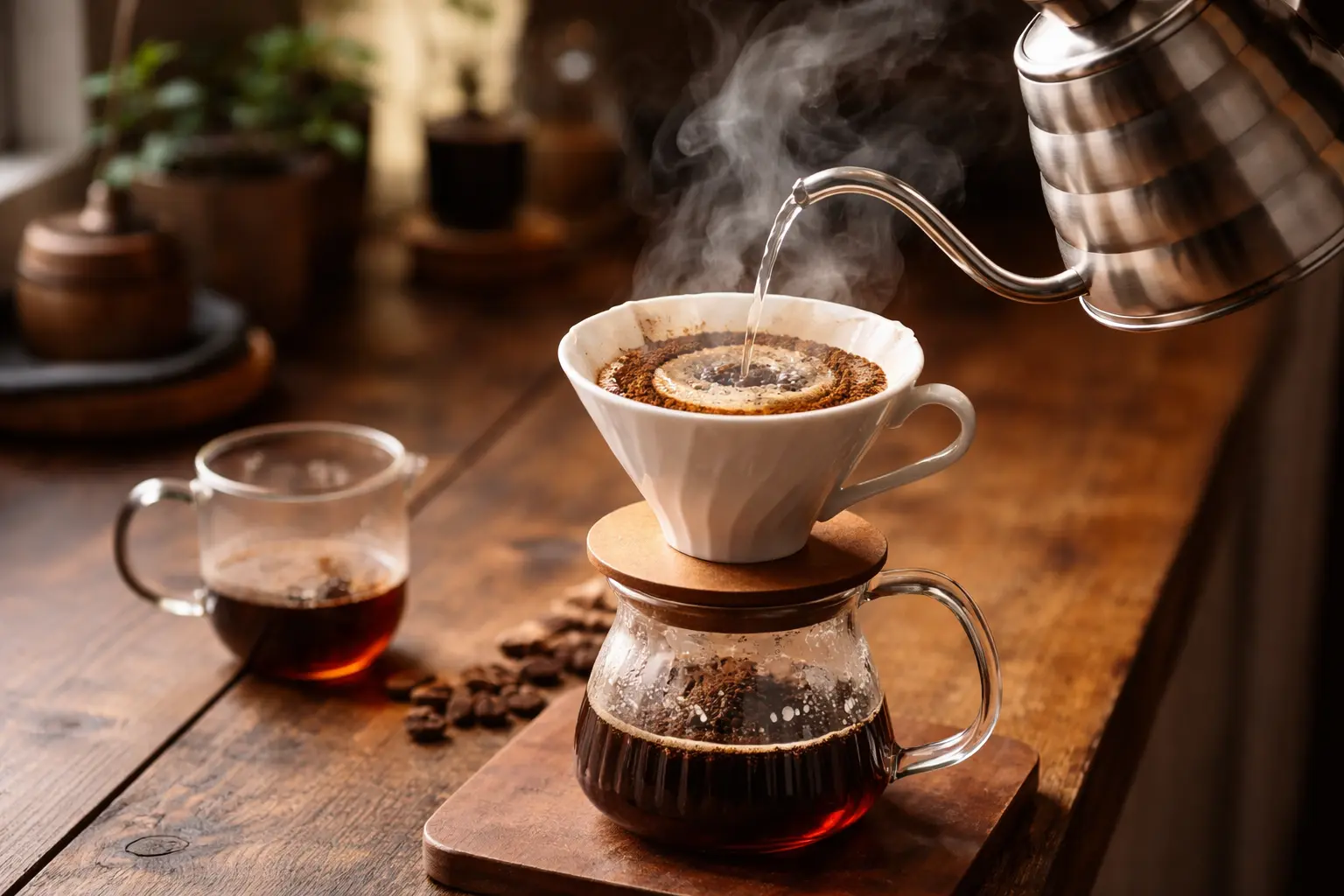
In a pour-over, you pour hot water over ground coffee in a filter cone or basket. Water passes through the bed and drips into the cup. Extraction depends on how fast water flows through the coffee, which is controlled by grind size, the dripper’s shape, the filter, and how you pour. Most recipes start with a short bloom (a small pour to let gas escape) and then add the rest of the water in stages.
Because fresh water keeps reaching the coffee as you pour, percolation is efficient at extracting bright, high-toned flavors. Paper filters catch most oils and fines, which is why pour-over is known for clarity.
Siphon: immersion plus vacuum filtration
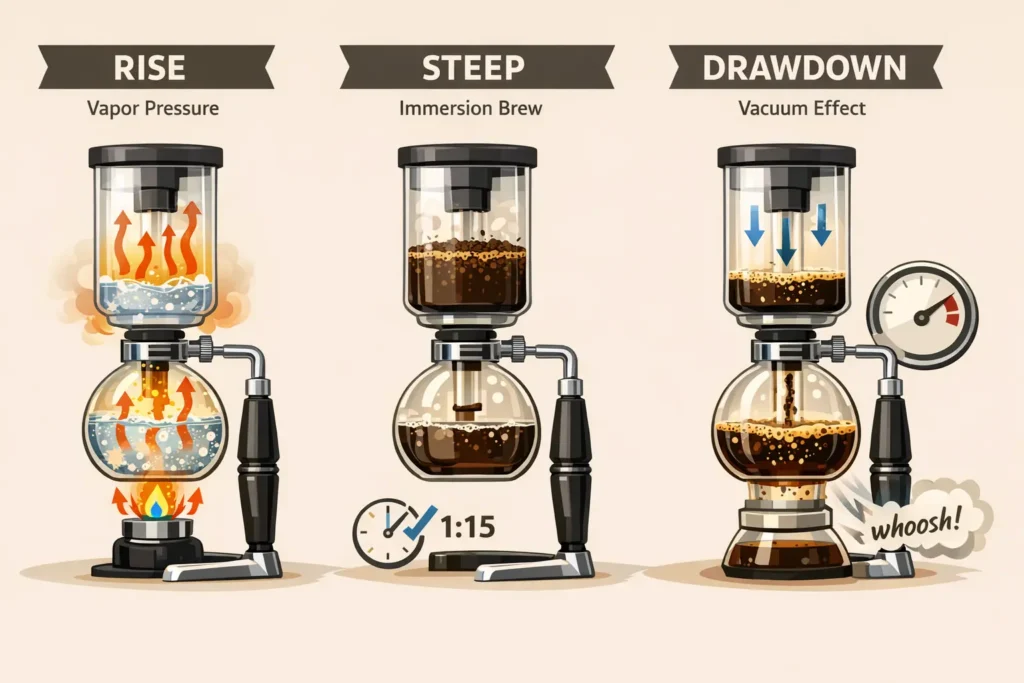
A siphon has two chambers. Heat under the lower chamber builds vapor pressure that pushes hot water up into the upper chamber. You add coffee, stir, and let it steep. When you remove the heat, the vapor cools and contracts, creating a partial vacuum that pulls the brewed coffee down through a filter.
Every particle of coffee is in contact with the water for the whole steep, so extraction depends mainly on time, temperature, and grind, not on pouring. The final drawdown also acts as a quick filtration stage. Our siphon how-to walks through each step.
Why They Taste Different: The Extraction Science
Coffee flavor comes from how much of the soluble material in the grounds ends up in your cup, and which compounds come out first. Acids and fruity aromatics dissolve early; sugars and heavier, rounder compounds follow; harsh, bitter compounds come out last. Every brew method is a way of controlling that sequence. Siphon and pour-over control it through different levers.
Contact time and concentration
In a pour-over, fresh water keeps arriving at the coffee bed. Because that water is low in dissolved coffee, it pulls solubles out efficiently, especially the bright, aromatic compounds that dissolve first. The trade-off is that extraction is uneven if the water finds channels through the bed, which is why pour rate and grind consistency matter so much.
In a siphon, all the water and coffee sit together for the whole steep. As the brew gets stronger, extraction slows down, because concentrated water dissolves less. That makes immersion forgiving: an extra 10 seconds of steep changes the cup only a little. It also means everything is extracted evenly, since every particle sees the same water for the same time.
Temperature
Pour-over water starts hot in the kettle and cools as it travels through the cone and coffee bed, so the effective brewing temperature drifts down during the brew. A siphon holds the slurry near brewing temperature for the whole steep because the heat source stays on underneath. Stable, high heat helps explain why siphon cups are so aromatic and why siphon can extract well even with lighter roasts.
Filtration
The filter decides how much oil and how many fine particles reach the cup. Paper, the default for most pour-over drippers, traps nearly all oils and fines, producing a light, very clean cup. A cloth siphon filter lets a little more oil through, adding silkiness. Metal filters let the most through, adding body and some sediment. If you want to isolate the brewer from the filter, brew both methods with paper and compare.
| Lever | Siphon | Pour-over | What it does to the cup |
|---|---|---|---|
| Water-to-coffee contact | All at once, for the whole steep | Continuous fresh water passing through | Immersion is even and forgiving; percolation is efficient and bright |
| Temperature during brew | Held steady by the heat source | Falls gradually after leaving the kettle | Stable heat boosts aromatics and sweetness |
| Agitation | One or two stirs | Pouring stream and swirls | More agitation speeds extraction |
| Filter | Cloth by default; paper available | Paper by default; metal available | Paper is cleanest; cloth adds silkiness; metal adds body |
| Main error | Too much heat or too long a steep | Channeling from uneven pours | Bitterness in siphon; hollow or uneven cups in pour-over |
Our coffee extraction science guide goes deeper into extraction yield and strength, and flat bottom vs cone pour-over explains why dripper shape changes flow.
Siphon vs Pour-Over at a Glance
| Siphon | Pour-over | |
|---|---|---|
| Brew style | Full immersion, then vacuum filtration | Percolation (water flows through the coffee) |
| Typical cup | Very aromatic, clean, slightly rounder body | Clean and bright; body depends on dripper and filter |
| Main variables | Heat, steep time, grind | Grind, pour rate and pattern, dripper, water temperature |
| Skill to learn | Heat control, filter setup, timing | Pouring technique and grind adjustment |
| Typical brew time | About 5–7 minutes including heating | About 3–4 minutes after the kettle boils |
| Gear | Siphon, heat source, cloth or paper filter | Dripper, paper filters, ideally a gooseneck kettle |
| Fragility | Glass chambers; open flame or heater | Usually plastic, ceramic, glass, or metal; no flame |
| Cleanup | More parts; cloth filter needs care | Toss the filter and rinse |
| Batch size | Fixed by chamber size (often 3–5 cups) | One cup to a full carafe depending on dripper |
How the Cups Differ
Both methods produce a filtered, low-sediment cup, so the differences are about emphasis rather than night and day.
- Aroma: siphon is famous for aroma. The coffee steeps near brewing temperature in the open upper chamber, and the cup tends to be very fragrant.
- Body: with a cloth filter, siphon usually has a little more body and silkiness than paper-filtered pour-over. A paper siphon filter narrows that gap.
- Clarity and brightness: paper-filtered pour-over, especially in a cone like the V60, often shows the most separation between flavors and the most noticeable acidity.
- Consistency: siphon is very repeatable once your heat and timing are set, because pouring technique is removed. Pour-over consistency depends on how evenly you pour.
Filters change the result as much as the brewer. Our pour-over filter comparison explains how paper, metal, and cloth shift body and clarity.
Skill and Effort
Pour-over asks you to pour steadily and evenly. A gooseneck kettle makes this much easier, and flat-bottom drippers like the Kalita Wave reduce the penalty for uneven pours. Once the routine clicks, a cup takes a few minutes and almost no cleanup.
Siphon asks you to manage heat: strong heat to make the water rise, gentle heat during the steep, and no heat to start the drawdown. You also need to seat the filter carefully and handle hot glass safely. It takes longer per brew, but there is no pouring technique to master, and many people find the process enjoyable to watch.
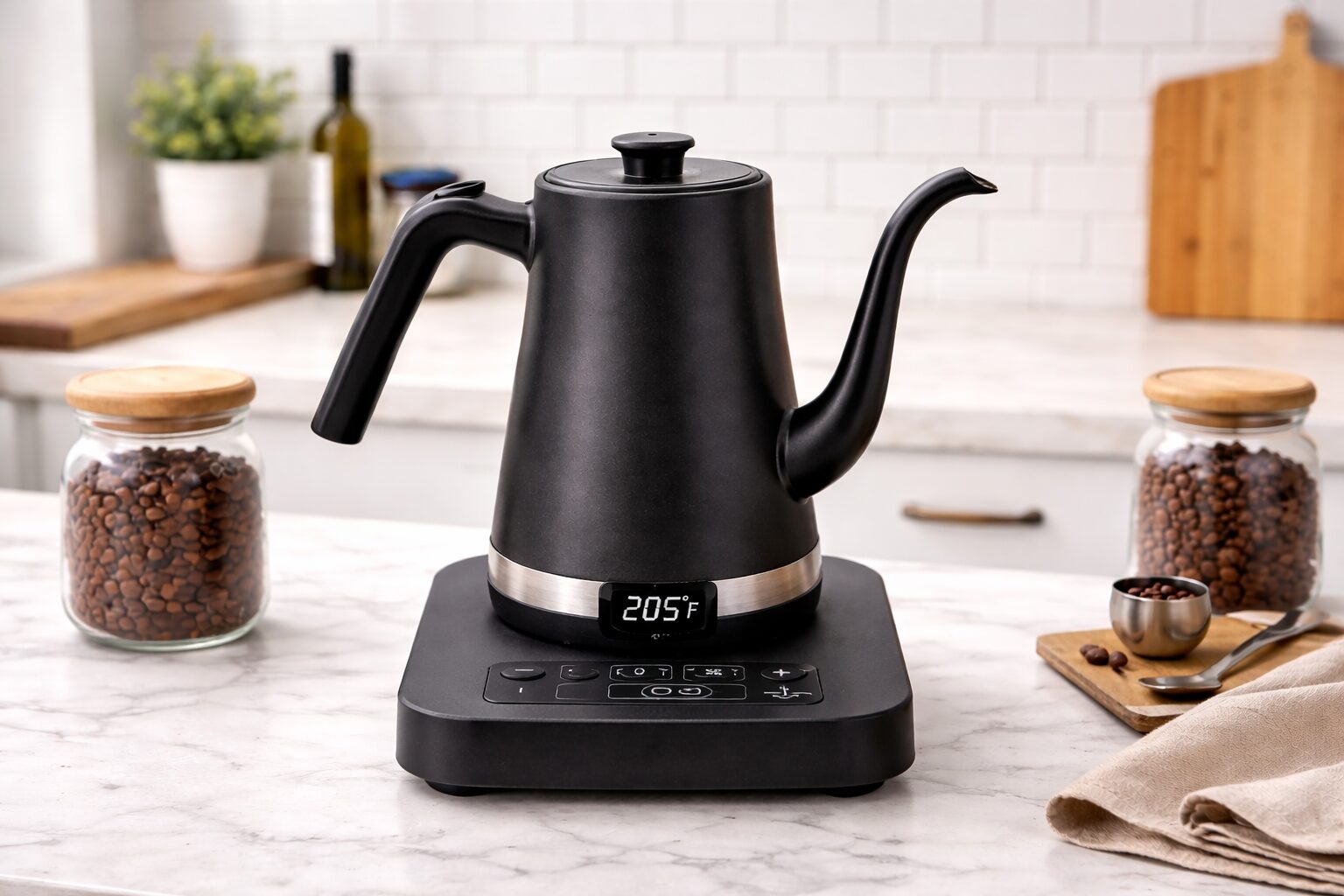
For pour-over, a gooseneck kettle with temperature control, such as the Fellow Stagg EKG, makes slow, controlled pours easier and lets you set water temperature exactly. It is also useful for preheating siphon water, which shortens the time glass spends over a flame.
See our best gooseneck kettles guide and pour-over water temperature guide.
Starting Recipes
| Siphon | Pour-over (V60 or Kalita) | |
|---|---|---|
| Ratio | About 1:15 (36 g to 540 ml) | About 1:15–1:17 (20 g to 300–340 g water) |
| Grind | Medium-fine, a little finer than drip | Medium-fine for V60; medium for Kalita Wave |
| Water | About 90–93°C (194–200°F) in the upper chamber | About 92–96°C (198–205°F) from the kettle |
| Timing | Steep 60–90 seconds; drawdown about 20–35 seconds | Bloom 30–45 seconds; total about 2:30–3:30 |
| Adjust if sour | Steep 15 seconds longer, then grind finer | Grind finer or pour a little slower |
| Adjust if bitter | Shorten the steep and lower the heat | Grind coarser or reduce total brew time |
These numbers match our siphon guide, pour-over guide, and coffee brew ratio guide. Treat them as starting points and adjust by taste.
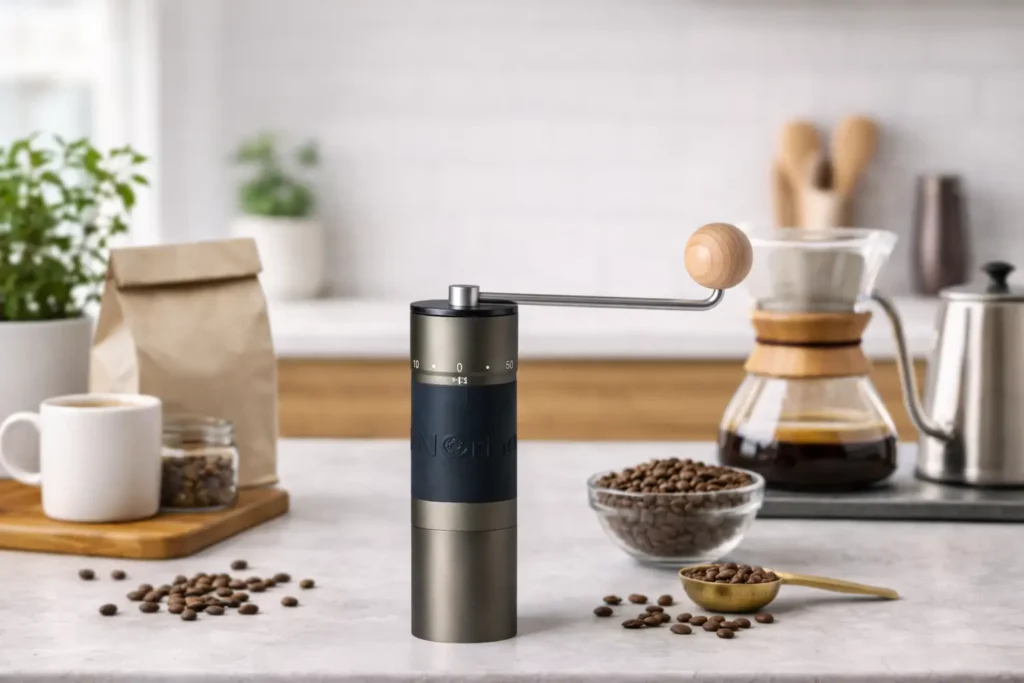
Both methods need a consistent grind. Fines slow pour-over drawdown and clog siphon cloth filters. A good manual burr grinder such as the KINGrinder K6 covers the medium-fine range both methods use.
Our pour-over grind size chart and KINGrinder K6 settings chart give reference points.
Cost and Upkeep
A pour-over dripper is one of the least expensive ways into specialty coffee, and paper filters are cheap and widely available. Most people eventually add a gooseneck kettle and a scale, which also help with every other manual brewer.
A siphon costs more up front, and some models need a separate burner or heater for the best control. Ongoing costs include replacement cloth filters, burner fuel if you use one, and the occasional replacement glass or gasket. Cloth filters also need to be rinsed and stored wet in the fridge between uses. Check current listings for prices, which change often.
Best Gear for Siphon and Pour-Over
These are the brewers and tools we recommend most often across CoffeeGearHub’s siphon and pour-over guides. They cover the main decisions: manual or electric siphon, cone or flat-bottom dripper, and whether a temperature-control kettle is worth it.
How we chose
We compared manufacturer specifications and documentation, replacement-part and filter availability, heat-source and stovetop compatibility, ease of cleaning, and how forgiving each brewer is for a beginner. We weighed value across price tiers rather than picking only premium gear. CoffeeGearHub does not claim hands-on testing; every pick is based on published specifications, established brewing practice, and our existing in-depth guides.
| Product | Type | Heat or flow | Filter | Best for |
|---|---|---|---|---|
| Hario Technica | Manual tabletop siphon | Alcohol burner included; butane upgrade possible | Cloth | The classic siphon experience |
| Yama Glass Stovetop | Manual stovetop siphon | Gas or electric coil with wire diffuser | Cloth | Trying siphon on a budget |
| Tiger Siphonysta | Electric siphon | Built-in heating and timing | Metal or paper (model dependent) | Hands-off, repeatable siphon |
| Bodum PEBO | Stovetop vacuum brewer | Stovetop | Built-in filter | Compact, minimal setup |
| Hario V60 02 | Cone dripper | Fast flow, one large hole | Paper cone | Control and clarity |
| Kalita Wave 185 | Flat-bottom dripper | Slower, even flow, three small holes | Wave paper | Forgiving daily pour-over |
| Fellow Stagg EKG | Electric gooseneck kettle | Variable temperature with hold | — | Precise pouring and preheating |
Best overall siphon
Hario Technica
The Technica is the reference tabletop siphon: heat-resistant glass chambers on a stand, an alcohol burner, and a cloth filter. It comes in 3-cup and 5-cup sizes. Its seal and filter fit are predictable, which matters when you are learning to manage the rise and drawdown, and Hario replacement filters and parts are easy to find.
Pros: classic design with strong parts support; reliable seal; works with a butane burner upgrade for faster, adjustable heat.
Cons: the included alcohol burner is slow; glass needs careful handling; more cleanup than a dripper.
Skip it if: you want coffee in under five minutes on weekday mornings or do not want an open flame on the counter.
Best value siphon
Yama Glass Stovetop Siphon
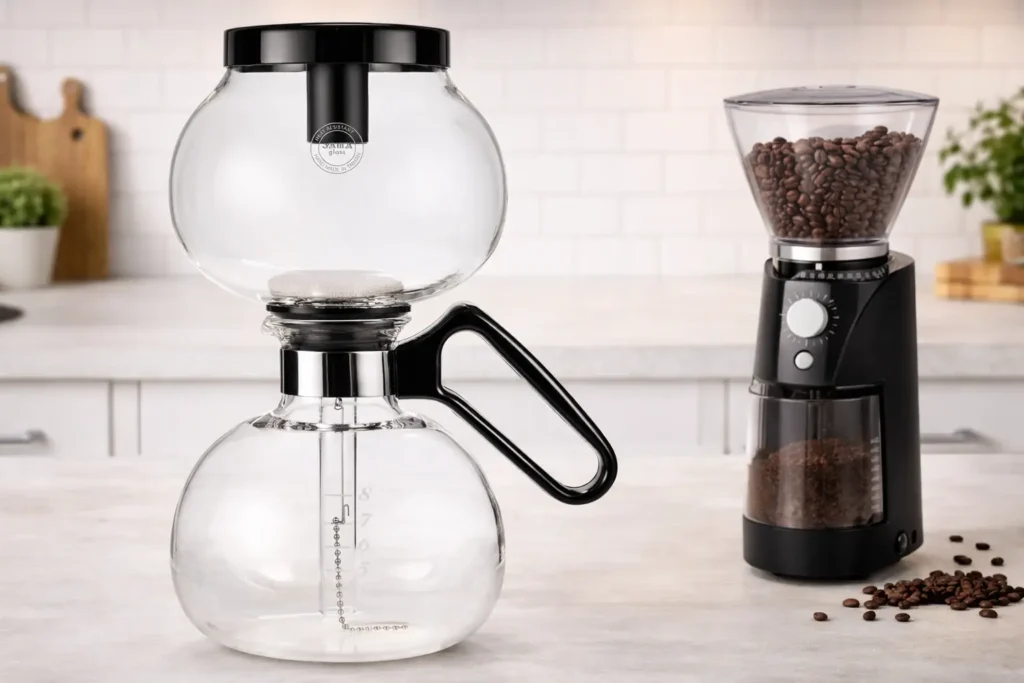
Yama makes the most popular budget route into siphon. The stovetop version sits on a gas burner or electric coil with a wire heat diffuser, so you do not need a separate burner. Once you dial in grind and heat, it can produce cups close to more expensive siphons.
Pros: low cost of entry; no separate burner needed on a compatible stove; high cup-quality ceiling.
Cons: fit and finish are simpler than Hario; stovetop heat is less precise; not for induction unless the listing says so.
Skip it if: you have an induction or glass-ceramic cooktop without a compatible setup.
Best electric siphon
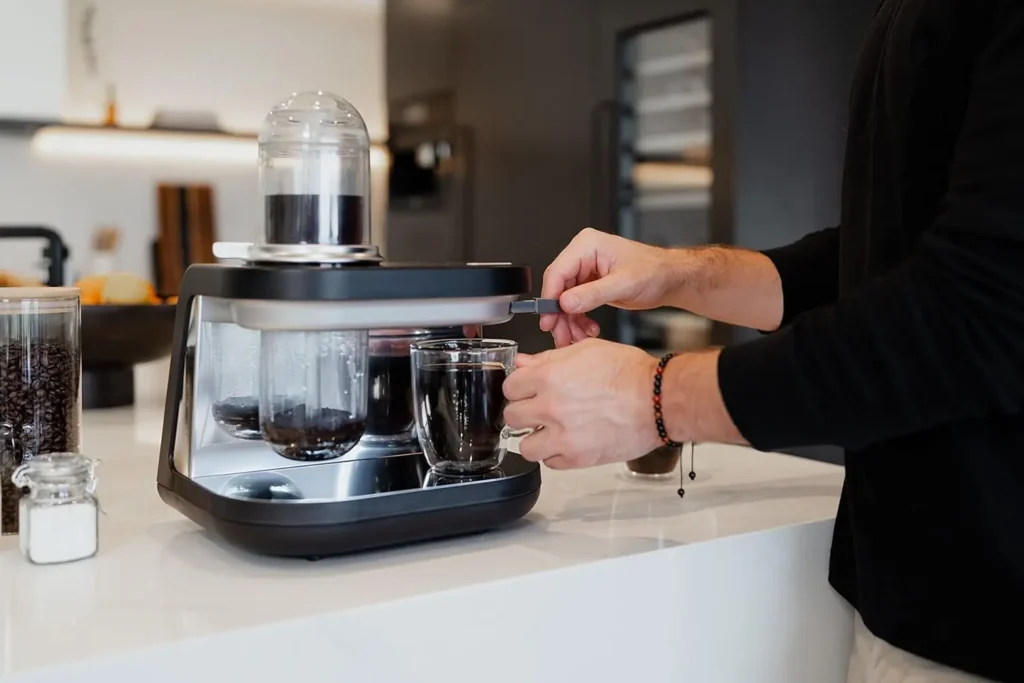
Tiger Siphonysta
The Siphonysta automates the part of siphon brewing most beginners find hardest: heat management. The machine controls heating and timing, so you focus on dose, grind, and recipe while keeping the clean, aromatic siphon cup.
Pros: no flame or burner to manage; repeatable results; the easiest siphon to live with day to day.
Cons: the most expensive option here; less hands-on control and less theater than a manual siphon; check filter and replacement-part availability in your region.
Skip it if: the manual ritual is the reason you want a siphon.
Best compact vacuum brewer
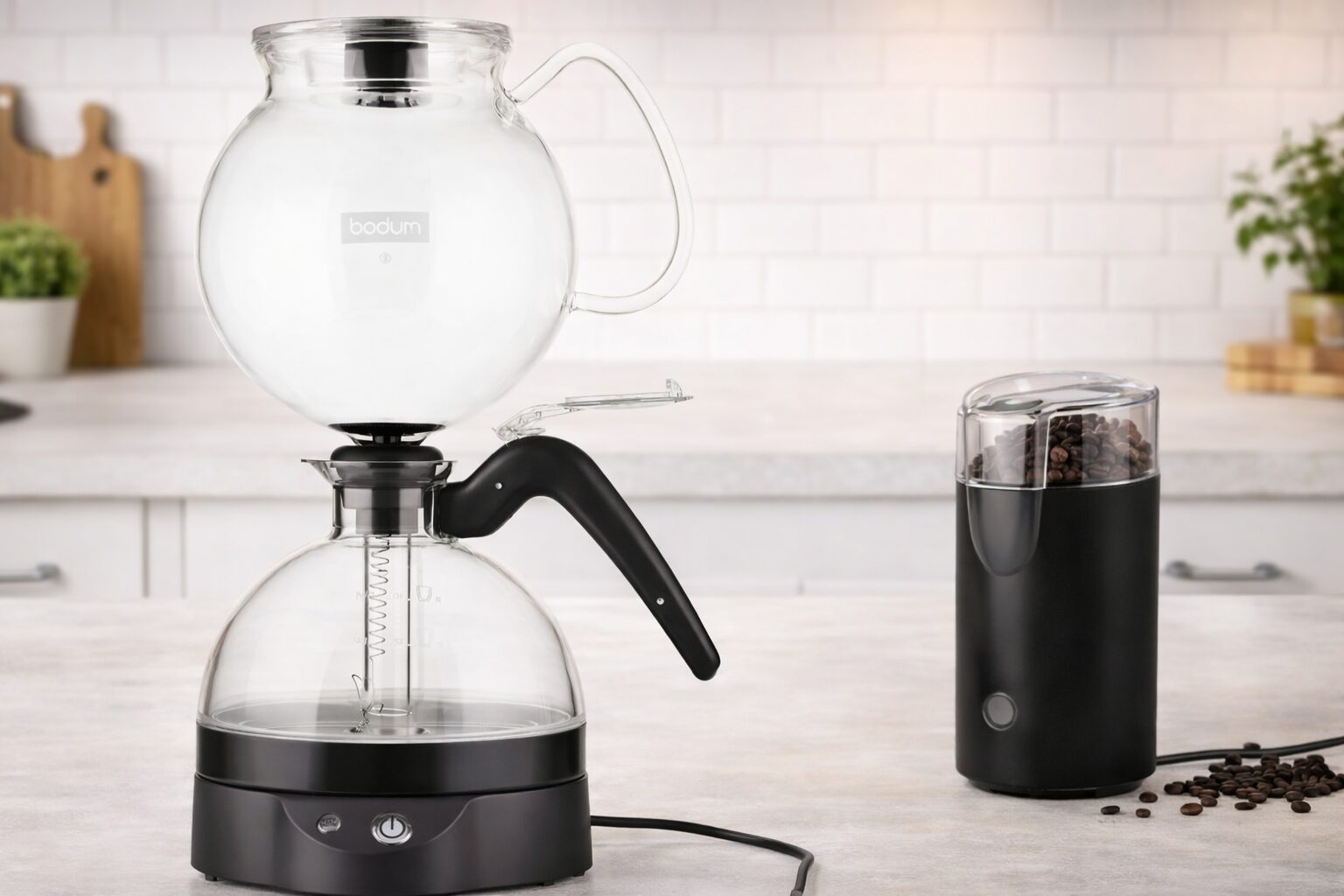
Bodum PEBO
The PEBO is a vacuum brewer for people who like the siphon cup but not the lab look. It stacks two glass chambers on the stovetop with a built-in filter and stores more easily than a stand-mounted siphon. It tends to suit medium roasts with chocolate and caramel character.
Pros: compact and simple; no separate burner on a compatible stove; makes a larger batch than most tabletop siphons.
Cons: less visual control than an open-stand siphon; stovetop heat is less precise; check cooktop compatibility before buying.
Skip it if: you want fine control over steep temperature or brew mostly single cups.
Best pour-over for control
Hario V60 02
The V60 is a 60-degree cone with spiral ribs and one large hole. Water flows quickly, so grind size and pouring speed directly shape the cup. That makes it the most expressive dripper for light roasts and the one most recipes online are written for. The 02 size covers about one to four cups, and the plastic version is light, durable, and holds heat well.
Pros: very affordable; huge range of published recipes; excellent clarity with paper filters.
Cons: less forgiving of uneven pours; benefits from a gooseneck kettle; flow changes noticeably with grind.
Skip it if: you want the same cup every day with as little technique as possible; choose the Kalita Wave instead.
Best forgiving pour-over
Kalita Wave 185
The Kalita Wave has a flat bed and three small holes, and its fluted filters keep the paper from sticking to the walls. Flow is slower and more even than a cone, so small mistakes in pouring matter less. The 185 size suits about one to four cups.
Pros: very consistent from cup to cup; forgiving for beginners; even extraction across the flat bed.
Cons: needs Kalita’s specific wave filters; slightly less flexible than a V60 for experimental recipes.
Skip it if: you enjoy tweaking pour technique and want the fastest-flowing dripper.
Kettle for either method: the Fellow Stagg EKG lets you set an exact temperature and hold it, which is ideal for pour-over and for preheating siphon water. Its narrow gooseneck spout makes slow, steady pours much easier. If you only brew siphon, any kettle works.
Buying Guide: What to Look For
Choosing a siphon
- Heat source: decide first whether you will use an alcohol lamp, a butane burner, your stovetop, or an electric model. This determines which siphons work for you.
- Stovetop compatibility: only stovetop models with a diffuser should go on a burner. Most glass siphons are not induction-compatible.
- Capacity: siphons rise most reliably near their marked capacity. Buy the size you will usually brew, not the largest available.
- Filter system: cloth is standard and needs wet storage; check whether paper filter adapters are available if you prefer easier cleanup.
- Parts support: replacement glass, gaskets, and filters keep a siphon in service for years. Established brands make this easier.
Choosing a pour-over setup
- Dripper shape: cones (V60) flow faster and reward technique; flat-bottom drippers (Kalita Wave) are more forgiving.
- Material: plastic is cheap and holds heat well; ceramic and glass look great but should be preheated; metal is durable.
- Filters: make sure the paper size you need is easy to buy locally or online.
- Kettle: a gooseneck kettle is the biggest upgrade for pour-over consistency. Temperature control is a bonus.
- Batch size: for two or more mugs at once, choose a size 02 cone, a Kalita 185, or a Chemex rather than a single-cup dripper.
Starter and Enthusiast Setups
| Setup | Siphon | Pour-over |
|---|---|---|
| Starter | Yama stovetop siphon, any kettle, a burr grinder, a 0.1 g scale | Hario V60 or Kalita Wave, paper filters, a burr grinder, a 0.1 g scale |
| Enthusiast | Hario Technica with butane burner, KINGrinder K6, scale with timer | V60 and Kalita Wave, Fellow Stagg EKG, KINGrinder K6, scale with flow rate |
| Low-effort | Tiger Siphonysta and a burr grinder | Kalita Wave, any gooseneck kettle, a scale |
A grinder and a scale matter more than the brewer for both methods. See our best coffee scales and how to use a coffee scale guides.
Troubleshooting Both Methods
| Problem | Siphon fix | Pour-over fix |
|---|---|---|
| Sour or thin | Steep 15 seconds longer; grind slightly finer; keep gentle heat on during the steep | Grind finer; pour more slowly; use hotter water |
| Bitter or harsh | Shorten the steep; lower the heat during the steep; grind coarser | Grind coarser; shorten total brew time; avoid over-agitating |
| Slow finish | Drawdown stalls: grind coarser and rinse or replace the cloth filter | Drawdown over 4 minutes: grind coarser and check for fines |
| Hollow or uneven | Stir to wet all grounds at the start | Pour evenly over the whole bed; swirl after the bloom |
| Grounds in the cup | Re-seat and re-hook the filter | Check the filter is the right size and not torn |
Which Should You Choose?
| If you… | Choose |
|---|---|
| Want the easiest daily routine and fastest cleanup | Pour-over |
| Are new to manual brewing and on a budget | Pour-over (start with a Kalita Wave or V60) |
| Love bright, high-clarity light roasts | Pour-over with paper filters |
| Want a fragrant cup with more body without pouring technique | Siphon |
| Enjoy the ritual and want a showpiece for guests | Siphon |
| Brew for one person most days | Pour-over (siphons work best near full capacity) |
| Have curious kids or pets around the counter | Pour-over, or an electric siphon such as the Tiger Siphonysta |
Pick Your Method
Start with a dripper if you want simple daily pour-over, or a classic glass siphon if the ritual is part of the appeal.
As an Amazon Associate, CoffeeGearHub earns from qualifying purchases.
Can You Own Both?
Many home brewers do. Pour-over covers busy mornings; a siphon comes out on weekends or for guests. The two share the same grinder, scale, and kettle, so adding the second method mostly means buying the brewer itself. If you already own a V60, trying a siphon is a good way to taste how much brew style, not just beans, shapes the cup.
Editorial bottom line: Pour-over is the better everyday method for most people: cheap, fast, and easy to clean, with excellent clarity. Siphon is the better ritual: very aromatic, slightly fuller, and repeatable once you master heat and timing. Start with pour-over unless the siphon process itself is what draws you in.
As an Amazon Associate, CoffeeGearHub earns from qualifying purchases. Prices and availability can change at any time.
Frequently Asked Questions
Is siphon coffee better than pour-over?
Not better, different. Siphon is usually more aromatic with a little more body; paper-filtered pour-over usually shows more clarity and brightness. Which you prefer depends on taste and how much ritual you want.
Is siphon coffee stronger than pour-over?
Strength depends on the ratio, not the method. At the same ratio, a cloth-filtered siphon can taste slightly fuller, which some people read as stronger.
Is siphon harder than pour-over?
It is different rather than harder. Siphon removes pouring technique but adds heat control, filter setup, and glass handling. Pour-over is quicker to learn for most people.
Which is easier to clean?
Pour-over. You throw away the paper filter and rinse the dripper. A siphon has two glass chambers and usually a cloth filter that must be rinsed and stored wet.
Can I use the same beans for both?
Yes. Light-to-medium roasts with clear, layered flavors suit both. Grind a little finer than drip for siphon and V60, and medium for flat-bottom drippers.
Do I need a gooseneck kettle for siphon?
No. A siphon only needs hot water poured into the lower chamber. A kettle is still useful for preheating water so the brew is faster.
Does siphon coffee have more caffeine than pour-over?
Not inherently. Caffeine dissolves easily in both methods, so the amount in your cup depends mainly on how much coffee you use. At the same dose and ratio, the two are similar.
Can I use paper filters in a siphon?
Yes, with a compatible paper filter holder or adapter for your model. Paper gives a cleaner cup and easier cleanup; cloth gives a little more body.
Which is better for light roasts?
Both can be excellent. Pour-over with paper shows the most clarity and brightness. Siphon’s stable heat helps light roasts extract fully and highlights aroma. Try both with the same beans if you can.
Is siphon coffee worth the extra effort?
If you enjoy the process and like aromatic, rounder cups, yes. If you mainly want good coffee fast, a pour-over dripper gives most of the quality with far less effort.
Sources and Further Reading
Brewing methods and parameters were cross-checked against published brewing guides, including Coffee Brew Guides’ siphon guide and the Specialty Coffee Association brewing standards, along with manufacturer instructions for Hario siphons and drippers and CoffeeGearHub’s existing siphon and pour-over guides. Recipes vary; treat the numbers here as starting points.
CoffeeGearHub product shortlist
Continue with related products on CoffeeGearHub
Review product categories and current verified merchant offers on CoffeeGearHub before leaving the site.